

Well, it is now 2026. This means it is officially the future, Outposters. Flying cars, bacofoil pants, hoverboards, sex-droids. None of these things actually happened. Instead, we got fucking Instagram. Where’s my moonbase, you bastards? So instead of living in the brave new world we were promised, we need to go back, way back, to the 1980s when there was another way forward, if only we had chosen to grasp it with both hands. Runaway showed us this future. It was plastic, and it beeped a lot.
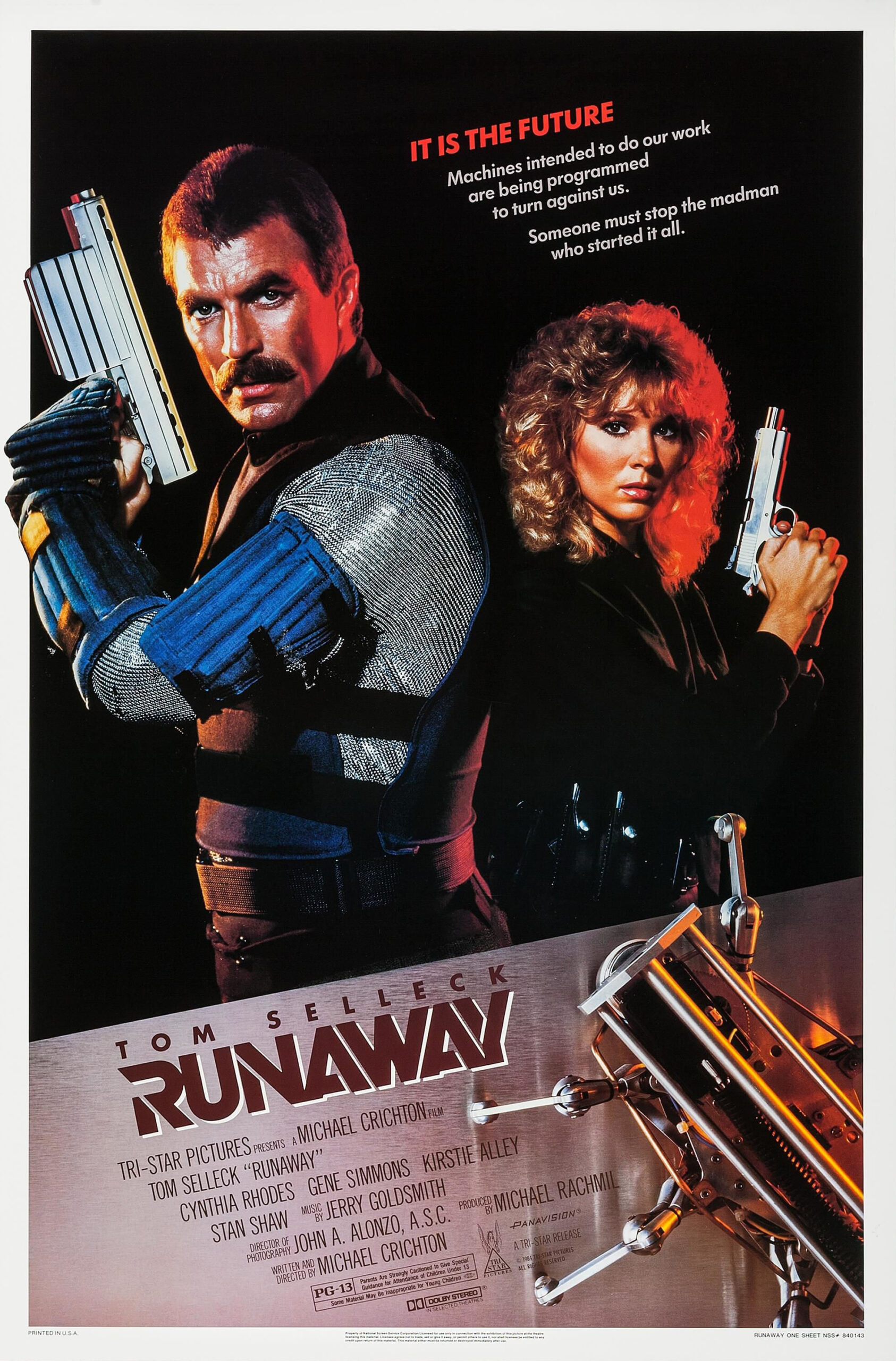
Runaway
Runaway sits firmly within a particular sub-genre of 1980s science fiction that exists in a liminal space between genuinely prophetic and utterly bonkers. It’s the “near future” movie, where tomorrow is basically today but with more buttons, shoulder pads, and an unshakable belief that robots will look like Fisher-Price toys, but act as if they are possessed by Satan.
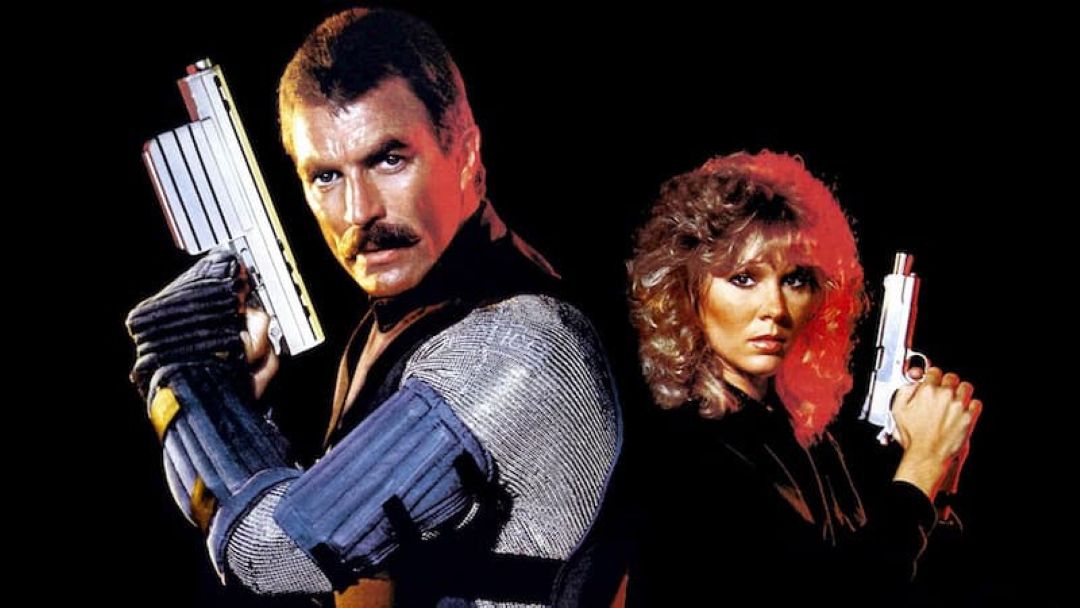
Michael Crichton’s Runaway sits here, waving an oversized futuristic gun and telling us that the future is now, and it runs on AA batteries.
Runaway is one of those films that feels like it should be forgotten, yet stubbornly refuses to be. It’s dated. It’s ridiculous. It’s sometimes unintentionally hilarious. And it’s also… kind of awesome. The sort of awesome that sneaks up on you while you’re laughing at a robot spider firing hypodermic needles.
It positively reeks of VHS while it presents to us this “near future” of beige computers, chunky CRT monitors, and a society that still dresses exactly like the Reagan era, but with shinier jackets.
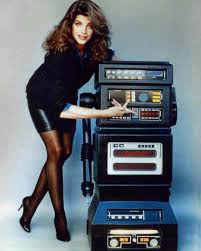
This is not the sleek neon dystopia of Blade Runner (1982). This is not the cold, metallic nightmare of The Terminator (also 1984). This is suburban sci-fi. The future where robots mow lawns, make food, and occasionally malfunction and murder you because someone spilled Pepsi on their circuit board.
The central idea is actually very Crichton: technology is great until it isn’t, and when it stops working, it really stops working. In this world, robots are everywhere, and because of that, we have a special police division called the Runaway Unit. Basically, this is cops and robots.
Already better than it sounds.
Front and center is Tom Selleck as Sergeant Jack Ramsay, the most 1980s action hero name imaginable. Selleck is at a fascinating point in his career here. He famously lost out on Raiders of the Lost Ark because of Magnum P.I., which means Harrison Ford got to define cinematic adventure while Selleck got to define Hawaiian shirts and moustache-based charisma.
But don’t feel too bad for him. By 1984, Selleck was a massive TV star, still riding Magnum, and coming off High Road to China (1983), which was basically “Indiana Jones but with more biplanes and fewer Nazis.”
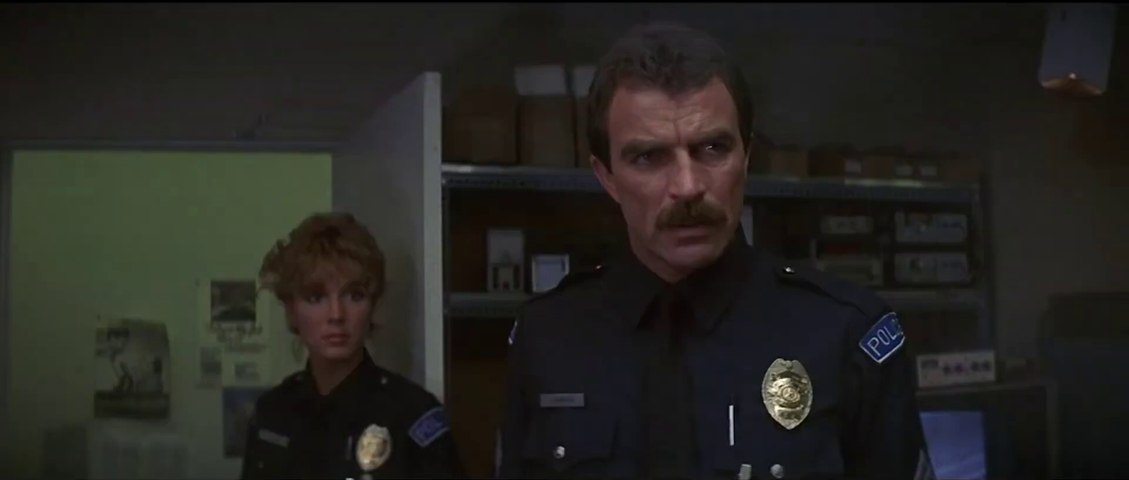
Runaway feels like Hollywood saying:
“Okay Tom, here’s your sci-fi action hero shot. Go save the future.”
And honestly? He’s great.
Selleck brings a grounded, slightly weary presence to the role. He’s not quippy like a Schwarzenegger, not manic like a Gibson, and not coked-out like half the action stars of the decade. He’s a professional. A cop. A man who looks like he drinks black coffee and sighs at paperwork.
Which makes it even funnier when he’s forced to fight killer robots that look like malfunctioning kitchen appliances.
A Near Future Awakening
Playing opposite Selleck is Kirstie Alley as Anne Anderson, a civilian who gets pulled into robot police work because… well, because the plot needs her to.
This is pre-Cheers Kirstie Alley, but only just. She has the look, the confidence, and the kind of presence that made a lot of teenage boys in the 1980s suddenly very interested in science fiction. There is a bra scene. It exists. It was noticed. It was paused. Let’s move on.
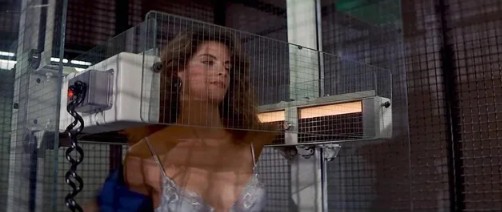
Alley is a bit of a femme fatale here. She’s not there just to scream, although she does scream occasionally, because it’s the 80s and contracts demanded it.
The real emotional heavy lifting comes from the 80s sidekick MVP that is Cynthia Rhodes.
Her chemistry with Selleck works in that understated 80s way, with mild flirtation, and the unspoken understanding that neither of them has time for a full relationship because robots are trying to kill everyone.
She plays Jackie Rogers, Ramsay’s partner. If you watched movies in the 80s, you know Cynthia Rhodes. Flashdance. Staying Alive. Dirty Dancing. She was the decade’s go-to “tough but supportive” female presence. No matter what she is in, she is solid and dependable in a girl-next-door way, but then also absolutely gorgeous just as the plot demands it, as if some kind of switch gets flipped.
In Runaway, she’s competent and professional; she establishes the stakes early and gives the film some emotional grounding before things get truly ridiculous.
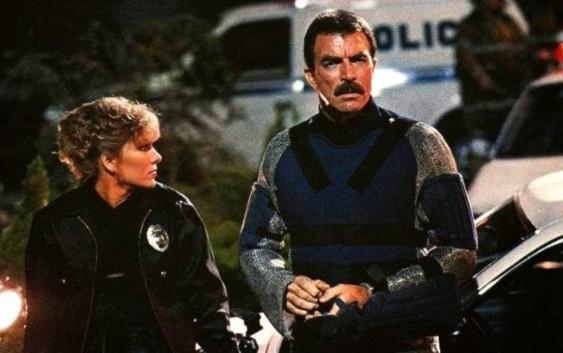
Rhodes had a knack for making thinly written roles feel real, and she does it again here. You believe she’s a cop. You believe she belongs in this world.
And then… there’s Gene Simmons. Yes. THAT Gene Simmons.
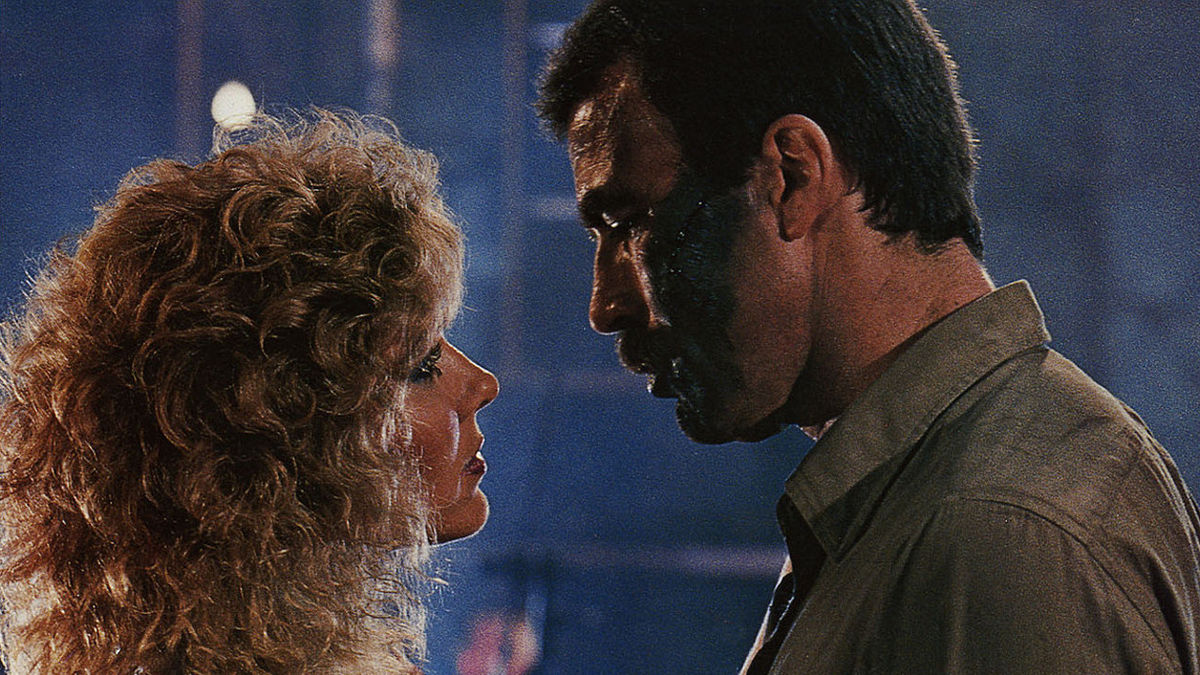
Playing Luther, the film’s villain, Simmons delivers one of the creepiest performances of the decade. This is not fun, tongue-in-cheek KISS theatrics. This is cold, quiet, unsettling evil. He doesn’t chew the scenery. He stares at it like he’s deciding where to bury a body.
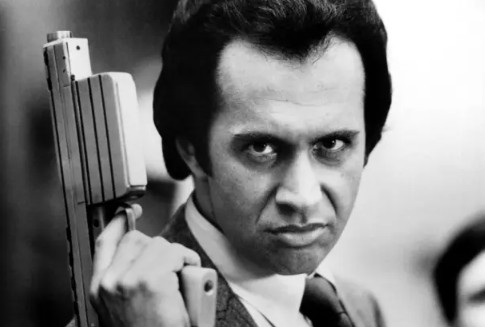
Luther is a tech genius who uses robot malfunctions to assassinate people, which means Simmons spends the movie lurking, whispering, and generally making your skin crawl. He’s got metal braces, soulless eyes, and the vibe of a man who absolutely does not ask for consent.
It shouldn’t work. Rock stars crossing into acting often don’t. But Simmons is legitimately effective here, possibly because he leans into being weird instead of trying to be cool.
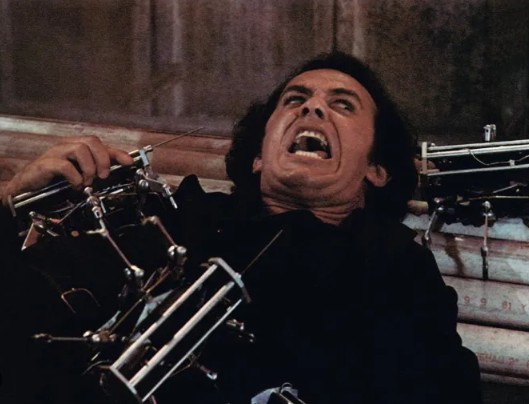
Also: robot spiders that inject acid into your bloodstream. That’s on him. Sleep tight.
Then there are the robots. Oh my, the robots!
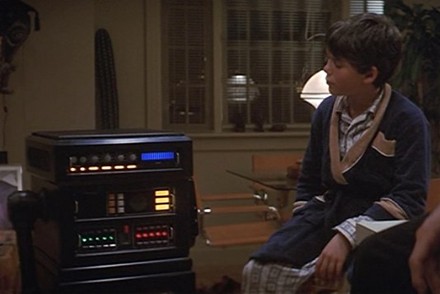
These things are glorious disasters. They beep. They whirr. They roll slowly toward danger. They look like someone glued vacuum cleaner parts together and called it “artificial intelligence”.
There’s a robot lawnmower that tries to kill a family. There are industrial robots that forget they’re not supposed to crush humans. And then there are the spider robots. Small, weaponized nightmares that crawl under doors and stab people with needles.
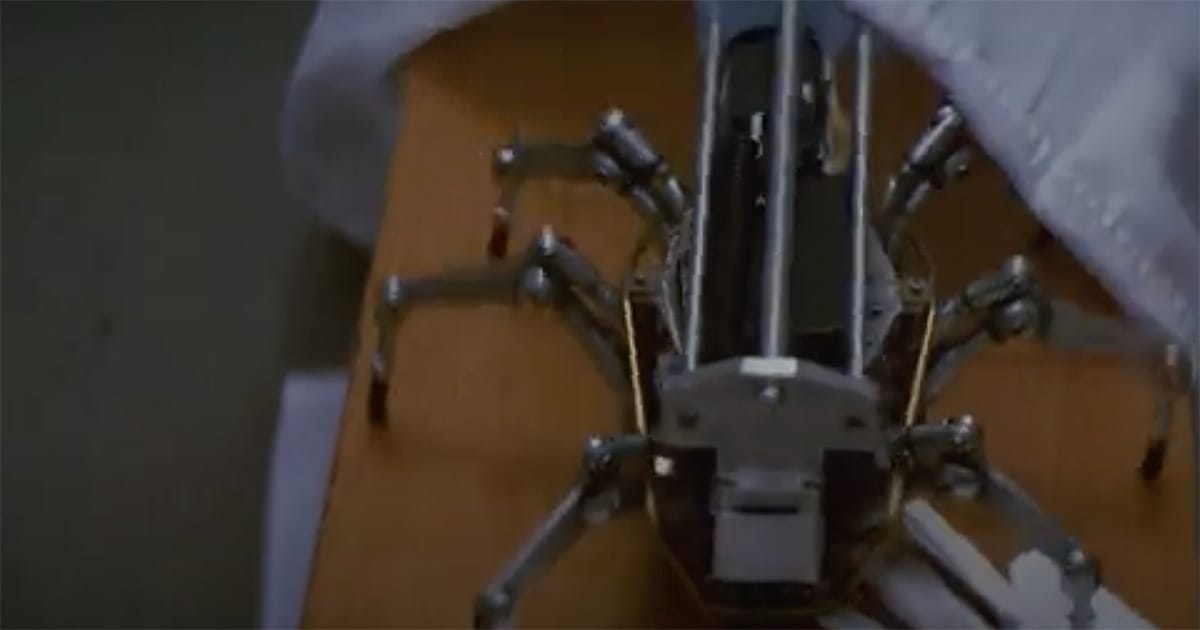
In 1984, this was cutting-edge stuff. Today, it all looks like the losers of the RobotWars playoffs got very angry about it.
But here’s the thing: the film commits. Crichton treats these robots seriously. There’s no winking at the camera. No irony. This is a police procedural about malfunctioning machines, played completely straight.
And that sincerity is why it all works.
Both written and directed by Michael Crichton, Runaway sits neatly between Westworld (1973) and Jurassic Park (1993) in his “technology will absolutely murder you” career arc.
Crichton loved this stuff. He understood systems, failures, and unintended consequences. Even when the execution looks dated, his ideas are solid. An automated society creates new kinds of crime. Specialized cops emerge. Technology outpaces regulation. Sound familiar?
This is the same brain that gave us killer theme parks, rogue AI, and nano-swarms. Runaway might be smaller in scale, but it’s pure Crichton.
Runaway arrived in a golden age of near-future cinema. Around the same time, audiences were watching:
- Blade Runner imagining a rain-soaked noir future
- WarGames warning us not to play tic-tac-toe with nuclear weapons
- Tron throwing us inside a computer
- The Terminator redefining robot horror
- Short Circuit then trying to convince us not to worry, as robots were actually adorable idiots
Compared to those, Runaway feels almost quaint. No apocalyptic stakes. No nuclear annihilation. Just robots screwing up in suburban America. And that’s kind of refreshing.
Is Runaway dated? Hugely.
Is it ridiculous? Frequently.
Do the robots look like they’d lose a fight with a Roomba? Absolutely.
But it’s also smart, earnest, and packed with 80s charm. Tom Selleck is solid. Cynthia Rhodes grounds it. Gene Simmons terrifies. Kirstie Alley appears in just underwear, and Crichton’s ideas hold up better than the special effects. It’s a time capsule of a future that never happened, but it’s also a reminder of when science fiction was allowed to be fun, weird, and just a little bit stupid.
And sometimes, that’s exactly what you want.
The future may not look like this… but we kind of wish it did.