


Well, we made it Trekizens. The original series has been completely reviewed, and even the animated series. If you haven’t read all the episode reviews yet, then of course this review will make no sense. I suggest you go back and read every single article. Twice. There will be a quiz later.
Ok, all kidding aside, now we go into the movies. The next few articles will be a little more spaced out rather than the Monday-Wednesday-Friday schedule. We’ll go back to that when we start digging into The Next Generation. Oh yes, we will always Trek On!
There are tons and tons of videos and articles on the behind the scenes and making of the various movies and quite frankly, I doubt there’s much I could add that either you don’t already know or could get better information about from other sources. Instead, I added a couple of new sections. One is A Novel Approach. In that, I will highlight some differences between the book adaptation and movie.
The second is What’s The Score? In there, I will discuss the musical score. Trek had a pile of different scores, never settling on a single one. Some are better than others. As a connoisseur of movie scores, I have a lot of opinions. Finally, Library Computer for any particular trivia that don’t fit anywhere else.
Of course we have the usual sections but I expect these articles will be quite a bit longer given that these are movies. So sit back, get your scroll finger ready, and let’s Trek On into the movies!
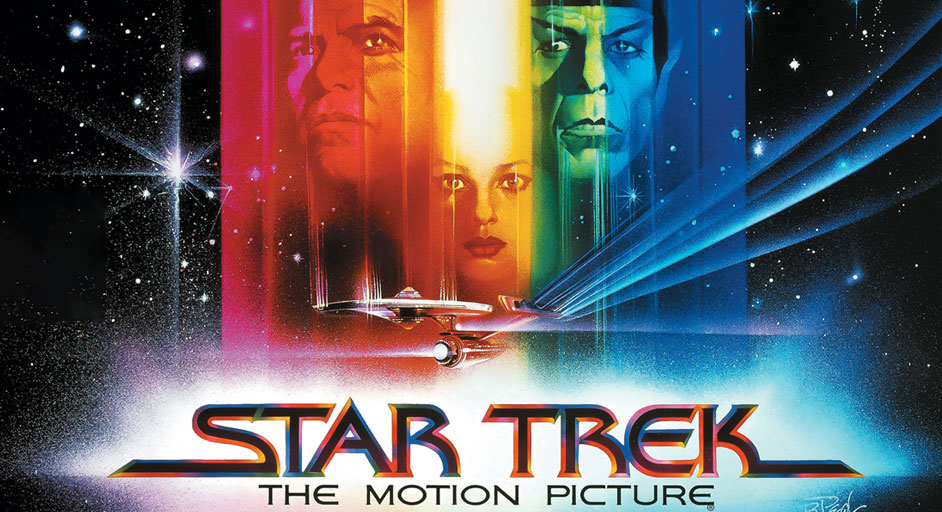
Title: Star Trek The Motion Picture
Release Date: 12/7/1979
Plot Summary
Two and a half years after the end of the historic 5-year mission, the crew of the Enterprise has gone their separate ways. Kirk has been promoted to Admiral and is in charge of Starfleet Operations. McCoy so objected to Kirk’s promotion that he angrily resigned from Starfleet. Spock has gone on a quest to achieve Kolinahr, the final purging of all emotions. The rest of the crew has taken on various assignments.
But a cloud enters the system, taking out three Klingon cruisers and on a direct course to Earth. Kirk uses the emergency to take command of the newly refitted USS Enterprise and bring his crew back together, except for Spock who has been inactive in Starfleet since returning.
Will Decker, the current captain whom Kirk recommended to take over due to his promotion, is none too happy about being pushed to first officer. They are also joined by the Deltan Ilia, a former flame of Decker’s who has some unspecified telepathic talents that require an oath of celibacy to join Starfleet.
The rest of the crew, however, believes that Kirk is the best chance they have to succeed in this mission. Bones is drafted, as he puts it, and is less confident in Kirk. He correctly believes that Kirk may be obsessed with getting back the center chair. Confirming his point, Kirk pushes the crew too fast to go to warp speed on untested warp engines and nearly gets them all killed in a wormhole, saved only by Decker’s quick thinking which makes Kirk look a little foolish.
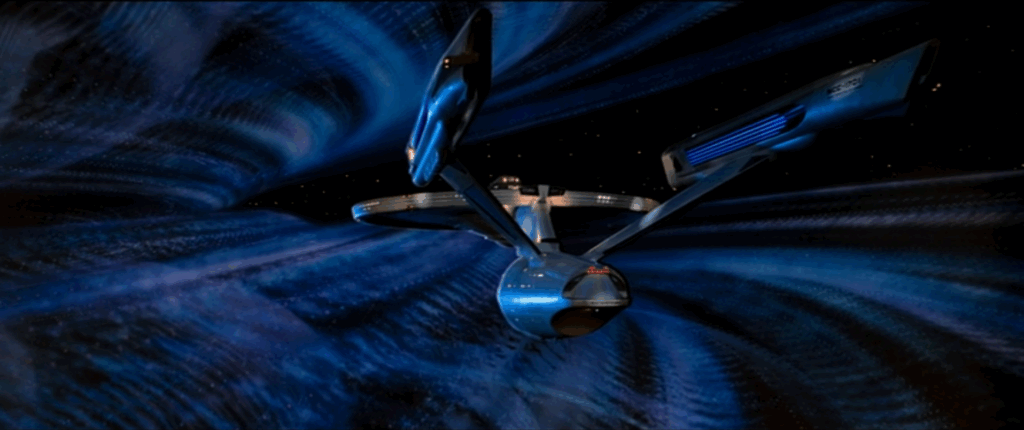
Things look up while making further repairs, Spock shows up on a shuttle to aid them, but he’s not the same Spock. Aloof and cold, even for him. Nevertheless, he is able to correct the imbalance in the warp engines and soon the Enterprise is on its way.
Kirk and Bones confront Spock, and he admits that he stepped away from the final moments of the Kolinahr ritual because he sensed the massive intelligence he believes is coming from the cloud. He had an emotional reaction and realized he needed to discover its secrets. Bones and Kirk wonder privately if he’s been compromised by this power.
Soon they arrive at the cloud boundary and are immediately attacked. The shields hold owing to the new technology the Enterprise has but will not survive a second blast, a blast that’s already heading their way. Spock finds that the entity has communicated at speeds far beyond what they normally use and is able to send out a message moments before being hit. The energy blast simply disappears.
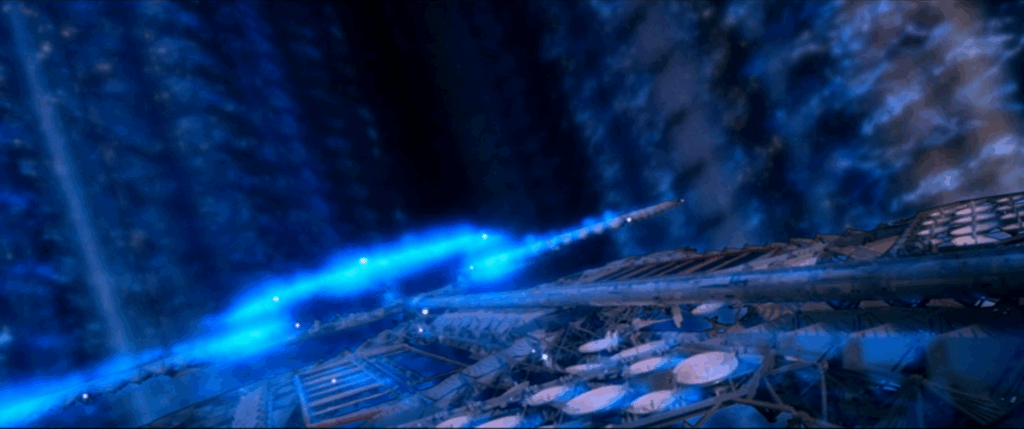
The Enterprise continues into the cloud, where they find a massive vessel. After running the length of the vessel, which dwarfs the Enterprise the way the Enterprise dwarfs a mosquito, a probe made of pure plasma energy appears on the bridge. It attempts to interface with the computer consoles, but Spock smashes the panel. The probe then disappears taking Ilia with it.
The entity activates a tractor beam and brings the Enterprise into its interior. Before they have a moment to get their bearings, another probe appears in Ilia’s quarters. This time it’s a mechanism, an android nearly indistinguishable from Ilia herself. Spock surmises that they may have duplicated her too well, with Ilia’s memories still intact.
Still, he’s not confident that it should be their only access to the entity, which the probe has identified as something that sounds like “Vejur.” She also shocks the crew by informing them that Vejur is heading to earth to find the creator and join with him.
Kirk orders Decker to work with the probe, seeing if his past relationship can bring Ilia back out, a move Bones approves of as it shows that Kirk is thinking more about the mission than himself finally. Meanwhile Spock sneaks off the Enterprise in a space suit. After traveling for a bit he finds Ilia, patterned for data storage, along with entire planets and civilizations that Vejur has come across. He realizes that this isn’t a vessel with a crew, but a lifeform. The entire vessel IS Vejur.
He attempts to mind meld with the transceiver on the neck of the Ilia he’s found and it nearly kills him. Vejur sends him back to the Enterprise where he tells Kirk that he understands now. Vejur is a barren, completely logical being. There’s no reason or passion to him, he simply exists. He realizes his rejection of emotions was a mistake.
Vejur has finally reached Earth and begins sending out many of the same blasts that hit the Enterprise, except that all of them are many times more powerful since he didn’t receive a reply to his signal. A signal sent on old radio frequencies. Kirk finally plays his last bluff and informs the Ilia-probe that he knows why the creator hasn’t responded but can only give the answer to Vejur himself.
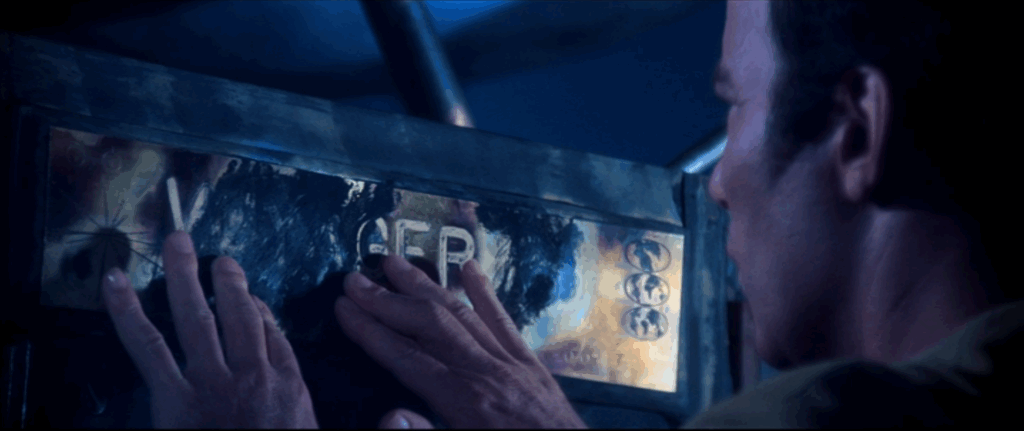
The Enterprise is drawn deeper into the vessel where they dock, so to speak, to a vast area that has an earth-like atmosphere and gravity. Kirk, Spock, Bones, Decker, and the Ilia-probe go to the center of area to find an old NASA probe. Voyager 6 is written on the old spacecraft with the O, Y, A being nearly worn off, so it’s not Vejur, it is V’Ger.
They realize that Voyager was tossed to the far side of the galaxy and found a planet of machines. The directive was to discover new life and planets, to “learn all that was learnable.” The machines took this seriously and built this entire vessel around the NASA probe in order for it to complete its mission. It amassed so much knowledge, it became sentient, but not able to understand emotions. It longed for something and Decker realizes that it wants to join with a human to be able to gain imagination, emotions, and purpose.
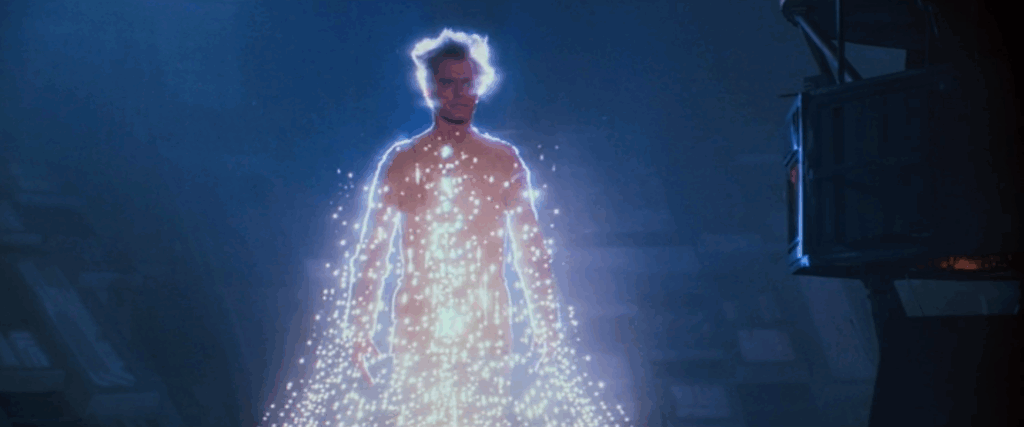
Decker accepts this opportunity and he and V’Ger join in a blazing blast of light, with Kirk, Spock and Bones barely making it back to the Enterprise. With threat removed, the crew back together, and Spock realizing where his place is, Kirk orders the Enterprise to have a proper shakedown cruise.
Risk Is Our Business
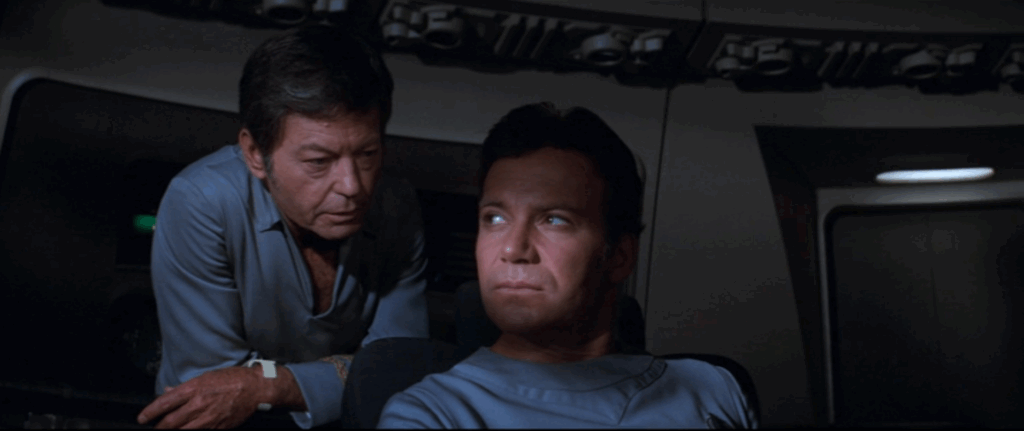
Kirk is a lost soul, desperate and unhappy after being promoted to Admiral. This is a throughline for the next several movies. Not sure why, after The Motion Picture, that he didn’t go back to Captain again, he probably could’ve had whatever he wanted, what with saving the planet and all. Again.
Still, his behavior at the beginning is not great. He muscles his way to the center chair, knocking out his young protege in the process. Even Bones calls him out on it. They end up in a wormhole because he won’t listen to his own people. If Scotty says they ain’t ready, then they ain’t ready. He’s so gung-ho about being captain, he seems to forget a few things about being captain.
As things progress however, he begins to reign himself in and stop thinking about it, instead focusing on the mission. I have to wonder if he brought Bones in because deep down, he knew he needed someone who would tell him off if required.
The moment when Bones clearly calls him on his motivation and leaves, with the smoky glass doors sliding closed, darkening Kirk in camera, was a prime visual example of this.
His best moment in dealing with all this is when Decker reminds him that the role of the first officer is to present all possibilities to the captain. Kirk is ready to start berate him but backs off and agrees with a smile. It was probably the defining moment when Kirk realized that it isn’t all about him.
His handling of the Ilia-probe cemented it by assigning to Decker. Typically he would do the captain thing and save the day but he recognized that Decker and Ilia’s past would be beneficial and probably have a greater chance of success.
When it finally comes to crunch time, he listens to everyone and decides to take Spock’s advice in treating Vejur like a child. It was a baller moment and he was full Kirk at that point. Just a simple refusal to answer Vejur.
Logical
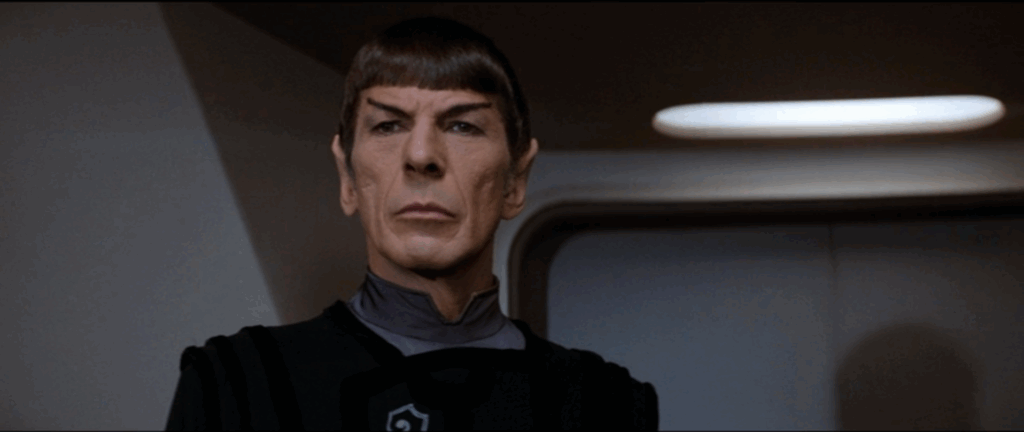
Spock starts out on Vulcan, about to receive the symbol of total logic, but stops it when he senses Vejur from across the stars. When he arrives on the Enterprise, he’s completely cold and aloof, to the point of Bones wondering if this power might have taken over his mind or caused him to consider betraying them.
But Spock starts to warm up a bit as he assumes his science officer status. He does get a proper neck pinch to sneak off the Enterprise in a space suit. It’s the mind meld that causes him to question everything he’s known. Total logic means lack of passion, desire, and drive. He realizes that the simple feeling he constantly tried to deny in himself towards Kirk would end up with a dead soul, so to speak.
Of course, old habits are hard to break, as he playfully admonishes Bones regarding the new Vejur/Decker lifeform’s emotions. “Yes, unfortunately, it will have to deal with those as well.”
He’s Dead, Jim
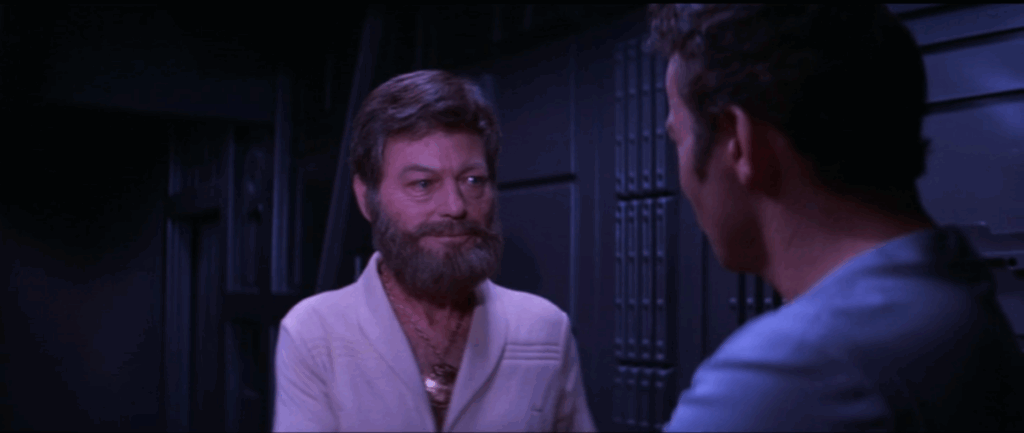
Bones is Kirk’s Jiminy Cricket at the start, then settles into his old cantankerous voice of skepticism. He beams on unwillingly given his dislike of transporters. But mostly because he was retired, claiming that Admiral Nogura drafted him. Though I suspect that if he really didn’t want to join, he wouldn’t have. He wanted to be talked into it, but I bet it was to make sure Kirk was doing ok.
He soon discovers that Kirk isn’t. As Chief Medical Officer, he can be in most briefings even if Kirk doesn’t want him there. Specifically when he and Kirk first talk to Spock and what’s going on with him. He also gently chides Kirk when Kirk keeps banging on about Warp speed even though the crew is telling him it might blow up the ship or something.
He also scans the Ilia probe and figures out that she/it is a mechanism.
Helm Sluggish Captain
Sulu is quite happy to see Kirk but informs him that Decker “doesn’t know” with a meaningful glance at the Captain’s chair. But after Kirk exits the bridge, he comments “He wanted her, he got her!” and seems not at all surprised that Kirk might end up taking back the conn.
He also pushes them to warp speed with a throttle, a new addition to the helm.
Hailing Frequencies Open, Sugar
After Sulu makes his comment, an ensign defends Decker and criticizes Kirk just muscling his way in. Uhura will have none of it, saying:
“Ensign, our chances of returning from this mission in one piece, may have just doubled.”
I’m not certain if she was absolutely right or absolutely wrong. Kirk did figure out the situation and made the right decisions but Decker sacrificed himself saving the Enterprise and planet Earth for that matter. Well, maybe “sacrifice” isn’t quite the right word.
The rest of the time she mentions any communications or lack thereof.
My Wee Bairns
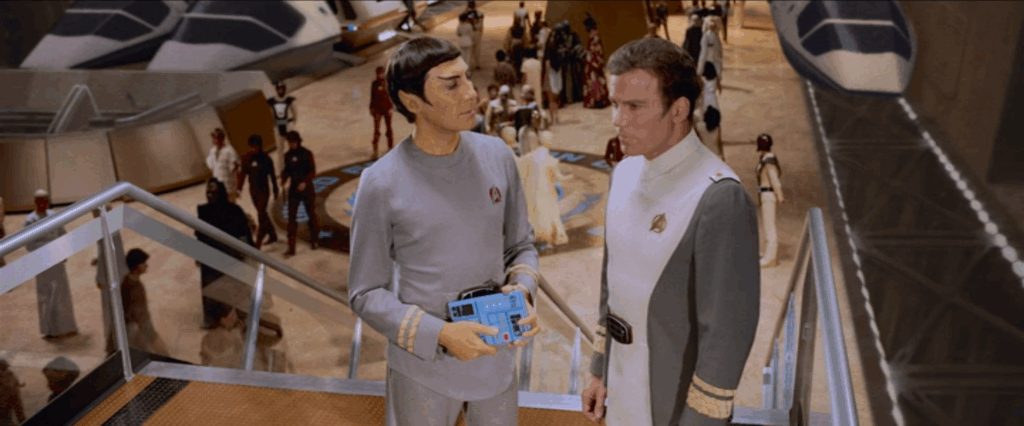
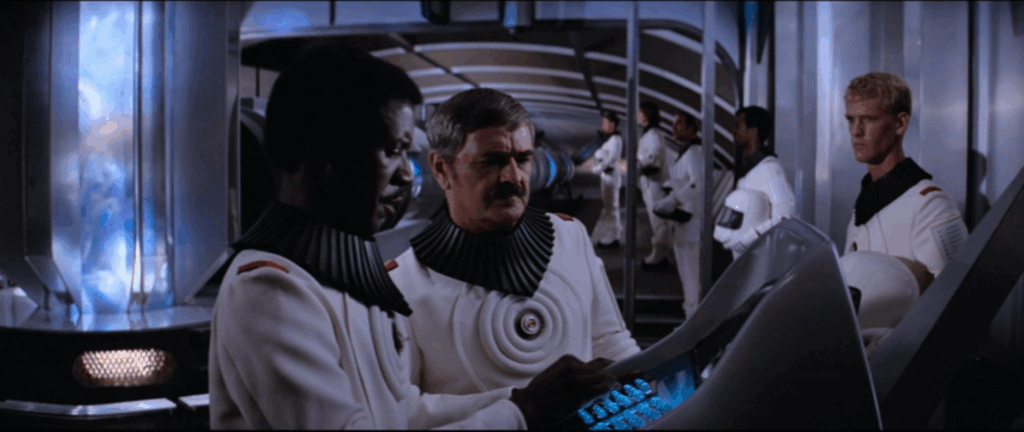
Scotty is the first crewmate to reunite with Kirk, on a space station since the Enterprise’s transporters aren’t working. Not realizing that Kirk was taking the chair, he tries several suggestions to get Starfleet to delay their departure so he has more time to get the ship ready. When Kirk reveals that he’s the new captain, his shock is immediately changed to warmth, reversing his suggestions and promises to get her out on time for Kirk.
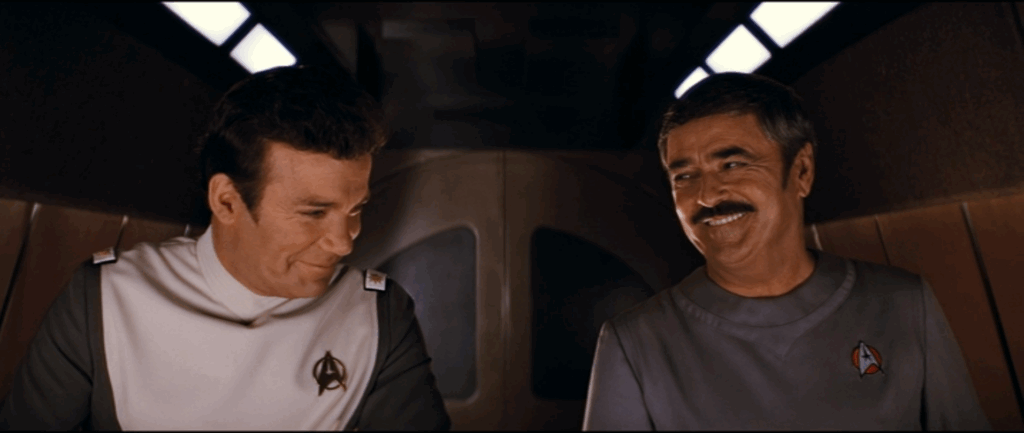
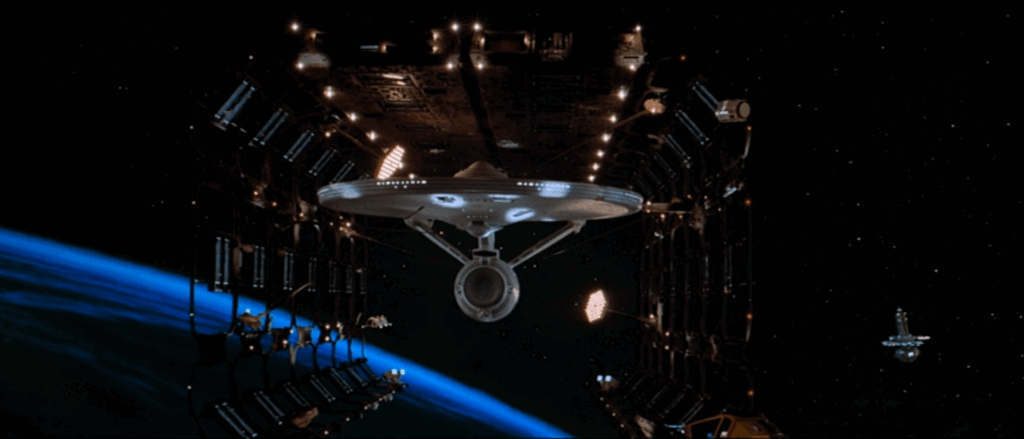
Scotty then takes Kirk on a long trip around the Enterprise in a travel pod. He could’ve gone right to the docking port but instead goes all the way around the front of the ship to give Kirk a good a proper view to take it all in. If you watch closely, Kirk realizes what he’s doing and shakes his head in playful annoyance. But he’s soon awash in the beauty of the ship and thanks Scotty for the ride.
As a viewer, seeing it for the first time and taking in the music, I thank you too, Scotty.
Nuclear Wessels
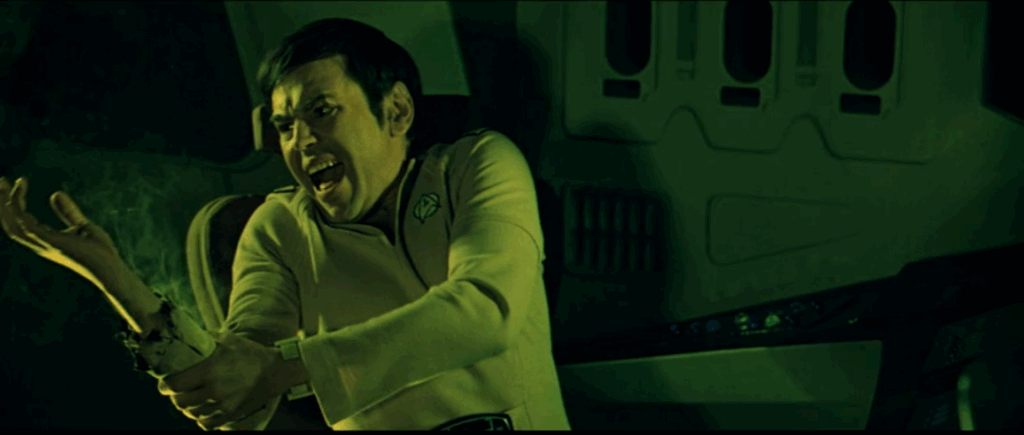
Chekov has been made the weapons officer and mans the torpedoes when the asteroid needs to be blown up in the wormhole. Later on, when Vejur attacks and some of the energy burns his hands, we get a good and proper Chekov scream.
When the first probe comes onto the ship and sends out lightning tendrils to the various consoles, including his, Decker says to not interfere. Chekov sarcastically responds:
“Absolutely I will not interfere!”
I Know That Guy
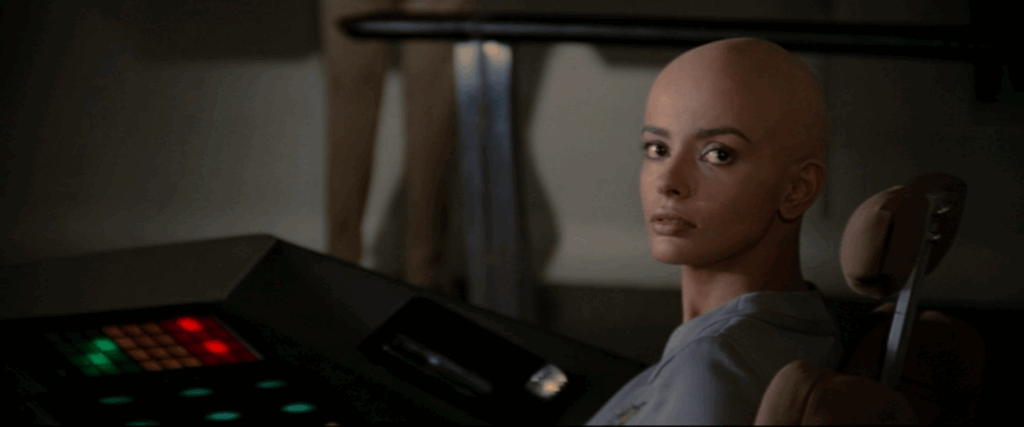
Persis Khambatta plays the bald Deltan Ilia. She had a several roles in various b-movies over the next few years. A lot of you Gen-Xers will remember her in Megaforce. She was a beauty queen in India and was probably the hottest bald woman ever in Star Trek. Fight me. Her last role was in Lois and Clark in 1993 and sadly died of a heart attack in 1998 at only 49 years old.
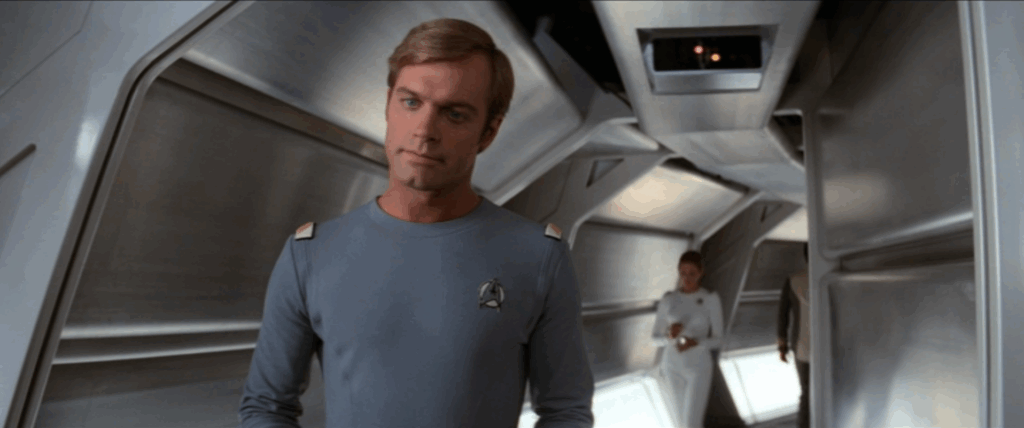
Stephen Collins plays Decker. He would go on to play the main role in the 90s show Seventh Heaven among other things. He has a checkered past and was pretty much blackballed into oblivion. I know some of these allegations on various stars turn out to be either overblown or flat out false, but not in this case. We’re better off without him in movies and shows anymore. It’s a shame, he played this part quite well.
David Gautreaux plays the commander of Epsilon station. It was a notable as he was cast in Star Trek Phase II as the Vulcan Xon, a Spock replacement. He was set for the new series that was being readied before the whole thing got scrapped in favor a movie. I guess they felt bad for him so gave him this little part. He didn’t do a lot afterwards, one wonders if the new series had gone through instead of the movie how his career might have gone.
Jon Rashad Kamal plays Commander Sonak, the science officer that Kirk meets at Starfleet command who later gets turned into a quiche on the transporter. He didn’t do much later.
Edna Glover plays the Vulcan priestess. She was in one episode of Charlie’s Angels and one episode of Mannix. That’s it. That’s her entire resume. Talk about falling backwards into immortality. She got a part that everyone will know about for decades, small though it is.
Grace Lee Whitney returns as Janice Rand. She’s been promoted to transporter chief. Given that she couldn’t be bothered to confirm it was fixed before beaming up a couple of people into mulch, I have a feeling she was moved on.
Majel Barret plays Nurse Chapel. Excuse me, Dr. Chapel. She’s a full MD now.
Finally, Mark Lenard plays the Klingon commander at the beginning, who gets zapped by Vejur along with his other ships. At this time, Lenard was the only actor to play all three major races in Star Trek, a Klingon, a Romulan, and a Vulcan.
Canon Maker
Well, the movies created a pile of canon. First off this establishes Starfleet Command as headquartered in San Francisco. I’m going to assume they’ll get the crime and homelessness solved by the 23rd century. Maybe. This is something that will remain constant, not only in later movies, but also into the Next Gen era as well.
During the original series, it was accepted that Spock was the only Vulcan in Starfleet. With Commander Sonak, we see that has changed a bit. It’s been generally accepted in various media that the crew became famous due to the five year mission. Even in Amok Time, T’Pring mentions that Spock has become a legend among their people, even before the mission was completed. So I would assume he inspired other Vulcans to join Starfleet.
Refits are now canon. I’ll get more into the details of the Enterprise in a bit but taking an older ship and refreshing her design from the ground up is now a thing. And what a refit it is. The movie version of the Enterprise takes a perfect basic design and refines it to an absolute thing of beauty. No Trek ship has matched it yet. Once again: Fight me.
The uniforms have changed drastically and have various colors. What didn’t change was the rank insignia on the sleeves. This would be the last time the rank would match what was on the show. Engineers wear some sort of protective suits that will be the only uniforms that carried over into the subsequent movies.
This would also be the first time the idea of the first officer and science officer would be two different crewmen.
The warp core is shown as a large vertical tower for the first time. From now on, this is how the main core would be depicted in nearly all the shows.
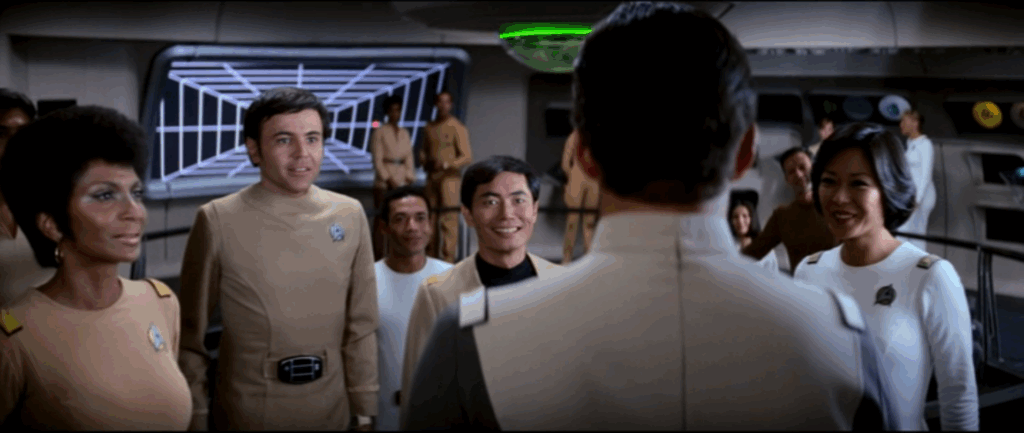
Uhura, Scotty, Sulu, and Chekov have all been promoted in the intervening years, mostly to Lieutenant Commanders. Bones is now a full commander.
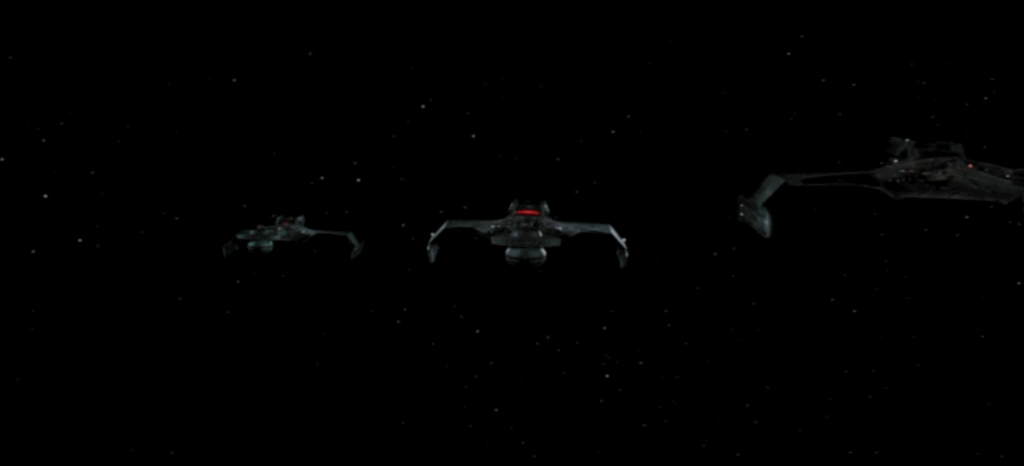
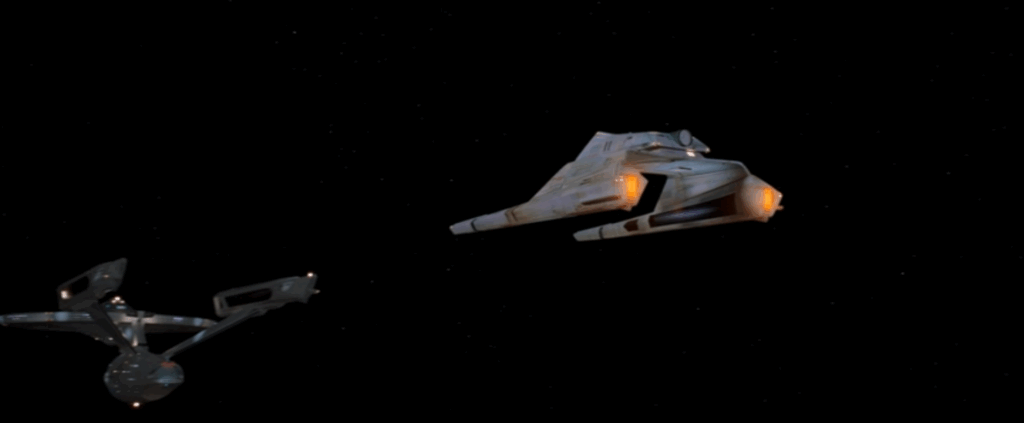
Klingon cruisers have been updated and look awesome. We see that their photon torpedoes are shot out an opening under the forward bridge module.
Canon Breaker
The uniforms may have maintained the rank consistency but the colors are all over the place. Gray/blue, light beige, brown and white. What do they mean? Who knows. None of it has any rhyme or reason. On top of that, the delta insignia has a ring around it filled in with various different colors. White, red, blue, gold, and I think I saw a green in there.
Plenty of hate goes to these uniforms which I don’t completely hate but certainly agree with their blandness. The exception is Kirk’s admiral uniform which is damn cool.
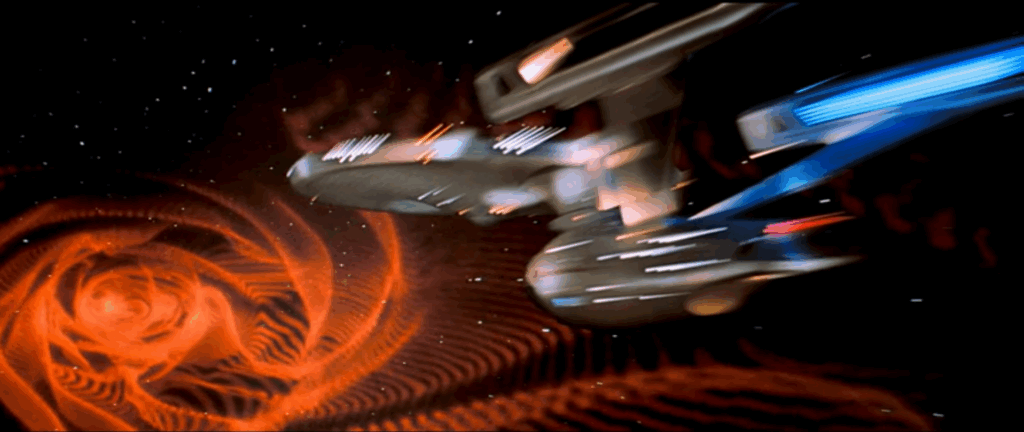
Wormholes are usually naturally occurring phenomenon that might send you thousands of lightyears across the galaxy. They are typically unstable and so not used, DS9 notwithstanding. They are not created because your warp core intermix recipe is running rich.
We never sent up a Voyager 6 in the 20th century. Thank goodness, apparently.
Klingons. So is this a canon maker or breaker? For the first time we see Klingons with ridges. Interestingly, maybe because we see the ships first, there was no question that these were indeed Klingons. It was accepted but truth be known, this is not exactly what Klingons looked like on the show. They would look this way going forward so I guess it sets new canon.
We also for the first time hear the Klingon language, though it wasn’t quite right. It would be Star Trek III before the Klingon language would be figured out, to the point that a language book would be published.
Technobabble
The Enterprise has several changes to it. The hull is far more detailed instead of the pure smooth surfaces. The nacelles are now rectangular with brilliant blue lines on the interiors. The secondary hull is slightly more bulky but the biggest changes are the sensor/deflector dish which glow blue or orange/white alternately. Typically it’s blue when they are in warp unless the special effects guy forget to change it.
The photon torpedo launchers are now prominently mounted on the top of the secondary hull embedded in the saucer pylon, with two launch bays clearly shown.
Speaking of torpedoes, they not only glow orange now but also have rays of light shooting out in various directions. It’s a great look and nearly all the shows would do their best to imitate the same look, though not nearly as impressive. Don’t blame them, TV budgets.
The interior has changed drastically as well. The bridge is full of consoles and monitors that look a bit more varied to convey a sense of specialty for different stations. The weapons console is now on the outer ring of the bridge rather than being fired from the helm/navigation stations in front of the captain’s chair.
Speaking of which, the chair looks a heckuva lot more comfortable. It retains the various controls on the armrest but the most useful improvement it added was the ability to fold the armrests over the legs to hold the captain in place, much the same purpose a a seat belt. That makes so much sense given how often Kirk was thrown around the bridge. Why they didn’t do this for all the other seats, you tell me.
Another interesting feature is the very large cargo bay that is at least three stories tall. The recreation area may be 4 to 5 decks high and has a lot of entertainment options, as well as the added benefit of being able to gather the entire crew to address them all in person or have a blow out Christmas party.
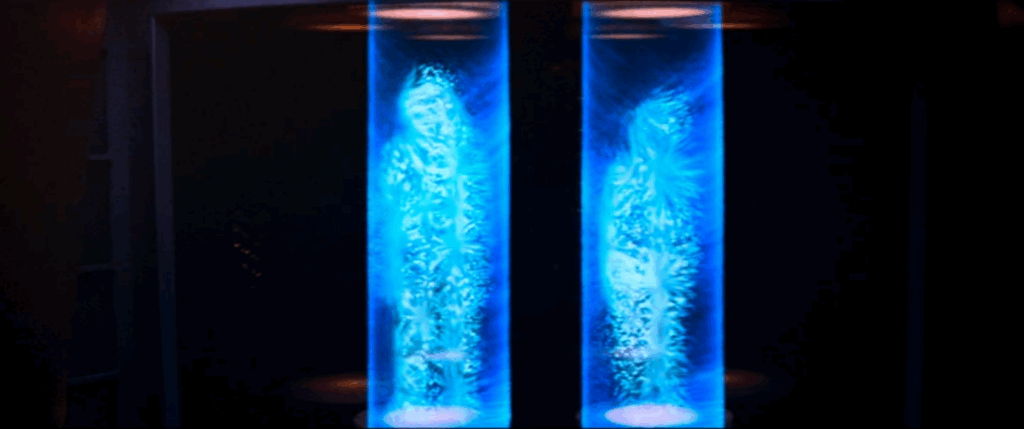
Transporters still have the sparkling yellow effect on a person materializing but the entire area they appear in is surrounded by a blue cylinder of light as well.
Sick bay monitors are far more extensive now, including a scanning table that sees inside the body down to the microscopic.
Communicators are now in the form of wrist watches. This makes a ton of sense as a crewman would always have it on them and not have to worry about losing it, as happened on the show quite often. For some reason, that was abandoned by Star Trek II as they went back to the flip phones.
Library Computer
Deltans are introduced as a race and never seen again. They have a very telepathic aspect to sex which pretty much overwhelms a human, hence the oath of celibacy.
The Will Decker and Ilia characters were most obviously repurposed in TNG as Will Riker and Deanna Troi. Ilia was a Deltan, and Deanna was a Betazed and both had a mental talent, and both had past relationships that both Will’s walked out on for their careers.
The movie itself has several different versions of varying lengths. I personally find the director’s cut the best, especially the newer 4k version that polished the added special effects that were first put in the DVD release back in 2000. Some of the edits are a little odd and I miss them, mostly at the beginning of the movie. But the removal of some of the longer travel scenes through the Vejur cloud and then over Vejur itself is shortened to just the right length.
This is one of the last movies to have an overture at the beginning, a lost art.
This is the only movie where everyone is part of the crew, including Chapel and Rand. Both Grace Lee Whitney and Majel Barrett would appear again here and there, but none of the movies had them actually a part of the crew.
Scotty taking Kirk to the Enterprise on a travel pod happened simply because the transporters were broken. But it was such a big event in-universe that the lore around it became famous, much like his five-year mission. Captains taking command of a ship for the first time would then arrive on the ship using a shuttle or pod rather than beaming on. It became a tradition. You can see this in TNG when they show Picard taking command in the time travel finale and in a flashback in an episode of Voyager which showed Janeway taking command of Voyager.
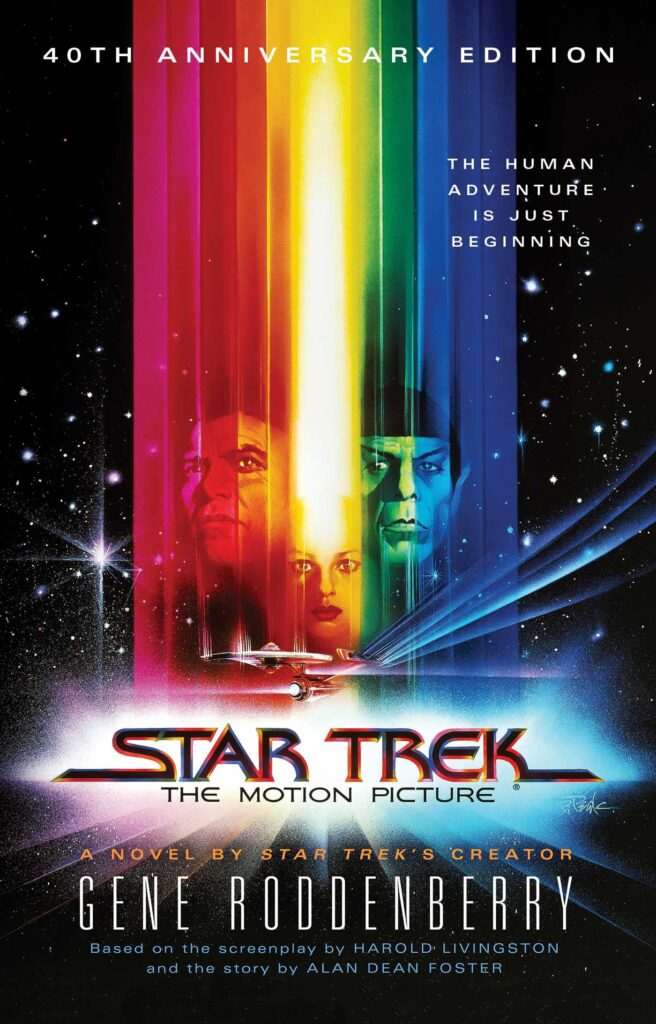
A Novel Approach
The novel was written by Gene Roddenberry himself. Some believe it was ghost written by Alan Dean Foster but this is incorrect. The tone of the book is a little weird. There’s a lot of inner monologues by various characters, particularly Kirk and his thoughts really don’t match what you think of when you think of Kirk.
There were a few good expansions, though, that I’d like to highlight and a few I didn’t like.
The forward by Captain Kirk is a prescient discussion on the differences between Starfleet humans and civilians whom he calls NewHumans. It reads today as the difference between people who actually have been in the world and learned to deal with the realities of danger and those who live in a paradise untouched by problems.
He even mentions that he embraces the male surname, implying that gender is more of a thing of the past for those who live in their bubble. I swear this is all in there and while definitely open to interpretation, it seems more relevant now than when I was reading it back in the eighties. In fact, back then, I found the whole thing boring and irrelevant and now it’s at the very least, an interesting curiosity.
When the Klingons get smoked at the beginning, it is specified that Epsilon 9 had a probe snuck in there to film everything. That makes sense.
Kirk was in Egypt when he got the news and headed back to Starfleet command immediately. How he found out was odd to say the least. Apparently personnel ranked Captain on up have an implant in their brain that Starfleet can activate to communicate images directly into a person’s brain. So when the Klingons are getting attacked in the movie, in the book that scene is happening all in Kirk’s brain. It did happen, of course, but it is presented to the reader by way of Kirk’s reaction to it.
Commander Sonak is widely known to have been one of the two people turned into transporter sludge. But who was the other person? In the book, Kirk is met up with Lori Ciani, a vice-admiral who had a relationship with Kirk but they had broken it off. They were still friends and had a lot of affection for each other. It was she who got the meeting with Admiral Nogura and we get to see the entire conversation Kirk has with the Fleet Admiral with Lori’s support. It was that conversation that got him back aboard the ship.
She was going to surprise him, perhaps to see him off and was the other doomed person on that transporter pad. Indeed, in the movie, it seems to be a female voice screaming in pain. So that gave the accident even more weight than Sonak’s death already provided.
When Spock senses Vejur on Vulcan, he also hears Kirk’s thoughts and reactions as Kirk was receiving the transmission. This is explained by the bond they share as friends. Spock can sometimes sense Kirk from distances greater than he can from others he’s not as close with. Interesting idea but I’m going to call BS on that one.
It is confirmed in the novel that Will Decker is Matt Decker’s son. It’s always assumed in most fan circles and it’s difficult to say whether or not novelizations are canon or not since sometimes they differ from the movie. But I say that since the movie was non-committal on the matter, the novelization in this case could be considered canon.
Ilia’s and Decker’s history is a little more explored. While they did have a relationship, Decker bought that headband seen in the movie without realizing its significance. He just thought it was a nice piece of headwear, but it turns out it was basically a marriage proposal. He beat feet as soon as he realized it but did care about her.
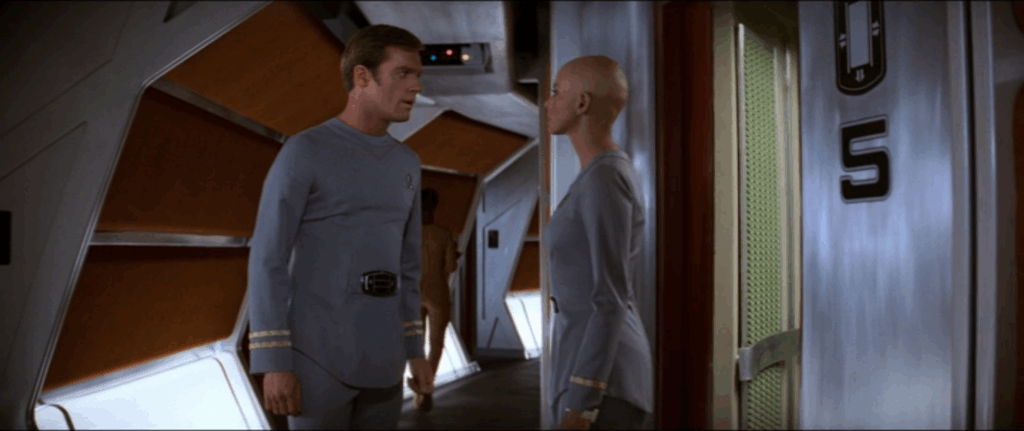
When trying to break through the Ilia-probe to get her memories to come out, he did more than just put the headband on. The two have sex. Redlettermedia mentioned that ST:TMP is the horniest Trek ever. While it’s subtle in the movie, it’s not in the book. Gene was a well-known horndog.
In the movie, the phasers are said to be run through main power, i.e. the warp core, to increase their power. That’s great except if I had a nickel for every time the mains went off-line I’d be a millionaire. It’s a terrible idea and the movie even proves it. In the novel they actually address it, with Decker getting dressed down by Kirk for not changing that design.
It turns out that Decker had been overruled by Starfleet so instead he decided to just do it after they left Spacedock and he could do whatever he wanted with the ship. He had the plans all ready to go and Kirk had to eat a little crow when he was presented with them. The moment did go a long ways towards cooling their animosity towards each other though.
The rest of the book mostly follows the movie with minor differences in dialogue and better understanding of character’s mindsets here and there. For instance, Decker was rightly pissed when Kirk took over but by the time the Enterprise left spacedock, he was somewhat rooting for Kirk to succeed. Uhura did stick up for Kirk as in the movie but privately she was a little worried that he was still the same Captain she knew and was a little troubled by him muscling into the center chair.
All in all, it’s not the best novelization but it’s also a fairly quick read and I have incorporated a few ideas into my head-canon whenever I watch the movie.
What’s The Score?
Jerry Goldsmith came up with an iconic score that damn near borders on perfection. The main theme was so good that it was appropriated for The Next Generation opening and used again for Star Trek V. However, it did not come without some false starts. Initially the score was presented to Robert Wise, who thought it sounded too much like sailing ships. He’s not wrong, the main moments do bring up more images of 18th century sailing ships than starships. Here’s a sample of the road not taken:
So Jerry went back to the drawing board and changed sections. You’ll hear some very similar bridges and asides, but the main theme is much more bombastic. Here’s the intro and the Klingon theme. I love the little preamble leading into the main theme, I understand why TNG didn’t use it but it really leads you in nicely.
Then you have Ilia’s theme which makes up the overture at the beginning. It’s a wistful, longing theme which fits perfectly with the lost love angle of Ilia and Decker.
I mentioned way back in the TOS review of And The Children Shall Lead that Craig Huxley developed an instrument called the Blaster Beam. It was used to great effect here. Vejur’s theme sounds both alien and ominous.
Just a great set of musical cues for this movie and really redefined what Star Trek could sound like. I’m just going to say it, this soundtrack is the best of all the Trek movies. I mean all. Yes there are other soundtracks that are excellent in their own right, but this is grand, epic, and has no bad tracks. It’s just sublime.
What It Means To Be Human – Review
For the longest time, it was generally agreed that Star Trek II was the best followed by IV, VI, III, I, and finally V. While last place hasn’t changed, the other odd numbered movies have had a lot of re-examination. For me, The Motion Picture may have become my favorite. It’s not that Khan has lost anything in my eyes, but I firmly believe that TMP has the most in common with the original series than any other.
Maybe that’s because the story is really a re-telling of The Changeling. This however, has a budget and definitely more to say. We have Kirk dealing with what makes him happy and the questionable things he does to get back to it. We have Spock having realizations that picking one heritage over the other isn’t necessarily the best idea. We have the band getting back together.
And we have the updated Enterprise. Holy crap, I know I said it above but it’s damn impressive. It’s absolutely beautiful. On a side note, last year I ordered the Tomy 1:350 scale replica of it. It should arrive sometime in November, and I’ll do a video on the unboxing and such. The lighting, the texture, it’s all chef’s kiss perfection.
The interiors all have such detail. It’s impressive what production designers can do with a big budget. The engine room is gorgeous, just pulses with power. The bridge loses nothing that was established in the show, but adds a tremendous amount of detail. Consoles slide in and out to allow access but also to surround the operator to give them far more versatility.
There are so many good moments that set up the universe and where everything is at. For instance, the transporters being out forced Kirk to come aboard using a travel pod. You can see Kirk and Scotty clearly through the window and so you get a very good idea exactly how big the Enterprise is. It’s not like we didn’t have a pretty good idea from the show but this was visually represented for the first time. The Enterprise looks massive in comparison. You also get to really drink it in, a coming out party as it were.
More importantly however is that now that we know how big the Enterprise really is, when it comes next to Vejur and looks like an ant, the viewer really understands just how big this thing is. It’s a nice little set up and pay off.
All of them coming back changed from their time off really makes them work to get back to the crew they were on the show. While Sulu, Uhura, and Chekov still get short shrift, at least Scotty gets a few moments with Kirk and we see the issues he has to deal with in the engine room.
Bones has the quickest turnaround. He beams aboard with a giant beard and even more giant 70’s medallion on his chest (remember those?) but really all it takes is for Kirk to sincerely just tell him “Dammit Bones. I need you. Badly!” and he relents.
Spock, however, returns completely aloof. It was like whatever part of him that enjoyed being with humans, and make no mistake he does, had been extinguished. He told himself that his human part was shameful, he wanted to purge that completely. Something that is simply a rite of passage for most Vulcans was an attempt to kill a part of himself. Maybe it was to try to get Sarek’s approval, his people’s approval? That’s pure speculation on my part.
So when he comes back, it feels like he’s failed utterly and any friendly interactions with the crew would confirm that. But he can’t quite NOT feel. Kirk’s moment to put just the right amount of intensity in his voice when he says, “Mister Spock. Welcome aboard.” gives Spock pause.
His arc is completed when he realizes what the final form of what he thought he wanted looked like.
Then we have Decker and Ilia’s unrequited love arc, they are able to finally come together at the end, at least it’s implied. Since Deltans join minds in marriage to possibly become each other, this makes a lot of sense how it ended.
Decker wanting to be Vejur, like Kirk wanted to be Captain is my only nitpick. I just never saw anything in his interactions that had him wanting to become a god or whatever he became. Suddenly, he just wanted it like no other thing and I’m not sure why.
As a kid, I remember being fairly disturbed by Decker getting discorporated at the end. At 10 years old, that was nightmare fuel. Some things just hit you weird when you’re little. Of course, the big one for all Gen-Xers was the chick in Superman III getting turned into a robot. Brrrrr.
Vejur being an old NASA probe was a great twist though it might’ve hit a little harder if hardcore Trekkers hadn’t seen The Changeling. Still, the themes of belonging and purpose are much better illustrated here than The Changeling. That episode was basically about defeating an intergalactic Roomba. Kirk not being where he belongs as an Admiral. Spock not finding where he belongs on Vulcan. Vejur trying to find his purpose. It’s all there.
Add to that the great special effects that hold up to this day, a great score by Goldsmith, and Wise’s expert direction and I find this movie has more upon rewatch than any of the other Trek movies. A bonafide classic.


