


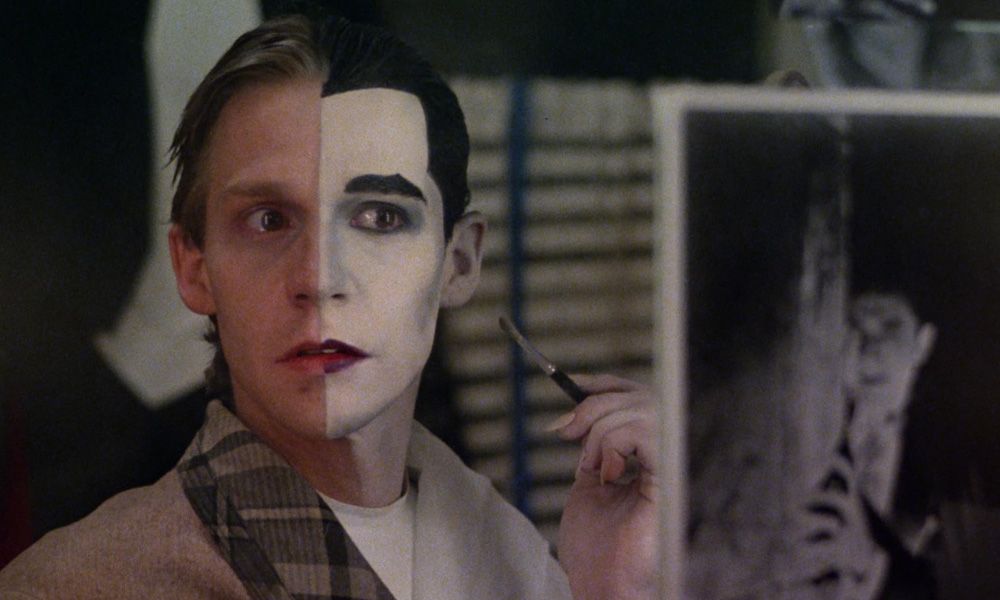
Fade to Black (1980) is your average Outposter biopic. A cinephile is inspired by the films he loves to murder the people who annoy him. Alas, the idea is greater than the reality. Frankly, the main character is a bit of a twerp who needs to be bullied…
Fade To Black
Fade to Black was a labor of love for director Vernon Zimmerman, and it shows. It seems like one of those movies a director needs to get out of his system to move on to bigger and better things. Did Zimmerman move on to bigger and better things?
If writing Teen Witch (1989) is bigger and better, then yes. After all, Teen Witch did star Zelda Rubinstein. Regardless, Zimmerman was in there swinging. That counts for something.
As things stand, Fade to Black was the film Zimmerman built to after laboring in the drive-in movie market for a decade, which films such as Unholy Rollers and Deadhead Miles.
Furthermore, Fade to Black did not flop. It brought in $15 million on an $1.8 million budget. If Kathleen Kennedy got an 8x return on investment on all her films, she never would have gotten fired…any…day…now…
Ultimately, Fade to Black is Zimmerman’s love letter to his favorite movies, written in his own weird way. It contains snippets of various films cut into its story and references others with movie posters or homages. Such films include Creature from the Black Lagoon, Mark of the Vampire, White Heat, The Public Enemy, Horror of Dracula, Night of the Living Dead, Kiss of Death, Casablanca, The Mummy and Halloween.
Fade Away To Black
Dennis Christopher stars in the main role. Chrisopher is probably most recognizable from his role as Eddie Kaspbrak in the 1990 miniseries It. If extenuating circumstances didn’t make it so unlikely, one would guess Christopher was the illegitimate son of Roddy McDowell. They share similar mannerisms and features.
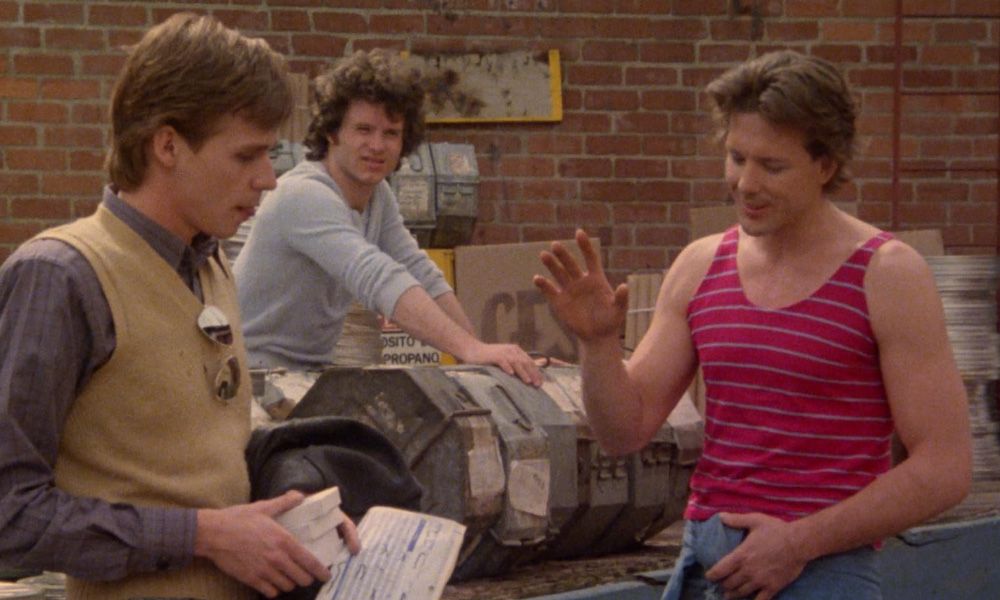
Christopher is sufficiently twerp-y in Fade to Black. He geeks his way from watching movies in his bedroom to a dead-end job at a film warehouse. When he is not put upon by his invalid “aunt,” he is put upon by his coworkers and boss.
When Christopher stumbles upon a Marilyn Monroe lookalike, he gets a fleeting glimpse of living out his pie-in-the-sky fantasies, only for the possibility to crumble when the Marilyn Monroe lookalike goes out to eat with the guy with the most punchable face from Thirtysomething: Peter Horton.
Christopher has a psychotic break, dresses up like his favorite movie characters and starts killing people. He also has a wank, which is as unnecessary as it sounds. Things like that hobble Fade to Black. A movie like this requires a certain amount of sympathy, or at least charisma, for the main character, but the viewer is mostly grossed out by him.
Zimmerman’s direction does not help. His setups don’t particularly “feature” Christopher and his performance. Christopher is blandly in frame, with the camera doing minimal storytelling in the way it presents the players.
It all culminates in a drawn-out death scene on top of the Chinese Mann Theater that is probably supposed to reference King Kong, except everyone felt something when King Kong died. In Fade to Black, the feeling invoked is mostly good riddance…
Fade To Always Bet On Black
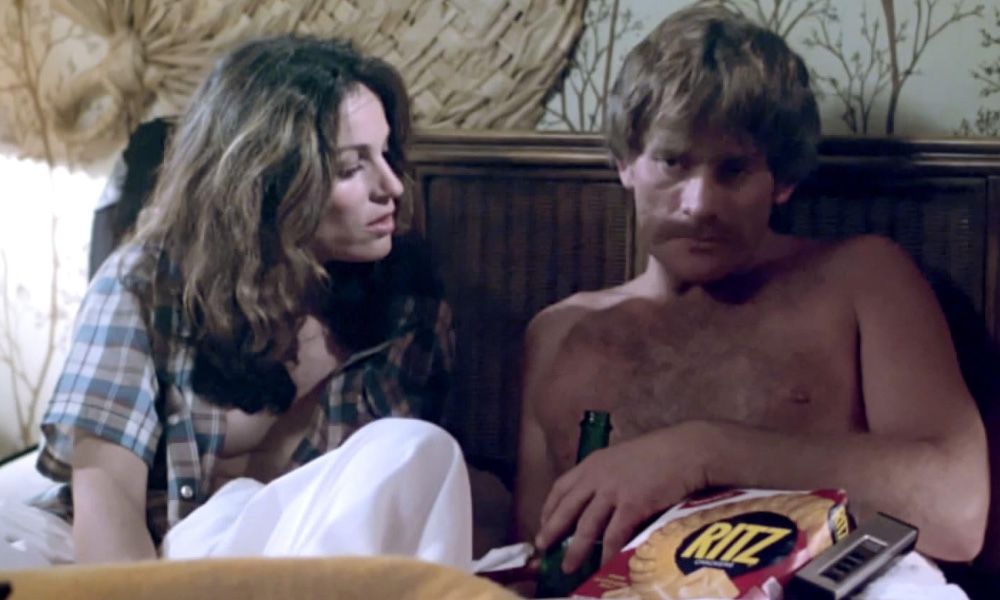
A couple familiar faces pop up in the film. Tim Thomerson and Gwynne Gilford are shoed-in flatfoots that flit about the edge of the movie like moths around a lightbulb. Thomerson inexplicably plays harmonica and snorts cocaine. Gilford, who we met on Beware The Blob was pregnant with Chris Pine during the filming of Fade to Black.
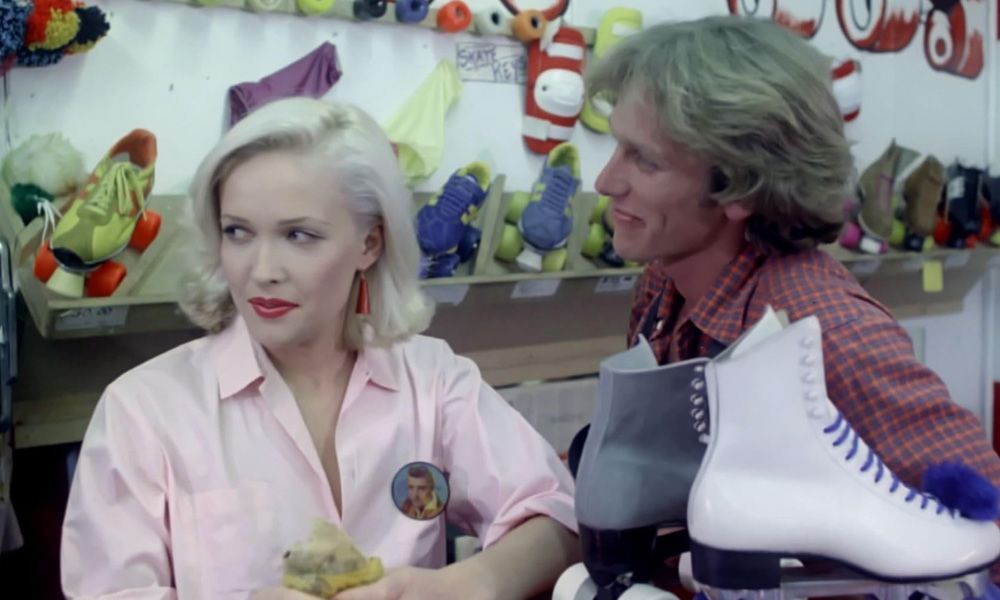
Linda Kerridge plays the Marilyn Monroe lookalike. Kerridge is an Australian actress who got into movies because…she looked like Marilyn Monroe.
I don’t see it, personally. Kerridge is blond, but she doesn’t project the playful buxom bombshellness of Monroe. Kerridge projects Aussie. Ana De Armas projects more Marilyn Monroe, and she’s not even blond…or buxom.
The most fun appearance of a recognizable face in Fade to Black is a normal-looking Mickey Rourke, as a workplace bully. Rourke absolutely dripped with charisma back in the day. He steals the movie whenever he is onscreen without even trying.
Rourke probably could have hit the Brad Pitt level if he didn’t flame out. I recently tried to watch Hunt Club, another spin on The Most Dangerous Game, with Mena Suvari and Casper Van Dien. Believe me, I know exactly what I’m getting into with a Van Dien movie, but I still gave up on Hunt Club in short order. Rourke appears in the movie, as well, which made me pretty sure Rourke would appear at my birthday party if I paid the SAG minimum.
Fade To The Black Hole
Fade to Black was most popular in France. That explains a lot. Today it is considered something of a cult film. It was interesting to check out, but it doesn’t know what it wants to be, and that makes it an uneven watch. Is it a psychological study, a thriller, a slasher…or even a spoof? It is kind of all of those things and disappears up its own backside in the process.
By the time Christopher pranced around in a prince outfit while feeding Kerridge drugs like communion wafers, I was waiting for it to be over. It occurred to me why Zimmerman had the characters taking drugs. It was the only way for their actions to make sense.
Maybe Zimmerman should have referenced only bad movies in Fade to Black. Then it would all make sense. Instead, Zimmerman referenced movies we’d all rather be watching than the one he put before us…


