



It has been eight years since Kathryn Bigelow’s last feature, Detroit. She’s back, this time bankrolled by Netflix, with A House of Dynamite. It is billed as a high-stakes and time-sensitive thriller, telling the story of an incoming possible nuclear strike on American soil and… boy is this one going to divide opinion!
Why? Well, there is no way to tackle this without spoilers, so consider this a SPOILER WARNING.
A House Of Dynamite
The film opens relatively quietly in Alaska, where Major Daniel Gonzalez (Anthony Ramos) and his team are roused from a humdrum day by the sudden notice of an unidentified ICBM flying over the western Pacific towards the US.
It seems to be following the pattern and trajectory of North Korean missile tests, but worryingly, no satellites detected a launch in North Korea. Or Russia… China…Iran…
When the missile then assumes the flight pattern of something very different, it is clear this is not a test, and a full-blown national emergency develops. The target list is narrowed down as governmental responses swing into action.
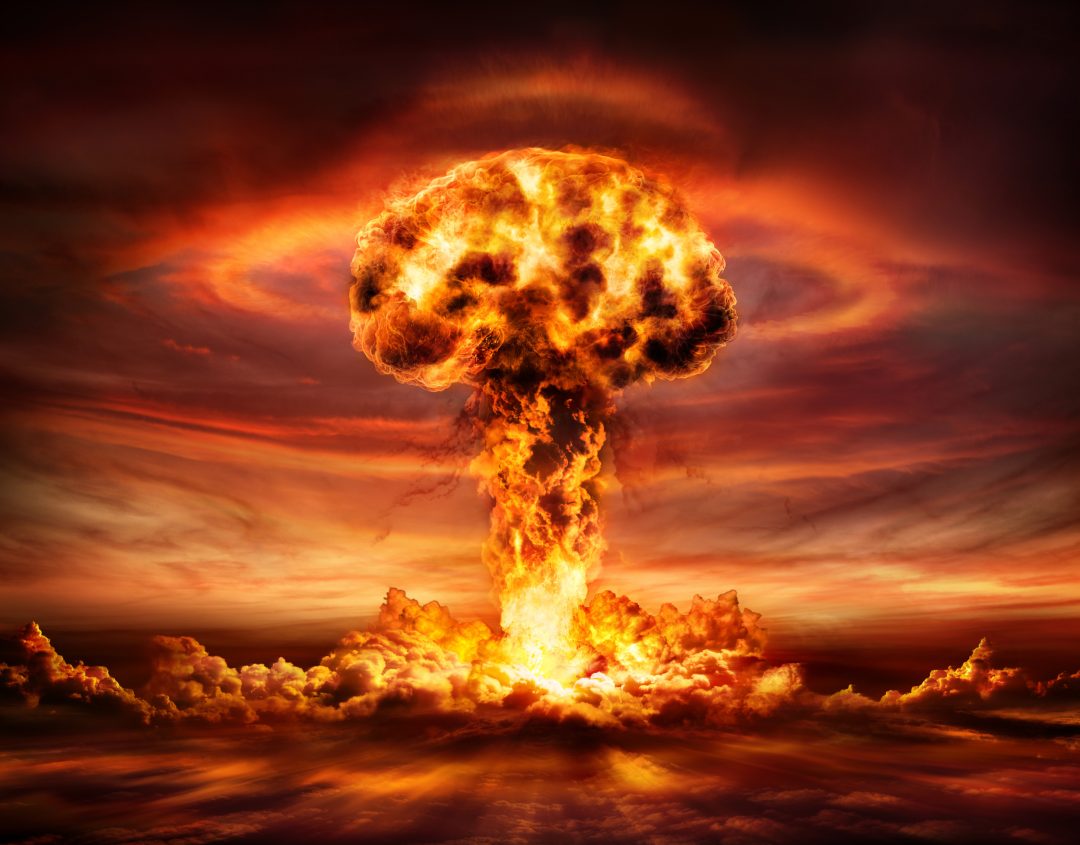
It turns out the target is Chicago, and the entire US government has less than twenty minutes to figure out what’s happening, who’s responsible, and how to respond.
From this point, the narrative unfolds from multiple different vantage points, and it is here where Bigelow’s project makes the first decision that is likely to divide audiences.
A House Of Division
A House of Dynamite uses a Rashomon-style structure, replaying segments from different angles. This builds a sense of overlap, which is effective in making the crisis feel real. It also means you are presented with one view of what is happening, and then the other view challenges your perception, or places an assumption you made into doubt when things are viewed from the other point of view.
However, it does mean that anyone uncomfortable with uncertainty is likely to find it an unpleasant experience, and some may be frustrated by a feeling of repetition around the main thrust of the central story. This is where you start to realise that this film is not here to make friends, and doesn’t care about your feelings. This could leave you feeling discombobulated by its crisp and precise coldness.
The three main viewpoints are the White House Situation Room, led by Captain Olivia Walker (Rebecca Ferguson), Strategic Command, and the U.S. President himself (Idris Elba).
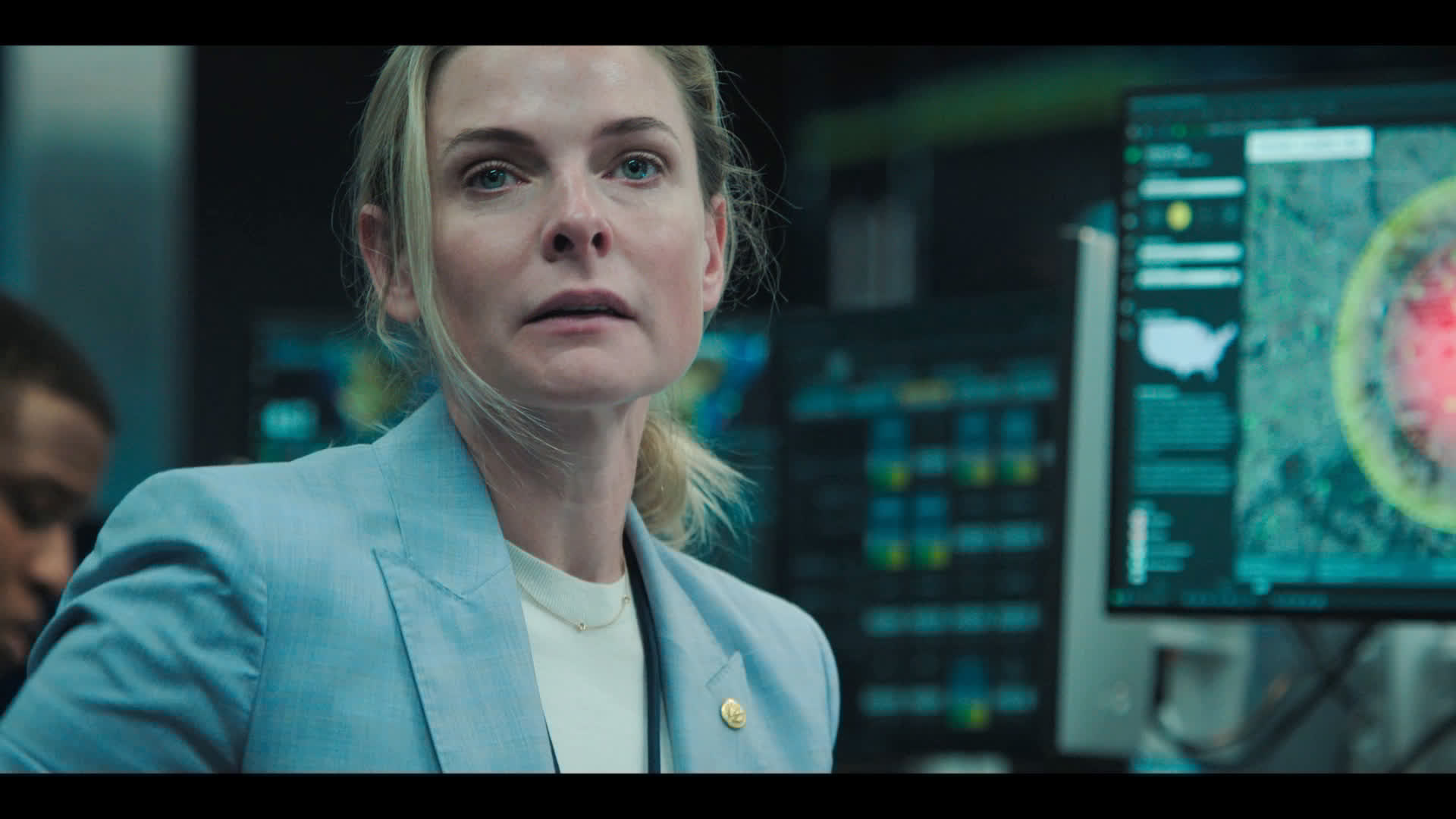
So almost the entire action is set in offices, war-rooms and command centres. This means the real tension comes not from explosions but from decisions, delays, communication breakdowns, and palpable human uncertainty.
It amplifies the unease and builds, so it is not good for your resting heart rate. Very rarely does it give the viewer the comfort of the full picture, meaning you feel as uncertain and conflicted as the characters on screen.
Some people will absolutely hate this.
The closer the missile comes, the more you see the attitude and even body language of all of the characters change, some with some tragic outcomes.
Rebecca Ferguson is steady as Olivia Walker, balancing a calm professional exterior. Alongside her at the White House is Gabriel Basso as the nervous deputy national security advisor, becoming exhausted under the unexpected pressure.
One criticism is that, just when things should be really getting interesting for these characters, the viewpoint switches.
Idris Elba remains off-screen for the first two viewpoint segments, as his US President character was out at a public engagement when the crisis began and can only join the calls via voice as his limo frantically races to meet Marine One.

His presence is felt even when his character is off-screen, and his performance is strong, showing hesitation and uncertainty without appearing overly weak, just very aware of how his next decisions will have world-changing consequences. Again, if you like your Presidents more Independence Day / Whitmore rather than heartbreakingly human, then this will also likely annoy.
The supporting cast includes Jared Harris, Tracy Letts, and Greta Lee. High-tension realism replaces over-the-top heroics. No character saves the world; instead, you see a system under the ultimate pressure, complete with failings that feel uncomfortably real at times.
That is the word I would stick with. Uncomfortable. This is an uncomfortable watch, not enjoyable. It focuses on process with associated human cost, giving weight to the idea that big decisions are made by people under extraordinary pressure, and they might not always be morally, strategically, or emotionally on the high ground.

There are no heroes or villains. There is just institutional machinery and the humans operating within it.
There is no sabre rattling here, so depending on your personal investment, you may find it chillingly too real, or weirdly cold and uninvolving
A House Of Endings
When it ended, my immediate reaction was “what the fuck…” but then I realised I had been sitting there for five minutes staring blankly at the credits rolling as I processed. The ending is the very opposite of cathartic. It doesn’t deliver closure.
Some people have complained that it doesn’t have an ending. I think it does, but it’s revealed after consideration.
The ending is the President’s decision and action. The final scene is the epilogue. Is it a good outcome? By presenting it the way A House Of Dynamite does, that ball is entirely in your court.
If you favour more character-driven stories, or expect an action-packed finale with fireworks and clear resolutions, this will feel deeply unsatisfying. The film isn’t easy or comfortable; it’s intentional.

In the end, it simply poses you the same question the characters are faced with. Is the whole world now not even a house of cards that could tumble, but a house of dynamite, and it only takes one rogue actor to light the fuse?
I cannot say I enjoyed this film. It is not that type of experience. I would say that it is worth watching, simply so you can form your own point of view and then argue with people about it. It’s that kind of thing. It is certainly going to divide audiences, and as it is not a piece of entertainment in that manner, it is hard to score.
It may haunt you or enrage you more than it entertains you. And perhaps that’s precisely the point.

