


Awards season is supposed to be a celebration of art, with the ego of those involved given a thorough stroking, all while wearing couture that costs more than a three-bedroom house in Normo Town.
Instead, thanks to the BAFTAs earlier this week, it turned into a masterclass in how little the film industry actually understands the very causes it claims to champion.
The hypocrisy is delicious, and the weakness is revealing.
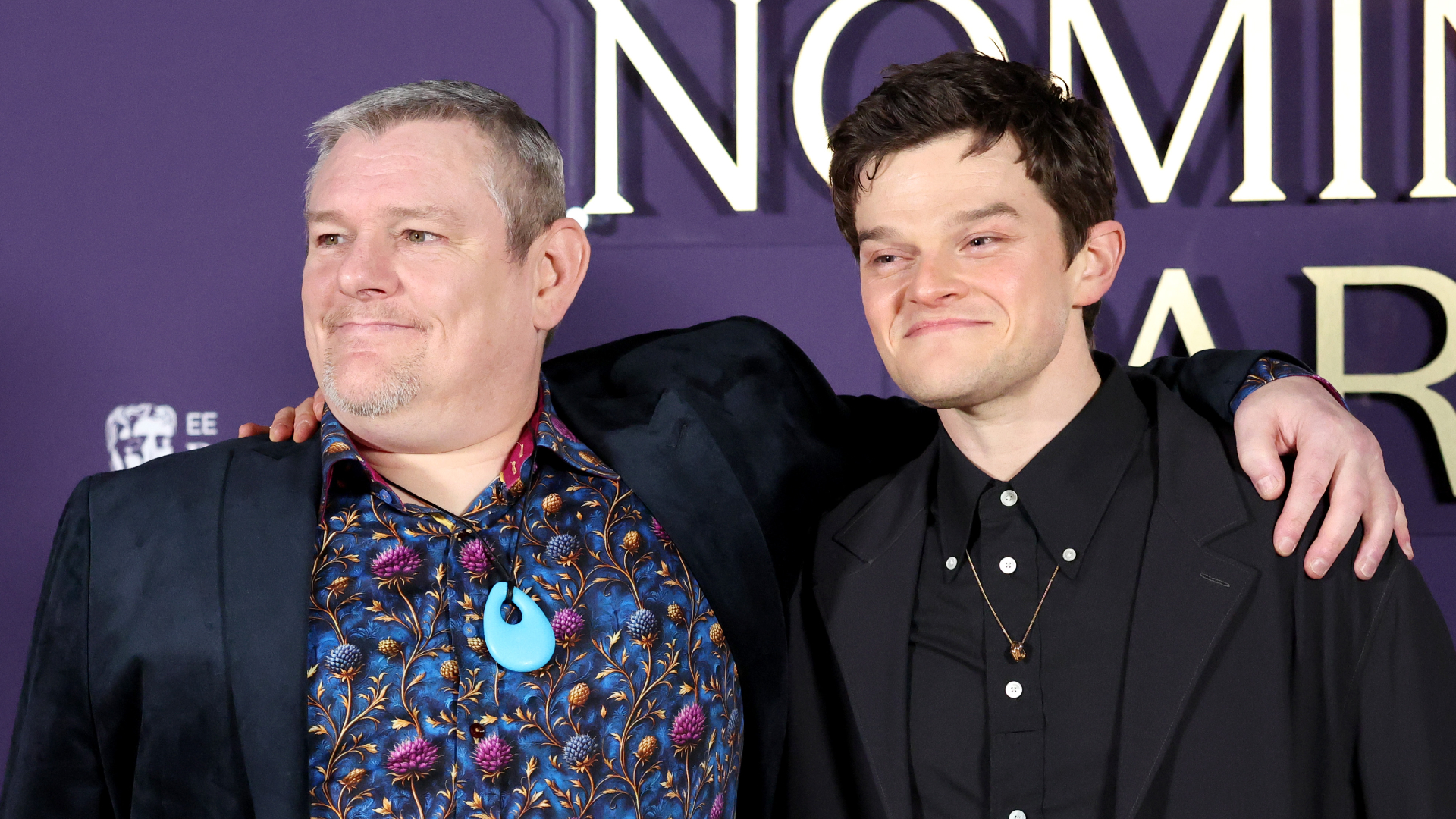
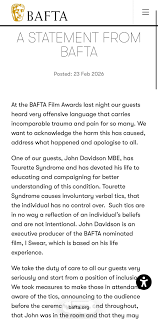
As everybody in the known world is now aware, one of the big winners at the BAFTAs was I Swear, a biographical drama based on the life of John Davidson.
Davidson is arguably the world’s most famous sufferer of Tourette’s syndrome. This syndrome renders the sufferer unable to control tics and verbal outbursts. It is a debilitating condition that has vast impact on the lives of those afflicted.
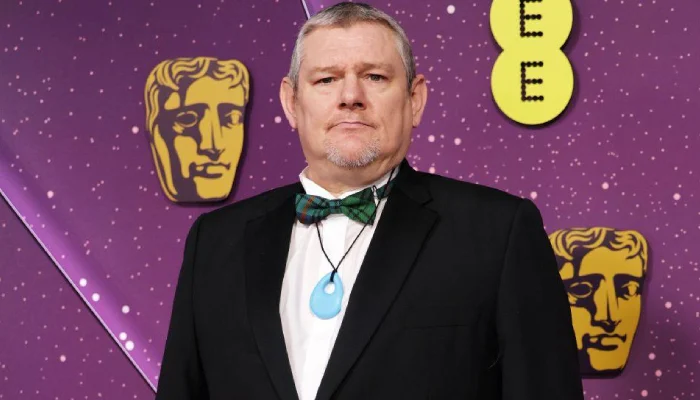
During the ceremony, Davidson was in the audience and the event was always liable to trigger the condition… and it did.
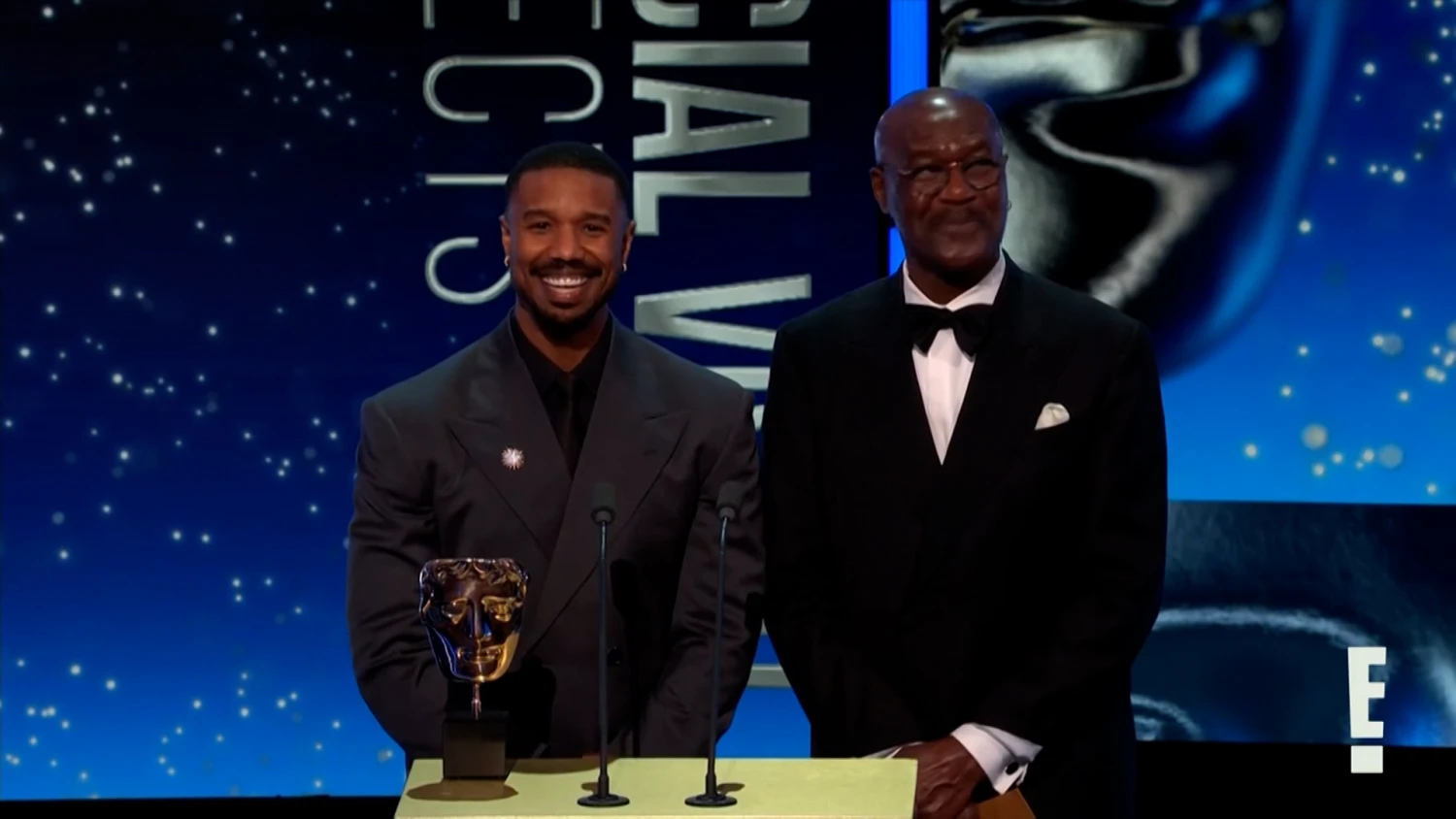
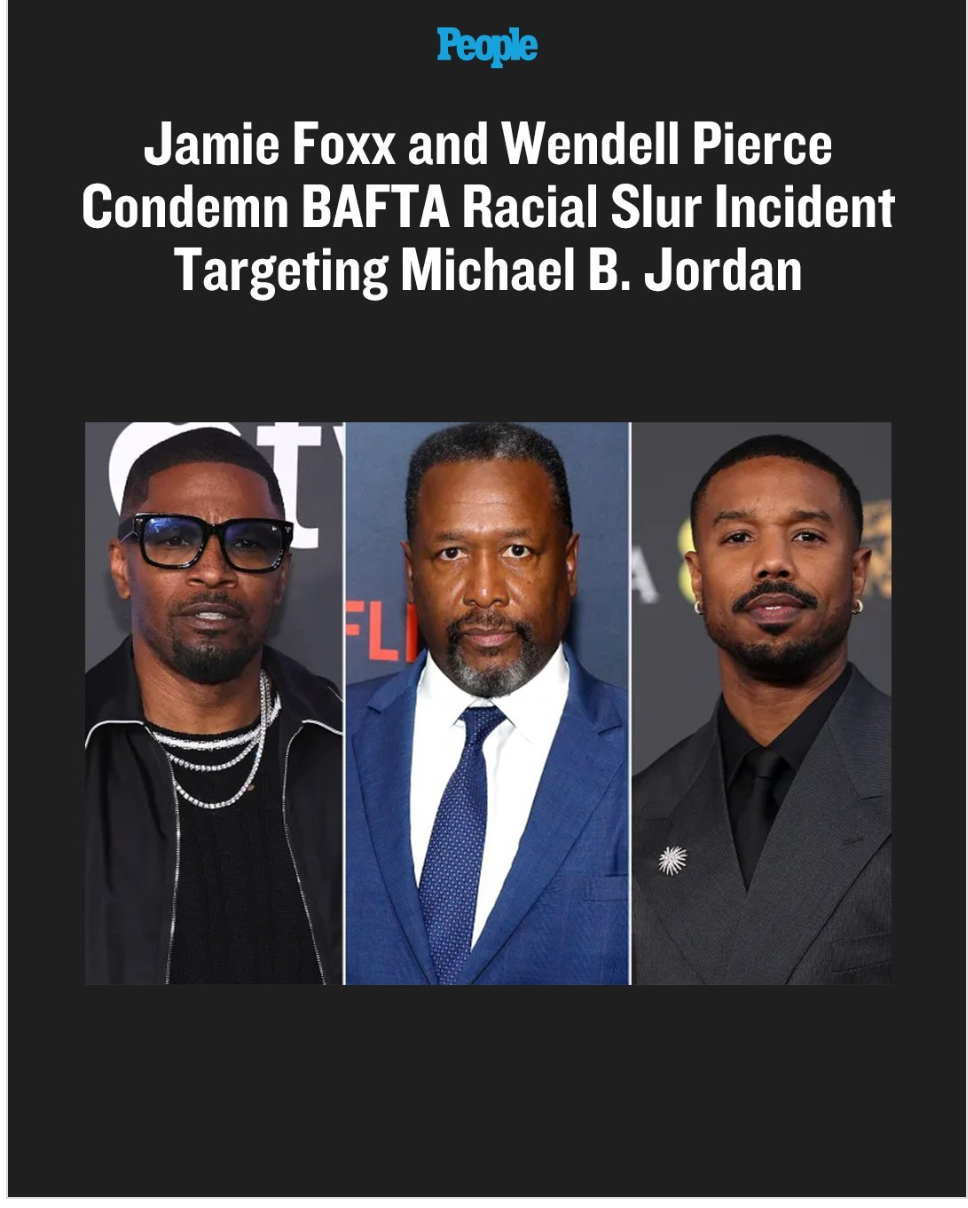
The crime here, when two African-American actors were on stage, Davidson’s condition caused one of his tics to be the shouting of a word. That word. The word. The most evil word in the world that must never, ever be uttered under any circumstance…
…unless it is a rap video, a Tarantino movie, any movie featuring a black cast, or any day ending in ‘Y’ in just about any American town or city.
Cue the outrage klaxons in Beverly Hills and beyond spinning so hard they nearly achieved liftoff.
Within hours, the industry’s self-appointed moral referees were lined up to deliver solemn lectures about harm, accountability, and the importance of “doing better.”
The same people who greenlight ultra-violent prestige dramas, build careers on shock humor, and hand out awards to movies where half the cast is morally compromised criminals suddenly discovered the concept of unacceptable language.
The irony could be bottled and sold as a fragrance: Eau de Hypocrisie.
Tourette’s: The Cause They Forgot to Google
An industry that will spend months researching the correct fork to use in a period drama set in 1847 apparently couldn’t spare 10 minutes to look up Tourette’s syndrome before launching into a moral crusade.
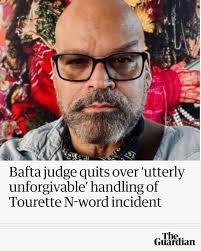
Tourette’s is not a punchline. It’s not a convenient excuse. It’s a neurological disorder and the symptoms can include coprolalia: the involuntary utterance of socially inappropriate or taboo words.
“Involuntary” being the key word here.
Not edgy. Not provocative. Not strategic. Not “weaponized”. Involuntary.
Yet a distressing number of industry voices responded as though someone had coolly, deliberately delivered a manifesto.
The nuance evaporated. Context was incinerated. Medical reality was treated as a footnote to a more fashionable narrative of offense.
It’s not just ignorance. It’s willful ignorance. The kind that happens when being outraged feels more satisfying than being informed.
We see you, Hollywood.
You pride yourself on being the most enlightened room in any building. You lecture entire continents about representation, justice, and the correct temperature at which to hold your moral compass.
But when confronted with a messy, uncomfortable situation involving a neurological condition, you are all so paper thin, ideologically weak or just so damn fucking ignorant that you defaulted to the same binary thinking you claim to oppose.
Slur spoken = Bad person.
Medical context = Inconvenient.
Public optics = Everything.
What makes this particularly rich is that this is the same industry that endlessly champions authenticity and lived experience.
Actors win awards for playing characters with disabilities. Studios commission sensitivity readers. Panels are held. Hashtags are deployed.
And yet when faced with an actual example of a real condition manifesting in an ugly, uncomfortable way, the reaction wasn’t curiosity or compassion. It was brand management.
The subtext was clear:
“We are horrified. Please don’t cancel us.”
When Victimhood Becomes Currency
Another striking aspect of the fallout was how quickly certain segments of the industry positioned themselves as uniquely aggrieved – injured not just by the word, but by the mere suggestion that context might matter.
This is where things get awkward, because of which Hollywood segment it is.
The most protected and promoted segment in recent Hollywood memory.
The modern film industry has spent the better part of a decade loudly re-centering specific voices, perspectives, and identities. Entire marketing campaigns are built around it. Studio heads trip over themselves to signal alignment. Awards bodies practically choreograph their optics.
Color blind casting has worked almost uniquely in favor of this segment, while distinctly average movies are lauded beyond all reasonable quality measures due to the centricity.
No longer, for a long time, marginalized in the corridors of power. They are celebrated, platformed, and in many cases, running the show.
Which makes the hyper-fragile response look less like strength and more like insecurity.
When you hold immense cultural capital, control narrative pipelines, and dominate awards conversations, reacting as though a medically documented tic is an existential assault doesn’t project confidence. It projects thin skin.
It suggests that the moral authority so often claimed might not be as sturdy as advertised.
There’s a difference between acknowledging genuine harm and indulging in theatrical indignation.
A strong cultural community can say:
“That word is painful. We don’t like it. But it was truly involuntary, let’s address it with clarity and education.”
A morally, mentally weak response is to declare that context is irrelevant, that medical realities don’t mitigate impact, and that anyone who suggests otherwise is morally suspect.
One approach builds credibility.
The other looks like overreach.
And in an industry already mocked for its echo chambers and self-seriousness, overreach is gasoline on the fire.
It reveals what we already knew. The true, only, religion of this industry is optics.
Studios calculate social media reactions like they used to calculate opening weekend projections. Publicists don’t ask, “What’s true?” They ask, “What trends?”
So when the BAFTA incident hit, the calculation wasn’t, “How do we educate people about Tourette’s?” It was, “How do we avoid being the next trending cancellation?”
The result? A rush to condemnation before comprehension.
This is the same ecosystem that can forgive actual criminal behavior if the PR strategy is airtight. Careers have survived far worse than an involuntary word.
But because this particular landmine intersects with race, identity, and the industry’s most sacred talking points, the reaction had to be swift and dramatic.
Subtlety doesn’t trend.
Lost in the scramble are the people actually living with Tourette’s syndrome.
Imagine having a condition that already invites misunderstanding, then watching a global industry effectively imply that your involuntary tics are morally indistinguishable from deliberate hate speech.
That’s not progress. That’s stigma.
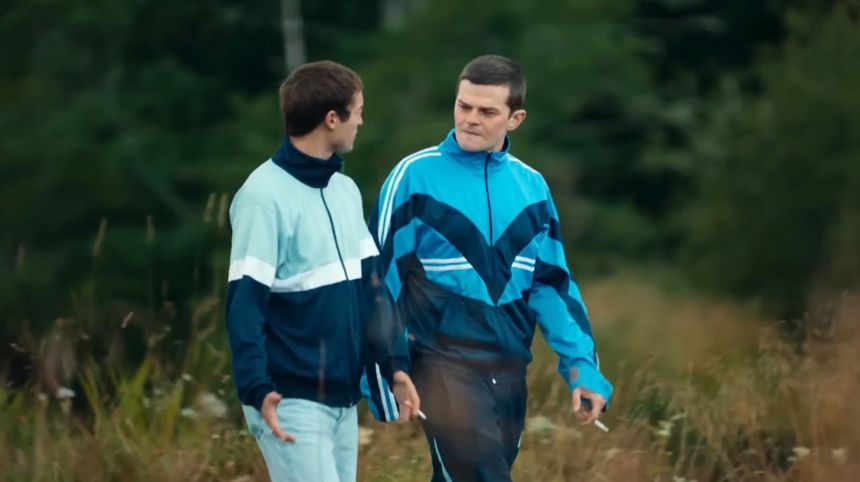
Hollywood, you have failed so completely, totally and utterly over this that every single thing you ever think you can ever say, about just about anything, is now null and void.
Go back to playing dress up and make believe, speaking the lines given to you by others.
By flattening the conversation into pure outrage, the industry inadvertently reinforced the very ignorance it claims to fight. Instead of explaining coprolalia, instead of platforming neurologists, instead of demonstrating mature complexity, it chose a simpler script:
Bad word. Bad optics. Bad person.
Or, maybe here is the unpalatable truth – bad industry full of cretins.
When you spend years elevating yourself as the enlightened class, every misstep becomes magnified. Every inconsistency is ammunition.
And this was the big one.
Because when the champions of empathy appear unwilling to extend empathy to someone with a documented neurological disorder, the halo starts to flicker.
When the self-proclaimed strong voices of justice react as though a contextual explanation is an attack on their identity, it undermines the image of resilience they project.
Strength isn’t loud. It’s measured. Confidence doesn’t panic at nuance.
The BAFTA incident should have been an opportunity. A chance to educate. To model grown-up discourse. To show that complex issues can be handled without either minimizing harm or denying medical reality.
Instead, parts of the film industry chose the easier path: outrage first, understanding later, or never.
In doing so, they didn’t just look ignorant about Tourette’s. They looked brittle. Performative. Afraid of their own narrative machine.
So sit down and shut up you performing clowns, because here is the really uncomfortable part. This exposes your ignorance and your addiction to moral grandstanding.
And in a town built on illusion, this might be the most revealing performance of all.

