


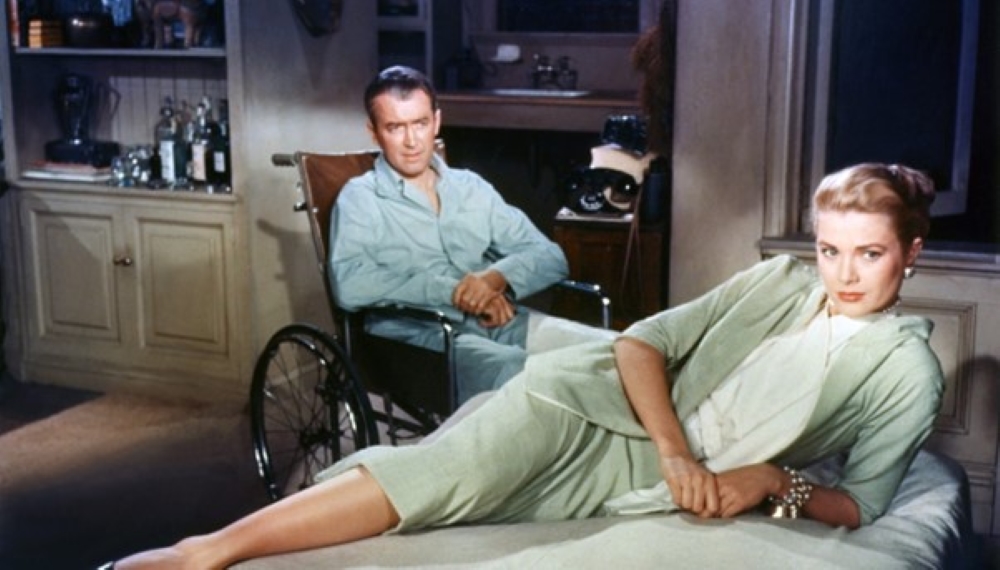
You voted for me to watch and review the Alfred Hitchcock classic Rear Window as part of my quest to watch every movie in the IMDB top 250.
The category this time was psychological thriller. I now realise that psychological drama is closer to the mark for the other options, which were One Flew Over the Cuckoo’s Nest, Parasite and Whiplash.
The good news is that Rear Window is a psychological thriller, so it worked out okay in the end.
Rear Window
I described Rear Window as “James Stewart looking out of a window,” which is surprisingly accurate. The movie takes place entirely within the apartment of L.B Jefferies (Stewart), or Jeff to his friends.
Jeff is an action photographer laid up with a broken leg after getting hit by a race car. A picture on the wall shows the moment before he was struck.

He must have been standing in the middle of the home straight! To be fair, this was the era of leather driving caps and crash barriers made of straw. I can believe it.
What I can’t believe is 46-year-old James Stewart, looking about 60, somehow being irresistible to 25-year-old model and goddess Lisa Fremont (Grace Kelly).
Despite possessing a head of hair greyer than an elephant’s foreskin, Jeff tells his nurse he’s not ready for marriage. When Lisa glides into his apartment, he tries to dissuade her from staying with him while she cooks lobster thermidor looking like a goddamned angel.
To be fair to Jeff, he makes a good point about their compatibility. When he’s not sitting in a wheelchair wearing old man pyjamas, he’s a man of action, journeying the world, taking photographs of atomic bomb tests in dangerous, far-flung lands. It’s no place for a luminous being like Lisa. She’s too perfect.
The age gap is fine, though. He could have just mentioned that if he wanted to bin her off.
Nice view
Jeff’s second floor apartment overlooks a courtyard in Greenwich Village, New York (actually an elaborately constructed soundstage at Paramount Studios). It provides a perfect view of the other apartments.
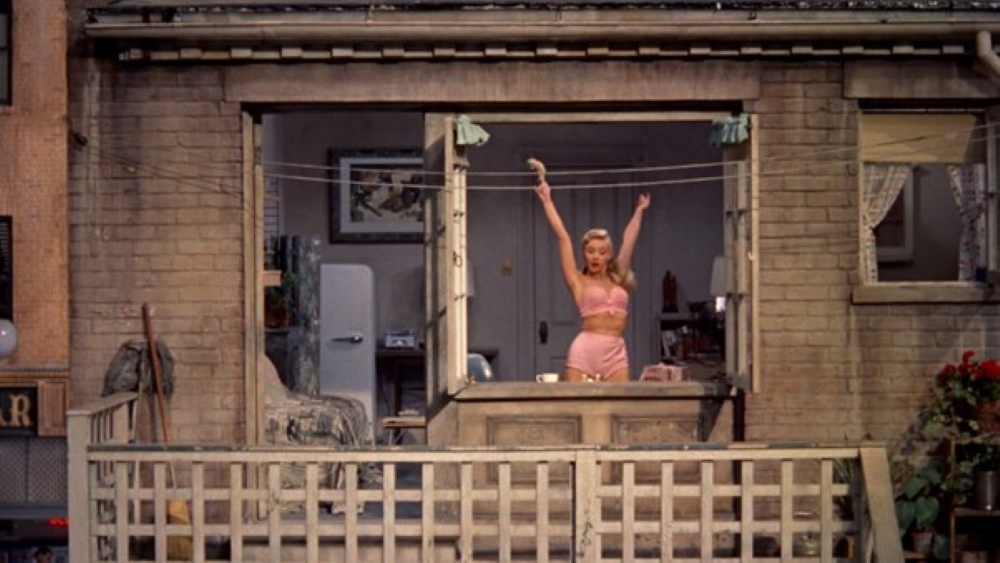
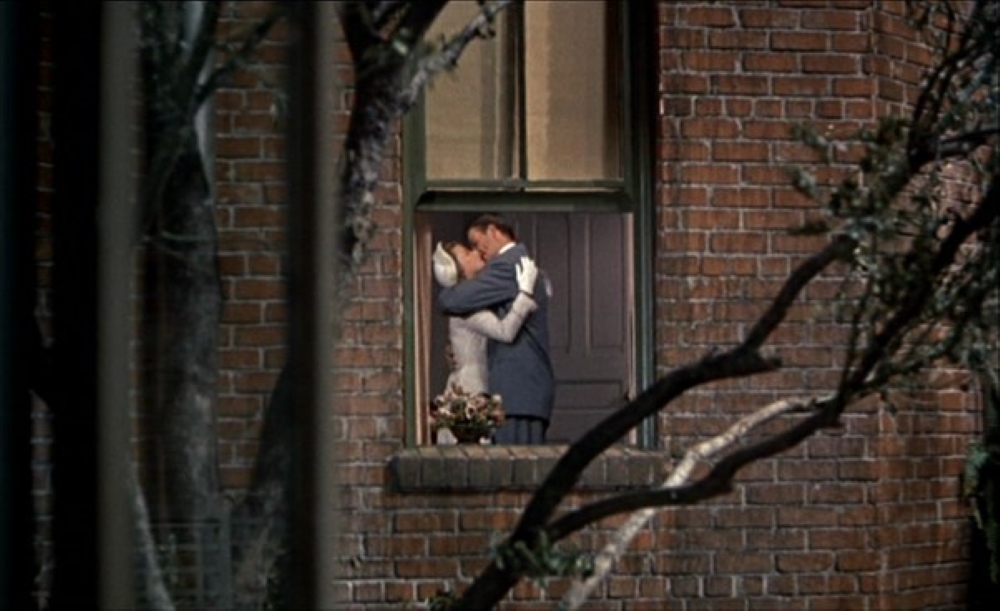
None of Jeff’s neighbours appears to have heard of this wonderful invention called curtains. Only a newlywed couple keep their blinds closed, and it becomes a running joke. Every time the husband raises the blind, his wife calls him back into action.
It’s a fascinating window into people’s lives. There’s the female sculptor, the composer writing a symphony on his piano, the middle-aged woman yearning for company, an older couple who sleep on their balcony, a ballet dancer who practices in her underwear, a guy who murders his wife.
That escalated quickly.
Jeff watches his neighbours out of boredom and it doesn’t come across as overly voyeuristic. Sure, his gaze returns to the ballet dancer once or twice, but it’s not like he’s taking photos. And he owns a camera with a gigantic telescopic lens.
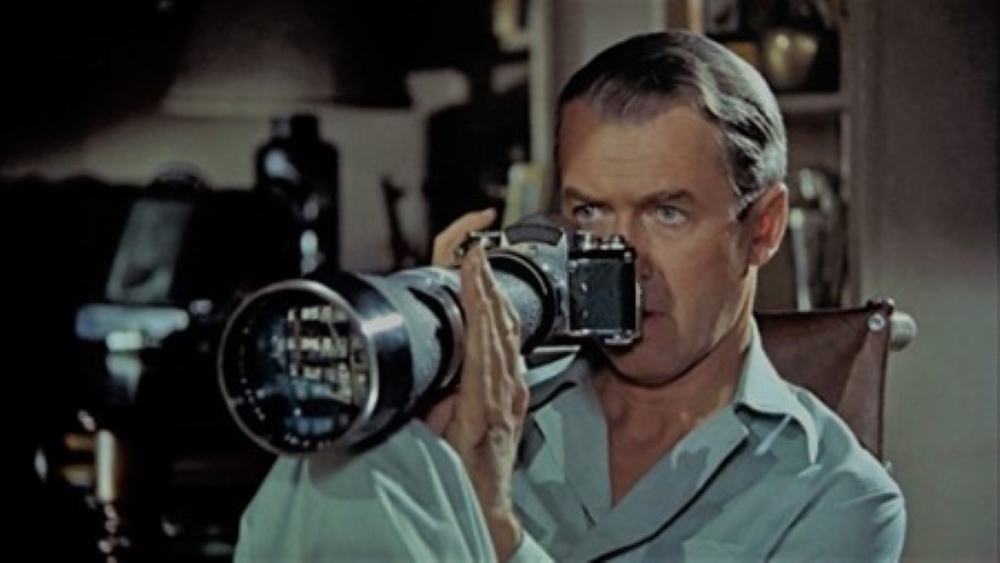
The camera and binoculars only appear after Jeff sees his neighbour Lars Thirwall (Raymond Burr) acting suspiciously. He goes out late at night multiple times carrying a large suitcase. His wife has disappeared. He spots him with a large saw.
Nobody believes him, of course. Not Lisa, his nurse Stella, or his policeman friend Tom. Being trapped in his apartment ramps up that sense of helplessness and isolation.
But it’s odd that in such a close-knit neighbourhood, where everyone must know so much about everyone else’s business, how little sense of community there is. Jeff doesn’t interact with any of his neighbours other than Thirwall, and that’s hardly consensual.
Woman of action
Hitchcock not only kept the camera in Jeff’s apartment, but he also directed the entire movie from there as well. The actors in the other apartments took instructions via earpieces.
Hitchcock’s framing is innovative, but not always effective in my opinion. The middle portion of Rear Window sags, and not a whole lot happens. Jeff is a passive viewer, waiting for something to happen across the street.
Would it have been better if Jeff could move around, albeit inhibited, in his wheelchair? Would it be better if he roped his neighbours into solving the mystery of whether Thirwall killed his wife?
I doubt it, to be honest. It would turn Rear Window into Only Murders in the Building. A standard thriller. The staging is central to the movie’s appeal and legacy.
The fact that Jeff’s neighbours are oblivious to what’s happening stokes the fears of ordinary people. Who knows what foul deeds might be happening under your nose as you go about your ordinary life?
The soundtrack is diegetic, meaning all the sound comes from the world of the movie. The only time we hear music is from the neighbour playing his piano. Another scene plays out to the sound of rainfall.
Hitchcock gradually ramps up the tension, and the last act is fantastic. When Jeff persuades Lisa of Thirwall’s guilt, she becomes an active participant in finding him out.
The future Princess Grace of Monaco climbs ladders and makes a daring leap into Thirwall’s first-floor apartment while wearing a radiant summer dress.
It’s a neat and understated way of demonstrating depth to her character beyond high fashion, gourmet cooking and the greatest genetics of early 20th Century America.
Overall
I have a few quibbles. Jeff watches Thirwell through the telephoto lens in his camera but doesn’t take a single picture in the entire movie. That’s literally his job.
When Lisa is in peril, Jeff just sits there and bites his fist. I get what Hitchcock is going for, but he wasn’t completely helpless. He could have called out because the window was open.
That aside, I’m glad I finally got to watch Rear Window. Time to seek out some more Grace Kelly movies. I’ll start with High Society.
Rating

Good movie, but it takes a while to get going.

Artistry outstrips entertainment for much of the movie, but the last 20 minutes are thrilling.

