


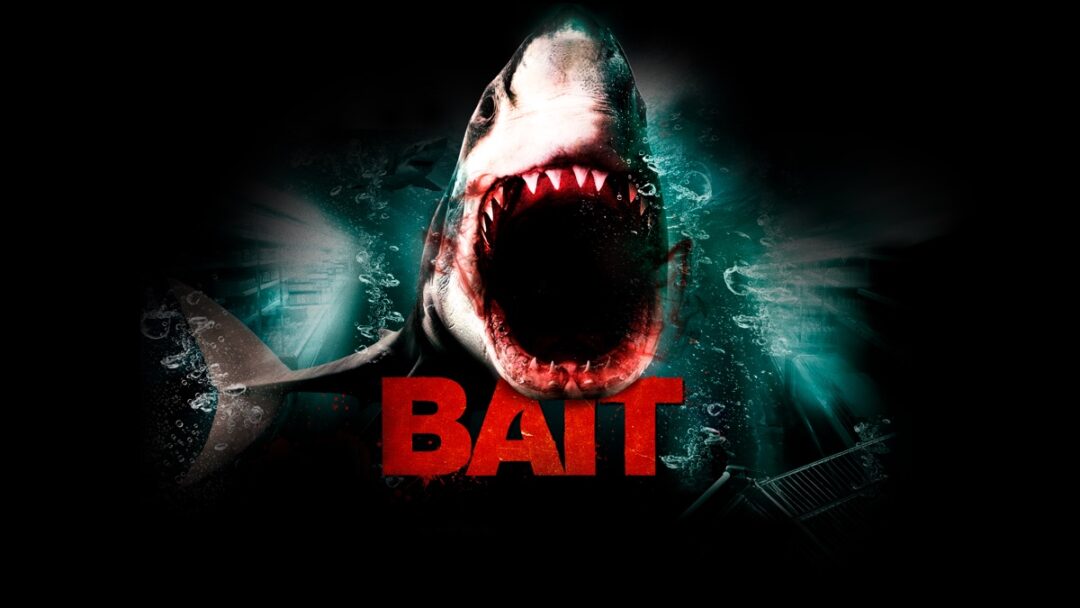
While writing up the trailer for the upcoming Netflix shark spectacular (or not!) Thrash, I was reminded of another movie that features sharks entering man’s domain. No, not Deep Blue Sea, but Bait, also known as Bait 3D as it was one of the final spasms of that aborted 3D revolution that Avatar started. So what is this Australian curio?
Well, there are good ideas. There are bad ideas. And then there are ideas that are so gloriously, magnificently stupid that they circle all the way back around to being good again. The cinematic equivalent of ordering a kebab after twelve pints. You know you shouldn’t. You know this is going to end badly. But by God, you’re going to enjoy every greasy second of it.
Bait 3D is one of those ideas. The pitch practically writes itself: A tsunami floods an Australian supermarket, trapping shoppers inside with a great white shark.
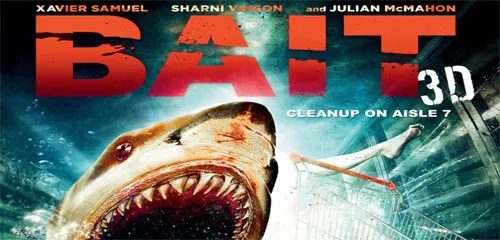
Bait 3D
Yes. This is real. This is a real thing that actually exists as a movie. That’s the entire fever dream. Someone said that sentence above in a meeting, and instead of being escorted out of the building by security, they got a budget and a production schedule.
And yet, somehow, this absolute nonsense manages to be entertaining.
Not good, exactly. Let’s not get carried away. But entertaining in that slightly ashamed, popcorn-covered way where you keep muttering “this is ridiculous” while also leaning forward because you want to see what absurd thing happens next.
Instead of scientists being eaten in a research facility, we’ve got shoppers, looters, security guards, and checkout staff trying not to get turned into sashimi in the flooded aisles of a grocery store.
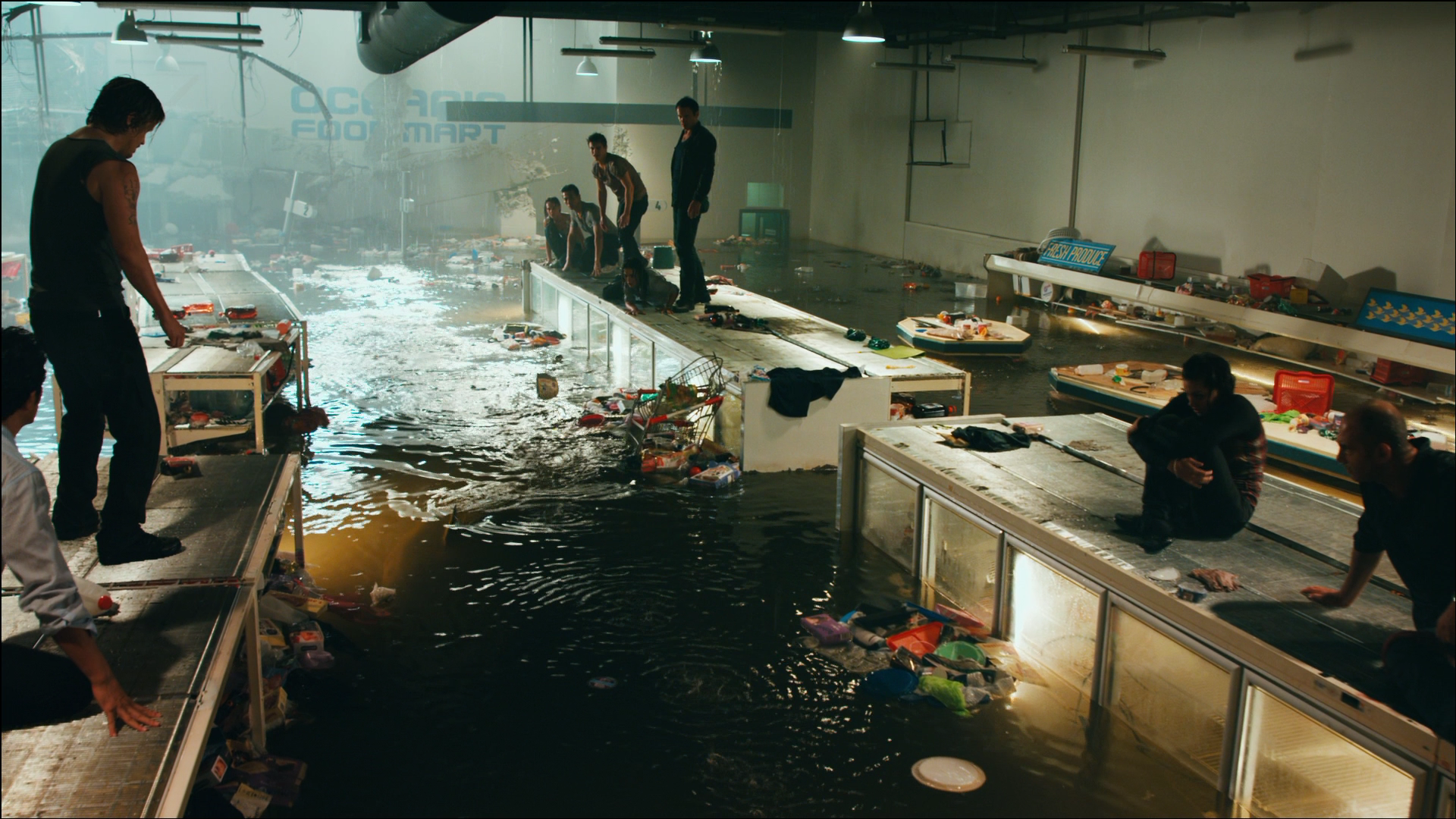
The result? A soggy, silly, occasionally tense creature feature that has no business working, that just about pulls it off through sheer dumb enthusiasm.
One of the most random trivia nuggets about Bait 3D is the writing credit. The screenplay comes from Russell Mulcahy, the same guy who directed Highlander. Yes, that Highlander. The immortal sword-fighting, Queen-soundtracked cult classic.
Mulcahy didn’t direct Bait, but the fact that he wrote the script somehow explains the film’s weird commitment to its own lunacy. Like Highlander, the movie fully understands that its premise is as mental as a woman who thinks she is being ignored and just decides to run with it.
Because once the tsunami hits, the movie goes full “why not?”
Flooded supermarket? Sure.
People trapped on top of shelves? Fine.
Great white shark swimming through the aisles where the frozen peas used to be? Obviously.
A group of survivors building some kind of mobile anti-shark cage out of shopping carts? Now we’re cooking.

The setup is surprisingly busy for what is basically Jaws in Aisle Five.
Josh (Xavier Samuel) works at the local supermarket. He’s nursing heartbreak after his girlfriend Tina (Sharni Vinson) dumped him, and his best mate got chomped by a shark off the beach while on a surf rescue gig that Josh should have been covering. Tina, meanwhile, has rebounded with a spectacularly irritating new boyfriend who seems to exist solely to make the audience mutter “please let the shark eat him”.
Elsewhere, we have a pair of small-time criminals attempting a robbery, a tough cop who just happens to be outside when the tsunami hits, a security guard of limited personality, and the usual random assortment of shoppers and staff.
Then the wave hits.
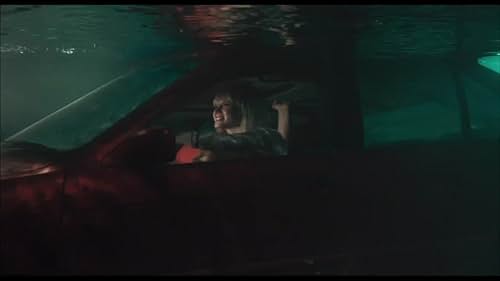
Cars are tossed around like Lego bricks. The parking garage floods. The supermarket becomes a giant aquarium. And somewhere in the chaos, a very confused great white shark gets swept inland along with everything else.
Which means the survivors are now trapped in a half-submerged supermarket with a super-predator that has suddenly discovered the convenience of indoor dining.
Perhaps the most surreal element of the movie is the presence of Julian McMahon. Once upon a time, McMahon looked like he was on track to be a proper Hollywood star. After TV success on Nip/Tuck and playing Doctor Doom in the mid-2000s Fantastic Four films, he seemed destined for bigger things.
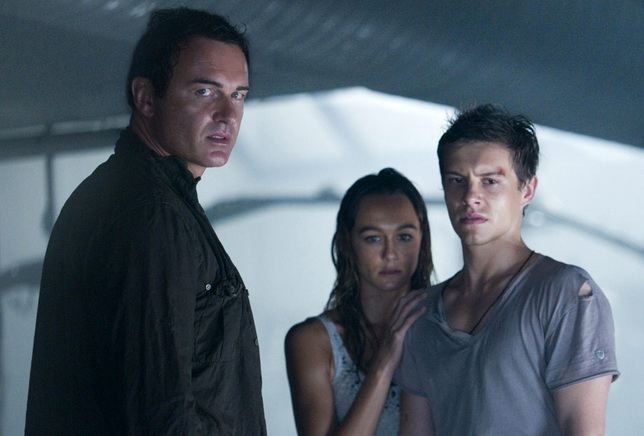
Instead, here he is, in an Australian movie set in a flooded grocery store, arguing about sharks.
McMahon plays Doyle, one of the criminals. He’s gruff, cynical, and slightly baffled by everything happening around him which, to be fair, is exactly the correct emotional response when a shark swims past the breakfast cereal. To his credit, McMahon commits to the material. There’s no winking at the camera. No “I’m too good for this.” He treats the whole situation with deadpan seriousness, which somehow makes the film funnier.
The central challenge in any shark movie is making the shark feel threatening while also acknowledging the reality that sharks generally prefer the ocean. Bait sidesteps this by simply flooding everything.
Now the shark can go wherever it wants. The parking garage. The aisles. The storage area. The snack section. The frozen food section. Basically, if there’s water there, the shark might show up.
And the movie wrings surprising tension out of that concept. The parking garage sequences are especially effective, with characters trapped in murky water while the shark glides somewhere beneath the surface. You can’t see it. You can’t hear it. You just know it’s there. It’s a simple trick, but it works.
It’s Electrifying!
Of course, because this movie operates on the principle of “maximum bad decisions per minute,” and the flooded environment comes with additional complications. Namely live electrical wires dangling into the water. This leads to one of the film’s more ridiculous yet oddly suspenseful problems.
The survivors have to navigate around the electrified issues while also trying not to attract the shark. It’s the cinematic equivalent of playing The Floor Is Lava while a great white circles beneath you.
And every great creature feature needs a moment where the characters MacGyver their way out of danger. Bait provides a classic. At one point, somebody needs to cross an exposed stretch of water where the shark has been patrolling to turn off the electricity. Their solution?
They build a kind of mobile shark cage out of shopping carts. Yes. Really. They link several carts together, one person climbs inside, and pushes the whole contraption across the flooded floor like the world’s most dangerous grocery run.
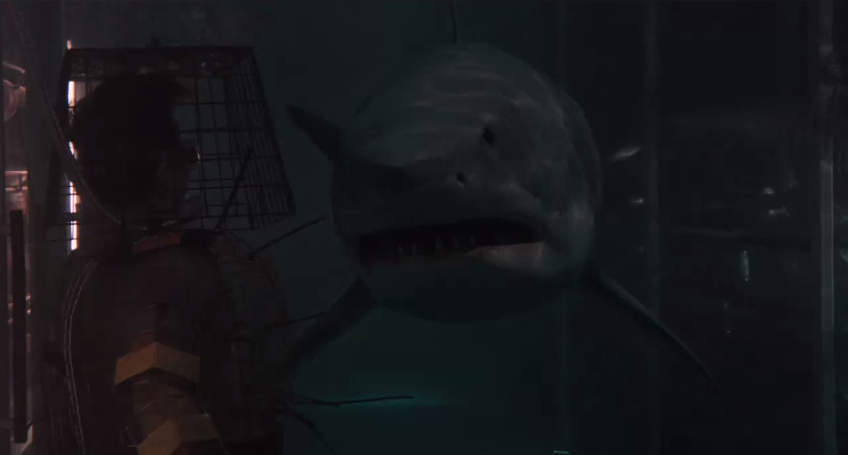
It’s completely ridiculous. It’s also kind of brilliant. The sequence manages to be both tense and hilarious, and is exactly the kind of moment that makes you forgive the film’s budget limitations. Everyone involved, including the watching audience, thinks “This is stupid… but it might work!”
The movie also deals with the classic disaster-movie trope – the inconvenient romantic obstacle – in the most Aussie way possible. Tina’s new boyfriend is exactly the sort of smarmy, irritating character whose sole narrative purpose is to prevent the original couple from reuniting. And wouldn’t you know it… sharks tend to solve those problems.
Chomp!
A creature feature lives or dies by its kill scenes, and Bait delivers a handful of solid ones.
The parking garage attack is probably the standout, with the shark snatching an unfortunate victim from the water in a moment that feels ripped straight from Jaws. There are also several crunchy, splashy bites that make good use of the confined setting. Instead of wide-open ocean attacks, these happen in tight spaces between shelves, inside cars, or in narrow corridors.
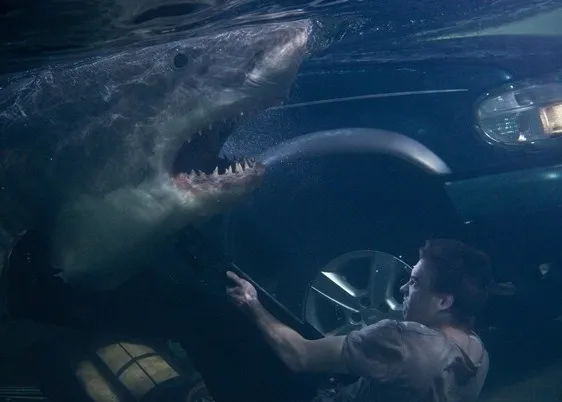
The result is a series of messy, chaotic encounters where nobody feels particularly safe. The film isn’t especially gory (except for one memorable scene), but it does enough to keep the stakes feeling real. Or at least as real as a shark shopping for groceries can feel.
Another thing the movie gets right is the group dynamic. Once the initial panic settles, the characters actually start working together to solve their increasingly ridiculous problems. How do we move across the flooded floor? How do we avoid the shark? How do we deal with the electrical hazard? How do we get out of the building before another wave hits? The film essentially becomes a series of mini-puzzles, with the characters improvising solutions while trying not to get eaten. It gives the movie momentum, even when the effects occasionally remind you this wasn’t exactly a Jurassic Park-level budget.
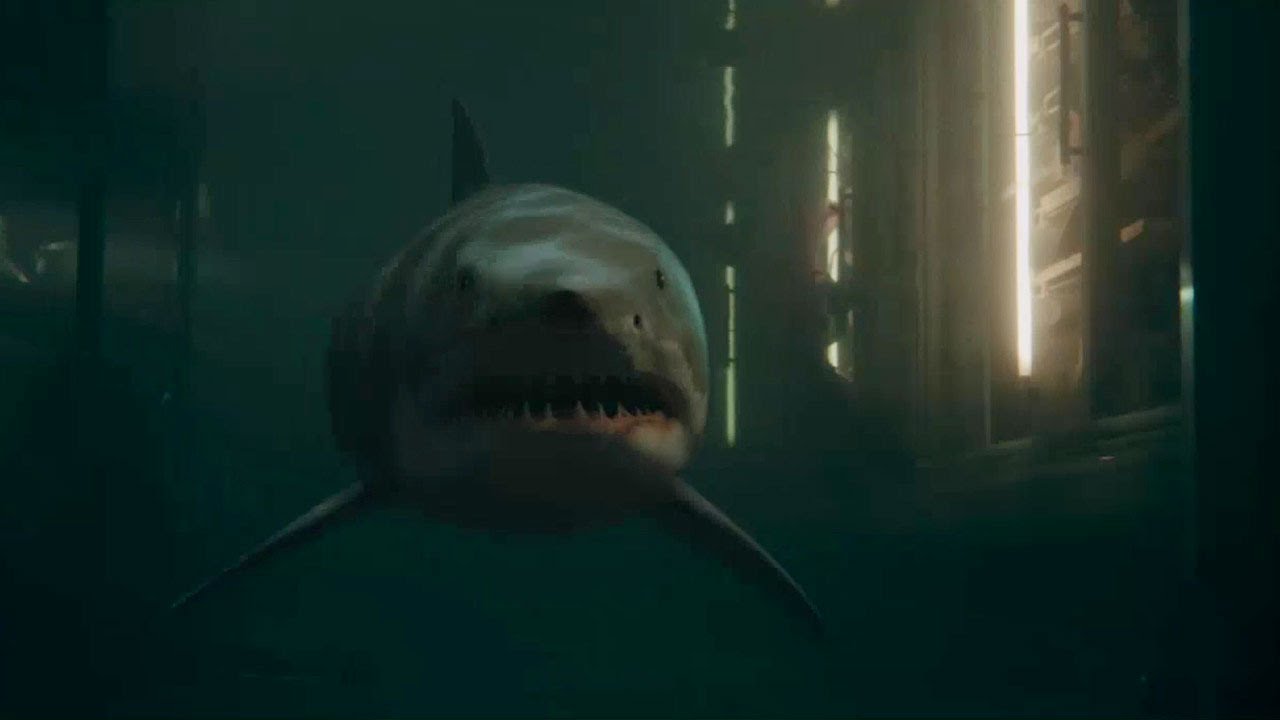
Speaking of the budget: yes, it shows. Some of the CGI shark shots look a little ropey, and the tsunami sequence isn’t going to fool anyone who’s seen a modern disaster film. But the filmmakers lean into practical sets and confined spaces, which helps sell the premise. The flooded supermarket is a great location. It’s visually interesting, easy to navigate for action scenes, and just plausible enough to keep the movie grounded. You can practically smell the soggy cereal boxes.
Bait 3D is a completely ridiculous movie built on a premise that should never have made it past the first brainstorming session.
And yet… it works. Not because it’s clever. Not because it’s sophisticated.
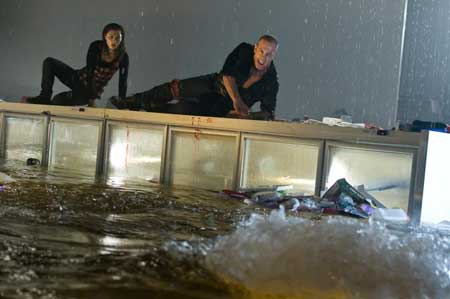
But because it embraces the insanity of its own concept and delivers exactly what you’d want from a late-night creature feature: tense moments, silly problem-solving, a few satisfying kills, and a premise so ludicrous you can’t help but admire the commitment.
It also sits in an interesting little sub-genre: predators invading human spaces. Deep Blue Sea did it with a research facility. Crawl would later do it with alligators in a hurricane-flooded house. And upcoming Thrash goes all in on the concept. Creature features continue to riff on the idea because it’s such a simple, effective hook.
Take something dangerous. Put it somewhere it shouldn’t be. Then trap people with it. Job done.
Is Bait 3D a good movie? Not really. Is it a fun movie? Absolutely.
Drink heavily and enjoy the spectacle of a shark, a flooded supermarket, and a shopping cart cage. And if that sounds like a stupid idea… well, that’s kind of the point.

