


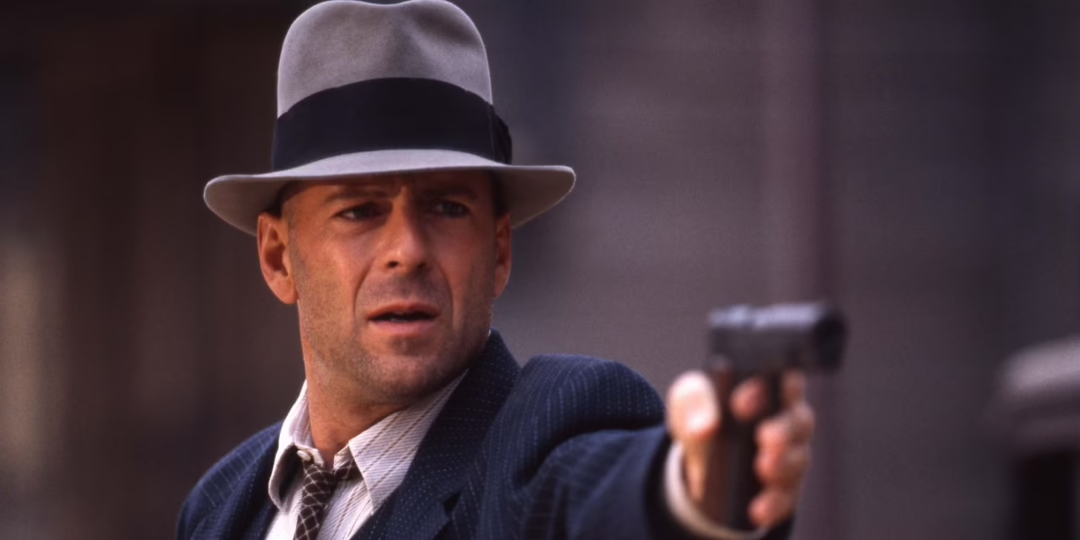
There are movies that want you to have a good time. Then there are movies that want you to think. Sometimes, movies that want to make you cry. Then there is Last Man Standing, a 1996 attempt to determine just how much bleakness, gunfire, dust, murder, and Christopher Walken one human being can reasonably consume in brisk 101 minutes.
The answer, apparently, is MORE!
Because Last Man Standing is not merely a remake of the always welcome Yojimbo. It is Yojimbo from the never disappointing Walter Hill. So this is Yojimbo after being dragged through a vat of bourbon, beaten senseless with a copy of The Warriors, left overnight in the Texas desert, and told that smiling is a sign of weakness. Kinda like A Fistful Of Dollars, then? Now you are getting it!
Akira Kurosawa provides the basic architecture: mysterious stranger arrives in a town, discovers two rival factions, and decides the best way to make a living is to get them to kill each other. Then Hill looked at this and thought:
“Yes. But what if everyone hated each other just a bit more?”
And thus, Last Man Standing exists.
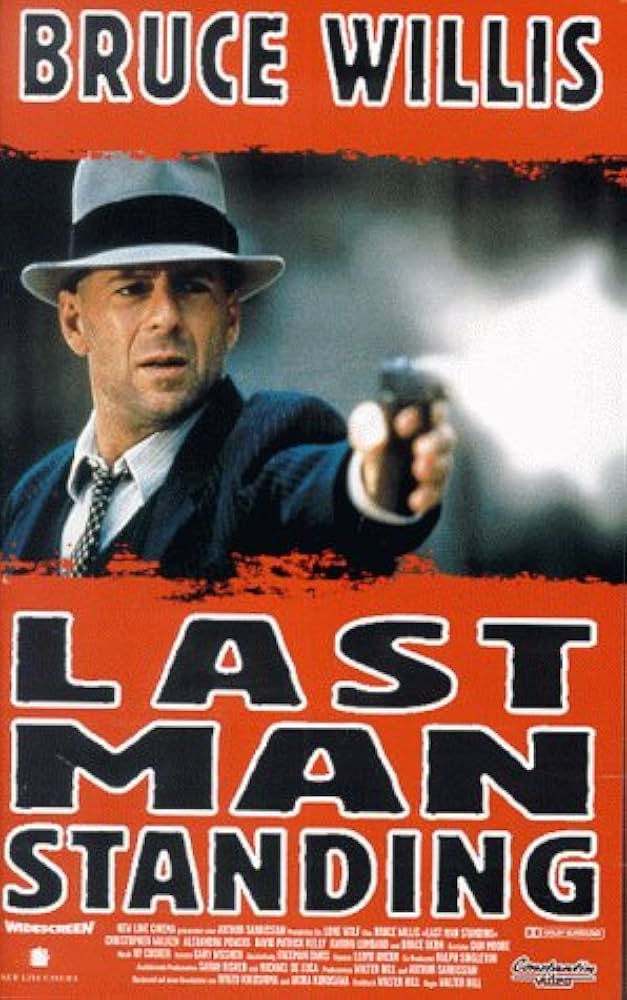
Yojimbo With The Smiles Removed
The lineage here isn’t subtle, and it doesn’t even care.
Kurosawa’s Yojimbo gave us Toshiro Mifune’s wandering ronin, who strolls into a town divided between two criminal factions and realises that the best way to deal with organised crime is apparently to become an aggressively freelance consultant.
Sergio Leone then took the same basic premise and turned it into A Fistful of Dollars, replacing samurai swords with six-shooters and giving Clint Eastwood the kind of career-launching squint that would make Lee Majors hard.
Hill takes the idea one stage further. Or backwards. Because Last Man Standing feels like Yojimbo and A Fistful of Dollars have been stripped of virtually everything resembling warmth, charm or fun.
This is a movie in which people do not laugh. They barely smile. They certainly don’t chuckle. There is not a cheeky wink between the assembled cast. It is as though Walter Hill issued a memo on the first day of shooting:
“Nobody smiles. Nobody jokes. Nobody appears to be enjoying themselves. If anyone looks happy, shoot them.”
And everyone seems to have taken that literally, which is probably why critics didn’t much care for it. The movie is mean. Not “darkly comic” mean, not “edgy” mean, not “morally ambiguous” mean. It’s just a complete bastard.
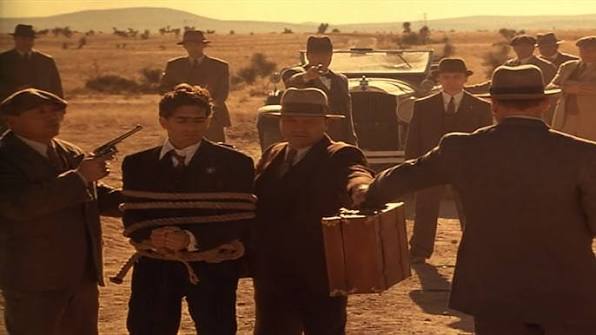
People are unpleasant. They behave badly. They lie, cheat, betray, murder and generally conduct themselves as if somebody has just informed them that joy has been outlawed. And frankly? That’s precisely why I bloody love it! Because critics tend to get terribly upset when a film doesn’t invite them to like anybody, but since when was it our job to give a flying fuck about your emotional well being?
Last Man Standing isn’t interested. It doesn’t want you to feel uplifted or teach you anything, and it certainly doesn’t care if you don’t root for a single character. And I respect that.
It doesn’t want to give you a cuddle. It wants to put Bruce Willis in a dusty town with two Colt 1911s and have him turn organised crime into a self-service shooting gallery. So, as an Outposter, I ask what’s not to like?
Walter Hill Was Born To Make This Movie
If there is one filmmaker who was absolutely tailor-made for this material, it is Walter Hill. Hill’s career is basically a catalogue of men with guns, men with attitude, men who don’t talk much, people trapped in hostile environments, criminal organisations, urban decay, existential violence and characters who would rather walk directly into a hail of bullets than attend a group therapy session.
The Warriors.
The Driver.
Southern Comfort.
48 Hrs.
Streets of Fire.
Red Heat.
Johnny Handsome.
This is a filmmaker whose cinematic vocabulary includes approximately three primary words – men, guns, trouble. Last Man Standing, offering him all three and it’s almost suspiciously perfect.
The film takes place in the ghost town of Jericho, New Mexico, where two rival gangs are fighting for control. The local population appears to consist primarily of terrified civilians and people who have been waiting for Bruce Willis to arrive so they can be murdered.
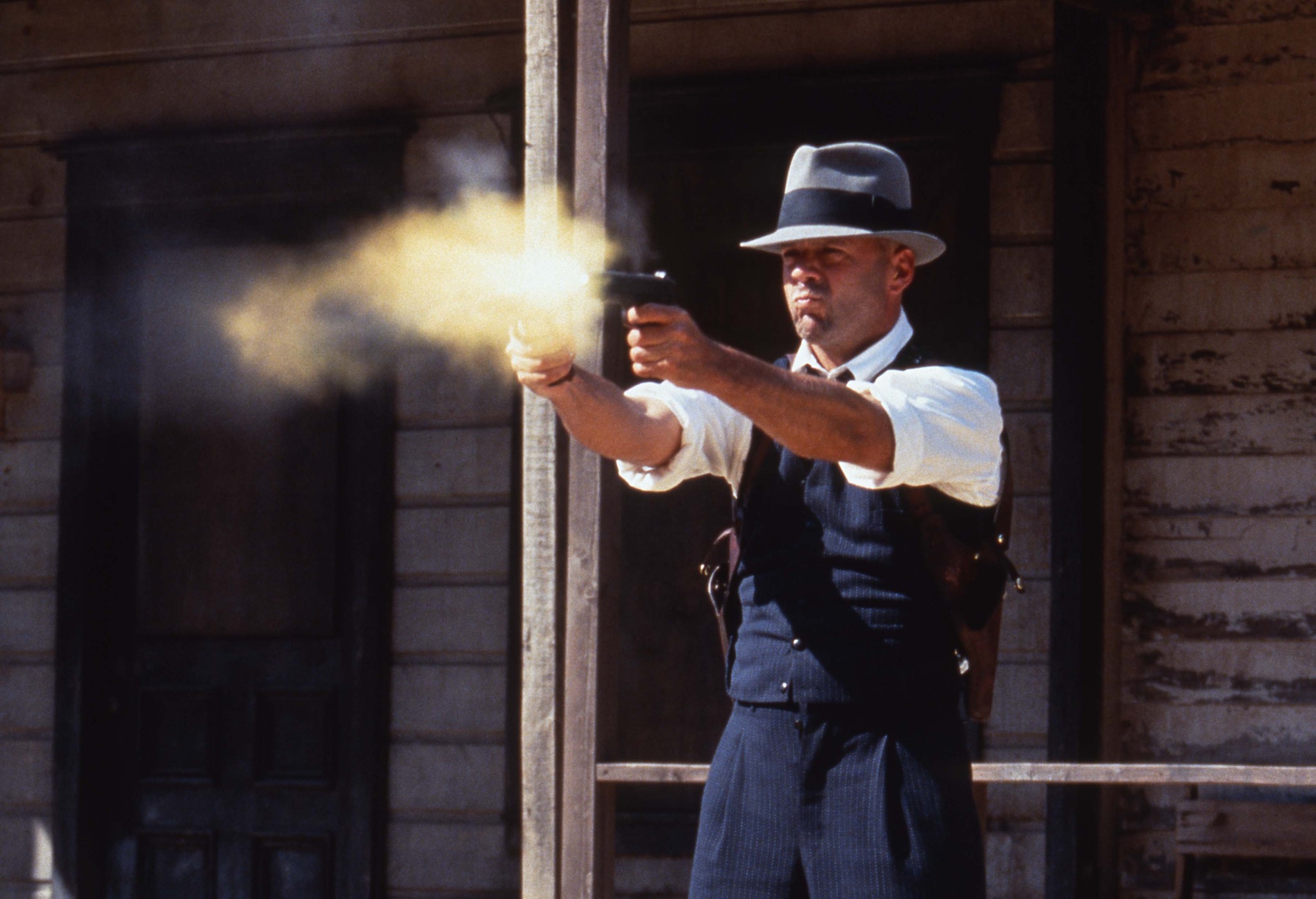
Into this walks John Smith. That’s his name. Probably.
He’s an archetypal Walter Hill protagonist: mysterious, taciturn, cynical, violent and apparently equipped with an internal compass that points directly towards trouble.
Willis is perfectly cast. This is the same decade in which he had become one of Hollywood’s great action stars, but there is something particularly appropriate about seeing him reduced to this stripped-back version of the archetype.
There is no banter machine here. No Die Hard wisecracks or “Yippee-ki-yay.” No Bruce Willis grin telling us everything is going to be alright. This Bruce Willis looks like he has been awake since 1987 and is furious about it.
He finds himself going up against Christopher Walken because of course he does. Anyone but the biggest idiot would have put Walken into this movie and into this role, even if the role requires him to actually exist in a different movie and just be day tripping back to Last Man Standing. It’s the only way to make a movie so joyless without the audience topping themselves around the ends of Act II.
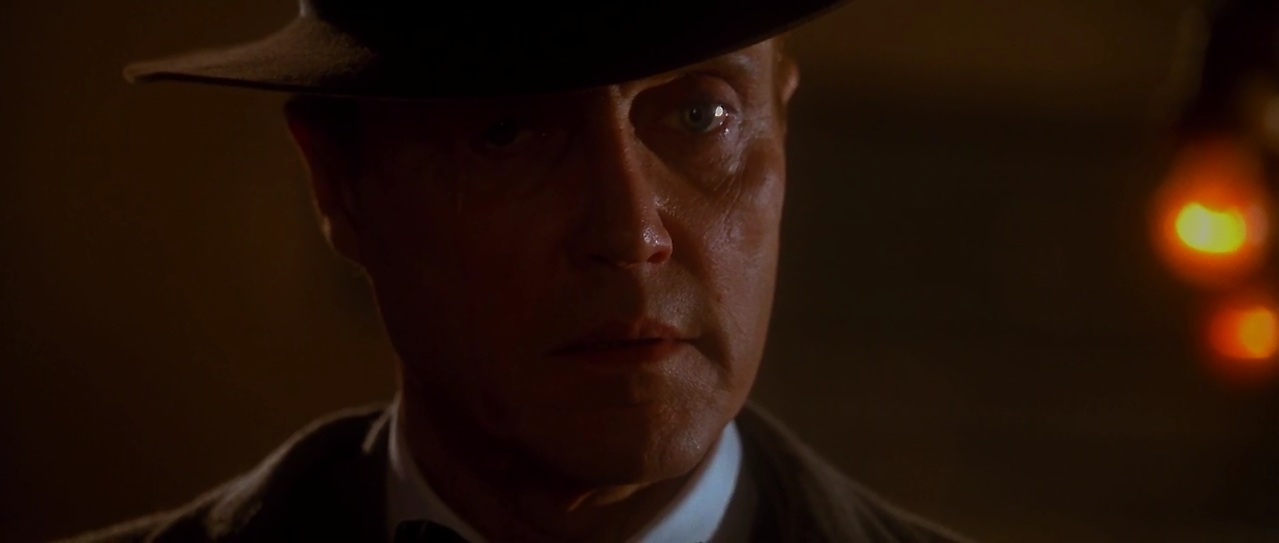
Walken plays Hickey, the right-hand man to one of the criminal factions, and approaches the role with that extraordinary Walken quality where you’re never quite sure whether he’s acting, threatening you, or remembering something that happened to him in 1973. Walken doesn’t need to do much here. He simply is Christopher Walken.
The voice, the pauses, the eyes, that slightly peculiar rhythm that makes every sentence sound like it might be the beginning of a hostage negotiation or the punchline to a joke that nobody else has been told. It is all here.
And here’s the thing: Last Man Standing is so completely humourless that Walken’s presence becomes almost surreally comic. He’s a man who can make the sentence “We’re going to kill him” sound like an intriguing anecdote.
He wanders through the film carrying the unmistakable aura of somebody who knows he’s Christopher Walken in a Walter Hill movie and is therefore contractually obligated to make every moment slightly stranger than it needs to be. It’s magnificent.
The supporting cast is terrific too. Bruce Dern, Michael Imperioli, David Patrick Kelly, Karina Lombard, Leslie Mann and a host of familiar faces populate this wonderfully grim little universe. Yet you watch Last Man Standing and afterwards barely remember a single characters name. It is just that type of movie.
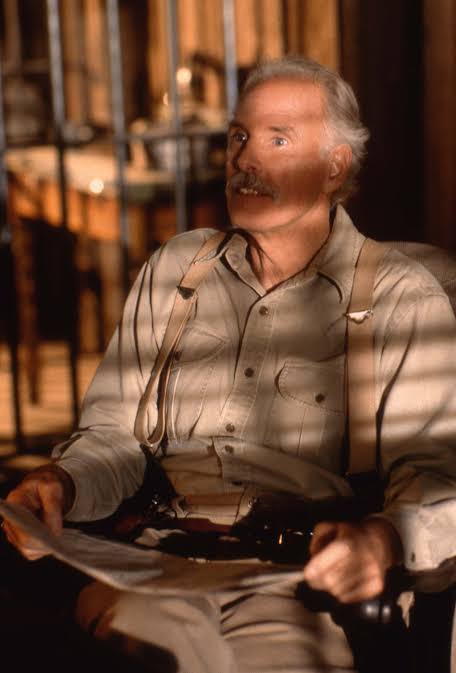
John Smith. Hickey. Strozzie. Doyle. Felina. Whatever. It doesn’t matter. These people aren’t really characters, they are archetypes with firearms. You’ve got the gangster. The other gangster. The corrupt lawman. The doomed woman. The violent henchman. The mysterious stranger. And Christopher Walken. You don’t need character names. You ust put all this in a blender, remove any joy, and let it unfurl all over the screen.
Ammunition Is A State Of Mind
One of the great pleasures of Last Man Standing is its approach to firearms logistics. That approach specifically being “fuck logistics”.
John Smith carries twin Colt 1911s, and these things appear to contain approximately as many bullets as the scene requires. Sometimes they’re conventional handguns, and sometimes they’re apparently portal guns connected directly to an ammunition warehouse.
You watch him empty magazine after magazine but not really changing magazines and you begin wondering whether the 1911s have secretly been fitted with Doctor Who technology. Reloading is less a mechanical process and more of a philosophical concept. There is ammunition when the plot needs ammunition. There is no ammunition when the plot needs a pause.
The bullets are governed by the same laws of physics as action-movie explosions: broadly speaking, they exist.
But honestly? It adds to the fun. Nobody is watching Last Man Standing for a meticulous examination of magazine capacity. I only noticed because I started to think there might be a drinking game in it somewhere.
Outside of this, we’re only here to watch Bruce Willis walk around looking like death has personally inconvenienced him.
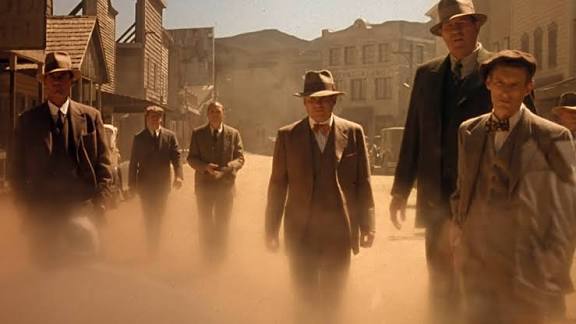
There is something else wonderfully tactile about the movie. You can practically feel the grit. Everything is dusty – the streets are dusty, the buildings are dusty, the cars are dusty, the people are dusty, Bruce Willis is dusty – so by the end of the movie, you feel dusty. I genuinely feel like I should be finding New Mexico sand in my keyboard as I type this.
Hill shoots the town as a miserable, sun-baked purgatory. There’s no glamour to it. This isn’t the romantic Old West. There’s no sense that the frontier is some magnificent place where men become legends.
It’s a shit hole. Everyone knows it’s a shit hole and everyone wants to leave. From the moment you first see it, you think “This town is a complete shithole!” And then you are sure that the one man who arrives is somehow going to make it substantially worse.
That’s Walter Hill being Walter Hill.
The brilliance of Last Man Standing is that the story is almost aggressively simple. Two gangs. One town. One stranger. Everyone wants power. Everyone wants money. Everyone is willing to kill everyone else. So John Smith decides to exploit the situation.
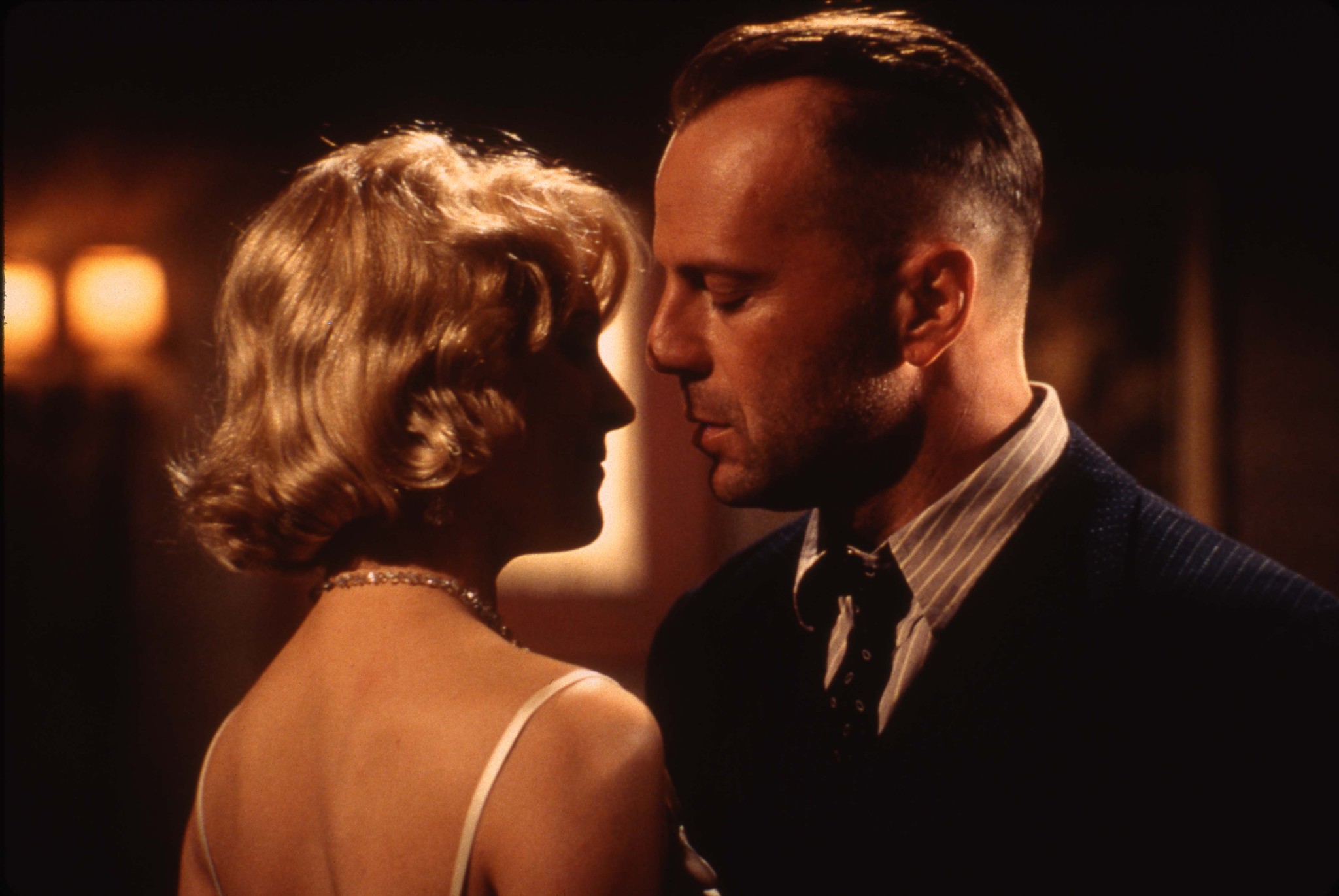
That’s it. There is no sprawling mythology or elaborate twists. It is just a beautifully efficient machine for producing corpses. Yes, it’s Yojimbo, but it is so flawlessly executed, and that takes talent. There is a simplicity while Hill just concentrates on what he does best: atmosphere, movement, violence, masculinity and visual storytelling.
The film feels almost like a Western despite being a gangster movie despite being a samurai remake despite being an American adaptation of an Italian adaptation of a Japanese movie. It’s basically cinematic recycling at the highest possible level but it works like a Swiss watch.
Critics Didn’t Like It. Good.
Last Man Standing was not a hit. The critics were unimpressed and the box office was disappointing. Over time, the film has largely occupied that strange cinematic limbo reserved for movies that weren’t quite successful enough to become classics but are far too interesting to disappear. This is precisely where cult movies come from, so why is this one taking so damned long to get there? It should be a cult classic by now.
The critical complaints are understandable. It IS cold. It IS repetitive. It IS relentlessly violent. They didn’t seem to understand that this is exactly the point.
The characters aren’t exactly designed to inspire empathy and the dialogue can be sparse to the point of malnutrition while the whole thing is so relentlessly grim that watching it is occasionally like being locked in a room with a particularly angry tumbleweed.
But these are also the reasons to revisit it.
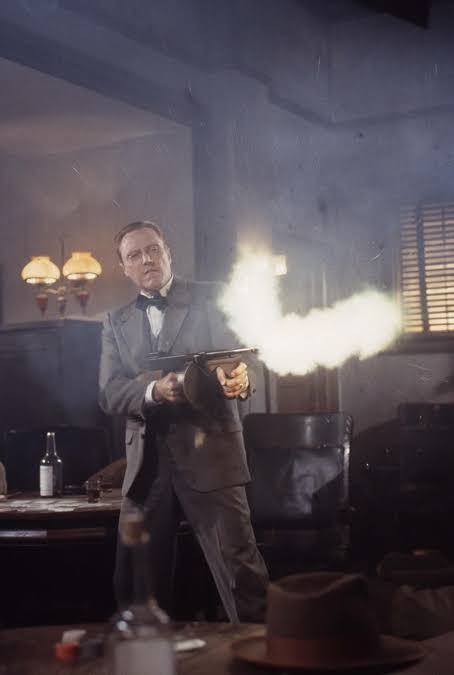
Because Last Man Standing isn’t trying to be pleasant, it is very cool. But not cool in that really trying waaaaay too hard fashion that Quentin Tarantino has never grown out of. It’s just fucking cool, because it is. Tarantino could learn from this, but he wouldn’t. He would just copy it and throw in a few more N words like that makes it edgy.
There is a purity to this movie that is increasingly rare. There are no speeches about redemption, no forced comedy. Just men killing men in a dusty town while Walter Hill films it like he’s settling an old personal grudge against sunshine.
Last Man Standing is not a perfect movie. It is, however, a perfect Walter Hill movie.
It’s Yojimbo with the humanity drained out, and A Fistful of Dollars after somebody removed the romance. It’s a Western wearing a gangster movie’s clothes, with Bruce Willis doing Clint Eastwood doing Toshiro Mifune, while Walter Hill stands behind the camera yelling “More misery!”
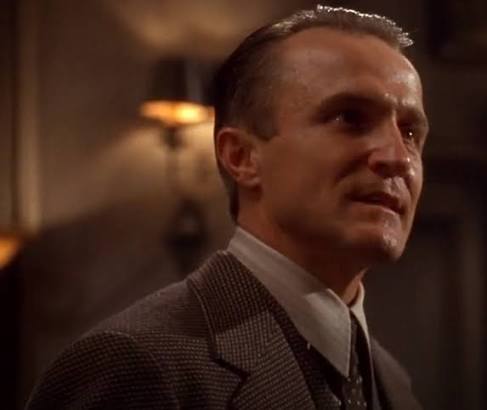
There is something admirable about a film this committed to its own unpleasantness that doesn’t apologise or soften the edges. It doesn’t ask us to sympathise with anything, it just drops us into Jericho, hands its protagonist guns that appear to have been blessed by the ammunition gods, and tells us to sit back and enjoy the massacre.
The critics didn’t. The box office didn’t. But what the hell do they know about anything, anyway?

