



28 Years Later brings Danny Boyle and Alex Garland back to the world of movies. They tried some other stuff and had varying degrees of success. Now it’s time to go back to the well and see if they can recapture the magic of yesteryear.
Fortunately, going back to the well is what producers are all about these days. They forked over the dough for Boyle and Garland to film two 28 [Insert Time Frame] Later films back-to-back. 28 Years Later is the first. Its sequel will come out in 2026.
Is 28 Years Later a return to form for Boyle and Garland? Let’s find out with minimal spoilers.
Setting The Stage
For the uninitiated, the 28 [Insert Time Frame] Later films are UK-based. A rage virus turns people into fast zombies. Survival horror ensues. The first film, 28 Days Later, reinvigorated the zombie genre, a reinvigoration that lasts to this day.
That is pretty impressive for a film that was initially believed to be about a menstrual cycle.
A sequel, 28 Weeks Later, followed.
28 Years Later sees the UK quarantined by the rest of the world. Survivors are left to fend for themselves. They do their best to survive by forming their own little societies, foraging for supplies and keeping the infected at bay.
Boyle directs. Garland writes. As for his end of the bargain, Boyle is on-point. He shot the film primarily with iPhones, and the result is visually pleasing. Certain shots are artistic. Action is chaotic and violent but easy to follow. Everyone looks great. iPhones also enabled Boyle and crew to minimize their environmental footprint while filming in forests.
This is good to know. A forest takes roughly 35 minutes to overgrow a film crew’s footprints. Hopefully, they got that down to approximately 20 minutes with their efforts on 28 Years Later.
As for Garland’s side of the bargain, he is hit and miss. He introduces fun little wrinkles into the universe and creates interesting characters. On the other hand, he slides a bit too far into talky, which we will address later.
Your Crime Is Time And It’s 28 And Life To Go
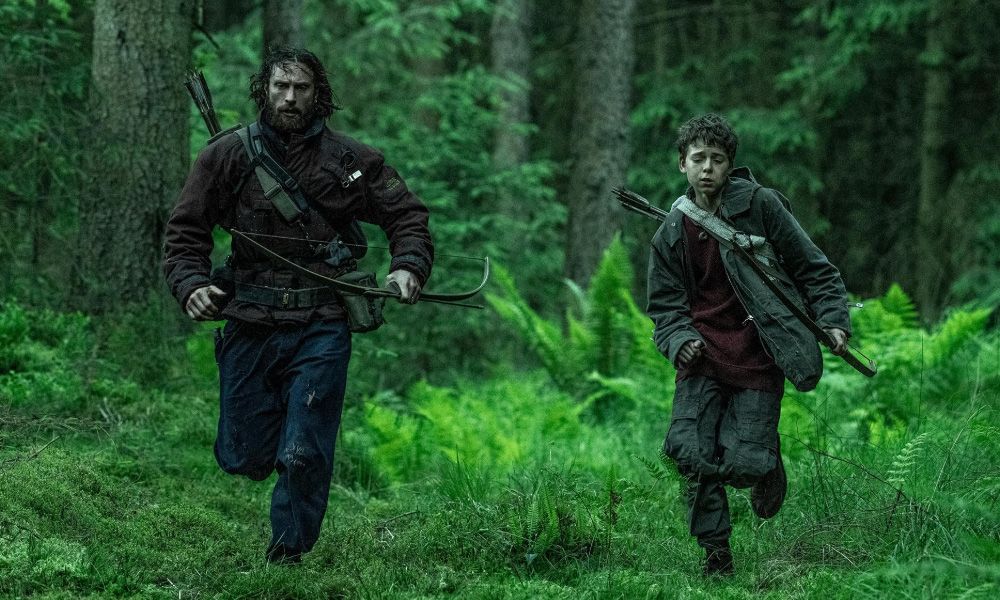
28 Years Later stars Aaron Taylor-Johnson as a father in an island community. Everyone has their role in this little village. Taylor-Johnson is a forager. He successfully inhabits the part and ends up a likable character that the viewer is interested in following. Taylor-Johnson also deserves credit for completely masking his pretty-boy tendencies. He doesn’t show his abs even one time. I was fairly certain an ab scene was in his contract, but he must have waived that clause for the greater good in this case.
Just give Taylor-Johnson the Bond mantle at this point. He can likely be serviceable in the role.
Alfie Williams plays Taylor-Johnson’s son. He learns the ways of foraging from his father. The film begins with his first journey to the mainland to test his skills.
Normally, I don’t like movies about kids, and about an hour into 28 Years Later, I realized Williams is actually the main character of the film, not his father. Yet, Williams is solid and watchable. He avoids annoying tendencies like the kids in Jurassic Park displayed, for example.
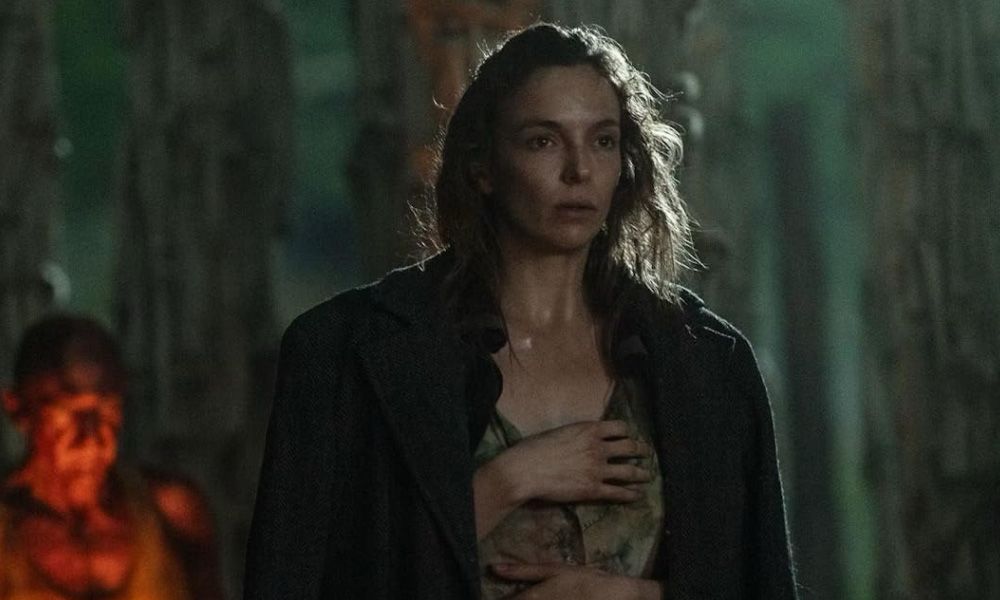
Jodie Comer is the matriarch of the Taylor-Johnson and Williams duo. She is ill and portrays a character wobbling between coherency and confusion. She provides the proverbial “emotional core” of the movie. Whether or not we need an “emotional core” is up for debate. In the end, probably not so much.
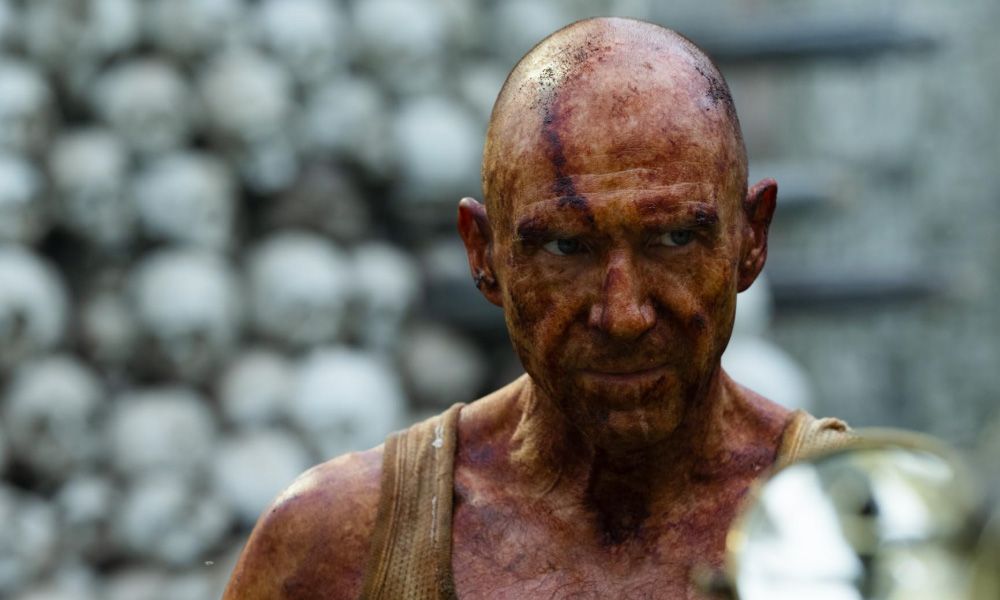
Finally, Ralph Fiennes shows up in the latter half of the film as a mysterious survivor.
She’s Only 28, Daddy Says She’s Too Young, But She’s Old Enough For Me
28 Years Later is essentially three films in one.
The first hour introduces the characters, introduces the world and provides survival horror. The first hour flows like water on a stone and offers solid excitement and action.
The underlying theme of the first hour seems to be preserving the homeland against invading hordes. It would not be much of a stretch to tie the current immigration debate into the start of 28 Years Later. The fact it appears to take the conservative position is also a surprise. The film is pro-family and pro-small-town values.
The next forty-five minutes of 28 Years Later calm down quite a bit. Things continue to calm down until they eventually bog down in a talky stretch of humanist philosophy that tries to deal with the pain of death. Garland preaches that being remembered is the main comfort of dying.
And that is where humanism fails. No one remembers anyone. Case in point: how often do you fondly remember your great-grandparents?
Everyone is two generations from being completely forgotten. The plain fact is the current generation spends more time remembering Sabrina Carpenter than they spend remembering their great-grandparents. Heck, I spend more time remembering Sabrina Carpenter than I spend remembering my great-grandparents.
This aside is only relevant because Garland starts the film portraying Christians as lunatics, and it looks like he will have more to say on that subject in the sequel. And then the comfort he offers about death is simply treacle dandelion fluff compared to the Jesus take on the subject.
Finally, the last few minutes of 28 Years Later flip into another kind of movie completely that is like a scene pulled from Peter Jackson’s Dead Alive. If that is an indication of how the next film will go, it could be fun. Time will tell.
On A Scale From 1 to 5…
This three-films-in-one structure makes 28 Years Later extremely easy to rate. The first hour is a comfortable four stars. The next forty-five minutes are probably two stars. That averages out to three. Throw in an extra half-star for the wacky ending. And there you go…
28 Years Later is worth watching…with a caveat. Sure, the film completes its coming-of-age story, but its ultimate success will depend on how the sequel closes things out. Ultimately, 28 Years Later can’t stand on its own because the overall story is not finished. Plus, there is talk of a third film being shot yet, as well. Even if a movie is good, it’s no fun to wait [Insert Time Frame] for a conclusion.


