



There are films you defend because they are secretly masterpieces. Then there are films you defend because they are deeply stupid, gloriously excessive, and made by people who understood the sacred cinematic principle that if a giant sea monster is eating rich people and pirates on a luxury cruise ship, then subtlety can go straight into the sea. Deep Rising is one of those films.
And not just one of those films. It may actually be the king of those films.
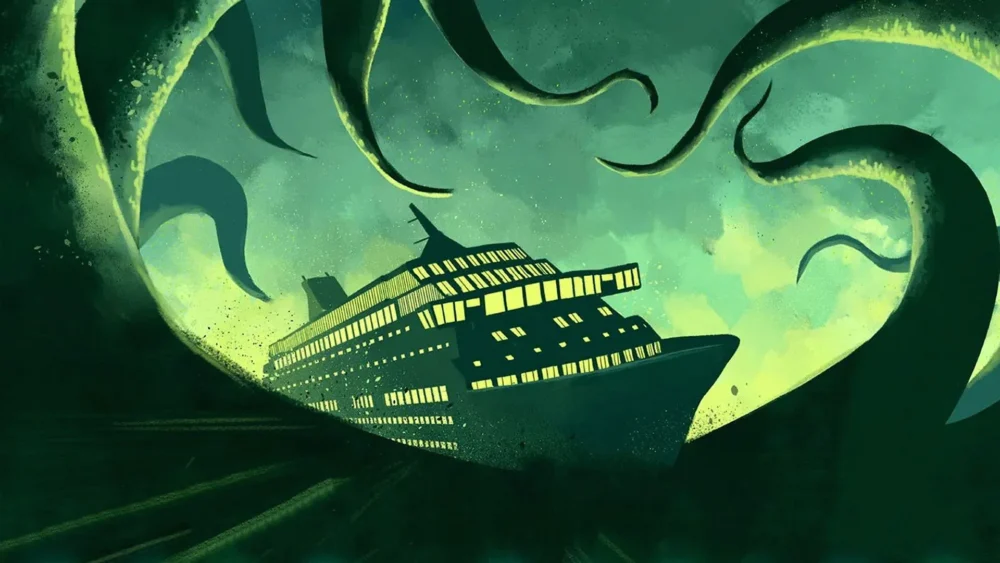
Deep Rising
Deep Rising is, arguably, the ultimate Friday-night-with-a-beer movie. The kind of late-90s creature feature that used to infest DVD rental shelves with outrageous confidence.
The kind of film where a character fires dual pistols at tentacles while making jokes, where the explosions are absurdly huge for no reason, and where the screenplay appears to have been written by a caffeinated twelve-year-old who had just watched Aliens, Jaws, and The Poseidon Adventure in one sitting.
And bless it for that.
Released in 1998, right in that magical sweet spot where Hollywood had enough CGI to get reckless but not enough to get self-conscious, Deep Rising arrived during the glorious “throw money at monsters” era.
This was the period when studios were casually greenlighting things like The Mummy, Dragonheart, Anaconda, Lake Placid, and every other “CGI thing eats people” concept that executives could scribble on a napkin during lunch at Spago. It was a beautiful time.
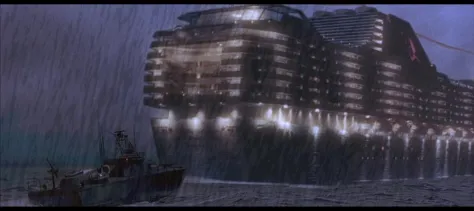
Today, every blockbuster costs the GDP of Luxembourg and arrives burdened with cinematic universe obligations, trauma arcs, and actors whispering about “the responsibility of the material.”
Back then, you could make a movie about squid monsters liquefying people on a cruise liner for around $45 million, and everyone involved treated it like a perfectly reasonable use of studio resources with an absolutely straight face.
Directed by Stephen Sommers, who may genuinely be the patron saint of 1990s high-concept pulp nonsense, Deep Rising was the cinematic equivalent of finding an unloved movie on TV late at night and accidentally discovering it absolutely rules.
Sommers was the ultimate jobbing director of that era. Not an auteur. Not an awards darling. Not someone film students annoyingly pretend to love. He was a craftsman of chaos. A man who specialized in explosions, wisecracks, monsters, and highly attractive people sprinting through collapsing environments. He made movies for normal humans.
And honestly? Looking back, his filmography is basically a monument to blockbuster entertainment before Hollywood disappeared completely into algorithm sludge. Deep Rising, then The Mummy, then The Mummy Returns, then eventually the enormously entertaining stupidity of Van Helsing. Every one of them was overstuffed, noisy, and determined to entertain you every thirty seconds whether you liked it or not.
No brooding. No moody grey lighting. No “grounded realism.” Just jet skis exploding through hallways. Cinema.

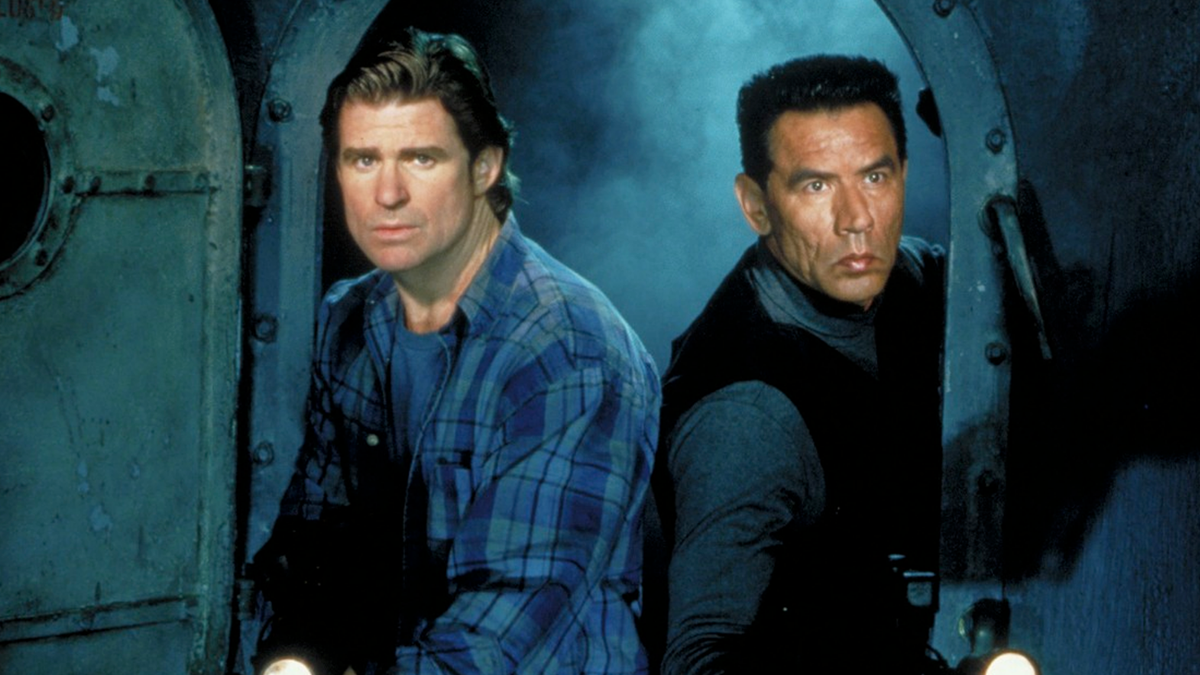
The setup is magnificently dumb. Treat Williams leads a gang of mercenaries heading toward a luxury cruise liner called the Argonautica, supposedly to rob it. But when they arrive, the ship is mysteriously deserted. Which, in movie language, means “everyone has already been partially digested.”
Turns out a giant sea creature has oozed its way aboard the vessel and is enthusiastically turning the passengers into seafood smoothies.
That’s it. That’s the movie. How perfect.
Now, let’s discuss Treat Williams.
If Hollywood history had a Hall of Fame for “almost, but not quite” leading men, Treat Williams would have a bronze statue out front. The man was perpetually one role away from becoming a full A-list movie star.
He had the looks, the charisma, the voice, the swagger, and that incredibly specific quality where he felt simultaneously dangerous and comforting, like a handsome gym teacher who definitely owned a speedboat.
But somehow, he always ended up orbiting true stardom instead of fully landing on it. And in Deep Rising, he is absolutely magnificent.
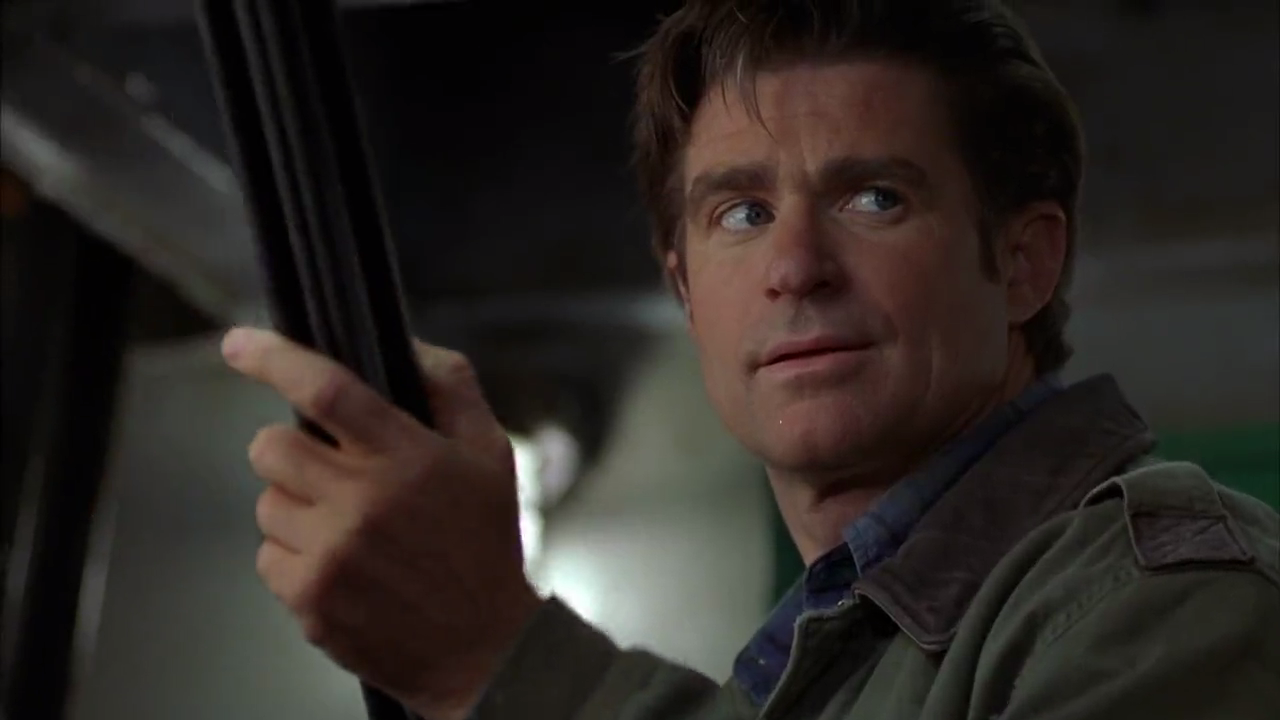
He plays Finnegan, a smuggler/mercenary/rogue-ish scoundrel type who exists entirely to grin through catastrophe while delivering lines with maximum smirk efficiency.
Williams attacks the role with the energy of a man who fully understands he’s in a giant squid movie and therefore intends to have the time of his life. There’s no embarrassment. No irony. He commits.
That’s what separates good schlock from bad schlock. Everyone here understands the assignment.
Williams was one of cinema’s great substitute leading men. The kind of actor studios used when Harrison Ford or Kurt Russell said no. And frankly, there’s something lovable about that category of performer. They often work harder because they know they’re not protected by superstardom.
Treat Williams gives Deep Rising exactly the right flavor of blue-collar charisma. He’s not polished enough to feel untouchable. He feels human. Like a guy who accidentally wandered into a monster movie while trying to avoid a tax bill.
Then there’s Famke Janssen. Good lord.

This was peak post-GoldenEye Famke Janssen. The absolute apex of late-90s dangerous glamour. She enters Deep Rising looking like the human embodiment of every magazine cover in a Heathrow airport WHSmith circa 1998. The movie knows it too.
There’s no pretending otherwise. The camera worships her with the kind of unapologetic enthusiasm modern films have largely forgotten. And honestly, in an era before every blockbuster protagonist had to dress like a tactical accountant, there was something wonderfully honest about it.
Janssen plays Trillian St. James, a thief aboard the luxury liner, and she spends most of the film running around in drenched evening wear while monsters attempt to eat her. This is not feminist cinema. This is pulp nonsense. And it absolutely works because Janssen possesses that rare old-school movie star quality where she can make absurd dialogue sound halfway seductive.
Also, she and Treat Williams have genuine chemistry, which is critical in a movie where giant tentacles are constantly interrupting conversations.
And speaking of interruptions… The toilet death scene.
Cinema history’s greatest argument against using cruise ship bathrooms. A woman sits on the toilet. Suddenly, she hears weird noises. The toilet water begins bubbling ominously. And then, because this movie is powered entirely by lunatic energy, a tentacle erupts upward and drags her screaming into the plumbing system.

One of the dumbest deaths ever filmed is also completely unforgettable.
This is why people still remember Deep Rising. It understands that creature features need set pieces. You need bizarre kills. You need moments audiences will describe to friends in pubs twenty years later with the phrase “Mate, you HAVE to see this.”
Modern monster movies often get trapped in dreary seriousness. Deep Rising knows giant sea monsters should occasionally kill someone through a toilet because that is inherently funny.
The supporting cast is another huge part of the charm. Jason Flemyng arrives riding high off Lock, Stock and Two Smoking Barrels and clearly understood the assignment immediately. Flemyng spent the late 90s becoming one of Britain’s premier “that bloke from that thing” actors, and he’s wonderfully twitchy here. You can practically see him leveraging every ounce of post-Guy Ritchie cool into Hollywood opportunities.
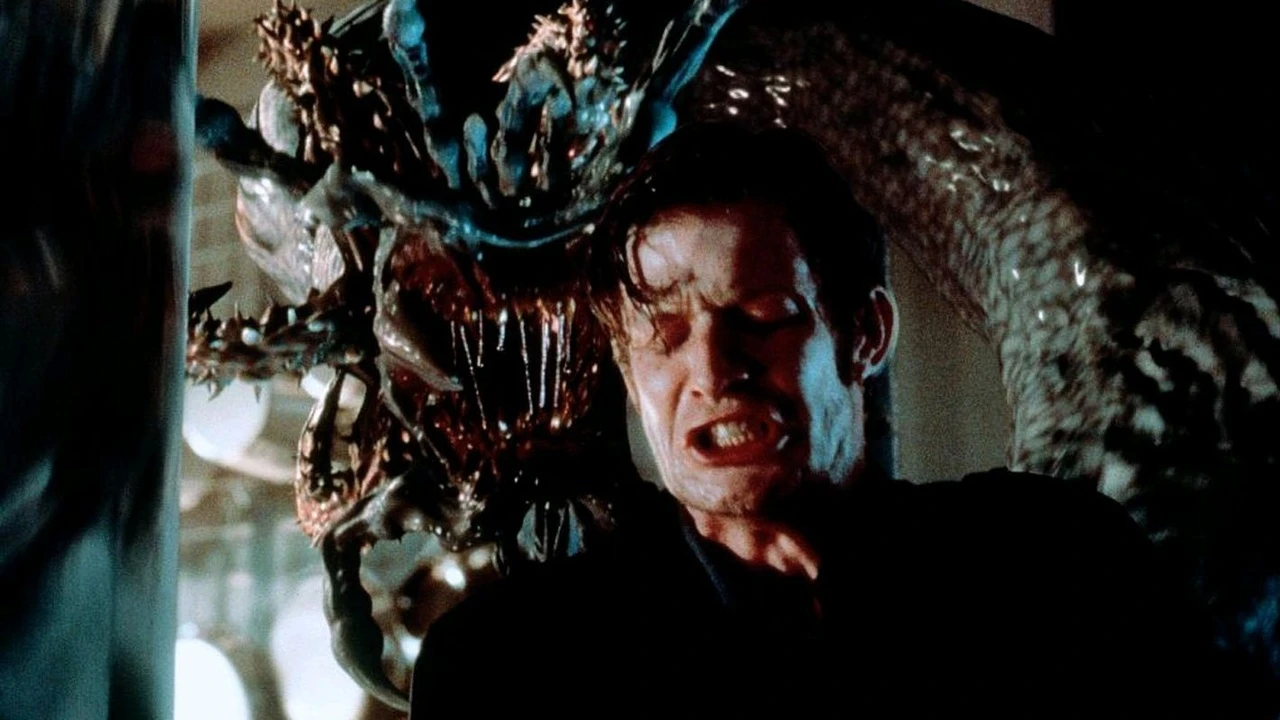
Then there’s Kevin J. O’Connor, who appears to be playing exactly the same character he later played in The Mummy, only with slightly fewer references to ancient Egypt. Honestly, if you told me his Deep Rising character eventually wandered into Hamunaptra and became Beni, I’d believe you immediately.
O’Connor specializes in a very specific form of sweaty cowardice. Nobody panics with more enthusiasm. Nobody screams “I am absolutely doomed” more convincingly. He’s one of those great character actors who can elevate pure exposition simply by looking catastrophically untrustworthy.
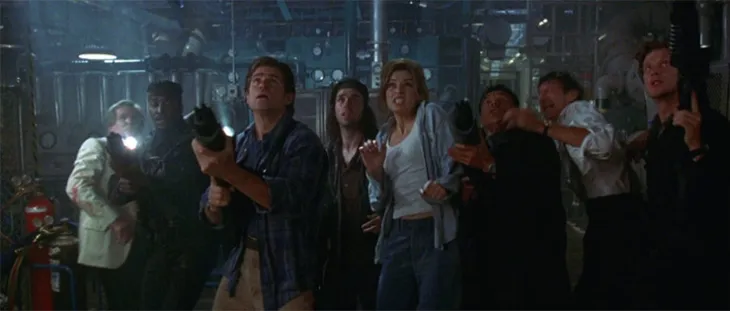
The rest of the ensemble follows the sacred 90s action formula:
- One guy who definitely dies first.
- One mercenary who thinks he’s tougher than the monster.
- One comic relief lunatic.
- One wealthy villain.
- Several extremely edible supporting characters.
Perfect balance.
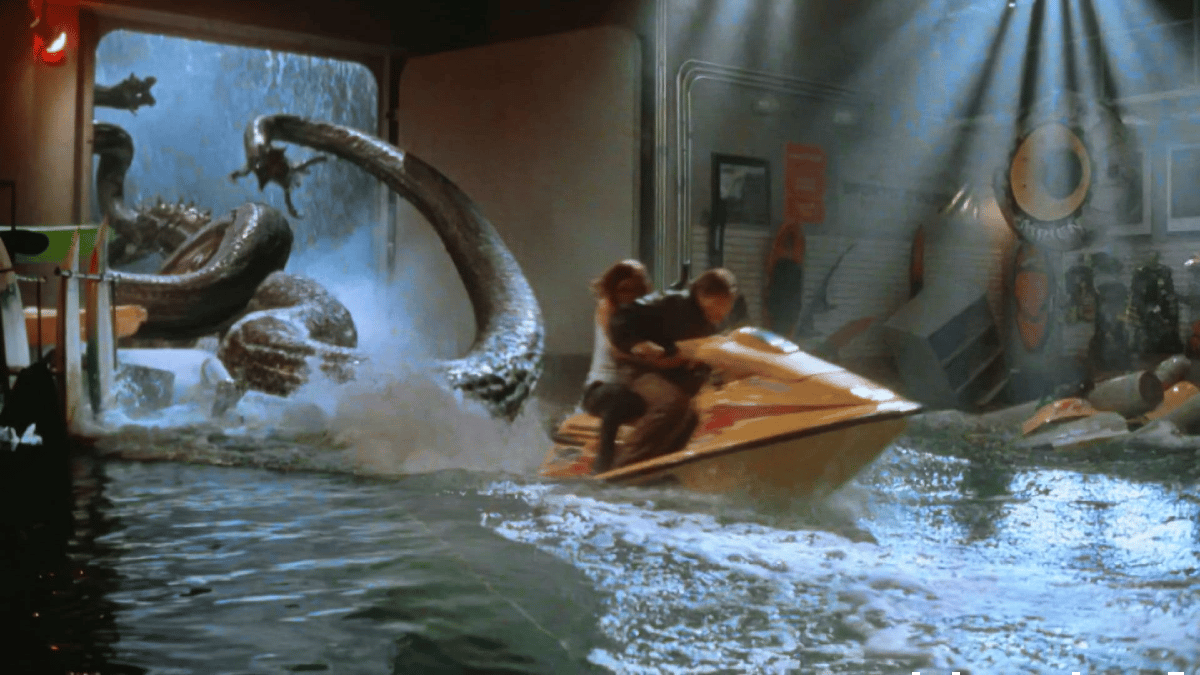
And then there’s the jet ski scene. This is where Deep Rising ascends from enjoyable B-movie homage into true art. At one point, Treat Williams literally rides a jet ski through the flooded corridors of the cruise ship while firing at monsters. That sentence alone should have earned the film an Oscar.
The late 90s loved this kind of thing. Movies hadn’t yet become terrified of silliness. Executives still believed audiences wanted FUN rather than “lore.” So filmmakers would casually include absurd action beats simply because they were cool. And they were right.
The jet ski sequence is preposterous. Physics leaves the room entirely. The geography of the ship becomes incomprehensible. But none of that matters because it’s joyous. It’s pure blockbuster sugar. That’s the secret ingredient missing from so much modern spectacle: joy. And Deep Rising enjoys itself enormously.
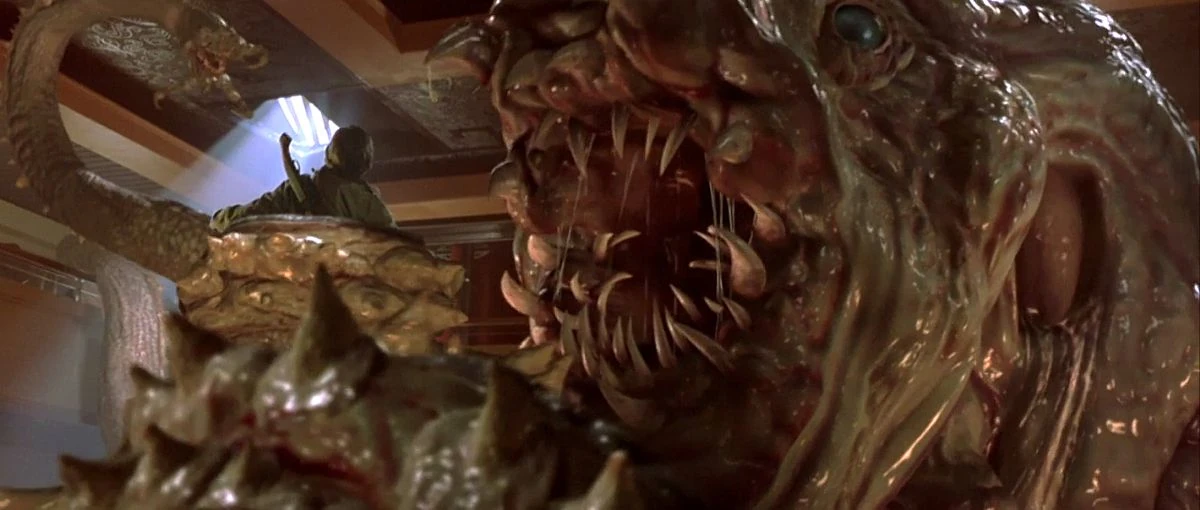
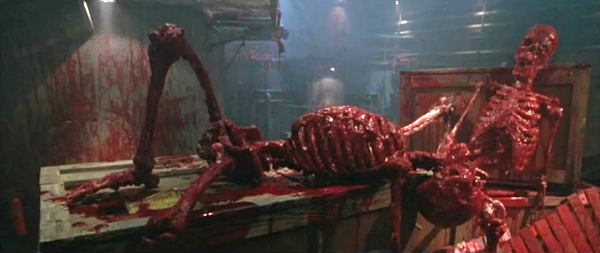
Even the CGI, which has obviously aged badly in places, possesses a certain nostalgic charm now. This was during that weird transitional phase where practical effects and digital effects were awkwardly shaking hands in public. The monster is a gooey CGI nightmare mixed with practical tentacle rigs and gallons of slime. Made by Rob Bottin, no less.
And honestly? It works better than many modern over-rendered digital creatures because there’s texture to it. Weight. Wetness. Everything in this movie looks damp and disgusting. As all respectable sea monster movies should.
The making of the film itself is also wonderfully chaotic. Originally conceived under the title Tentacles, the production was basically Stephen Sommers trying to make the biggest possible movie without actually having blockbuster money. Universal reportedly gave him around $45 million, which even in 1998 wasn’t exactly Titanic cash. So the production relied heavily on ingenuity, recycling sets, and squeezing every ounce of value from the budget.
And you can feel that hustle onscreen.
There’s something deeply lovable about economical filmmaking. Modern blockbusters often feel smothered by excess. Deep Rising feels scrappy. It feels like a bunch of talented lunatics trying to maximize entertainment value per dollar.
The giant cruise ship interiors? Largely sets.
The monsters? Clever combinations of practical effects and early CGI.
The atmosphere? Industrial quantities of water and smoke machines.
A proper movie.
And because this was the late 90s, the entire thing has that glorious shiny aesthetic where every metallic surface gleams under blue lighting. Everybody is sweaty. Every corridor sparks randomly. Computers make beeping noises that no real computer has ever made. It’s magnificent.

The film bombed on release, naturally. Of course it did.
This always happens to movies that later become cult favorites. Audiences in 1998 were probably too busy watching Saving Private Ryan or debating whether Armageddon counted as cinema to notice Deep Rising. Meanwhile, it quietly lurked in video stores waiting for cable television to transform it into a beloved guilty pleasure. Which it absolutely became.
Because guilty pleasure movies are rarely actually “bad.” Usually, they’re just operating according to different priorities. Deep Rising does not care about realism. It does not care about prestige. It cares about monsters, attractive people, explosions, sarcastic dialogue, and increasingly elaborate methods of being eaten. And by those standards, it succeeds brilliantly.
There’s also something comforting about the movie’s sincerity. It never pauses to wink at the audience. Modern films constantly apologize for themselves through self-aware humor. Deep Rising simply assumes giant tentacle monsters on a cruise ship are inherently cool.
Again: they were right.
Even the ending is hilarious. After surviving all this chaos, the remaining characters wash ashore on a mysterious island… only to hear gigantic roaring noises from the jungle as a muge monster of some kind crashes through the trees towards them. Finnegan utters “Now what?” – Cut to credits.
No explanation. No sequel. Just pure “ah, fuck it!” energy.
And honestly, that final sting perfectly encapsulates the entire film. It’s basically Stephen Sommers leaning into the camera and saying “You liked monsters? Here’s MORE monsters. Now, goodbye!” like some kind of damn hero.
Watching Deep Rising today feels like rediscovering an extinct species of blockbuster. Mid-budget studio genre films used to exist everywhere. Weird, muscular, slightly trashy entertainment made by directors who understood pacing and momentum rather than “franchise architecture.” You could make a creature feature with just about recognizable stars, decent effects, sharp pacing, and no cinematic universe obligations. You could just make a fun movie.
And that’s exactly what Deep Rising is. Fun. Huge, unapologetic, ridiculous fun.
It’s a gloriously silly relic from a time when Hollywood studios would casually spend millions bringing pulp paperback energy to multiplexes. No prestige, no guilt, and as a result, no restraint. Just Treat Williams on a jet ski shooting sea monsters while Famke Janssen looks astonishingly beautiful.
Sometimes that’s all a movie needs to be.

