

There was a strange period in Disney history when the company appeared to have looked at the changing world around it, noticed that children were becoming interested in spaceships, superheroes, spies, explosions, fast cars, and women who were considerably more glamorous than anyone had any business being in a family film, and responded by saying:
“Fine. We’ll do all of those things. But nobody is allowed to bleed.”
This was the late 1970s and early 1980s Disney. The era of The Black Hole, Tron, The Watcher in the Woods, The Devil and Max Devlin, and a series of other live-action films that often seemed as though they had been conceived by a committee of ageing uncles who had been shown Star Wars but were only allowed to remember the bits involving vehicles.
It was an awkward transitional period. Walt Disney Productions was trying to modernise without frightening the grandparents. It wanted to compete with the increasingly spectacular Hollywood while retaining the wholesome, family-friendly identity that had made the company famous. The result was often fascinating, occasionally entertaining, and sometimes like watching your favourite elderly relative attempt to dance to techno.
Then came Condorman.
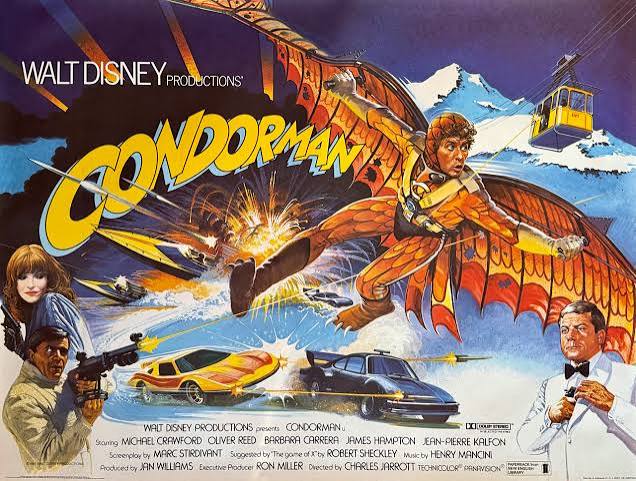
Condorman
Released in 1981 by Walt Disney Productions and distributed by Buena Vista Distribution, Condorman was the company’s attempt to create a superhero adventure, a spy thriller, a romantic comedy, a Cold War thriller and a live-action cartoon simultaneously.
It is approximately 90 minutes long. At least 65 of those minutes are spent introducing or operating some form of vehicle.
This is not a criticism. Well, it is. But it is also one of the reasons why the film still has a following.
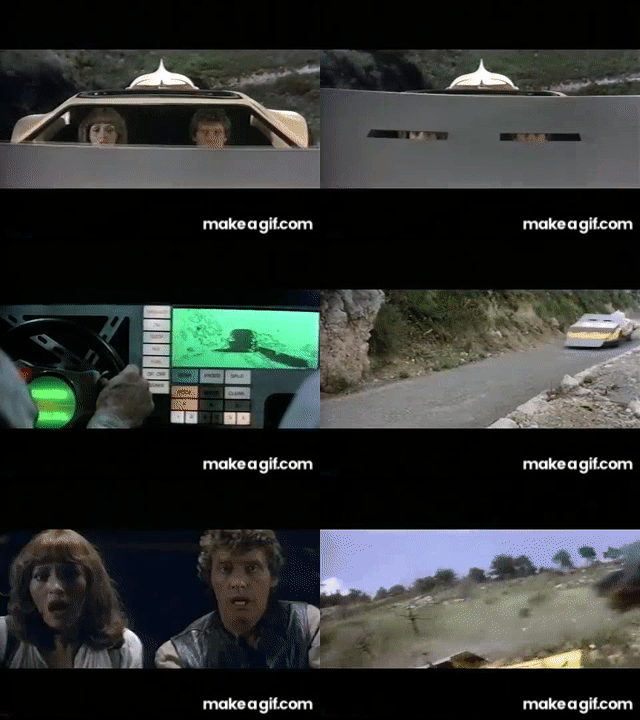
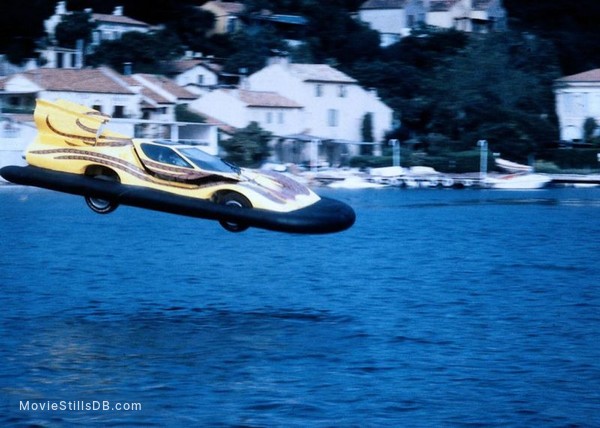
Because if you saw Condorman as a child, you probably did not care that the plot was held together with string, optimism and Michael Crawford’s American accent. You cared that there was a yellow supercar with that turned into a ramp and a boat. You cared that it fired gadgets. You cared that there was a speedboat with a laser. You cared that the hero had a giant mechanical bird suit. You cared that the entire movie appeared to have been designed by someone who had been locked overnight inside a branch of Toys “R” Us and given some truly excellent drugs.
The film’s shortcomings were invisible because the Condormobile existed. That is the power of a cool car.
It is like Disney went Bond, but remembered to bring a packed lunch and check that a clean toilet was available in the vicinity.
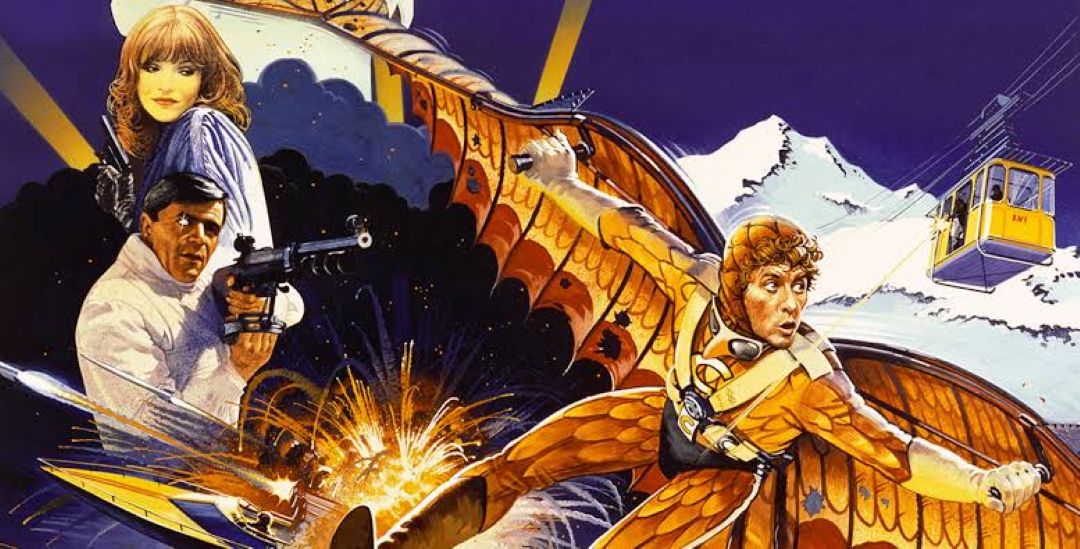
The story begins with Woodrow “Woody” Wilkins, a comic-book artist and writer played by Michael Crawford. Woody has created a superhero called Condorman, who is essentially Batman if Batman had been designed by a child who had just discovered birds.
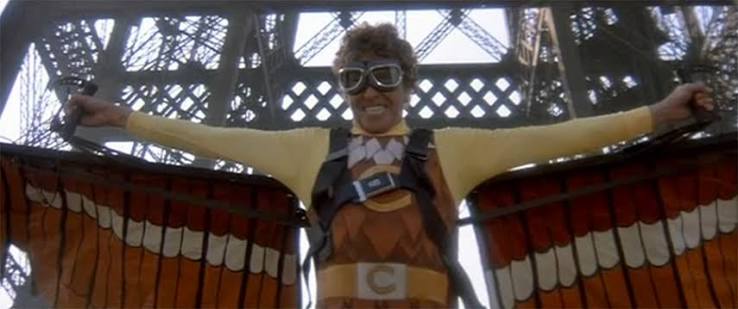
Condorman flies. That is his thing. He has wings. Not metaphorical wings. Not spiritual wings. Not the wings of freedom. Actual enormous mechanical wings.
Woody is so committed to realism that he refuses to draw anything his hero could not theoretically do himself. This sounds admirable until you realise that it means he has constructed a giant flying suit and intends to test it by jumping off the Eiffel Tower… which he does.
The film actually begins with Michael Crawford throwing himself off one of the world’s most famous landmarks while wearing enough machinery to power a medium-sized French village.
This is not how most Disney films begin. Bambi begins with a baby deer. Cinderella begins with singing. Condorman begins with the star of Some Mothers Do ’Ave ’Em attempting aviation through aggressive self-confidence.
The flight goes badly, naturally. One wing fails and Woody plummets into the Seine, because even in 1981 Disney understood that every superhero origin story required a traumatic event. Usually it is the death of a parent, but here it is the death of several thousand pounds’ worth of prototype equipment.
Woody is then recruited by his friend Harry, a CIA employee played by James Hampton. Harry needs a civilian to conduct a seemingly harmless document exchange in Istanbul and decides that the best candidate is a comic-book artist who has recently hurled himself off the Eiffel Tower wearing a giant bird costume. This is the CIA’s recruitment process. No wonder the Cold War took so long.
From Frank Spencer To The Phantom
Michael Crawford was a fascinating choice for a superhero. At the time, British audiences knew him primarily as Frank Spencer from the BBC sitcom Some Mothers Do ’Ave ’Em, where he played one of television’s great incompetent men. Frank Spencer was a walking workplace accident who could turn putting on a pair of trousers into a national emergency.
Then Disney looked at him and apparently thought “You know what this man needs? Wings!”
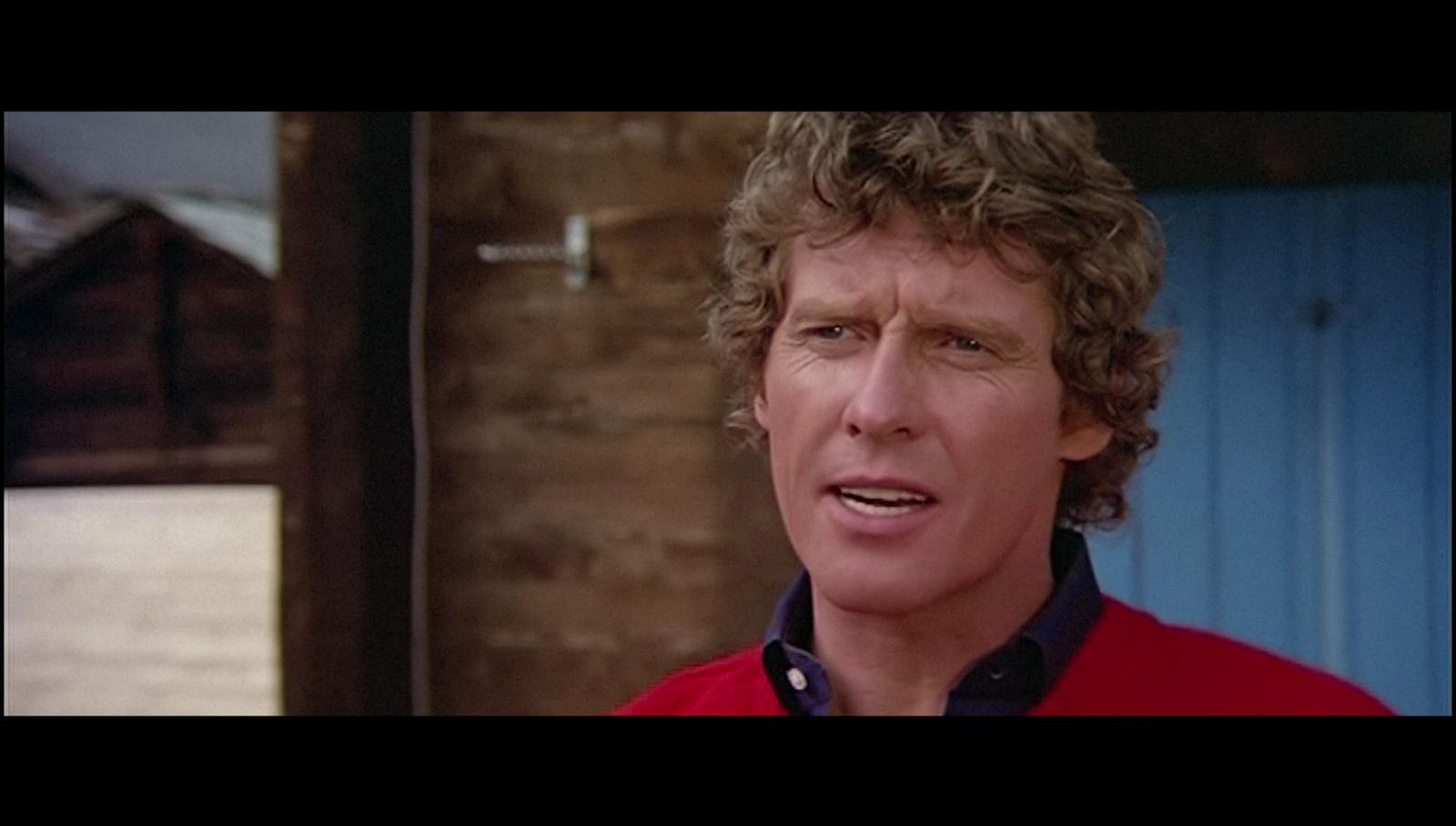
Crawford was fresh from years of playing a cheerful idiot who caused catastrophic property damage merely by entering a room. In Condorman, he is asked to become a comic-book hero, international spy, inventor, action star and romantic lead… who is a cheerful idiot who caused catastrophic property damage merely by entering a room
He approaches all of these responsibilities with the same expression of a man who has just been informed that the kettle is on fire. Meanwhile, his American accent is committed. It exists. That is probably the kindest thing that can be said about it. Crawford sounds as though he has learned American speech patterns by listening to Humphrey Bogart through a wall while someone repeatedly operates a blender. Yet he is enormously likeable.
Woody is not a conventional action hero. He is not physically imposing. He does not possess secret-agent training. He is not particularly brave. He is simply a man who has spent years designing absurd gadgets and then discovers that the world has unexpectedly become a comic book.
The film’s central idea is that Woody’s creations become useful because reality begins behaving like one of his stories. His inventions are not merely decorations. The Condormobile, the gadgets, the wings and the various ridiculous devices emerge from his imagination and are folded into the plot. The comic-book artist is effectively forced to live inside his own work.
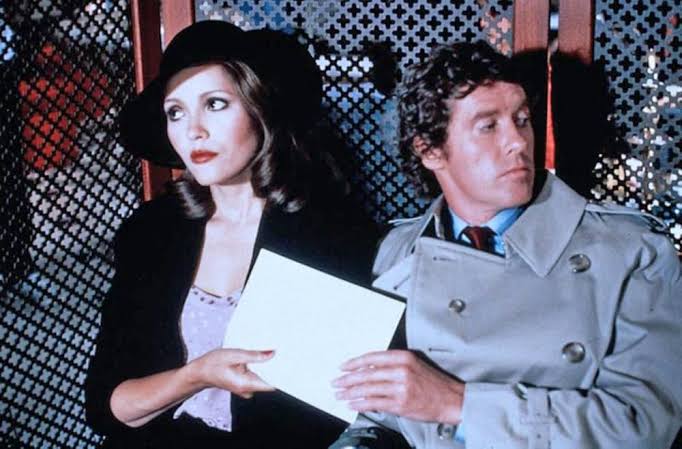
It is a clever concept. The film then spends most of its running time driving it around Monaco at high speed.
Crawford would soon move into the kind of career that made Condorman seem like an unusual footnote. In the same year, he starred in the original London production of Barnum, earning major acclaim and an Olivier Award. Later came The Phantom of the Opera, where he became one of the defining musical-theatre stars of his generation.
Which means Michael Crawford’s career path was Frank Spencer → Condorman → P. T. Barnum → The Phantom. That is not a résumé. That is a remarkable ascent powered by optimisim and Andrew Lloyd Webber.
The Sexiest Thing Disney Ever Allowed
Barbara Carrera plays Natalia Rambova, a Soviet operative who wants to defect. She is also extraordinarily beautiful. There is no elegant way to write around this.
The film knows it, Disney knew it, the marketing department knew it. Barbara Carrera enters Condorman looking like the physical manifestation of every adolescent boy’s inability to concentrate during a spy movie.
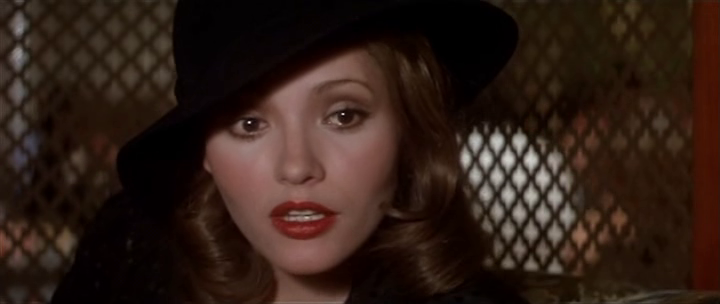
Disney president Ron Miller reportedly described her character as the sexiest in Disney history, which is a statement that probably caused several executives to immediately loosen their ties and ask whether anyone had checked the company rulebook.
Carrera is glamorous, intelligent and dangerous, and she plays Natalia with enough confidence to survive being placed inside a film where the romantic lead occasionally dresses as a giant bird. She is the film’s closest connection to the Roger Moore Bond universe in which it clearly wishes it was present.
In fact, Condorman often feels as though Disney had watched The Spy Who Loved Me and decided to remake it without the adult innuendo, the gun violence or any awareness that people occasionally need to have conversations between car chases.
Carrera was in the running for both Anya Amasova and Holly Goodhead in the world of Bond. She would eventually appear in Never Say Never Again, which meant she escaped one Bond-adjacent production and entered an actual Bond production. Presumably she spent the entire time wondering why Sean Connery was not wearing wings.
James Hampton plays Harry, Woody’s CIA friend. You know James Hampton. You absolutely know James Hampton. You have seen him in things. You have probably watched entire films in which he appeared, and you may have spent years saying:
“Who is that guy? He’s been in loads of stuff.”
That is James Hampton. He had the kind of face that belonged to cinema’s great supporting actors: familiar, friendly and permanently associated with the feeling that he might know where the keys are.
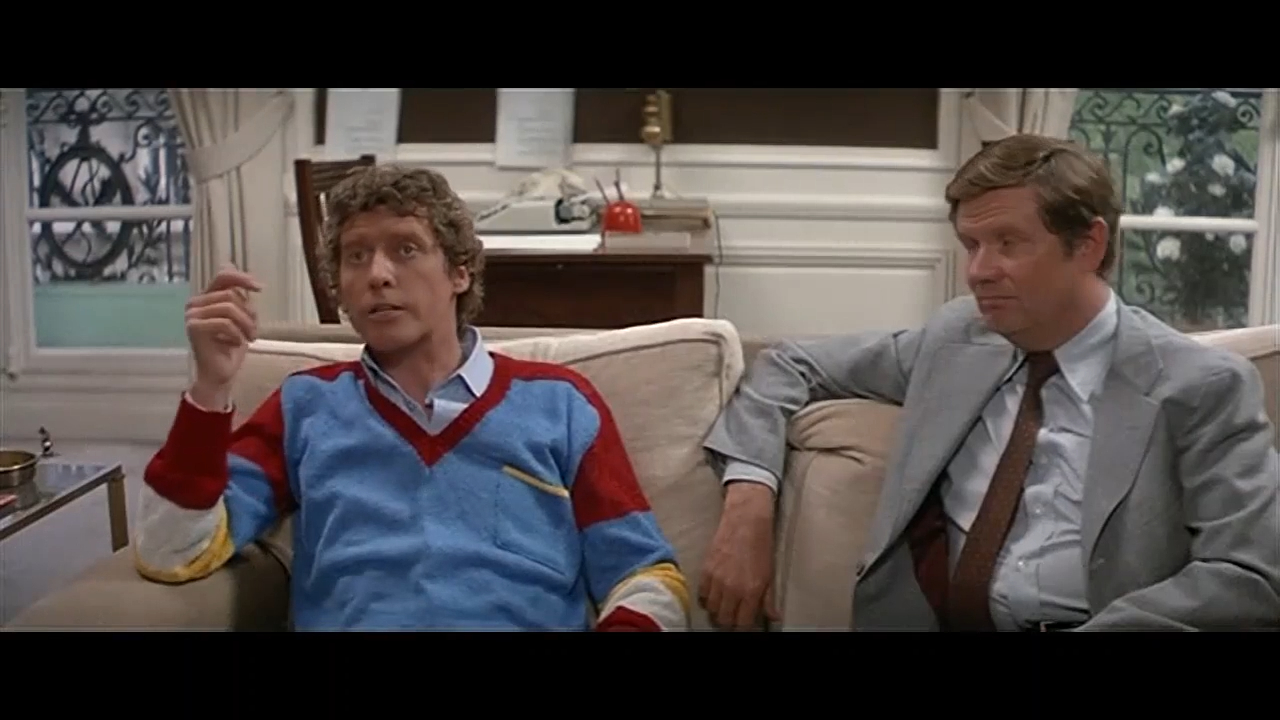
Hampton appeared in The Longest Yard, Teen Wolf, Sling Blade, F Troop, and countless other productions. He was one of those actors who could walk into a scene and immediately make it feel as though the story had acquired a competent neighbour. In Condorman, he is essentially the CIA’s representative of cheerful administrative incompetence.
The CIA is portrayed as a collection of people who appear to have acquired their espionage knowledge from office stationery. Harry is a file clerk. His solution to a dangerous international intelligence operation is to recruit his comic-book-writing friend. There are no background checks, no psychological assessments, no training, no extraction plan. Just:
“Hello, Woody. Would you mind going to Istanbul and exchanging documents with the Soviet Union? You’ll probably be fine.”
The CIA then spends much of the film looking surprised that this plan has generated complications.
The Man Who Could Out-Drink The Cold War
Ahhh, Oliver Reed. Reed plays Krokov, the film’s villain and a senior KGB official. He is dressed like a man who owns three factories and has personally fired everyone in them. Krokov is sinister, humourless and permanently irritated. He treats Natalia not as a person but as a valuable state asset that has escaped.
This is the Soviet Union according to Condorman: Grey. Cold. Bureaucratic. Robotic. Everyone obeys orders. Nobody laughs. The cars are black. The coats are black.
Meanwhile, America is colourful, inventive, free and filled with comic-book artists who can build flying machines in their spare time. The Cold War messaging is not subtle, it is not even hiding behind a curtain. It is standing in the middle of the room wearing an American flag as a cape.
The Soviet system suppresses individuality. America encourages creativity. The KGB has professional assassins. The CIA has James Hampton. The KGB uses cold, disciplined efficiency.
America uses a man dressed as a condor, and apparently wins.
Oliver Reed was still deep within his legendary hellraising era. His reputation for drinking, fighting, partying and treating civilisation as a loose set of recommendations was already enormous. Reed’s stories became so famous that they sometimes sounded like folklore.
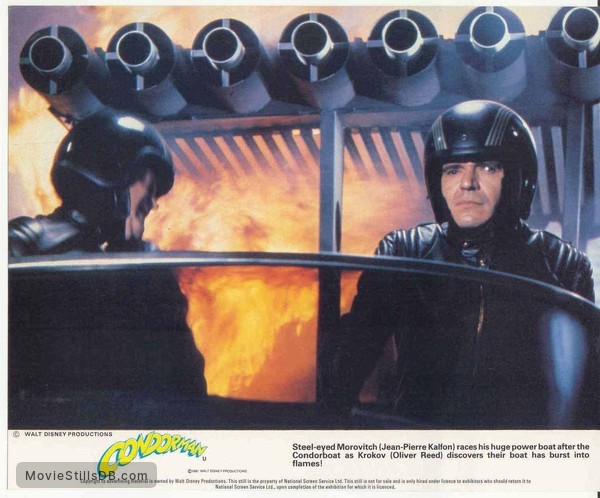
There were tales of marathon drinking sessions, bars damaged during arguments, contests involving impossible quantities of alcohol and behaviour that would now result in a production being shut down before lunch. Oliver Reed did not merely enter a pub, he conquered them.
He was a magnificent actor, but his public legend often became larger than his performances. By the time he appeared in Condorman, audiences could look at him and reasonably assume that the KGB had not recruited Krokov. They had simply found Oliver Reed sitting outside a hotel and offered him a coat.
He is underused. Krokov spends much of the movie issuing instructions and becoming increasingly annoyed that Natalia keeps escaping.
You expect Reed to bite someone. He does not. You expect him to throw a table. He does not. You expect him to drink an entire minibar while threatening the West. Disney probably hid the minibar.
The Car Is The Star
The Condormobile is magnificent. Yellow, low, adorned with an emblem. It looks like Batman’s car after Batman spent a weekend in Monaco and became obsessed with Italian concept vehicles.
The vehicle was based on a modified Nova Sterling kit car, but the film transforms it into something that belongs in the imagination of a ten-year-old. It is a declaration personified and given wheels that says, loudly:
“I have no idea where I am going, but I intend to arrive sideways.”
The Condormobile contains gadgets, hidden functions and enough technology to make Q quietly consider retirement.
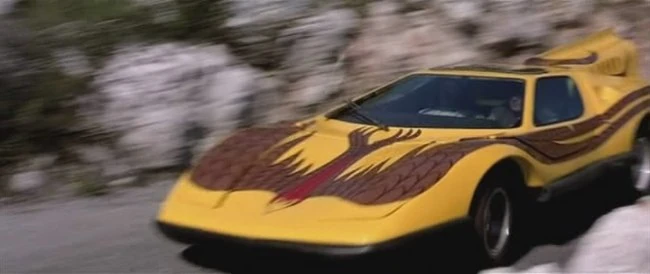
The car chase is one of the film’s highlights, and it was coordinated by legendary stunt driver Rémy Julienne, whose career included The Italian Job and Bond films. That Bond pedigree is visible, as the vehicles move with speed and precision. The stunt work has weight. Cars genuinely appear to be travelling through real locations rather than being pushed slowly across a soundstage by disappointed technicians.
In Condorman, the chase sequences are the point and everything else is connective tissue. The plot exists because the Condormobile requires somewhere to go, or there is a nearby body of water that is just begging for a speedboat chase.
And once Condorman begins moving, it refuses to stop. The movie operates according to a simple rule – If the audience has seen a vehicle for more than ten minutes without it exploding, transforming or travelling dangerously fast, introduce another vehicle.
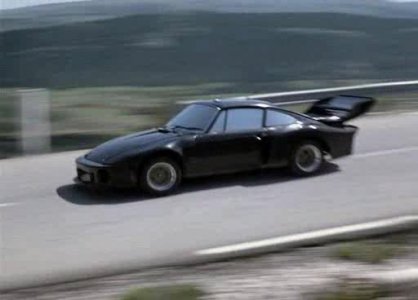
This is why children loved it. Children do not care that international espionage is being explained through a series of increasingly implausible misunderstandings. Children care that the car shoots bombs!
Sure, adults may ask:
“Why would the CIA allow an untrained civilian to impersonate a secret agent?”
But the children ask:
“Does the car shoot anything?”
Adults may ask:
“Why does the KGB behave like a corporate management team from a dystopian novel?”
The children simply want to know:
“WHEN DOES HE FLY?”
The answer is eventually. The answer to everything a child could ever want in a movie is “eventually” where Condorman is concerned. That is why it still has a deep well of love today from people who were kids when this thing hit the screen.
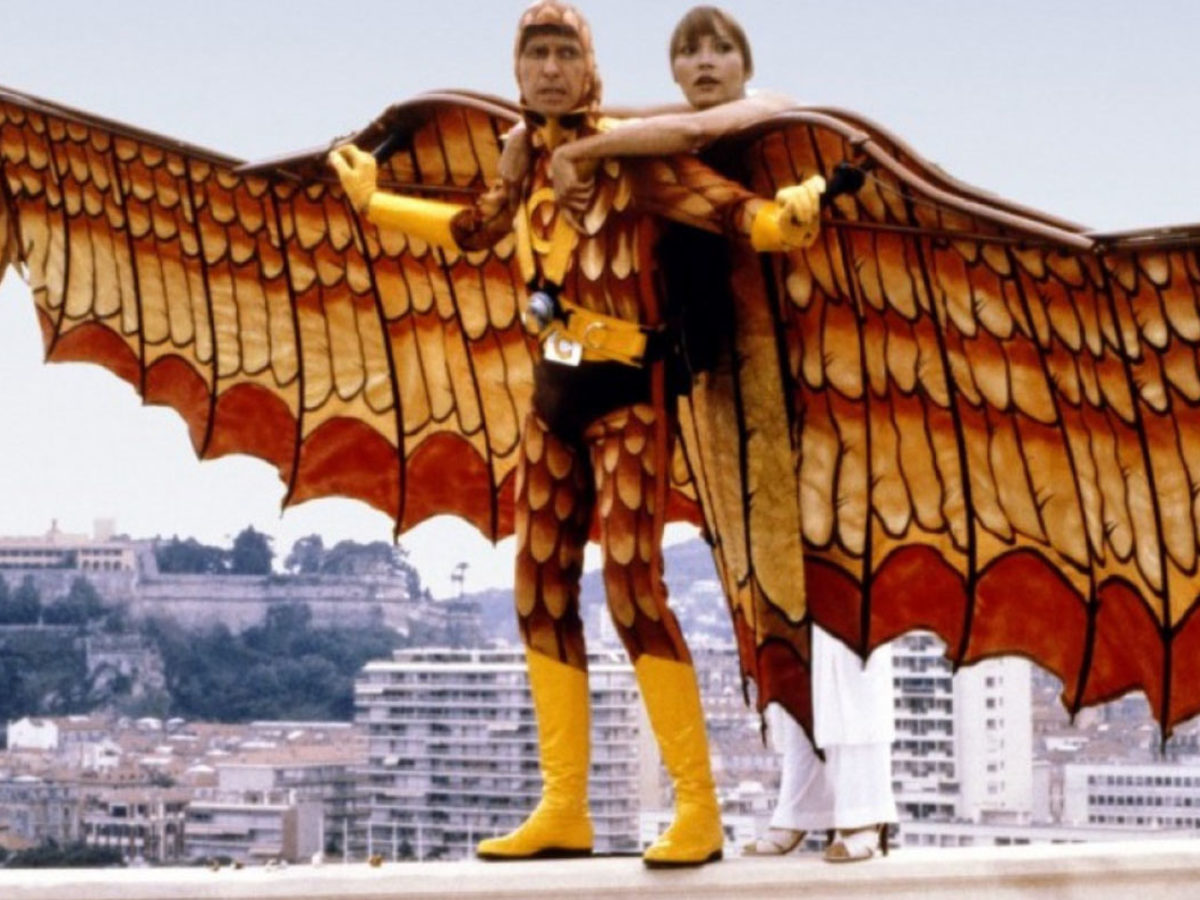
And when Condorman finally takes to the air, the film delivers the thing it has been promising since the opening sequence. The effects were supervised by Colin Chilvers, who had worked on the first two Superman films. The production used facilities at Pinewood associated with those films, although the effects are not quite operating at Christopher Reeve level. The flying occasionally looks like Michael Crawford is being carried through the sky by visible disappointment. Critics noticed.
Children did not. Children were too busy imagining how to build their own wings.
Condorman owes a great deal to Batman. The secret identity, the gadgets, the custom vehicle, the costume, the idea that a wealthy or talented civilian can use technology to become a hero.
But, as I have mentioned several times, it owes even more to Roger Moore-era Bond. There are glamorous European locations, beautiful woman with uncertain loyalties, sinister Soviet villains, gadgets, absurd vehicles, and a comic tone.
There is sense that every international crisis can be solved by driving something expensive through a wall.
The difference is that Roger Moore played Bond as a man who knew exactly what he was doing. Michael Crawford plays Condorman as a man who suspects he may have forgotten to turn off the oven.
Bond enters a casino and immediately controls the room. Woody enters a casino and looks as though he is searching for the toilets. Bond seduces women, Woody falls over near them. Bond uses gadgets with confidence, while Woody appears genuinely surprised when his inventions work. Yet this is almost entirely the film’s charm.
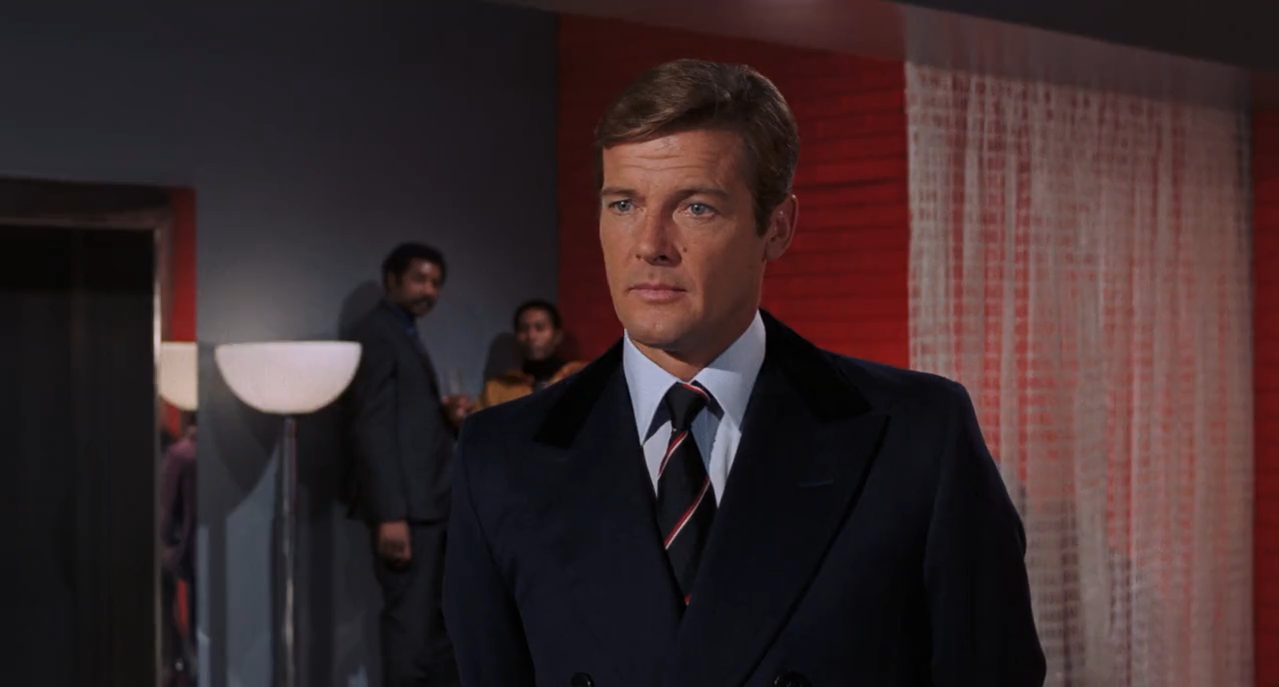
Condorman is not a superhero because he is powerful. He is a superhero because he is enthusiastic.
The critics were not kind. They looked at Condorman and saw a confused, expensive film that was neither a convincing spy adventure nor an effective comedy.
The Los Angeles Times called it dull and dispiriting. Gene Siskel and Roger Ebert criticised the visible wires, obvious effects and generally dated feeling, arguing that Disney appeared to be behind the curve again. This was not entirely unfair.
By 1981, audiences had seen Star Wars, Superman, Raiders of the Lost Ark and increasingly sophisticated action cinema. Condorman often looked like a film that had been designed in 1976 and accidentally released five years later.
Yet one critic, John Corry of The New York Times, was more forgiving, describing it as painless, chaste and attractive, with beautiful scenery and clothes. That may be the most polite review imaginable.
“Nothing terrible happened while I was watching it.”
High praise. The box office was also not kind.
The film cost approximately $14 million. It reportedly earned only around $2.5 million at the box office and contributed to Disney’s poor financial performance during 1981. Estimates suggest Disney lost roughly $9.5 million on the film. That is not a disappointing result. That is the financial equivalent of the opening scene. Disney built a giant mechanical bird, pushed it off a famous landmark and watched it fall directly into the accounts department.
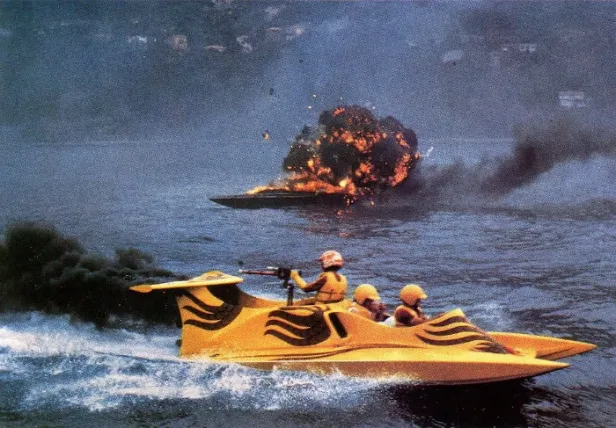
The company had reportedly expected a hit and had even considered further adventures. The Condorman franchise never happened, there was no Condorman 2: Return of the Krokov.
The bird had flown once, then Disney clipped its wings.
Nostalgia Glasses, Engage!
Watching Condorman as an adult is a peculiar experience. You notice the awkward plotting, the inconsistent tone, and the wobbly effects.
You notice that the CIA appears unable to organise a lunch appointment without creating an international incident, while the Soviet Union is portrayed as an enormous office staffed by people who have never experienced joy. You notice Michael Crawford’s accent.
You notice everything. But then the Condormobile appears, and suddenly you are ten years old again.
The movie’s logic becomes irrelevant because it is essentially a feature-length demonstration of expensive toys.
Condorman is not a great film. It may not even be a consistently good film. But it is an enormously likeable piece of early-1980s Disney weirdness: a strange collision between superhero fantasy, Roger Moore Bond, Cold War propaganda, live-action cartoon comedy and a child’s dream garage.
It is a movie where imagination becomes reality, and who cares if that reality really should have demanded a better screenplay? The car can shoot lasers and turn into a boat, for God’s sake!