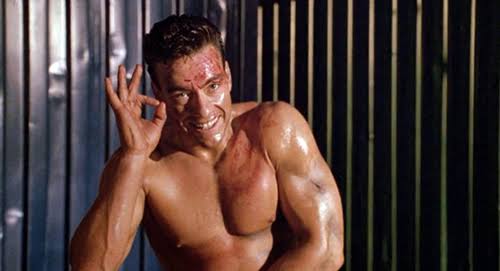


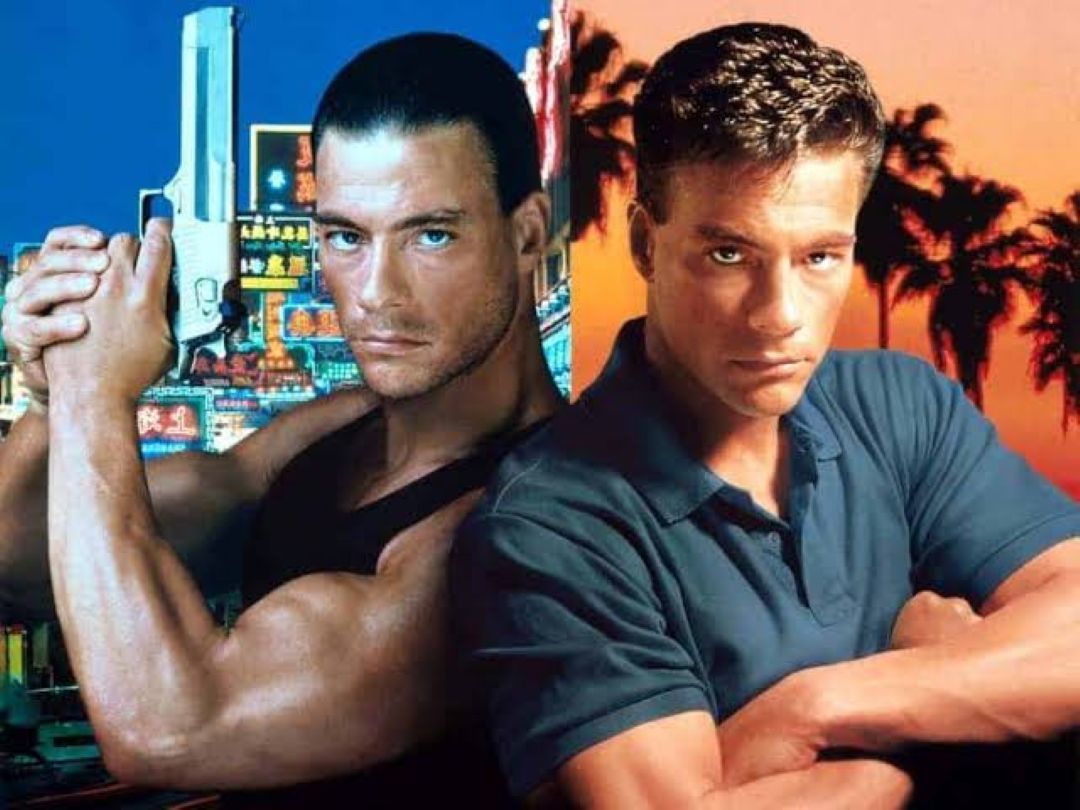
Stop! Don’t think. Just answer this simple question. It is the early 1990s, and if Jean-Claude Van Damme is awesome, what is the only thing in the whole of the multiverse that is even more awesome? That’s right – TWO Jean-Claude Van Dammes!
There are few things better in life than Jean-Claude Van Damme kicking seven shades of shit out of a room full of disposable henchmen, unless it is Jean-Claude Van Damme kicking seven shades of shit out of a room full of disposable henchmen while another Jean-Claude Van Damme stands nearby, waiting for his turn.
So take the already considerable pleasures of late-1980s and early-1990s Van Damme cinema and double them. You get Double Impact, and humanity is simply better for it.
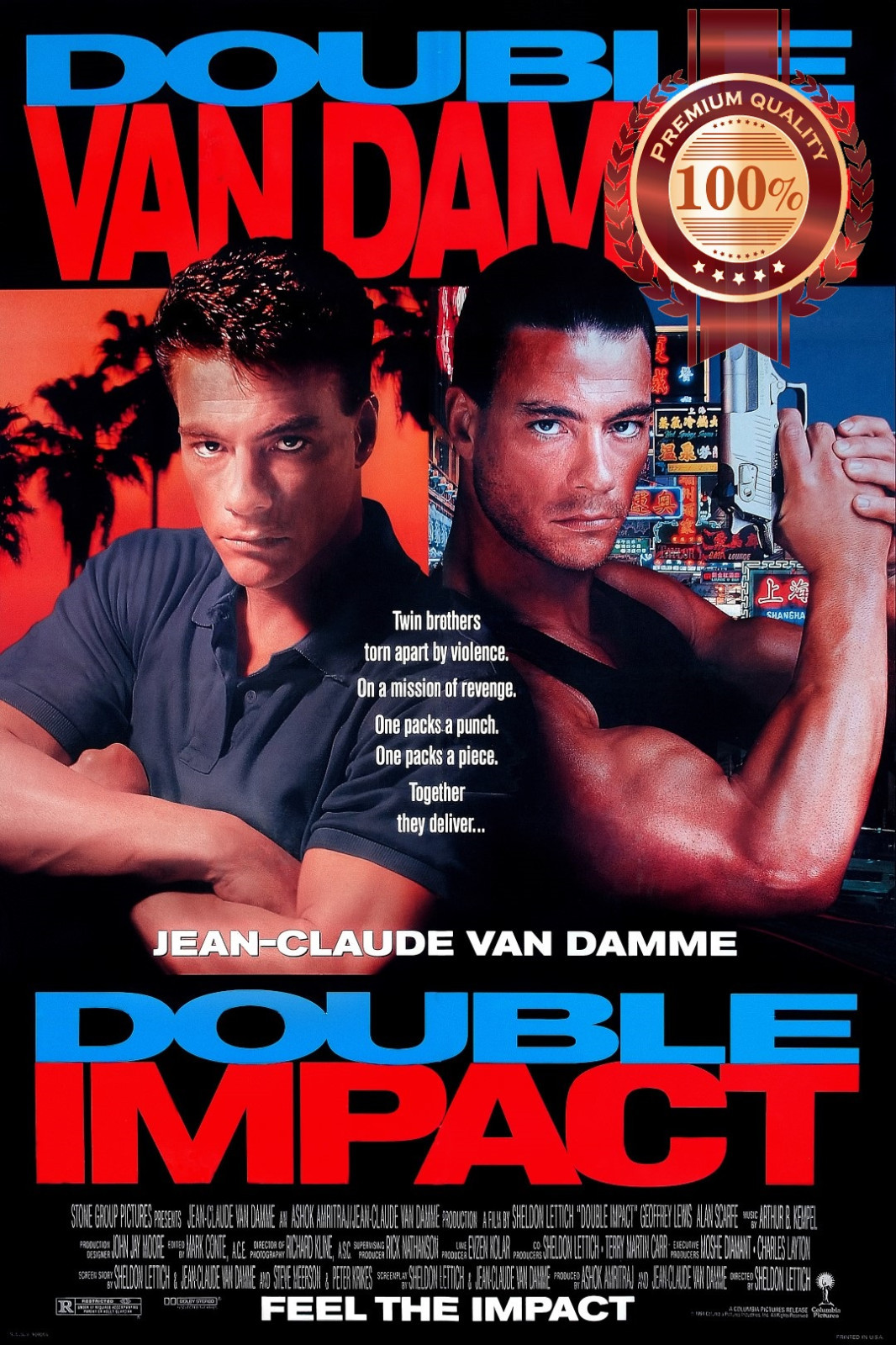
Double Impact
This is peak VHS-era action filmmaking. A time when action heroes had magnificent hair, villains wore expensive suits, women were impossibly beautiful, and the solution to pretty much every problem was an explosion.
By 1991, Jean-Claude Van Damme was becoming an enormous star. Bloodsport had established him as a martial arts sensation, Kickboxer had cemented his reputation, and Universal Soldier was just around the corner. He was the Muscles from Brussels, the human pretzel, the man who could make kicking someone in the face look like an Olympic discipline.
He was also blessed with an extraordinary combination of physical ability, ridiculous good looks, questionable acting choices and an accent that seemed to have been assembled from several European countries in a darkened room.
Double Impact was his opportunity to demonstrate that one Van Damme simply wasn’t enough. And, frankly, he had a point.
The plot begins in 1960s Hong Kong, where wealthy businessman Paul Wagner is celebrating the opening of a major harbour tunnel. He’s accompanied by his wife Katherine, their infant twin sons Alex and Chad, and business partner Nigel Griffith.
Unfortunately, Griffith is in cahoots with local crime boss Raymond Zhang, who has decided that murdering his business partner and stealing control of his interests is a perfectly reasonable way to conduct corporate restructuring.
The Wagner family is ambushed. Both parents are murdered, but the babies survive. Their bodyguard Frank Avery manages to rescue one child, Chad, while the family nurse escapes with the other, Alex, leaving him at a Catholic orphanage in Hong Kong. And so the twins are separated by violence and bloodshed.
Twenty-five years later, Chad has grown up in Los Angeles, where he’s become a successful martial arts instructor. He’s clean-cut, polite, wealthy enough to have an attractive house, and apparently spends most of his spare time practising kicks in a leotard so tight you can tell what his religion is.
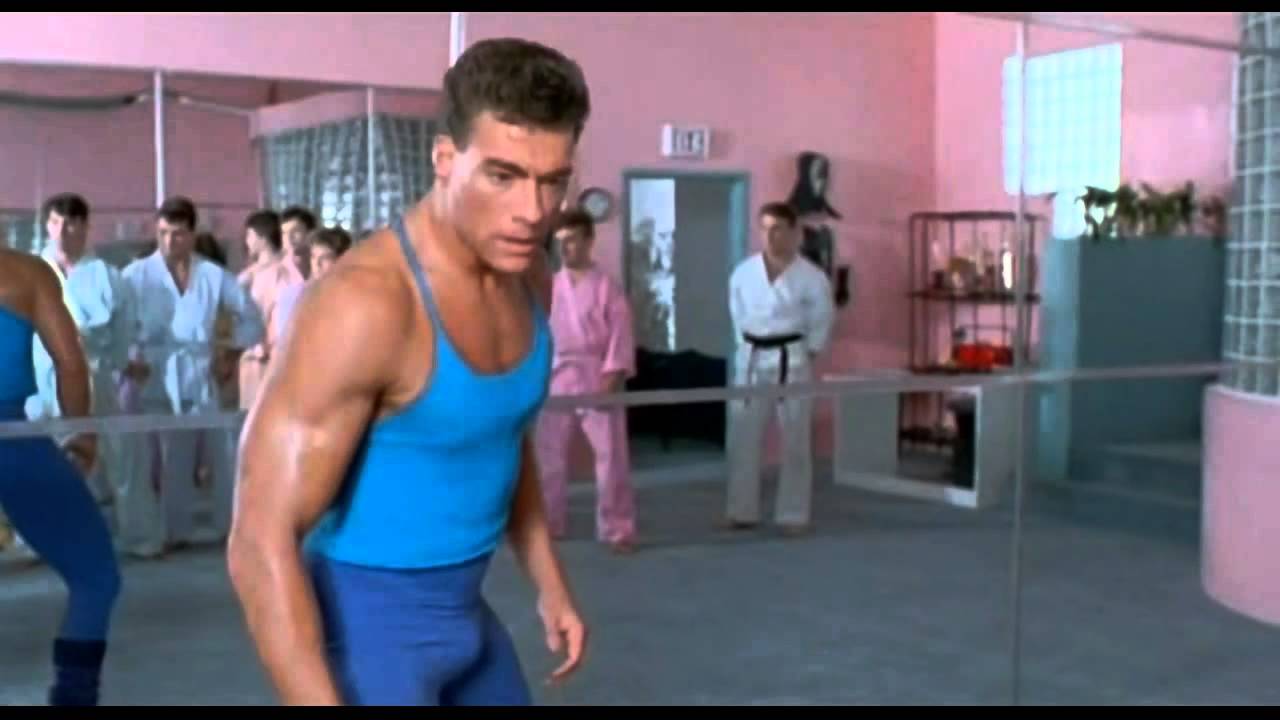
Alex, meanwhile, has grown up in Hong Kong. He’s considerably more rough around the edges, a streetwise criminal with a taste for gambling, beautiful women, fast cars and punching people. He’s basically Chad if Chad had been raised by the sort of people who hang around outside nightclubs.
Frank eventually reunites the brothers, reveals the truth about their parents’ murder and explains that their old enemies are still very much in business. Naturally, the twins decide to seek revenge.
It’s a beautifully simple premise. The brothers have different personalities, different upbringings and different attitudes towards violence. They also happen to look exactly alike, which is handy when you’re trying to confuse the bad guys, or, indeed, the audience.
Because of this, the film’s method of telling them apart is absolutely magnificent.
One Man – Two Haircuts
Chad has slicked-back hair. Alex has slightly more styled hair.
That’s it.
One has hairgel. The other apparently doesn’t. It’s the sort of character distinction that would make a screenwriting lecturer quietly weep, but it works. You never really have any difficulty identifying which Van Damme you’re looking at, and that’s what matters.
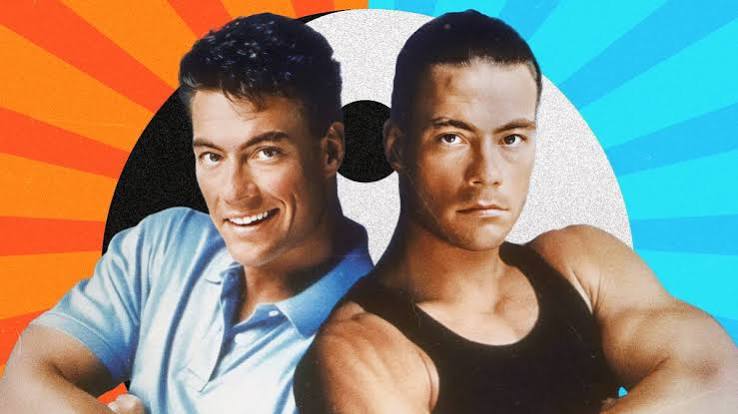
Chad is the sensible one. Alex is the naughty one. Chad wears hilarious early 90s LA clothes, Alex dresses like someone who has just robbed a Belgian charity store. Chad is the nice twin. Alex is the criminal one. It’s not exactly subtle stuff.
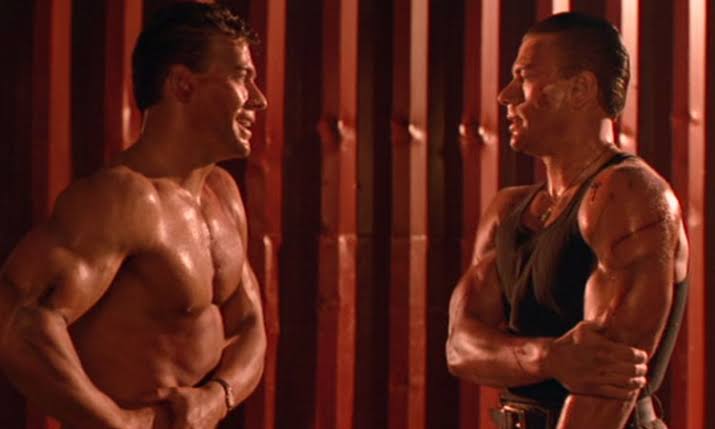
The really remarkable thing about Double Impact is that, for all its silliness, the technical achievement of putting two Jean-Claude Van Dammes on screen together is genuinely impressive.
Remember, this was 1991. We weren’t dealing with modern digital compositing, motion capture or an army of computer-generated artists. This was the era of optical effects, split screens, carefully choreographed camera movements, body doubles, and an awful lot of patience.
Director Sheldon Lettich and the visual effects team had to work out how to make two versions of the same actor interact convincingly.
The production used split-screen photography, motion-controlled camera movements, optical compositing and body doubles. Several doubles were employed for different purposes, including matching Van Damme’s appearance from behind and replicating his martial arts movements. Some of the results are wonderfully effective.
There are scenes where the brothers sit opposite one another, talk, exchange glances and interact in ways that genuinely convince. You can see the effort involved in getting the eyelines, timing and positioning right. Van Damme also deserves credit for creating two distinct performances rather than simply playing one character twice with a slightly different expression.
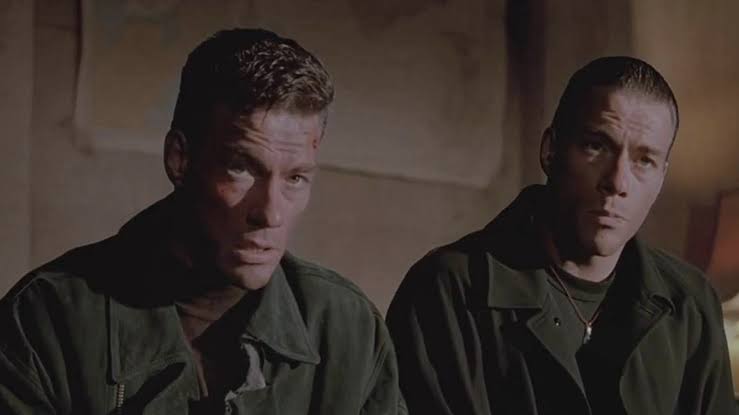
Then there are other moments where the illusion becomes a little less convincing. Occasionally the lighting looks slightly different between the two halves of the picture. Sometimes the compositing is obvious. There are moments when the doubles are a little too noticeable, and the whole thing looks like someone has attempted to clone Jean-Claude using the technology available at their local wedding video studio.
But honestly, who cares? The fact that it works as well as it does is something of a minor miracle. And when the two brothers finally get to fight alongside each other, the technical achievement becomes part of the entertainment. It’s not perfect. It’s not invisible. But it’s bloody good fun.
The film’s Hong Kong setting is another major attraction. In the early 1990s, Hong Kong was still a British colony, with the handover to China looming in 1997. It was an extraordinary period for the territory: a booming international financial centre, a major manufacturing and trading hub, and home to one of the world’s most vibrant film industries.
It was also a place where organised crime, particularly the triad societies, had a significant presence. The film takes that real-world backdrop and turns it into a gloriously exaggerated action-movie playground.
There are criminal empires, corrupt businessmen, secret meetings, container terminals, enormous offices and shadowy organisations operating with the sort of efficiency that most legitimate businesses can only dream about.
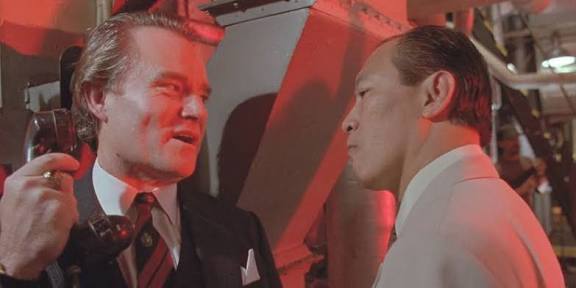
Raymond Zhang, played by Philip Chan, is the local crime boss. His partner Nigel Griffith, played by Alan Scarfe, is the respectable Western businessman providing the international connections and corporate respectability. Together, they are responsible for a criminal operation that seems to encompass just about everything unpleasant happening in Hong Kong.
Griffith is particularly entertaining. He’s the sort of villain who has a huge office, expensive furniture and a permanent expression suggesting that he’s just discovered somebody has put the wrong milk in his coffee.
And then there’s Zhang’s organisation, which appears to employ an almost limitless supply of armed men who are spectacularly bad at their jobs. They are the sort of henchmen who could be replaced by a collection of traffic cones and achieve approximately the same results.
The film also benefits enormously from shooting on location. Hong Kong looks fantastic, with its crowded streets, harbour traffic, towering buildings and distinctive skyline. The harbour chase, in particular, is a terrific sequence, making excellent use of the environment. This isn’t some anonymous backlot pretending to be Asia. It’s a proper location shoot, and it gives the film a scale and atmosphere that a lot of American action films of the period lacked.
Enter The Bolo
Just when you thought it couldn’t get any better, Bolo Yeung turns up. Whenever Bolo Yeung arrives in a martial arts film, it’s cause for celebration. The man looks as though he was assembled from reinforced concrete and anger.
Best known to Western audiences as Chong Li in Bloodsport, Bolo has an extraordinary screen presence. He doesn’t need much dialogue. He doesn’t need complicated character development. He just needs to stand somewhere, look menacing and occasionally flex a muscle. And here he plays Moon, Zhang’s principal enforcer.
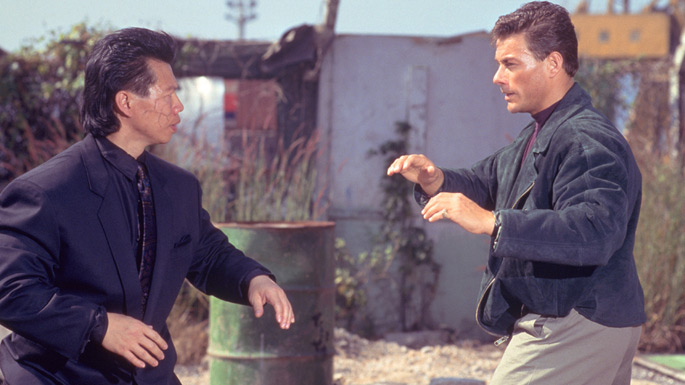
Naturally, this means that a confrontation with a version of Van Damme is inevitable.
It’s a lovely piece of casting. The two already have a history together through Bloodsport, and seeing them face off again is a treat. Bolo provides exactly the sort of physical menace that a film like this needs. He’s not a villain who can be defeated by a stern talking-to or a strongly worded letter. He needs kicking.
This being an early-1990s action movie, there are also some women. And there is no confusion over the definition of women here. Straight out of a text book.
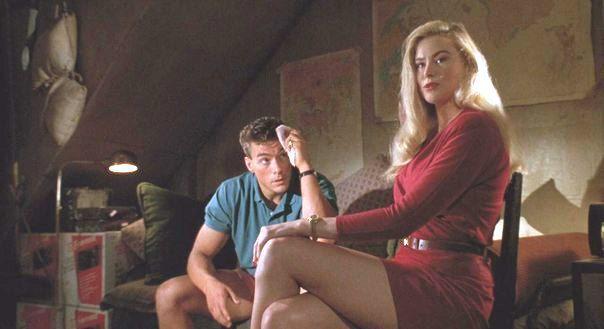
First, there’s Danielle, played by Alonna Shaw. She’s a classic blonde bombshell, impossibly attractive and blessed with the sort of screen presence that suggests the casting department had a very specific checklist. There’s a fair amount of nudity, too, very much in keeping with the period. The film isn’t remotely interested in subtlety, and neither, apparently, is anyone’s wardrobe department.
Then there’s Kara, played by Cory Everson. And my goodness. Chun-Li’s thighs have nothing on this! Cory Everson was a six-time Ms. Olympia bodybuilding champion, and she looks as though she could bench-press the entire cast and crew before breakfast.
As Griffith’s bodyguard, she’s a rather different proposition from the usual glamorous female companion. Kara is an absolute unit. When she walks into a room, you immediately understand why she’s employed as a professional enforcer. She could probably subdue most of the criminal underworld simply by sitting on them.
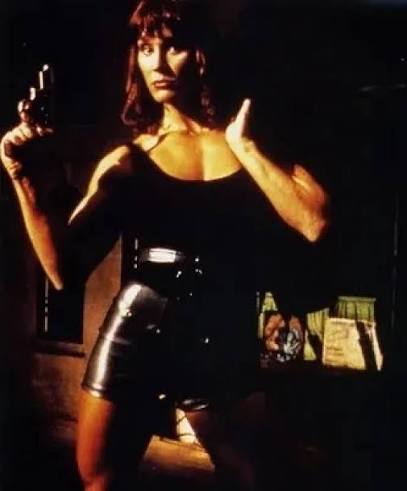
The film makes excellent use of her physical presence, and she provides a genuinely entertaining opponent for the brothers. For once there is a female opponent that you actually believe could beat a guy up.
It’s also worth noting that the fashions throughout this film are absolutely atrocious. Especially Chad. His wardrobe looks like someone has taken a selection of early-1990s catalogue clothing, and thrown it down a flight of stairs. There are oversized shirts, questionable patterns, shiny fabrics and trousers that seem to have been designed by someone who has never actually seen a human leg.
It’s glorious.
Fight!
Ultimately, though, we are here for the fighting, right? And Double Impact delivers. Van Damme was at the height of his physical powers. His flexibility was extraordinary, his kicks were fast and powerful, and he had that rare ability to make martial arts choreography look both technically impressive and entertaining.
There are plenty of the familiar ingredients: high kicks, spinning kicks, splits, punches, knees, elbows and opponents being launched into furniture with the sort of force that would make a health and safety inspector spontaneously combust.
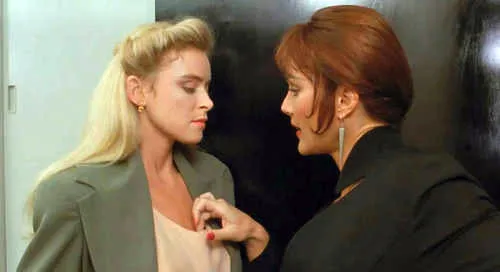
The action is energetic and wonderfully physical. The film also benefits from its Hong Kong stunt personnel. Sheldon Lettich has discussed how the local stunt performers were willing to take considerable physical risks, giving the action a more dangerous edge than some of the carefully controlled Hollywood equivalents.
The harbour chase is a highlight, as is the eventual assault on the villains’ operations. And then there’s the final showdown. We get Van Damme against Bolo, Van Damme against Cory Everson, and, eventually, the two Van Dammes working together. It’s everything you want from a film like this.
The choreography isn’t always particularly sophisticated, and some of the fight editing is a little frantic, but the enthusiasm is infectious. These are real people doing real physical work. There is a tangible sense of impact to the action, and Van Damme is clearly enjoying himself.
The film also gives him room to demonstrate that he’s more than just a collection of impressive kicks. Playing two contrasting characters allows him to have some fun with his performance, particularly when the brothers start irritating one another.
It’s not Shakespeare, obviously. But then Shakespeare never had Bolo Yeung.
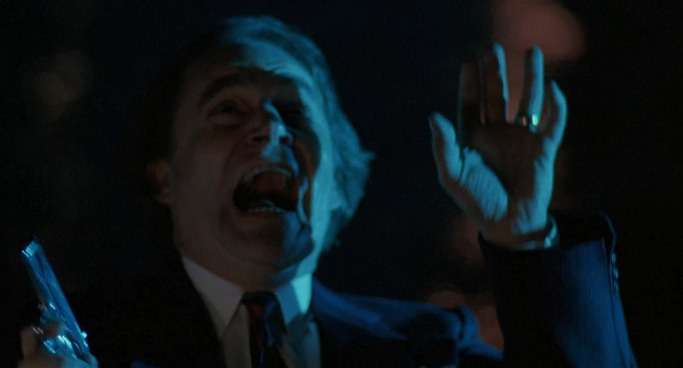
The film was directed by Lettich, who had already worked with Van Damme on Bloodsport and would go on to collaborate with him again on Lionheart and The Order. Lettich co-wrote the screenplay with Van Damme, and the project was a deliberate attempt to expand the star’s appeal beyond straightforward martial arts films.
The production began principal photography in November 1990, with filming taking place in Hong Kong and Los Angeles. The budget was reported at approximately $15 million, a fairly substantial sum for this sort of action picture. Van Damme was also a producer, giving him considerable involvement in the project.
Double Impact opened in August 1991 and became a solid commercial success, earning around $30 million at the US box office. It wasn’t some enormous cinematic event, but it reinforced Van Damme’s position as one of the biggest action stars of the period.
Double The Fun
Double Impact is not a particularly clever film. Its plot is ridiculous, its villains are cartoonish, its fashions are criminal and its romantic subplots are about as sophisticated as a teenager’s bedroom poster collection. But it has something that many modern action films seem to have misplaced.
Fun. Uncomplicated, enthusiastic, gloriously stupid fun.
It understands exactly what its audience wants. It gives us an attractive action hero, an assortment of colourful villains, exotic locations, ridiculous henchmen, attractive women, enormous muscles and enough martial arts action to keep a chiropractor in business for several generations. Then, just when you think you’ve had enough Van Damme, it gives you another one.
The technical effects are occasionally ropey, but they’re also genuinely inventive. The Hong Kong locations are superb. Bolo Yeung is magnificent. Cory Everson is terrifying. Alonna Shaw is gorgeous. And Van Damme is operating at the absolute peak of his physical abilities.
It’s a wonderful snapshot of a particular era of action cinema, when filmmakers weren’t afraid to embrace ridiculous premises and simply run with them. Today, we’d probably get a three-hour origin story, a complicated mythology, a franchise setup and an enormous amount of CG.
In 1991, they just got Jean-Claude Van Damme to talk to himself. Twice.
And frankly, that’s how it should be done.