

D.O.A. has one of the best cinematic openings ever. The camera follows a man walking into a police station and up to the front desk.
“I’d like to report a murder,” he says.
“Who was murdered?” the desk attendant asks.
The camera swings around to the man’s stricken face.
“I was,” he says…
It doesn’t get more attention-grabbing than that. And so simple, too. No big flashy effects. Nothing outrageously exciting. Just a killer premise delivered with total economy, and the viewer is instantly drawn in.
Flogging A Dead On Arrival Horse
The original D.O.A. is considered a classic of the film noir genre. The Library of Congress deemed it culturally, historically and aesthetically significant enough to preserve it in the United States National Film Registry.
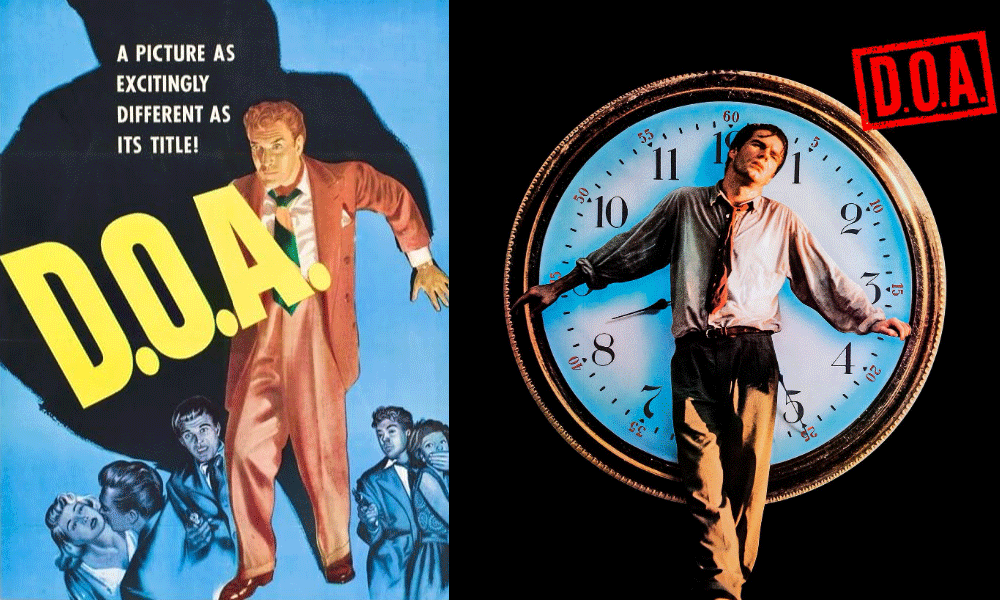
D.O.A. was produced by the short-lived company Cardinal Pictures in 1949. Due to a filing error, the copyright to the film was not renewed, causing it to fall into the public domain. This has led to multiple remakes: Color Me Dead (1969), D.O.A. (1988), Dead on Arrival (2017) and D.O.A. (2022).
For the purposes of this article, we will only look at the 1949 and 1988 versions. Adding in the 1969, 2017 and 2022 versions is a bridge too far and will cause me to keel over from too much typing. Then I will be D.O.A…
I will avoid spoilers, though, in case younger folks have not seen these flicks.
D.O.A. (1949)
Rudolph Mate directed the first film. He was a Polish-Hungarian filmmaker who cut his teeth working for the communists in his homeland before moving to the USA. His other most notable films include When Worlds Collide and The 300 Spartans, which influenced Frank Miller to write 300, so Zach Snyder could realize his homoerotic vision. Truly, it’s all connected…
Russell Rouse and Clarence Greene wrote the screenplay. The duo worked together often and were known for their offbeat creativity and originality. If any of their credits stand out to the modern viewer, The Fastest Gun Alive (1956), starring Glenn Ford might be the most recognizable title to movie fans.
The film starred Edmond O’Brien, who appeared in such classics as The Killers (1946), White Heat (1949), The Man Who Shot Liberty Valance (1962) and Fantastic Voyage (1966).
D.O.A. also marked the film debut of Beverly Garland. Garland appeared in films like The Alligator People (1959) and even somehow ended up on an episode of the game show Weakest Link in 2002.
Other notable performers include Pamela Britton (My Favorite Martian) and Neville Brand, who looks like Calibos from Clash of the Titans (1981), but still managed a long career that reached leading man status and appearances in films like That Darn Cat, Killdozer!, Eaten Alive, The Ninth Configuration and Without Warning.
Filming D.O.A. took place in San Francisco and Los Angeles. Some scenes even took place in the famous Bradbury Building, which showed up in a little movie called Blade Runner and that episode of The Outer Limits where Robert Culp had a robot hand that talked to him whenever he recovered a finger.
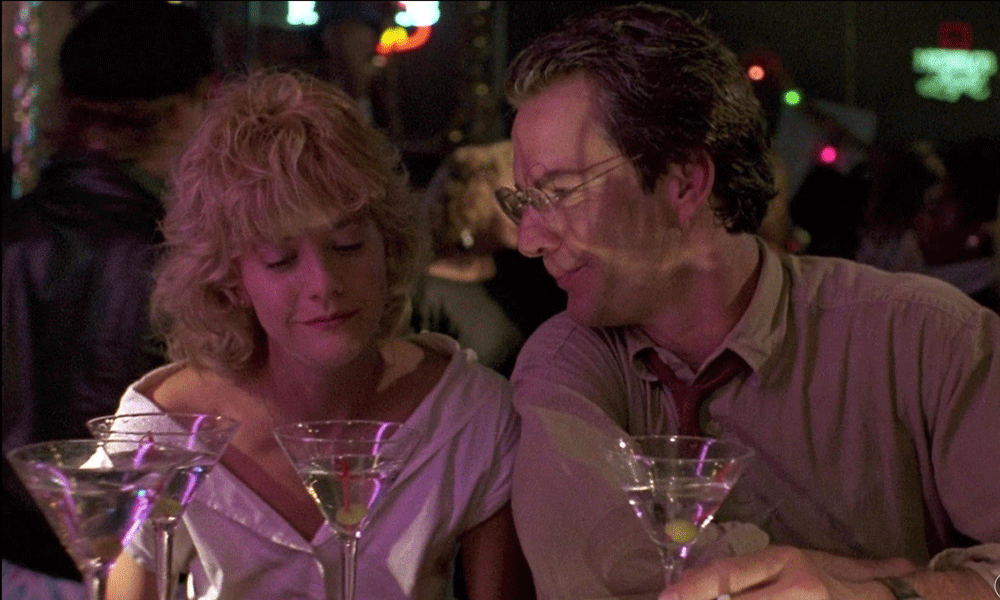
D.O.A. (1988)
Rocky Morton and Annabel Jankel manned (or womanned) the director chair for D.O.A. (1988). They got the gig after creating Max Headroom, who made a brief but memorable dent in 1980s pop culture.
Charles Edward Pogue, who we recently read about on the unrealized version of The Fly (1986) wrote the screenplay. Pogue went on to write Dragonheart and Kull the Conqueror, which is pretty cool…or not, depending on your hierarchy of popularity in high school.
The film starred Dennis Quaid in the lead role. Upon this rewatch, I realized Quaid has a heck of a Joker grin. He might have been able to pull off appearing as the character in a Batman film. Maybe he still can. Dark horse candidate for The Dark Knight Returns, perhaps? Then again, Quaid went full Republican. Never go full Republican in Hollywood.
Nevertheless, people sleep on the career Quaid had in the 1980s. It wasn’t earth-shattering, but it was solid: Jaws 3D, The Right Stuff, Dreamscape, Enemy Mine, Innerspace and even an attempt at an Oscar with the musical biopic Great Balls of Fire!
Community Note: Quaid did not receive an Oscar…
Joining Quaid was America’s sweetheart and his main squeeze at the time, Meg Ryan, plus Daniel Stern, Jane Kaczmarek, a hopelessly young Robert Knepper, a hopelessly blond Brion James and Christopher Neame.
It might offend my British comrades to say that I thought Christopher Neame was William O’Connell, who played the idiot biker, Elmo, in Any Which Way But Loose and Any Which Way You Can.
Actually, I still think that. They look alike to me…
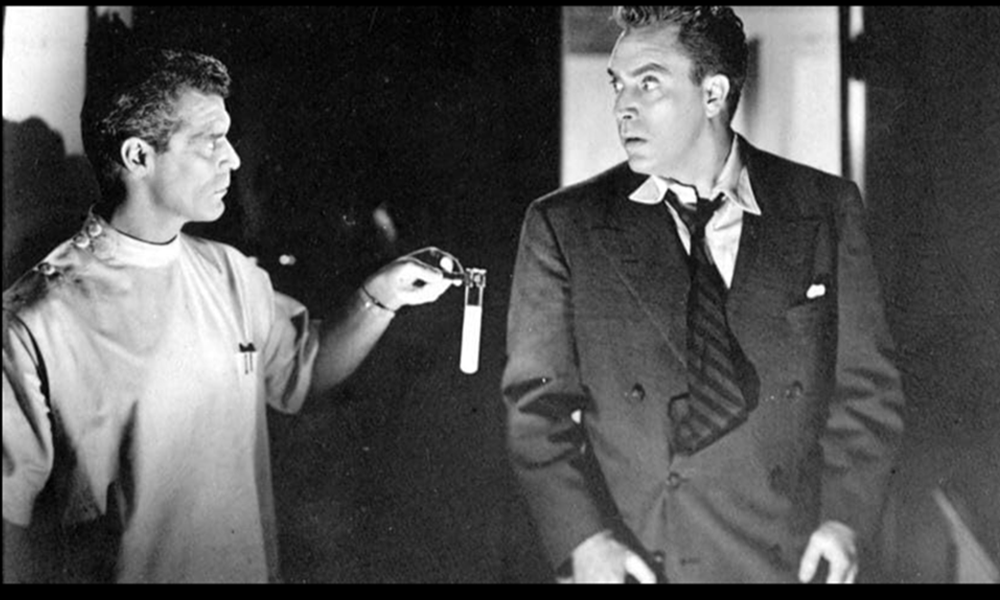
The Match Up
How do the two films compare? Do things follow true to usual form and the original is better…or did the remake pull off a The Thing (1982)?
They both have merits. After the first scene, the remake wisely spun off into a different direction. While the base elements of the story remain, the circumstances are completely new. In the end, a slight nod goes to the remake as the more watchable film.
Yet, purists shouldn’t be offended. They are both pretty.
The original takes a bit of time to build up steam. It almost starts out as a romantic comedy, complete with a slide-whistle effect whenever O’Brien walks by a pretty girl. The gag is jarring and makes one wonder what they were thinking — not quite to the point of The Man With The Golden Gun, but close.
The hinge point happens during a manic scene featuring a jazz band striving for maximum grooving. The film then becomes a proper noir film with O’Brien retracing his steps to figure out who murdered him, with plenty of rapid-fire dialogue with Transatlantic accents.
The only real problem is that the trail of events are a bit difficult to follow, as the plot basically spirals out from paperwork.
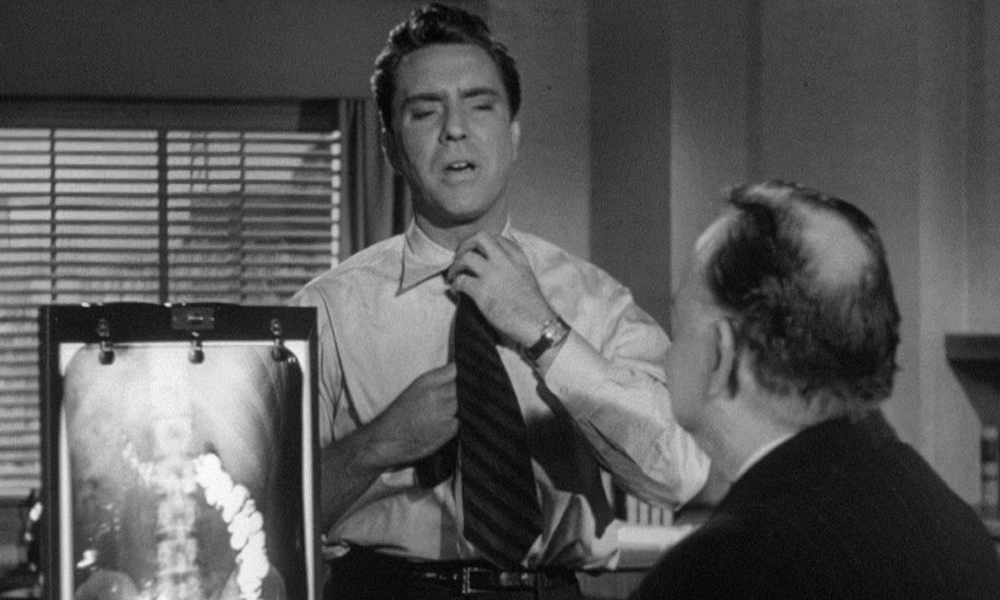
The highlight performance is a tie between O’Brien’s growing desperation and a psycho turn by Neville Brand. Brand plays what appears to be a sadist with a belly fetish and a perpetual, disturbing smile.
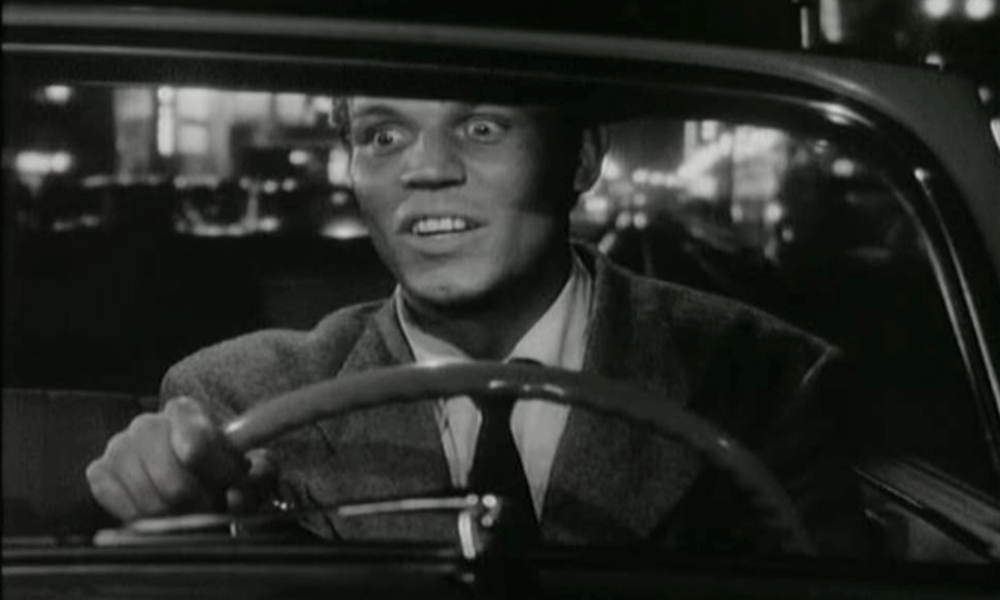
New And Improved
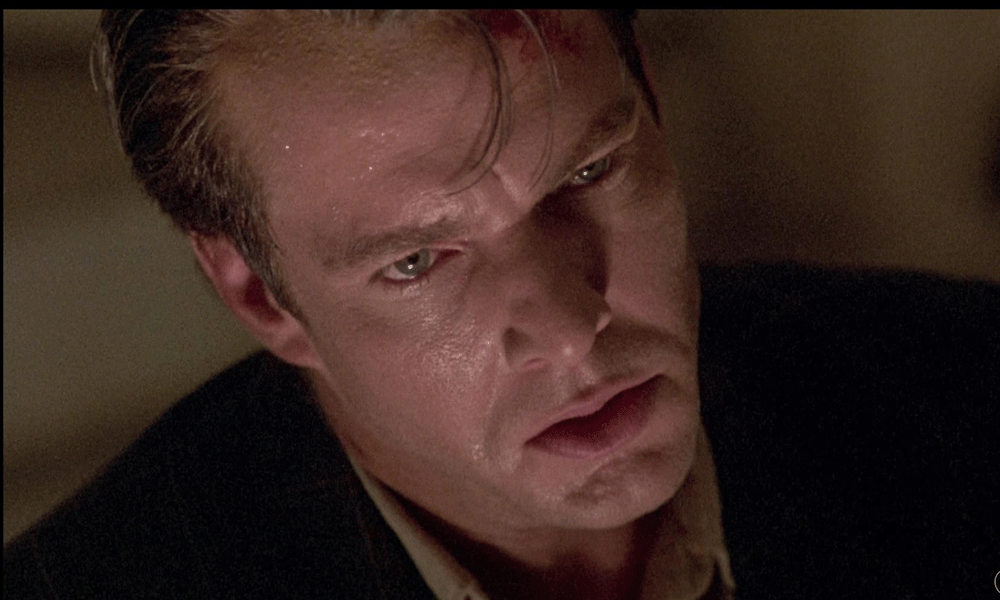
D.O.A. (1988) follows the trend of late 1980s movies. Rocky Morton and Annabel Jankel bring a slick style to the proceedings. They favor Dean Cundey-like lighting, tight close-ups and more dead bodies.
Meanwhile, Quaid is great as a burned-out professor/writer. He walks a fine line between being a failure yet still sympathetic. Then he layers desperation on top of that. What makes the character work is that he had every opportunity to go completely into bastard territory, but he never quite quenched the spark of good that remained smoldering within him.
Some clumsiness rears its ugly head. The relationship between Neame and his charge tries for comedy that never quite gets there. The score for the film also doesn’t ring true at various points.
Otherwise, the rest of the proceedings and performances are right down the line. Ryan is a solid Florence Nightingale-type that ultimately becomes the buddy-partner, which the original lacked. Stern is good as Quaid’s friend and co-worker. The other performers fulfill their roles, as well. Plus, it all moves at a brisk pace and ends up a bit more poignant than the original film with its denouement.
It also appears that Morton and Jankel put some thought into things. For example, Quaid’s watch looks to be stopped throughout the film. It’s a small thing, but it is a nice touch, considering he is a dead man.
I also wonder if they tried to say something with the gift Quaid gives his estranged wife, played by Kaczmarek. He carries the gift around in a box at the beginning of the film, but when the gift is revealed, it shouldn’t be able to fit in that box.
Was that a deliberate choice? Were Morton and Jankel saying the gift was ultimately more than Kaczemarek bargained for? Or was it a mistake?
Probably a mistake, but I found it interesting regardless…
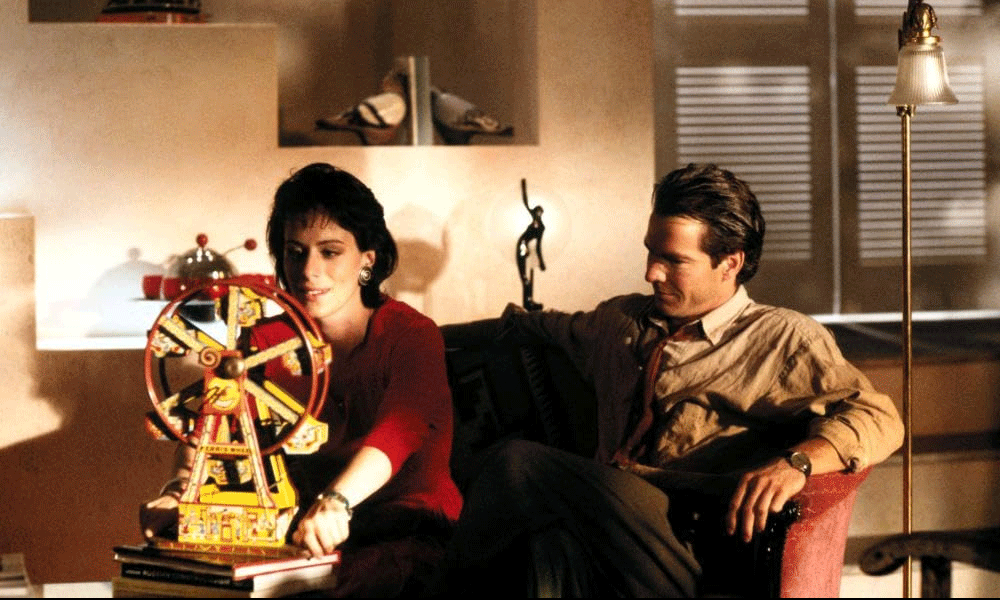
Not D.O.A.
Ultimately, neither film is dead on arrival. They both have life. The original is a classic that laid down a noir blueprint. The 1988 remake is a fresh riff on it. Both films use the same method to try to keep the audience guessing. The plot is a bit of a Russian doll in that one element is hidden inside another element. Both films pull it off, but the remake does a more satisfying job of giving the viewer one more nudge. We will composite score these flicks…



