


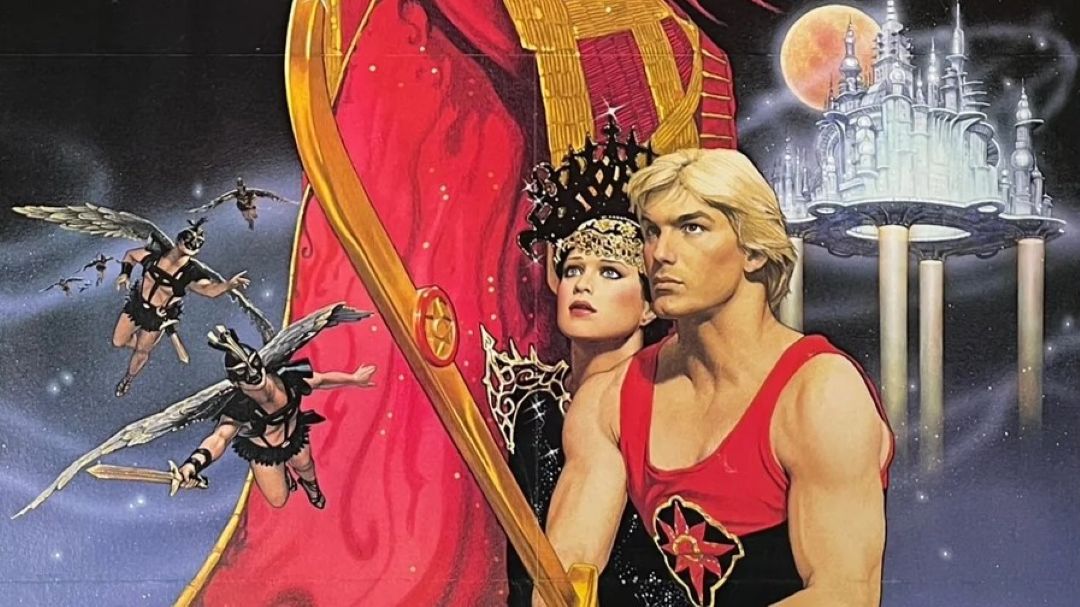
No consideration of the 80s through rose-tinted nostalgia glasses would be complete without going back, way back, to that very first year – 1980 – and a movie that has a very important place in my heart for a weird reason. Flash Gordon.
I was barely out of diapers when Flash Gordon arrived. It is basically my second-ever movie-going memory. My third is Star Trek II, my fourth is ET. Jesus Christ, I had a blessed cinematic childhood.
My brother, some four years older than me, and I insisted we had to be taken to the movie theater to see it immediately. Our father drew what he would have considered the short straw, and off we went.
It is fair to say that my father didn’t enjoy the experience. He hated it. He hated it so much that he never actually let us forget it as long as he lived. Genuinely.
I would honestly not have been completely surprised if, on his deathbed many decades later, searing through his dementia befuddlement that characterised his last days, his final words to the two of us were:
“I still haven’t forgiven you for Flash Gordon, you little shits!”
Here’s the thing, though. Back then, as a small being not even into my seventh year of existence but already deep into a Star Wars obsession that would last half a century, I didn’t like it either. I hated it. I thought it was silly.
And it was silly. The issue back then was that I was simply too young to “get” it. There was a joke, and I wasn’t in on it.
The Ultimate Punchline
You see, there are films that arrive like precision-engineered Swiss watches, ticking in perfect rhythm with the culture of the time. And then there are films that arrive as a glitter cannon fired directly into the face of God… while laughing.
Flash Gordon is the latter.
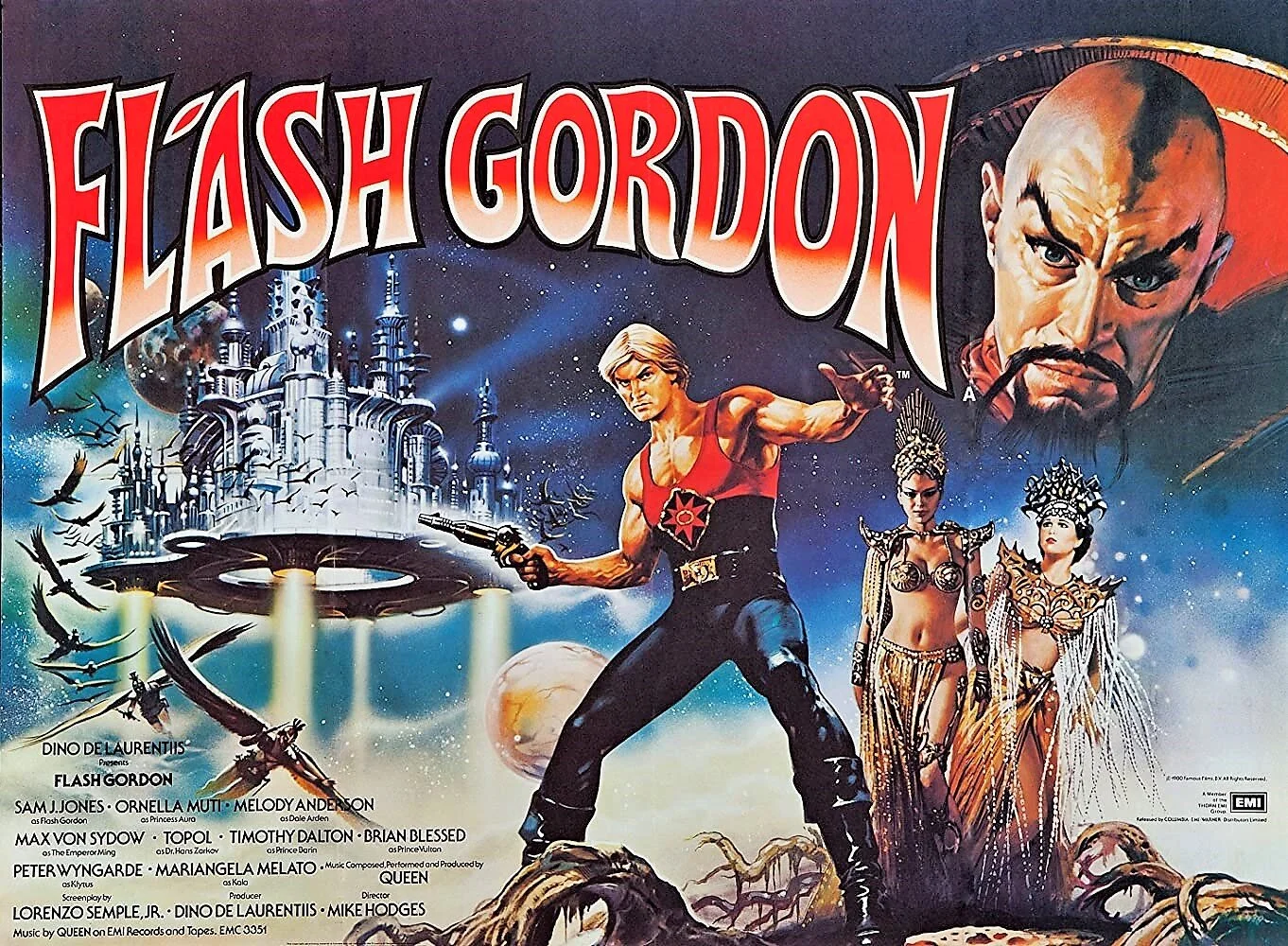
Released in 1980, it was perched precariously between the aftershocks of the aforementioned childhood obsession of mine, Star Wars, and the encroaching shadow of the sequel in the form of The Empire Strikes Back. In this in-between space, Flash Gordon is not so much a science fiction film. It almost doesn’t even try to be. Instead, it is like a chrome-plated glam-rock hallucination. It is the cinematic equivalent of a velvet painting of a space hawk. It is magnificent. It is ridiculous. It is, in every conceivable way, a camp classic.
And if you don’t love it, you are wrong.
To understand Flash Gordon, you have to rewind the clock to the 1930s, when Saturday matinees were king and cliffhangers were a civic duty. Flash was born in the 1934 comic strip created by Alex Raymond, a riposte to the Buck Rogers craze. The strip was a lurid, lush fever dream of rocket ships, jungle kingdoms, hawk-men, and interplanetary despotism.
Soon came the movie serials, most famously starring Buster Crabbe in 1936. These were shoestring productions with papier-mâché sets and an enthusiasm for physics that could only be described as optional. But they were sincere, breathless, and heroic in that square-jawed, chin-forward way.
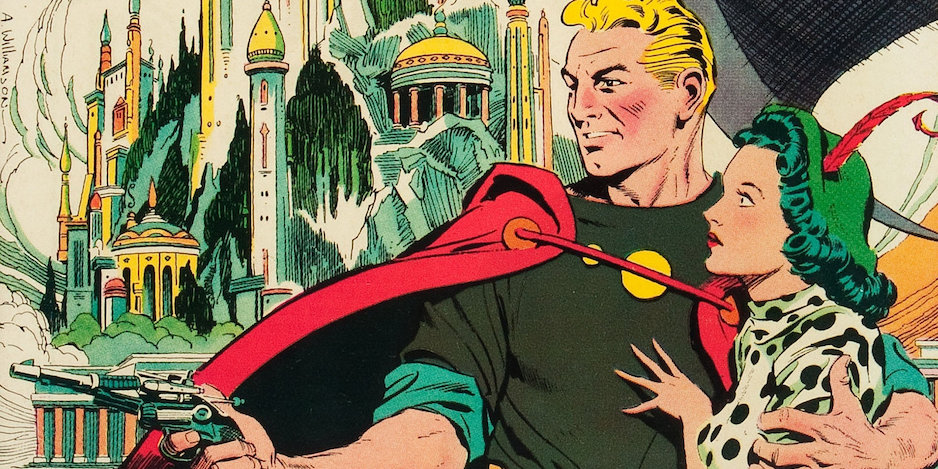
This movie doesn’t merely nod to those serials. It grabs them, spray-paints them gold, slathers them in eyeliner, and hurls them into a New York disco.
The film was shepherded into existence by megaproducer Dino De Laurentiis, whom George Lucas had originally tried (and failed) to secure the rights from. As a result, Lucas made Star Wars instead.
Just like when his cinema experience with Jaws led us to the mentalness of Orca (1977), this is one of those cinematic sliding doors moments. Had Dino let Lucas have Flash, then maybe Star Wars would never have happened?
Or perhaps we would have eventually ended up with a version of that saga scored by prog rock and costumed by a Versailles’ cocaine dealer.
Instead, Dino accelerated his own efforts to bring back Flash. If he couldn’t fight off the new space opera, he’d resurrect the original.
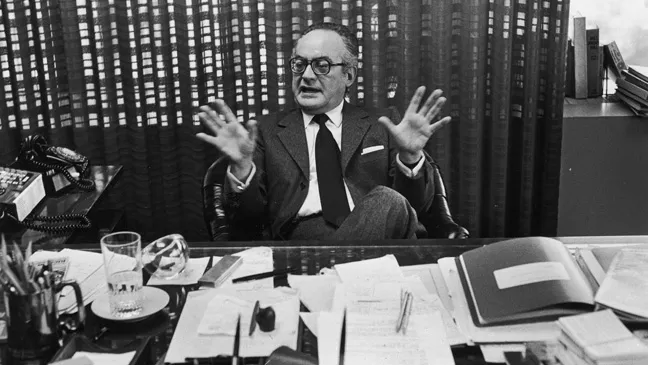
The production was a glorious mess. Directors came and went. Nicolas Roeg circled the project briefly, which suggests an alternate universe where Flash Gordon involves fragmented timelines and existential dread. Eventually, the gig landed with Mike Hodges, fresh off a gritty British crime drama. One imagines him surveying the art department’s neon fever dreams and wondering if he’d taken a wrong turn at Pinewood.
The budget ballooned. The costumes multiplied. The wigs achieved sentience.
And thus Mongo was born, not as a plausible alien world, but as a maximalist art installation with the anti-Star Wars aesthetic
If Star Wars is dusty, lived-in, and an industrial “used future”, then Flash Gordon is the anti-Star Wars. It is anti-grime, anti-subtlety, and anti-anything that might resemble realism.
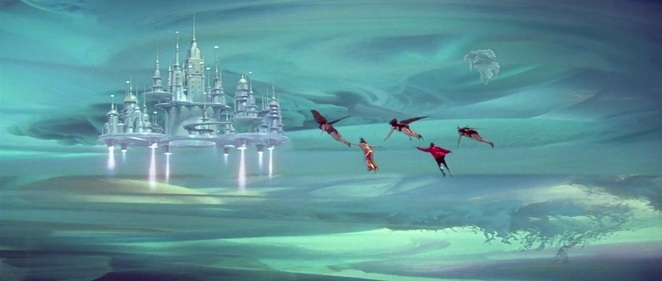
Mongo looks like it was decorated by Liberace after discovering Dune. The color palette is a riot: crimson skies, gold armor, emerald halls. Everything gleams. Everything shines. Nothing is practical.
There are no hydraulic pistons hissing in the background. There are instead capes. So many capes. Capes with shoulder pads that could decapitate an adult moose. It’s not interested in convincing you. It’s interested in dazzling you.
Into all of this strides Sam J. Jones: the golden himbo who also might not be in on the joke… yet.
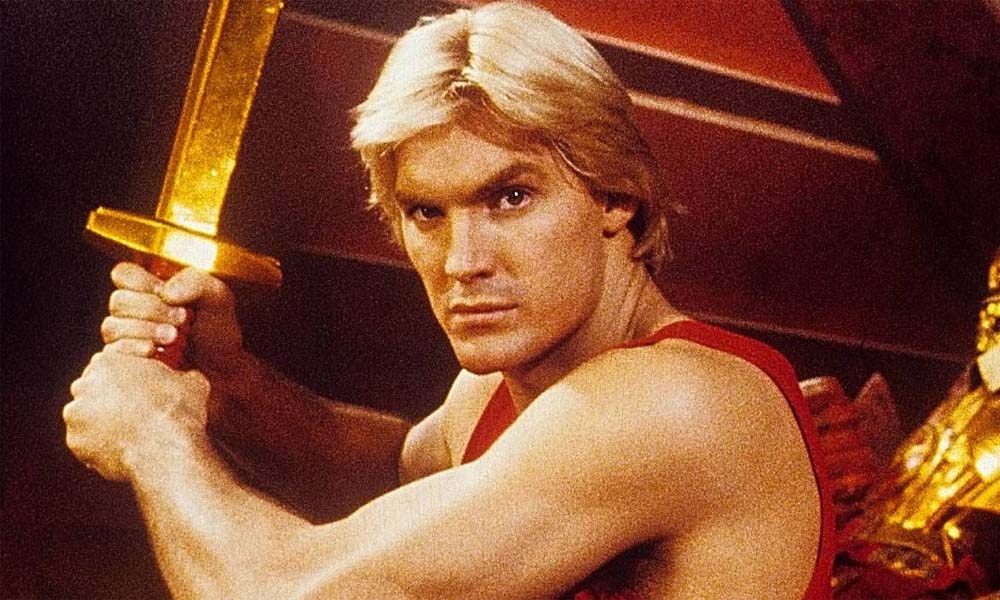
The craziness just swirls around him like a lacquered maelstrom. He is a former football quarterback whose acting style might generously be described as “earnest bewilderment” and plays Flash as a man who has just wandered in from a male cosmetics commercial and cannot quite believe what’s happening. His line delivery has all the gravitas of somebody ordering a sandwich, and yet, miraculously, it works.
Why? Because Flash is not meant to be tortured. He is not brooding. He is not haunted by the moral ambiguity of interplanetary geopolitics. He is a clean-cut, all-American innocent coming at a time when American innocence was completely toast.
The Emperor Of Edible Scenery
He’s up against Max von Sydow as Ming. Oh, Ming. How the young me didn’t appreciate the sheer magnificence on display.
Von Sydow, veteran of The Seventh Seal and cinematic collaborator of Ingmar Bergman, decided, at some point in 1979, that what his career truly required was to play a galactic tyrant in lacquered robes while stroking his moustache like an interstellar cat.
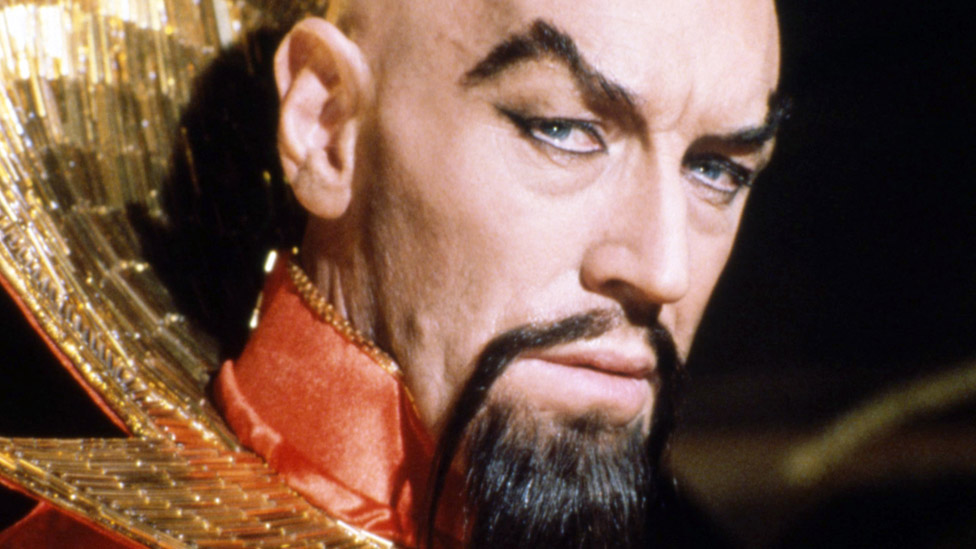
His Ming is not subtle. His Ming does not whisper menace. His Ming announces his villainy the way a cruise ship director announces dinner.
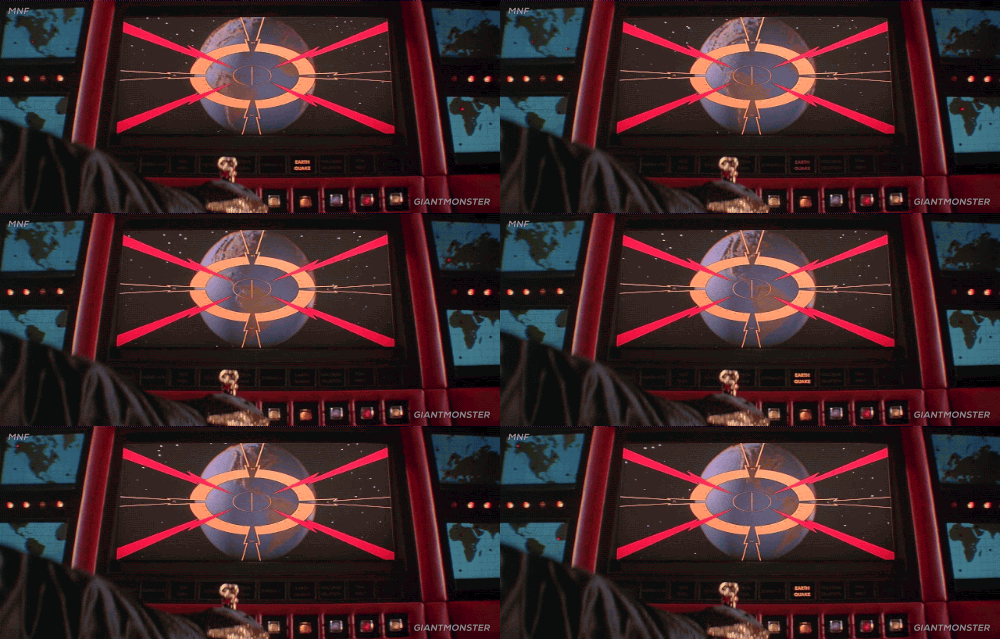
But here’s the thing: he does it with absolute conviction. He never winks. He never apologizes. When he declares that Earth will be destroyed because he is bored, you believe that this man has, in fact, annihilated planets between sips of wine.
Von Sydow’s Ming is grand opera villainy. He elevates every absurd line into a proclamation from an audition for a place at the Juilliard School. Without him, the whole enterprise collapses into kitsch. With him, it becomes myth.
Then there is Princess Aura. There are, perhaps, three major touchstones in the journey towards a lifetime of heterosexuality. Linda Carter as Wonder Woman was the first. Erika Eleniak in Baywatch was probably the final push. Right in the middle was Ornella Muti in Flash Gordon as Aura. She glides through the film like a sentient jewel. Aura is petulant, seductive, treacherous, and occasionally heroic, entirely depending on which man is currently in the room.

Muti plays her with a knowing sensuality that somehow makes the melodrama feel intentional. She understands the assignment. She is also in on the joke, but perhaps only just, and she looks spectacular doing it.
A pre-007 Timothy Dalton plays Prince Barin as all windswept hair and righteous indignation. Dalton plays it straight. Painfully straight. His Shakespearean intensity applied to dialogue about arboreal rebellion is a thing of beauty. When he swears vengeance, he means it. When he broods in the forest kingdom, you can almost hear the Royal Shakespeare Company quietly nodding approval.
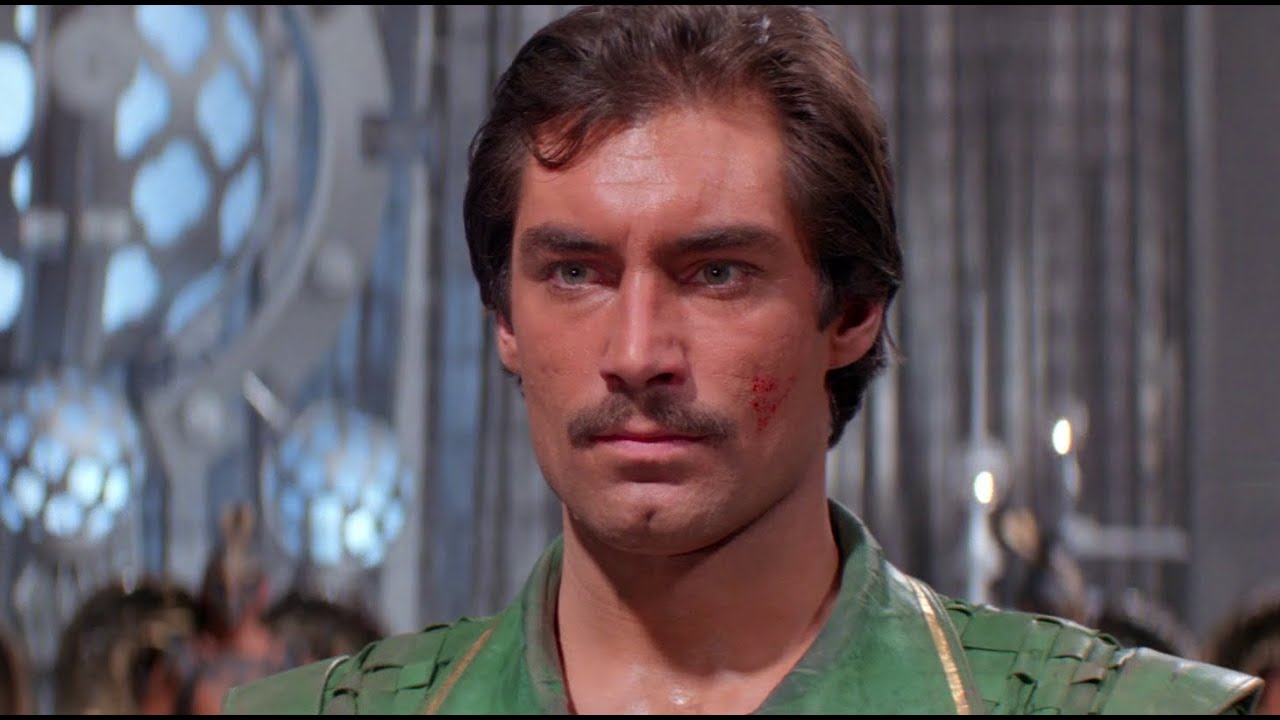
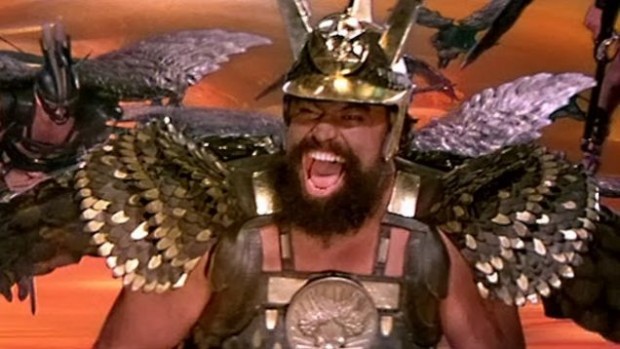
Against this straightness comes the relief in the form of a human airhorn. Brian Blessed as Prince Vultan. Blessed does not act. Blessed detonates. It is not a line reading when he declares:
“GORDON’S ALIVE?!”
It is a seismic event. It is the sound of rafters surrendering. He spends the entire film at a volume normally reserved for announcing the apocalypse. He rides a giant bird-man army into battle like he’s late for lunch and furious about it. Every scene he inhabits becomes his. It is magnificent.
Then there is Klytus. Dry camp in a metal mask played with delicious iciness by Peter Wyngarde. Encased in a chrome mask and clad a way that suggests villainy by way of avant-garde fashion week, Klytus delivers lines with such dry disdain that you half expect him to roll his eyes behind the faceplate.
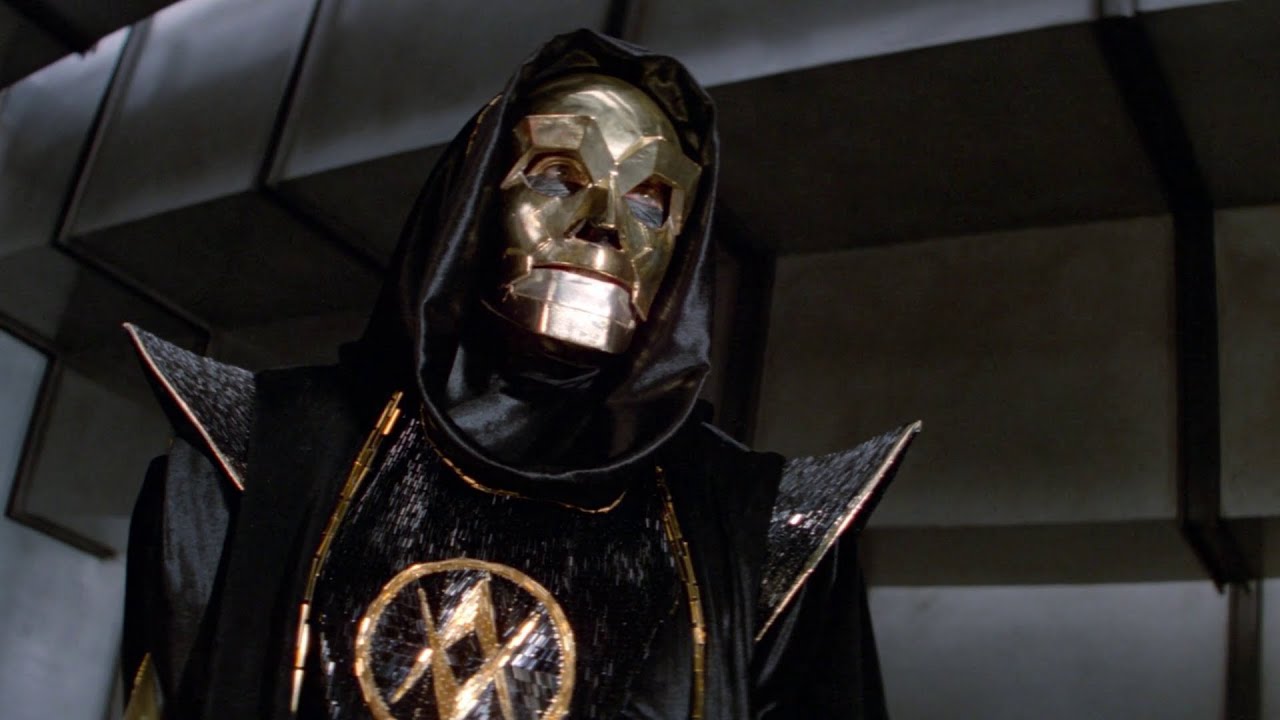
His camp is not flamboyant. It is arid. Bone-dry. He treats the destruction of planets as an administrative inconvenience. When he orders:
“Dispatch War Rocket Ajax.”
It’s not shouted. It’s sighed. Which brings me on neatly to something else:
Dialogue, So Bad…
The dialogue in Flash Gordon is not good. But it is wonderful. Lines land with the subtlety of a mallet. Emotional transitions occur as though the characters are being yanked forward by invisible strings.
“I love you, Flash, but we only have fourteen hours to save the Earth!”
Nobody talks like this. And yet this is precisely how people should talk in a universe where hawk-men exist. The script understands something crucial: this is heightened reality. Subtext is for cowards. Everything is declared. Everything is announced. It is not realism. It is a myth performed at full volume.
And this myth is underwritten with more robust underwriting than an actuary with a spreadsheet. This myth is underwritten by Queen!
Queen did not so much score this film as conquer it. It all starts with a main theme that is less of a score, more of a stadium chant from another dimension. Freddie Mercury, the king of the flamboyant showmen, was in his element here. The score is bombastic, operatic, playful, and utterly sincere. It transforms slow-motion football tackles into cosmic destiny. Simply put, without Queen, the film might have simply flopped into kitsch.
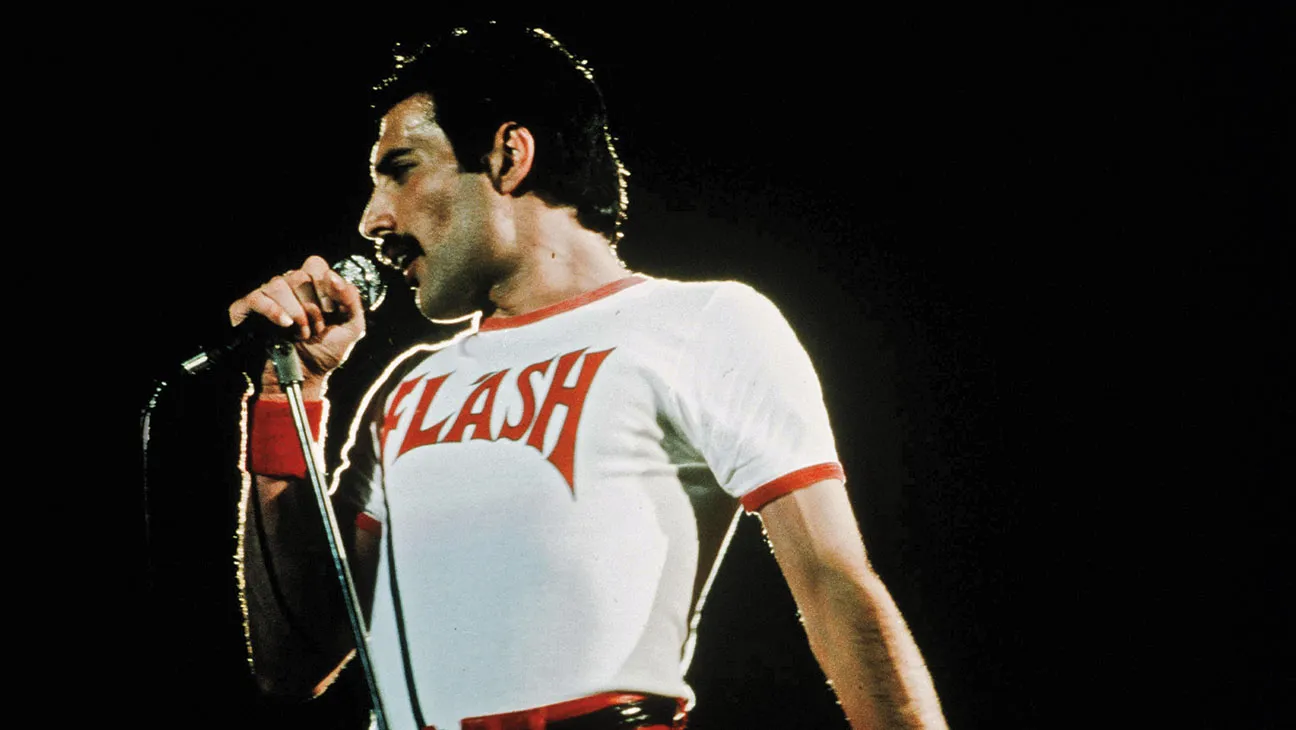
With Queen, it runs headfirst and then high dives into that kitsch and comes up laughing at absolutely everything, declaring it all simply a massive rock opera with laser guns and dares you to do anything about it.
Of course, like very small me, and my father, in 1980 audiences didn’t quite know what to do with it. Critics compared it unfavorably to The Empire Strikes Back, which was darker, moodier, and narratively sophisticated. Next to that, Flash Gordon looked like an over-decorated float at a Pride parade.
It performed modestly at the box office, particularly in the UK, but it wasn’t the juggernaut Dino hoped for. American audiences, still drunk on lightsabers and mythic gravitas, found it too silly.
Which is ironic, because silliness was the point.
In the decades since, Flash Gordon has ascended to cult status. Midnight screenings. Quoted lines. Brian Blessed memes. Its refusal to conform, to be gritty, to be plausible, to be anything other than exactly what it is, has actually aged beautifully.
In an era of desaturated blockbusters and self-serious franchise building, Flash Gordon now feels rebellious. It is not embarrassed. It does not apologize. It struts, and this is why it endures.
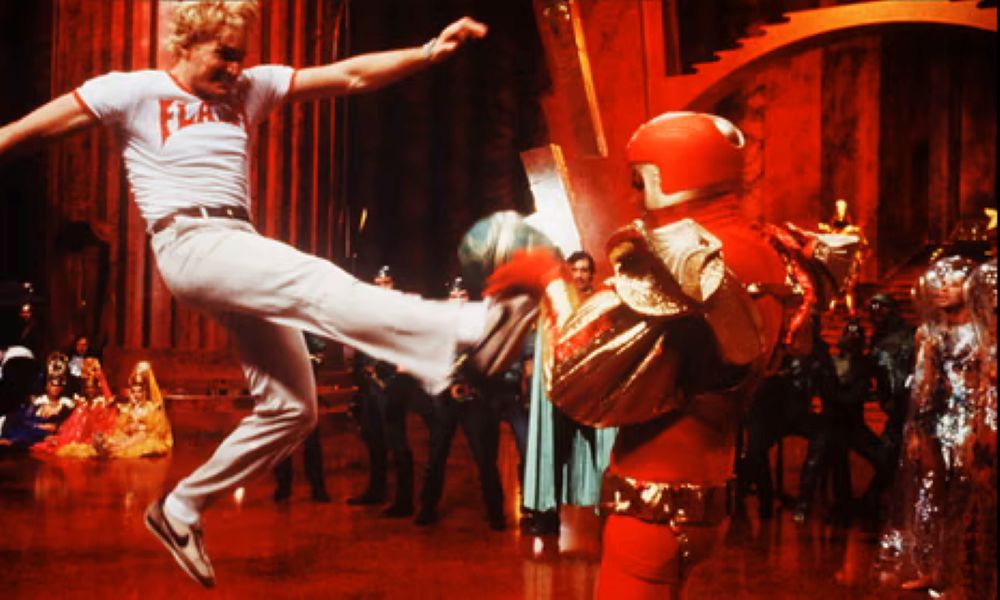
Because it commits. Because von Sydow never winks. Because Dalton never smirks. Because Blessed never whispers. Because Queen decided quiet musical interludes are for pussies. Because it looks like nothing else before or since.
And because it captures something that modern blockbusters often forget: joy. Unfiltered, unrestrained, cape-flapping joy.
Flash Gordon is not perfect. It is not subtle. It is not restrained. It is better than that.
It is a chrome-plated monument to excess. It is the anti-Star Wars space opera that chose glam over grit. It is a camp classic forged in gold lamé and powered by an electric guitar.
It is ridiculous.
It is glorious.
Flash Gordon is alive. And thank heaven for that.
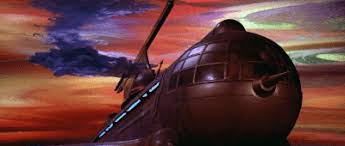
Not The Bore Worms!
If you love Flash Gordon, check out our LMO YouTube channel, where Yoda discusses a documentary about the epic craziness and also interviews the director of the documentary.

