


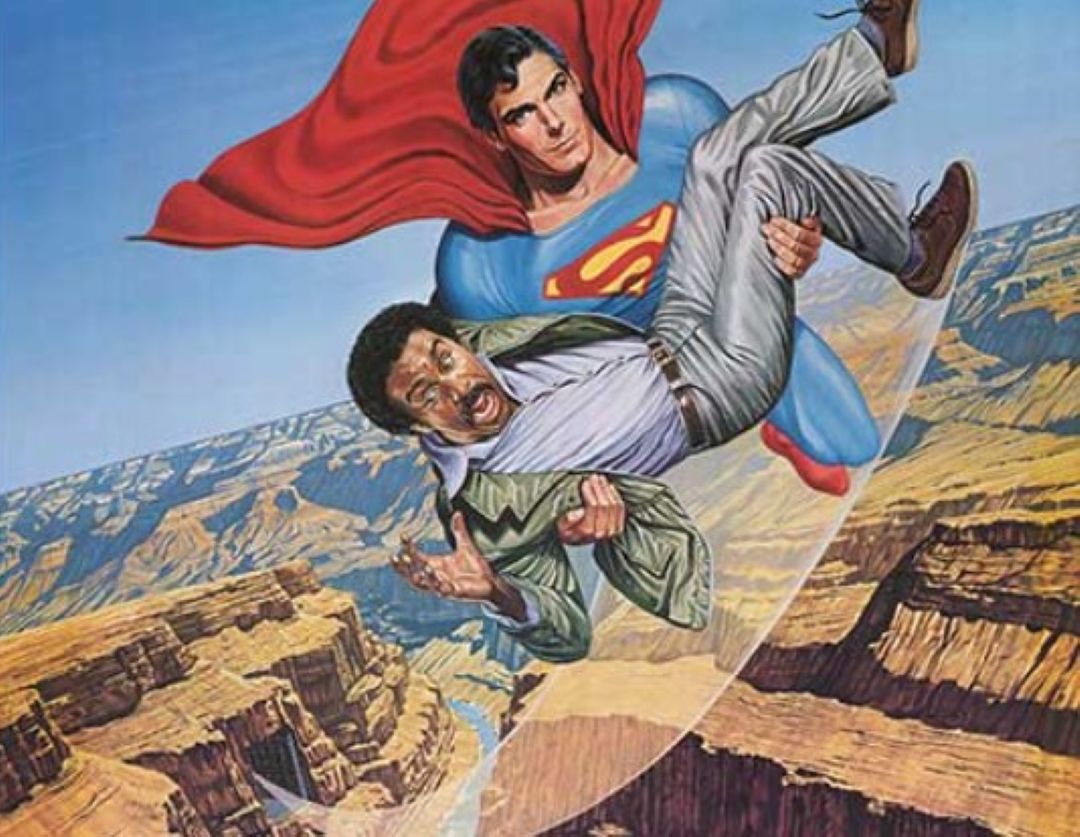
Superman III is a film that asks one of cinema’s great unanswered questions:
“What if we took arguably the greatest superhero ever put on film… and made him the co-star in a Richard Pryor comedy about computer programming?”
It’s one of those uniquely baffling productions that could only have existed as an early 1980s threequel. Somebody in the massed ranks of suits believed Superman movies needed more comedy. Meanwhile, computers were magical boxes capable of doing absolutely anything except what computers actually did.
The result is a film that somehow manages to be simultaneously boring, manic, expensive, childish, and deeply strange.
And yet… two scenes remain lodged in the collective consciousness forty years later – the junkyard fight, and the robot woman. We’ll come back to that nightmare shortly.
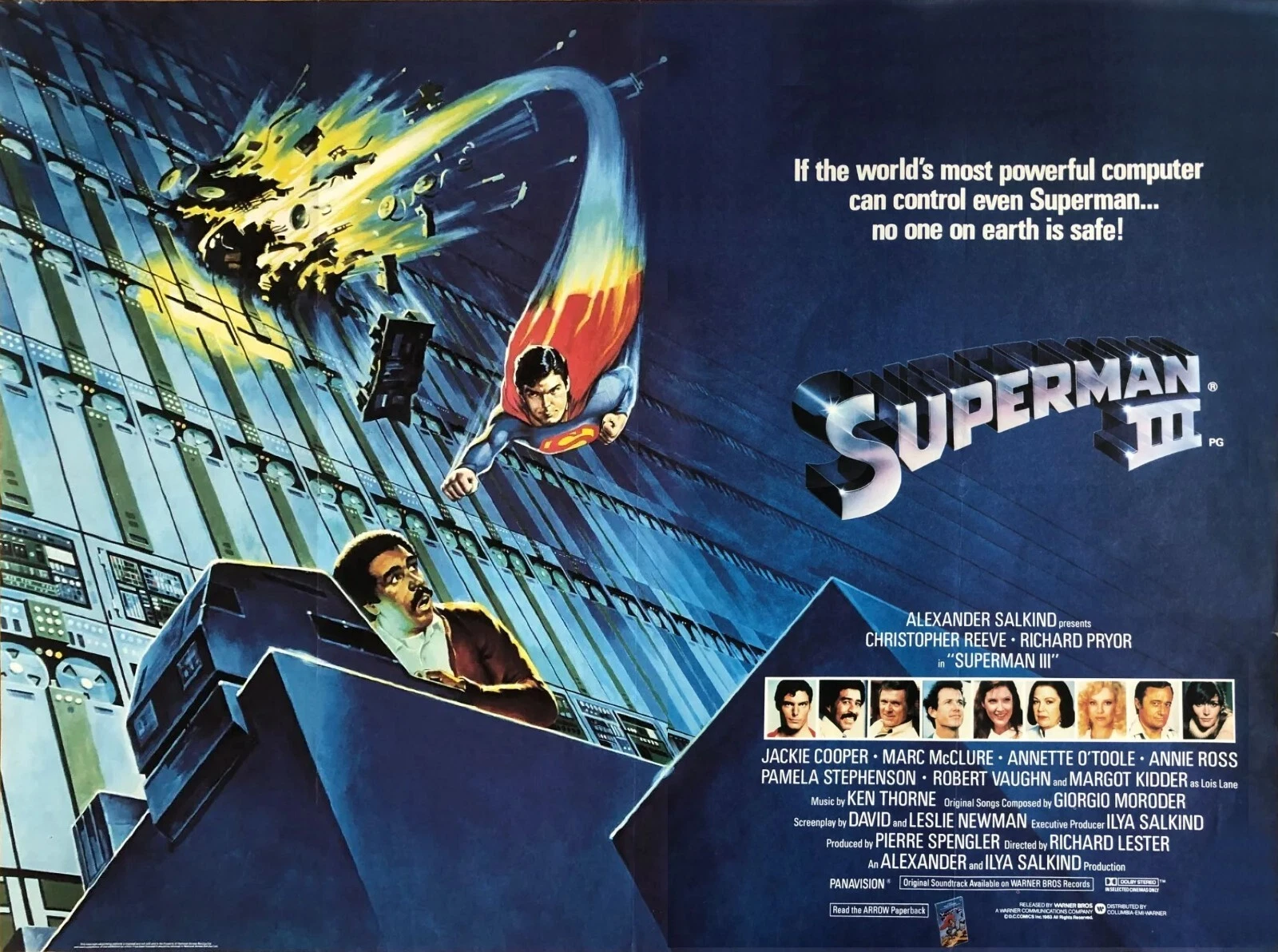
Superman III
By the time Superman III rolled around, the series had travelled an awfully long way from Richard Donner’s original vision.
Donner famously approached Superman: The Movie with one guiding principle: Verisimilitude.
Treat the impossible as if it were absolutely real. Christopher Reeve wasn’t playing a comic book character, he was playing a real man with impossible abilities. It worked. The audience laughed because Clark Kent was charmingly awkward, not because the film was desperately elbowing them in the ribs every thirty seconds.
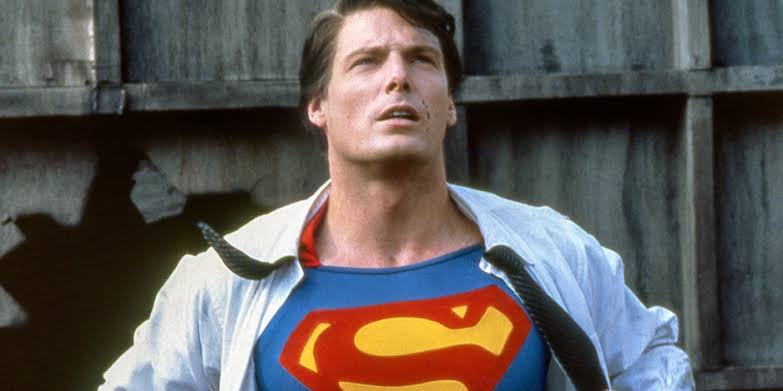
Reeve’s physical acting was an unsung hero here, and every good Outposter can point to how he manages to transform himself in Superman II in the identity reveal scene with Lois.
That approach made people believe a man could fly.
Superman III believes a man on roller skates pushing a hot dog cart into a row of phone booths is the height of sophistication. It’s astonishing how quickly the series abandoned the thing that made it work.
Instead of grounding Superman, the makers of Superman III decided to ground the audience’s intelligence. Everything becomes broader. Every gag lasts too long. Every joke arrives with all the subtlety of a custard pie fired from a cannon.
It’s not that superhero films can’t be funny, it’s just that this one mistakes volume for wit.
Speaking of comedy, let’s address the elephant in the room – Richard Pryor.
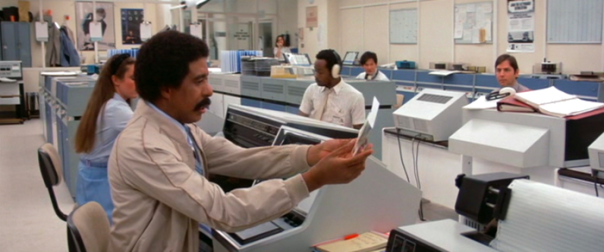
Richard Pryor was a comic genius. One of the greatest stand-up comedians who ever lived. His routines remain legendary. His storytelling was unparalleled, and his timing was immaculate.
None of which automatically qualifies someone to become the second lead in a Superman movie. His casting happened because the Salkinds reportedly heard Pryor publicly say he loved Superman I and Superman II in an interview.
The response? – “Get him!”
Which appears to have been the entire casting process for the whole movie. The screenplay then bends itself into shapes trying to justify his existence. Pryor plays Gus Gorman, a chronically unemployed drifter who accidentally discovers he’s a computer genius because the plot says so.
That’s genuinely it. One day he can’t keep a job. The next he’s hacking global weather satellites. This is less character development and more divine intervention.
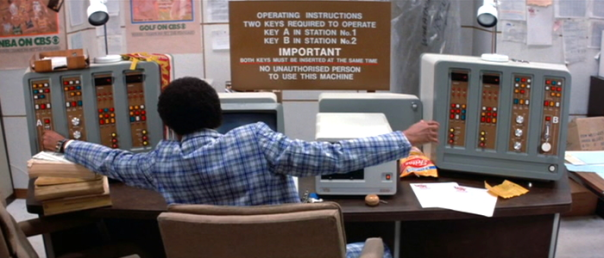
Every time the film threatens to become a Superman story, it remembers Richard Pryor hasn’t had a comedy routine for seven minutes and wanders off again. There’s an extended sequence involving drunkenness. Another involving skiing. None of these have anything to do with Superman. It’s like watching two completely different movies awkwardly sharing custody of the same reel of film.
Christopher Reeve is trying to make an actual Superman movie, meanwhile Richard Pryor wandered in from Silver Streak. Neither knows what the other is doing.
The Real Lex Luthor
One thing the film accidentally gets right is Robert Vaughn. Webster actually behaves like what you’d imagine a billionaire industrialist supervillain would. He’s ruthless. Corporate. Manipulative. Greedy. He weaponises technology. He exploits people. He thinks entirely in terms of profit and control.
Sound familiar? That’s because it’s Lex Luthor. The industrialist version from the comics, not Gene Hackman’s increasingly cartoonish, underground dwelling interpretation.
Weirdly, then, it puts any Superman fan who is familiar with the comics into some kind of bizarro world. If someone told you Webster ran a multinational corporation, you’d believe it.
If someone told you Hackman’s Luthor had successfully organised a criminal empire while acting as a used car salesman and dressed as Groucho Marx, you’d probably ask several follow-up questions.
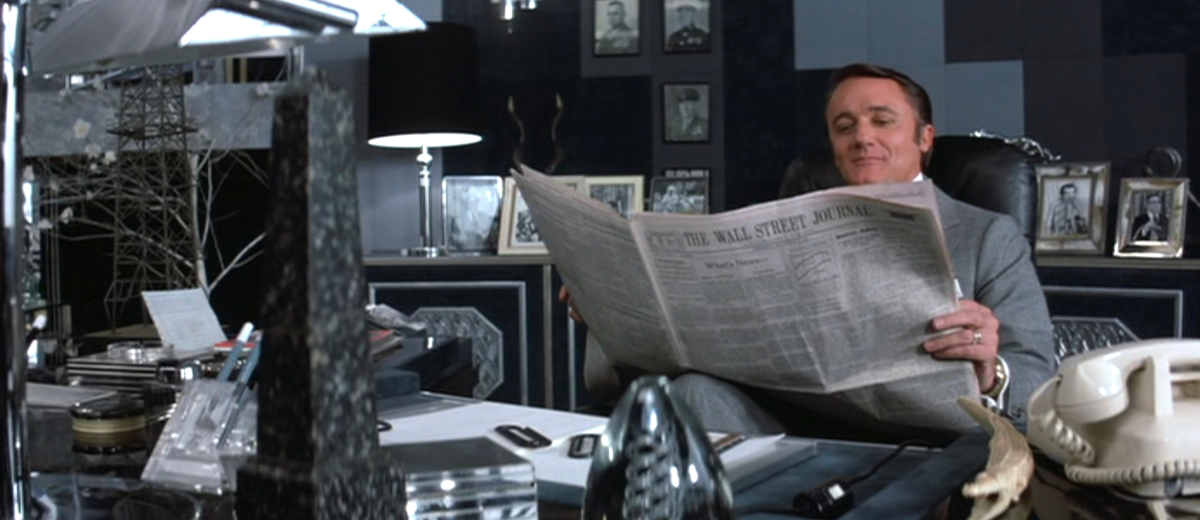
Vaughn gives the material considerably more dignity than it deserves. Unfortunately, he’s surrounded by a film that seems terrified of allowing anyone to remain serious for more than ninety seconds.
One subplot sees Clark returning to Smallville for a high school reunion. It’s an obvious attempt to recapture the warmth and Americana of the original film, but instead, it feels like someone accidentally wandered into a Hallmark movie.
Clark reconnects with Lana Lang, played by Annette O’Toole, who would later return to Superman mythology as Martha Kent in Smallville. Comic book symmetry has a funny way of working out.
Reeve and O’Toole actually have pleasant chemistry. You almost wish the film had stayed here and just let Clark be Clark. Let him reconnect with ordinary people. Let Superman be about humanity again. But then an evil supercomputer has to happen.
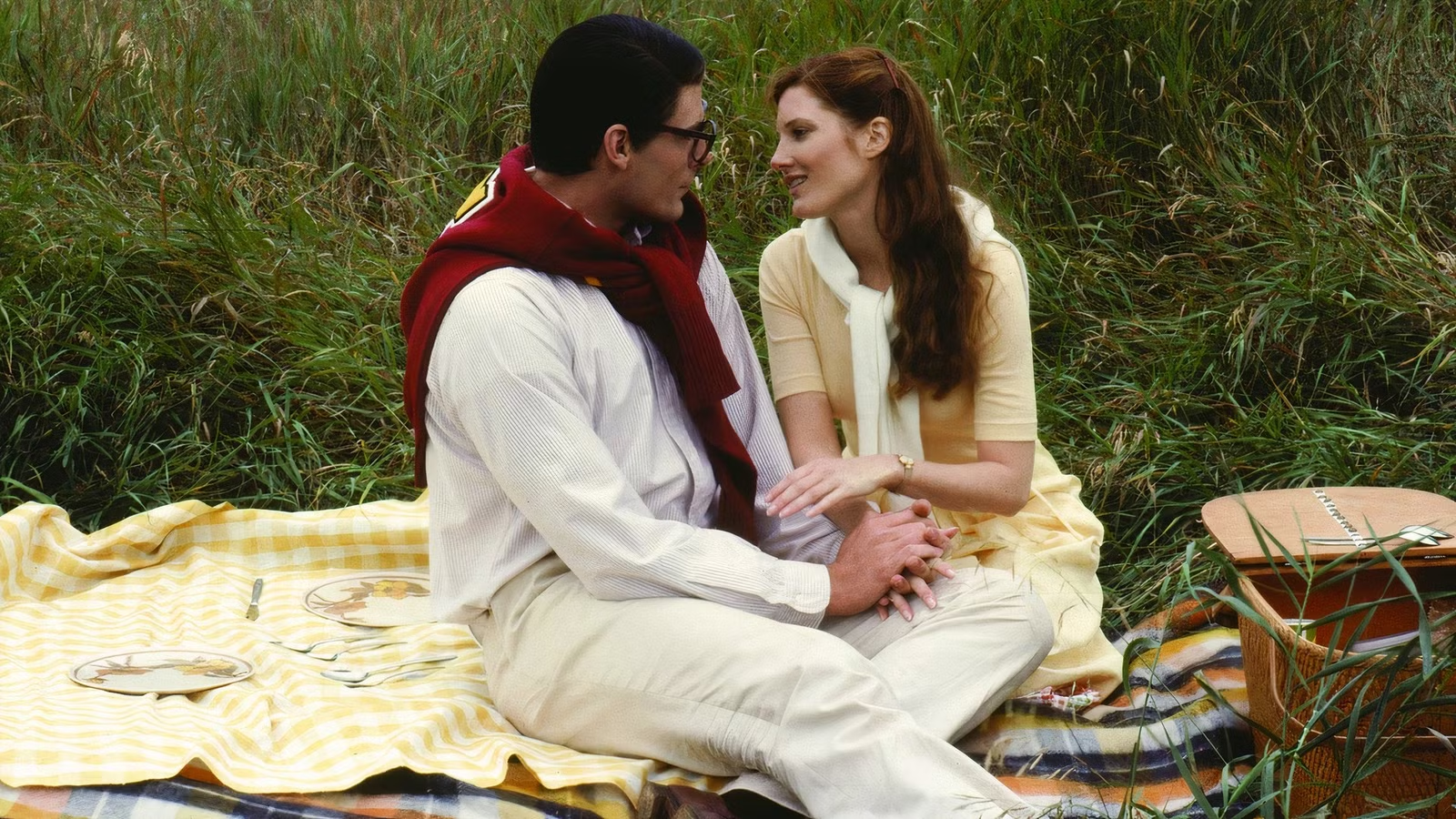
Meanwhile, Margot Kidder barely appears. This is not a metaphor. The film actually writes Lois Lane into another continent.
Officially, Lois is sent on holiday to Bermuda. In reality, Margot Kidder’s reduced role has long been associated with tensions following the dismissal of Richard Donner.
Kidder had publicly supported Donner during the upheaval surrounding Superman II, and reports from the production have consistently suggested that this contributed to her significantly reduced involvement in the third film.
Whether viewed as studio politics, creative differences, or simply unfortunate timing, the effect on the film is obvious. Without Lois, Superman loses one of his essential ingredients. Clark has nobody to bounce off. Lois always grounded the series emotionally.
Without her, we’re left watching Richard Pryor accidentally invent artificial intelligence, and this is not an improvement.
The Evil Superman
Then, completely out of nowhere, Superman III suddenly remembers greatness… for around fifteen minutes.
After exposure to synthetic kryptonite, which itself is wonderfully ridiculous because the computer can’t analyse kryptonite, so it simply invents the missing ingredient through what appears to be electronic guesswork, Superman begins changing.
He becomes arrogant, cruel and lazy.
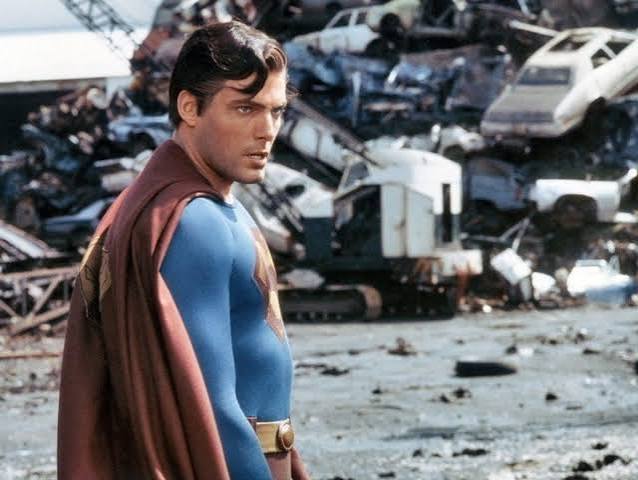
As this is Superman III, we can’t have everything, so this evil manifests itself as him straightening the Leaning Tower of Pisa.
He then goes on a drinking bender and flicks peanuts at bottles, while ignoring impending disasters.
Christopher Reeve absolutely relishes it. The performance is fantastic. Gone is the warm sincerity, in comes smug confidence. He’s genuinely intimidating because Reeve never overplays it.
Then comes the junkyard battle. Good Superman vs. Bad Superman with one actor and all the limitations of early 80s VFX, so mostly relying on clever editing and excellent physical acting.
It’s still superb today, as the good half of Superman is represented by Clark Kent, battling what has become the darker half of himself.
It’s easily the best sequence in the entire film. It belongs in a much better movie.
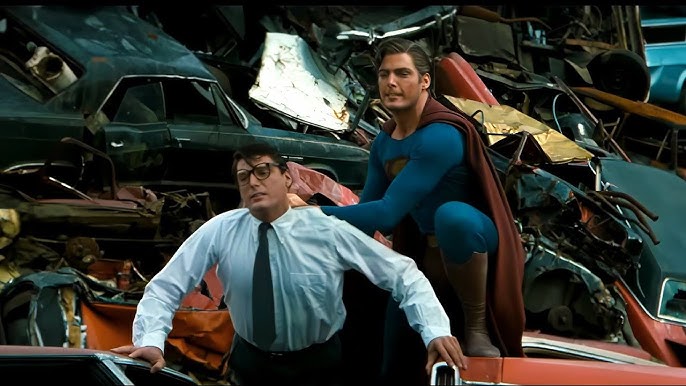
It is also no accident that these parts of Superman III are the parts that are as far away from Richard Pryor as possible.
Don’t think we didn’t notice.
And then comes pure nightmare fuel. You know the scene. Everyone knows the scene. Every child who saw this movie was scarred for life by this one scene.
Webster’s sister Vera is dragged into the giant supercomputer. Metal wraps around her body and tiny machines invade her face.
Artificial eyes emerge. She screams, and transforms into a cyborg. It’s genuinely horrifying. Not “1980s funny horror.”, it’s actually disturbing, and veers as far towards body horror as you can get in a family movie.
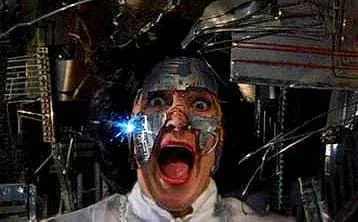
Somewhere, Doctor Who was watching and quietly muttering:
“Bit much for a PG, lads.”
It remains astonishing. The film is clipping along like a Saturday morning cartoon, when suddenly it is as if David Cronenberg walks through the door and relieves himself all over the movie for about three minutes before politely leaving again.
Computers Are Magic
One of the great joys of revisiting Superman III today is its understanding of computers. Which is to say, absolutely none whatsoever.
Here, computers can steal fractions of pennies, control satellites, launch missiles, create weather, manufacture kryptonite, and build artificial intelligence.
They’re basically electronic wizards. Hollywood spent years treating computers as enchanted wardrobes with keyboards attached, and Superman III may be the patron saint of this genre.
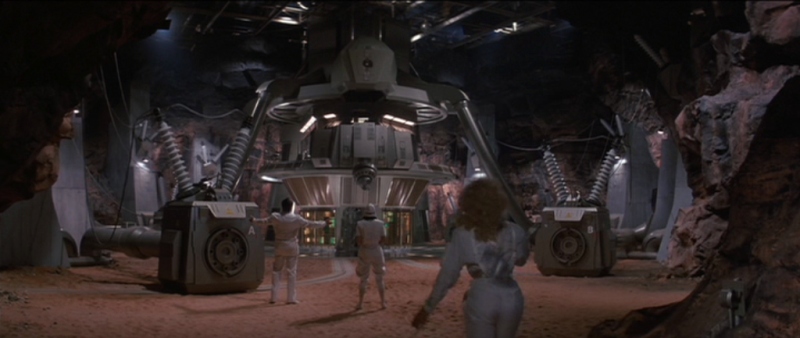
Every computer makes cheerful beeping noises because apparently that’s how processing works. Nobody questions anything.
“Can the computer do this?”
“Yes.”
“Why?”
“Because computer.”
Roll credits.
Production took place primarily in England, continuing the franchise’s strong British identity weirldy juxtaposed against such a red, white and blue character.
Pinewood Studios once again housed much of the production, while extensive location filming took place around Calgary in Alberta, Canada, doubling for Smallville and its surrounding countryside.
Additional scenes were filmed in the English town of Coalville and elsewhere in the UK, giving the film its familiar blend of North American landscapes stitched together with unmistakably British production infrastructure.
By this point the Salkinds were firmly steering the franchise away from Donner’s grounded mythic approach and towards broader family comedy. Director Richard Lester, who had completed Superman II after Donner’s departure, leaned even further into slapstick here.
The tonal shift wasn’t accidental. It was the plan. Unfortunately, it was also the problem.
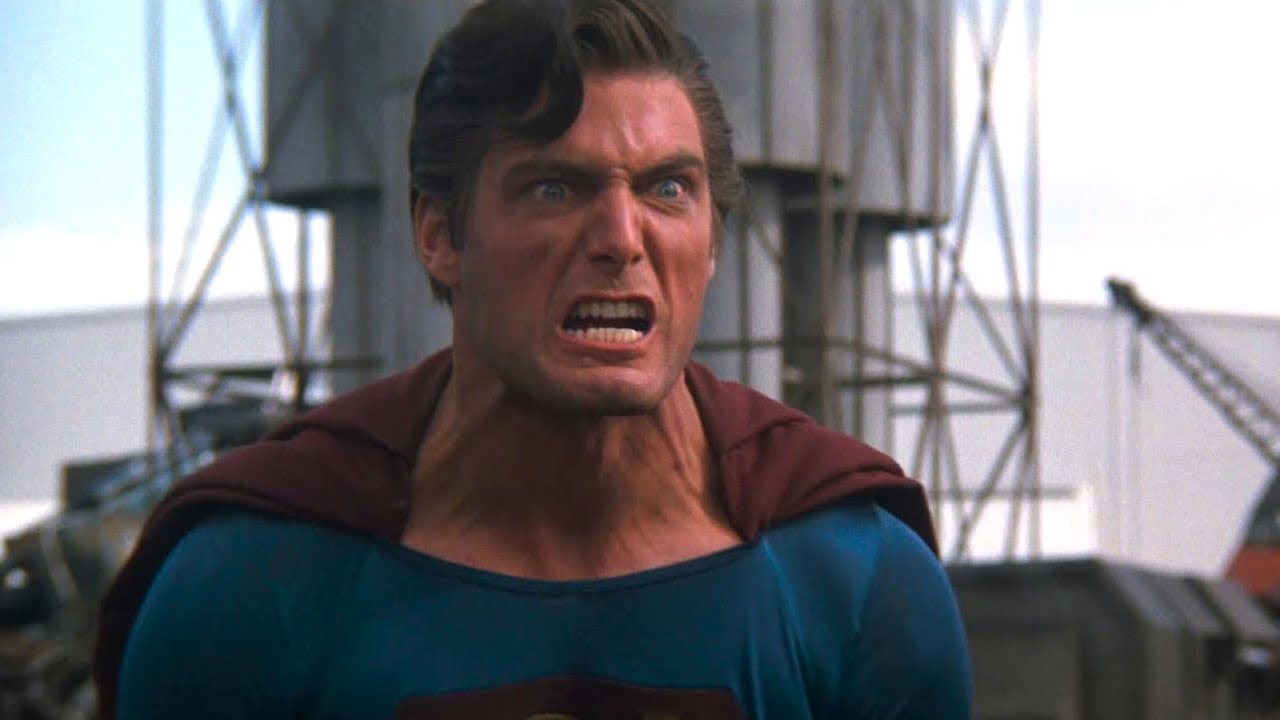
Christopher Reeve remained utterly committed. He never phones it in. Even surrounded by sight gags involving traffic wardens, giant magnets and malfunctioning robots, he plays Superman with complete sincerity. He’s the anchor holding together a ship determined to sail upside down. God, we miss him.
Critics weren’t buying it. The reviews were charitable only by the standards of hostage negotiations. Many critics praised Reeve, as they always did. Several acknowledged Pryor could be funny. Almost everyone agreed they seemed to be acting in different films.
The biggest complaint remains tone. The film simply can’t decide whether it wanted to be superhero adventure, broad comedy, science-fiction satire or children’s slapstick. The answer appeared to be:
“Yes.”
Financially, things were hardly catastrophic. Produced for roughly $39 million, Superman III earned around $80 million worldwide, meaning it wasn’t a flop in the strict accounting sense.
But context matters. After the enormous success of the first two films, expectations were considerably higher. Attendance dropped sharply, enthusiasm cooled, and the sense of cultural event surrounding a Superman movie had noticeably diminished.
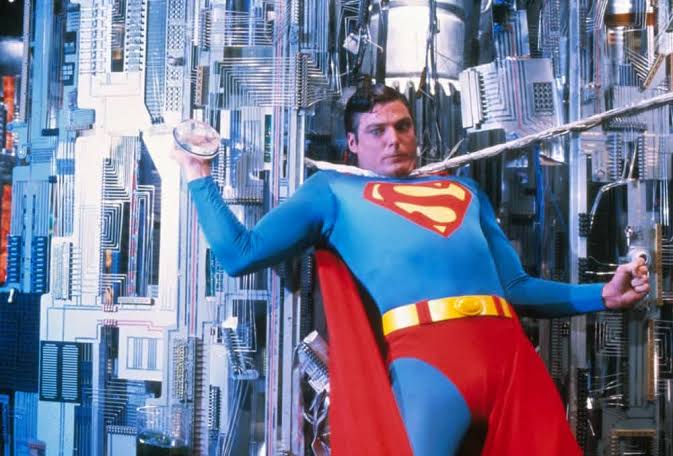
For Warner’s flagship superhero, “less than the last one” was not the trajectory anyone wanted. The momentum had gone. The cape was beginning to fray.
Superman III is not a good film. It is not secretly good. It is not misunderstood. It is not an underrated gem waiting for rediscovery.
It’s an odd, uneven, tonally confused blockbuster that mistakes relentless silliness for entertainment and squanders one of cinema’s greatest superhero performances.
Yet, Christopher Reeve remains magnificent. Robert Vaughn quietly delivers a more convincing cinematic Lex Luthor than the official Lex Luthor standing next door. The evil Superman storyline is genuinely good, and the junkyard battle still works brilliantly. The robot woman remains one of the most unexpectedly terrifying images ever smuggled into what was ostensibly a family film.
Everything else?
It’s mostly Richard Pryor wandering through a film that keeps forgetting who its actual hero is. Richard Donner understood that Superman inspires us because he treats humanity with absolute sincerity.
Superman III treats him like the straight man in someone else’s sketch show.

