


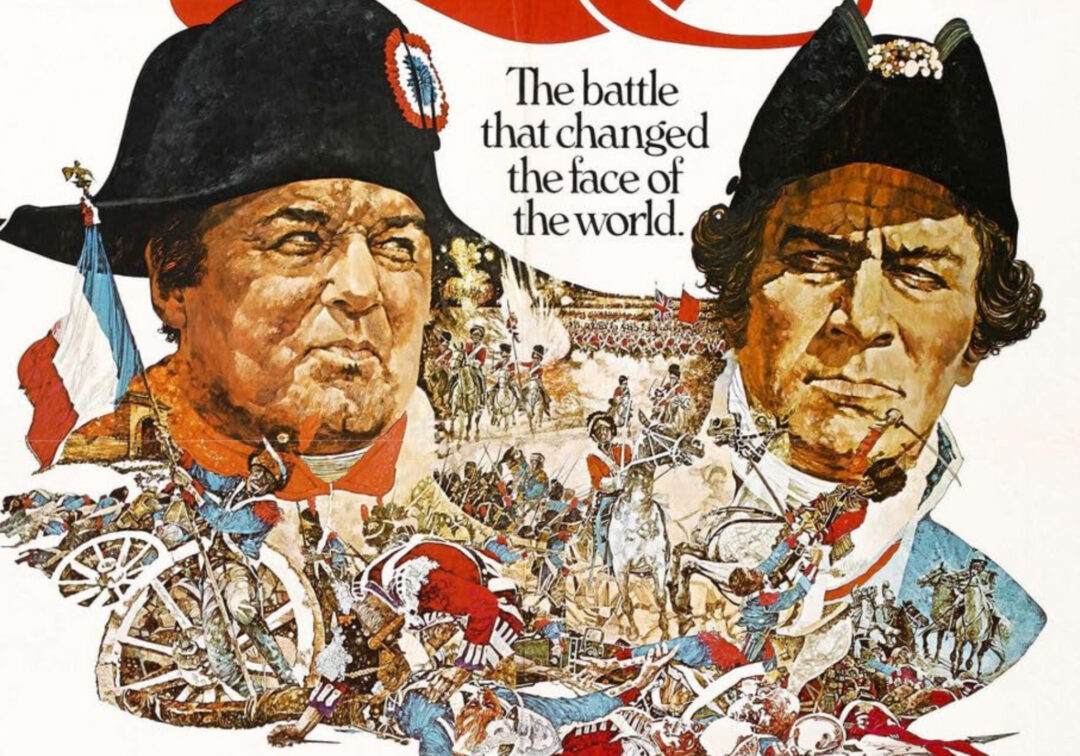
There are very few films made today that would begin production by essentially asking, “How many actual soldiers can we get?”
Not actors dressed as soldiers. Not CGI soldiers. Not a couple of thousand extras composited digitally until the computer starts making worrying noises.
Actual soldiers, and thousands of them.
You might think that sounds slightly excessive, but welcome to Waterloo, the 1970 historical epic directed by Sergei Bondarchuk, and made with the subtlety and restraint of someone who has been given access to the Soviet Army and told to do whatever he likes with it.
The result is magnificent. It is also completely bloody enormous.
Waterloo is one of those films that makes modern cinema look faintly embarrassing. Somewhere in Hollywood today, a producer is probably having a meeting about whether they can afford to digitally render 400 horses.
Sergei Bondarchuk would have simply asked the Russians for 2,000… by Tuesday.
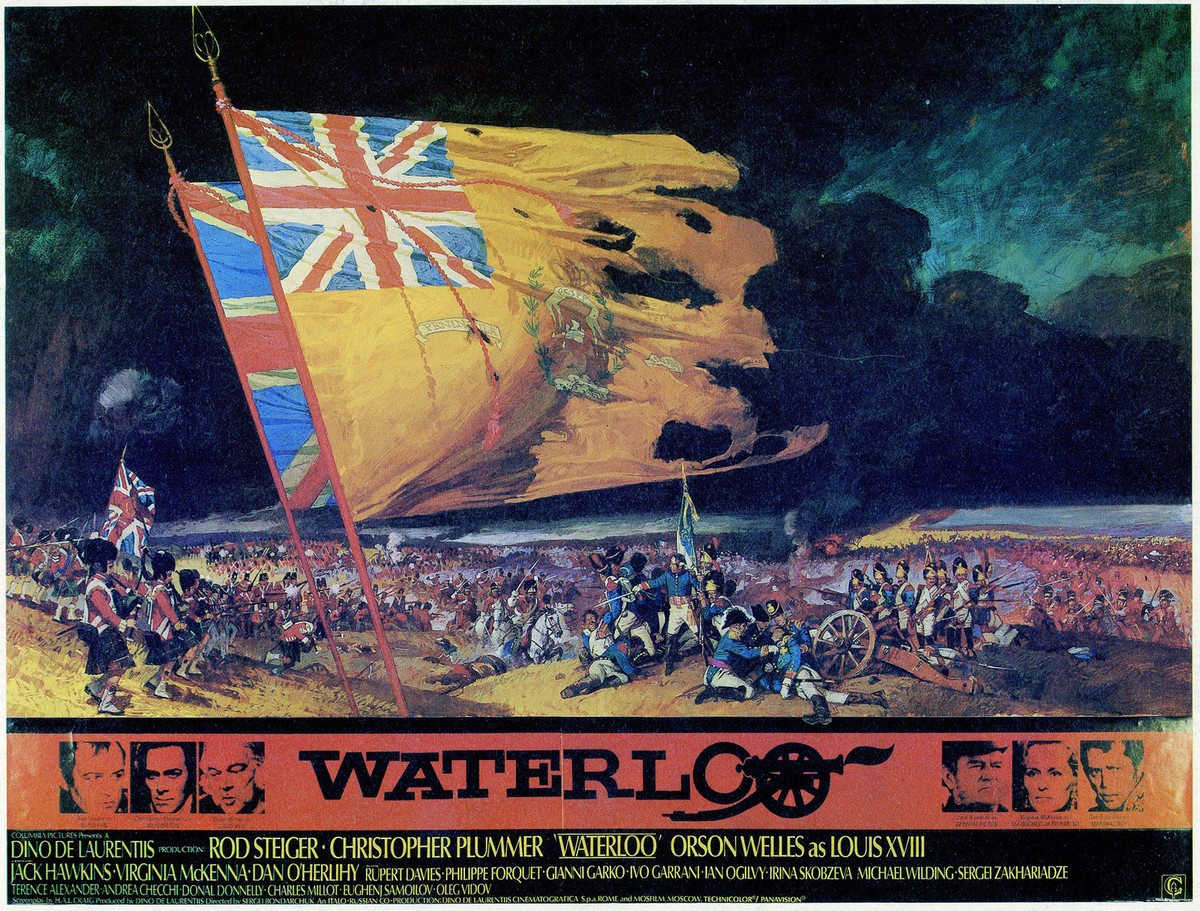
Waterloo
This is the sort of movie you simply don’t see anymore. Imagine pitching it today?
“Right, we’ve got a script about Napoleon.”
“Excellent.”
“Rod Steiger is playing him.”
“Excellent.”
“Christopher Plummer is Wellington.”
“Excellent.”
“Jack Hawkins, Orson Welles, Virginia McKenna, Dan O’Herlihy, Michael Wilding, Rupert Davies…”
“Good, good…”
“And we’ve acquired an entire Soviet army.”
.
.
.
“I’m sorry?”
.
.
.
“An army.”
“How many?”
“About seventeen thousand.”
.
.
.
(Stunned silence)
.
.
.“And we’re going to film them fighting on a battlefield we’ve reconstructed in Ukraine.”
At which point the modern producer would probably quietly leave the room and apply for a job at Netflix.
Of course, none of this was a problem, because here we are dealing with Dino De Laurentiis. Or, to give him his proper title, Dino De-Fucking-Laurentiis.
A man who never once looked at a picture and thought “We should go smaller with this!”
The production was a strange Italian/Soviet co-production involving Russian production house Mosfilm, filmed partly around Uzhhorod in what was then the Ukrainian Soviet Socialist Republic.
The Soviet contribution wasn’t merely some money and a few technicians. Mosfilm brought in those Soviet troops, cavalry, engineers and labourers.
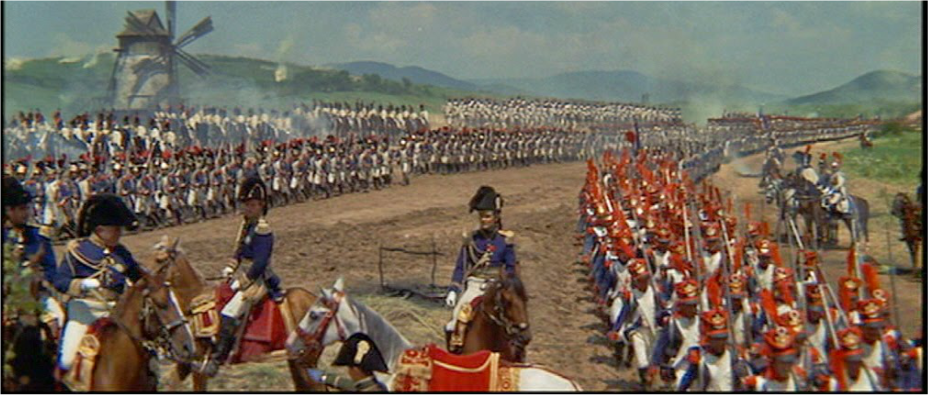
Accounts vary slightly on the precise total, but roughly 15,000 infantry and 2,000 cavalry were used for the battle sequences. The soldiers were trained in Napoleonic drill and formations for months before filming.
The Face Off
The film stars Rod Steiger as Napoleon Bonaparte and Christopher Plummer as Arthur Wellesley, Duke of Wellington.
And frankly, this casting is ridiculous. Ridiculously good, that is.
Steiger plays Napoleon as a man whose ego, exhaustion, genius, vanity and sheer bloody-mindedness are all fighting for control of the same body.
He is intense. Really intense.
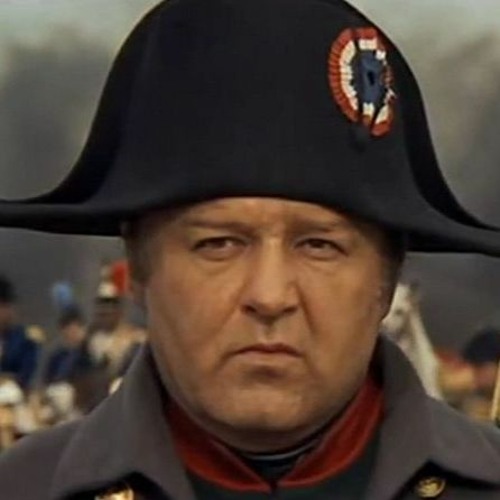
This is not Napoleon as the charming little hat enthusiast of popular caricature. This is a man who has been through years of war, has lost his empire, escaped Elba, returned to France and somehow persuaded an entire country to hand him the keys again.
The film catches him at the end of the road.
The great Napoleon is still there, but the machinery is beginning to grind.
Steiger’s performance is frequently theatrical, occasionally bordering on operatic, and absolutely fascinating. He plays Napoleon as someone who cannot quite comprehend the possibility that the universe might have stopped cooperating with him.
There is a wonderful sense throughout the film that Napoleon knows exactly who he is.
He also assumes everyone else knows. And if they don’t, he’s prepared to explain. At length. With artillery.
Plummer, meanwhile, is sublime.
His Wellington is the perfect counterweight. Where Steiger’s Napoleon seems to occupy every cubic inch of the room, Plummer’s Wellington often seems to occupy about three inches and somehow controls everything from there.
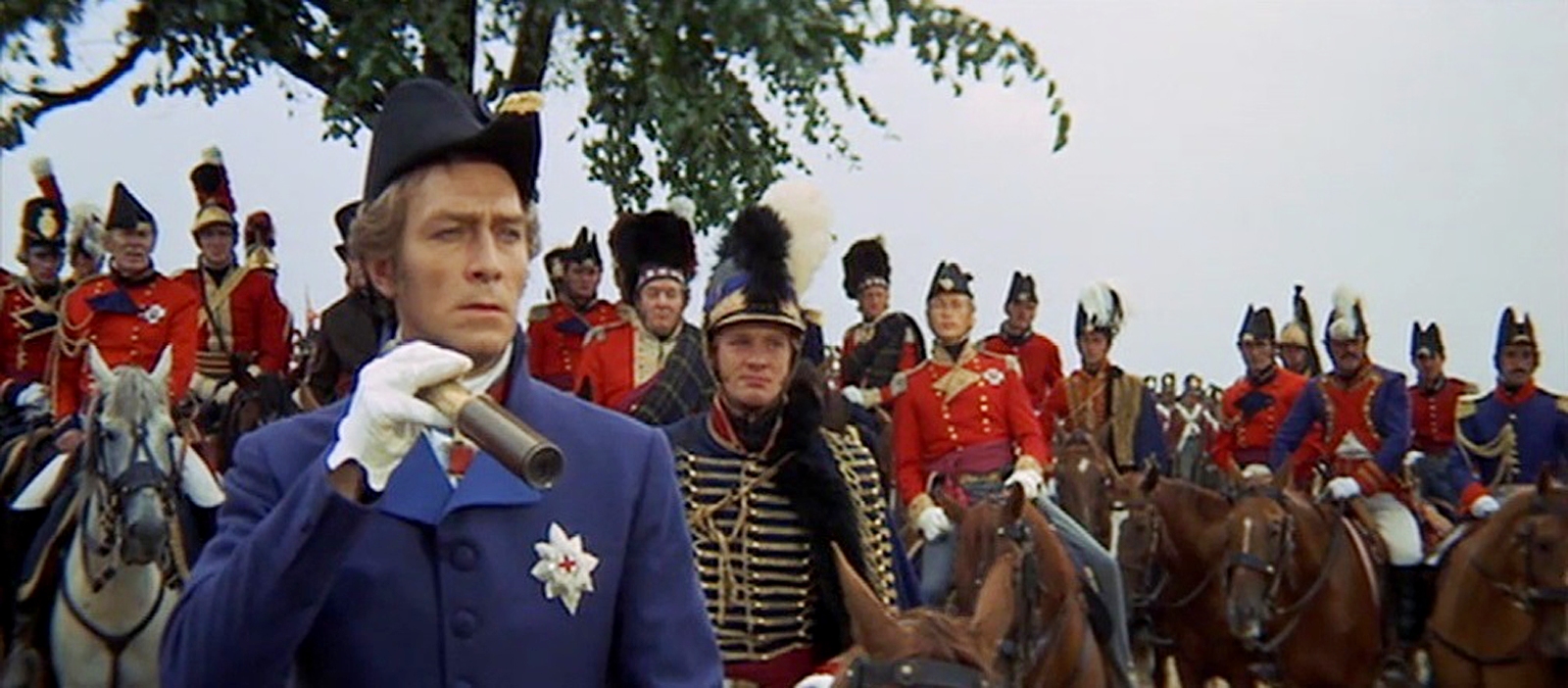
Cool. Dry. Observant. Patient. Occasionally sardonic. Wonderfully arrogant to the extreme.
This is a Wellington who looks as though the apocalypse could be taking place around him and he’d merely adjust his hat and ask whether anyone had remembered to bring the maps.
Christopher Plummer was one of those actors who could make a sentence about the weather sound like a declaration of war. Here he gives Wellington an exquisite mixture of authority and weary calculation.
And the film understands the central dramatic irony perfectly.
Napoleon and Wellington are the two great personalities of the story, but they never actually meet.
Their entire relationship is conducted across a battlefield through scouts, messengers, maps, guns, cavalry and thousands of men trying very hard not to become historical statistics.
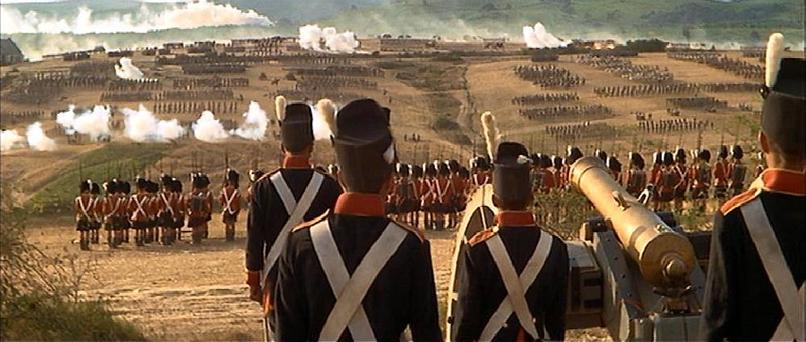
They are essentially having the most elaborate argument in history without ever being in the same room.
Alongside them, the supporting cast is spectacular.
This isn’t one of those historical epics where the two stars are surrounded by actors you’ve never heard of and one bloke from Dynasty.
This thing is stuffed with names. Actual, proper names.
Orson Welles turns up as Louis XVIII, which is exactly the sort of casting decision you get when someone says “We have Orson Welles available. Put him somewhere.”
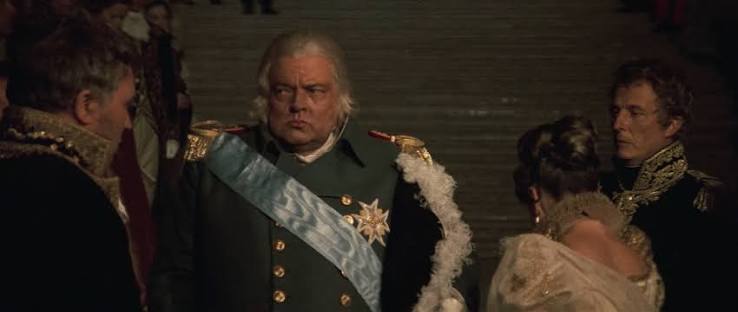
Jack Hawkins plays General Sir Thomas Picton. Virginia McKenna is the Duchess of Richmond. Dan O’Herlihy is Marshal Ney. Rupert Davies is Gordon. Michael Wilding is Ponsonby. Ian Ogilvy is De Lancey. Terence Alexander plays Uxbridge.
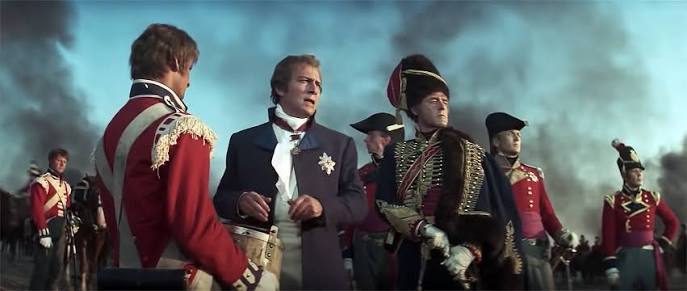
And then there are a whole host of European and Soviet actors filling out the French, British, Prussian and allied ranks.
There is something gloriously old-fashioned about the whole enterprise.
Nobody appears to have asked whether an audience would know who everyone was, or really care. They simply assumed that if you put enough impressive actors in uniforms, the audience would eventually catch up. And they’re right.
The film also benefits enormously from Bondarchuk’s experience directing massive historical material.
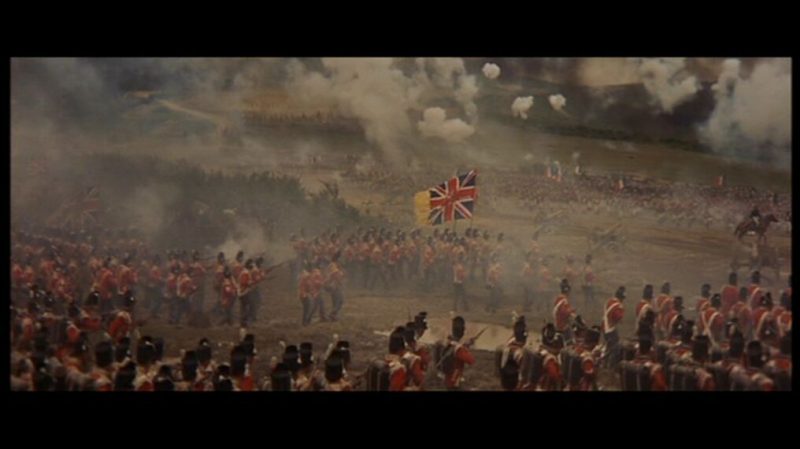
He had already directed the enormous Soviet version of War and Peace, and Waterloo often feels less like a conventional movie than an enormous moving historical painting.
A Study In Neutrality
The basic story is, of course, Napoleon’s return from exile in 1815 and his attempt to smash the allied armies before they can combine against him.
And this is where the film adopts an interesting approach. It doesn’t really take sides.
There isn’t a modern Hollywood insistence that one army must be the Good Guys and the other must be the Bad Guys. The French aren’t presented as cartoon villains. The British aren’t presented as flawless heroes. The Prussians aren’t suddenly the lovable underdogs.
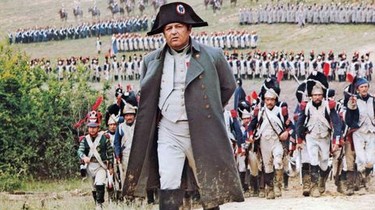
Everyone is essentially doing the job they’ve been sent to do – kill the other lot, preferably before lunch.
This neutrality is one of the film’s greatest strengths. Bondarchuk simply presents us with the battle.
And what a battle it is.
There are moments of heroism on both sides. There are moments of stupidity on both sides. There are moments when men behave with extraordinary courage and moments when military commanders make decisions that would get you permanently banned from playing Civilisation.
The film isn’t interested in telling you who deserves your emotional support.
It is interested in showing you what happened.
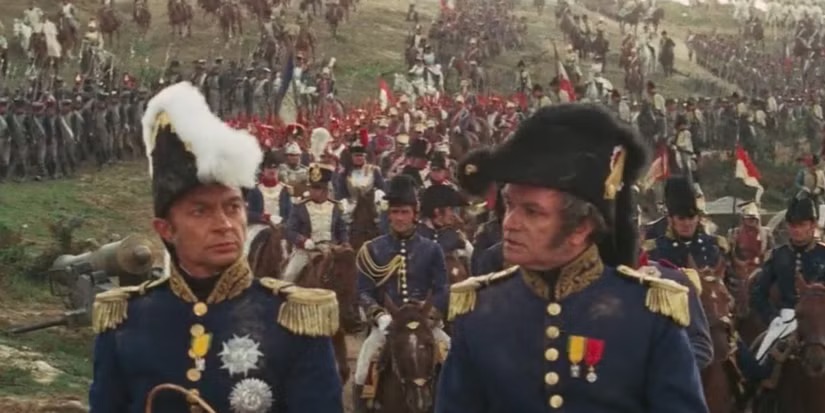
And, rather wonderfully, it frequently lets Napoleon and Wellington’s thoughts provide the commentary. The internal monologues give us access to the two commanders as they assess the battlefield, contemplate their decisions and try to understand what the other man is doing.
It’s a slightly unusual technique, but it works because the film is essentially about two minds attempting to outmanoeuvre each other.
Napoleon thinks.
Wellington thinks.
Thousands of men then die because of those thoughts. Military history: possibly the most expensive form of chess ever invented.
The Battle
The astonishing thing about Waterloo is how much of the actual battle it gets right.
Not everything. It isn’t a documentary, and there are historical liberties, composite characters and moments of cinematic invention. Some battlefield deployments and movements aren’t entirely accurate, and the geography is necessarily manipulated for the camera.
But the overall chronology is impressively faithful.
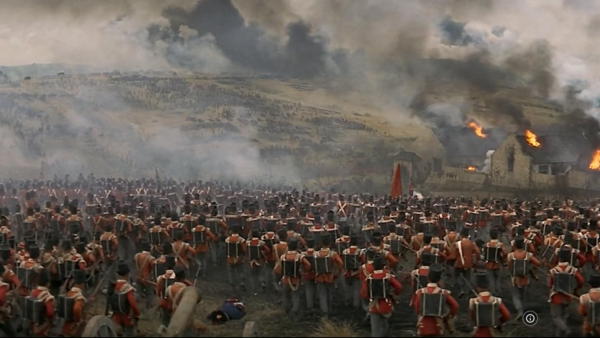
The battle begins late in the morning, with Napoleon’s artillery bombardment and the attack around Hougoumont. Then comes the French assault.
Then more fighting. Then the cavalry are repulsed by squares. Then more fighting. The Brits repulse the Imperial Guard after tricking them into advancing.
Then the Prussians begin arriving and Napoleon’s options start disappearing, as France discovers that perhaps invading everyone in Europe simultaneously wasn’t a sustainable business model.
The film allows the battle to unfold over time rather than turning the entire thing into one continuous two-hour explosion.
You get the feeling of an actual battle developing. Units move. Orders are issued. Messengers ride. Generals wait. Commanders misinterpret what they’re seeing. Reserves are committed.
And all the while the battlefield slowly becomes an increasingly horrifying soup of mud, smoke, horses, uniforms and people wondering whether they should have taken up farming instead.
One of the great sequences is the French cavalry attacking the British infantry squares. This is where Waterloo becomes something mythic.
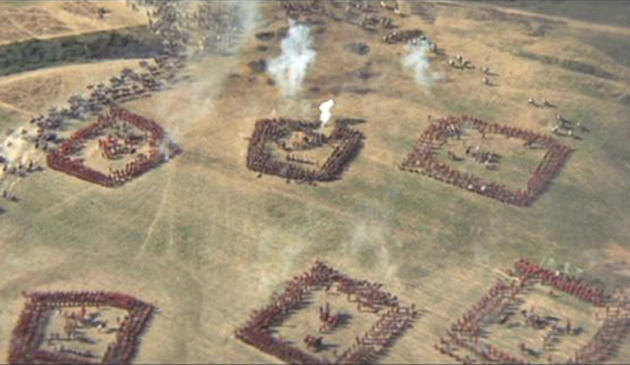
The cavalry come charging across the field. Thousands of men on thousands horses. The ground shakes as the British infantry form squares.
The cavalry slam into them, but the square doesn’t break.
The horses cannot simply charge through a wall of men pointing bayonets at them. So the cavalry sweep around the squares, looking for weaknesses, while the infantry hold their positions and pour fire into the attacking horsemen.
It is magnificent, right down to the agonising lament of the men as they are forced to unleash carnage on each other.
And because Bondarchuk had an army rather than 37 extras and a green screen, the sense of scale is extraordinary. The film understands something that modern CGI often struggles to recreate: mass.
You can see formations extending into the distance, you can see cavalry moving across enormous sections of the battlefield, you can see the battle as something that is happening everywhere simultaneously.
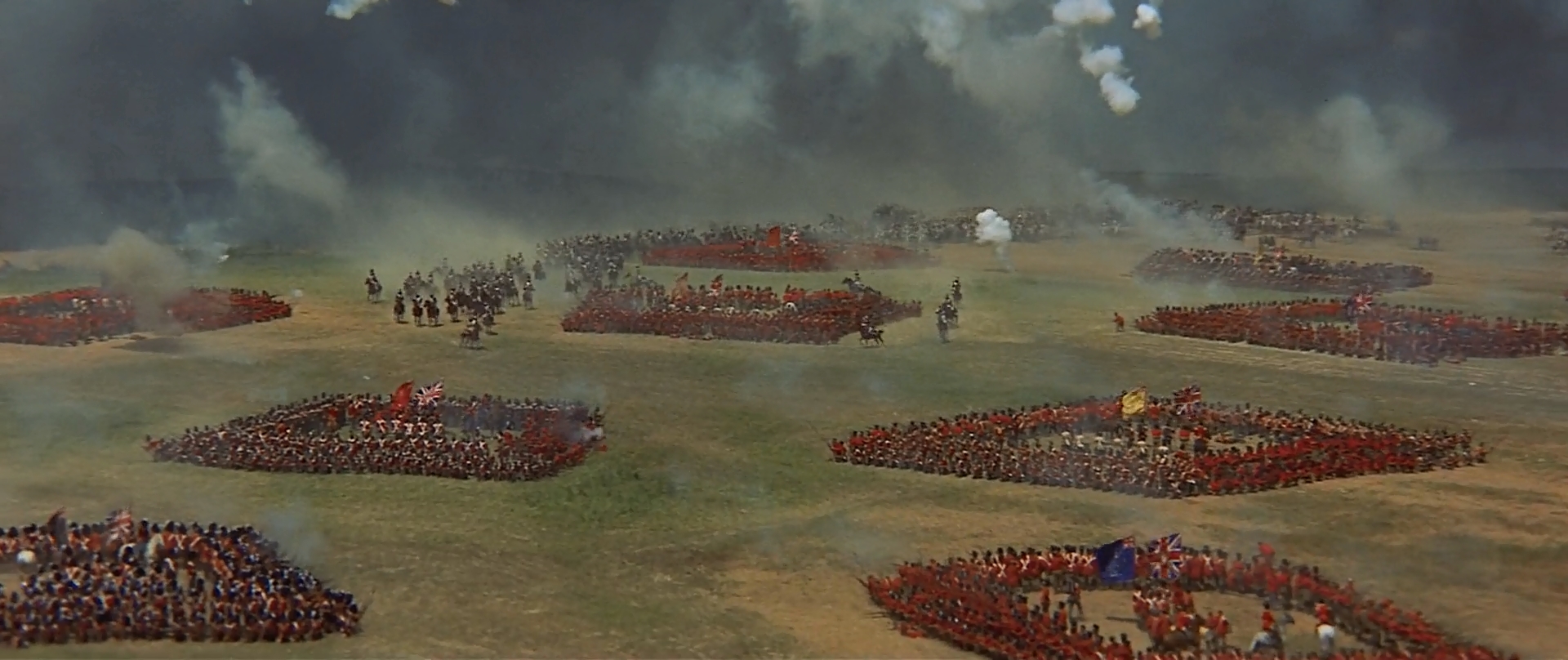
This isn’t six actors running around a field while the camera avoids showing the other 400 acres. This is an army.
Soviet Engineering
The production story is almost as impressive as the movie.
To create the battlefield, the Soviet production team reshaped the landscape. Hills were altered, roads constructed, trees transplanted, crops planted and historic buildings reconstructed. The film crew spent months preparing the location.
Nobody said “We’ll fix it in post.”
If Bondarchuk wanted a road, they built a road. If he wanted a hill somewhere else, somebody got a bulldozer.
If he wanted thousands of soldiers, he apparently rang the Kremlin.
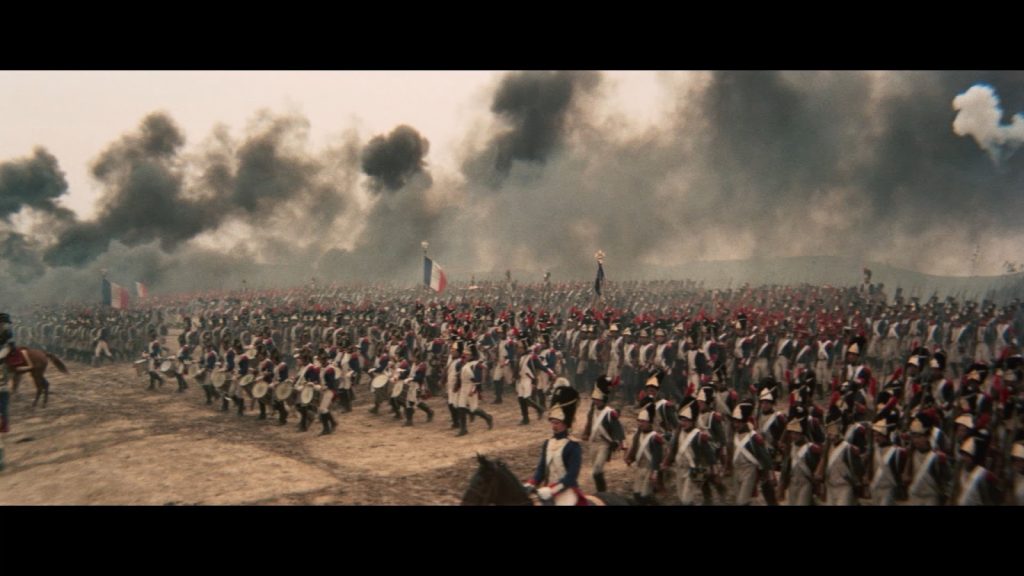
There were around 28 weeks of filming, including substantial delays caused by weather, with the huge battle sequences shot during the summer of 1969.
The Soviet soldiers weren’t simply handed uniforms and told to wander about looking vaguely military. They were drilled.
They learned formations, they practised the handling of muskets, sabres, bayonets and artillery, they were trained to load and fire muskets.
Officers coordinated the enormous formations while Bondarchuk communicated with them by radio.
Because apparently directing one of the largest battle sequences ever committed to film wasn’t stressful enough without doing it through a walkie-talkie while speaking through four interpreters. English. Italian. French. Serbo-Croatian.
Then there are the little historical details that make the film such a pleasure for anyone who knows the story.
One of the most famous is the fate of Lord Uxbridge.
Terence Alexander plays him as a magnificently composed British cavalry commander who spends much of the battle behaving as though being surrounded by thousands of heavily armed Frenchmen is an irritating administrative inconvenience.
Then comes the cannonball that smashes into his leg.
The real Uxbridge famously had his leg amputated after Waterloo. The story became one of the great pieces of battlefield legend associated with the day.
And the film gives the incident the attention it deserves.
It is one of those moments when the scale of the battle suddenly collapses down to one man.
For all the soldiers, the generals, the cavalry, the artillery and the strategy, someone still has to deal with the unpleasant reality of having a cannonball rearrange their anatomy.
The movie then recreates one of the most British exchanges in history:
“By God sir, I have lost my leg.”
“By God sir, so you have!”
Jack Hawkins as Picton is another highlight.
Hawkins had, by this point, been seriously affected by throat cancer and his dialogue was dubbed by Robert Rietti, but the physical performance remains commanding.
And Picton’s death is handled without the modern tendency to turn everything into a slow-motion Oscar submission.
He goes into battle. He gets shot. He dies. Because that’s what happened.
The film repeatedly does this. It is completely unsentimental. It gives famous historical figures enough personality to make you care about them and then cheerfully reminds you that history doesn’t care about your feelings.
Napoleon’s Last Gamble
The final stages are extraordinary. The Prussians are arriving. The French position is deteriorating and Napoleon is running out of options.
And the film makes the defeat feel like something that happens gradually. There is no magic moment when somebody presses the “Lose The Battle” button. No magical allied Hail Mary.
The French army is slowly being squeezed. Napoleon keeps trying, and he commits to the famous advance of the Imperial Guard.
The final throw of the dice as The French Imperial Guard, who had been the terrifying elite of Napoleon’s army, are unleashed. If there was one formation you didn’t want marching towards you, it was these men.
But at Waterloo the situation is different. The French army is exhausted, the Prussians are appearing on the horizon, and the British line is still standing.
And the Guard advances into the British trap, then it breaks.
And when the Guard breaks, something more important than a military formation breaks with it. The psychological spell.
Napoleon’s army has lost. The great man has finally run out of road.
And then it ends.
And this is another thing Waterloo gets right. It doesn’t turn the aftermath into a triumphant British victory lap. There is no enormous flag-waving sequence.
No Wellington standing on a hill celebrating. No downfall of a “villain”.
It simply ends. The battle is over. Thousands are dead. Napoleon’s attempt to claim Europe has failed.
There is something melancholy about it, as we as an audience survey the terrible cost of war, and quietly thank God we didn’t live in a time where we had to go off and fight like that.
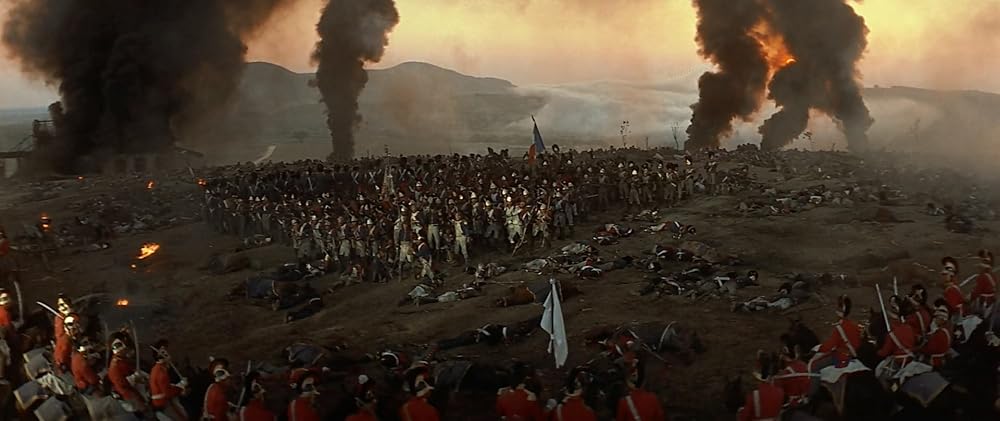
The movie has spent so long building this enormous machine of war that when it finally stops, the silence is unsettling.
The ending is perfect because it makes you feel every bit of the final horror of a battlefield at the end of the battle.
The end of arguably the biggest movie ever made makes you feel things that don’t feel nice.
It reminds you that despite the scale, Waterloo is also remarkably restrained in what it ultimately wants to say.
Napoleon isn’t a pantomime villain. Wellington isn’t a superhero.
The French aren’t idiots and the British aren’t saints. The Prussians aren’t supporting characters who wander in at the end apologising for being late.
Everyone is simply caught inside history, and that is what makes the film work. That, and the performances that give it personality.
Steiger gives Napoleon fire, ego and tragic intensity. Meanwhile, Plummer gives Wellington intelligence, composure and that magnificent air of a man who would rather be anywhere else but has unfortunately been handed the responsibility of defeating Napoleon Bonaparte.
The supporting cast is superb. The battle scenes are extraordinary. The production design is off the scale.
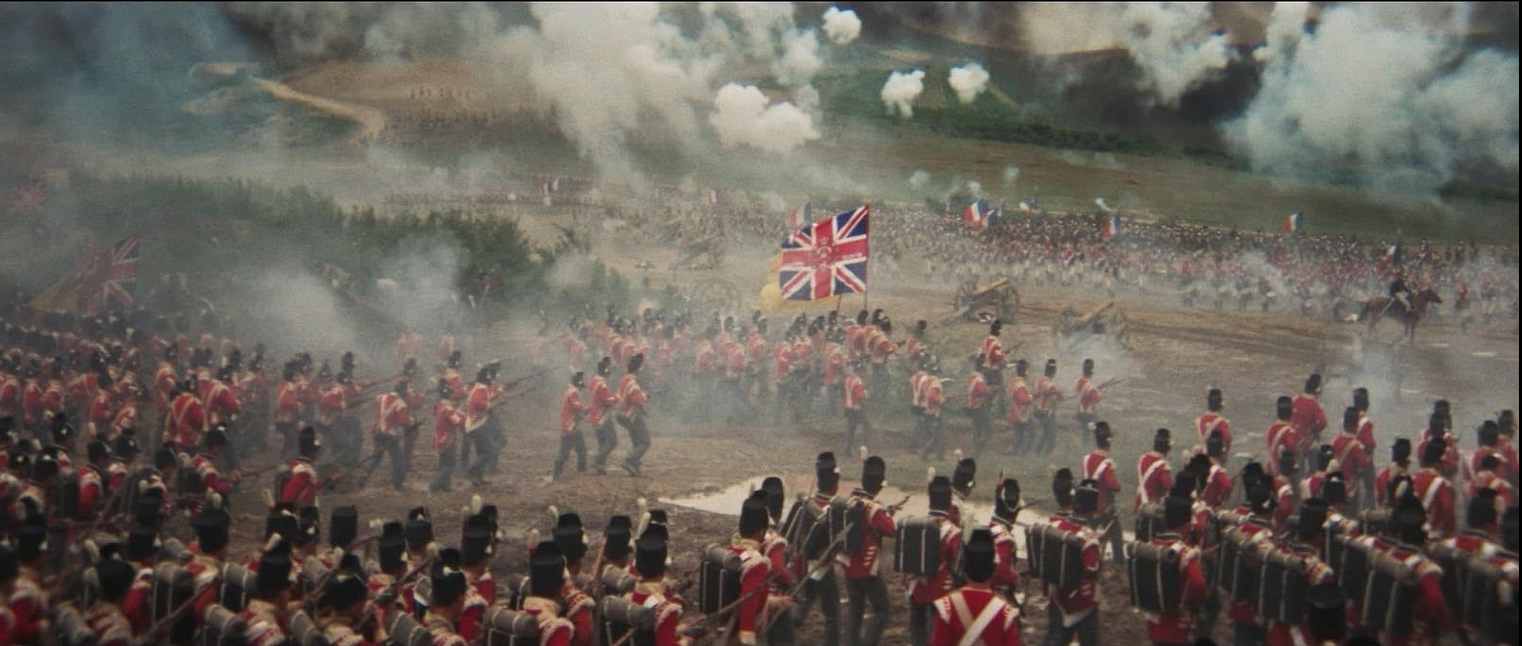
The whole thing exists because an almost psychotically ambitious Italian producer and a Soviet film studio apparently looked at the most famous battle of the nineteenth century and collectively decided that the only sensible response was:
“Right. We’ll need an army!”
That alone makes Waterloo almost impossible not to love.
It is one of the great historical epics of the old school: spectacular, serious, occasionally melodramatic, painstakingly constructed and completely uninterested in whether anyone would ever attempt anything like it again.
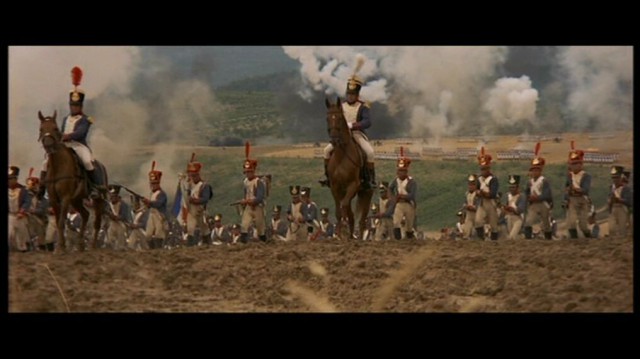
They wouldn’t. They can’t.
Probably the greatest example of international cooperation in cinema history.
And the French still lost.
Magnifique.

