


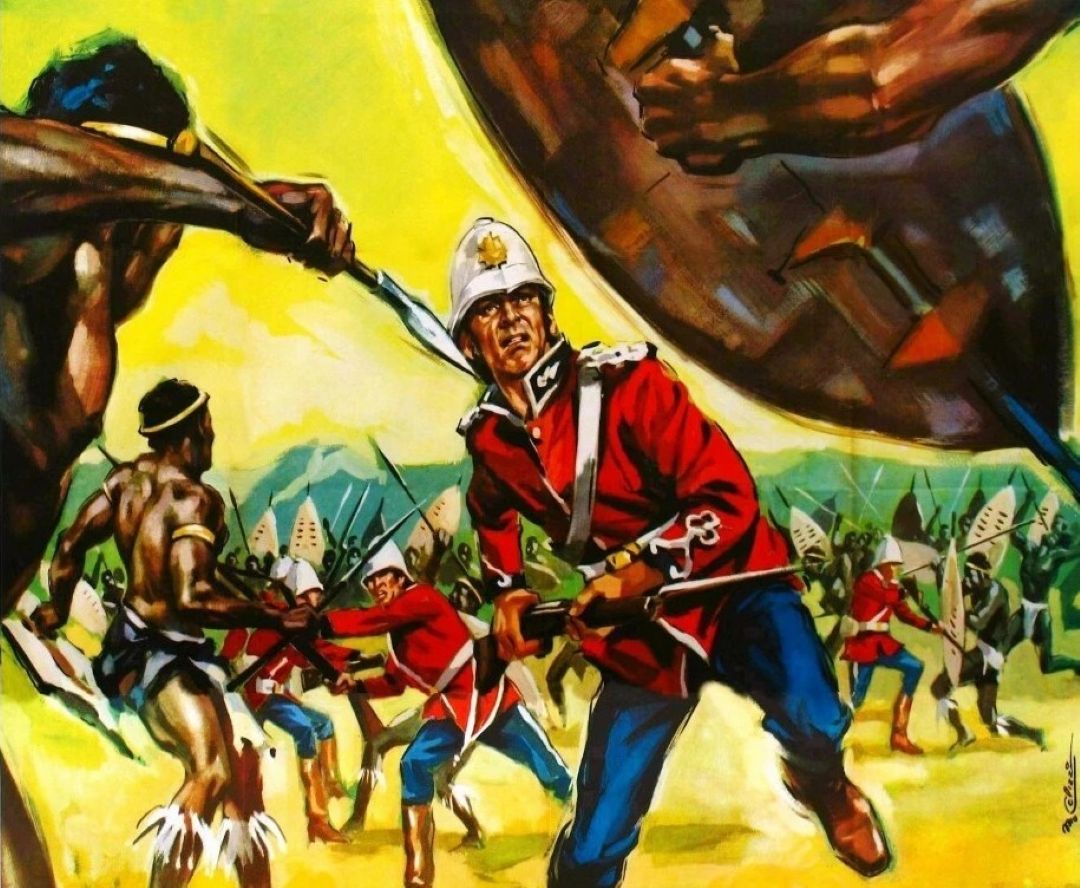
As we sit here, in the ashes of our great Western civilisation, surrounded by girlie men and crazy feminists, surveying the wreckage of a nearly 40-year experiment with insanity, it is hard not to yearn for a simpler time. A better time. A time when men were men, moustaches had rank, and foreign policy was dictated simply by how red your jacket was.
It’s time to set sail, completely inappropriately dressed for warm weather, to take over entire continents simply because you’re a bit bored and your food needs more spice. Get that damned fuzzy-wuzzy off the roof! It’s time for Zulu.
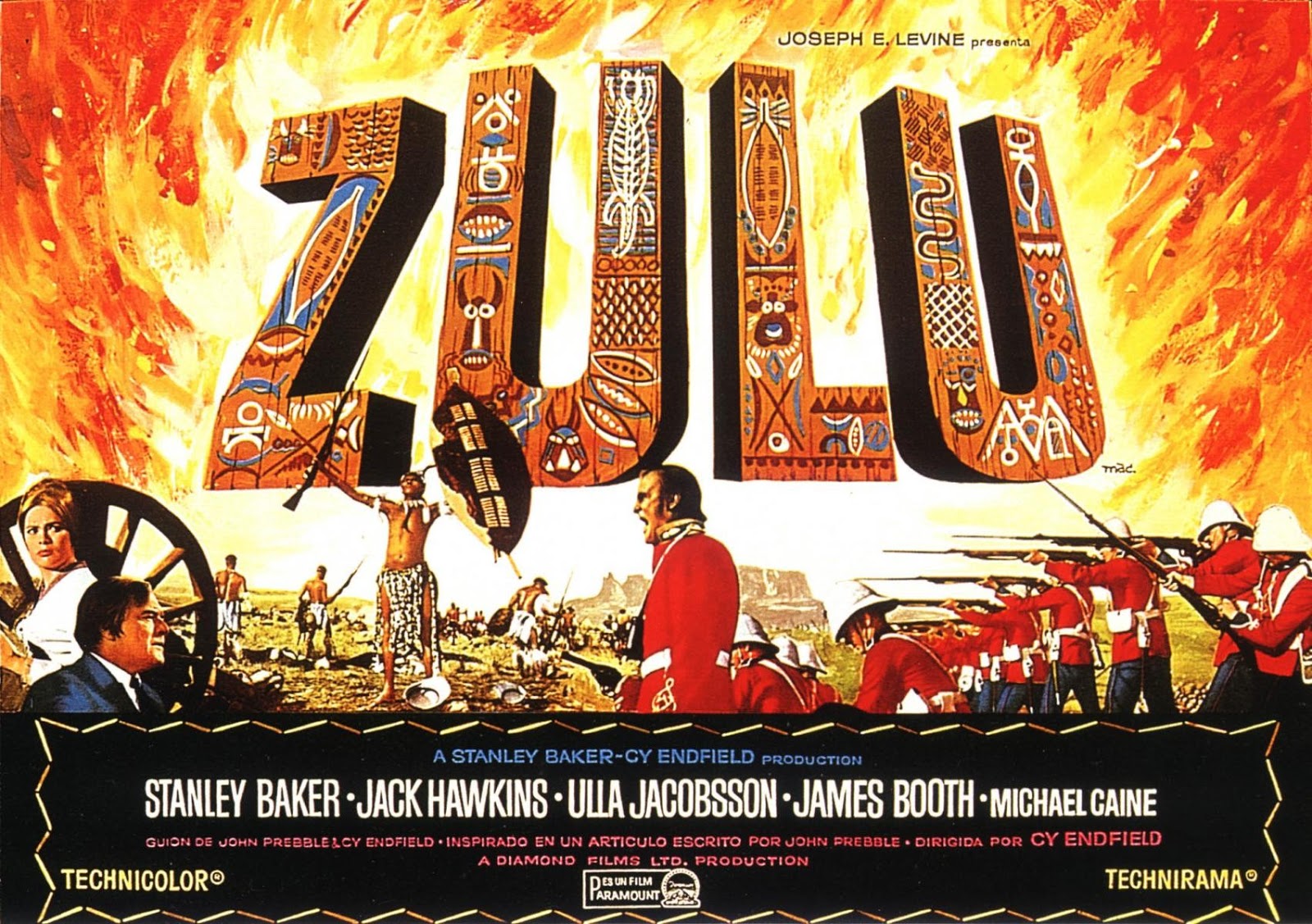
Zulu (1964)
There are movies that simply demand to be watched. You know them. You are flicking through channels at 11 pm, about to go to bed as you have a big meeting tomorrow, then you stumble across it just starting, and you have no choice. You have to watch it. To the end. For me, Jaws is one of those movies. Another is Zulu.
It is a film so magnificently British that if you watch it while drinking tea, the mug automatically salutes and a corgi appears from nowhere to inspect your trousers.
Made in 1964, this glorious slab of widescreen heroism tells the story of the defence of Rorke’s Drift, where just under 150 British soldiers somehow looked at several thousand Zulu warriors who were coming to kill them, adjusted their helmets and collectively decided:
“Well… no point making a fuss about it.”
Modern cinema would have turned this into a gritty meditation on trauma, colonialism, and the emotional journey of a lieutenant discovering himself and asking if he’s the bad guy. Zulu says:
“Fuck that. Fix bayonets!”
Zulu is based on real events. The Battle of Rorke’s Drift follows the disastrous British defeat at Isandlwana. A whole column has been ambushed and destroyed by overwhelming force. The survivors, a missionary and his daughter, arrive with terrible news. Thousands of Zulu warriors are coming, with the intention of wiping out the small British garrison.
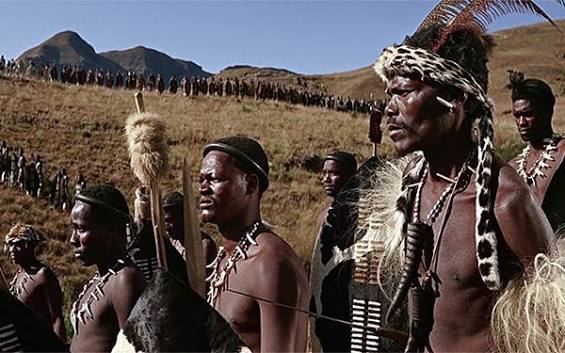
Nobody has enough ammunition. Nobody has enough men. Nobody has enough walls. And Michael Caine has only just learned how to stand like an officer.
For the next two glorious hours, the movie becomes the greatest “they’re coming over the hill” simulator ever filmed. They come over one hill. Then another. Then another. You begin to suspect that South Africa is composed entirely of hills with Zulus stored behind them like aggressive surprises.
Standing against them is the kind of British Empire resilience that your grandfather remembers after five pints.
The result is some wonderfully old-fashioned confidence that simply radiates from this film. A confidence that says a red coat, a flag, and an inability to tolerate drizzle for a moment longer were sufficient ingredients to become a global superpower.
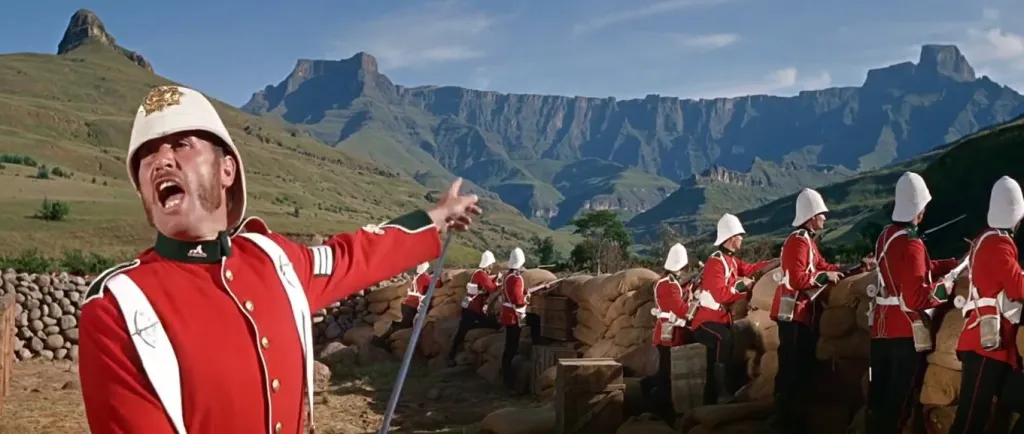
How did Britain build an empire spanning continents? Simple. Someone looked at a map and said:
“Looks warm.”
And six months later, there was a post office, a cricket pitch, and somebody explaining queue etiquette to bewildered natives.
The film inhabits that romantic imperial mythology with absolute sincerity. Its heroes genuinely believe they are bringing order, civilisation, and proper engineering to the world.
Railways, Administration, Bridges, and Afternoon Tea
Whether history was considerably more complicated than that is, naturally, a conversation happening somewhere far away while Colour Sergeant Bourne is busy polishing discipline into physical form.
And if you listen to certain nostalgic old colonels, Britain was apparently the nicest empire because at least it left behind railways instead of existential despair.
The French left weird architectural mismatches. The Spanish left syphilis and afternoon naps. The Portuguese left maps that looked quite optimistic, and a lack of measurable outcomes. The Belgians… let’s just move briskly on.
The British left people arguing over cricket scores in English. Again, this is the comforting imperial bedtime story the film wraps itself in, where every officer is honourable, every sideburn is regulation length, and every administrative decision can be solved with sufficient gin.
Into this story, Michael Caine arrives and invents Michael Caine.
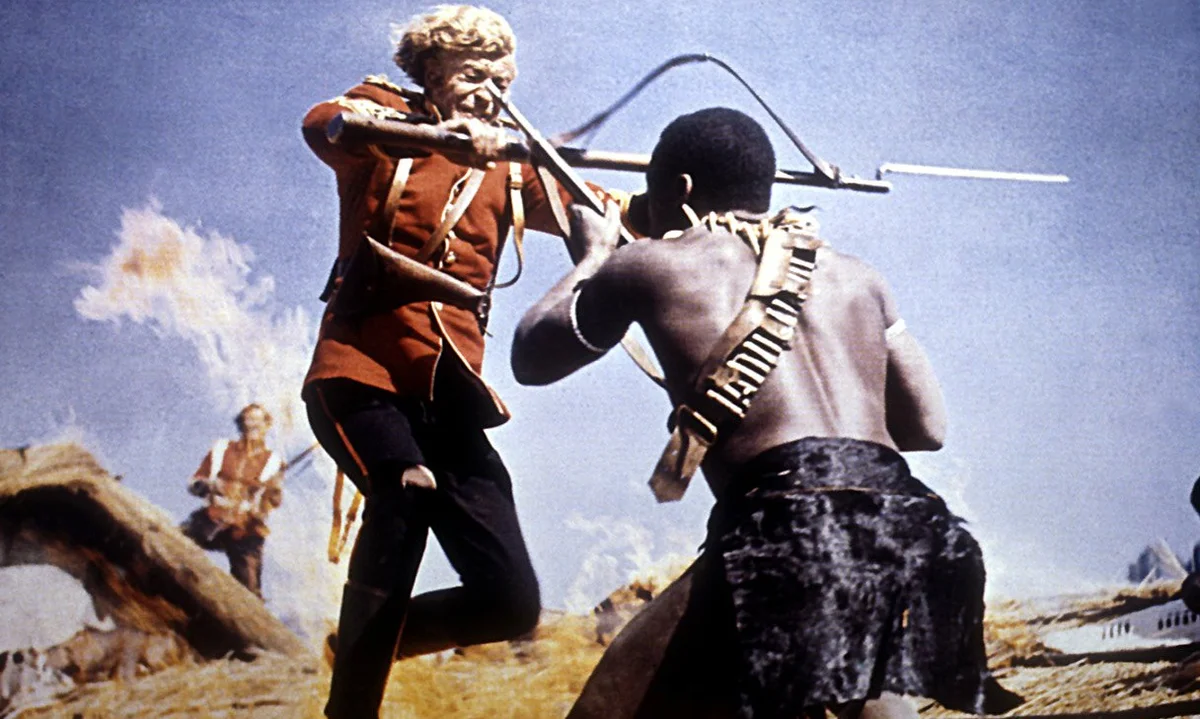
Before he became Michael Caine™, dispenser of immaculate one-liners and owner of the most recognisable voice in cinema, he was Lieutenant Gonville Bromhead. He walks into the movie looking impossibly young, blond, and aristocratic. Everyone assumes he’s useless. He assumes he’s useless. The audience assumes he’ll spend the battle hiding behind a biscuit tin.
Instead, he quietly transforms into exactly the officer everyone needs in an absolutely star-making performance.
Half the entertainment comes from watching the future icon gradually discovering that confidence is mostly standing very straight and saying things in an increasingly Michael Caine voice. You can almost hear his career beginning.
He faces off against Stanley Baker as Lieutenant Chard, played with magnificent restraint. He doesn’t command the screen, he simply occupies it with the calm authority of a man who has already calculated how many sandbags are required and is disappointed that everyone else hasn’t.
His chemistry with Caine is superb. One is practical, one is aristocratic. One builds walls, one looks good standing beside them. Together, they become one complete British officer.
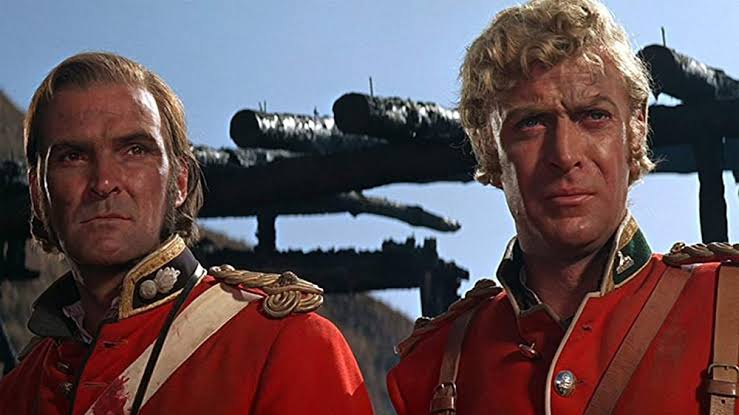
Some people occasionally misremember Stanley Baker as Stanley Baxter, which creates the hilarious mental image of the entire film being defended by a Scottish impressionist. Frankly, we’d still watch it.
Meanwhile, the casual racism is so casual that it practically apologises to you for having the temerity to interrupt your movie.
Viewed today, Zulu exists in a fascinating time capsule. The British characters receive names, personalities, arguments, fears, hopes, backstories, and little character moments. The Zulus receive…
“There’s another enormous wave.”
The Zulu army is presented with the collective individuality of Stormtroopers. Thousands of them appear. They charge magnificently. They chant magnificently. They retreat magnificently, or they die magnificently. Repeat until end credits.
Imagine if Star Wars spent two hours following the emotional development of Imperial logistics officers while every Rebel pilot was simply labelled “Incoming Human Number 437.” That’s basically the structure of Zulu.
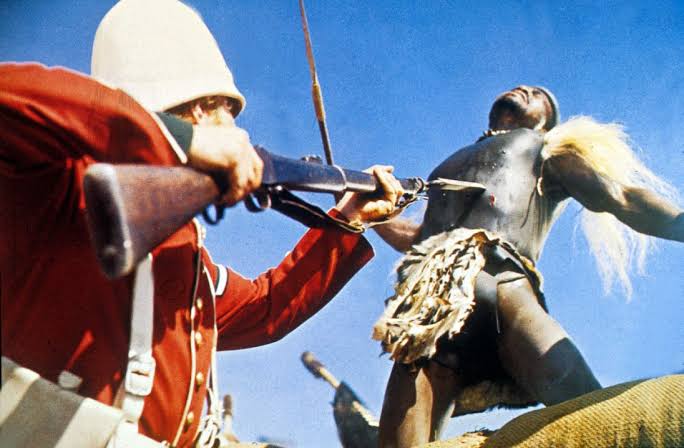
To the film’s credit, however, it also treats the Zulus as extraordinarily brave and disciplined opponents. Nobody wins because the enemy is incompetent. The defenders survive because everyone involved is operating at an almost superhuman level of determination. Still, there is an undeniable old-Hollywood simplicity.
British soldier:
“I have hopes, dreams, and concerns.”
Zulu warrior:
“I am currently over that hill.”
Next scene:
“There are now considerably more of them.”
A Soundtrack To Conquer A Continent
Few films understand rhythm quite like Zulu. The chanting, the singing, the measured military responses, the bugles, the boots. Everything feels musical. The exchanges between the British soldiers and the Zulu regiments become something almost hypnotic. It is less an action sequence than an enormous conversation conducted through song, courage, and spectacular amounts of spear-related enthusiasm.
By the end, you aren’t sure whether you’ve watched a war film or accidentally attended the greatest military musical never written.
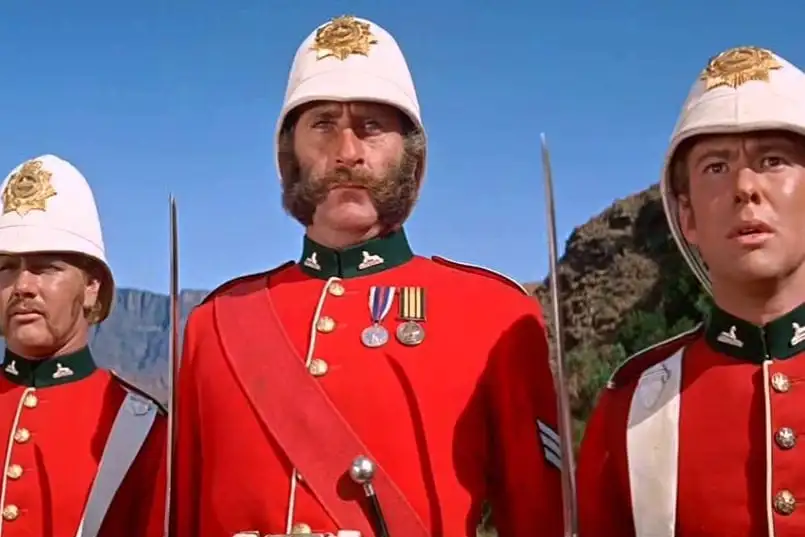
Meanwhile, as modern blockbusters proudly announce they used “The Volume” with computer-generated backgrounds, digital skies, and obvious FX, Zulu simply points a camera at South Africa and says:
“Good grief, that’ll do.”
Every frame is enormous. The hills stretch forever, and the landscapes are breathtaking. The tiny mission station sits surrounded by vast open country, making the defenders appear gloriously isolated. It looks real because it is real. There is actual sunlight. Actual dust. Actual people running over actual terrain instead of green carpets inside warehouses.
Cinema occasionally benefits from remembering that Earth has excellent production values.
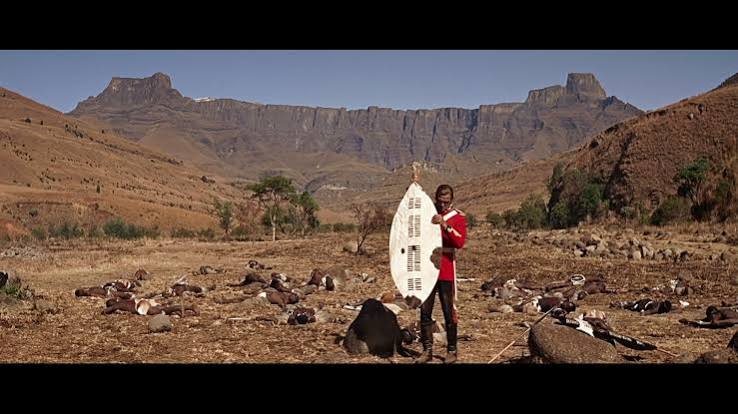
The production itself was remarkably ambitious. Huge numbers of extras recreate the Zulu formations. Massive practical action scenes unfold without the safety net of digital multiplication. When hundreds of warriors appear on screen, they are largely exactly that – hundreds of people. Running… in formation… up hills… again and again.
The scale feels tangible because somebody actually had to organise it. Some poor assistant director almost certainly spent weeks shouting:
“Could everyone attacking from the left please attack from the LEFT?”
It pays off magnificently.
The real Battle of Rorke’s Drift took place on 22–23 January 1879 during the Anglo-Zulu War. Around 150 British and colonial defenders held the mission station against over 4,000 Zulu warriors. Against extraordinary odds, they survived repeated assaults.
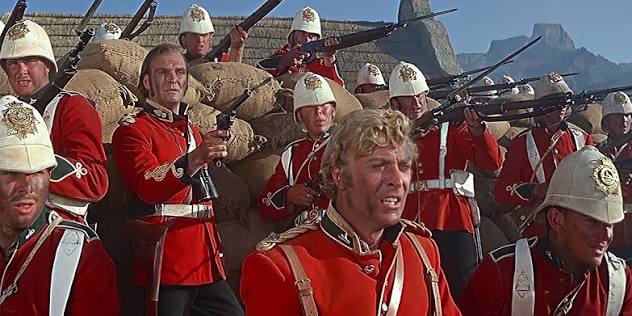
The defence became legendary and resulted in an astonishing eleven Victoria Crosses being awarded. The film naturally simplifies and dramatises events. It compresses personalities. It rearranges incidents. It polishes dialogue until everyone sounds permanently quotable.
But it captures something important: the determination of both sides. Nobody is portrayed as cowardly. Nobody quits. Everybody simply keeps going long after common sense has packed its bags and gone home.
Among all this action and sweeping scenery, it is easy to forget that the script is absolutely on point too. Some films give you one memorable line. Zulu gives you an entire pub conversation with every exchange sounding carved from oak. Orders are delivered with impossible dignity, and even insults somehow become polite. Announcements of imminent doom sound like train timetable updates, and ordinary military instructions become legendary through sheer confidence.
You leave the film wanting to stand in your garden and inform pigeons that you’ll “hold this position.”
They Don’t Make ‘Em Like This Anymore
Modern action films seem obsessed with escalation. More explosions, more CGI, more collapsing multiverses. Zulu raises the stakes using fences, a biscuit tin, and a handful of exhausted men.
When every inch lost matters and every volley counts, then every barricade suddenly feels like the most important object in cinematic history. The tension is astonishing because the movie has made sure that geography matters. You understand exactly where everyone is and exactly why moving twenty feet could change everything.
Apparently, coherent action scenes are possible after all. Who knew?
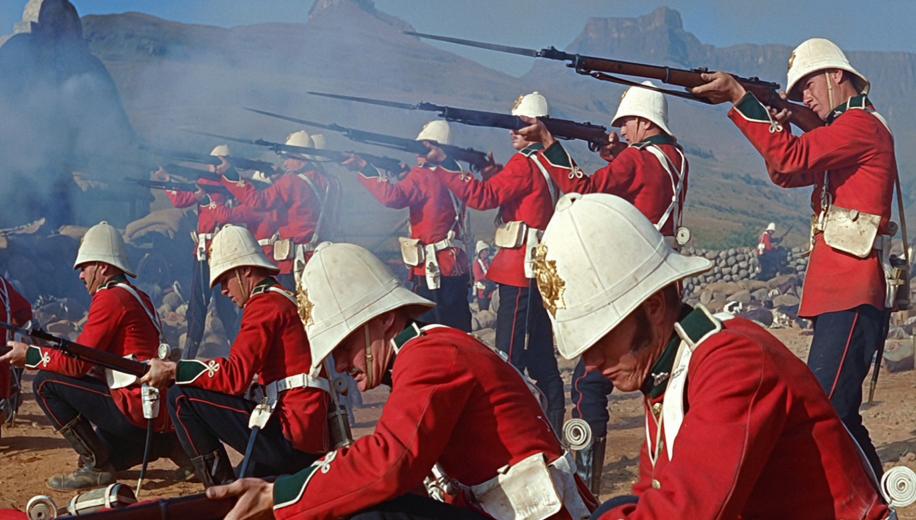
Zulu is magnificent. It is old-fashioned without embarrassment. It is heroic without irony. It is spectacular without computers. Funny in places it never intended. Moving in places it absolutely intended.
Its view of empire belongs to a romantic cinematic tradition where British officers are made of stoicism, shined and polished kit, and impeccable posture, and where a flag flapping in foreign sunshine apparently counts as justification for another colony.
Its treatment of the Zulus reflects the blind spots of its era, reducing an extraordinary people to an almost mythical force of nature even while admiring their courage and discipline. And somehow, despite every historical simplification and every period assumption, the film still works brilliantly. This is because beneath the pageantry and nostalgia sits one timeless idea:
Ordinary people standing together against impossible odds.
Also, because watching Michael Caine slowly evolve into Michael Caine while Stanley Baker radiates enough authority to command tectonic plates is one of cinema’s great pleasures. Now, excuse me while I stand on a chair, look meaningfully at the horizon, and wait for several thousand impeccably choreographed extras to appear over the nearest hill.
Oh shit, it’s Angela Merkel’s “New Europeans”!

