

One of the most fascinating questions in movie making is “what might have been?”
For example, what might have been if Arnold Schwarzenegger starred in a Ridley Scott-helmed I Am Legend and then did Verhoeven’s Crusade?
It seems hard to believe, but Arnold likely would have been propelled to an even higher level of stardom instead of fading out with films like Batman & Robin, End of Days, The 6th Day and Collateral Damage.
Other times, the question of “what might have been?” is more subtle. What might have been if Will Smith had starred in The Matrix instead of Keanu Reeves? Reeves had been floundering after hitting big with Speed. Movies like Johnny Mnemonic and Chain Reaction didn’t net the same results. Then The Matrix blew up like an atomic bomb, and Keanu remains a beloved actor to this day.
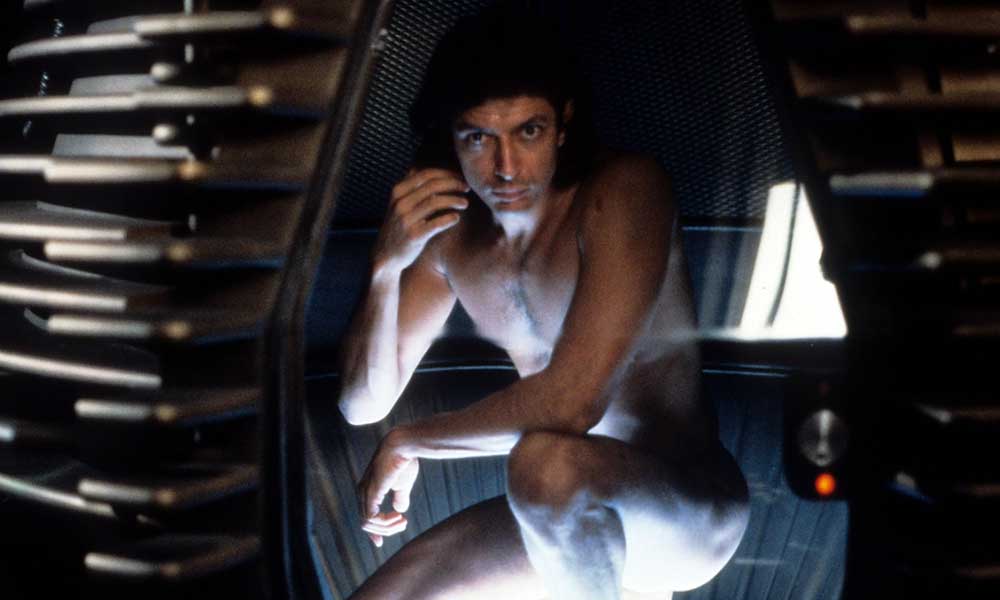
Another example is the horror classic The Fly (1986). It was originally intended to be a different kind of movie. English director Robert Bierman was attached to direct a script by Charles Edward Pogue. This version fell apart when Bierman suffered a personal tragedy. His daughter was killed in an accident, which left him unable to commit to directing The Fly. He would not return to filmmaking until the Nicholas Cage classic Vampire’s Kiss (1989). To this day, Bierman has never watched what The Fly remake became…
Meanwhile, famed body-horror director David Cronenberg stepped into the void and put his own spin on the film.
But what would Bierman’s Fly have looked like?
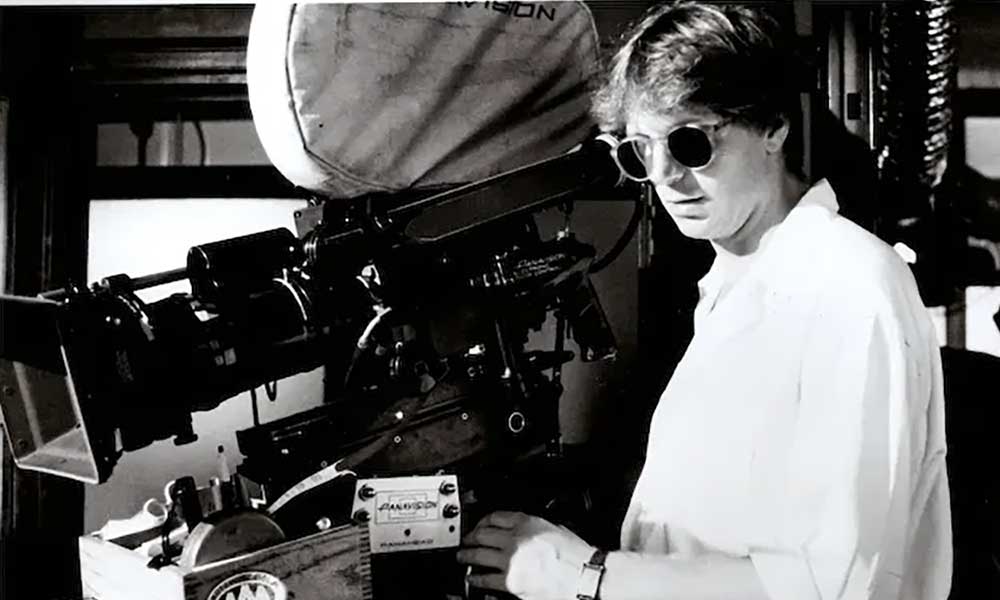
The Bierman Fly
Based on the original Pogue script, The Fly remake was originally intended to be a more conventional, plot-driven thriller rather than a taut masterclass in body horror.
Pogue used a corporate villain subplot to drive the narrative. The DeWitt Research Center funded a brilliant scientist named Geoff Powell. Powell achieved a breakthrough in teleportation and kept it secret from DeWitt because he knew they would exploit the technology. Growing suspicious of Powell’s secretive behavior, DeWitt manager, Harry Chandler, threatened Powell with pulled funding unless he turned over his research.
When Powell refused, Chandler attempted to turn Powell’s wife against him by seducing her and offering her a stable alternative to her increasingly unhinged husband.
Chandler’s plan is helped by the fact that Powell grows increasingly erratic after being merged with a fly in a teleportation accident. His transformation is more traditional in Pogue’s screenplay. Powell gradually morphs into a giant insect.
The climax takes place at DeWitt’s corporate headquarters. Powell kills Chandler with corrosive vomit and destroys himself and his research with fire.
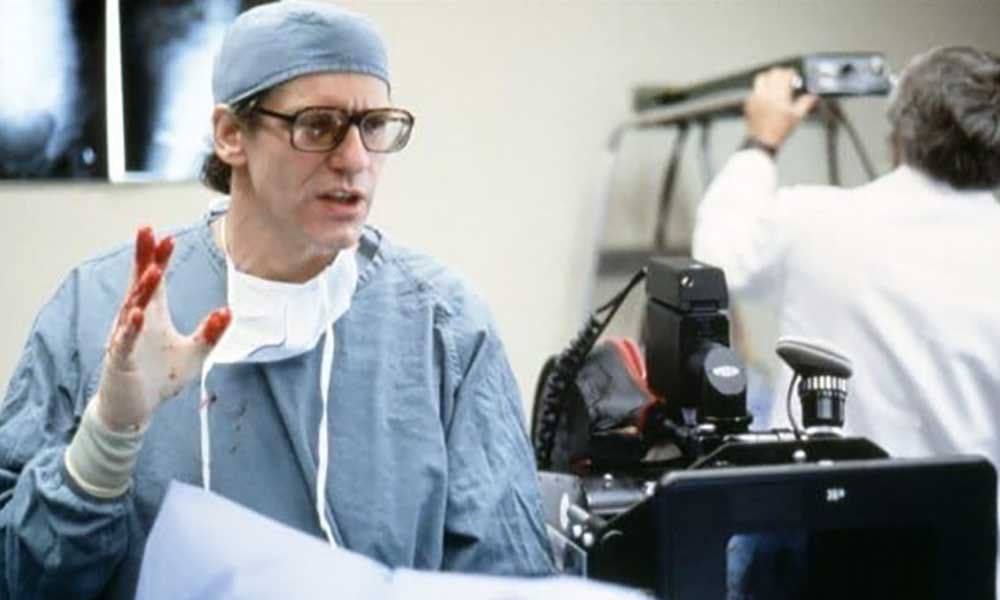
The Cronenberg Fly
While the skeleton of Pogue’s screenplay can be seen in Cronenberg’s version, Cronenberg ditched the corporate villain subplot completely. Cronenberg also turned the main character’s traditional transformation into something that was a metaphor for disease, aging and decay, along with the loss of identity.
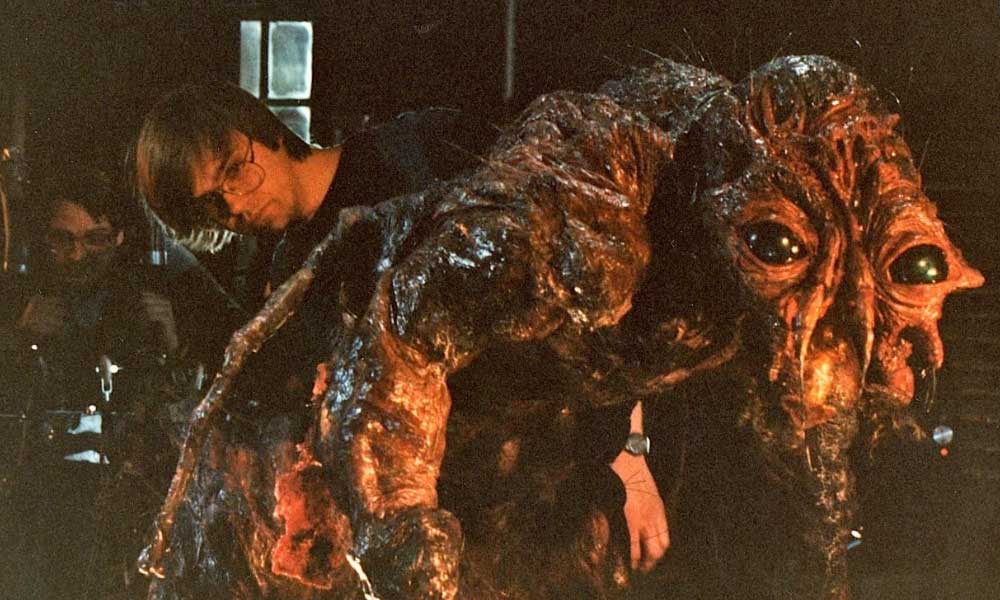
This resulted in the design work of Chris Walas moving from a more uniform, symmetrical monster to the lumpy, tumorous creature seen onscreen. While Bierman likely would have focused on making a slick monster movie. Cronenberg instead concentrated on making the proceedings disgusting on a visual and emotional level.
Cronenberg also started the story in motion. Instead of a lengthy introduction that depicted a married character, Cronenberg showed the character, now named Seth Brundle, meeting Veronica at a convention and building a relationship with her as he reveals his research.
Cronenberg created Stathis Borans to take the place of multiple characters in the Pogue script. Borans was also given a history with Veronica to turn the entire dynamic of the three characters into an operatic tragedy rather than a corporate thriller.
These changes also led to the removal of Pogue’s third-act finale, which would have seen the creature wreak havoc in a lab setting. Although, these elements do show up in The Fly II to perhaps give us an idea of what they had in mind.
In addition, Cronenberg rewrote most of Pogue’s dialogue to include his signature musings, such as the “poetry of steak” conversation and the gleefully terrifying “insect politics” monologue.
Cronenberg did use several of Pogue’s ideas, however. For example, the maggot baby is from Pogue. Cronenberg simply moved it to the middle of the movie instead of ending the film with it. Likewise, the discarded “butterfly baby” deleted scene was from Pogue.
Cronenberg/Pogue Fly
Despite Cronenberg throwing out most of Pogue’s characters, the first 17 pages of his script and changing the names and dialogue, Cronenberg fought to ensure that Pogue received a co-writing credit. Cronenberg stated he would not have known how to approach the story if it wasn’t for Pogue’s blueprint. He especially appreciated the slow, incremental transformation instead of the instantaneous change from man to insect, like in the original film. That was all Pogue’s idea.
As Brundle/Fly is a fusion of two different things in the film, the final story is a fusion of Cronenberg/Pogue. It is no exaggeration to say it is an amazing script. The film runs a lean 96 minutes, yet the amount of story the movie packs into that short time is incredible. Each scene is surprisingly dense. The Fly follows three characters through a tragedy, turns a man into a monster and makes the viewers squirm in their seats, all in one go.
In 1986, The Fly was nominated for one Oscar: Best Makeup. It won. In retrospect, it also should have been nominated for best screenplay, best actor and best director, as well.
Help Me — The Lost Fly Song
One more what might have been? exists with The Fly. English musician Bryan Ferry was commissioned to write a theme song of sorts to play over the end credits called Help Me. The title is a reference to the final scene of the original 1958 film.
Ultimately, Cronenberg felt the song was to poppy to fit with the subject matter of the film, and the song was dropped. Cronenberg decided to go with Howard Shore’s score over the end credits instead.
Help Me can be heard playing faintly during the arm-wrestling scene, however. Plus, Ferry created a video for the song. Below is the song and The Fly’s end credits. Listen to one and then the other. Then mute Shore’s score on the credits and play Ferry’s song to get an idea of how it would have worked at the end of the movie.
Cronenberg is right from an artistic standpoint. The song doesn’t fit the tone of the movie. Yet, I can’t say I hate a version of The Fly that ended with Help Me. What was too poppy in 1986 is a bit ethereal today.
Cronenberg’s The Fly is widely considered one of the greatest remakes ever made. Would a Bierman/Pogue version be viewed the same way? Who can say? But you probably can’t have one without the other, so Bierman and Pogue deserve credit for getting the ball rolling before Cronenberg came along and knocked it out of the park. I’ve watched the film many, many times and never get tired of how compact, yet complete it is on all levels.
My only complaint about The Fly is that every time I try to show it to my normie friends, they never want to watch another movie with me again. They are always afraid and grossed out, very afraid and grossed out…

