

Previously on the IMDB Top 250 project…
I asked you which gangster movie I should watch and review as part of my quest to watch all the movies in the IMDB top 250. The options were City of God, The Departed, American History X and Once Upon a Time in America.
You chose Sergio Leone’s crime classic Once Upon a Time in America, which honestly surprised me. I thought it was there to make up the numbers. I wasn’t particularly interested in watching it, despite owning the DVD for many years.
But the Outposters spoke, so I listened. And I’m glad I did. So here we go with my review of Once Upon a Time in America.
Once Upon a Trilogy
Once Upon a Time in America is the third movie in what has been dubbed Sergio Leone’s Once Upon a Time trilogy, following Once Upon a Time in the West and, er…Duck, You Sucker! (also known as A Fistful of Dynamite or Once Upon a Time…the Revolution, the latter of which fits the brand much better).
It isn’t a true trilogy where the movies follow one another, but a thematic trilogy exploring American history across different time periods. The connection is still tenuous in my opinion, especially as Duck, You Sucker! is set during the Mexican Revolution, but we like putting things in neat packages, so I’ll allow it.
But you don’t need to watch the other movies in the trilogy to understand this one. Good job, because I didn’t.
The Once Upon a Time trilogy rounded out Leone’s directing career. It followed his more famous Dollars trilogy of A Fistful of Dollars, For a Few Dollars More and The Good, The Bad and The Ugly.
I watched the first two Dollars movies earlier this year but haven’t gotten around to the third one yet.
In fact, the only two westerns in the IMDB Top 250 that I haven’t watched are both directed by Sergio Leone: The Good, The Bad and The Ugly and Once Upon a Time in the West. A shameful admission, but I will be correcting that forthwith.
Once Upon a Big Ball of Wibbly Wobbly, Timey Wimey Stuff
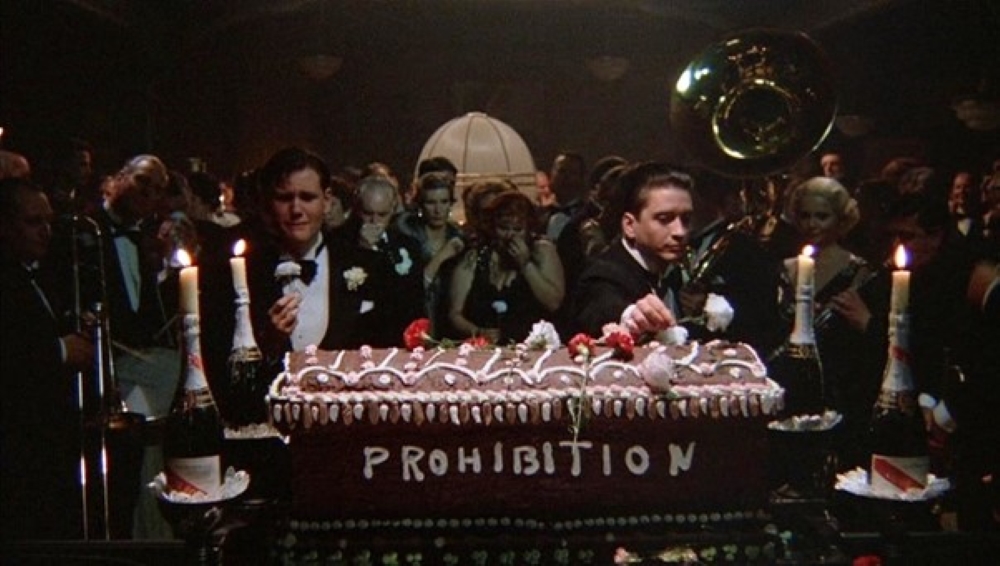
Once Upon a Time in America is based on the semi-autobiographical novel The Hoods by Harry Grey (Herschel Goldberg). The Hoods tells the story of Grey and his Jewish-American gang of friends as they grow up in New York’s Lower East Side. Petty crime turns to organised crime during the prohibition era of the 1920s.
Sergio Leone read the novel and first met Grey in the late 1960s with a view to adapting it, but Once Upon a Time in America would take until 1984 to reach the screen.
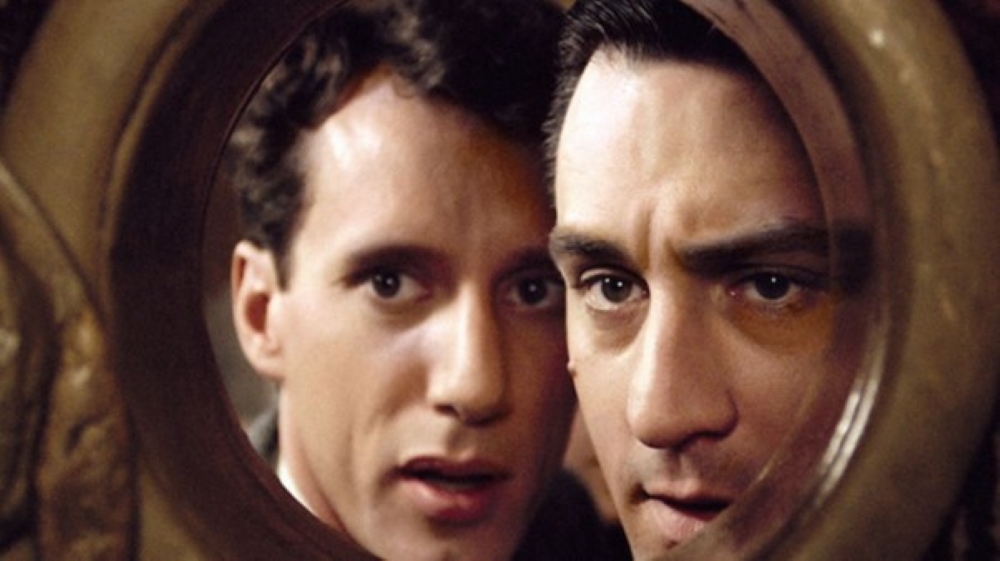
In the movie, Grey becomes Max ‘Noodles’ Bercovicz (Robert De Niro). Once Upon a Time in America follows Noodles and his gang through three distinct time periods: the early 1920s, the early 1930s and 1968, intercutting between them in a non-linear narrative.
I wasn’t sure at first if the non-linear format was the best way of telling the story, given that the movie opens in 1933 with the deaths of several major characters. It felt like a spoiler.
We then cut to 1968, where an elderly Noodles returns to New York after a 35-year absence. Visiting his old haunts leads him to reminiscing about his early years. The transitions between time periods are excellent and flow naturally.
Not that the intercutting is too elaborate. Once we go back to 1920, the movie plays out more or less chronologically, with an occasional 1968 intermission. The 1968 portion of the story plays out as a mystery, as Noodles tries to find out who has called him back after all these years, and why.
Speaking of intermissions, the movie has an official intermission with just over an hour remaining. It’s an odd place to put it seeing as the movie is 3 hours and 49 minutes long.
Once Upon a Holy Runtime, Batman
Once Upon a Time in America is one of the longest movies I have ever watched, but weirdly it isn’t the longest I’ve seen this month.
That crown goes to Until the End of the World, a pretty amazing 1991 Sci-fi epic starring William Hurt and Sam Neill that even Boba Phil hadn’t heard of. The director’s cut clocks in at 4 hours and 47 minutes long. But I digress.
Leone originally conceived Once Upon a Time in America as two three-hour films, but the studio wouldn’t allow it. The version I watched was the one released in Europe.
For the American release, the movie’s American distributers, The Ladd Company, recut it without Leone’s approval. This 2 hour and 19 minute version, which rearranged the movie into chronological order as well as excising 90 minutes of material, flopped hard at the box office.
I can see why. Even at 3 hours and 49 minutes, certain subplots seem under-developed. The Union subplot needs more room to breathe. Noodles’ best friend Max (James Woods) goes from loyal friend to madman too quickly.
Max’s romantic subplot with childhood crush Deborah (Jennifer Connelly/Elizabeth McGovern), if it can be called that, could have done with some more screen time.
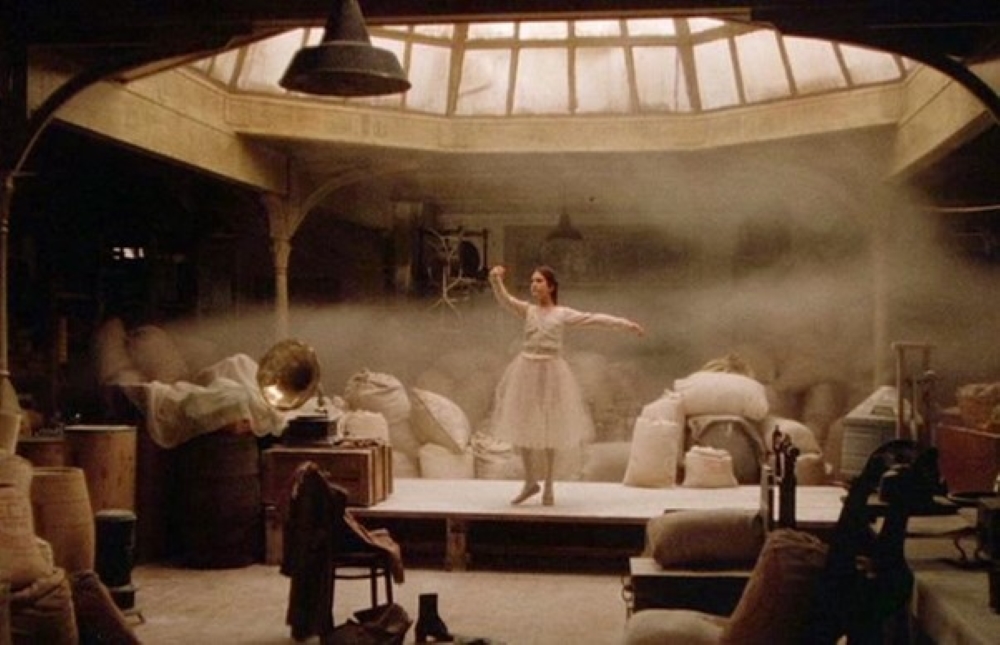
Doing the story justice with 90 minutes of footage cut out seems damn near impossible. And so it proved. Once Upon a Time in America grossed just $5.3m against a budget of $30m.
The original cut of the movie was 4 hours and 29 minute. I can’t tell you if this solves any of my quibbles.
Once Upon a Time in New York
This begs the obvious question: what do they fill up nearly 4 hours of screen time with? The answer is great world building, complex characters, shocking violence, mystery, moral ambiguity and enough period detail to make you feel transported to prohibition era New York.
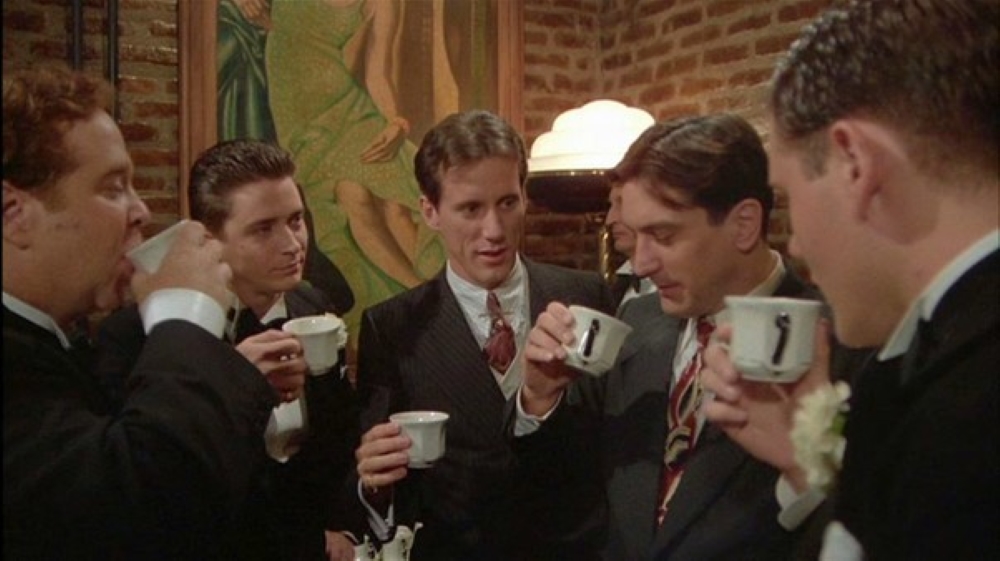
This is not a movie in a hurry, but nor is it boring. It tries your patience at times, such as an early montage set to the sound of a ringing phone that goes on for 3 minutes and 24 rings. Another scene shows Noodles stirring a coffee cup for what seems like eternity.
But for the most part, scenes last as long as they need to. It’s confident filmmaking rather than indulgent. Ennio Morricone’s epic score and the rich visuals transport you to a time and place that feels lived-in and real.
New York looks simultaneously beautiful, dirty and authentic, a reflection of the characters inhabiting it.
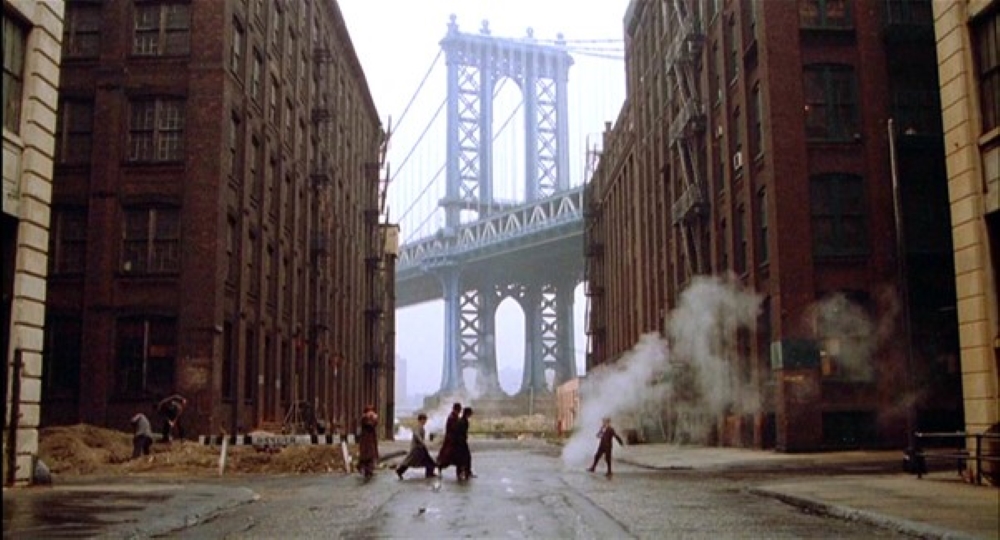
1968 New York provides a striking contrast, looking almost like the city we know today. This was only 40 years on from speakeasies, horse drawn wagons and gangsters firing Tommy Guns from Ford A cars, but it might as well be another world.
When Noodles walks into it with his convincing old man make-up, we can feel how much the world has passed him by. We find out nothing about his life in those intervening years. It’s almost as if he hasn’t lived at all.
And they all lived happily ever…oh
The ending is ambiguous, which has led to some wacky theories about what it means. I don’t think it’s that complex, but it’s still fun to speculate. At least they don’t cut to black.

I’ll give it 4.5 stars overall, with a small deduction for a few under-developed plot points.

In terms of entertainment value, a couple of scenes might drag and one shocking scene might leave a sour taste in the mouth for some.

