



Welcome to the future. Everything is wet. Everybody is angry. Nothing makes any sense. This is Split Second.
It presents us with a very specific kind of future. One that can only exist when viewed from about 1990 to 1995.
The future is grim. The streets are wet. A unspecified environmental event has done something. Nobody has invented a decent light bulb. Everyone wears black leather. The police have enormous guns for reasons that are never adequately explained. Someone has probably been suspended from the force for being “a loose cannon”.
Into this world steps Rutger Hauer, and from this point on, things are going to get very confusing.

Split Second
When thinking about Split Second, it is really important to consider it in its natural environment. That natural environment is VHS rental.
As Outposters, you know exactly what we mean. We talk about it often. The gas station / convenience store / VHS rental emporium The wire racks full of VHS cases. The faded posters. The guy behind the counter that would rent anyone anything, certifications being a mere suggestion.
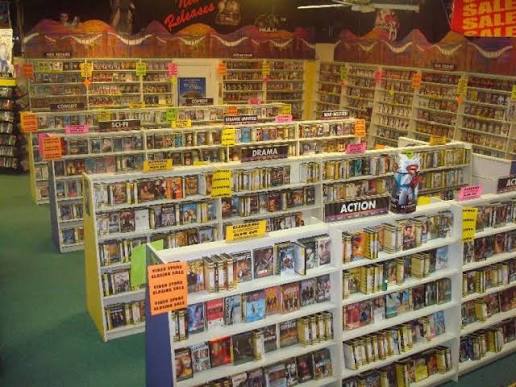
This was our church. This was where we came to worship, and discovered such delights.
One of these delights was Split Second. Everybody has seen it. Everybody loves it. Nobody knows why. It just… is.
We all discovered it the same way. Vaguely recognising the guy from Blind Fury, browsing the wire racks with a head full of Predator and Aliens, and there it was. It called to us. We don’t know why. Perhaps it is deep magic?
There was a mysterious serial killer that was also some kind of creature, there is some vaguely scientific bollocks involving DNA, there are people that make no sense in existing in this world doing things that don’t really fit.
But we all watched it and thought:
“That was awesome!”
Then we rewound the cassette and watched it again. Why? No idea! And this will become a theme as we step through Split Second.
Why is a Dutch man with an American accent a cop in future London? No idea!
Why is he fuelled by a bad attitude, coffee and chocolate? Because he just is!
What the actual fuck is Kim Cattrall doing in the middle of all of this? Not a clue!
Why is a serial killer now seemingly some kind of demonic creature that eats organs? Don’t ask questions, just look at the guns!

This whole movie makes not one lick of sense and yet somehow absolutely refuses to suffer for it.
Where to start? It doesn’t feel like it actually matters. So we might as well start with the talent out front.
Rutger Hauer doesn’t so much as have a character in Split Second as simply inhabit every 1990s cop movie stereotype all at once.
Somehow, this total familiarity with tropes does not stop the entire movie feeling like one of the strangest films of its era while also being quite brilliant.
Somehow.

Not brilliant in the conventional sense. It isn’t The Terminator. It isn’t Blade Runner. As mentioned, it isn’t even remotely interested in making any sense.
Split Second is brilliant because it is a complete cinematic bastard.
It takes a flooded dystopian London, a serial killer, a buddy-cop movie, a monster movie, a revenge thriller, a psychological horror story, some vaguely supernatural nonsense, a dash of cyberpunk, several buckets of blood, Kim Cattrall, a Dutch man, and throws them all into a blender and presses the blitz button.
Then it takes the resultant mush and rubs it vigorously in your eyeballs while shouting “How do you like that, bitch!” at you very, very loudly.
The resulting ninety minutes should be a disaster, but it’s actually magnificent.
Mind The Gap
The year is 2008.
Remember that this was 1992. The year 2008 therefore still sounded like the future rather than a date by which we’d all be posting Facebook updates designed to make our lives seem better than they really were.

This particular 2008 is a bit of a soggy bastard. Global warming has caused catastrophic flooding. Large parts of London are underwater. Streets have become canals. Buildings are crumbling. The Underground is apparently one strong wave away from becoming Atlantis.
The opening exposition tells us all this with the confidence of a film that assumes humanity has about fifteen years left.
Looking back now, the environmental premise is actually rather quaint. The film imagines a world battered by climate change long before that became an everyday political and cultural obsession.
Of course, Split Second isn’t really interested in exploring the consequences of ecological collapse.
It has things to shoot!
So instead of examining the social, economic and political ramifications of a flooded capital, the movie basically says:
“Anyway, there’s a bloke ripping people’s hearts out.”
Excellent. Let’s proceed.
London itself is one of the film’s great achievements. It doesn’t look particularly futuristic in the way that Hollywood usually imagined the future. There aren’t flying cars. There aren’t enormous holographic advertisements. There isn’t a talking computer assistant.
There is just water.
Lots and lots of horrible, filthy water.
The production did some clever work to create the flooded city, using industrial locations around London’s East End, including the old Hartley’s Jam Factory and Watney’s Raven Row Depot.
Floodable areas were constructed within the locations, while the climactic Underground sequence was built at an abandoned brewery, complete with old Tube carriages transported into position.
Which is a magnificent example of British filmmaking ingenuity, which is why so many films are still shot on the strange little island to this day:
“How do we build a flooded Underground station?”
“Find an abandoned brewery.”
“Obviously.”
The result is a genuinely convincing atmosphere. Everything is dark, damp, industrial and vaguely diseased. London looks less like the future and more like someone has forgotten to turn the rain off since 1987.
And then Harley Stone arrives.
Harley Stone is a police detective, apparently.

He is also a traumatised veteran, a caffeine addict, a sugar addict, an insubordinate lunatic, a borderline alcoholic, a psychic, a loose cannon, a grieving partner, a romantic complication and possibly the only person in London who has been trained to deal with whatever the hell is happening.
And he is Dutch but also American, in London.
Don’t ask questions. Just look at the guns. The film certainly doesn’t care, so why should we?
Hauer is magnificent because he understands exactly what kind of movie this is. He doesn’t try to make Harley Stone believable. He doesn’t attempt to ground him in reality. He plays him as though someone has taken every hard-boiled action hero cliché from the previous decade and said “Do that, but more!”
He also seems to have some kind of psychic connection with a killer, and a complicated relationship with the wife of his dead partner.
He has been suspended. He has been reinstated. He hates authority. Authority hates him.
Why? Don’t ask questions. Just look at the guns.

Meanwhile, Kim Cattrall is Michelle McLaine and there is unresolved sexual tension with Stone. There is grief. There is guilt. There is emotional baggage.
Never mind any of that. There is a monster!
Honestly, if you were writing a list of things Split Second doesn’t need, “an emotionally complicated romantic subplot” would probably be somewhere near the top.
But there it is. They had hired Kim Cattrall so they might as well use her, because apparently the film wasn’t already sufficiently weird.
Cattrall is excellent, though, and she brings some much-needed humanity to a movie otherwise populated by people who appear to have been raised exclusively on testosterone and mood swings.
The problem is that the film doesn’t really know what to do with her.
She is simultaneously love interest, emotional anchor, plot device and monster bait.
Eventually she gets kidnapped, which is basically the screenplay’s way of saying:
“We’ve run out of things for Kim Cattrall to do. Put her on a hook.”
Harley gets a new partner, because of course he does. Dick Durkin.
He’s younger, more educated, more conventional and considerably less interested in spending his evenings wading through London’s sewage system hunting a ten-foot nightmare.

This is where Split Second briefly remembers it is supposed to be a buddy-cop movie. Durkin is basically there to ask the questions the audience is asking.
“What the hell is happening?”
“Why are we doing this?”
“What is that thing?”
“Why does it keep killing people?”
“Why does Stone seem to know it?”
Of course, this is Split Second, so it has no interest in actually answering any of these questions. Just shut up and look at the guns!
So What Is It?
Ah. Yes. The monster. What is it? Well…
Yes. Exactly.
This is one of the great mysteries of Split Second. The creature is introduced with enormous confidence and almost no explanation.
It is big. It is nasty. It has claws. It is fast.
It is apparently capable of moving around London without anyone noticing. It rips people’s hearts out. It eats them. It appears to possess strange genetic properties.

It seems to have a psychic connection with Stone. It killed Stone’s partner. It previously encountered Stone. Stone somehow survived.
The creature is now obsessed with him. Why?
Don’t ask questions. Just look at the guns.
There are attempts at explanation. A serial-killer known as The Ratcatcher. Something about recombinant DNA, absorbing the DNA of victims, and Stone surviving an attack.
There is something about the moon, something about London history.
Look. I have seen this movie more times than I care to count and I could still NOT, with any degree of confidence, attempt to tell you the backstory and origins of this monster.
It is as though the screenplay reaches the edge of the abyss, looks down into it and says:
“That’s probably enough explanation.”
Is this a problem? Don’t ask questions, just look at the guns.
Effects designer Stephen Norrington ultimately had only around three weeks to design the monster after all the uncertainty surrounding it. Which might explain quite a lot.
The movie does, however, understand the golden rule of monster cinema: – If you’re unsure what your monster looks like, show less of it.
It’s not a bad strategy. It works for Split Second.
How Many Movies? All!
The origins of Split Second are almost as strange as the finished product.
Gary Scott Thompson originally wrote the screenplay in 1988 under the title Pentagram.
It was originally an occult serial-killer story set in modern-day Los Angeles. This sounds suspiciously like The First Power.
Somehow we went from occult serial killer in Los Angeles to climate change floods London and Rutger Hauer fights a monster.
This is not a small rewrite. That’s a completely different film.

The screenplay was subsequently reworked into Black Tide, moved to futuristic London and transformed into the film we eventually got.
Challenge Films became involved, Tony Maylam came aboard as director, and Rutger Hauer eventually signed on.
Interestingly, Thompson had originally written the role with Harrison Ford in mind. Imagine that? Harrison Ford in Split Second.
Hauer loved the script and wanted to make the movie. He also pushed for the story to become more physical and for the psychic connection between Stone and the creature to be emphasised.
And then the production started changing things again.
And again.
And again.
The ending was rewritten during filming. The creature’s design was being debated. The production itself was under pressure.
Tony Maylam ultimately stepped back before the movie was completed, with Ian Sharp taking over some of the additional material, including the finale.
Which may explain why Split Second feels like several different movies have been welded together using industrial quantities of duct tape.
Because that’s essentially what happened. And somehow, it holds… barely.
This is primarily because Split Second is a bastard child of VHS, and VHS holds no fear.
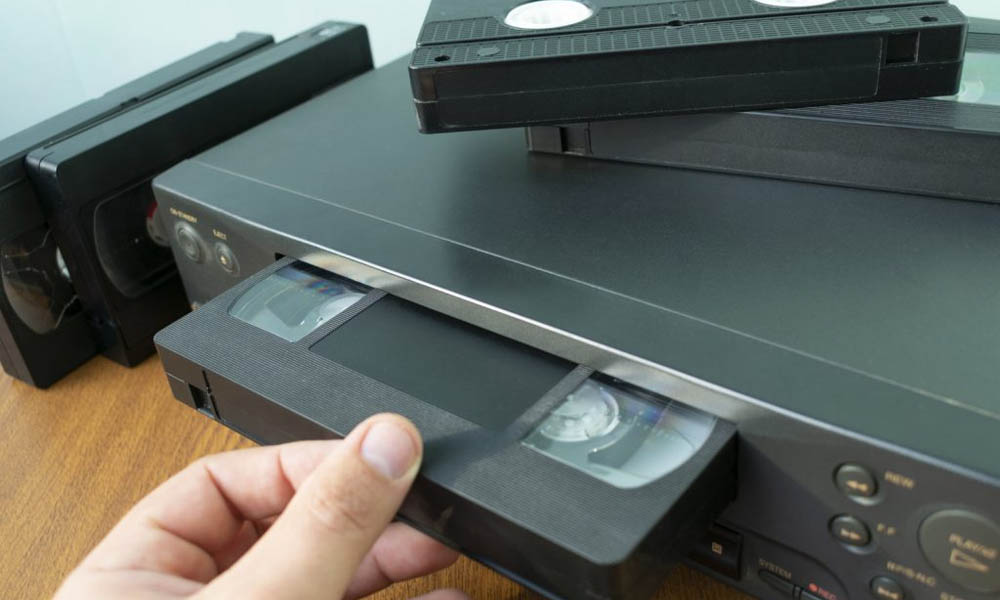
It was practically designed to be discovered in those aforementioned rental emporiums on a rainy Saturday afternoon when you were fifteen years old and had $2 burning a hole in your pocket.
You had already rented every Schwarzenegger and Stallone joint in the place. But, what’s this…?
And so began one of the weirdest love affairs in all of being an Outposter.
Because Split Second is one of those movies people don’t necessarily recommend by saying:
“It’s a good film.”
They say:
“You’ve got to see Split Second.”
There is a difference. Nobody can really explain. They just know. Why? Don’t ask questions. Just look at the guns.

Critics hated it. The reviews at the time were brutal. It failed to recover its roughly $7 million production budget.
None of this matters now. Because Split Second was never destined to be remembered as a successful 1992 theatrical release.
It was destined to be remembered as that weird film you found in a video shop and inexplicably love with all your little Outposter heart.

