


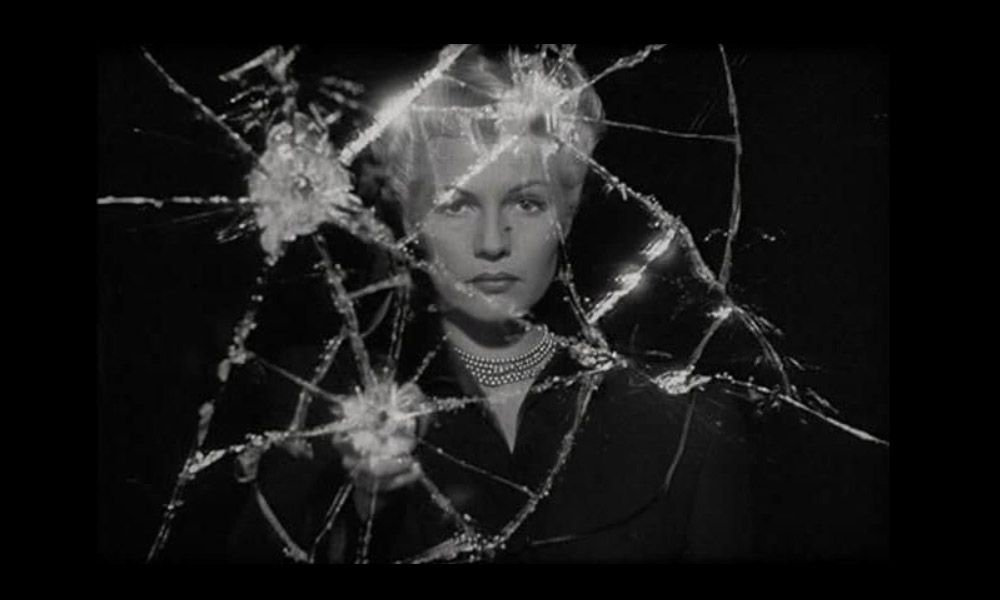
The Lady From Shanghai (1947) has a lady in it, but she isn’t originally from Shanghai. This is clear because she can pronounce Rs and Ls and is shown competently driving a car. None the less, said lady did arrive from Shanghai at the beginning of the film. So, technically, the title of the film is correct, and technically correct is the best kind of correct…
Let’s travel back to yesteryear and take a look at this flick.
The Lady From Shanghai
The Lady From Shanghai is a noir film because every other movie in the 1940s was a noir movie. The film is based on the novel If I Die Before I Wake by Sherwood King. King received the princely sum of $600 for the movie rights. We, at The Last Movie Outpost laugh at such paltry sums. We receive that per word here.
Now…dance for us, plebs!
But I digress, The Lady From Shanghai is brought to you by a little-known Wisconsin filmmaker named Orson Welles. The fact that someone escaped the cheese pit known as Wisconsin for Hollywood is probably a story unto itself. One can only imagine that the goodbye between Welles and his sheep was particularly emotional.
Originally, cinema showman extraordinaire William Castle held the writes to If I Die Before I Wake, but the rights ended up in Welles’s hands, and it was off to the races.
The plot of The Lady From Shanghai is thus:
A vagabond sailor is hired by a wealthy man and his femme fatale wife to accompany them on a yacht trip. Things turn noirish.
The story starts out in New York City during a time when people could leave a horse on the street, and it wouldn’t get eaten. Everyone then ends up in a boat, pauses for a beach party in Acapulco and makes their way to San Francisco during a time when people could walk down the street without stepping on pooped-out drug needles.
The Lady And The Tramp From Shanghai
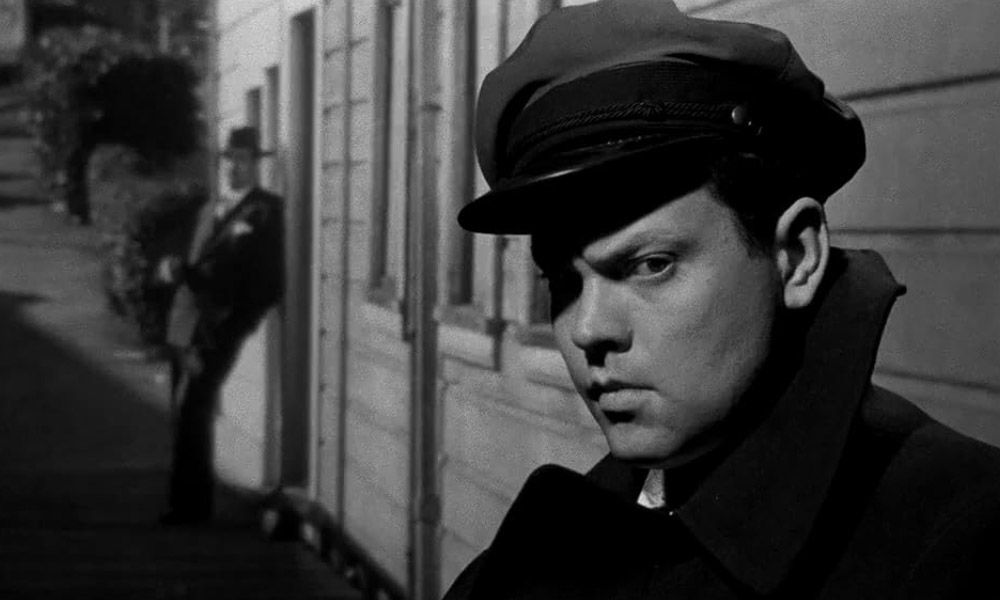
The Lady From Shanghai also stars Orson Welles as the vagabond sailor. He sports an Irish accent for the film. As for the accent’s accuracy, we will need to consult Outposter Aldo on that one. I am from the Midwest, USA, so my understanding of accents goes no further than the ones displayed in Fargo.
Oddly enough, most of Welles’s dialogue comes off as dubbed. Perhaps, he was not confident of his accent in front of the camera and tried to perfect it after the fact.
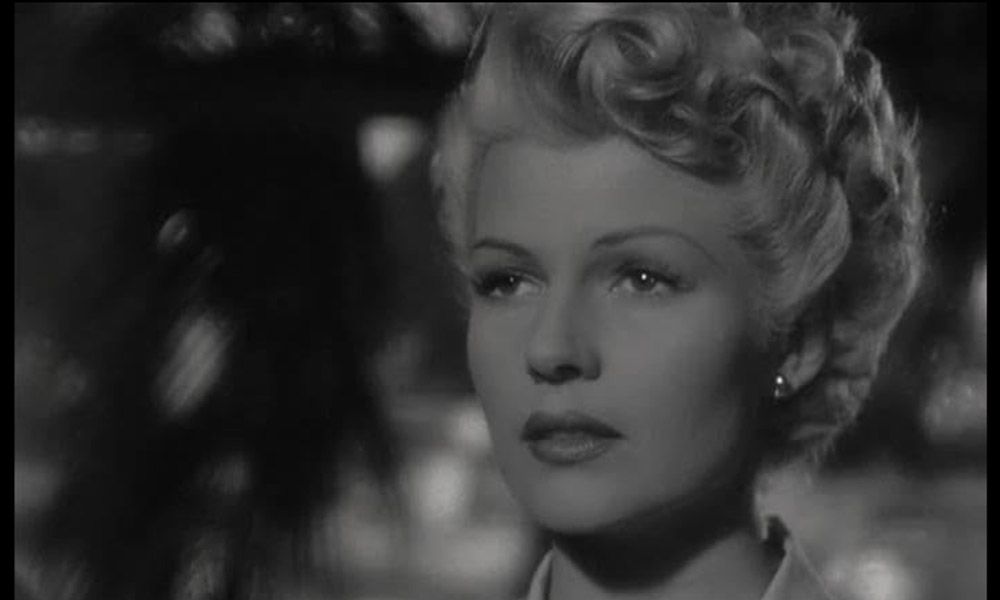
The femme fatale is played by Welles’s wife at the time, and top World War II pin-up girl, Rita Hayworth. Hayworth cut her brunette locks for The Lady From Shanghai and sports a blond Julia Garner hairdo. She utilizes no accent.
Everett Sloane portrays the wealthy husband. Sloane worked with Welles previously on Citizen Kane and looks like he could have fathered David Bradley.
Some other dudes populate the movie, but Glenn Anders gets the most screentime as Sloane’s greasy partner. Anders did not have a big career, and is likely best known for his role in this film. Supposedly, Errol Flynn also appears in The Lady From Shanghai as a background extra.
The Lady In The Water From Shanghai
With such a pedigree, one would expect The Lady From Shanghai to be a classic, and it is considered a classic, but the truth of that claim is debatable.
Watching the film reveals a mess of tone and plot. When one researches The Lady From Shanghai’s production, the reason for such things become clear.
Orson completed a rough cut of the film, and Columbia Pictures President Harry Cohn was not happy with the result. He particularly did not like Welles’s stylistic choice to not use close-ups and the confusing plot. Cohn ordered reshoots. Once they were over, heavy editing took more than a year to complete, and an hour was cut from Welles’s rough cut.
The end result is a muddled film. While viewing The Lady From Shanghai, numerous closeups did, in fact, stand out as awkward. The closeups seemed like they tried to shoulder their way into the movie the way Boba Phil tries to shoulder his way past Jessica Chastain’s bodyguards during a meet-and-greet and ends up jittering on the floor after getting tased.
Okay, maybe not that awkward but pretty close.
On the other hand, Cohn may have had a point regarding the plot. Welles starts out as a typical cynical, but insightful, noir hero and journeys straight into moron territory. Welles also made the baffling decision to include a courtroom scene that takes a hard left turn from the somber tone of the film into extremely broad humor.
Supposedly, Welles decision was “Brechtian” in nature. This term is from German playwright Bertolt Brecht, who had a principle called Verfremdungseffekt, which roughly translates as “defamiliarization effect.” This involved stripping an event of the familiar and creating a sense of astonishment about it. I imagine being a connoisseur of craft beer would help one better understand this concept.
The LadyKillers From Shanghai
On the other hand, The Lady From Shanghai does have a degree of style. It contains a large amount of voiceover that delivers the appropriate noir nuggets of world-weary wisdom.
Welles also oversees some nice cinematography that makes good use of expressionistic shadows. He also throws in the old-timey trope of soft close-ups on Hayworth that emphasizes the ethereal nature of beauty. These kinds of things are fun to watch and make one realize that most camera angles on women nowadays emphasize a more slattern nature of beauty.
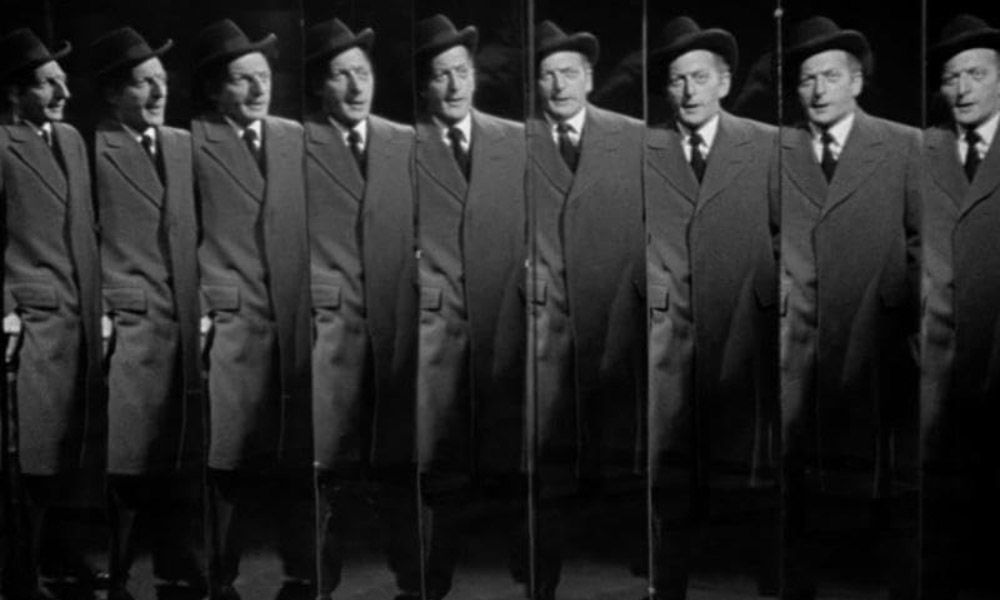
Finally, the film ends with a confrontation in a funhouse that involves kooky imagery of funhouses and mirror mazes. Supposedly, Welles intended the funhouse set to be a climatic tour-de-force of editing and production design. Elaborate sets were built for what was intended to be a twenty-minute sequence. It ended up being about three minutes.
While one can see the potential there, one is also hard-pressed to wonder how such a confrontation could have been stretched that long without audiences getting bored.
The Lady In White From Shanghai
A good noir film doesn’t necessarily have to be logical, but a good noir film does need to maintain a consistent tone. It also needs to match the wavelength of the male id. A part exists within every man that longs to be cut lose and drifting from all responsibility, living by his wits and two-fisting his way through the enforcement of his own moral code. If a pair of smoking forty-fives can be added to the mix, all the better.
This is why it doesn’t work to feminize male entertainment. Women, especially liberal women, don’t get those things and actively hate them.
The Lady From Shanghai also violates this rule. It is allowed a fair degree of plot muddling, plus awkward filmmaking, but letting the hero take a turn into a chump is not allowed. Sure, Welles’s character reasserts his manly manliness in the end, but he wasn’t made a chump so much by devious scheming, as he was by his own stupidity within the machinations.


