


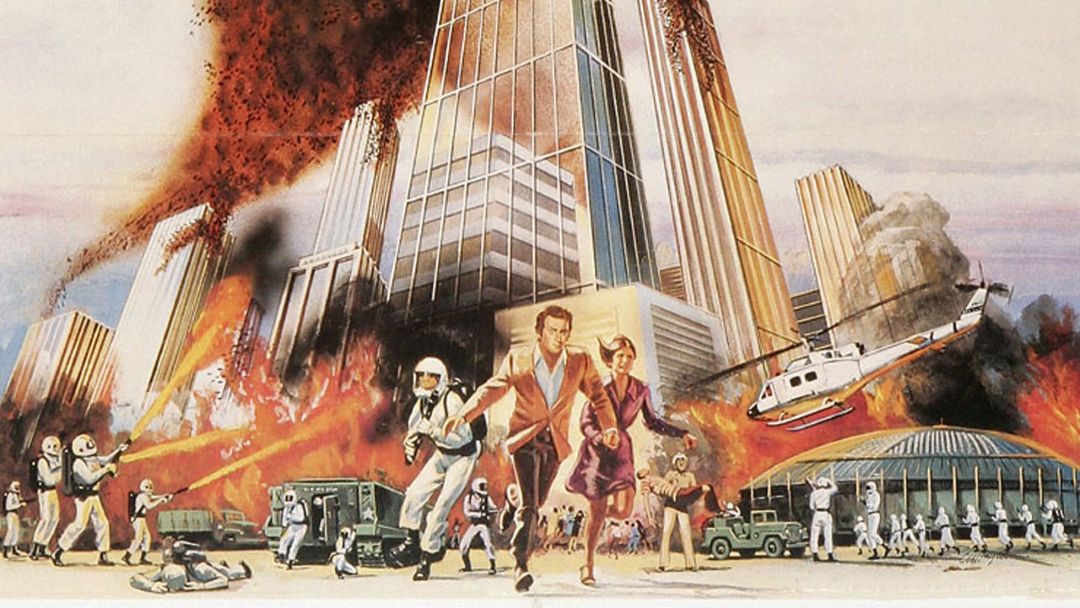
Irwin Allen didn’t just make disaster movies. He made event cinema. He made films where famous people stood around expensive sets explaining to other famous people why the expensive set was about to explode, sink, burn, crack in half, or fall into the sea.
In the 1970s, this counted as entertainment on an industrial scale. Allen was the “Master of Disaster,” a nickname that sounds complimentary until you realize it could also apply to a project manager who accidentally sets fire to an airport.
No matter how cheesy, how overblown, how melodramatic, you can never quite bring yourself to dislike an Irwin Allen movie. The guy just understood spectacle to such a degree that even his misses were entertaining. One project, however, skirts close to the limit – The Swarm.
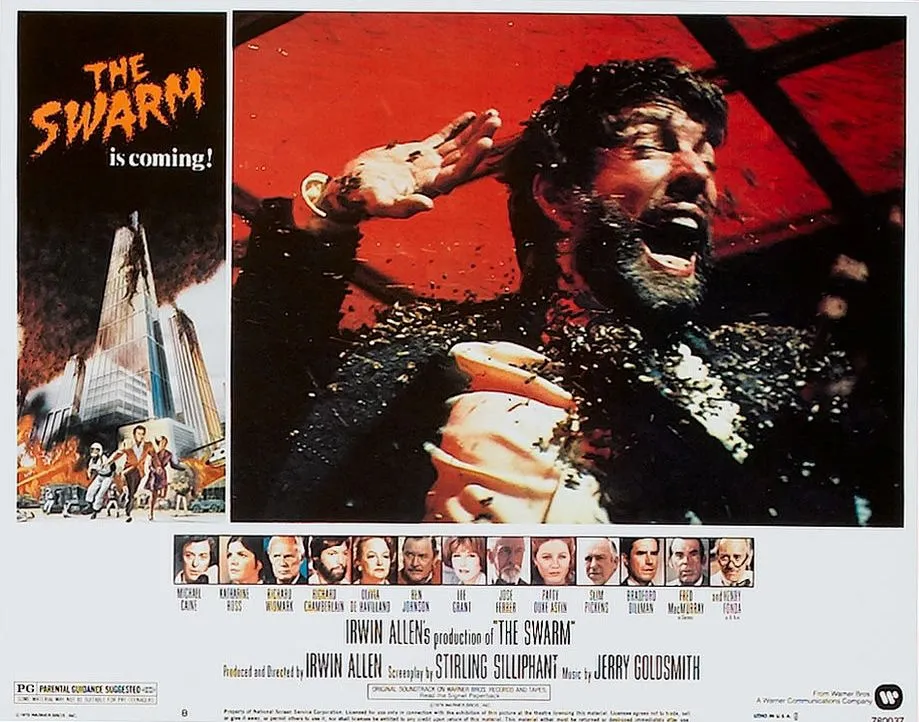
The Swarm
Coming off a one-two punch of The Poseidon Adventure and The Towering Inferno, it seemed he could do no wrong. Then, in 1978, came The Swarm. A film so gloriously, catastrophically misguided that it now plays less like a thriller and more like a studio-sanctioned nervous breakdown.
This is a movie where bees derail trains, attack schools, invade military bases, overwhelm flamethrowers and, to prove that cocaine was practically on tap in Hollywood writing rooms in the 1970s, threaten a nuclear power plant. Not metaphorically. Literally. The bees cause a nuclear meltdown.
There were Italian film directors looking on at this point and saying “Hang on, that feels like overkill.”
And yet parts of it are absolutely seared on my memory. Not because it’s good. Defintiely not. But because it exists in that rarefied zone occupied by only the most magnificent Hollywood disasters: films made with absolute sincerity, staggering budgets, enormous talent, and almost no contact with human reality.
Like Heaven’s Gate, Battlefield Earth, or that period in the 1990s where Michael Crichton adaptations convinced executives that tornadoes, viruses, gorillas, and weather systems were all one rewrite away from Oscar glory, The Swarm is a monument to excess and hubris.
It is also one of the funniest non-comedies ever made.
The setup is magnificently stupid. African killer bees are migrating north through the USA from South America, leaving death and panic in their wake. Scientists and military officials gather to discuss the crisis in rooms full of blinking lights, while people are murdered by what often appears to be someone angrily throwing yellow and black pellets at the camera lens.
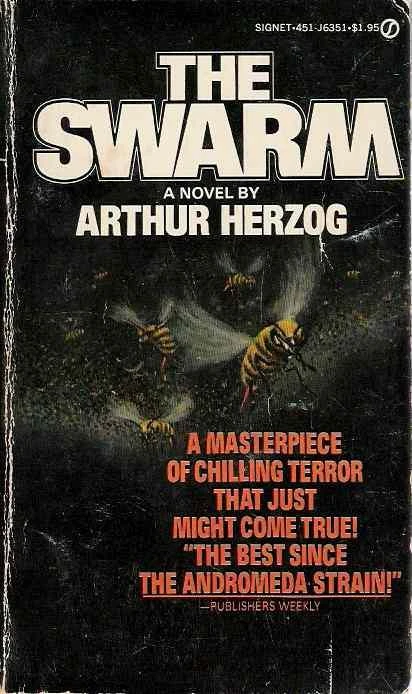
The film was based on the 1974 novel The Swarm by Arthur Herzog, who also wrote Orca: The Killer Whale, another uplifting tale about nature deciding humanity can absolutely go and f*ck itself.
Herzog seemingly specialized in ecological panic fiction during the decade when Americans became convinced literally every animal on Earth wanted revenge. Bees, whales, ants, dogs, rabbits, frogs… the 1970s were basically a decade-long hostage negotiation with wildlife.
And to be fair, the killer bee panic was very real.
In the 1950s, Brazilian researchers crossbred African honey bees with European honey bees in hopes of creating a more productive strain. Some escaped because of course they did. This eventually led to the spread of Africanized honey bees through South and Central America and into parts of the United States. Newspapers, naturally, reacted with the calm restraint of a tweaker in a tumble dryer.
1970s media coverage convinced the public that America was about to be consumed by a buzzing apocalypse. Killer bees became one of those uniquely 70s fears alongside spontaneous combustion, Satanic cults, unexplained quicksand, and Burt Reynolds’ chest hair.
In reality, Africanized bees are more aggressive than standard honey bees, particularly when defending hives, but they are not the airborne extinction event promised by films like The Swarm. Today, they exist primarily in warmer southern US states, and while attacks occasionally happen, humanity has somehow endured without bees sabotaging rail infrastructure or conducting military-like operations against power stations.
Which is disappointing, honestly.
They’ve Always Been Our Friends
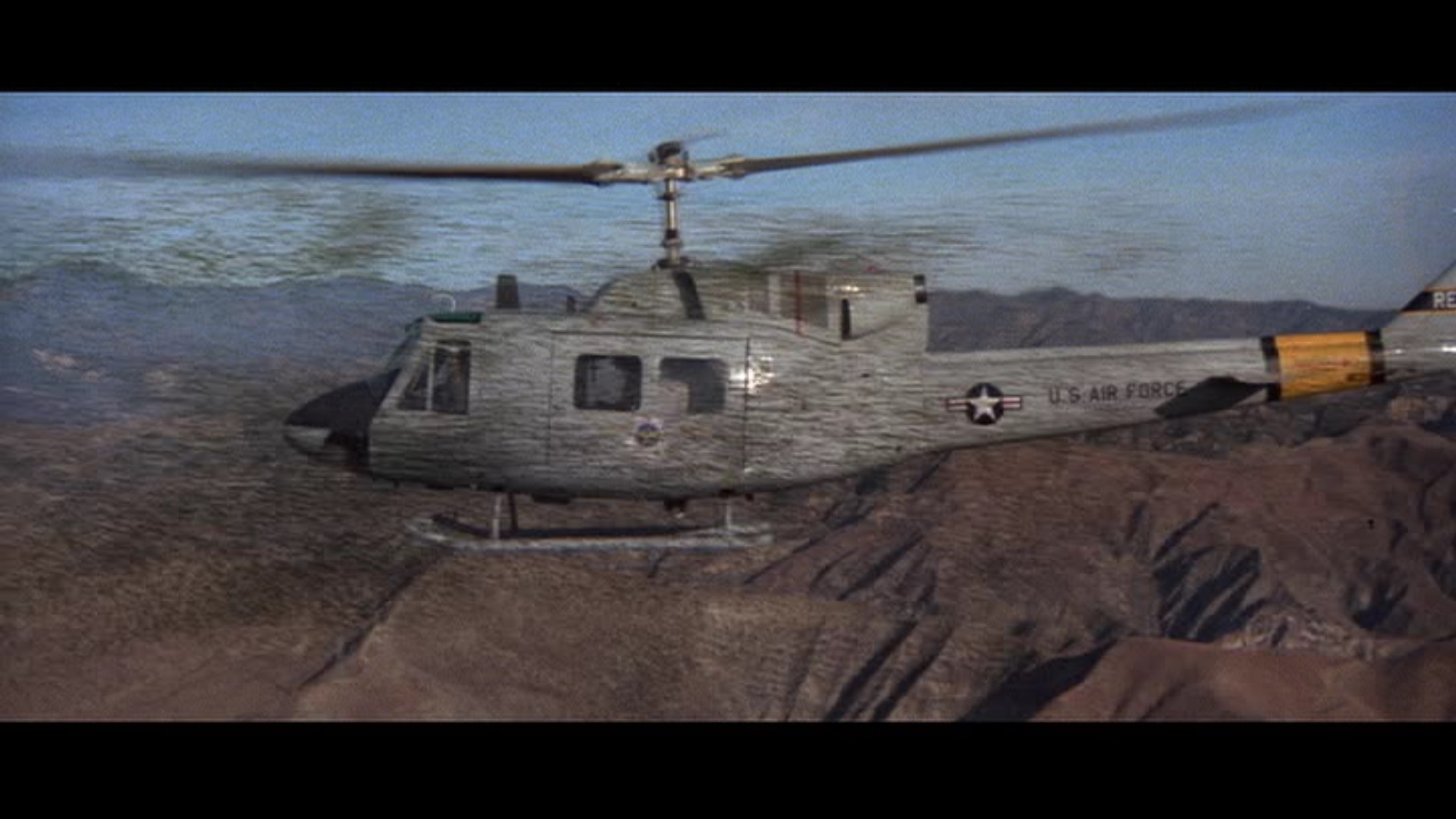
The movie opens with military personnel discovering an entire base mysteriously dead. It’s played like a biological horror film. Men have collapsed foaming at the mouth. Helicopters hover ominously. Scientists whisper gravely. And then someone says, essentially:
“Bees!”
Not a virus. Not nerve gas. Bees. Cue two and a half hours of escalating nonsense.
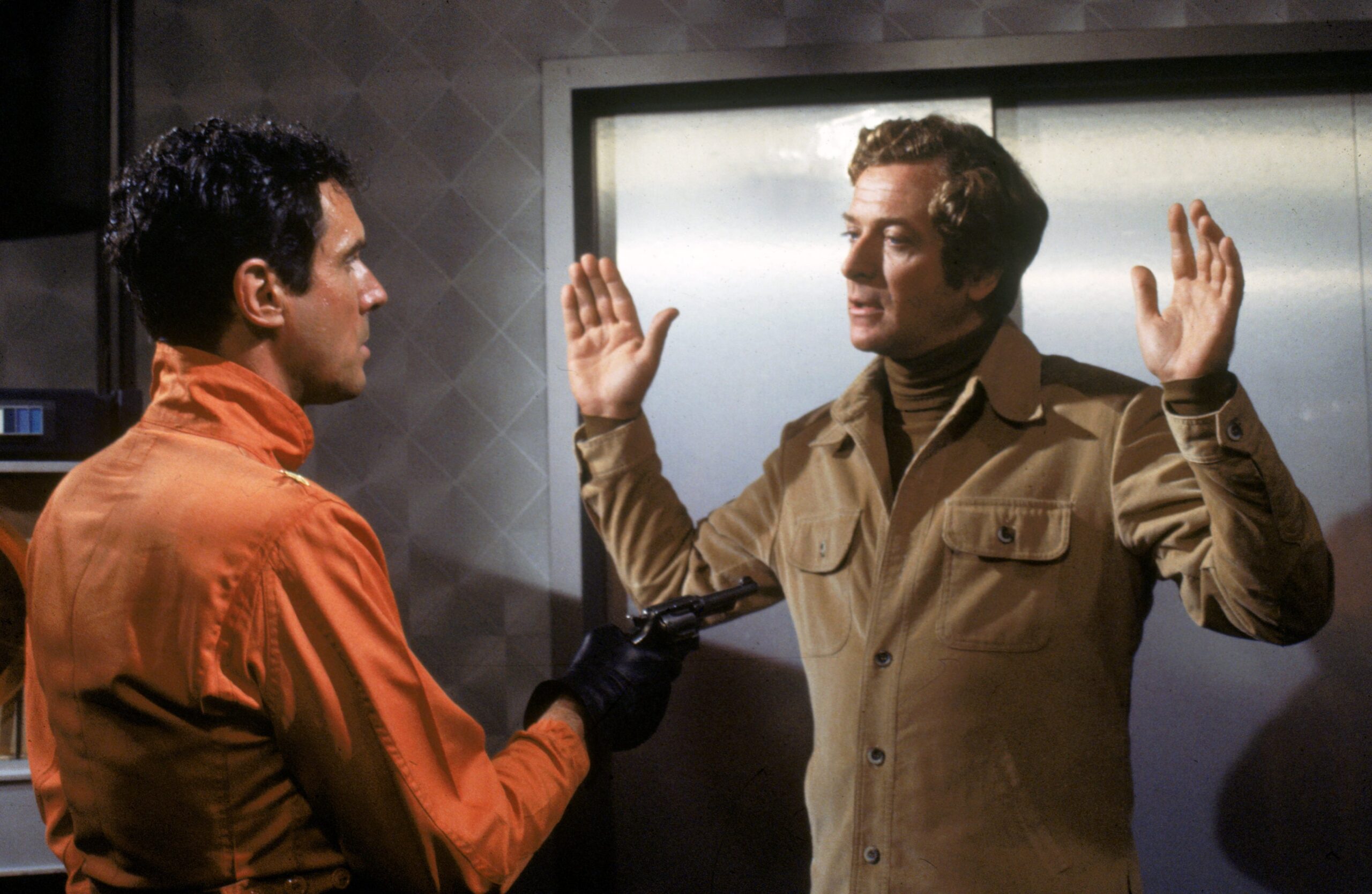
At the center of this chaos is Michael Caine, giving one of his most committed pay-cheque performances in his long history of pay-cheque performances. Having grown up in abject poverty among the bombed-out remains of post-WWII East London, Caine understood that every role was money in the bank.
Here, Caine plays Dr. Bradford Crane, a scientist whose name sounds like a rejected Marvel character. He spends the entire film explaining bees to increasingly hysterical government officials while looking faintly irritated that the catering has run out of shrimp.
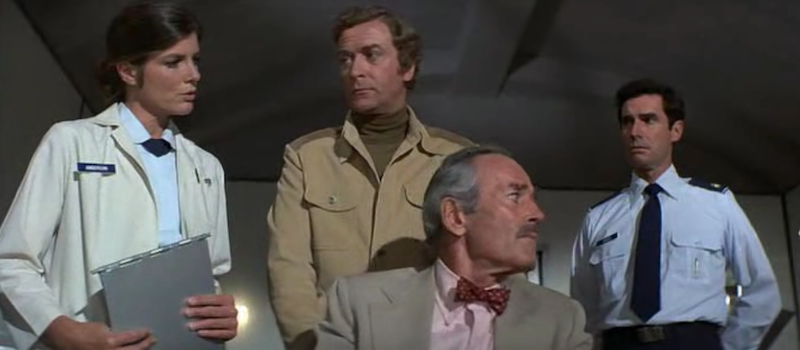
Caine, as usual, acts as if he is appearing in a respectable BBC thriller and delivers lines about homicidal bees with calm yet Shakespearean conviction while everyone around him behaves as if they’ve just discovered coffee. Then you look at the cast list, and your brain starts melting.
Henry Fonda.
Richard Widmark.
Olivia de Havilland.
Ben Johnson.
Jose Ferrer.
Fred MacMurray.
Patty Duke.
Richard Chamberlain.
Slim Pickens.
Bradford Dillman.
This isn’t a cast. It’s an in memoriam montage. The film operates under the classic Irwin Allen philosophy that if enough respected actors stand near enough smoke machines, audiences will mistake confusion for spectacle. And to an extent, it works. There is something hypnotic about watching legendary performers say, with complete sincerity, things like:
“The bees are organized!”
One scene involves military strategists discussing bee movement like they’re planning for D-Day. Another has helicopters attacking insects with chemicals as though the Pentagon briefly confused nature with Vietnam.
Then there’s the train sequence. Dear God, the train sequence.
The bees attack a passenger train, causing mass panic and derailment. This should be thrilling. Instead, it feels like everyone involved in writing, creating, or starring in this scene lost a bet. The editing is pure 1970s disaster-movie hysteria: screaming extras, sparks, stock footage, random zooms, and actors flailing while things are hurled at them from off-camera.
Despite all this, The Swarm somehow becomes transcendent. Modern bad movies fail because they’re cynical. The Swarm gets given a pass by everyone who watches it because it is glorious rubbish. It genuinely believes every second of this nonsense matters.
I mentioned bits that are seared in our minds. This is because, unexpectedly, the film stumbles into actual horror a couple of times. Skin itching, lifelong fear-inducing, phobia-fuelling actual horror.
Childhood Fears Unlocked
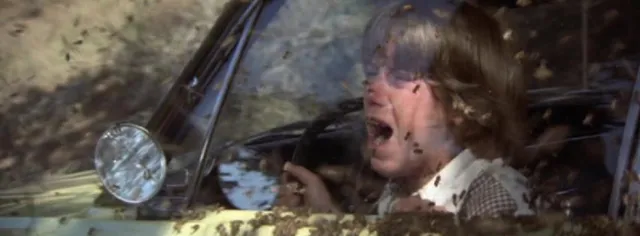
The picnic attack and the school attack. That is nightmare fuel right there. Where we get close-ups. Thousands of real bees were used in production, because 1970s filmmaking was workplace safety-free. People screaming, particularly children, while swarms descend, has a visceral nastiness modern CGI can’t replicate. It taps into something primal and ugly. There’s a tactile realism to these particular scenes that cuts through the camp.
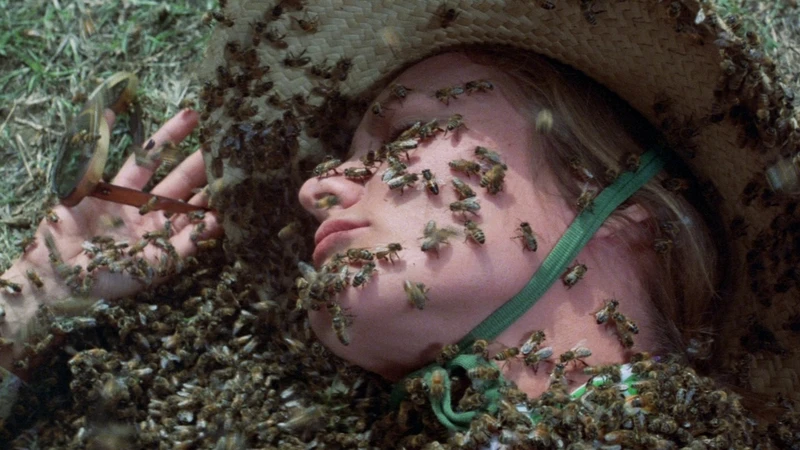
Because those are real bees. Real bees landing on real actors. Which means everyone onscreen was effectively participating in a giant airborne hostage situation.
Stories about these scenes from production are legendary. The film used millions of live bees, with bee wranglers handling swarms during filming. Cast members wore special protective pheromones where possible, although reports suggest stings were inevitable. Some actors allegedly refused certain scenes. Others simply sweated through them while Irwin Allen screamed for more panic.
By 1978, the disaster boom he helped create was dying. Allen had ruled the decade with films that balanced spectacle with tight pacing and just enough sincerity to work. They were big, glossy crowd-pleasers that turned catastrophe into prestige entertainment.
Then Hollywood did what Hollywood always does: it milked the trend until audiences wanted it to die.
By the late 70s the genre had become self-parody. Airplanes crashed every six weeks. Buildings burned down hourly. Meteorites, avalanches, earthquakes, and fish attacks clogged multiplexes. Eventually, audiences stopped showing up because there are only so many times you can watch George Kennedy explain imminent death before your soul leaves your body.
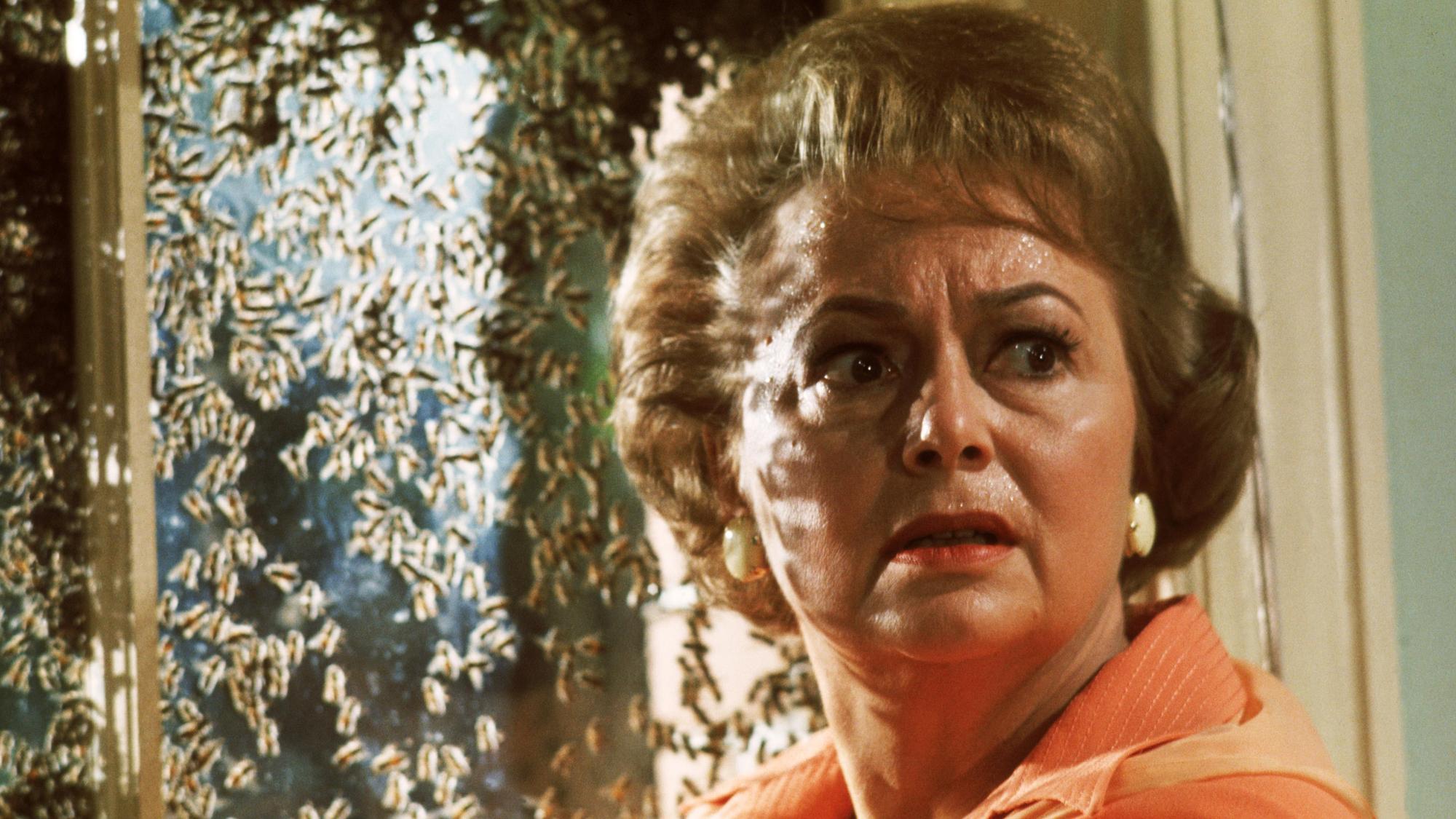
The Swarm arrived precisely when people were tired of this formula, and worse, it was wildly expensive.
Reports vary, but the budget ballooned somewhere north of $20 million, an enormous sum at the time. Adjusted for inflation, it is about $102 million today… which just shows how out of control Hollywood budgets are now!
Allen treated the production with the same oversized ambition as his earlier hits, except now audiences were moving toward leaner, sharper blockbusters inspired by Star Wars and Jaws. Compared to those films, The Swarm felt ancient before it even premiered.
Critics annihilated it. Not politely. Not professionally. They went after it like the bees themselves. Reviewers mocked the absurd script, uneven effects, endless runtime, and self-serious tone. The dialogue became an instant camp legend. The film quickly earned a reputation as one of the worst major studio releases ever made.
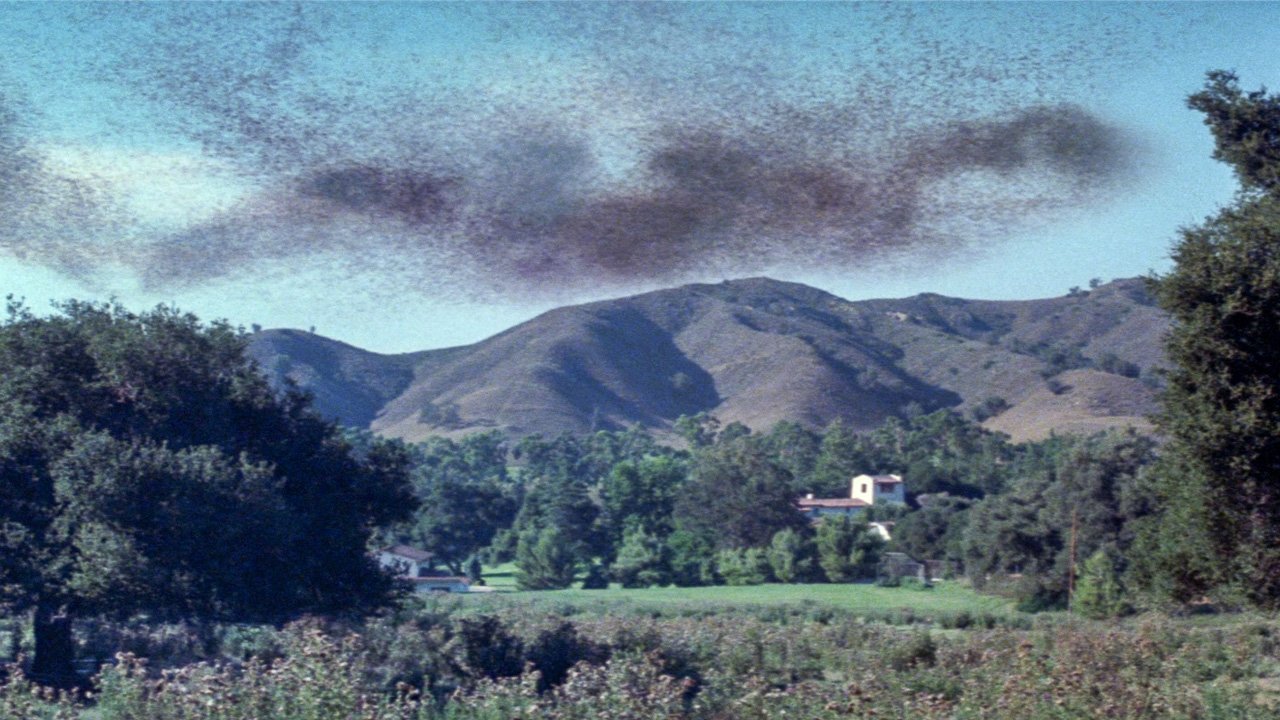
And financially? Catastrophic.
The movie bombed hard enough to leave a crater. Allen never fully recovered theatrically after this. While he continued working in television and producing, The Swarm marked the effective collapse of his reign as Hollywood’s disaster king. The genre itself staggered onward for a few more years before largely disappearing until the CGI era resurrected it in the 1990s.
But here’s the thing.
Time has been strangely kind to The Swarm.
Not because it secretly deserves reevaluation as misunderstood art. Let’s not get irresponsible. It’s still ridiculous. The pacing is a disaster. The tonal shifts are insane. Characters vanish randomly. Scientific logic collapses under questioning faster than wet cardboard. The climax involves enough pseudo-scientific nonsense to qualify as bee-based astrology.
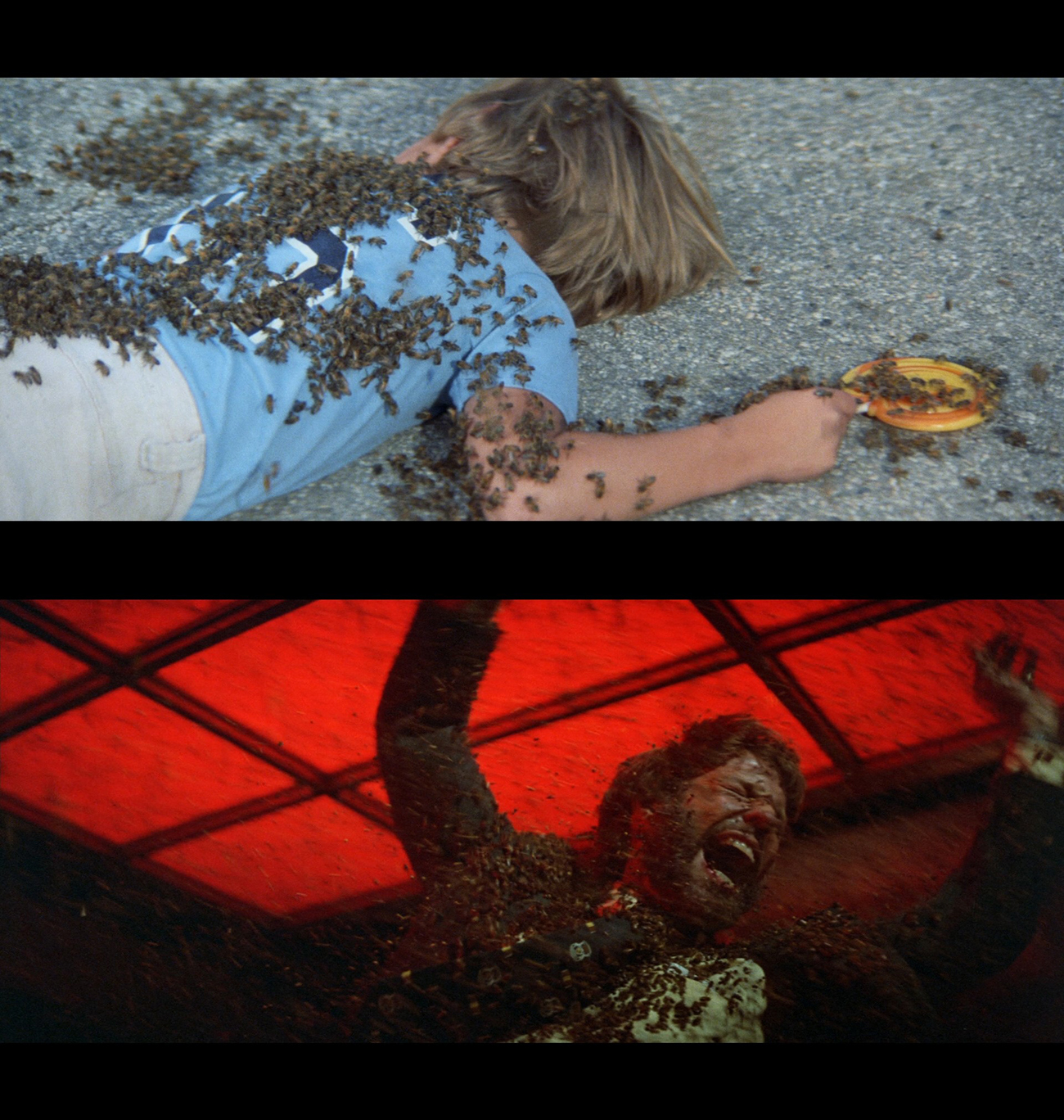
And yet modern audiences increasingly love it because it represents a kind of filmmaking Hollywood barely allows anymore: gigantic, earnest failure. No irony. No self-awareness. No postmodern wink at the audience. Just a major studio spending mountains of money to ask:
“What if bees, but too many?”
You can practically feel the confidence pouring off the screen. Everyone involved genuinely thought they were making an important thriller about ecological collapse. Nobody appears aware they’re starring in a movie where pensioners are dive-bombed by angry honey factories.
And the craftsmanship, however misguided, is often impressive. The practical effects work has scale. The locations feel enormous. The action sequences are ambitious. Even the awful optical effects possess a grimy charm modern CGI sludge lacks. Also, any movie where Henry Fonda gravely discusses bee strategy deserves preservation by UNESCO.
The funniest aspect may be how seriously the film takes itself. Nobody cracks jokes. Nobody acknowledges the insanity. When bees start causing infrastructure collapse, government officials respond as though this is a plausible Tuesday concern.
At one point, the movie genuinely behaves like the bees are a military invasion force capable of strategic planning. If the queen bee had appeared wearing a tiny general’s hat, the film’s internal logic would have accepted it immediately.
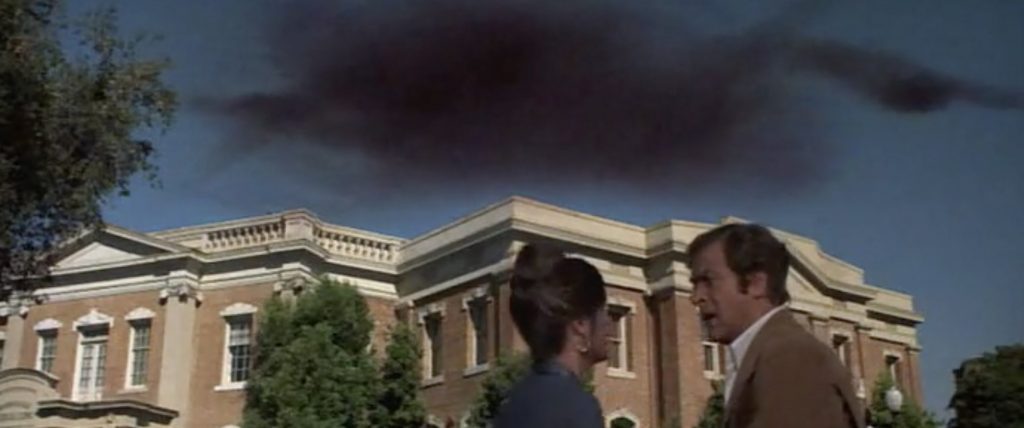
Today, this drives some kind of grudging respect. Because modern Hollywood would ruin this with smugness. There’d be Marvel-style quips every thirty seconds. Someone would say, “Well THAT just happened.” A side character would explain bee memes to the audience to unlock some special defence.
The Swarm never does that. It stares directly into the camera with absolute conviction and says:
“Millions may die because insects are angry.”
In that respect, it is pure cinema.
Irwin Allen’s legacy remains complicated. At his best, he helped define large-scale Hollywood spectacle. The Towering Inferno is still a borderline masterpiece. He understood scale, tension, and the pleasure of watching arrogant rich people panic in expensive environments.
At his worst, he disappeared into excess. Bigger casts. Bigger budgets. Bigger destruction. Less discipline.
The Swarm could very well be another example of what happens when a filmmaker loses the ability to hear the word “no.”
But maybe that’s also why it lives on in our collective movie consciousness? Nobody remembers competent mediocrity. People remember glorious catastrophe. The Swarm is one of the great cinematic catastrophes: bloated, bizarre, terrifying, hilarious, self-important, utterly unhinged, and weirdly lovable.
It’s a movie where Oscar winners flee from bees while Michael Caine explains insect sociology like he’s defending a doctoral thesis at gunpoint. It’s a film that turns a tabloid panic into an apocalyptic opera. It’s seventy percent nonsense, twenty percent accidental comedy, and ten percent genuinely upsetting nightmare fuel.
And now, somehow, I think I kinda love it.

