


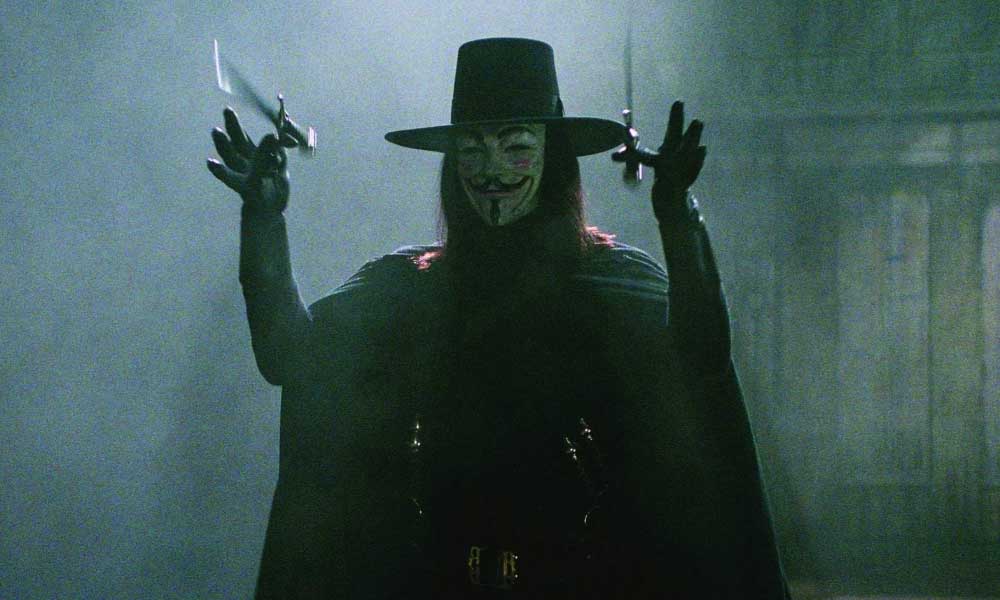
V for Vendetta viewed with venti-venti-six vision vexes watchers. (You are supposed to pronounce the “w” words with a German accent to maintain the alliteration.)
On the one hand, the film is laughably quaint. On the other hand, it is eerily prescient.
V For Vendetta
V for Vendetta is based on a comic book from the 1980s. It came from the brain of everyone’s favorite grumpy, anti-establishment, wizard Alan Moore. When he’s not worshipping Glycon, he’s cleaning dead sparrows out of his beard.
Margaret Thatcher’s Britain disturbed Moore. He viewed certain conservative policies as an erosion of civil liberties. He channeled this anxiety into a story about a type-A anarchist vs. a rigid fascist state. Moore’s goal was to present a philosophical duel that forced readers to grapple with a difficult question: is terrorism justified in a dictatorship?
Moore named the anarchist V and based his appearance on Guy Fawkes. The character was a chimera of old ideas Moore had rolling around in his head. Years earlier, he pitched a story called The Doll about a transvestite terrorist fighting totalitarianism. He also worked on a comic called Night Raven, which took place in a dystopian near future.
Moore did not want a standard heroic character. He wrote V to be terrifying, unhinged and cold-blooded. V for Vendetta connected with readers and ended up being a touchstone comic book that elevated the medium into adult fare.
Flash forward to 2005 and the most established of establishments, Hollywood, said, “Hey, we should make V for Vendetta into a movie! That will show George W. Bush!”
V: The Final Battle For Vendetta
Back in 2005, the Wachowskis still had a degree of clout (and penises) after The Matrix Trilogy and chose V for Vendetta as their next project. Being a bit burned-out, they limited their involvement to writing, producing and second unit work while turning over directing duties to James McTeigue (Ninja Assassin).
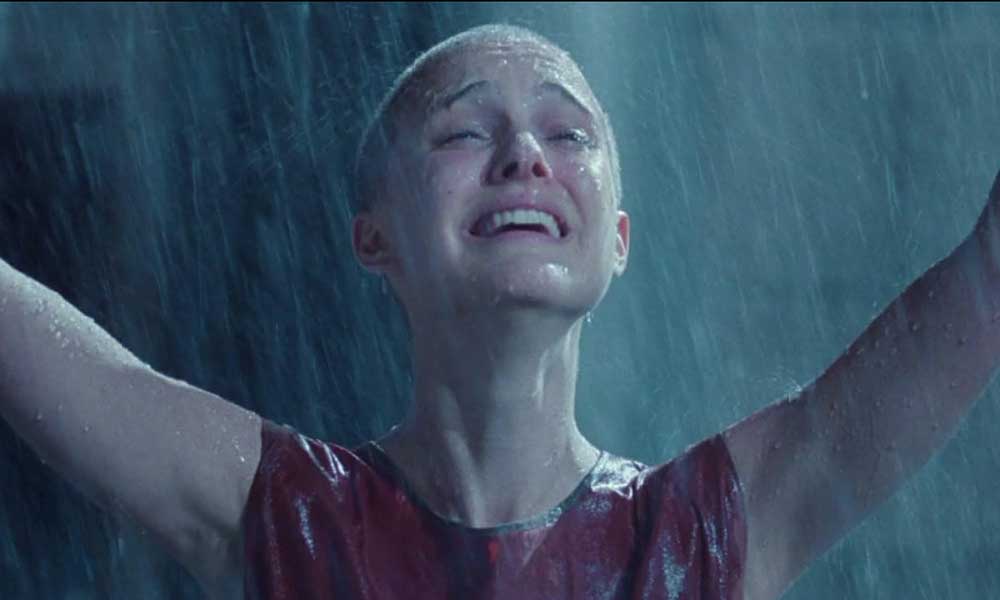
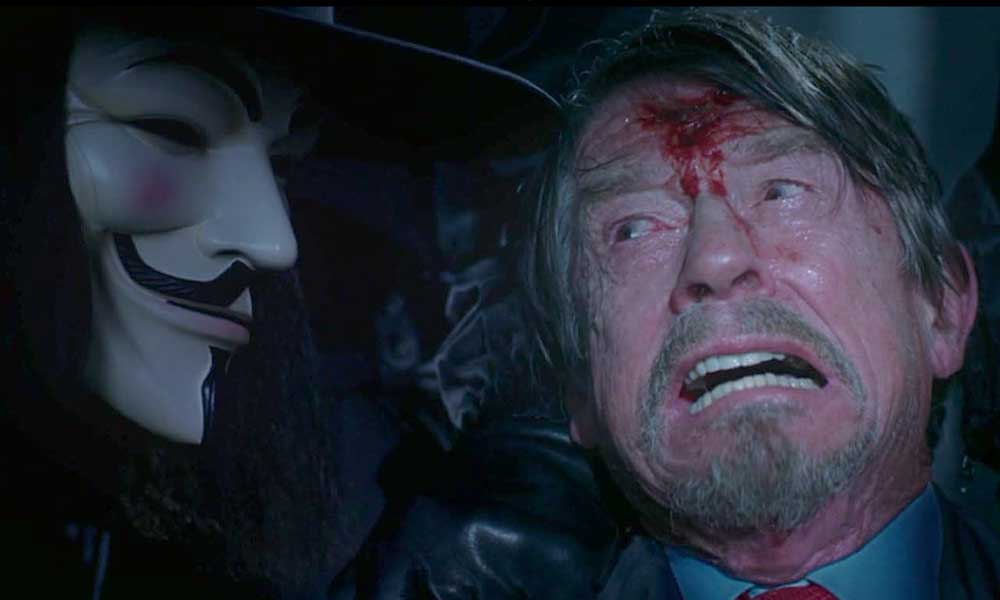
Natalie Portman (hot from the Star Wars prequels) took the role of Evey. Stephen Rea played Chief Inspector Finch. Stephen Fry portrayed talk show host Gordon Deitrch, and the villain part went to John Hurt as High Chancellor Sutler.
James Purefoy (Solomon Kane) was originally cast as V. He left after six weeks of filming. It was reported that he had difficulty wearing the Guy Fawkes mask. Purefoy later stated he left because of creative differences about how V should be portrayed. Hugo Weaving then stepped into the role and used his distinctive voice to bring V to life.
V for Vendetta had a modest budget of $50 million (even the first Matrix got $63 million). It ended up pulling in $135 million at the box office. It then earned an additional $65 million from DVD/Blu-ray sales. Not a bad haul overall. Everyone was happy, right?
Wrong…
V For Victory Vendetta
Alan Moore hated the film version of his work. He hated it so much that he disassociated himself from it completely. His name did not appear in the credits. He even ended cooperation with DC Comics after its corporate parent, Warner Brothers, failed to retract statements about his supposed endorsement of the film.
Moore also refused direct payment and royalties for V for Vendetta. As of 2023, any royalties the film generates is forwarded to Black Lives Matter. At the very least, it helps the founders of BLM buy fancier mansions…
What was Moore’s beef?
Moore claimed the film “defanged” his story. It reframed his tale of British political satire into an American liberal fairy tale about fighting a neoconservative government, based on the policies of George W. Bush in the wake of his War on Terror.
Also lost was the comic’s debate between fascism and anarchy. The villains became conventional cliches. V became a standard good guy instead of an obsessed, violent lunatic. Evey went from being a desperate prostitute to a wannabe actress. And a biological conspiracy plot undermined the population’s accommodation of fascism.
Despite, Moore’s abrasive personality, one must admit he is pretty much exactly right on every criticism he had of the film. Yet, in 2026, V for Vendetta kind of almost works.
Vying For Vendetta
Today, the central conceit of V for Vendetta the film is laughable. It can basically be boiled down to “oh no, the government is going to take away our gay!”
For those around at that time, gay marriage was a big talking point in addition to the War on Terror. The plaintive, heartfelt arguments were regularly sandwiched in between Iraq talking points: “We just want to be free to love!”
Meanwhile, opponents said, “Be wary. Gay marriage will be a gateway to bigger problems.”
Twenty years later, folks are waking up to the notion that a vocal faction of gays genuinely don’t want to just be free to love. They also want to groom kids, have the right to prance around naked in public and have representation in every song, TV show and movie. And if a person doesn’t like it, they are a hate-speech bigot that must to be cancelled.
V for Vendetta also presented right-wingers as destroyers of art and the ones who shut down the streets. Twenty years later, society realizes it is not necessarily the right-wingers who want to do these things. It is the wokesters and activists. They tear down statues, throw paint at masterpieces, riot, censor old movies and TV shows and dig up dirt by finding things people said decades ago and ruin careers over it.
In the end, the creators of V for Vendetta were the fascists all along.
On the other hand, the film’s take on government overreach in the event of a manufactured plague and its manipulation of the public to obey the call via the media is spot on. Likewise, it’s message that the people must stand up to these activities in mass, if they want change, is relevant.
V for Vendetta
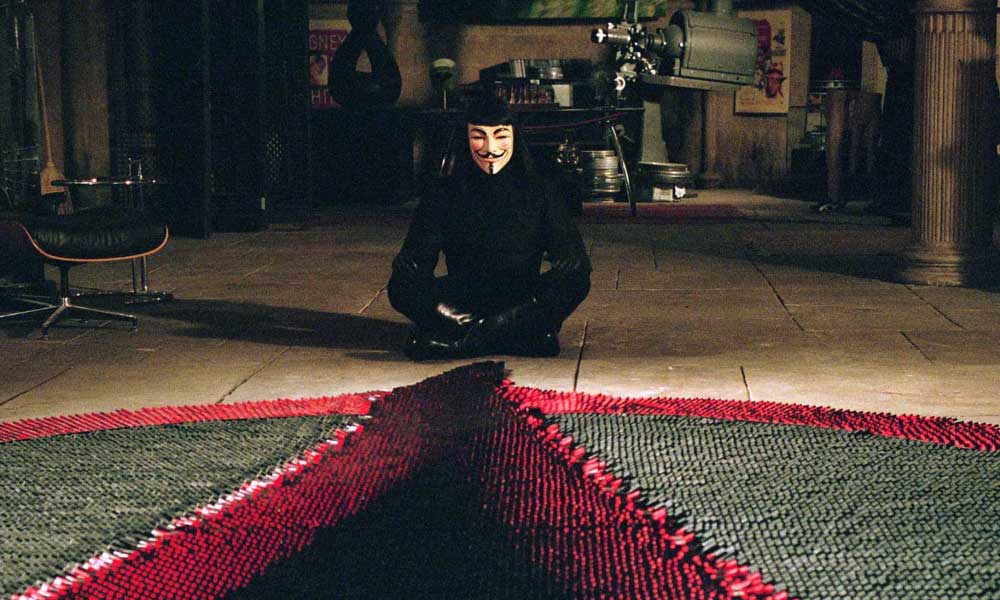
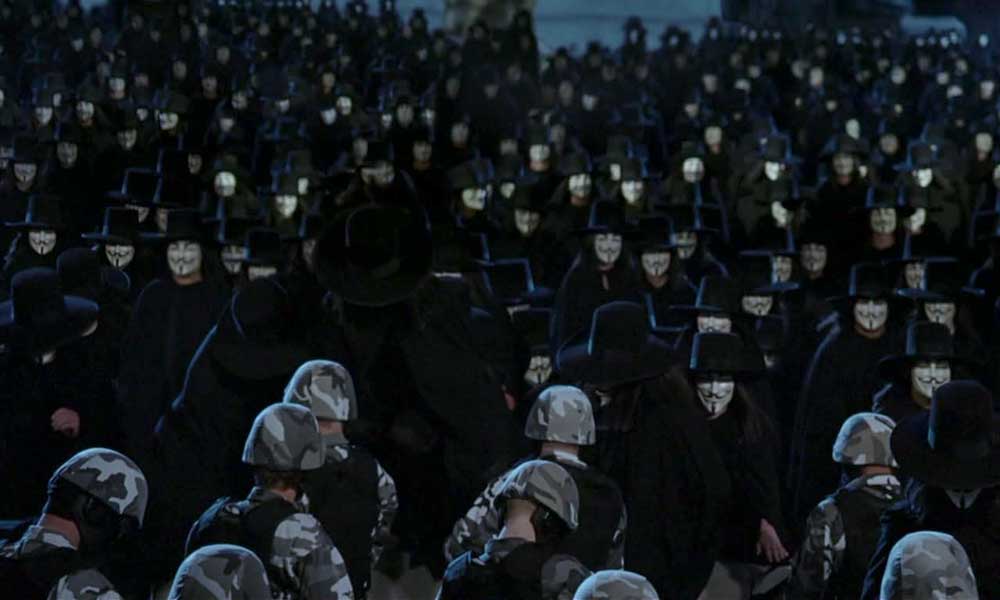
Pushing all this baggage to the side for a moment and simply viewing V for Vendetta as a film, it works well enough. The performances are good. The characters are compelling. The story contains enough mystery to draw the viewer in. McTeigue brings a fair degree of style to the proceedings. Meanwhile, it’s fun to watch V assassinate conspirators and knife paramilitary henchmen. The silver slipstreams of V’s blades during the meeting-his-maker scene remains a nice effect I have not seen before or since. I also love that shot of V leaping over the crest of a roof in slow motion. Alas, the gay card does get overplayed as the film broaches the subject with all the subtlety of an after-school special written by Jessica Gao.
Ultimately, V for Vendetta ends up a strange combination of quaint, relevant and kick-ass. Many films that take place in the future get things completely wrong. For example, Back to the Future II had flying cars in 2012. Meanwhile, V for Vendetta only got things half wrong. The people it portrayed as victims are actually the oppressors. Yet, it’s message of resistance remains true.
V for Vendetta is not a V-star movie, but it is viable movie that your family can argue about at Thanksgiving.


