


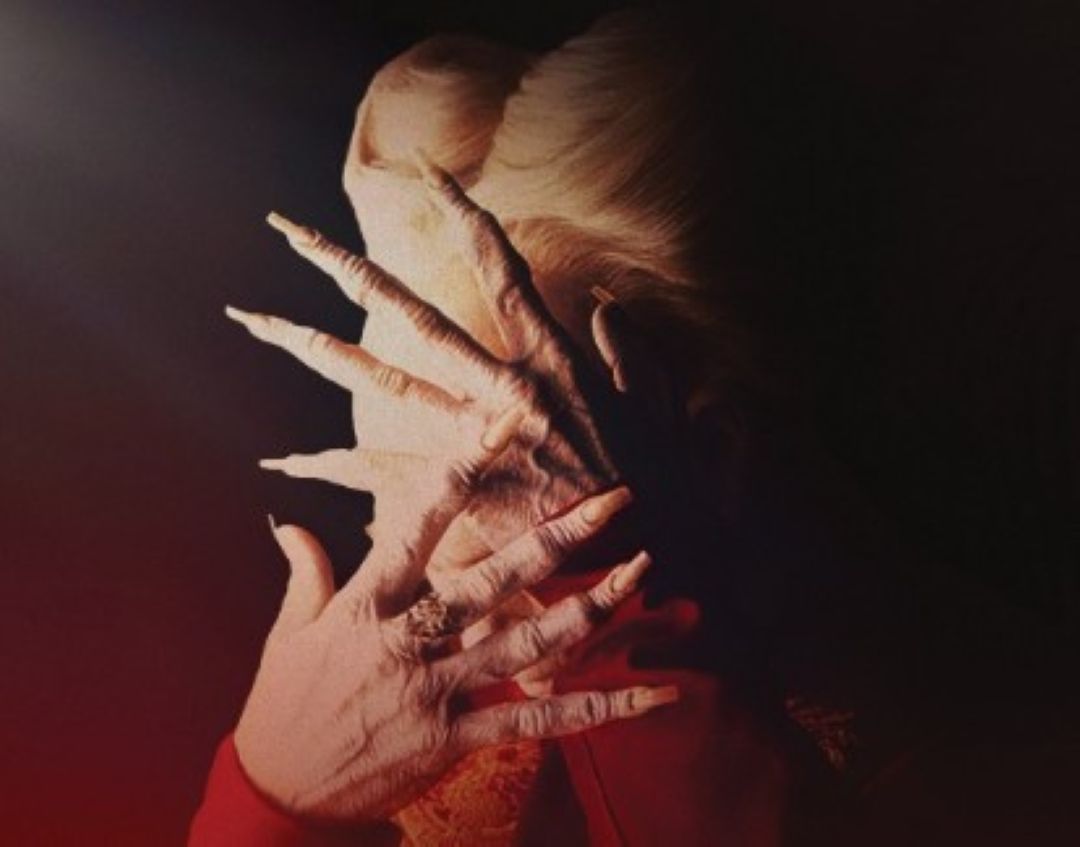
Halloween approaches, and we have already tackled werewolves. Now it is time to think about, arguably, the most famous movie monster of all time – Dracula.
From the Hammer Horror classics, through the Universal portrayals, even into more recent CG heavy versions in ensemble movies like Van Helsing. the Count remains a fascinating, beguiling figure of evil. There have been so many attempts to adapt the original novel over the years.
For some reason, they all seem to feel the need to veer off-piste and switch things up. Whether it is switching around the characters of Mina and Lucy, or combining or removing members of the heroic team hunting Dracula down, they simply can’t stop tinkering.
So when Francis Ford Coppola announced he was making Dracula, and not just any Dracula, but Bram Stoker’s Dracula, hopes were high for a faithful adaptation at long last. Did we get it?
Well, yes. But also no. Very much no.
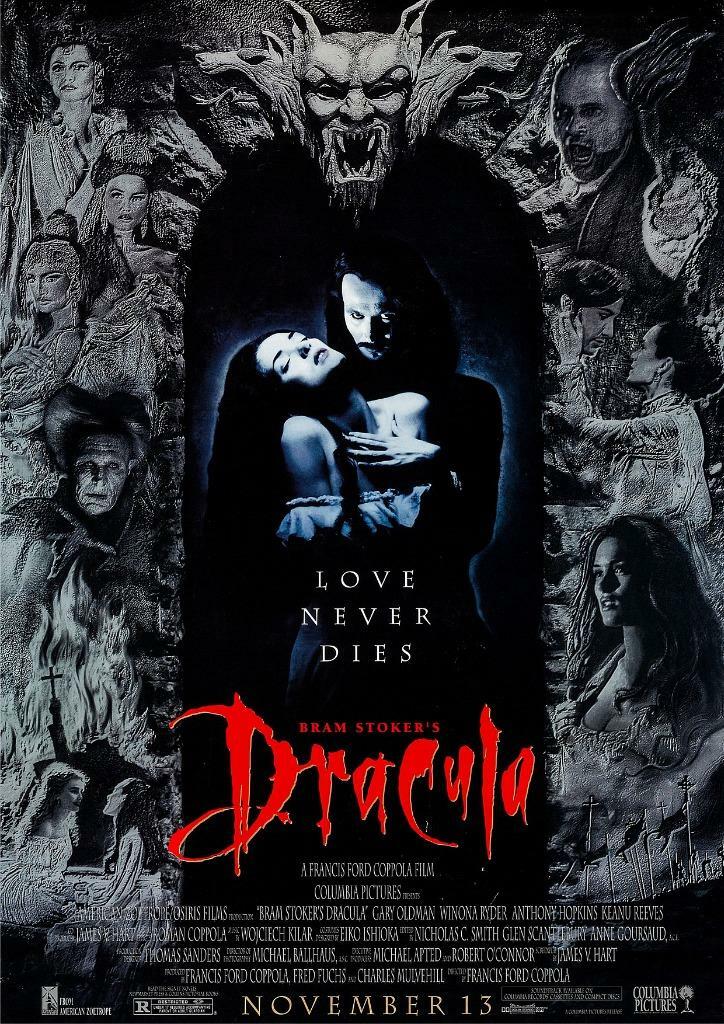
Bram Stoker’s Dracula
Way back in 1992, it was as if Hollywood suddenly woke up and decided that horror could be lavish, expensive, and considerably more sophisticated than a chap in a rubber mask chasing teenagers around a summer camp.
Enter Francis Ford Coppola, fresh from the operatic excesses of The Godfather Part III and the financial disappointments of the late 1980s. He decided that what Bram Stoker’s 1897 novel really needed was a gigantic cinematic makeover. He envisaged a Victorian gothic fever dream with a big budget.
What he crafted was simultaneously sumptuous, and genuinely frightening in places. Unfortunately he also fell into the trap of so many before him, making it both erotically charged, and occasionally so melodramatic that you half expect Gary Oldman to burst into song and demand that the villagers bring him a chorus of backup dancers.
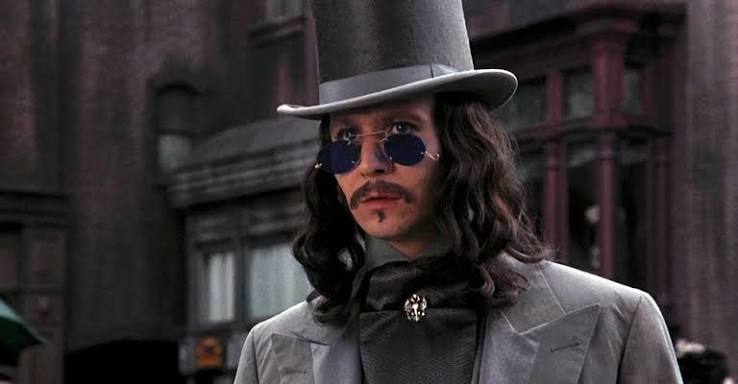
At some points, it is a masterpiece of gothic excess. Then Keanu Reeves attempts to sound like an English solicitor.
The making of Bram Stoker’s Dracula is almost as interesting as the finished film. Coppola had been looking to make a Dracula adaptation for years, and his enthusiasm for the material was considerable. Rather than produce another straightforward vampire movie, he always wanted a lavish, theatrical nightmare: a film that embraced the sensuality, horror, mythology, and melodrama of the original Victorian gothic tradition.
The screenplay was written by James V. Hart, who had been developing the project for years. Coppola’s involvement helped turn it into a major studio production, backed by Columbia Pictures, with a cast that mixed established Hollywood stars with younger, hotter talent.
The director’s approach was deliberately old-fashioned in one important respect. He wanted to create visual magic in the manner of early cinema, using practical tricks, forced perspective, miniatures, rear projection, elaborate camera effects, and optical illusions rather than relying on the emerging digital technology that was beginning to transform Hollywood.
Nobody can deny this effectiveness in the finished movie. Shadows move independently of their owners, with Dracula’s silhouette behaving like a separate creature. The camera glides through impossible spaces, while images overlap and dissolve into one another like illustrations from a Victorian penny dreadful.
Coppola and cinematographer Michael Ballhaus create a world that feels simultaneously completely MVartificial and utterly convincing. The film looks like a stage production designed by a mad aristocrat with unlimited money and absolutely no interest in the health and safety of his crew.
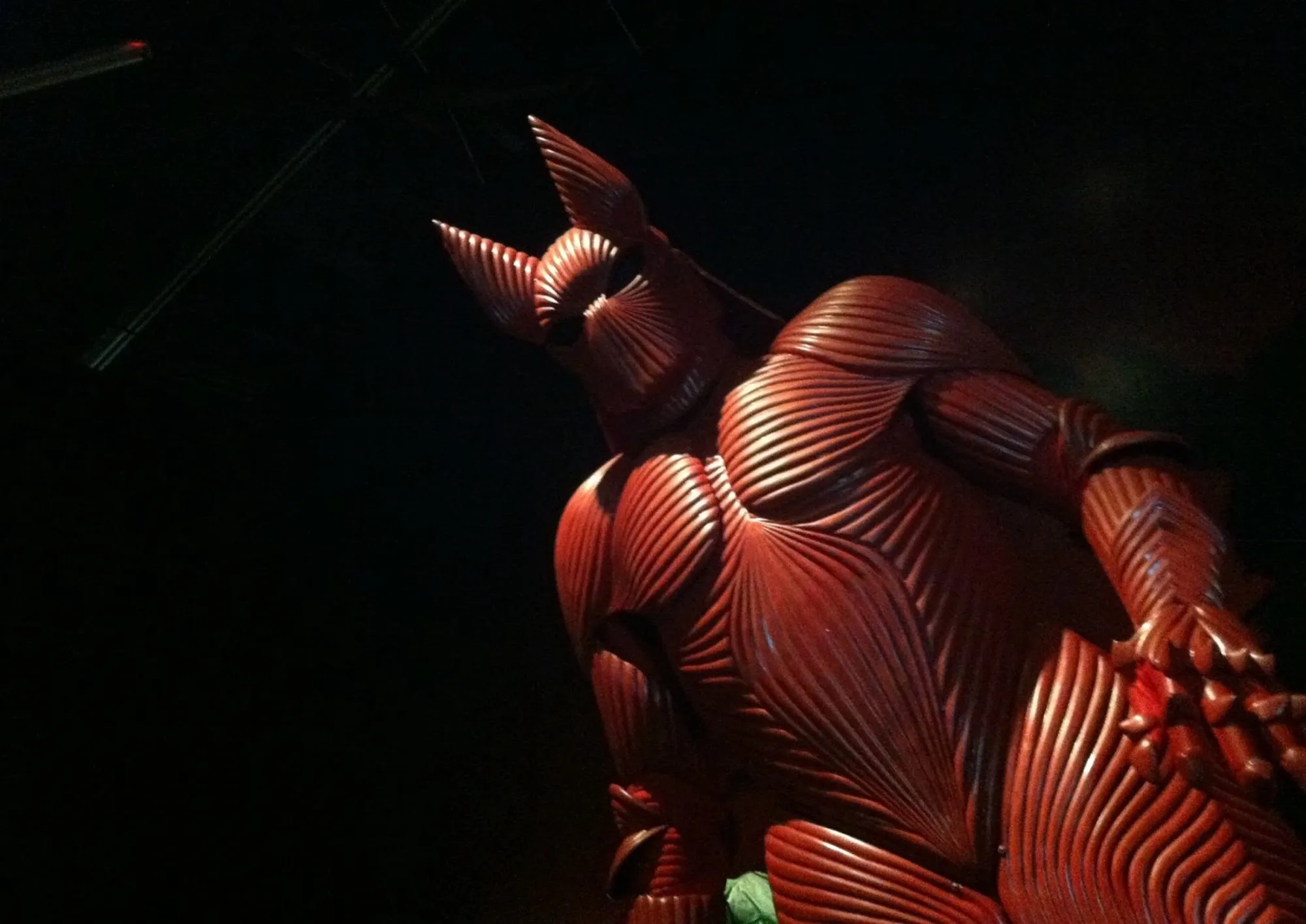
The costumes, designed by Eiko Ishioka, really are magnificent. Dracula’s red armour resembles something a medieval warlord might wear if he had recently discovered haute couture. His enormous red cloak is practically a character in its own right. The costumes won Ishioka an Academy Award, and deservedly so.
The film also won Oscars for makeup and sound editing. It was a critical and commercial success, proving that there was still an audience for horror with ambition, artistry, and enough blood at times to make a slaughterhouse worker say “Steady on!”
Coppola was not interested in making a historically respectable vampire film. He wanted a romantic, operatic, visually overwhelming experience. And, in fairness, he absolutely achieved that. He also decided to rewrite the emotional foundations of the Dracula story, which is where things become rather more contentious.
Predator Vs. Lover
In Stoker’s novel, Count Dracula is not a misunderstood romantic hero who has spent four centuries pining for the reincarnation of his lost soulmate. He is a predator.
He is an ancient, parasitic monster who preys upon the living, manipulates people, invades their homes, and attempts to establish dominion over them. The horror lies partly in the destruction of personal autonomy, the corruption of innocence, and the threat he poses to the social and sexual order of Victorian Britain.
Mina Murray, later Mina Harker, is not secretly yearning for him – she is fiercely loyal to her husband, Jonathan Harker, and regards Dracula with horror and disgust. When the Count attacks her, drinks her blood, and forces her to drink his, the scene is an act of domination. He is contaminating her, binding her to him, and establishing a psychic connection that threatens her freedom and identity.
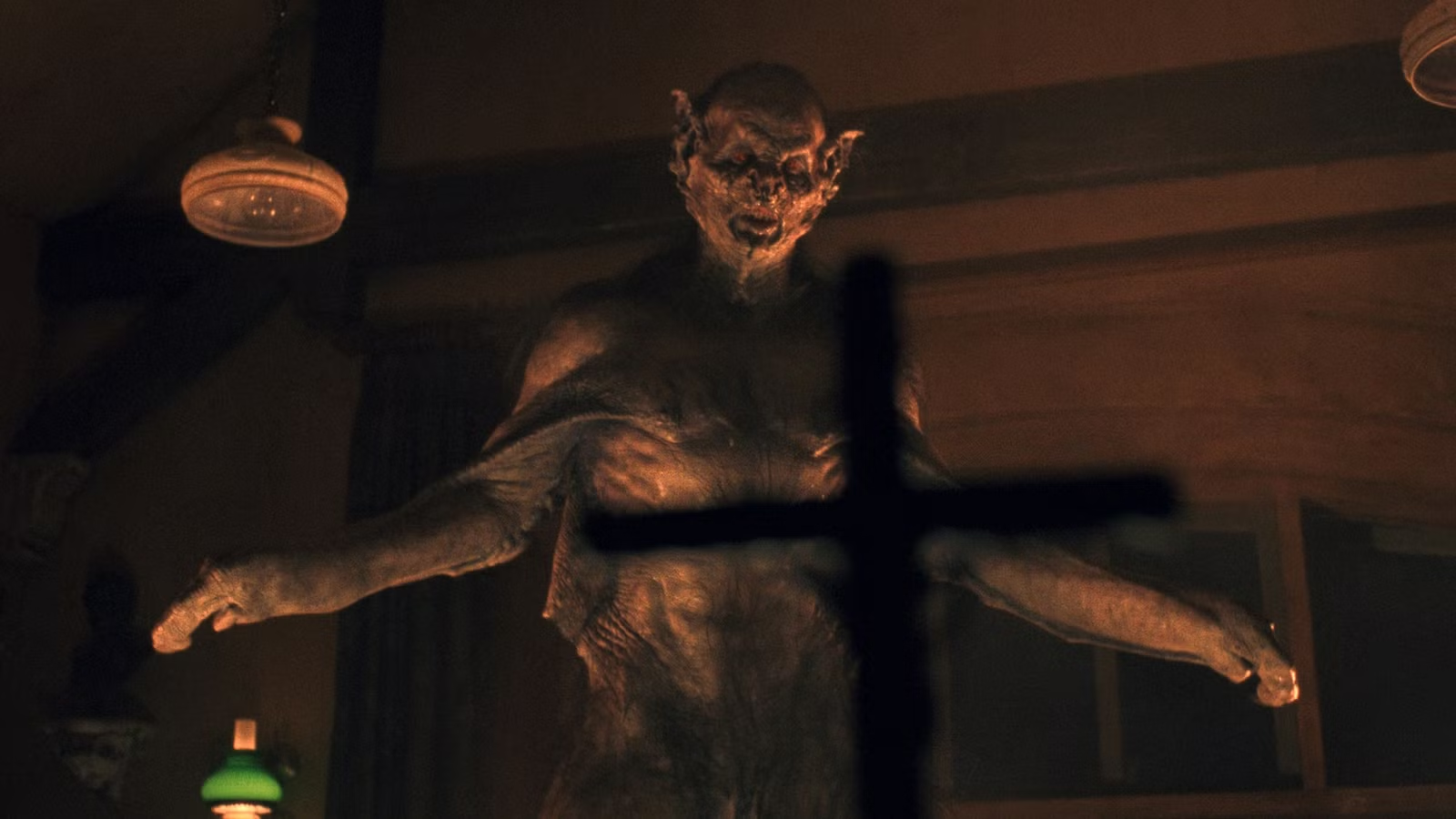
It is violation, not romance.
The distinction matters. Dracula’s attack is terrifying precisely because Mina has not consented to becoming his bride, his companion, or his supernatural pen pal. He is imposing himself upon her.
Coppola, however, provides Dracula with a tragic origin story. Centuries before the main action, the historical Vlad Dracul loses his beloved wife, Elisabeta, who dies after receiving false news of his death in battle. Discovering that the Church condemns her suicide, Dracul rejects God, renounces his faith, and becomes a vampire.
Cue centuries of supernatural sulking.
When Dracula encounters Mina, he believes he has found Elisabeta reincarnated. The film transforms their relationship into a doomed romance, with the Count as a tortured lover whose monstrous behaviour emerges from grief and an inability to let go. It is a compelling cinematic idea. It is also a substantial departure from the book.
The film encourages us to see Dracula as both monster and victim, a man whose eternal existence is a punishment for losing the woman he loved. His attraction to Mina becomes an attempt to recover something irretrievably lost.
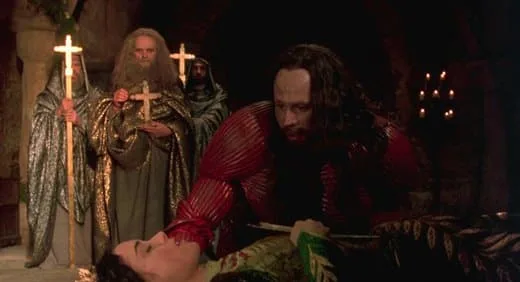
The problem is that the movie’s romantic framing can make Dracula’s behaviour look rather more sympathetic than it deserves. He does not simply woo Mina with flowers and a handwritten invitation to a candlelit dinner. He attacks her, feeds on her, and forces her to drink his blood. That is not an unconventional courtship.
The original novel’s horror is rooted in the fact that Mina is being victimised, not reunited with her one true love. Coppola’s interpretation turns that horror into tragic melodrama, and while it produces some beautiful moments, it fundamentally changes the story’s moral centre. It completely dilutes the epic battle of good vs. evil to borderline pointlessness.
Still, if you’re going to invent a tragic backstory for one of literature’s most notorious monsters, you might as well make it spectacular.
Asked to fulfill this rather confused role, Gary Oldman is the film’s beating, blood-soaked heart. His Dracula is a succession of different creatures: an ancient, skeletal aristocrat; a monstrous beast; a seductive young nobleman; and a wounded immortal haunted by his own past. Oldman moves between them with astonishing commitment.
The elderly Dracula, with his towering white hair and enormous red robes, looks like a particularly disgruntled Christmas decoration. The younger version is all charm, menace, and predatory elegance. The transformations are so extreme that he occasionally seems to be starring in several different films at once.
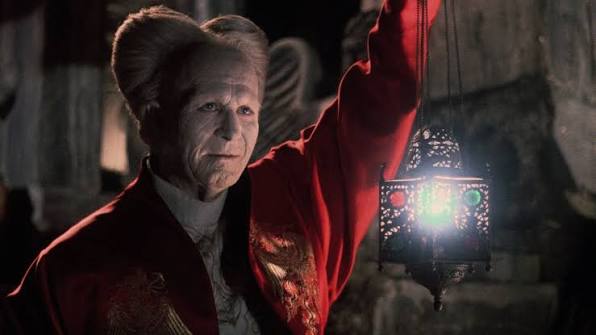
Oldman understands that this Dracula must be both attractive and repellent. He can be intimate and gentle one moment, then erupt into terrifying violence the next. His performance gives the character a psychological complexity that the screenplay sometimes struggles to earn.
He is also completely unembarrassed by the material. Oldman commits to every line, every gesture, and every melodramatic declaration as though he were performing Shakespeare at the National Theatre rather than announcing his eternal suffering in a room full of theatrical fog.
That commitment is crucial. A lesser actor might have made the whole thing laughable. Oldman makes it hypnotic. His performance is one of the great cinematic Draculas, and the film would be substantially diminished without him.
Excellent Suit, Questionable Accent
Jonathan Harker is played by Keanu Reeves, whose English accent has become one of the enduring attractions of the film.
Reeves is a perfectly likeable actor. He has physical presence, an appealing earnestness, and the sort of face that suggests he’d be helpful if your car broke down. But an English solicitor travelling to Transylvania in the nineteenth century requires a particular vocal register, and Reeves admits he was chosen for his cinematic profile at the time over his ability with the accent.
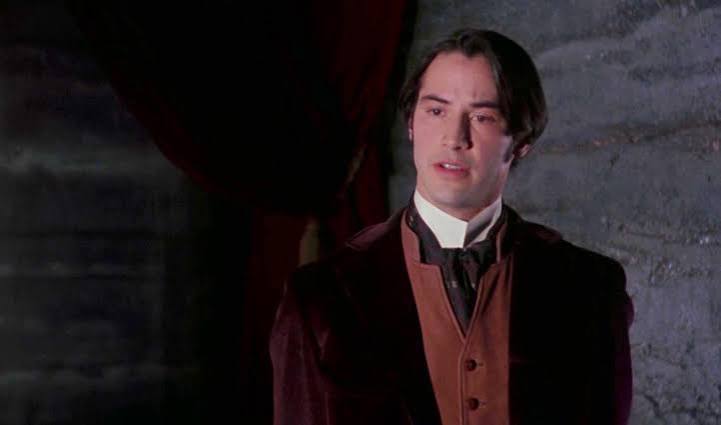
The result is an accent that wanders across the British Isles, occasionally stopping somewhere near California for refreshments. His delivery is stiff, his vowels are peculiar, and his attempts at period dialogue have the slightly uncertain quality of somebody reading aloud from a school textbook after being told that the headmaster is watching.
Every time he says something serious, the audience is invited to contemplate whether Jonathan Harker is being menaced by a vampire or simply trying to remember which pronunciation he settled on during the previous take.
The film’s other performances are so extravagant that Reeves’ comparative restraint might have worked. Instead, he often appears to be acting in a different production, one in which everyone else has received the memo about gothic hysteria. There is a reason this performance is still discussed more than thirty years later.
Winona Ryder fares considerably better as Mina, although the film gives her a character whose loyalties are increasingly complicated by the screenplay’s invented romance. Ryder brings a fragile, watchful quality to the role, and her chemistry with Oldman is central to Coppola’s vision. Mina is simultaneously drawn towards Dracula and horrified by what he represents, although the balance between supernatural compulsion and romantic longing becomes increasingly blurred.
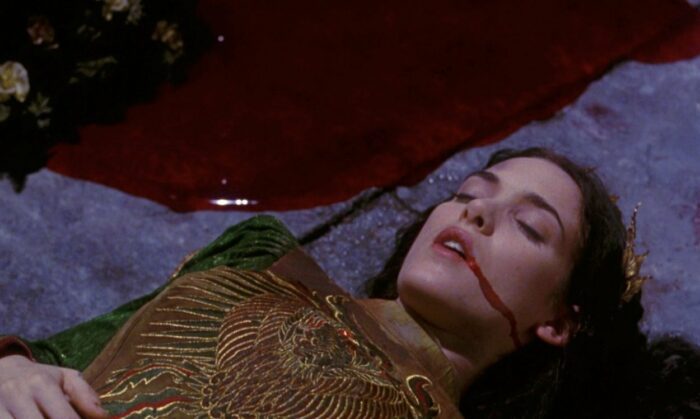
Ryder was also instrumental in getting the project moving. She had worked with Coppola on previous films and helped bring the Dracula screenplay to his attention.
There is also the extraordinary wedding story – During production, Coppola used a Romanian priest to conduct a genuine Orthodox wedding ceremony for the marriage scene involving Mina and Jonathan. The priest reportedly performed the rite as though the marriage were real, leaving Ryder and Reeves with the rather startling possibility that they had actually been married according to the ceremony’s religious tradition.
For two young actors playing a Victorian couple, it was an impressively immersive bit of method acting.
Unfortunately for tabloid headline writers, the story is generally treated as an amusing production anecdote rather than proof that the pair acquired an unquestionable legal marriage. The exact legal significance of the ceremony is another matter entirely.
Still, imagine the conversation with your solicitor.
“Good news, Mr Reeves. Your latest film has been completed.”
“Excellent.”
“Bad news. You may now be married to Winona Ryder.”
Another highlight of Bram Stoker’s Dracula is the brides, although their function in the story is less romantic than the film’s overall aesthetic might suggest.
Played by Monica Bellucci, Michaela Bercu, and Florina Kendrick, the Brides are seductive, predatory, and utterly terrifying. Their encounter with Jonathan in Dracula’s castle establishes the sexual menace of the vampire world long before Dracula himself arrives to complicate matters.
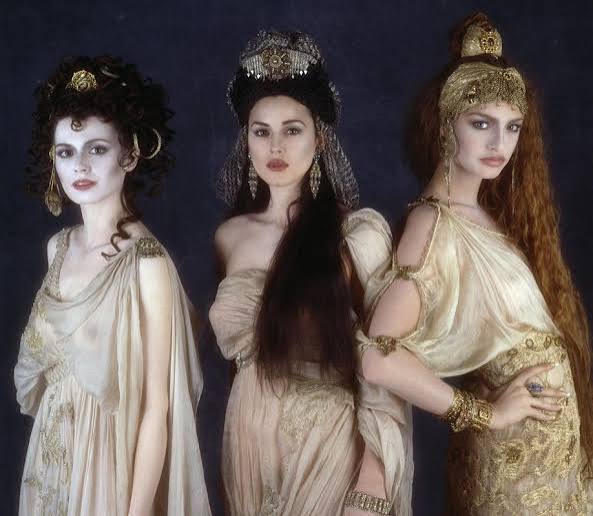
They are not exactly the sort of welcoming committee you hope to encounter when checking into an unfamiliar hotel. The sequence is one of the film’s most memorable, combining eroticism and horror with a distinctly uncomfortable sense that Jonathan has wandered into a situation from which there is no dignified exit.
The brides also embody Coppola’s willingness to push the material into a heightened, almost operatic register. They are beautiful, monstrous, and unmistakably dangerous. They are also a reminder that Dracula’s world is not a romantic paradise for the undead. It is a hierarchy of domination, appetite, and control, with the Count at the top and everybody else serving his needs.
One suspects the employee satisfaction survey would be fairly grim.
Meanwhile, Anthony Hopkins performance as Professor Abraham Van Helsing begins somewhere near eccentric academic and ends beyond the outer limits of theatrical sanity. Hopkins approaches Van Helsing as though the character has consumed seventeen cups of strong coffee, spent three days reading forbidden manuscripts, and concluded that the only reasonable response to supernatural evil is to shout at it.
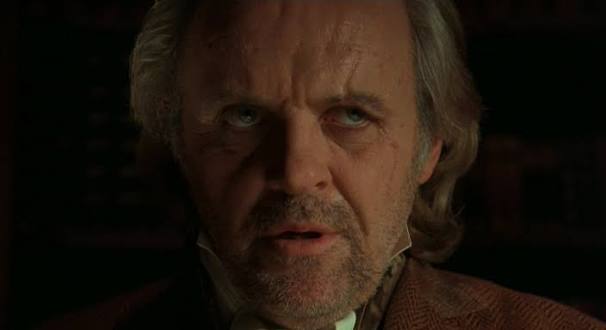
He is wonderfully, gloriously over the top. His Van Helsing is a man of learning, but also a man who seems to regard subtlety as a moral failing. He grins, bellows, gesticulates, and delivers exposition with the enthusiasm of somebody who has just discovered a new species of insect and wants the entire Royal Society to know about it immediately.
Hopkins understands that Van Helsing is not merely a scientist or a doctor. He is the human embodiment of rational inquiry colliding with supernatural horror, and his eccentricity makes him an effective counterweight to Dracula’s brooding grandeur. He also provides much-needed comic relief at times, sometimes I suspect without realising it.
The supporting cast is excellent, too. Richard E. Grant brings an appropriate degree of pomposity to Dr Seward; Cary Elwes provides a robust and reassuringly conventional Lord Arthur Holmwood; and Billy Campbell completes the group of men drawn into Dracula’s orbit as the Texan, Quincy.
Tom Waits is especially memorable as Renfield, whose descent into madness makes him one of the film’s most disturbing figures. He seems to have been assembled from spare parts left over from a Victorian asylum, and his performance is perfectly in tune with the film’s feverish atmosphere. Nobody here is remotely interested in underplaying anything. Thank goodness.
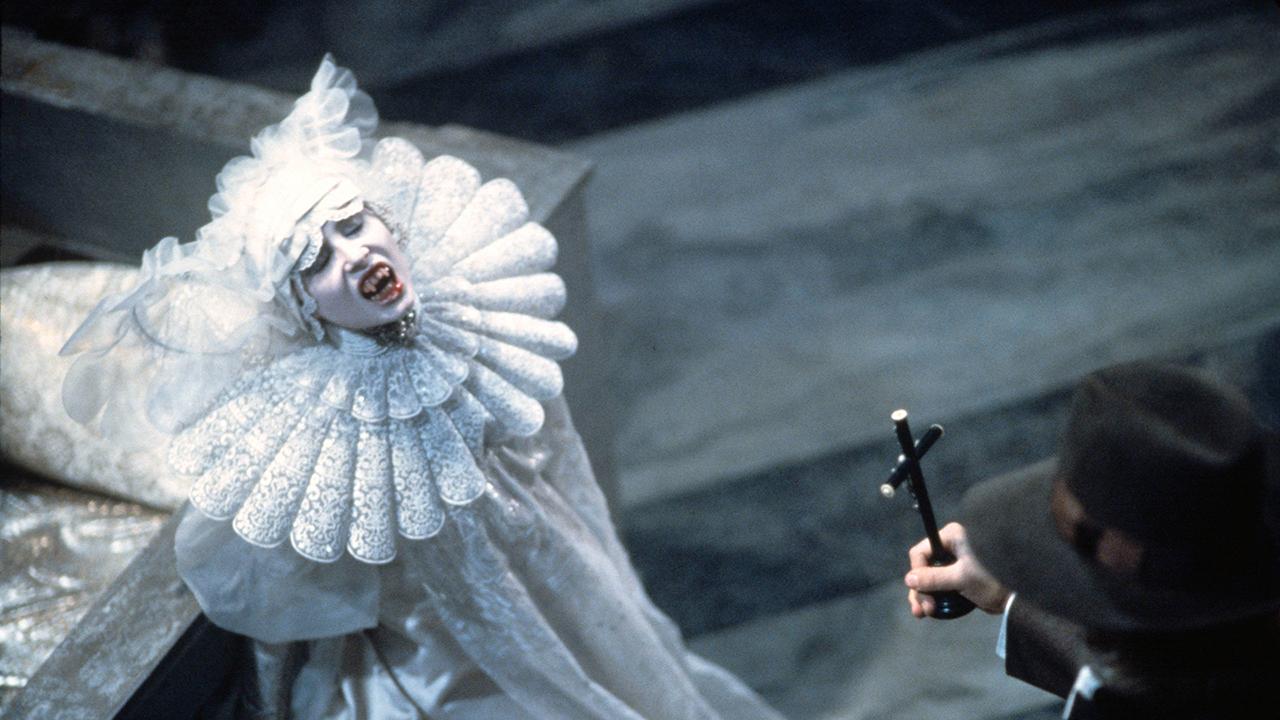
The Lucy sequences remain the stuff of sheer nightmares, and amid the gothic romance and lavish designs, they basically punch you square in the face with some good, old fashioned violence and horror.
A Beautiful, Bloody Mess
Bram Stoker’s Dracula is not a faithful adaptation in the strictest sense. Its invented love story changes the relationship between Dracula and Mina, while its tragic origin for the Count invites us to sympathise with a monster whose actions remain appalling.
But as a piece of filmmaking, it is extraordinary.
Coppola’s visual imagination, Ishioka’s costumes, Ballhaus’s cinematography, the practical effects, and Oldman’s magnificent performance combine to create a film unlike almost any other vampire adaptation. It is lush, strange, funny, frightening, and gloriously excessive.
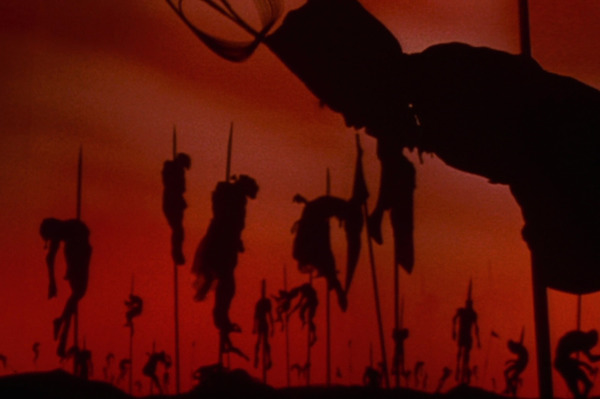
It occasionally mistakes melodrama for depth, and its romantic reinterpretation of Dracula comes at the expense of the novel’s more unsettling themes of coercion and violation. Reeves’ accent remains a cinematic event in its own right, while Hopkins appears to be having the time of his life playing a man who has never encountered a sentence he couldn’t improve by shouting it.
Yet the film’s flaws are part of its peculiar charm. This is Dracula as gothic opera, not restrained literary adaptation. It is a world of blood-red armour, enormous hair, seductive vampires, deranged academics, and a tragic immortal who really needs to learn that grief is not an excuse to terrorise the neighbours.
Oldman gives us a Dracula for the ages. Coppola gives him a world worthy of his monstrous grandeur. And Keanu Reeves gives us an English accent that may itself require an exorcism.
A sumptuous, ridiculous, unforgettable slice of early-1990s gothic cinema. Just don’t mistake its blood-soaked coercion for a healthy relationship.
Your Turn
Do you want to tell your fellow Outposters all about one of your favorite Halloween watches? See your name in lights. Get bragging rights. Have glamorous women with loose morals throw themselves at you because of your writing prowess? All this and more is possible. If you want to share an article, send it to [email protected] and we will do the rest.

