

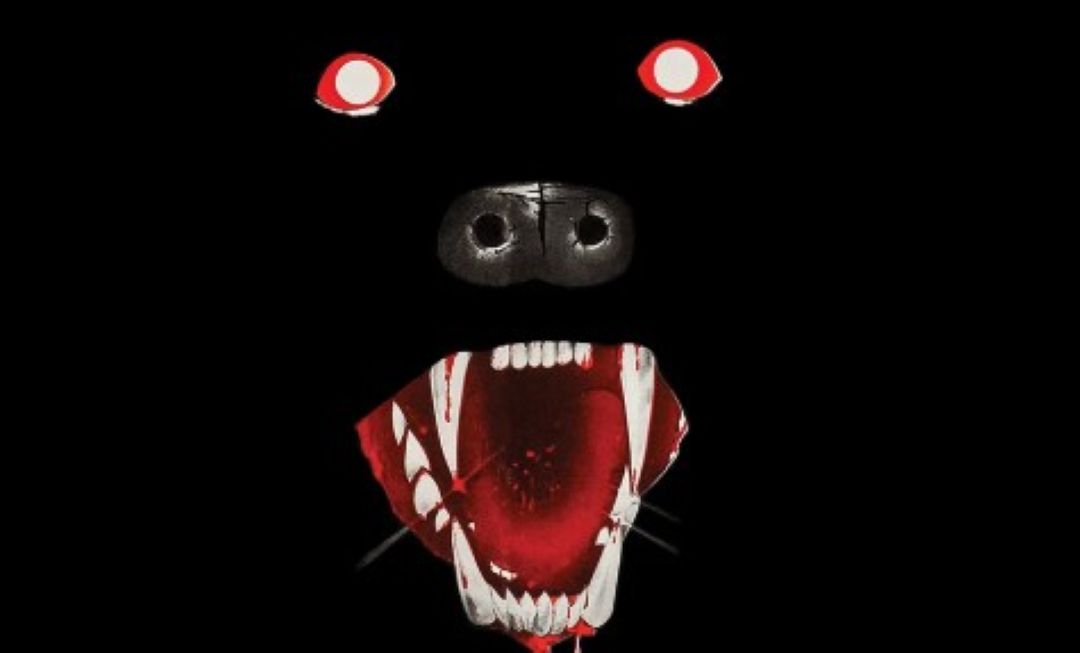
Once more, Halloween draws near. Time for children to take to the streets and start begging for confectionary. Time for Outposters to start dusting off their BluRay collections and revisiting some old classic horror movies, and some random curiosities like The Beast Must Die.
Every single time we talk werewolf movies here at Last Movie Outpost, an Outposter will always mention The Beast Must Die. It clearly has a lot of fans out there in our community, and it is easy to see why.
The central idea is so solid, so pitch-able, so easily accessible to an audience, that it is a wonder it hasn’t been remade several times over.
It is Agatha Christie meets The Wolf Man. The Most Dangerous Game with lycanthropy. A parlour game in which the penalty for guessing incorrectly is apparently being disembowelled by someone who was, until quite recently, enjoying the cheese course.
Imagine what a contemporary filmmaker could do with this premise, a decent budget, and some genuinely unsettling practical effects? There are few ideas in horror cinema more immediately appealing than the prospect of a country-house murder mystery in which one of the guests is a werewolf.
You have the isolated location, the collection of suspicious characters, the increasingly paranoid host, the bodies piling up, and the delicious possibility that the perfectly respectable chap sitting opposite you at dinner might spend his evenings turning into something with considerably more hair and a rather less manageable dental plan.
Nobody in Idiot Town has grasped this apparently cinematic home run, so instead, we have Amicus Productions’ 1974 effort, a film that comes tantalisingly close to greatness before periodically reminding you that British horror in the 1970s was not always blessed with the sort of resources movies had across the pond, so we get a werewolf that looks as though it is a dog that has escaped from a particularly disappointing grooming appointment by crawling through the coal cellar.
It looks that way because it is, in fact, a big shaggy dog.
And yet, despite its shortcomings, The Beast Must Die remains a wonderfully entertaining little curio. It has a cracking premise, a surprisingly impressive cast, a genuinely interesting approach to werewolf mythology, and one of the most gloriously eccentric gimmicks ever inflicted upon an unsuspecting cinema audience.
It also has a downer ending that leaves you contemplating the moral consequences of obsessive big-game hunting, and the nature of humanity. All of this from a movie that, genuinely, looks like it could have been assembled with the spare change Sir Lew Grade might have found down the back of his couch. Let’s get into it.
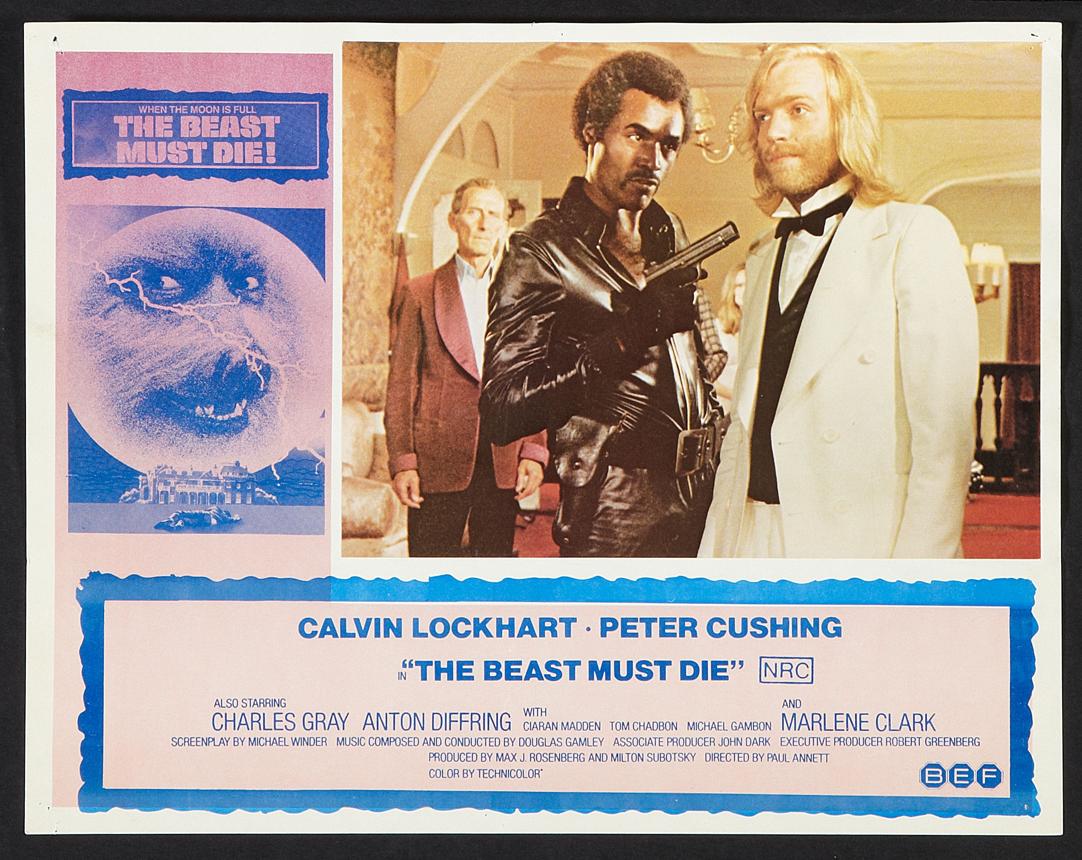
The Beast Must Die
One of his guests is a werewolf, and he intends to find out which one.
Newcliffe has transformed his home into a sort of lycanthropic laboratory, complete with surveillance equipment, elaborate security systems, and enough monitoring apparatus to make a modern smart home enthusiast look like a man living in a cave. His guests are subjected to a series of increasingly bizarre tests designed to expose the beast in their midst.
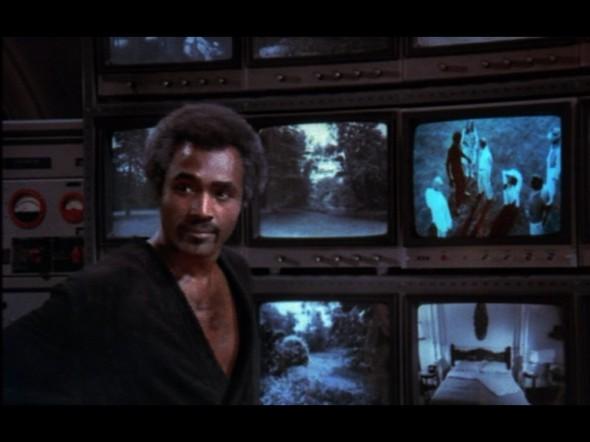
The suspects include a disgraced diplomat, an artist with a criminal past, a pianist, the pianist’s young wife, and a scientist with an unnatural fascination with the myth and legend surrounding werewolves. There is also Newcliffe’s wife, Caroline, who has the unenviable task of being married to a man who apparently regards hosting a dinner party as an opportunity to conduct a zoological execution.
The important thing is that the werewolf could be any of them.
This is the film’s great strength. Rather than presenting a monster who turns up to menace a succession of interchangeable victims, The Beast Must Die gives us a proper mystery. We have personalities, secrets, suspicious behaviour, red herrings, and the increasingly uncomfortable feeling that everyone in the room is hiding something.
It’s a premise that practically writes itself. Lock a group of potentially dangerous people inside an isolated estate, establish that one of them is a supernatural killer, and let paranoia do the rest.
It could be a terrific psychological thriller. It could be a savage satire of the wealthy and their peculiar hobbies. It could be a genuinely frightening horror film about the fragility of civilisation when confronted with the animal lurking beneath the surface.
Instead, it is occasionally all three, while simultaneously being a film about a big black dog. Such are the compromises of cinema.
The Coolest Man in the Room
The first thing that strikes you about The Beast Must Die is its leading man.
In the mid-1970s, and in the midst of the blaxploitation cinema explosion, The Beast Must Die decides to cast a black man as the wealthy, landed gentry, big game hunter. Brave for the time.
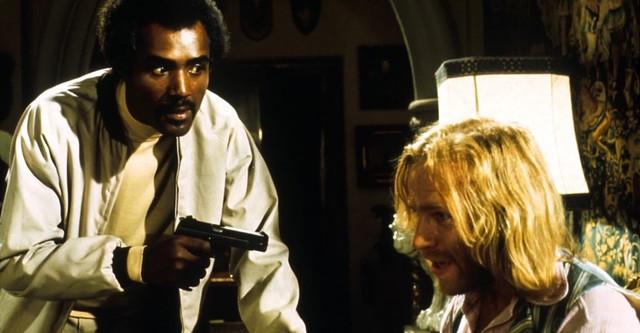
Calvin Lockhart is an absolute presence. As Tom Newcliffe, he strides about the place with the confidence of a man who owns half of Surrey and a helicopter and absolutely no intention of allowing something as trivial as supernatural biology to interfere with his weekend plans.
Lockhart was born Bert McClossy Cooper in Kingston, Jamaica, in 1934. He moved to the United States, studied acting, and built a career across theatre, film and television. He appeared in Sidney Poitier’s The Mark of the Hawk (1957), and later became associated with the blaxploitation boom, including Cotton Comes to Harlem (1970) and Melinda (1972).
He was a charismatic, physically imposing actor who could project authority without needing to shout. There is something particularly satisfying about watching him play a man who believes he can solve an ancient supernatural curse through the application of modern technology, several expensive guns and a frankly alarming quantity of self-confidence.
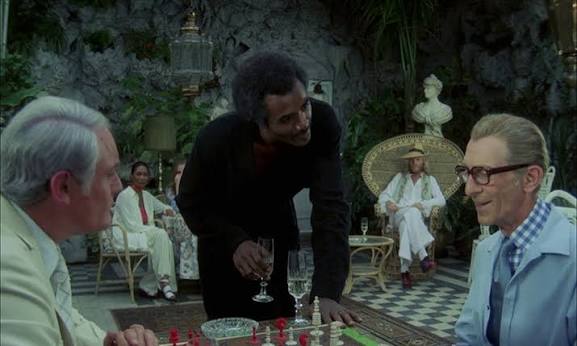
Newcliffe is an interesting character because he isn’t merely a rich man who fancies himself a hunter. He’s a control freak who has turned the natural world into his personal shooting gallery. He has cameras everywhere, monitors his guests, analyses their behaviour and treats his entire household as though he is running a homicidal episode of Big Brother.
The film reportedly had Robert Quarry in mind for the lead before Lockhart was cast, with the producers switching to take advantage of the contemporary blaxploitation trend. Whatever the commercial reasoning, Lockhart is an excellent choice. He gives the film a centre of gravity it desperately needs, and his performance makes Newcliffe’s eventual fate considerably more affecting than it might otherwise have been.
He’s also playing a character who would almost certainly have been banned from every responsible wildlife conservation organisation in existence.
A Full Roster Of Real Talent
The supporting cast is another of the film’s considerable attractions. There is Peter Cushing, playing Professor Christopher Lundgren, an authority on lycanthropy. Cushing could probably make a shopping list sound like a lecture delivered to the Royal Society, and he brings his customary seriousness to proceedings. He explains werewolf biology with the calm authority of a man who has spent decades studying monsters and has finally been given a research grant large enough to cover the travel expenses.
Then there’s Charles Gray. Gray had already played Blofeld in Diamonds Are Forever (1971), and would later become immortal to an entirely different audience as the criminologist in The Rocky Horror Picture Show (1975). Here, he’s Arthur Bennington, a former diplomat whose past gives the other guests plenty of reason to suspect him.
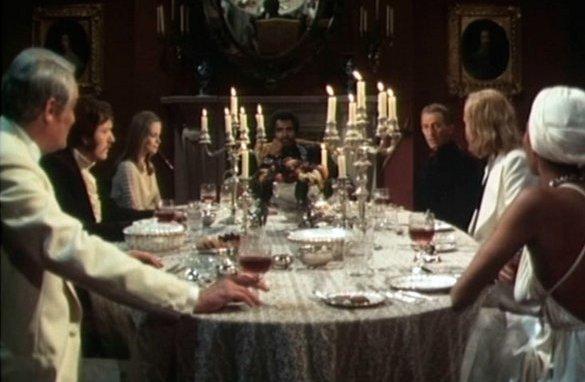
Anton Diffring, another familiar face from British genre cinema, plays Pavel, Newcliffe’s assistant and technical minder. He looks as though he was born in a laboratory specifically to deliver sinister information while standing beside a bank of flickering monitors.
And then there’s Michael Gambon.
Yes, that Michael Gambon. Future Dumbledore. Future national treasure. Future possessor of one of the most recognisable voices in British acting. Here he plays Jan Jarmokowski, a concert pianist whose presence in the house is considerably less reassuring than his musical profession might suggest. Gambon was still years away from becoming a household name, but watching him here is a reminder of how many extraordinary careers were already quietly gathering momentum in 1970s British cinema.
Ciarán Madden and Marlene Clark round out the principal cast, with Clark giving Caroline Newcliffe a welcome measure of emotional substance. She is increasingly exasperated by her husband’s obsession, and quite rightly so. There comes a point when any reasonable spouse would draw the line at having the breakfast table converted into a forensic examination station.
The cast is full of people who know exactly what sort of film they’re making. Nobody appears to be embarrassed by the premise. Nobody is trying to smuggle a prestige drama into a werewolf movie. They are all playing it straight, which is precisely what allows the sillier elements to flourish.
Amicus Productions
The film was directed by Paul Annett, making his feature-film directing debut, and produced by the ever-resourceful Amicus partnership of Milton Subotsky and Max Rosenberg. Principal photography began at Shepperton Studios in July 1973, with the film released in 1974.
Amicus had made a name for itself with portmanteau horror films such as Dr. Terror’s House of Horrors and Tales from the Crypt. The company was a reliable purveyor of compact, entertaining British horror, often featuring familiar actors, efficient storytelling and a healthy disregard for the emotional wellbeing of the people wandering around its fictional worlds.
But The Beast Must Die was something a little different: a standalone horror mystery built around one central puzzle.
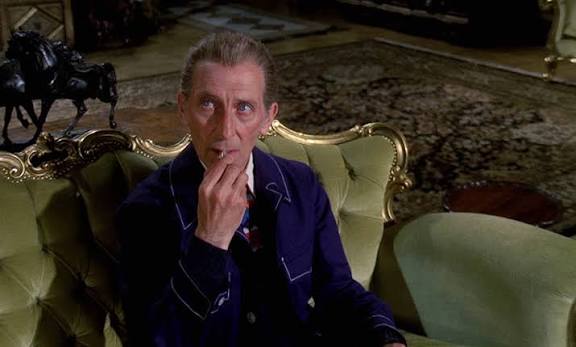
The screenplay by Michael Winder was based on James Blish’s 1950 short story There Shall Be No Darkness, originally published in Thrilling Wonder Stories.
Blish was a respected science-fiction writer, and the story’s appeal lies in its attempt to treat lycanthropy as something that might be investigated rather than simply feared. What if a werewolf could be identified through observation, experimentation and an understanding of the condition’s underlying rules?
What if the monster wasn’t an anonymous creature stalking villagers, but someone sitting in the drawing room, sipping a drink and making polite conversation?
The adaptation takes that intriguing concept and gives it a distinctly early-1970s technological makeover. Newcliffe’s estate is equipped with cameras, microphones and perimeter alarms. He approaches the hunt like a combination of a military strategist, a private detective and a man who has spent far too much time watching The Avengers… the TV programme, not the Marvel movies.
It is a terrific way to modernise an old monster myth. The film’s biggest frustration is that it never quite develops the idea as intelligently or as seriously as it could, which is why I join the chorus of voices calling for a remake.
Then, of course, we arrive at the werewolf.
The Beast Is A Very Bad Dog!
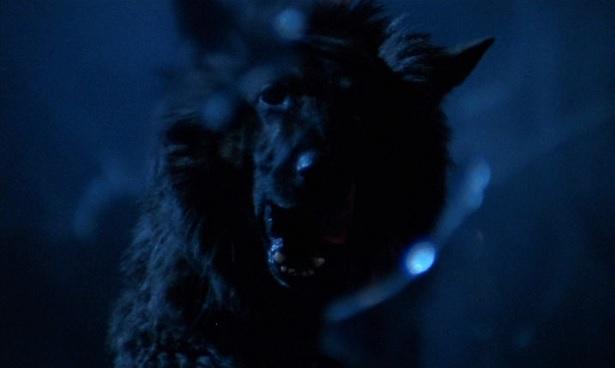
There is a moment in every monster film when the creature must be revealed, and the entire production hangs upon whether the audience believes what it is seeing. In The Beast Must Die, that moment arrives with all the dramatic impact of a Labrador wandering into the wrong garden.
The werewolf is essentially a large, shaggy black dog. Reports on the production identify it as a German Shepherd, and the film’s low budget plainly constrained what Amicus could achieve with its monster effects.
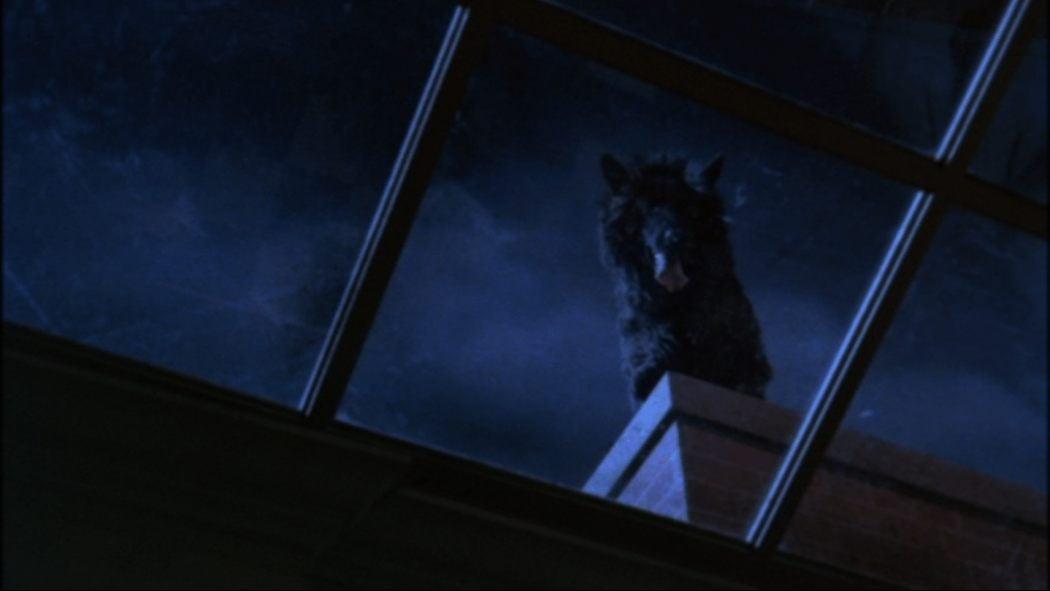
Now, let us be clear. There is nothing wrong with German Shepherds. They’re intelligent, loyal, handsome animals. Properly trained, they make excellent companions and working dogs. But they are not, traditionally, the stuff of supernatural terror.
This is supposed to be a creature that has haunted human nightmares for centuries. A bloodthirsty hybrid of man and beast, driven by an ancient curse, capable of tearing a grown man to pieces and turning the countryside into a charnel house. And yet, when the beast finally appears, one half expects it to fetch a tennis ball.
The problem isn’t simply that the effects are dated. Plenty of older horror films conjure up terrifying creatures with very little money. The problem is that the film spends so much time establishing the intellectual and psychological dimensions of its mystery that the physical payoff feels woefully inadequate. We have been promised the ultimate predator. What we get is a canine that looks like it is waiting patiently for its owner to finish filming.
It is a tremendous shame because the creature’s relative ordinariness robs the climactic encounters of much of their impact. A proper werewolf design could have transformed the film. Instead, Amicus gives us a creature that might terrify a postman but would struggle to intimidate a moderately assertive cat.
Cinema’s Most Bizarre Pop Quiz
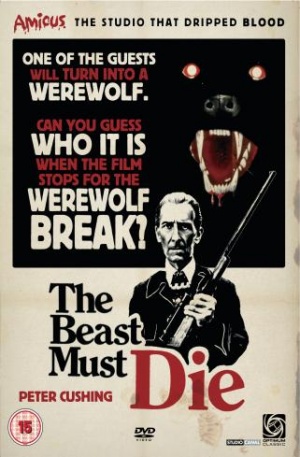
Just when you think the film cannot get any more eccentric, it introduces the Werewolf Break. At the beginning, the audience is explicitly told that this is a detective story. We are not being asked to identify a murderer, but a werewolf. We should watch carefully, examine the evidence and prepare to deliver our verdict.
Then, approximately fifteen minutes before the end, the film actually stops.
A narrator invites us to consider the suspects, and the audience is given a short pause to decide which character is the beast. The film essentially turns itself into an interactive game show, with the possibility of a bloody death replacing the prize hamper.
It is magnificent nonsense.
Imagine sitting in a cinema in 1974, enjoying a perfectly respectable horror film, when suddenly the narrative grinds to a halt and somebody effectively says:
“Right, then. Who’s the hairy bastard? You’ve got thirty seconds.”
It’s like Jeopardy, except Alex Trebek has been replaced by a disembowelled gamekeeper.
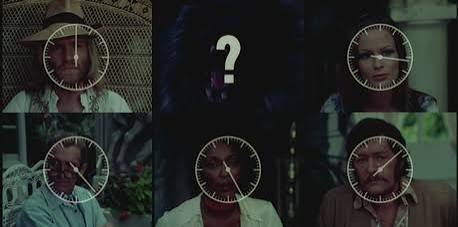
The gimmick was reportedly added in post-production by producer Milton Subotsky, without director Annett’s approval. Annett later expressed his dislike of the device, which is understandable: it interrupts the story just as the tension should be reaching its peak.
But there’s something endearingly audacious about it. The film doesn’t merely want you to watch. It wants you to participate. And, more importantly, it trusts that you’ve been paying attention.
A modern remake could do something genuinely interesting with this idea. The audience could be given clues through the characters’ behaviour, their reactions to the moon, their injuries and their responses to silver. Different versions might even allow viewers to reach different conclusions.
Instead, we have a freeze-frame pub quiz with a supernatural dog waiting patiently in the wings. I wouldn’t change a thing about the concept. I’d just change almost everything about its execution.
The Price of the Hunt
One of the film’s more interesting contributions to werewolf mythology is its attempt to establish a coherent set of rules.
Professor Lundgren explains that the condition has a biological dimension, involving a full moon, a hormonal reaction and the presence of wolfsbane pollen. The film also explores the effects of silver, the progression of the disease and the possibility that an infected person might eventually lose control over their transformations.
It’s an unusually clinical approach to a supernatural creature, and it gives Newcliffe something tangible to investigate.
The film also plays with the idea that lycanthropy is not merely a matter of turning into a wolf. It is a condition that threatens to erode a person’s humanity, leaving them increasingly unable to control their appetites. That idea is far more disturbing than the usual business of growing facial hair and running around in the woods.
Unfortunately, the plot’s final revelations are a little convoluted. The identity of the real werewolf is ultimately revealed to be one person, but the chain of events involving the apparent suspects, another’s injury and the transmission of the curse adds an additional layer of confusion.
Newcliffe eventually kills the actual beast, only at great personal cost that drives a bleak conclusion. The hunter has defeated his quarry, but the victory is rendered largely meaningless. The man who believed he could master nature through technology and force discovers that there are limits to his control.
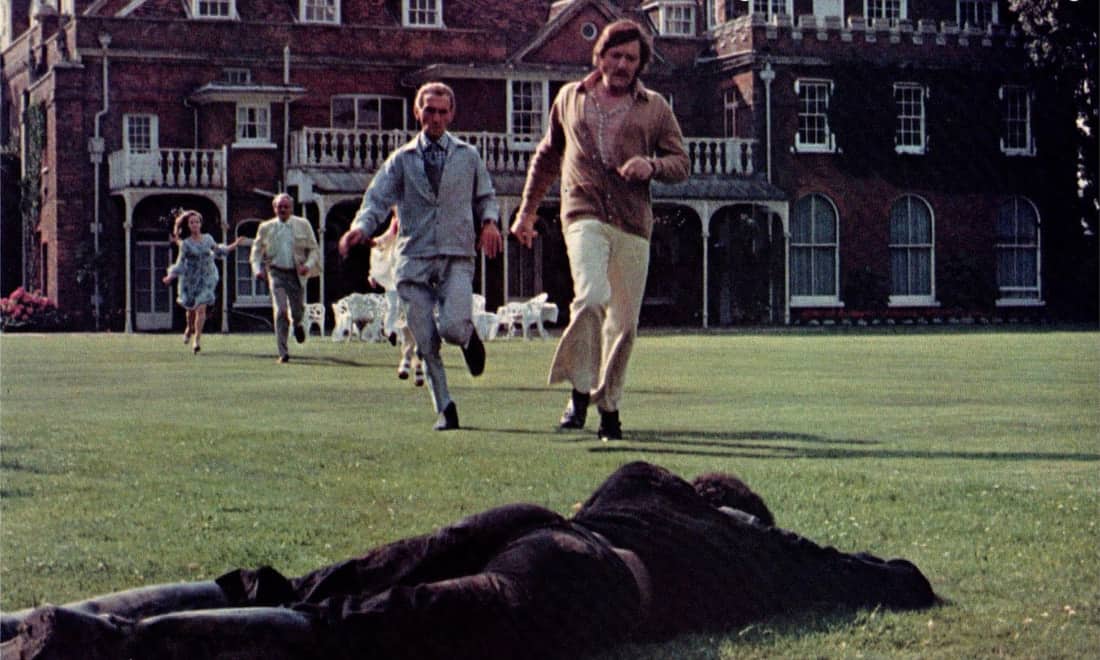
There is something genuinely tragic about that. Newcliffe’s obsession has cost him his marriage, his friends, his staff and almost everything that made his life worth living. The film ends not with a triumphant hero, but with a man who sees no way forward.
It’s a surprisingly downbeat ending for a movie that has spent much of its running time asking us to guess which dinner guest is a dog in disguise.
The Beast Must Be Remade
The Beast Must Die can be a frustrating film because it contains the DNA of something that could be, should be, truly extraordinary.
The central premise is superb. The cast is terrific. Calvin Lockhart makes for a compelling lead, Peter Cushing brings gravitas, and Michael Gambon offers a glimpse of the greatness to come. The country-house setting, the surveillance apparatus and the whodunnit structure all lend themselves to a tense, intelligent horror thriller.
The film even has something interesting to say about obsession, predation and the limits of human control.
But it is hampered by its budget, some awkward plotting, the interruption of the Werewolf Break and a monster that looks as though it should be barking at a passing car rather than tearing through a horror film.
Still, the idea remains irresistible. Imagine a remake with a genuinely frightening creature, a screenplay that leans into the mystery, and a director who understands that the best werewolf stories are about people as much as monsters. Give us suspects with convincing secrets, clues that reward attention, and an ending that feels inevitable rather than merely unfortunate.
Keep the central conceit. Keep the audience guessing. Keep the possibility that the person sitting beside you might be something monstrous, just for the love of all things cinematic, give the werewolf a better wig.
The original The Beast Must Die is a flawed gem: eccentric, atmospheric, occasionally ridiculous and consistently fascinating. It is the sort of film that makes you wish the people behind it had possessed just a little more money, a little more confidence and perhaps a slightly more generous budget for dog grooming.
A terrific idea. A very good cast. A rather less convincing beast. Ultimately it is a cracking little whodunnit wearing a werewolf suit that doesn’t quite fit.
Your Turn
Do you want to tell your fellow Outposters all about one of your favorite Halloween watches? See your name in lights. Get bragging rights. Have glamorous women with loose morals throw themselves at you because of your writing prowess? All this and more is possible. If you want to share an article, send it to [email protected] and we will do the rest.

