


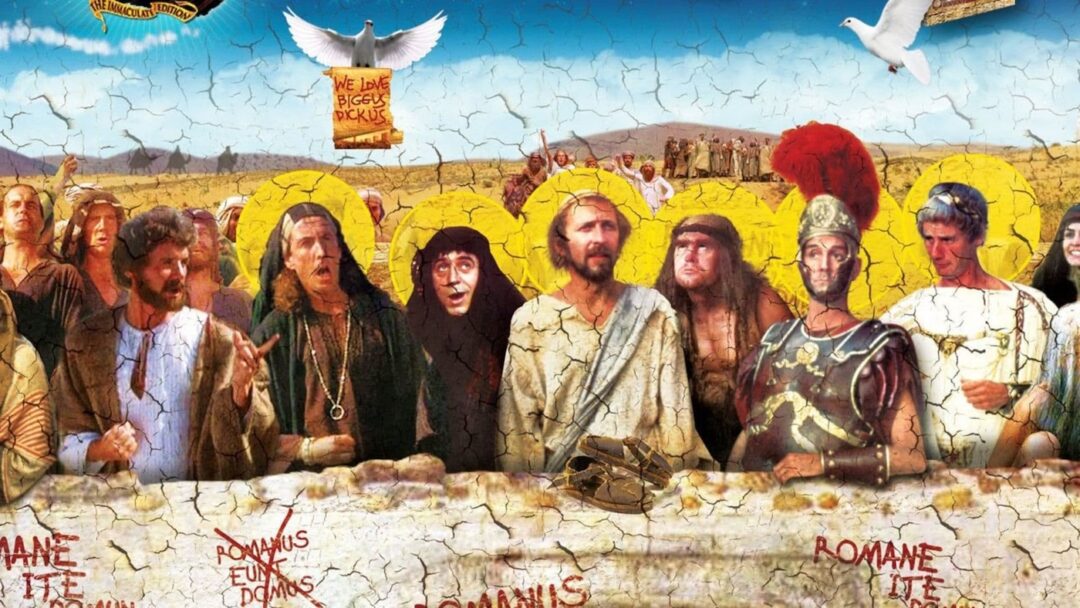
There are few things more likely to bring out the absolute worst in humanity than religion, politics and somebody making a joke about either. Not at Last Movie Outpost, of course, as we are all supremely well adjusted and super tolerant and… what fingers crossed behind my back? I don’t know what you are talking about.
Anyway, combine all three, and you have the recipe for a spectacular public meltdown. Add a few disgruntled clergymen, a collection of angry nuns, some local politicians who haven’t actually watched the film they’re complaining about, and six British comedians who consider taking the piss out of absolutely everything to be a sacred duty, and you have the extraordinary story of Monty Python’s Life of Brian.
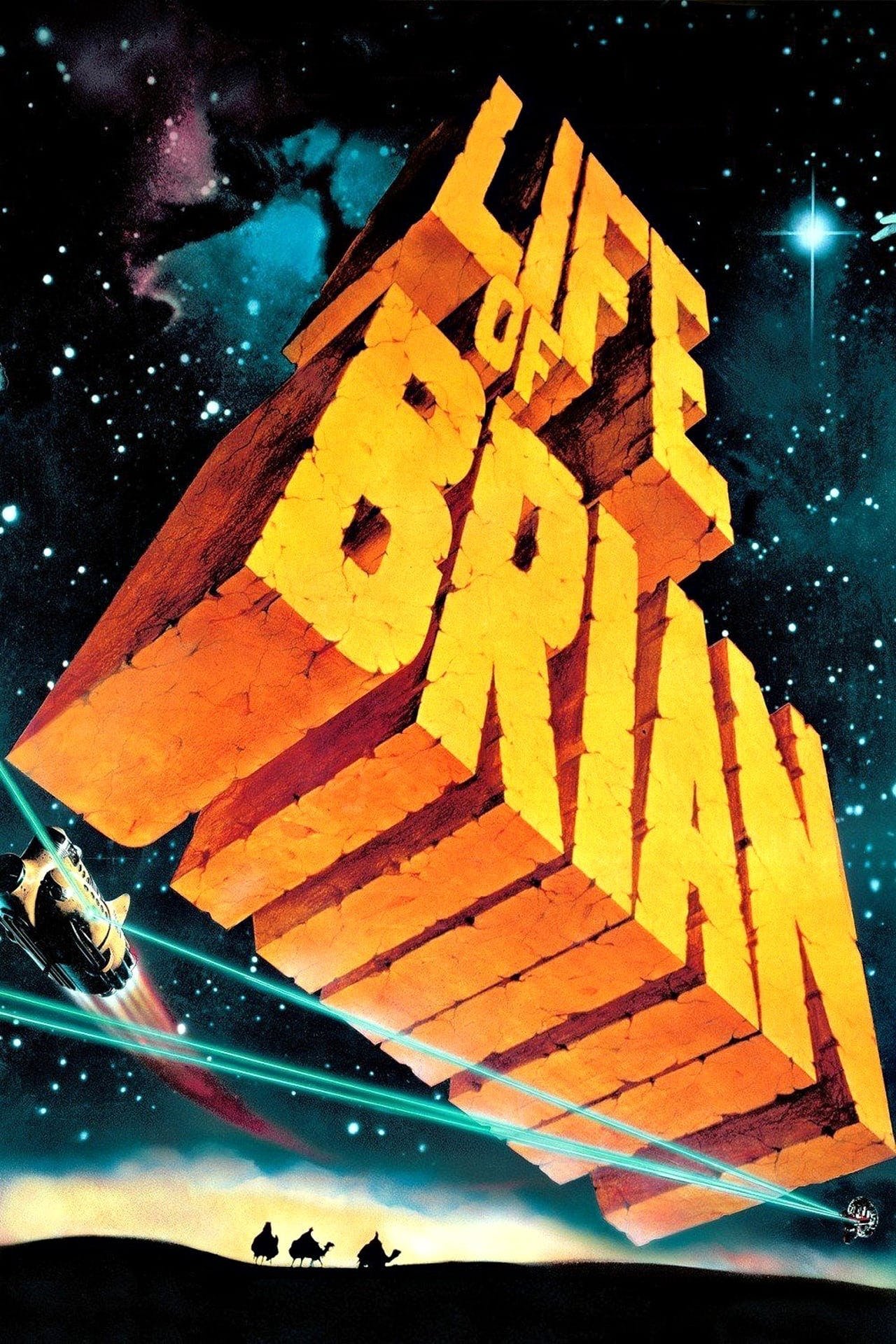
Today, it is difficult to imagine anybody getting particularly worked up about Life of Brian. It is regularly regarded as one of the greatest British comedies ever made, a beloved national treasure of a film whose dialogue has entered the language.
“He’s not the Messiah, he’s a very naughty boy.”
“What have the Romans ever done for us?”
“Always Look on the Bright Side of Life.”
These are not obscure quotations whispered between annoying, ageing graduates in the corner of a pub. They are part of the vocabulary. Even people who have never watched the film probably know half a dozen of its lines.
But when the film arrived in 1979, it was quite a different story. Life of Brian wasn’t simply controversial. It became an international cause célèbre, attracting protests, organised campaigns, political intervention, censorship and outright bans. There were people who genuinely believed that six comedians making jokes about ancient Judea represented a threat to Christianity itself.
And, in the process, they managed to provide Monty Python with possibly the greatest publicity campaign in cinematic history, and Hollywood History returns to tell you all about it.
The Life Of Brian Not Jesus
By 1979, Monty Python were already established as one of the most influential comedy groups in the world. Their television series had revolutionised British comedy, while Monty Python and the Holy Grail had demonstrated that their particular brand of lunacy could work brilliantly on the big screen in longer form.
The team consisted of Graham Chapman, John Cleese, Terry Gilliam, Eric Idle, Terry Jones and Michael Palin. Six men who had collectively demonstrated that there was practically no subject, institution, social convention or authority figure they weren’t prepared to ridicule. Their next cinematic project would be a historical comedy set in biblical Judea.
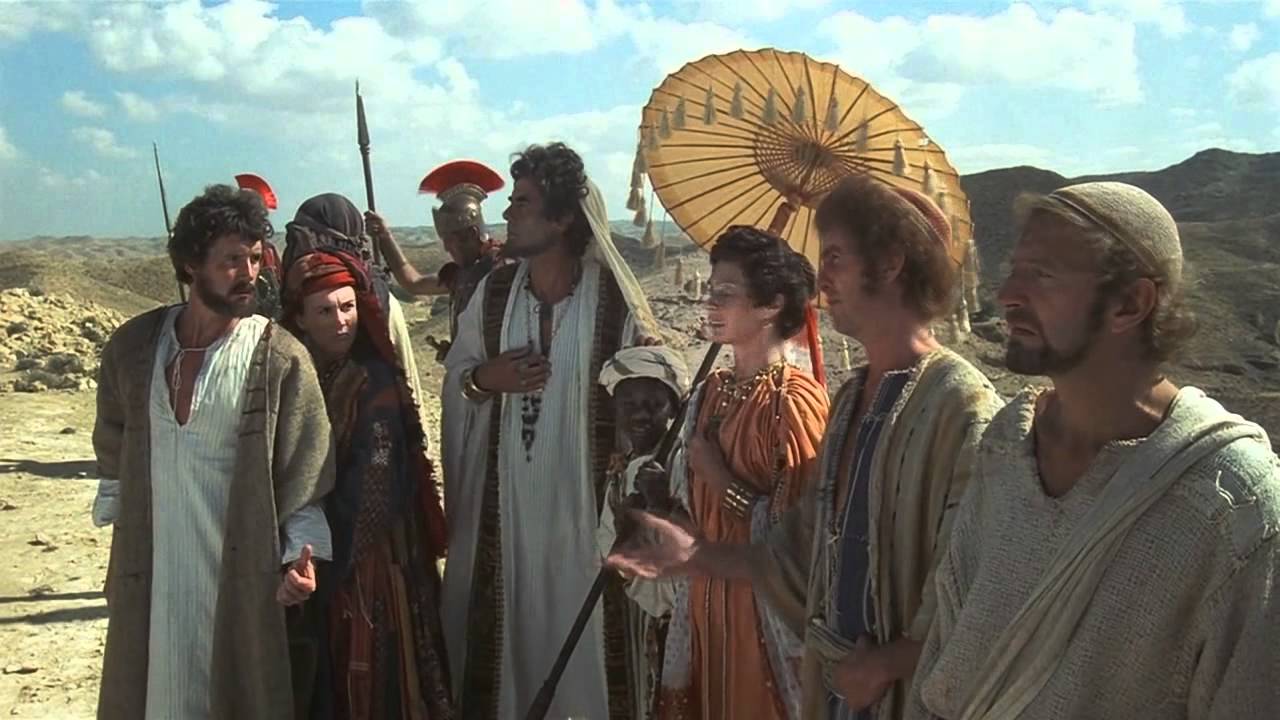
The original inspiration was apparently rather different. The Pythons had initially discussed making a film about Jesus, with Eric Idle and Terry Gilliam among those involved in the early conversations. But as they began researching the subject, they realised something rather inconvenient: Jesus himself wasn’t especially funny.
He was actually rather difficult to satirise. The biblical accounts presented him as a serious and largely admirable figure. There was little obvious comedy in the teachings of a man whose principal message involved loving your neighbour and not being an enormous bastard.
The Pythons therefore hit upon a much better idea. What if they made a film about somebody living at exactly the same time as Jesus, who was repeatedly mistaken for the Messiah?
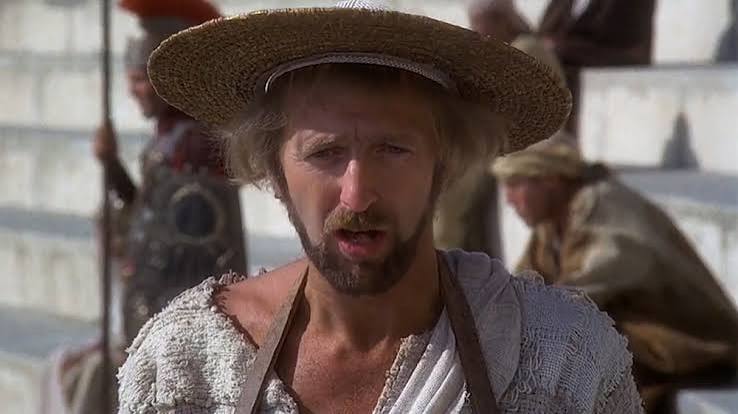
Enter Brian Cohen, played by Graham Chapman. Brian is born in Bethlehem, in a stable conveniently located next door to the one occupied by Jesus. Three wise men arrive, make the wrong entrance and initially mistake the baby Brian for the promised Saviour. It’s an excellent opening joke, immediately establishing the attitude the film will display to biblical history, while leaving Jesus alone.
Brian grows up to become an ordinary young Jewish man living under Roman occupation. He gets involved with a revolutionary organisation, the People’s Front of Judea, whose members are so consumed by internal political squabbling that they make the modern Western political establishment look like a model of organisational efficiency.
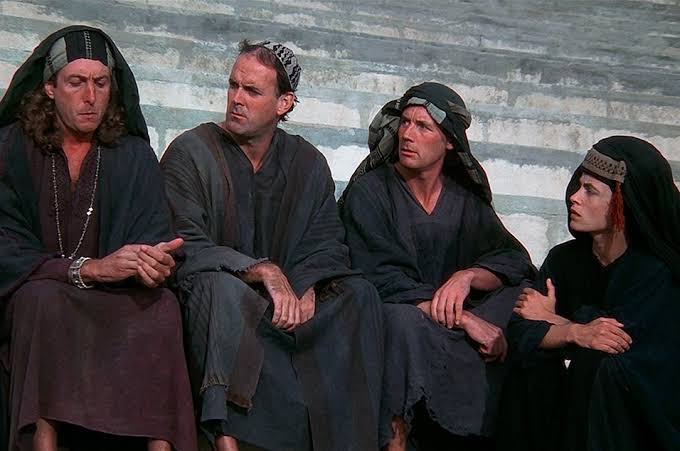
Through a series of misunderstandings, coincidences and increasingly ridiculous circumstances, Brian acquires followers who believe he is a prophet. His increasingly desperate attempts to convince them otherwise merely reinforce their conviction. The central joke is obvious. Brian isn’t special at all. He’s an ordinary bloke caught up in a movement that has become so desperate to believe in something that it will interpret absolutely anything as a divine revelation.
The target, according to the Pythons, wasn’t Jesus. It was organised religion, blind faith, political extremism, mob mentality and humanity’s extraordinary capacity to abandon independent thought whenever somebody starts shouting about a cause.
Unfortunately, a rather large number of people weren’t interested in that distinction.
The Controversy Begins
Even getting the film made turned out to be something of an adventure. The project was originally financed by EMI Films. However, just before production was due to begin, EMI chairman Lord Bernard Delfont finally got around to reading the screenplay. This was apparently something of a revelation.
Delfont took fright at what he considered to be the blasphemous nature of the material and withdrew the company’s financial backing. The production was suddenly left without its money, with the crew preparing to start filming and the Pythons facing the prospect of their ambitious new comedy collapsing before a single frame had been shot… Enter George Harrison.
The former Beatle was a huge Monty Python fan and stepped in to finance the production through his newly established company, Handmade Films. Harrison famously mortgaged his home to raise the money. When Eric Idle later asked why he had done such a thing, Harrison reportedly explained that he simply wanted to see the film. Quite possibly the most expensive cinema ticket ever purchased.
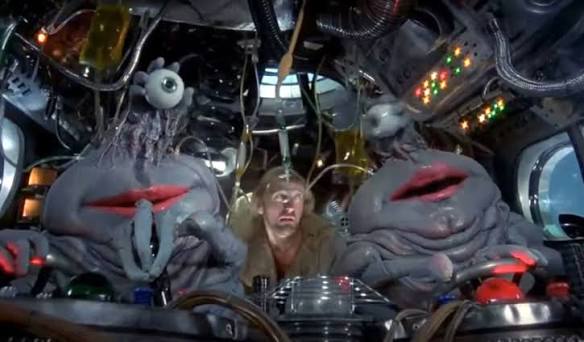
Handmade Films would subsequently become responsible for backing a remarkable collection of British films, but Life of Brian was its first production. Without Harrison’s intervention, one of the most celebrated British comedies ever made might never have existed. There is something particularly wonderful about the fact that a former Beatle had to rescue a film about a man who wasn’t the Messiah because a respectable film company had decided that making jokes about religion was a bit much.
The film was directed by Terry Jones, with Terry Gilliam handling much of the visual design and production design. Shot in Tunisia, it benefited from impressive locations and sets, many of which had previously been used for Franco Zeffirelli’s television production Jesus of Nazareth.
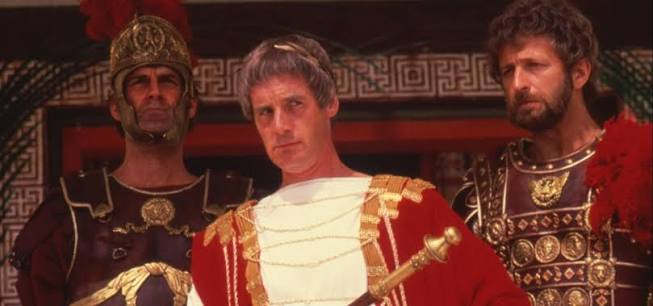
The result was a surprisingly convincing biblical epic, complete with Roman soldiers, ancient streets, enormous crowds and all the production values you’d expect from a serious historical drama. Only with considerably more arguments about the correct pronunciation of Latin, and a man called Biggus Dickus.
A Film So Offensive It Is Banned
The film premiered in the United States in August 1979, before its British release. The reaction was immediate.
Religious organisations across America began condemning the production. Catholic groups, Protestant organisations and Orthodox Jewish bodies all found reasons to object. Some described it as blasphemous, others as sacrilegious, and some seemed to regard the mere existence of the film as an act of aggression against their faith.
There were protests outside cinemas in New York, Los Angeles and elsewhere. Among the demonstrators were rabbis and nuns carrying placards and attempting to dissuade people from going inside. Nuns with banners. How incredibly Pythonesque.
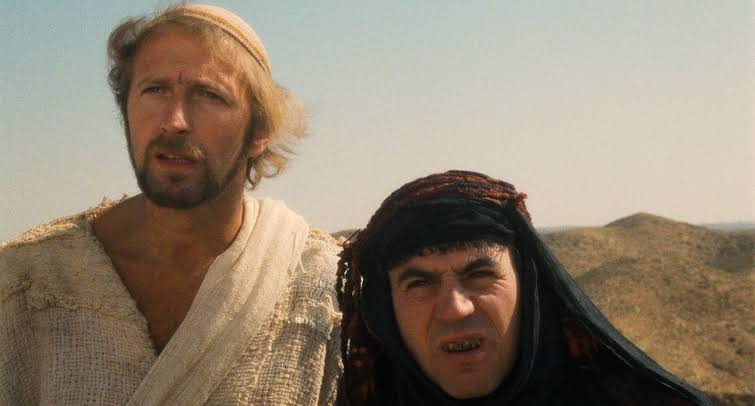
Michael Palin later recalled the spectacle with considerable amusement. There were people standing outside cinemas warning customers that watching the film would put their immortal souls in jeopardy. The American reaction wasn’t entirely confined to peaceful demonstrations, either. Some cinemas faced threats, and screenings in parts of the Bible Belt were prevented or discouraged.
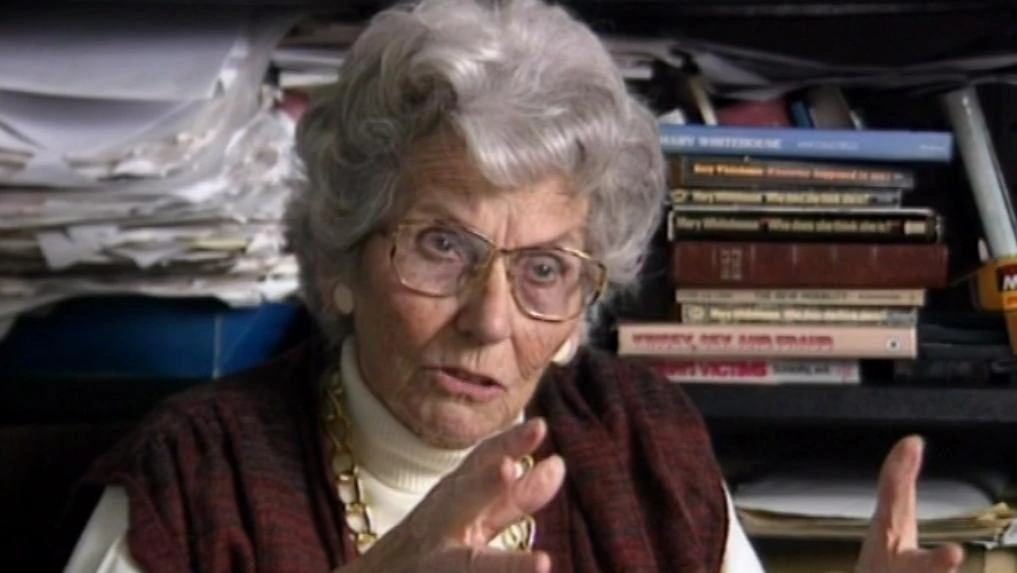
Meanwhile, the British campaign was spearheaded by Mary Whitehouse. We have spoken about her before in Hollywood History, when we covered the moral panic over Video Nasties. She was a formidable campaigner who had spent much of the 1970s attempting to persuade the country that television was leading civilisation towards an imminent moral apocalypse.
Whitehouse and her supporters were particularly concerned about the film’s treatment of Christianity. The Festival of Light, a Christian pressure group, helped organise opposition, circulating literature and encouraging people to campaign against screenings. There were even suggestions that the Pythons should face prosecution for blasphemy.
Think about that for a moment. Six comedians who had spent years making jokes about politicians, policemen, the military, the monarchy, the BBC and practically every other institution in Britain were now potentially facing legal consequences for making a film about a bloke who couldn’t persuade a crowd to stop following him.
The British Board of Film Censors had actually passed the film uncut with an AA certificate, meaning it was suitable for audiences aged 14 and over. The board had obtained legal advice and concluded that the film did not constitute blasphemy. Unfortunately, the BBFC didn’t have the final say everywhere.
Local authorities retained powers over cinema licensing, and thanks to pressure from religious groups, a number of councils decided that the public needed protecting from this dangerous outbreak of comedy. In total, 39 local authorities in Britain either banned the film or imposed more restrictive X certificates. Eleven councils imposed outright bans, while another 28 upgraded the certificate.
Some of the decisions were particularly extraordinary because councillors hadn’t even bothered to watch the film.
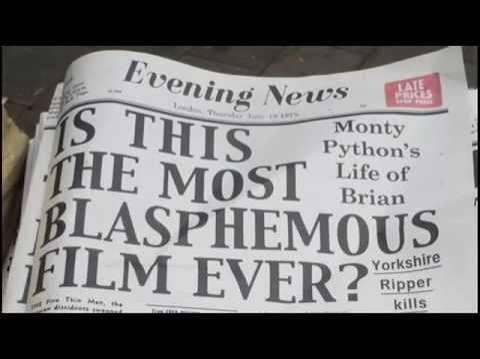
Harrogate, Yorkshire, became one of the most notorious examples. A councillor later admitted during a television interview that the council had based its decision on information supplied by the Festival of Light rather than actually viewing the movie. This was not censorship based on informed judgement. That’s a book-burning mentality with a council chamber and a set of minutes.
In East Devon, councillors reportedly refused to watch it on the grounds that:
“…you didn’t need to visit a pigsty to know it stank.”
Which is a fairly impressive philosophical position for somebody whose job presumably involved making decisions based on evidence. The controversy also spread to Cornwall, Swansea and various other parts of the country. Some areas maintained their bans for years. Swansea’s prohibition lasted until 1997, purely because nobody realised and filed any paperwork, when the film was finally allowed to be screened in aid of Comic Relief.
Eric Idle, upon hearing that the ban had been lifted, responded with the entirely appropriate observation: “What a shame. Is nothing sacred?”
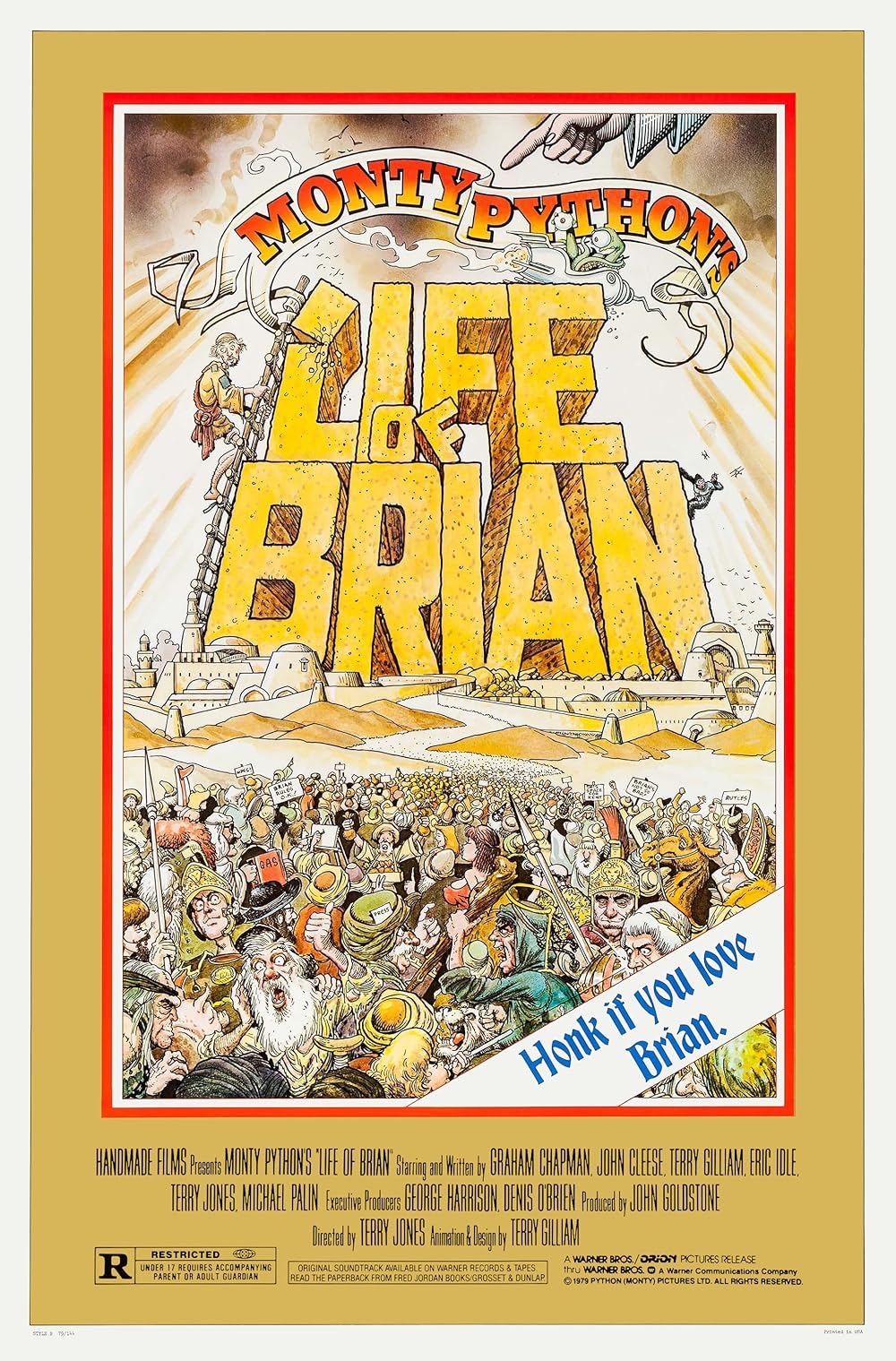
The situation was equally ridiculous internationally. Ireland banned the film for eight years, finally allowing its release in 1987. Norway also banned it, although that particular prohibition lasted considerably less time. Sweden immediately spotted a marketing opportunity and advertised the film with the magnificent slogan:
“So funny it was banned in Norway!”
Italy also imposed a lengthy prohibition, with the film unable to receive a theatrical release there until 1990. Chile maintained its ban until 2002. Malaysia and Singapore also restricted the film, although subsequent classification and release arrangements have changed over time.
The film’s history of censorship has therefore been rather more complicated than a simple list of countries where it was once banned. Some restrictions were lifted decades ago, while other territories have retained particularly restrictive approaches to public exhibition or classification. And the irony? The film wasn’t even particularly interested in mocking Jesus.
The Great Television Argument
Perhaps the most extraordinary moment in the entire controversy came courtesy of British television.
On 9 November 1979, BBC One broadcast an edition of the discussion programme Friday Night… Saturday Morning, devoted to the Life of Brian controversy. On one side sat John Cleese and Michael Palin, representing Monty Python.
On the other were two particularly formidable opponents: Malcolm Muggeridge, the celebrated Christian writer and broadcaster, and Mervyn Stockwood, the Bishop of Southwark. The programme was presented by Tim Rice, who presumably hadn’t anticipated that his evening would turn into something resembling a theological version of Celebrity Deathmatch.
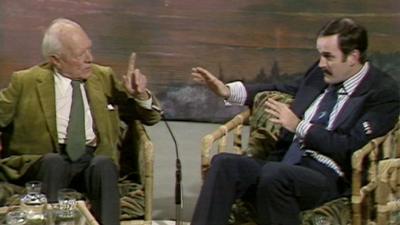
The debate became a television classic. Cleese and Palin attempted to explain that the film wasn’t a satire of Jesus Christ but rather a satire of religious dogmatism and the unquestioning behaviour of people who attach themselves to movements.
Their argument was fairly straightforward. Brian wasn’t Jesus. He was an entirely fictional contemporary who happened to be born in the neighbouring stable and subsequently became the victim of mass delusion. The Bishop and Muggeridge weren’t having it.
Muggeridge argued that the film was effectively lampooning Christ, while Stockwood took particular exception to the treatment of religious imagery and the crucifixion. At one point, Stockwood suggested that the Pythons would receive their thirty pieces of silver, a reference to Judas’s betrayal of Jesus.
Cleese was having none of it.
The exchanges became increasingly heated, with the comedians trying to explain the distinction between parodying Jesus and parodying the people who had completely misunderstood his teachings. There was another rather delicious detail. Muggeridge and Stockwood had apparently arrived late to a private screening of the film and missed the opening sequence. There have been persistent accounts that they also misunderstood the distinction between Brian and Jesus.
In other words, two of the film’s most prominent critics may not even have watched the whole thing properly before arriving to condemn it.
The debate was fascinating because it exposed precisely the problem the film was attempting to highlight. Cleese and Palin were arguing that people should think for themselves, question authority and distinguish between the actual teachings of a religion and the behaviour of those claiming to represent it.
Their opponents were effectively arguing that the subject was too sacred to be treated as comedy. And there, in a nutshell, was the entire disagreement.
The Pythons weren’t trying to convince anybody that Christianity was nonsense. They were suggesting that the human beings who organise themselves around religious beliefs can sometimes behave like complete idiots. It was an argument that the oppositon seemed to be insistent on proving by accident.
The programme remains one of the great examples of British television confrontation. Watching Cleese, in particular, patiently dismantle the objections while Palin looks increasingly exasperated is an absolute delight.
It is also a useful reminder that television used to occasionally allow people to have a proper argument rather than simply shouting rehearsed talking points at one another before being interrupted by an advert for washing powder.
The Film Television Didn’t Want
The controversy didn’t disappear when the cinema audiences went home. In the US, major US television networks refused to broadcast the film due to immense pressure, boycotts, and organized letters.
In Britain, the argument over Life of Brian continued into the 1980s, and television broadcasters remained nervous about the prospect of showing it. Channel 4, which had been established in 1982, became embroiled in the wider debate about religious programming and the treatment of Christianity on television. The film’s eventual television appearance was delayed until 1991, six years after it had originally been intended for broadcast.
By then, the controversy had become something of an embarrassment. A film that had been playing in cinemas, circulating on home video and enjoying a growing reputation as a comedy classic was still being treated as if transmitting it into living rooms might cause the entire country to burst into flames.
The global delay was particularly absurd when you consider that the film was already more than a decade old.
By the time British television audiences finally got to see it, the original controversy was looking increasingly ridiculous. The world hadn’t ended. Christianity hadn’t collapsed. The Pope hadn’t resigned. The Church of England was still there. And Brian was still a very naughty boy.
The Greatest Publicity Campaign Nobody Bought
There is a wonderful irony to the whole affair. The Pythons had made a film about the dangers of blind faith, unquestioning obedience and the willingness of ordinary people to follow whatever fashionable movement happens to be attracting attention.
And the response was to demonstrate all three things on an international scale.
The protests were, of course, an extraordinary marketing opportunity. Every demonstration, every newspaper headline, every outraged clergyman and every indignant councillor helped create the impression that Life of Brian was some forbidden cinematic experience that audiences absolutely had to see.
People travelled from towns where the film had been banned to neighbouring towns where it was showing. Cinemas enjoyed enormous audiences. The controversy became part of the attraction.
The British release was initially handled cautiously. Distributor CIC opened the film at just one London cinema, the Plaza in Lower Regent Street, on 8 November 1979, before expanding its release. Despite hymn-singing protesters outside, it broke the cinema’s box-office record, previously held by Jaws.
The film went on to become a substantial commercial success, both in Britain and America.
In Sweden, they were selling tickets on the strength of Norway’s disapproval. In Britain, cinemas in neighbouring towns were benefiting from the decisions of local councils. In America, the protests were generating precisely the sort of publicity that money normally has to buy.
There is also a particularly delicious final irony in the way the film was received by religious audiences over the following decades. The initial outrage gradually subsided. The film became a television staple, a favourite at Christmas, a fixture of British comedy culture, and something that even people with deeply held religious beliefs could enjoy.
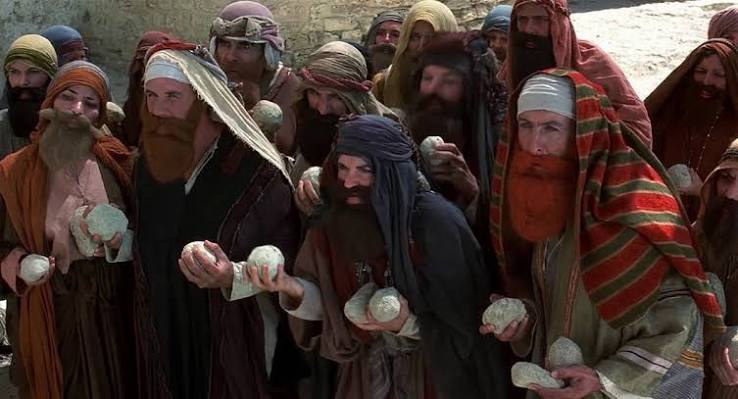
It turned out that you could watch a film featuring a crucifixion, a stoning, a man with a speech impediment called Biggus Dickus and a revolutionary organisation that couldn’t organise a piss-up in a Roman bathhouse without having a crisis of faith. In fact, it actually increased historical interest in the period. Who knew?
There are, incidentally, still occasional restrictions on public screenings in parts of Germany, where Good Friday laws prohibit certain forms of entertainment considered inappropriate for the solemn religious holiday. Life of Brian has been caught up in those restrictions, with screenings sometimes attracting legal challenges or fines. That is different from the old blanket national bans, most of which have long since disappeared. And the film itself has aged remarkably well.
Always Look On The Bright Side Of Life
The real achievement of Life of Brian is that it manages to be both an exceptionally silly comedy and a genuinely intelligent piece of satire.
The Pythons understood something rather important: you don’t necessarily undermine a belief system by attacking its central figure. Sometimes you do it far more effectively by showing what happens when ordinary people take themselves, their organisations and their supposedly sacred causes far too seriously.
The People’s Front of Judea is a masterpiece of political satire. The arguments about who is entitled to speak on behalf of the revolution are instantly recognisable. The followers who interpret Brian’s every accidental utterance as divine wisdom are an extraordinarily effective depiction of groupthink. And the stoning sequence remains one of the funniest pieces of comic writing ever committed to film.
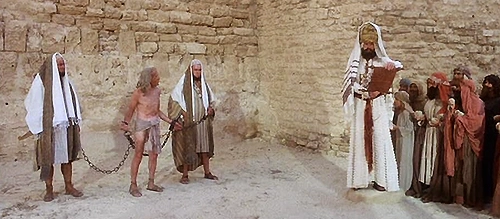
The film also has a surprisingly poignant quality. Brian is essentially an ordinary man who desperately wants to be left alone. He has no interest in being a prophet, has no desire to lead a movement and would probably be perfectly happy with a quiet life and a decent meal.
Instead, he ends up crucified because everybody around him has decided that he represents something far more important than the actual human being standing in front of them.
Then, just as the audience is left contemplating the rather bleak conclusion, the condemned men burst into song. It’s an extraordinary ending. Arguably one of the greatest comedy finales ever filmed. The jaunty whistling, the cheerful lyrics, the rows of condemned men hanging on crosses. It’s simultaneously hilarious, outrageous, and unexpectedly moving.
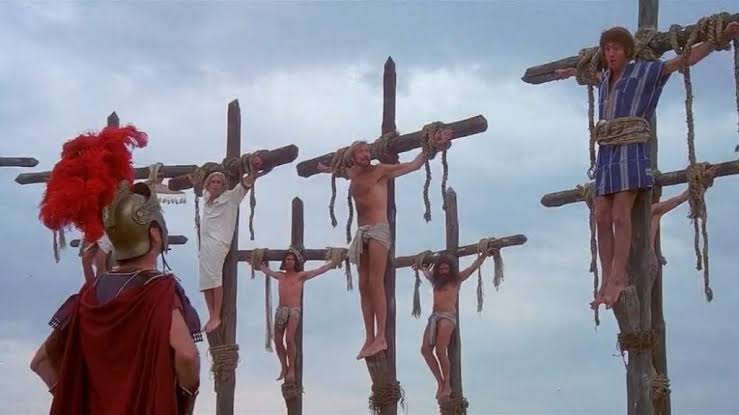
And it neatly sums up the film’s attitude towards life, death, religion and the extraordinary absurdity of the human condition.
Looking back at the controversy, it’s tempting to wonder what on earth everybody was so upset about. But perhaps that misses the point. The controversy is now part of the film’s history, an entertaining reminder of a time when certain people genuinely believed that comedians should be prevented from making jokes about subjects they considered important.
The film has outlived most of its critics, most of the local bans, and probably several generations of the councillors and pressure groups globally who imposed them. Mary Whitehouse is gone. The Festival of Light is history. The Norwegian ban is long gone. Harrogate eventually came to its senses. Life of Brian remains.
And the final joke belongs to the Pythons. They set out to make a comedy about a man mistaken for the Messiah, and ended up creating a film that was treated by some people as though it really were a threat to civilisation.
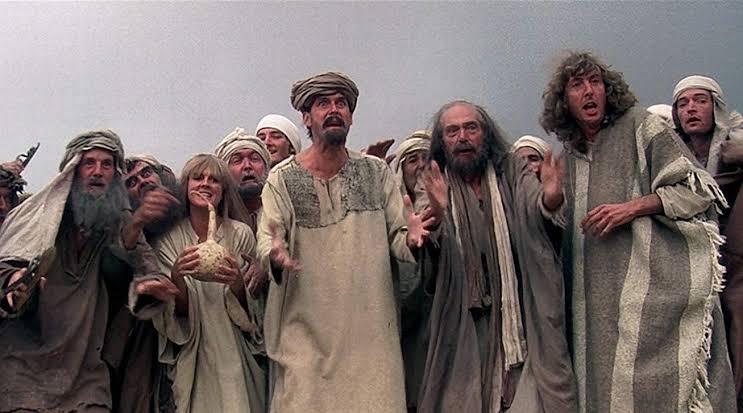
Maybe a final, not so funny, joke is that we all know some other belief systems that probably do deserve a gentle comedic examination but nobody would dare.
As for Life Of Brian, it’s not the Messiah, it’s a very naughty film, and it’s absolutely bloody brilliant.

