


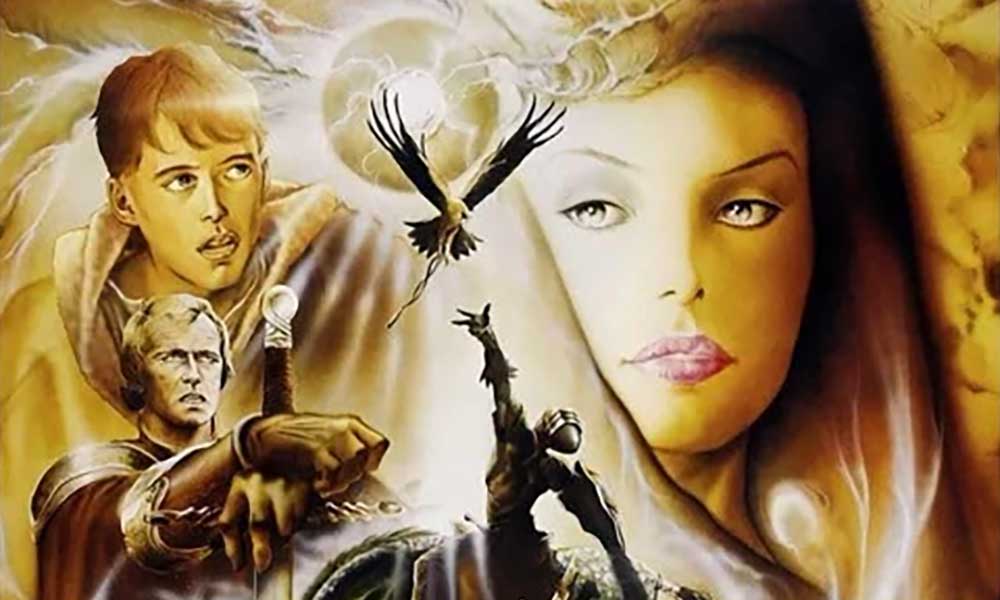
Ladyhawke should have been called Gentlemanwolfe. Rutger Hauer’s character got more screentime than Michelle Pfeiffer’s character.
On the other hand, Matthew Broderick’s character got the most screentime of all, so the film should have perhaps been called Ladtwinke.
Regardless, we got what we got. The one-two failure of Ladyhawke and Red Sonja in 1985 put a damper on the sword-and-sorcery craze of the early 1980s. Ladyhawke released with high expectations. Its $20 million budget was hefty at the time.
Rutger Hauer was poised to take the leap into Eric Roberts territory. Michelle Pfeiffer was poised to take the leap into Michelle Pfeiffer territory. Richard Donner jonesed for the high of his Superman days, and consultant Tom Mankiewicz was a veteran of Bond.
It didn’t work out, however. Ladyhawke topped out at $18 million at the box office. People just didn’t care. They were watching Police Academy 2, which was in theaters at the same time and took in a whopping $115 million on a $7.5 million budget.
Was the failure of Ladyhawke justified? Let’s take a look…
Ladyhawke
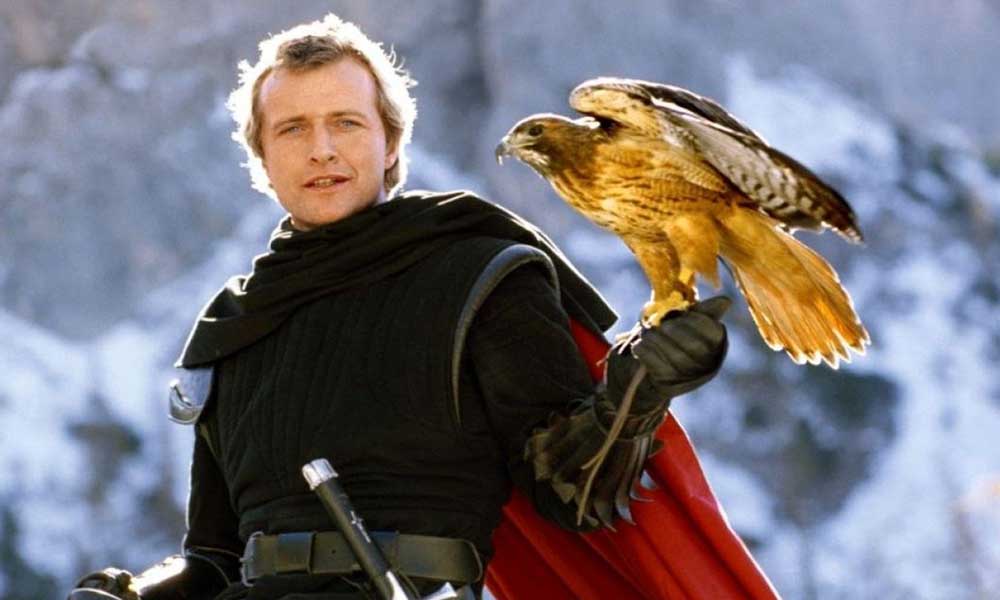
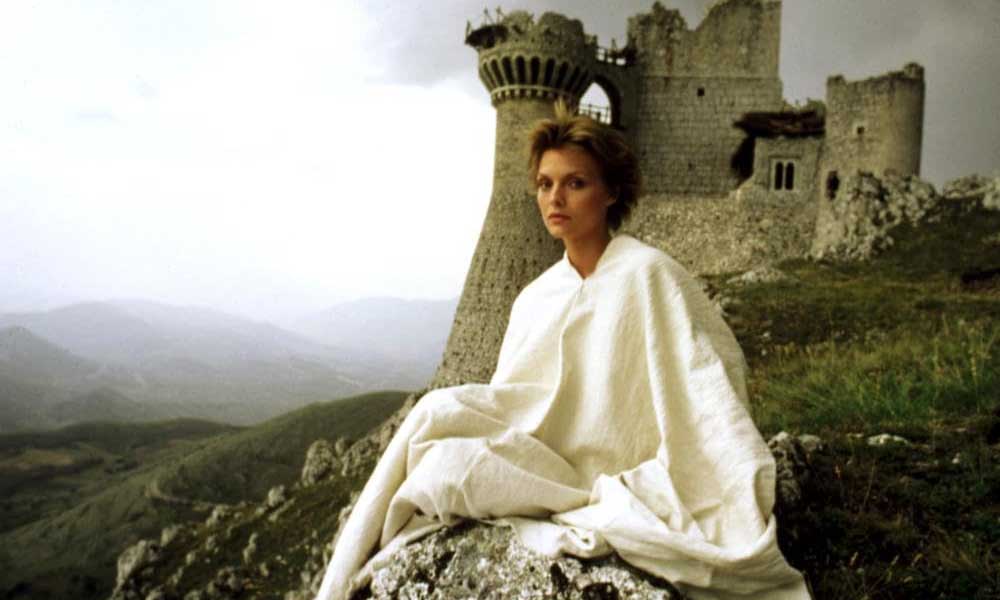
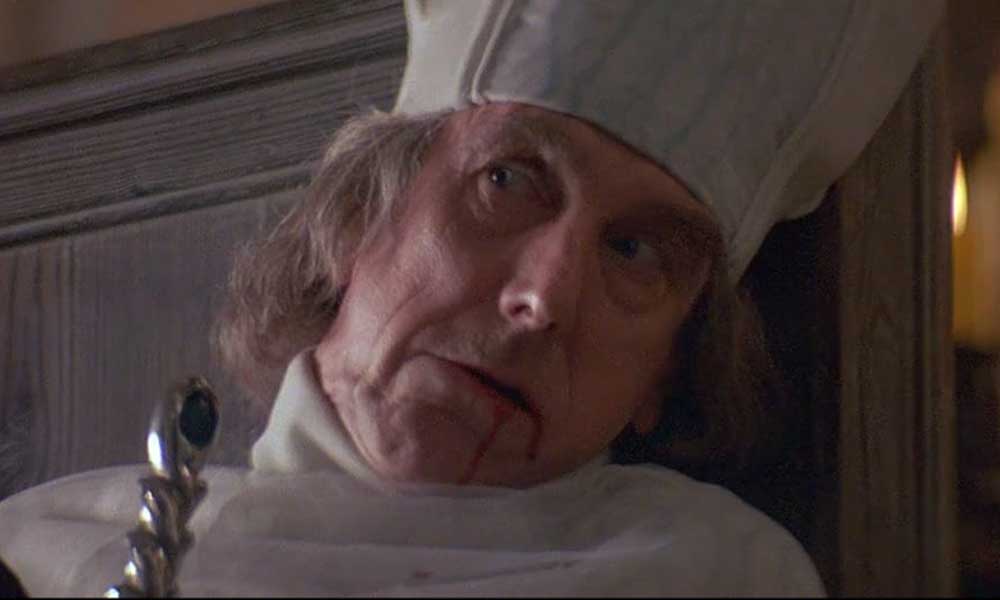
Hauer and Pfeiffer play cursed lovers who can never be together. Hauer turns into a wolf by night, and Pfeiffer turns into a hawk by day. This bad juju was cast upon them by the Bishop of Aquila (John Wood), who got incel’ed by Pfeiffer.
We’ve all be there, amirite?
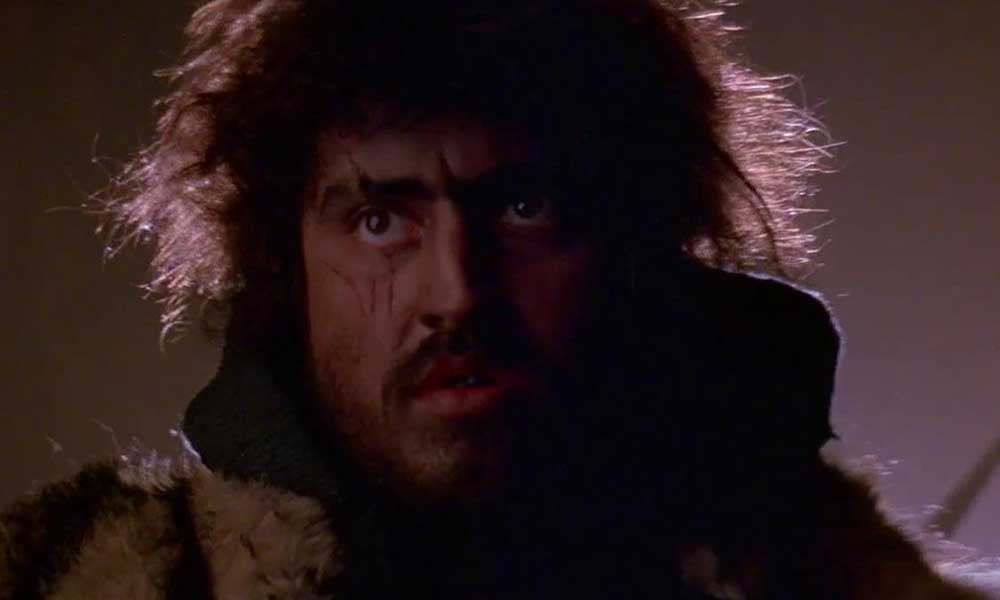
So, Hauer and Pfeiffer roam the countryside in their tortured existence until they come across Matthew Broderick, a thief who helps them overcome their issues. Along the way, Alfred Molina gets his head stuck in a wolf trap.
So far so good. Ladyhawke has a fine plot upon which to hang a film. It can offer adventure, romance, sword fights, lessons learned and even horror, if it so wishes.
But, like a fat person at a buffet, it tries to have it all and can’t get to the bathroom in time…
Ladyhawke A Loogie
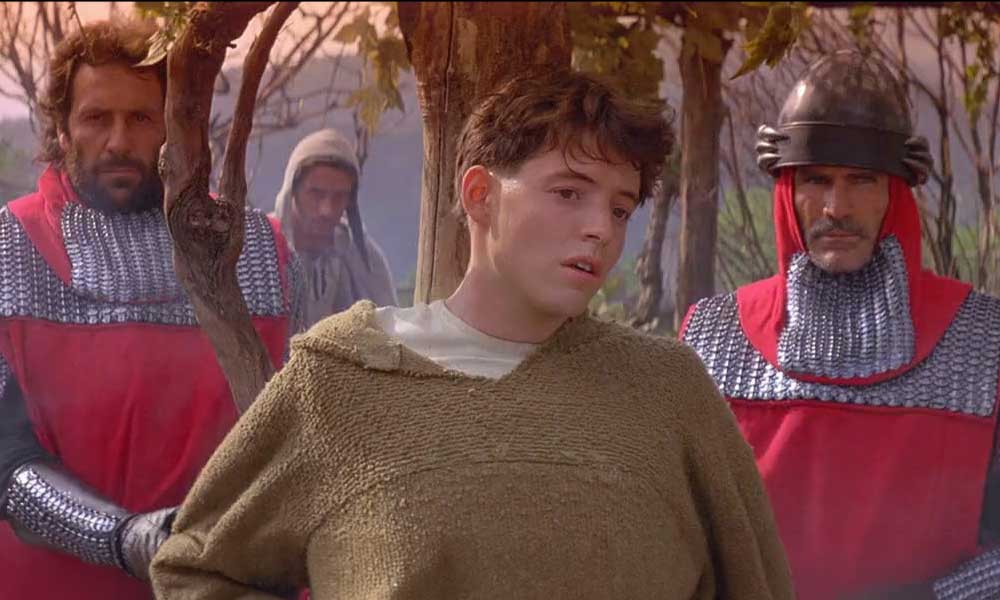
Broderick stood at the forefront of criticism. His attempt to combine comedic relief with a high-school-theater-kid Oliver Twist accent did not go over well.
It’s legitimate criticism. Broderick’s oil never mixes with the water of the world he inhabits. In a different movie, his character could be a lot of fun. He continually bargains with God as he goes about his dishonest misadventures, which creates an interesting personality dynamic.
Meanwhile, everyone else takes Ladyhawke as seriously as an SAT test.
Rutger treats every scene like he is trying to lose his tears in rain. Pfeiffer is shooting to make the cover of Vogue: The Ethereal Edition. John Wood can hear the phantom applause of doing Shakespeare in Regent’s Park Open Air Theatre. Only Alfred Molina seems to understand what kind of film he is in as he goes full 12th century redneck.
In this regard, it is hard to blame Broderick. He certainly did not perform in a vacuum. Someone stood behind the camera and directed him. For this reason, the problems of Ladyhawke ultimately fall at the feet of Richard Donner.
Once, Twice, Three Times A Ladyhawke
Watching Ladyhawke, it is easy to see the target Donner tries to hit. He wanted to give a medieval fantasy film and polished contemporary sheen. Genuine effort was put toward this. The film shot at real castles in Italy even.
Yet, the polished contemporary sheen is a big part of the problem. Ladyhawke never properly reads as a film. It reads as a TV mini-series. All the cinematography is bright and flat instead of lush and epic. If someone told you that the cinematographer was Vittorio Storaro, the same guy who shot Apocalypse Now, you’d say, “Surely, you jest.”
Yet, I don’t jest…
A decision was also made to not portray people in typical medieval fashion as dirty peasants. Everyone is well groomed, and the costumes look fresh from the dryer. Again, it reads like an episode of Xena: Warrior Princess instead of a film.
One can’t fault Donner for these artistic choices. They are defensible on paper. He even later revisited the concept of bolting a polished, contemporary sheen to a period piece with Maverick (1994), and nailed it.
It simply didn’t come together on Ladyhawke. It happens. Shrug.
Ladyhawke In Red
Another element exists that compounds the issues above: the score. As I rewatched Ladyhawke after not seeing it for many moons, I was struck by a singular thought:
Man, this score does not work at all. I mean, not even a little bit…
I went online to investigate and found vindication. The Ladyhawke score is placed near the top of various worst movie music lists. It is one of the most mocked soundtracks in film history. How did this happen?
Andrew Powell composed the music. He does not have a large credit list. He worked more with radio artists, including The Alan Parsons Project. In fact, Alan Parson produced the music for Ladyhawke with a synth, progressive-rock sensibility. This is at great odds with the usually robust orchestral scores of fantasy films.
Again, this was a Donner decision. He listened to Alan Parsons music while scouting locations and thought it would be a good idea.
It was not a good idea.
Powell defended his work, stating that even a “classical” soundtrack would be anachronistic to the time period of Ladyhawke. That may be the case, technically, but it wouldn’t be anachronistic to the viewer’s ears, which is the important thing.
Cuz You’re My Ladyhawke, And I Am Your Wolf Man
Ladyhawke is a lot like the story it represents at its base level: two people can’t be together because they are on opposite ends of a spectrum.
So, it is with Ladyhawke. It attempts to be multiple things that are opposite of each other. Is it comedy or serious? A love story or adventure? Is it medieval or contemporary? As it tries to exist on both sides of a scale, it ends up perfectly mediocre in the middle. Donner simply could not stitch it together in a seamless cloak.
Originally, Kurt Russell was set to star opposite Pfeiffer. Broderick’s role was offered to Sean Penn and Dustin Hoffman. Would it have been a different film with those players? Probably not much. Ultimately, Ladyhawke is Donner’s baby.
One more artistic decision of Donner is worth mentioning. He made a movie where a woman turns into a hawk and a man turns into a wolf. Then he decided not to do any transformation scenes. He wanted a more poetic approach to the shapeshifting, so he did it with slow motion, lens flares and fades. In a world where movies like The Howling and American Werewolf in London exist, that decision didn’t cut it either. It comes off as cheap.
In the end, Ladyhawke is an interesting artifact of the 1980s. It made a point to try to avoid 1980s cliches. In doing so, it lost whatever identity it might have had. And thus, that is the answer to the question of whether or not Ladyhawke’s failure was justified. Speaking of answers, let’s listen to an Alan Parson’s Project banger…


