


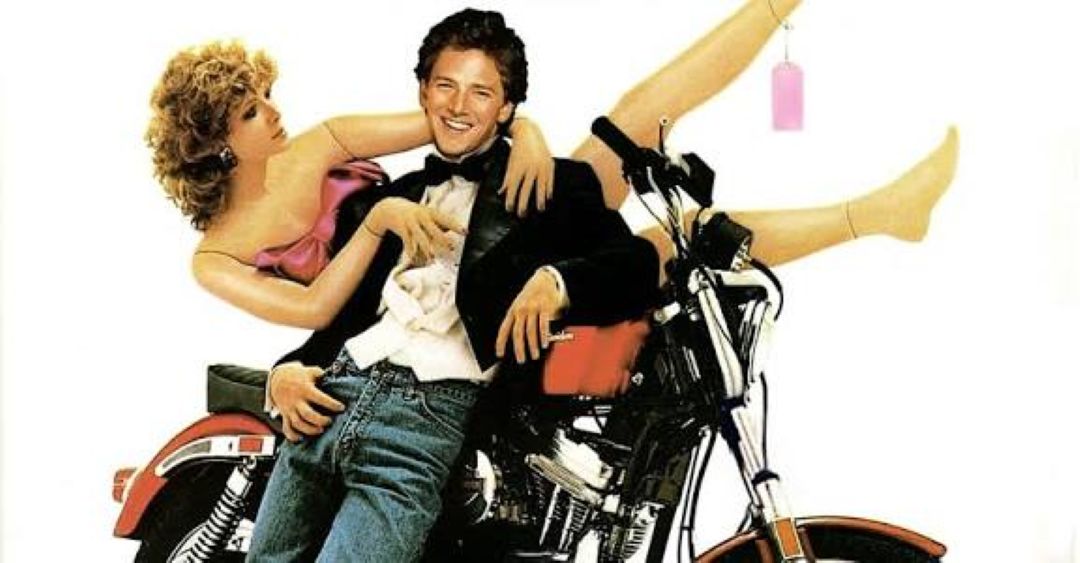
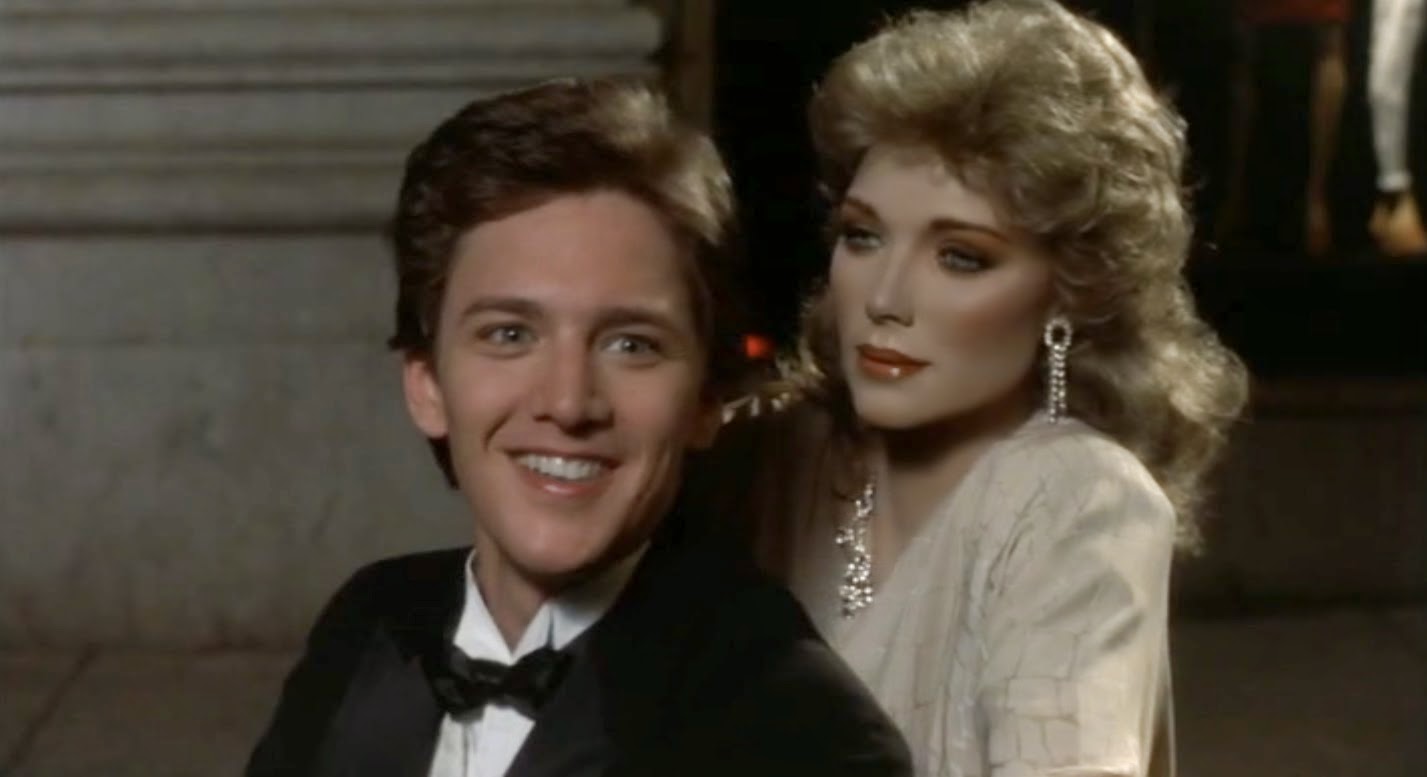
Mannequin is a movie about Andrew McCarthy falling in love with a shop dummy. Not figuratively. Not metaphorically. Not in the way somebody might look at a particularly fetching Ferrari and make an involuntary sound.
He falls properly, romantically, sexually and emotionally in love. And the astonishing thing is that this isn’t even the least plausible thing that happens in the film.
It is 1987. A time when Hollywood could apparently pitch a film about a man being romantic with a mannequin, get it financed by a major studio, attach Kim Cattrall, James Spader, G.W. Bailey and Estelle Getty, throw in an aggressively flamboyant black window dresser called Hollywood, set the whole thing inside a department store, add a song by Starship and somehow walk away with an Oscar nomination.
This is true. This really happened. And Mannequin made $42 million against a reported $7.9 million budget, so perhaps the joke is actually on us.
Mannequin is one of those films where the more you think about the premise, the worse it gets. So naturally the only sensible thing to do is not think about it at all. Because if you start asking questions, you’re finished.
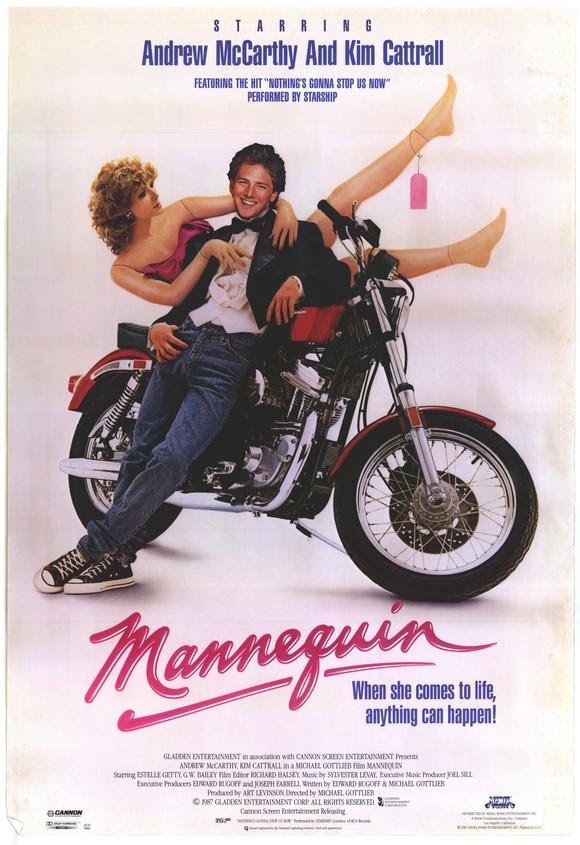
Mannequin
Who exactly is Emmy? Why is an ancient Egyptian princess trapped inside a modern mannequin? Why does she understand English? Why does she understand 1980s American culture? Why does she apparently know how department stores work? Why does she only come to life when Jonathan is looking at her? Why does this rule become increasingly elastic as the film progresses? Why does nobody call the police when a grown man is apparently having a relationship with a shop-window dummy?
The more I think about it, the more I think this movie only gets away with itself because of one thing: Kim Cattrall.
Let’s get this out of the way – Kim Cattrall in 1987: Good Lord!

The woman looks absolutely spectacular. She is not merely attractive in Mannequin. She has been weaponised by the production department. Every costume, every hairstyle, every lighting setup, every department-store display seems to have been designed by a committee whose only instruction was:
Make her look absolutely stunning in the hope people will stop asking questions about anything else!
And they succeeded. Cattrall plays Emmy, an ancient Egyptian princess who has spent several thousand years travelling through history as some kind of supernatural muse before ending up as a mannequin in Philadelphia. That’s quite a backstory. She takes it all in stride, and Cattrall is actually rather wonderful here because she understands precisely what sort of movie she’s in. She doesn’t try to make the premise believable. She simply commits to it.
She is glamorous, mischievous, sexy, funny and completely comfortable wandering around a department store while technically being a piece of retail display equipment.
The movie desperately needs her charisma, because Andrew McCarthy is playing Jonathan Switcher, a young artist whose principal personality characteristic appears to be being Andrew McCarthy in 1987. He’s floppy-haired, sensitive, bewildered and permanently looks like someone has just told him his bicycle has been stolen.
McCarthy was in the middle of his Brat Pack period, having appeared in St. Elmo’s Fire, Pretty in Pink and Less Than Zero. Here he’s basically the Brat Pack’s designated innocent. Which is useful, because somebody needs to look shocked when the mannequin starts talking.
Professional Mannequin Pervert
Jonathan is an artist. Apparently.
He’s also catastrophically unemployable. He bounces between jobs, including working in a mannequin factory, because obviously if you’re going to make a film about falling in love with a mannequin, you first need to establish that the protagonist has a deep professional relationship with mannequins.
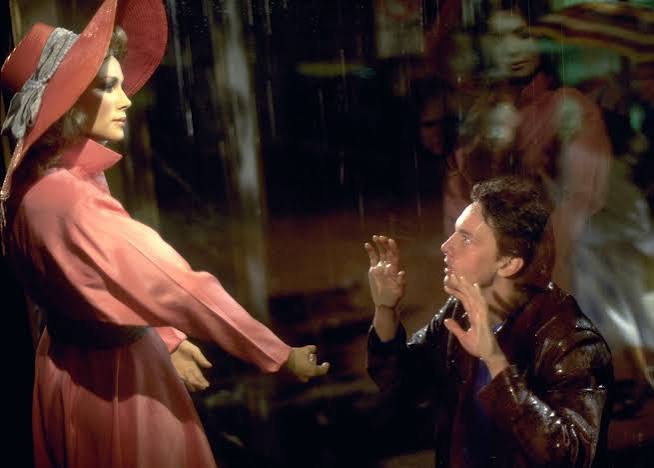
He eventually creates a mannequin modelled after Emmy, only to discover it sitting in the window of Prince & Company. This is apparently fate. Or stalking. Depending on how good your lawyer is.
Jonathan gets a job at the department store after saving its elderly owner, Claire Timkin, from an accident. He then discovers that his mannequin comes to life as Emmy whenever he’s alone with her. Rather than immediately seeking medical assistance, an exorcist, a priest, a psychiatrist or possibly just another human being to confirm he’s not having a breakdown, Jonathan thinks:
“Phwoaaarrr!”
Fair enough. I’m not sure what the ethical position is on having sex with a supernatural retail fixture, but I’m fairly certain HR would have some concerns.
Still, there is something wonderfully odd about Mannequin being populated by actors from the 1980s Brat Pack ecosystem. Andrew McCarthy is here, and James Spader is right alongside him. The two had already appeared together in Pretty in Pink and would turn up together again in other projects. Watching them in Mannequin feels like someone accidentally opened the wrong casting cupboard.
James Spader plays Richards, the slimy executive attempting to get Jonathan fired while secretly working for rival department store Illustra. Spader was born to play this sort of bastard. He doesn’t even need dialogue. Just put him in a suit, give him a smug haircut and have him look at somebody as though he has just discovered they’re poor. That’s basically Richards.
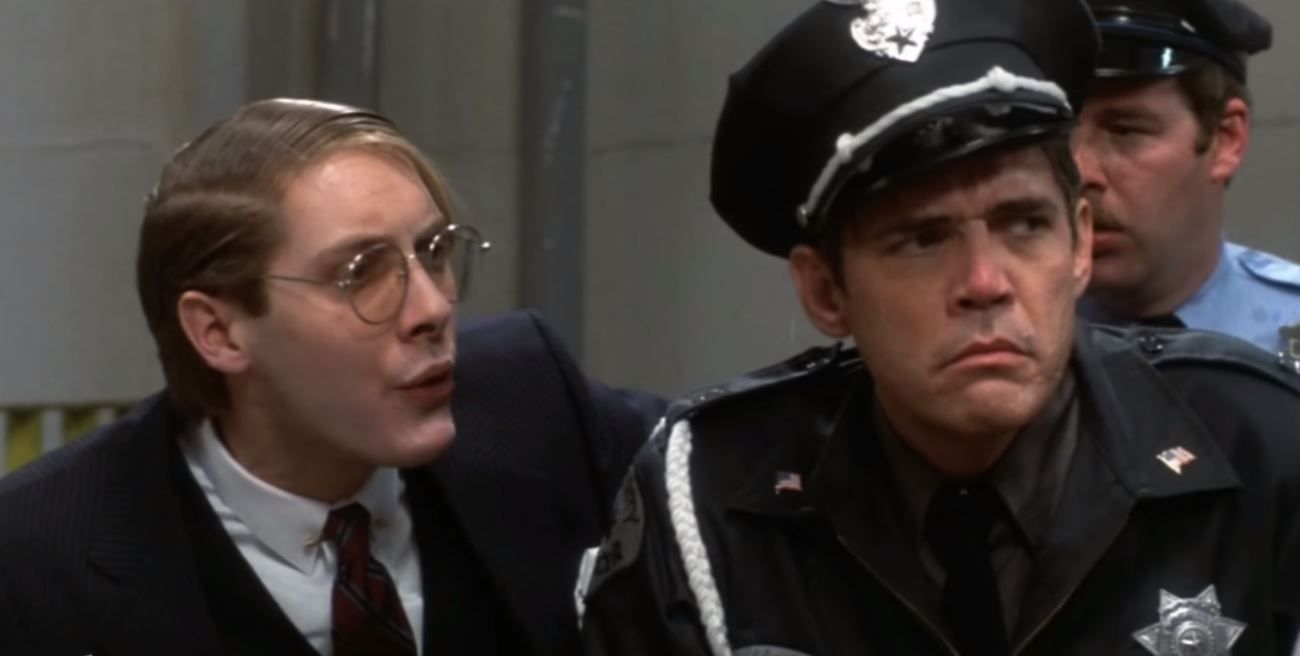
Spader’s entire performance seems to operate on the principle that everyone in the room is an idiot and he is the only person who knows it. The problem is that he’s in Mannequin, so occasionally the film asks him to behave like a cartoon, and James Spader doing broad comedy is a fascinating spectacle. It’s like watching a panther being asked to perform a tap-dance routine.
You admire the commitment, but you desperately want the panther to stop.
All this is playing against Andrew McCarthy who is somehow supposed to be the straight man in a film where his girlfriend is a supernatural mannequin. Things had gone terribly wrong.
Then, just when you’re wondering whether Mannequin has enough lunacy, G.W. Bailey turns up fresh from Police Academy playing the exact same bastard. Here he is Captain Felix Maxwell, the store’s head of security. He’s a grumpy, authoritarian, incompetent bully with a bulldog called Rambo.
He’s suspicious of Jonathan. He hates his job. He’s obsessed with authority. He’s accompanied by an animal. He shouts. He blusters. He falls over. You’re not watching a character. You’re watching G.W. Bailey’s greatest hits package as Captain Harris wonders why he’s suddenly guarding a lingerie department.
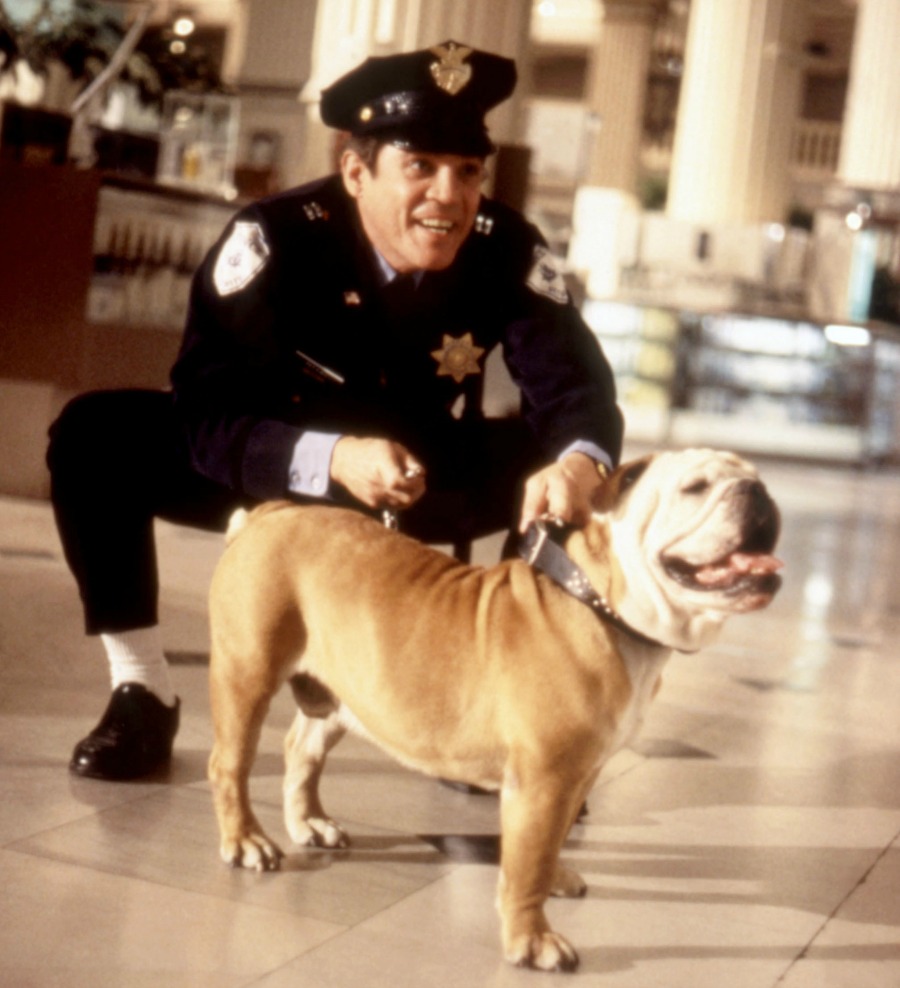
The dog is, naturally, more useful than Felix in many ways. The film has a bizarre fondness for the animal, despite the fact that the dog’s main dramatic function is to be terrified of everything. It’s one of those 1980s movie dogs that appears to have been hired because somebody in production said:
“You know what this needs?”
“A dog?”
“Exactly.”
Hooray For Hollywood
No discussion of Mannequin is complete without talking about Hollywood Montrose. He’s played by Meshach Taylor, Hollywood is the window dresser who befriends Jonathan. And Hollywood is quite possibly the most 1980s supporting character ever committed to celluloid.
He enters the movie as if he’s been fired out of a gay cannon, but in that 80s way, it is all implied – aaaaaand how! The character is flamboyant, theatrical, relentlessly enthusiastic and dressed with all the subtlety of Liberace being attacked by a rainbow haberdashery. Hollywood is not so much a person as a walking collection of 1980s cultural stereotypes, yet here’s the strange thing – Meshach Taylor is fantastic.
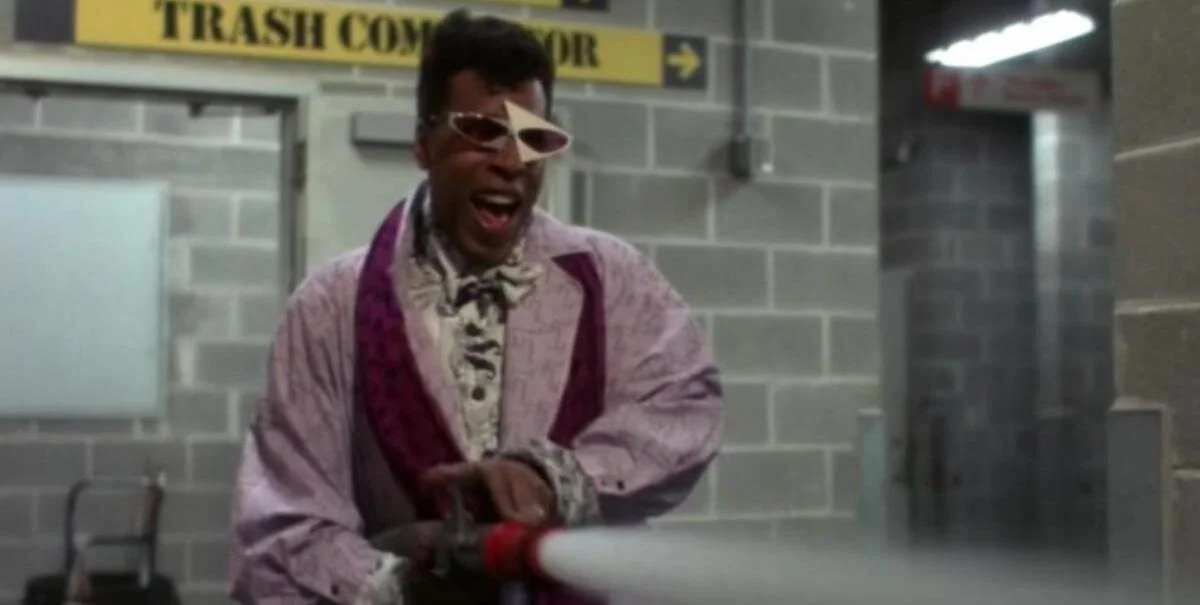
He’s easily the most entertaining people in the film. He has enormous screen presence and delivers every ridiculous line with absolute conviction. The movie itself doesn’t really know what to do with him. Hollywood exists largely to react to Jonathan, decorate windows and provide a constant supply of extravagant behaviour.
He is also crucial to making the whole damn thing work because otherwise, Jonathan’s entire performance would consist of standing around looking like a sad catalogue model.
Hollywood brings some actual energy. He is the human equivalent of someone plugging the movie into the mains. The character is dated, undoubtedly. Some of the humour around him has not aged well, but Taylor’s performance has genuine charm and he’s having a bloody good time. Frankly, somebody needed to.
Another notable mention goes to Carole Davis as Roxie. Before Mannequin, she was one of the magnificently built victims in Piranha II: The Spawning. In Mannequin she is Jonathan’s ex-girlfriend and is essentially the human embodiment of every person who has ever dated someone who then became inexplicably obsessed with a mannequin.
You’d be annoyed too. Here, she is glamorous, bitchy, manipulative and magnificent, playing Roxie with just enough venom to make you understand why Jonathan might have run away from her and straight into the loving arms of a piece of shop furniture.
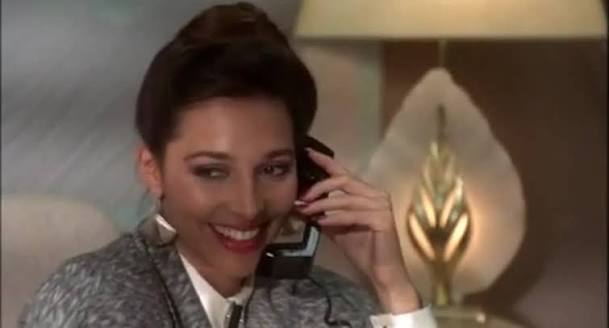
Carole Davis deserved more. Mostly a better screenplay.
The actual plot concerns Prince & Company, a department store threatened by rival chain Illustra. Prince & Company is apparently struggling. Illustra wants to take over, and Richards, a slimy suit, is secretly working for the opposition.
Jonathan’s window displays suddenly become a huge success because Emmy inspires him. People gather outside. The store becomes fashionable. Sales improve. And somehow this all becomes a major corporate battle.
You know you’ve entered a strange cinematic universe when window dressing is treated like a branch of military strategy. Jonathan creates a display, crowds appear. Richards panics. Illustra plots. Hollywood squeals. G.W. Bailey shouts. Kim Cattrall changes clothes. Andrew McCarthy looks concerned. Repeat.
It is essentially Die Hard in a department store if John McClane’s greatest tactical advantage was a very attractive magical mannequin.
And the magical rules are hilariously inconsistent. Emmy is supposed to become real when Jonathan is present and revert to mannequin form when anyone else sees her. Except the movie keeps finding ways around this whenever it becomes inconvenient. The rules exist only when the screenplay remembers them. Which is fine, because Mannequin is not interested in logic.
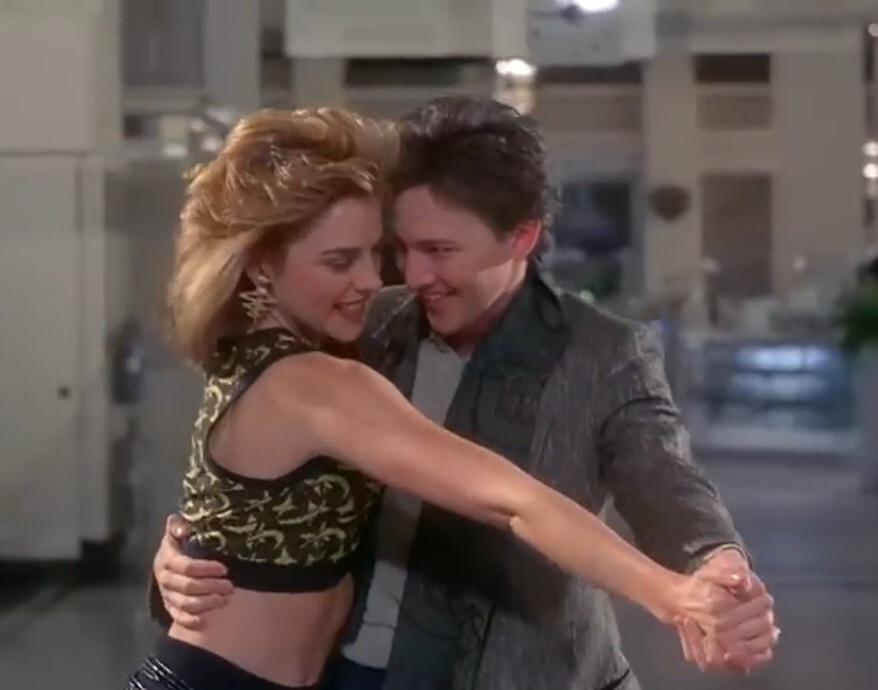
It is interested in how it all feels. It has all the ingredients right for 1987. Big department stores, corporate takeovers, designer clothes, pastel colors. Then there is the music. Specifically Starship.
Nothing’s Gonna Stop Us Now. The song. The Academy Award nomination for Best Original Song. Because if you’re going to make a movie about an ancient Egyptian princess reincarnated as a department-store mannequin falling in love with Andrew McCarthy, you might as well have Diane Warren write a song that sounds like the closing credits of every Hallmark movie ever made.
The song is absurdly catchy, and it makes the film’s final moments feel like a gigantic corporate presentation from 1987.
Somehow it works, or at least it does something, because Mannequin becomes rather difficult to hate. It is absolutely ridiculous, it makes no sense, its central romance is completely bonkers, its supporting characters are cartoons. Its villains are basically James Spader wearing an expression and Police Academy refugee Captain Harris with a dog.
Its comic relief is a flamboyant window dresser called Hollywood. Its heroine is an Egyptian princess trapped in a mannequin. And yet… it has charm. A weird, synthetic, aggressively commercial charm. It doesn’t pretend to be important. It doesn’t try to explain its own mythology. It doesn’t worry about whether the audience has questions. It simply says:
“Look. Kim Cattrall in a swimsuit! She is a mannequin. Andrew McCarthy loves her. James Spader is evil. G.W. Bailey has a dog. Meshach Taylor is fabulous. Now shut up and watch the window display.”
And perhaps that’s the secret. Modern cinema would spend forty-five minutes explaining the ancient Egyptian curse. There would be a mythology, and probably a prequel comic. There would be a a post-credit sequence and a spin-off streaming series.
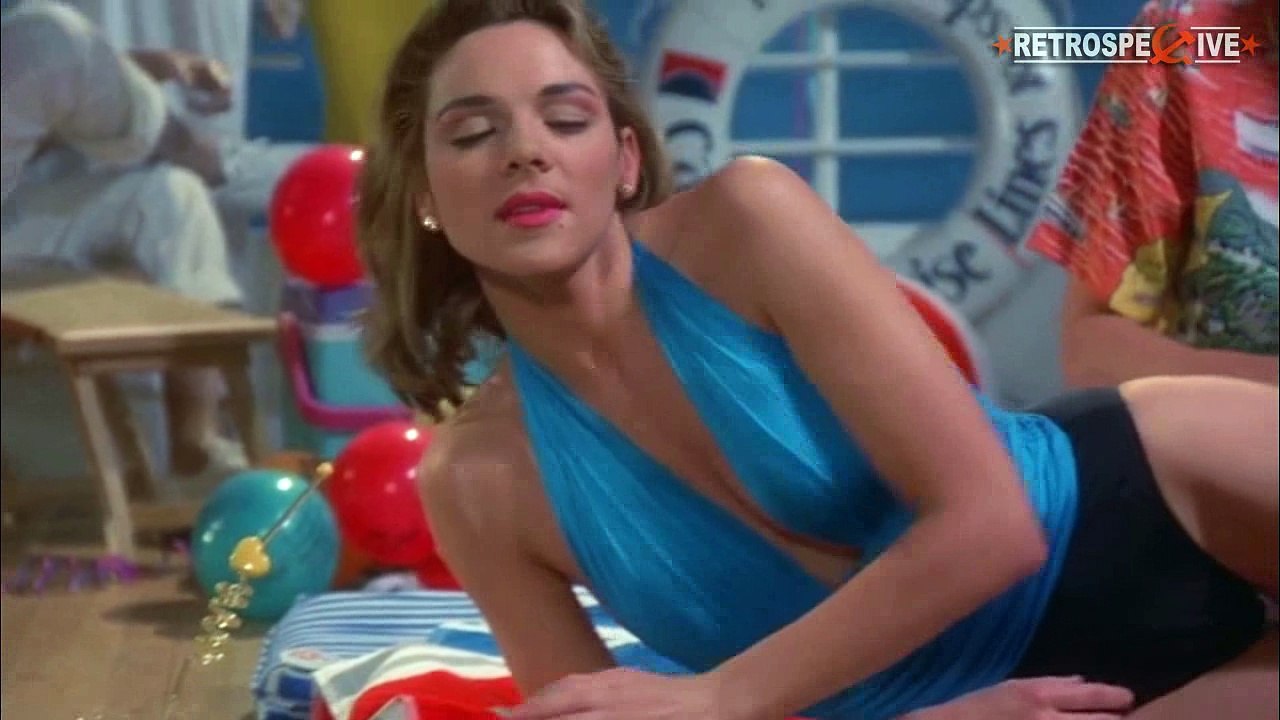
Mannequin just gets on with it. No explanation. No apology. No concern. Just Kim Cattrall. Lots and lots of Kim Cattrall.
Mannequin is a profoundly silly film. It is also a remarkably pure expression of its era, a time when Hollywood believed anything could be turned into a romantic comedy if you put enough attractive people, expensive clothes and synthesised music around it.
The cast is also bizarrely good for something this daft. Which is fortunate, because Mannequin asks you to forgive quite a lot, including the fact that nobody involved in the production seemed to stop for even one moment and ask:
“Hang on. Are we sure about this?”
But that’s Mannequin. It doesn’t care, and perhaps that’s why it has sort of survived. It’s stupid without being particularly cynical about its stupidity. It’s cheesy without being embarrassed about the cheese. It’s completely nonsensical and yet strangely sincere.
The movie’s entire worldview can be summed up by its title. And then G.W. Bailey chases somebody with a dog.