


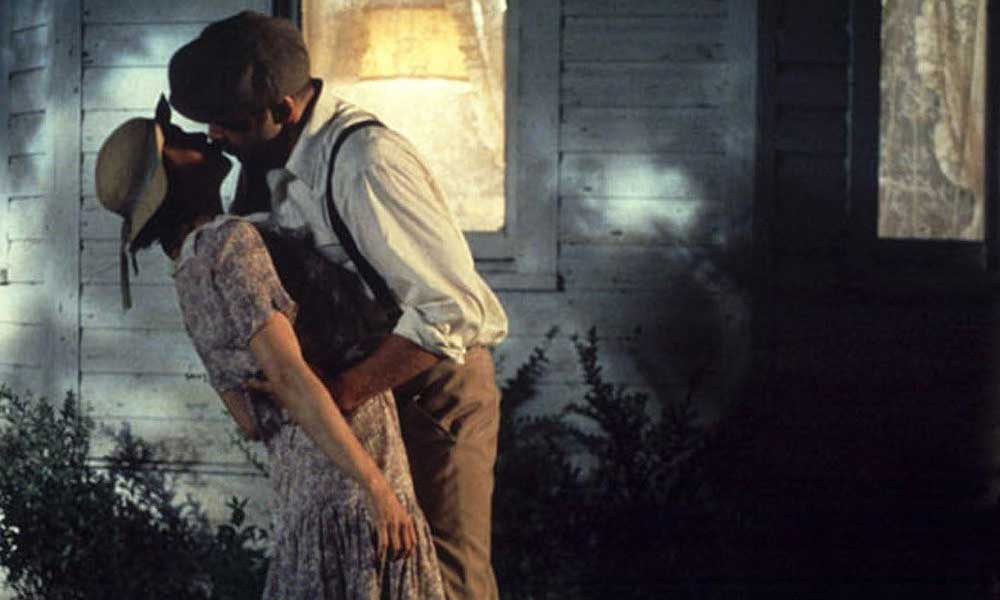
The Whole Wide World is a stealth geek film. At first glance it appears to be a period Hallmark romance movie starring a pre-fame Renee Zellweger. It’s actually a biopic of pulp fiction wunderkind Robert E. Howard, the man who invented Conan the Barbarian.
Numerous ladies likely watched it under the impression it would be a period Hallmark romance movie. One can only imagine how they felt when the tragic ending hit as they simultaneously finished their bowl of whip cream-covered cookie dough. Many cats were forced into unwanted embraces that night, my friend…
Let’s dive into The Whole Wide World like it’s the only Robert E. Howard biopic that we will ever get. Because it likely is the only Robert E. Howard biopic we will ever get…
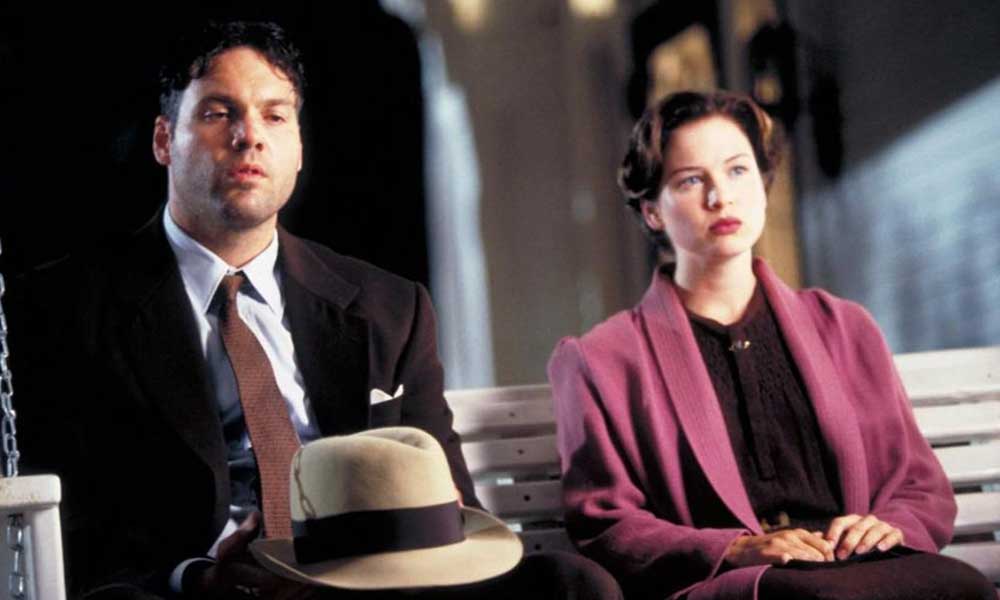
The Whole Wide World takes a different approach than standard biopics. Instead of concentrating on the main character, the story is told from the perspective of a tangential character. In this case, that is Novalyne Price (Zellweger).
Price had a relationship IRL with Howard in the dim, dusty days of 1933. The movie is based on her memoirs of that time: One Who Walked Alone.
The Whole Wide World
Price wrote One Who Walked Alone to dispel rumors about Howard back in the early 1980s. Fellow writer L. Sprague de Camp ended up the custodian and editor of Howard’s work after his death. Sprague wrote a biography titled Dark Valley Destiny (1983). He applied amateur psychology to Howard, portraying him as maladjusted and the owner of an Oedipal Complex toward his mother, among other things.
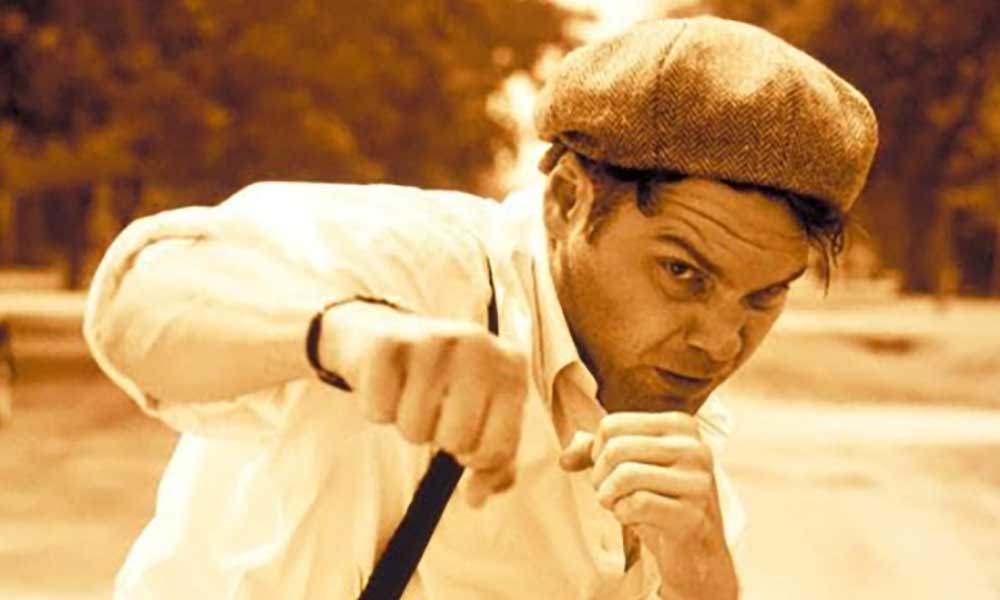
Price’s book revealed that while Howard was eccentric, sensitive and intense, he was not a lunatic. She did not gloss over his odd behaviors, however, as Howard was a bit out there. For example, he’d walk down the street shadowboxing; he’d often shout dialogue while he wrote; and he disdained social norms, which made him an iconoclast.
Because Price’s book came from a place of raw honesty, both toward herself and Howard, it provided a realistic look at Howard’s final years, which proved invaluable to fans.
In the end, Howard carried a great emotional burden. He likely battled severe clinical depression, had a nihilistic outlook of life, experienced a vagabond childhood as his family repeatedly moved, felt alienated and out of step with society and was unable to build lasting relationships with people due to his devotion toward his invalid mother, who was Howard’s only real anchor to the world.
Some have theorized that one reason Howard pushed people away is because he always planned to end his life when his mother died. His actions when his mother fell into a coma could support this.
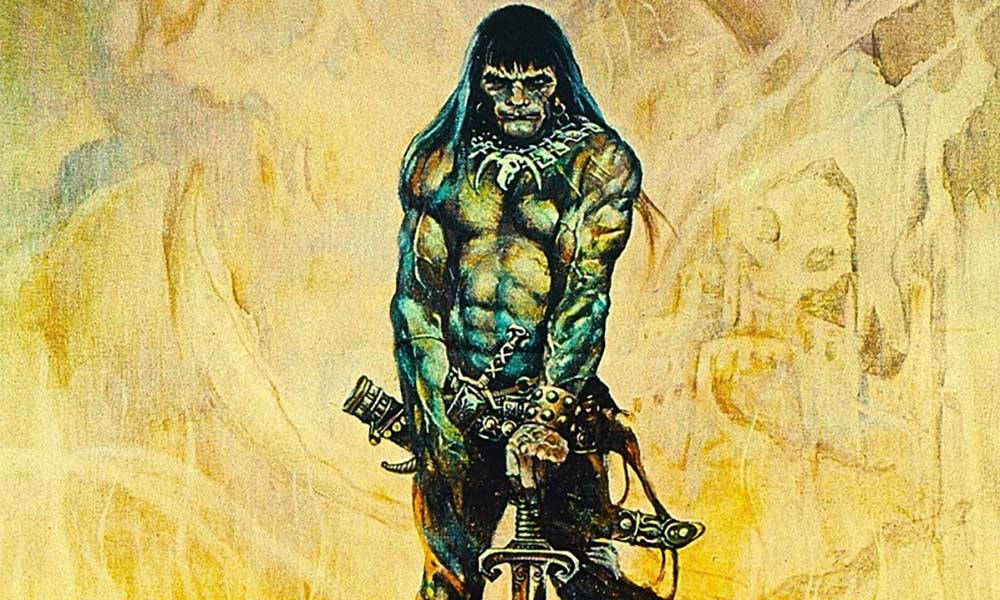
Despite these issues, Howard was a writing machine. His career lasted barely 12 years, but he authored over 300 short stories and practically created the Sword & Sorcery genre.
The Whole Wide World
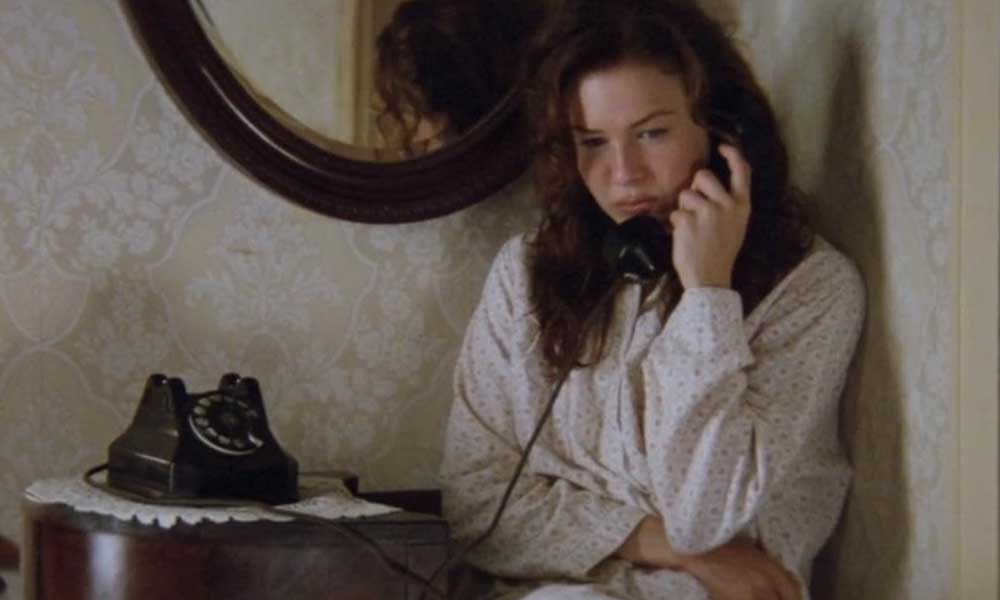
Price was a schoolteacher by trade, but she wished to write stories for the confession magazines and practiced her skills by writing down overheard conversations. This led her to instigating a meeting with Howard due to this shared interest.
Howard viewed all of this with a degree of bemusement. He learned to write by throwing himself into it after growing tired of regular jobs. Howard often wrote 12 hours a day and aimed for tales of high adventure, selling his stories to Weird Tales Magazine.
Despite their different approaches, Price and Howard spent a lot of time together, driving around the countryside and talking about writing, history and whatever else they found to ramble on about.
This led to an on again/off again romantic relationship. The two liked each other but often butted heads, and neither of them knew how to fix it.
In this way, The Whole Wide World might be one of the most realistic depictions of young love put on screen. Idealized romance is non-existent. It’s a fascinating look at a ‘sperg who finds a woman intrigued by his quirks but doesn’t know how to handle it.
Meanwhile, Price doesn’t have the experience to know how to deal with a man who identifies as a “morose, ungainly misfit.” She is unable to read Howard’s behavior, and when he finally does display a desperate desire to be loved, it gives her the “ick.”
This leads to a “romance” film that doesn’t have a familiar plot progression that viewers expect. It is simply the real-life depiction of a tragic relationship following its course to a doomed end.
No wonder The Whole Wide World died at the box office. Despite having a small budget of $1.35 million, it only recouped $375,000 at the box office.
The Whole Wide World
Dan Ireland directed The Whole Wide World. He began with Vestron Pictures and produced films like The Lair of the White Worm. The writer, Michael Scott Meyers, worked closely with Price to ensure the film stayed faithful to her recollections.
Vincent D’Onofrio heavily championed the project to get it off the ground. He also took on a producer credit to raise financing, in addition, he starred as Howard.
As for D’Onofrio’s performance, it is hard to get a handle on. He plays Howard as twitchy, boisterous, broken, romantic…and partially retarded. Numerous moments occur where D’Onofrio stares into space with a half-smile and no lights on behind his eyes.
Aside from that questionable choice, D’Onofrio is perfect to play Howard. Both men have a similar physicality and appearance that belies the poet within.
Zellweger is solid as Price. In fact, her performance in The Whole Wide World is what led to her being cast in Jerry Maguire. (And here I thought it was her role in The Return of the Texas Chainsaw Massacre.)
Together, D’Onofrio and Price create a couple that the viewer empathizes with, even as they watch their story play out in a way that is more King Kong than Pride and Prejudice.
The Whole Wide World
Despite its unique point of view into a tortured genius, The Whole Wide World falters at points. As the run time goes on, the film finds itself trapped in a repetitive cycle. Price and Howard go for a drive. Price and Howard connect. Price and Howard bicker about their world views. Price and Howard talk on the phone. Price and Howard go for a drive. Price and Howard connect. Price and Howard bicker about their world views.
And so and so forth…
It would have been nice to learn more about Howard’s writing process, daily life and childhood. The film could have touched upon the creation of Conan, Solomon Kane and other creations of Howard, along with his correspondence with H.P. Lovecraft, etc. Instead, it is content to mostly follow Zellweger go about her social life.
The Whole Wide World also stumbles with its ending. It tries to spin gold out of straw by making Howard’s death seem poignant. The sad truth of the matter is that Howard was a man who shaped an outlook that demolished all the institutions that might have offered him comfort in his despair and died broken and alone by his own hand. He once wrote…
I believe that all human desires, aims, and pretensions are ultimately futile and empty, leading from nothing to nothing…
That might go hard on a Reddit thread, but it is useless in the real world. Knowing this, it is hard to take the film’s final scenes seriously as Zellweger looks at a sunset with a smile, happy to have known Howard.
The Whole Wide World would have been better served to simply end with a shot of the final words Howard supposedly typed: all fled, all done, so lift me on the pyre; the feast is over and the lamps expire. Then let the viewer decide for themselves how they feel about the whole wide matter.


