


Is What Lies Beneath the last time Robert Zemeckis had anything to say with film?
Before the year 2000, Zemeckis elevated popcorn entertainment to levels that topped maybe even Spielberg. He then transitioned into a weird technological phase with Polar Express, Beowulf and A Christmas Carol.
Next came odd personal dramas like Flight, The Walk and Allied. Meanwhile, no one is sure what Zemeckis was doing with Welcome to Marwen, Pinocchio and The Witches.
These films were a far cry from his powerhouse days of Used Cars, Romancing the Stone, Back to the Future, Roger Rabbit, Death Becomes Her and more. Even when Zemeckis worked the production side of things, those projects had a shine to them: The Frighteners, Demon Knight and the Tales from the Crypt series, for example.
Zemeckis and Peter Jackson (pre-Phillipa Boyens) were my favorite filmmakers of that era. They effortlessly bridged the gap between story, special effects and technical craft.
As for What Lies Beneath, the idea behind it is simply inspired: what if Alfred Hitchcock did a Tales from the Crypt story with digital tools?
Is answering that question the last time Zemeckis felt alive behind the camera? We can only conject as we look at What Lies Beneath…
What Lies Beneath
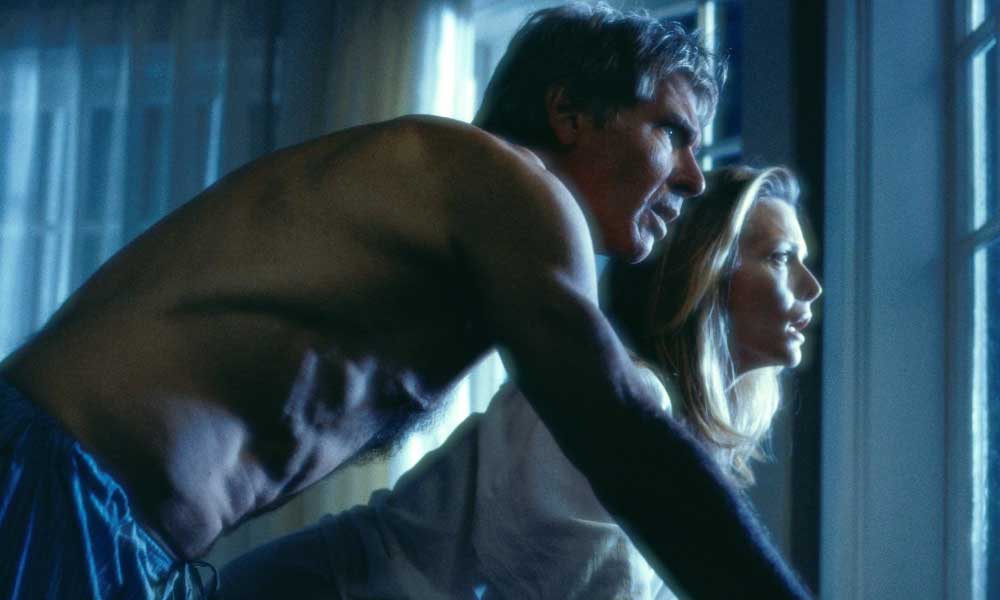
Zemeckis not only apes Hitchcock’s style in how he shot What Lies Beneath, the storyline references numerous Hitchcock films, as well.
The screenplay has the gaslighting-killer husband and victim/wife dynamic of Suspicion. It borrows elements of voyeurism from Rear Window. Psycho get homages with the name of the husband, some musical stings and a suspenseful bathroom scene. Vertigo is also touched upon with some soft body-doubling.
The original idea for What Lies Beneath came from hoity-toity writer Sarah Kernochan. Although, she also wrote the screenplay for 9½ Weeks, so how hoity-toity can she be?
Marvel Cinematic Universe actor Clark Gregg then further developed the story. Gregg originally tailored the screenplay for Spielberg, who wanted to do a supernatural movie that paralleled the wonder of Close Encounters of the Third Kind. It was to be about a mother who fills the empty space left in her heart when her kids leave by manifesting a ghost.
Thank goodness that didn’t happen. What Lies Beneath ultimately passed to Zemeckis, who isn’t afraid to bite the audience a bit and guided the story into something that is more like a Tales from the Crypt morality play gussied up with some prestige sensibilities.
Harrison Ford and Michelle Pfeiffer were cast as the main characters to further kick the whole enterprise up a notch. Ford even cleared his schedule by dropping out of The Perfect Storm.
What Light Through Yonder Window Breaks Lies Beneath
The final script for What Lies Beneath is not without its problems, but at least it errs on the side of aiming high.
The story attempts to be true to the movie’s title by addressing “what lies beneath” the actions of various characters. It does this poorly, middling and well in various instances.
It does it poorly in relation to the next-door neighbor, played by Miranda Otto (Lord of the Rings). What Lies Beneath uses Pyscho’s approach to a red herring for the first 45 minutes of the film. Psycho followed Janet Leigh around for half an hour in a heist plot before switching to a suspense movie.
In What Lies Beneath, Pfeiffer initially plays James Stewart from Rear Window by spying on her neighbors. She believes Otto’s character is murdered. It turns out that what lies beneath the erratic behavior of Otto is an intense love for her husband (played by James Remar) that causes her to freak out at the thought of losing him…or something.
Frankly, it does not ring true, and the movie wisely moves on before the viewer can think too much about how awkward this part of the film lands.

What Lies Sweet Little Lies Beneath
As for the middling use of what lies beneath a character’s actions, this applies to Pfeiffer’s character. Besides dealing with her daughter leaving for college and living with the memory of her deceased first husband, Pfeiffer is repressing the memory of seeing Ford cheat on her with one of his students. It is a bit clunky under analysis, but it mostly works from the standpoint of melodrama.
One plus is Pfeiffer does excellent work with the role. The viewer fully buys into her as she putters about the house as an aimless housewife, ghost hunts, investigates a missing person mystery, gets gaslit by Ford, comes to a horrible realization and eventually rises above her victimhood to save herself.
Not only that, it is refreshing to see an actress like Pfeiffer portray a woman. She acts like a woman and speaks like a woman. She even reacts to things like a woman. The character is not a girl-boss that presents a seamless façade of strength. She gets weepy, emotional, neurotic and everything else as she navigates the story.
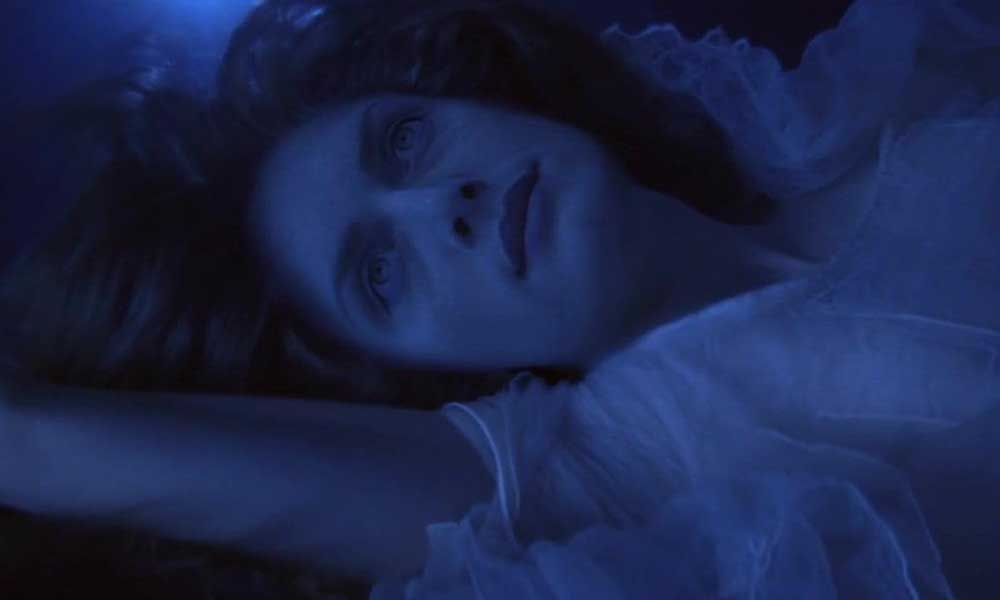
The highlight of Pfeiffer’s performance is when he plays being possessed by a ghost while her mind simultaneously comes to terms with the truth of what happened. This sequence is also helped by Zemeckis’s deft camerawork that nudges up against surreal.
The icy, blond beauty Pfeiffer has also plays well to the Hitchcockian aesthetic. She’s no Grace Kelly, of course, but she is close…
What About Bob Lies Beneath
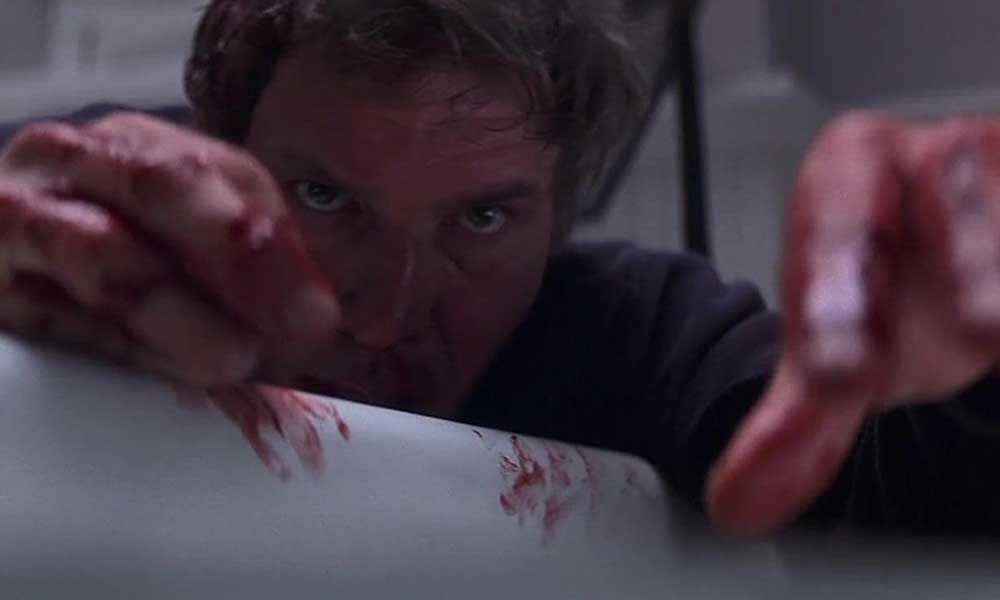
Ford’s character works well when it comes to showing what lies beneath his actions. He is the son of a brilliant geneticist trying to carve his own path as he works for a prestigious university. He is also a psychopath.
Throughout its runtime, What Lies Beneath throws out little hints at Ford’s depravity and lets the audience piece everything together. Unfortunately, it can’t be so subtle as to truly surprise the viewer with its casting-against-type trick, but it tries.
It also didn’t help that the original trailer worked the edges of the twist.
In the end, the viewer realizes Ford likely killed his father and probably killed Pfeiffer’s first husband, as well. My favorite line of the screenplay shows that the character is somehow even worse than all that. As he is on the verge of killing Pfeiffer, he says something to the effect:
“In some strange way, this tragedy will likely draw Caitlan (the stepdaughter) and I closer together. Whenever I look at her…I see you…”
From that, one gathers Ford is probably going to try to nail the stepdaughter, as well. That’s beautiful writing. The gross implication exists, but it is delivered in an elegant way not readily apparent.
What True Lies Beneath
While the screenplay plays around with things beneath the surface, Zemeckis runs the same type of theme behind the camera. It’s clear he is having fun imagining how Hitchcock would do various shots if he had digital capabilities to supplement his techniques.
Hitchcock liked to use camera tricks like dolly zooms, POV shots and fluid tracking shots to establish location and build dread. Zemeckis plays around with all those things, but with a twist. The camera regularly ends up in an impossible position. A good number of times the camera even ends up in looking at things from a “beneath” angle.
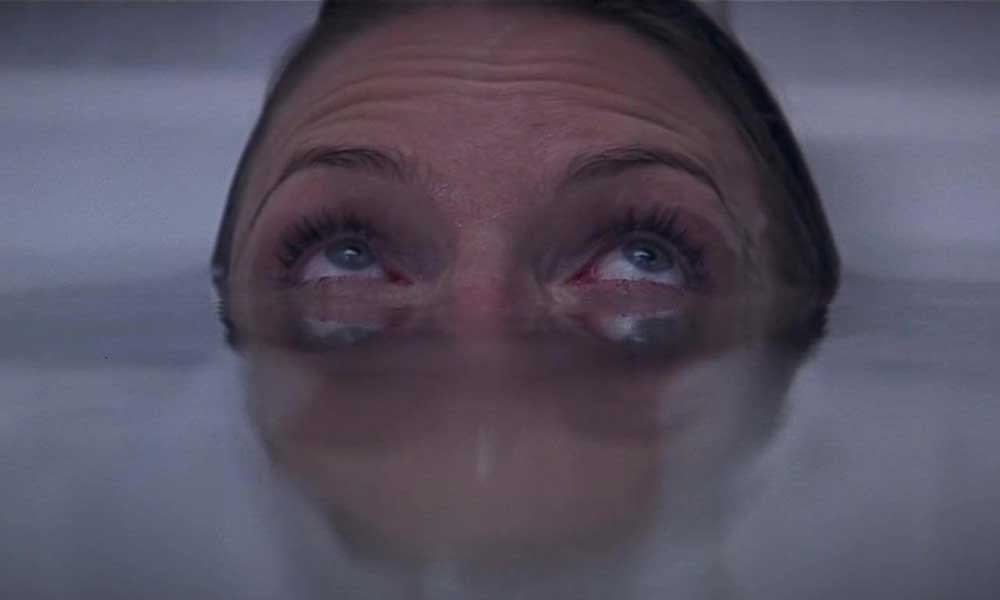
Mostly, the viewer will not question these viewpoints. They happen within the context of the story without time to process the camera’s position. For example, how can a camera look up from the bottom of a bathtub at a hand as it tries to grasp a shower attachment?
Hitchcock probably would have been tickled by these tricks, as well. After all, he is the guy that had Rod Taylor open an invisible door in The Birds.
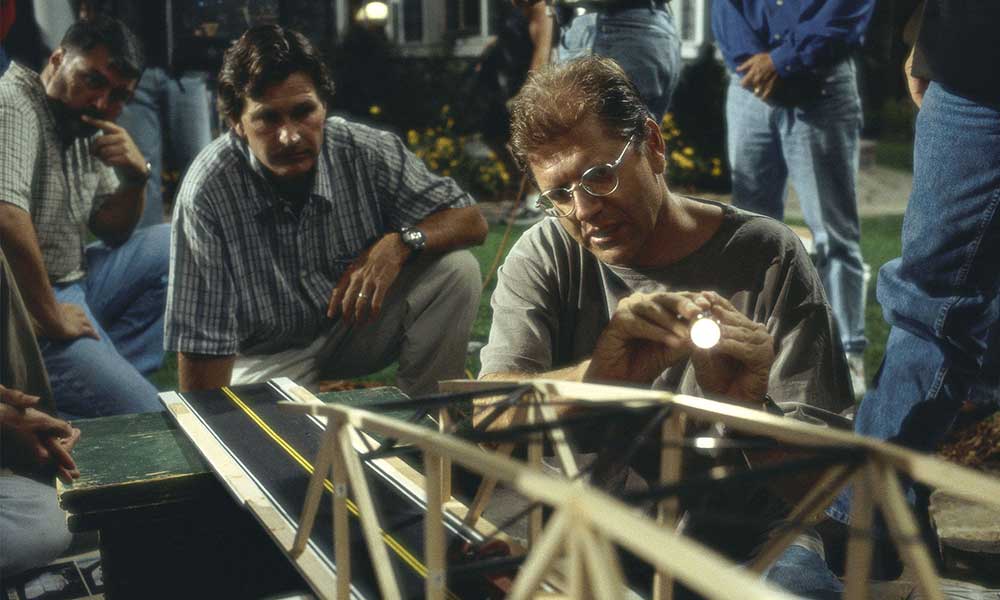
Maybe the most audacious shot of What Lies Beneath is where camera pans along the floor up to Pfeiffer’s face, then drops through the floor and looks up at Pfeiffer from beneath. This was done by having Ford and Pfeiffer on a partial glass floor. A hardwood floor was then added digitally in post production.
Hitchcock isn’t the only filmmaker Zemeckis references. He also does some De Palma during the climax when Pfeiffer flees the house. Zemeckis uses a split diopter and some clever storytelling with a rearview mirror that is pure De Palma in execution.
What Lies Beneath
In the end, What Lies Beneath is a flawed film, but it is also a pretty fun mash up of Hitchcock with Tales from the Crypt and digital filmmaking. One ding critics gave it at the time of release was that Hitchcock would never use the supernatural, but they miss the point. What Lies Beneath isn’t Hitchcock. It is Zemeckis playing around with film in a way he hasn’t really seemed to play around since.
Audiences seemed to enjoy it, as well. What Lies Beneath ended up at number 10 in the top 10 money grossers of the year 2000. It was the second Zemeckis film on the list that year. Cast Away came in at number 3. In fact, What Lies Beneath was made by Zemeckis with the same crew from Cast Away. They had to do something while Tom Hanks lost weight for the second half of the film, so they went off and banged out What Lies Beneath.
As for what happened to Zemeckis post-2000, maybe he simply ran out of fire-in-the-belly after back-to-back movies. And there is nothing wrong with that. He delivered great films repeatedly, pushed digital technology and won an Oscar with Forrest Gump. He also reports he did nothing but work in his 20s — no money, no life, only work. Throw in a divorce from character actress Mary Ellen Trainor in 2000, who has since passed away, and who blames Zemeckis if he flamed out?
Whether or not those things are what lies beneath Zemeckis’s present output is conjecture. It is better to focus on what is a known: Zemeckis is one of the greats.


