


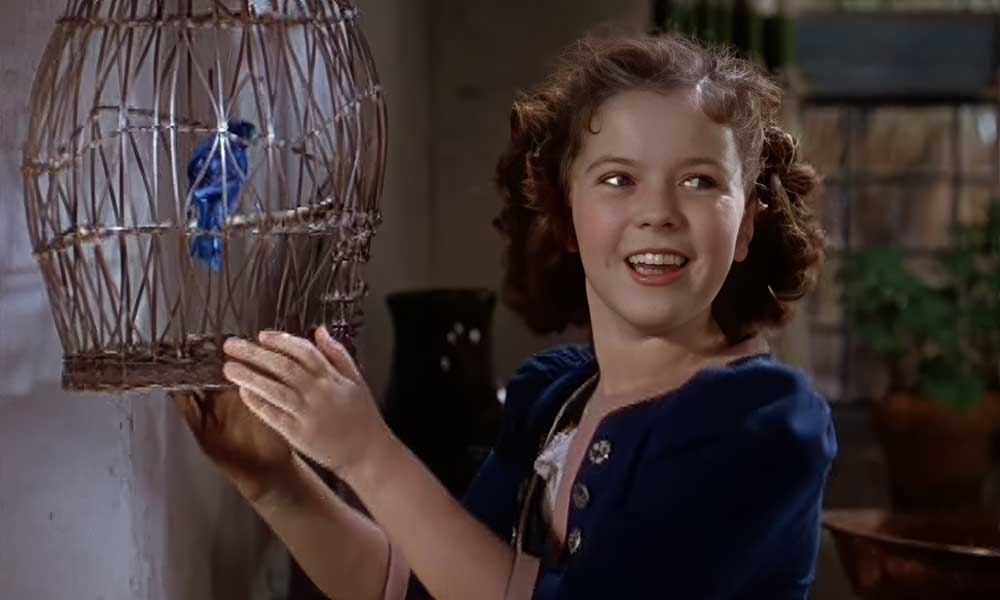
The Blue Bird was 20th Century Fox’s attempt to go toe-to-toe with the popularity of the Wizard of Oz. How did that turn out?
85 years later, people still ask…
“The what now…?”
This kind of hard-hitting, relevant journalism is what keeps The Last Movie Outpost the 116th ranked movie site on the Internet. We have our finger on the pulse of what movie fans want. They don’t want more articles on Star Wars, comic book movies or box office results of Star Wars and comic book movies.
No, a gnawing hunger exists for more articles about failed Shirley Temple films from nearly a century ago. The Last Movie Outpost fills that void and reaps the rewards of tens of clicks…
The Blue Bird
Modern audiences do not understand the power Shirley Temple wielded in the 1930s. Temple was the number one box office draw in the world from 1935-1938. She beat every adult movie star, including Clark Gable and Gary Cooper.
Temple single-handedly kept 20th Century Fox solvent during the Great Depression. President Roosevelt credited her movies with lifting national morale. Temple received more fan mail than Greta Garbo.
While Elizabeth Taylor and Mary Pickford (who?) reached great heights of wealth, fame and critical acclaim, neither achieved the cultural monopoly of a preschooler who commanded millions of dollars in the 1930s.
This sort of attention also drew the crazies. Temple nearly went the way of Dimebag Darrell on Christmas Eve 1939. She made a radio appearance to promote The Blue Bird. A female audience member brandished a gun at Temple because she believed Temple stole her dead daughter’s soul. Thankfully, police were able to subdue the woman before she fired.
Temple was so big, she essentially retired from acting at the age of 22, shortly after marrying the great B-movie actor John Agar. Agar wasn’t a great husband, however. He was a cheating boozer in that department. Temple then moved into a second career in politics. She was even considered as a running mate for Gerald Ford in the 1976 presidential election. She later served as the United States Ambassador to Czechoslovakia.
Temple passed away at the age of 85 on February 10, 2014 from chronic obstructive pulmonary disease. She was a lifelong smoker but avoided doing it in public because she didn’t want to set a bad example for her fans. This was unnecessary. She already set a great example. Despite her early, massive fame, she ended up a well-adjusted, normal adult who raised three children in a stable environment.
The Wizard of Oz
Temple was briefly considered for the role of Dorothy in The Wizard of Oz. In the end, producers were unimpressed with Temple’s singing and went with rising star Judy Garland instead. And the rest is history. While The Wizard of Oz was not initially profitable, it went on to be what is, for my money, the most popular film of all time. Even today, every child is born with an innate knowledge that The Wizard of Oz is a thing.
As for The Blue Bird…
“The what now…?”
Nevertheless, MGM had high hopes for The Blue Bird. It was based on a 1909 fantasy play by Belgian playwright Maurice Maeterlinck. It was directed by Walter Lang, who helmed the Roger and Hammerstein Yul Brynner musical The King and I. Lang later went on to direct Snow White and The Three Stooges.
Darryl F. Zanuck produced The Blue Bird. Outposters will likely recognize that name. Darryl sired Richard Zanuck, who went on to co-produce Jaws.
The Blue Bird went before cameras with a $2 million budget, which was sizeable at the time. The average cost of a Hollywood movie then was $350,000. Exact figures do not exist, but MGM took a big loss on the film.
Reason for the failure include a questionable cast, a gloomy, disjointed tone and the fact that Temple had started to outgrow her cute, cherubic appearance. Even then, Hollywood liked them young. The Blue Bird also faced stiff competition against The Wizard of Oz, Gone with the Wind, The Grapes of Wrath, His Girl Friday and Pinocchio.
The Blue Bird Is The Word
Calling The Blue Bird disjointed is spot-on. The Wizard of Oz has a straightforward plot: Dorothy wants to go home. The characters she encounters along the way assist her with getting home. Obstacles arise along the way to stop her from getting home. The Wicked Witch is the villain.
The plot of The Blue Bird is built around Temple’s character trying to find happiness, epitomized by a literal blue bird. While searching for the blue bird, Temple visits three fantasy zones: the past, the land of luxury and the future.
None of these fantasy zones have anything to do with each other. If any were removed, the viewer would not notice any damage to the plot. Rather, two of the zones exist to give the viewer life lessons in remembering loved ones and contentment.
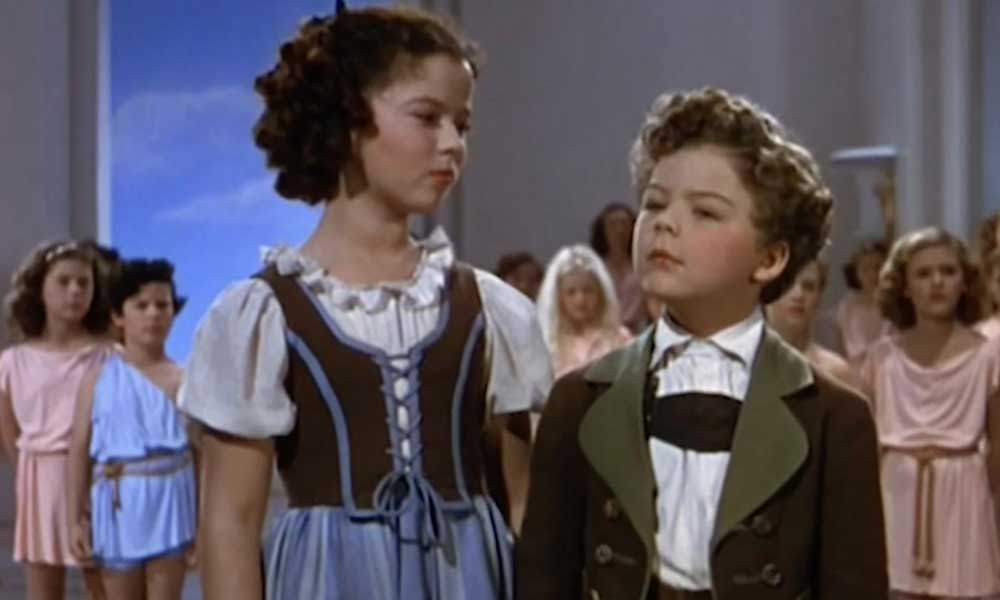
The future zone is the oddest module of the film. Temple and her friends visit a world where kids run around in tunics, waiting to be born. An odd aside exists where a young boy and girl weep as their love is torn apart by one of them leaving to be birthed. Another character is a young Abraham Lincoln boldly going to meet his destiny. Thomas Edison is also represented. Their names are not used, however. The only way a person could know it was Abraham Lincoln was by knowing the composer, Alfred Newman (“what me worry?”) reused his theme from the previous year’s film, Young Mr. Lincoln.
As for a villain presence, The Blue Bird has one, but it is extremely nebulous.
While The Blue Bird is an attempt to replicate The Wizard of Oz, it ultimately shares only surface level similarities. It has a young girl navigating a fantasy world, and it starts in black and white and then switches to color.
The Blue Bird Bunch
The cast of The Blue Bird never seems to generate much chemistry.
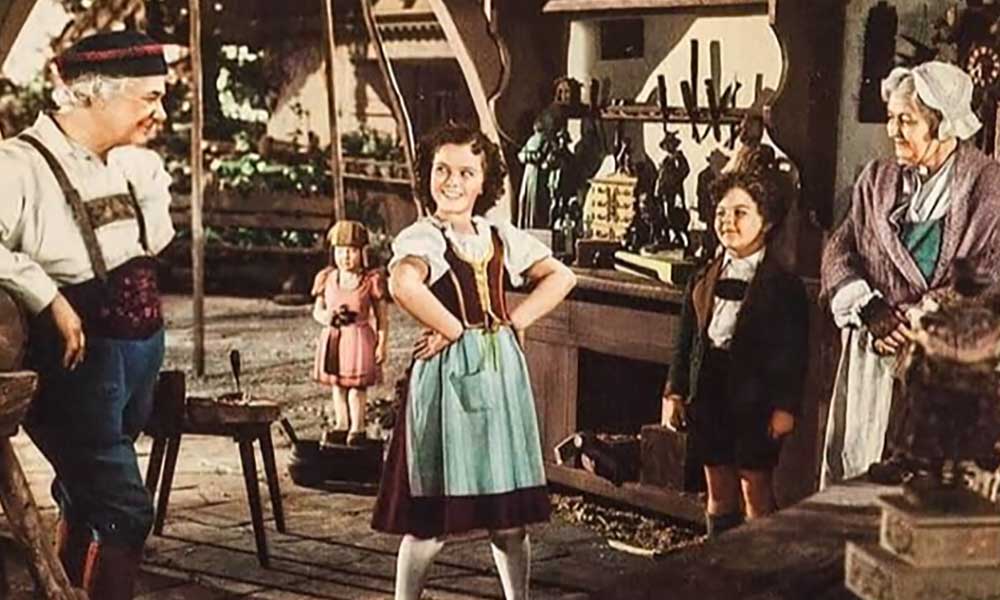
John Countryman plays Temple’s little brother. He reminds a person of Uter Zorker from The Simpsons. Interestingly enough, Countryman also retired young from acting, joined the miliary and went into diplomacy. He served as the United States Ambassador to Oman from 1981 to 1985. He and Temple probably still ran into each other in that world. Countryman only recently passed away in 2024.
Eddie Collins is the human personification of Temple’s dog in The Blue Bird. Collins serves as the film’s comic relief, similar to the Cowardly Lion from The Wizard of Oz. His comedy is extremely broad. He does a lot of mugging for the camera. Twice he is hooked up to wires and undercranked. Collins got started in film by serving as the live-action reference model for Dopey from Snow White and the Seven Dwarfs after being spotted in a Burlesque show.
Sharp-eyed Outposters might recognize the king of luxury world. He is played by Nigel Bruce, who starred as Watson in the Basil Rathbone Sherlock Holmes films.
A four-year-old named Caryll Ann Ekelund appeared as one of the unborn children in the future world. Tragically, she lost her life in a horrifying accident a short time later. She was celebrating Halloween, and her costume caught on fire from a lit jack-o-lantern. She died from her burns and was buried in her costume from The Blue Bird.
The Blues Bird
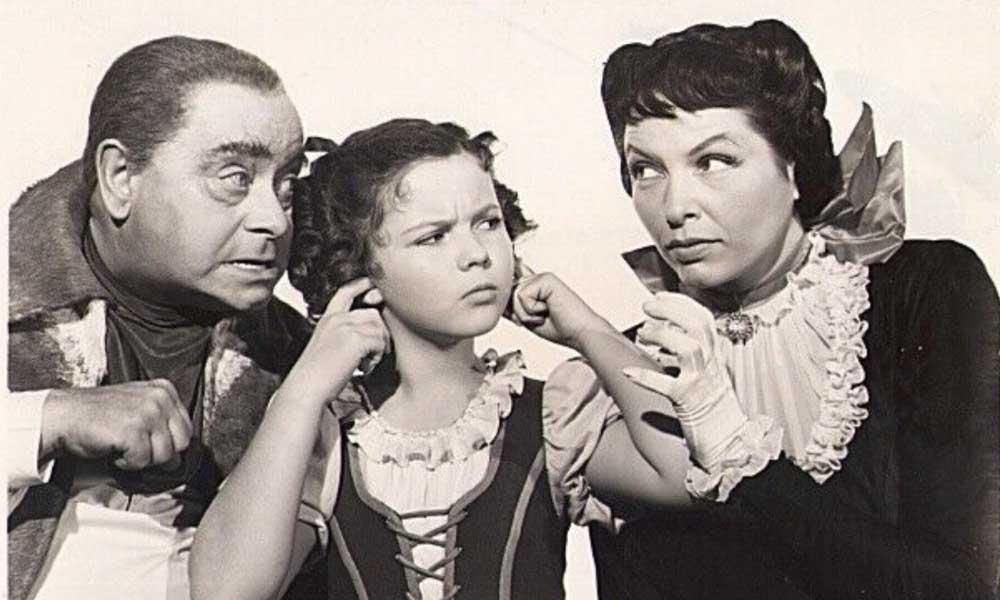
The most interesting member of the cast is Gale Sondergaard, who portrays the personification of Temple’s cat. This is the villain role, but only barely. For reasons not explained, this character wants to undermine Temple’s journey. She eventually, inexplicably, runs into a fire and dies.
Sondergaard was born in the small town of Litchfield, Minnesota, which I visited many times for work and even bought a used car there. The town does a poor job of promoting Sondergaard, though. I never knew this bit of trivia until I started this article…
Sondergaard won the first Academy Award for Best Supporting Actress for her work in Anthony Adverse (1936). Like Temple, she was also attached to The Wizard of Oz before The Blue Bird.
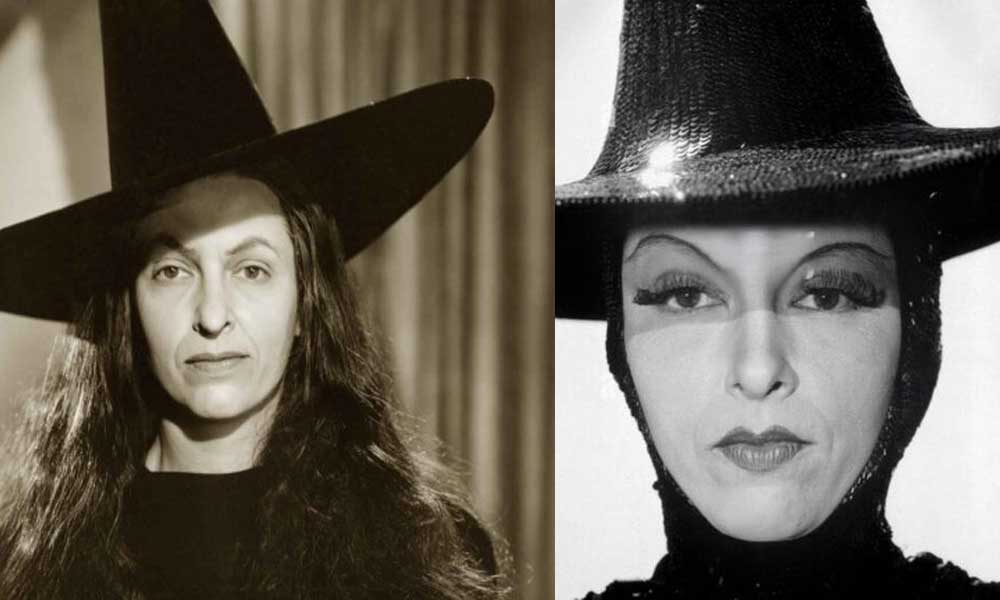
Sondergaard was initially cast to play the Wicked Witch in The Wizard of Oz. During pre-production, 20th Century Fox couldn’t decide whether to make the witch ugly or slinky/glamourous. Sondergaard was photographed for both versions (above). Once the studio decided to go the ugly route, Sondergaard backed out. She was afraid the disfiguring makeup would damage her career.
You know what else might damage a film career? Turning down the role of cinema’s all-time greatest villain! Darth Vader can kick sand. The Wicked Witch is the most famous baddie to ever hit the silver screen.
In the end, Sondergaard’s career got destroyed anyway during the Red Scare of the 1950s. Her husband, Herbert Biderman, was named as one of the Hollywood Ten, a group of suspected communists working in tinsel town. This resulted in Sondergaard being blacklisted until 1970 when she started appearing again on TV shows like Night Gallery and The Fall Guy. These types of roles were a far cry from the levels of fame she brushed against during her heyday.
The Blue Bird
The Blue Bird is proof that even more than 80 years ago, Hollywood was still a copycat town. It tried to ride the tail of The Wizard of Oz but ended up going nowhere. Today, The Blue Bird is an interesting artifact of another time and a glimpse into an era where a little girl commanded greater star power than Arnold Schwarzenegger.
The Blue Bird is about the search for happiness. Unlike the film it tried to emulate, it didn’t find the road that got it over the rainbow…


