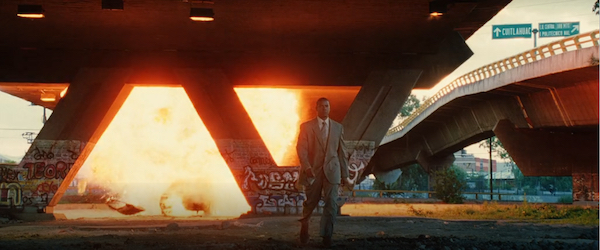


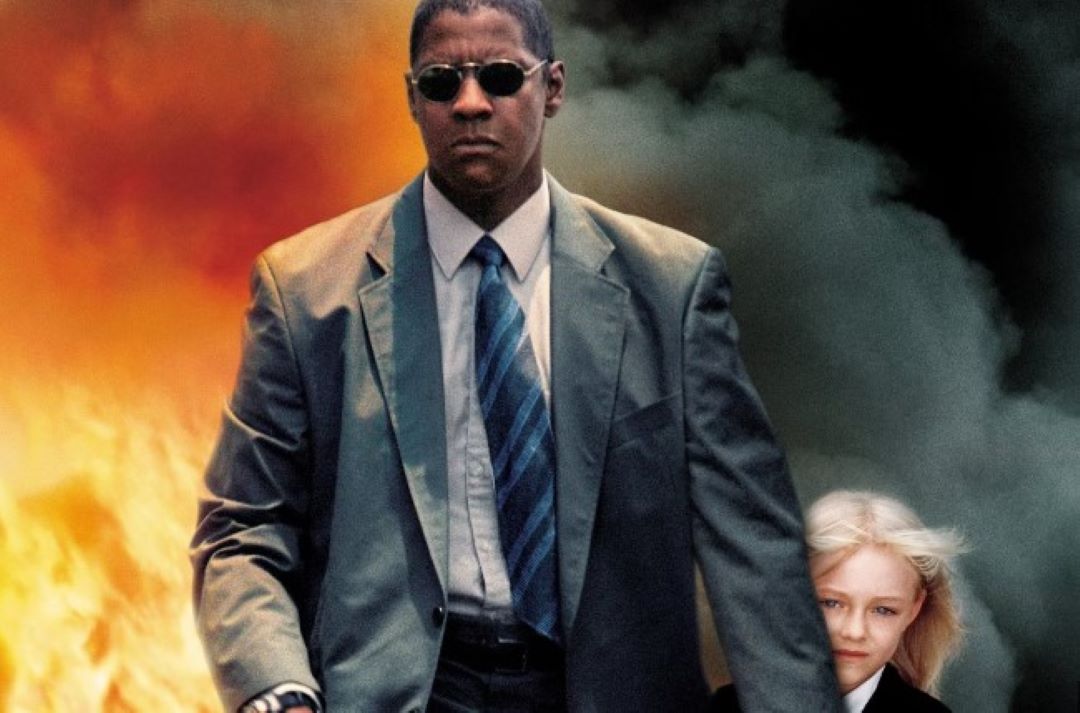
Sometimes, when I am feeling down or bored, I like to go on YouTube and watch clips of a stoic man killing Mexicans in a variety of inventive ways. I am fairly sure this means I have some kind of problem, but I can’t help it. I keep revisiting clips from Man On Fire.
There is something deeply reassuring about this film. Not because Man On Fire is a sensible film. It isn’t. Not because the plot is particularly plausible. It isn’t. And certainly not because Tony Scott has any intention whatsoever of allowing the human eye to perceive a scene in a conventional manner. He doesn’t.
The reassurance comes from the knowledge that if somebody kidnaps a little girl from Denzel Washington, they have made a catastrophic administrative error that will be extremely satisfying to the impartial observer. An error that will result in your entire organisation being introduced to an extremely taciturn man carrying a selection of firearms with an almost pathological enthusiasm for creative homicide.
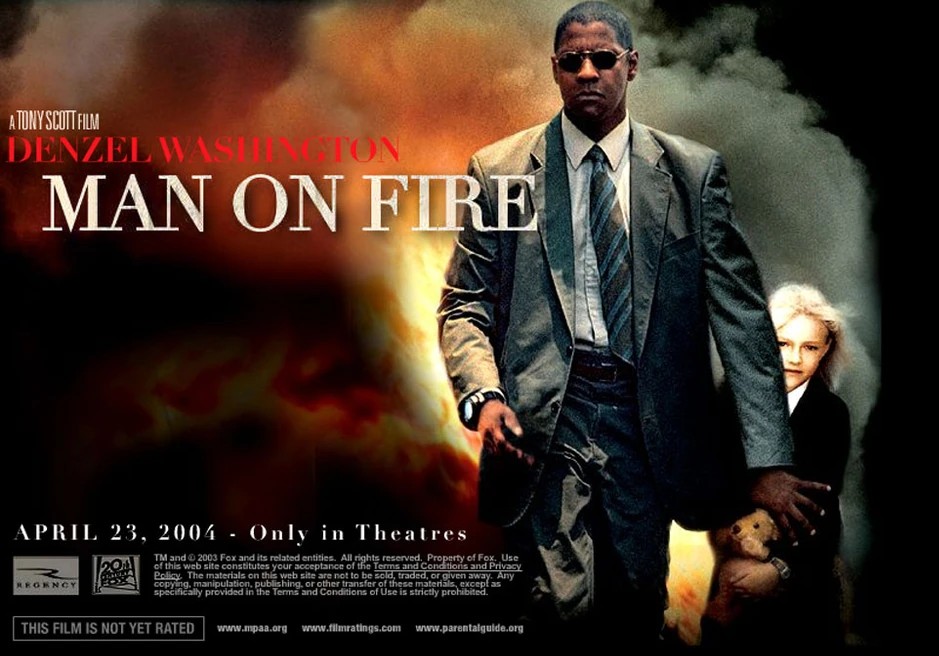
Man On Fire
Man On Fire feels different to a lot of revenge movies. Frequently, the hero loses somebody important as part of a pre-credits scene and then just goes off on a rampage. Pita (Dakota Fanning) isn’t even the lead character’s kid in Man On Fire, but Tony Scott spends an unexpectedly large chunk of the first act explaining why Creasy cares. Not only is it actually quite moving, but it is convincing.
As a result, what comes later feels earned and deserved.
When Denzel Washington eventually starts dismantling an entire Mexican kidnapping syndicate with the efficiency of a particularly motivated procurement department, it doesn’t feel like he’s simply gone off on a murderous bender. It feels personal. Very, very personal.
The first thing worth pointing out is that the 2004 Man On Fire is itself a remake of the 1987 film starring Scott Glenn.
Both films are based on A.J. Quinnell’s 1980 novel, so technically we’re dealing with another adaptation of the same source rather than some Hollywood executive discovering that there had once been a film called Man on Fire and immediately ordering a new one because apparently they had run out of things to remake.
The 1987 version, directed by Élie Chouraqui, starred Glenn as Creasy, with Joe Pesci, Jonathan Pryce, Danny Aiello and Brooke Adams among the supporting cast. It is a much leaner, more straightforward 92-minute affair and is set in Italy.
And this is where the 2004 version makes a very sensible change. It moves everything to Mexico City.
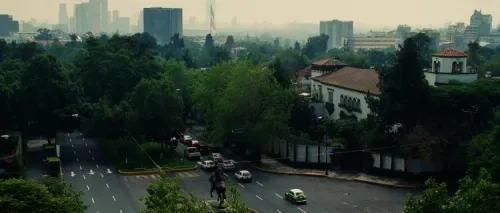
The original novel had been written when kidnapping was a significant problem in Italy. By the early 2000s, that setting no longer made quite as much contemporary sense, and Tony Scott argued that keeping the story in Italy would effectively require turning it into a period piece. Mexico City, where kidnappings were a very real contemporary problem, became the new setting.
It turns out to be an inspired relocation. Mexico City isn’t just somewhere the film happens to be taking place. Scott treats it as a character. It’s enormous, crowded, wealthy, poor, beautiful, chaotic, corrupt and vaguely threatening at all times. Basically, it’s perfect Tony Scott territory, and nobody filmed action quite like Tony Scott. Nobody.
By 2004, Scott had developed a visual vocabulary that consisted primarily of:
- extreme close-ups
- rapid cutting
- jump cuts
- handheld cameras
- strange colour processing
- frames within frames
- deliberately awkward compositions
- subtitles appearing in places subtitles have absolutely no business appearing
- shots that appear to have been filmed while the camera operator was being pursued by something
- and enough visual noise to make a migraine feel under-edited.
Some directors use a camera. Tony Scott attacks you with one. Here, he was influenced by City of God, and Scott deliberately embraced a gritty, hyperactive visual style. The production spent months shooting in Mexico, with huge numbers of local performers and extras.
The filmmakers also researched the kidnapping environment, while Mexico City’s police chief Marcelo Ebrard served as a consultant.
Scott’s approach is particularly effective once Creasy’s world begins falling apart. The film’s first half is relatively controlled. Then Pita is taken, and suddenly the movie itself seems to have acquired PTSD. Everything becomes fractured, ugly and aggressive. The subtitles wriggle around the screen like they’ve had too much caffeine. Images stutter. Cuts arrive before your brain has finished processing the previous shot.
It’s excessive. It’s completely unnecessary. It’s absolutely Tony Scott, and somehow it works.
Pitch Perfect Denzel
Denzel Washington is one of those actors who can make ridiculous material feel like it has consequences.
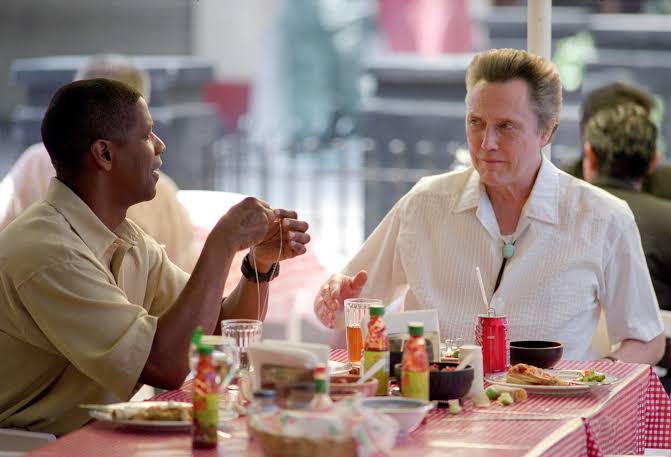
Creasy is a wreck. He’s an alcoholic former CIA operative who has essentially decided that his life has already ended. He arrives in Mexico City to stay with his old friend Rayburn, played by Christopher Walken, and takes a job protecting nine-year-old Pita Ramos.
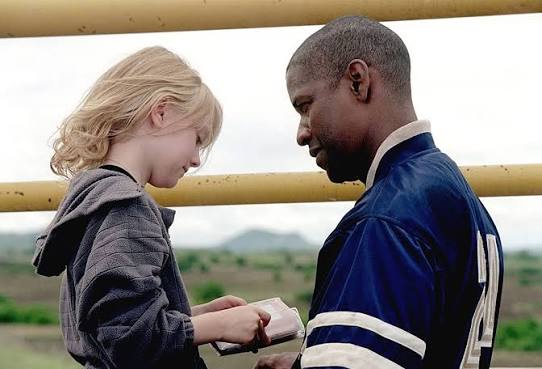
Creasy doesn’t particularly want the job. He drinks, he broods, he drinks some more, he looks like he hasn’t slept since the Reagan administration. Then Pita enters his life.
And here is the clever bit. The movie takes its time. This is not merely a case of “cute kid meets miserable action hero” followed immediately by “kid gets kidnapped, cue enormous explosions.”
Creasy and Pita actually develop a relationship. She talks to him, she asks questions, she irritates him, but gets him to smile. She challenges him, and eventually starts to drag him back to the light, and back to his humanity. And Dakota Fanning is terrific. She’s not playing the usual Hollywood movie child who speaks exclusively in lines written by a 47-year-old screenwriter suffering from terminal sentimentality.
Pita actually feels like a child. She and Denzel have genuine chemistry, and much of their interaction was reportedly improvised. Washington was apparently so impressed with Fanning that he would sometimes watch her and forget he was supposed to be in the scene.
The result is that when Pita is kidnapped, Creasy doesn’t simply become angry. He loses the one thing that had brought him back to life. Somebody, somewhere, is going to have a very bad day as a result. Suddenly, Man On Fire stops being a character drama and becomes a revenge movie.
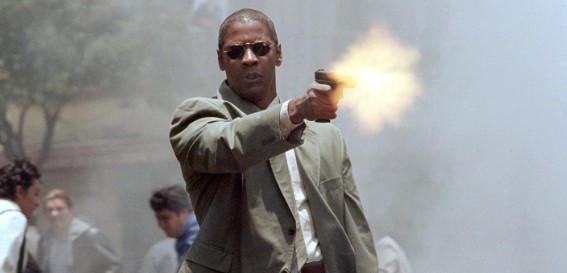
Creasy doesn’t merely shoot people. He conducts interviews via torture and then, when he has enough info, they are immediately dispatched.
And then we get the scene. You know the one.
The bomb. The arse. The countdown and the complete lack of empathy.
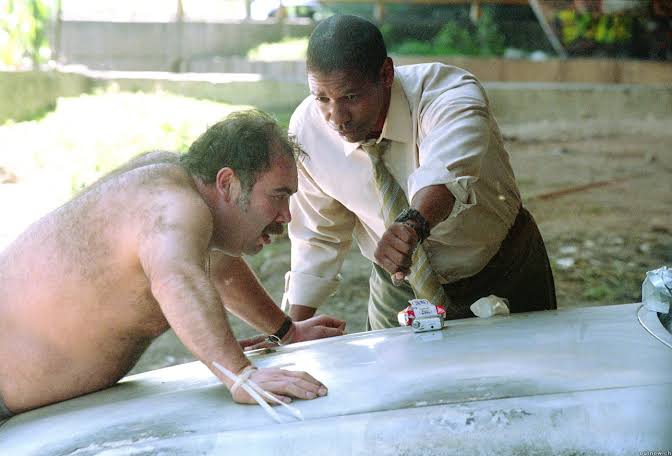
Creasy kidnaps corrupt police officer Victor Fuentes, straps him to the bonnet of a car and explains, with the calm instructional manner of a man demonstrating how to assemble flat-pack furniture, that he has inserted an explosive device into the man’s rectum. This is not implied. This is not metaphorical. There is a bomb in the man’s arse. It is one of the most spectacularly undignified interrogation techniques ever committed to film.
Fuentes desperately explains what happened. Creasy is glad of the information, but is way past giving a fuck about the state of Fuentes’ rectum.
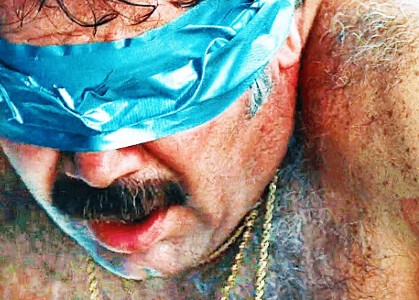
A man who has spent his career terrorising other people discovers that Tony Scott’s idea of procedural justice involves high explosives and absolutely no dignity whatsoever. It’s horrible. It’s hilarious. It’s magnificent.
Creasy’s Art Is Death
Christopher Walken is, naturally, Christopher Walken. This means that he enters the film, looks like Christopher Walken, talks like Christopher Walken and delivers his dialogue as though every sentence has just been mailed to him from another dimension. Then he disappears.
His description of Creasy is perfect – The man is an artist. His art is death. And he’s about to paint his masterpiece.
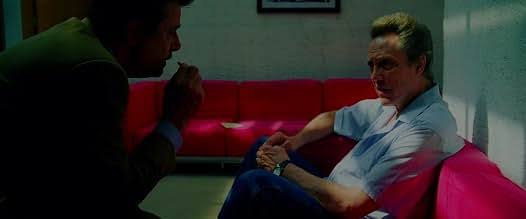
It’s absurd, but brilliant. Walken sells it because he has spent decades perfecting the peculiar cinematic skill of making absolutely anything sound simultaneously ominous and faintly ridiculous.
The supporting cast is absurdly understated yet solidly brilliant. Giancarlo Giannini brings gravitas as Manzano. Rachel Ticotin provides the exposition as a journalist. Ex-Mr Jennifer Lopez Marc Anthony plays Pita’s father, with Radha Mitchell as her mother.
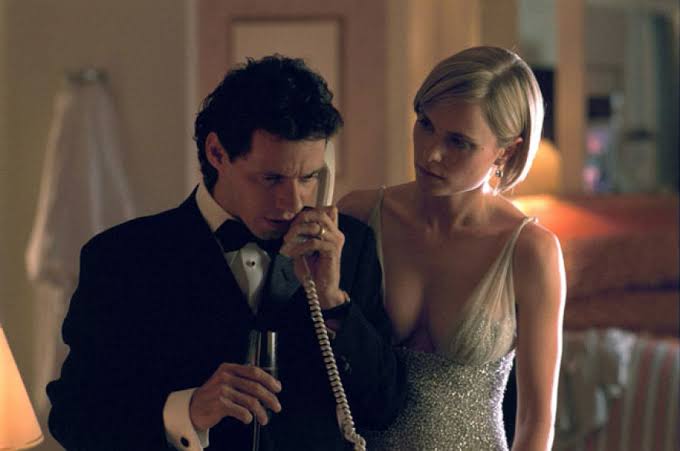
And then, wandering into the movie directly from the 1980s, is Mickey Rourke post surgery. Rourke plays Jordan Kalfus, the family’s lawyer, and he’s one of those wonderful supporting players who appears just long enough for you to think, “Hang on, is that Mickey Rourke?”
Yes. Yes it is.
The production actually went to Mexico. This wasn’t Hollywood pretending Mexico City was Mexico City while filming in Vancouver through that orange filter they always use for Mexico.
Principal photography took place primarily in Mexico City, Ciudad Juárez and Puebla, with interiors filmed at Estudios Churubusco. The production lasted around five months and used approximately 70 local actors and 11,000 extras. And filming wasn’t without risk.
Several crew members were reportedly robbed at gunpoint, and Washington needed substantial security, which creates a rather wonderful production irony.
Tony Scott also apparently met Denzel again by chance in a doctor’s waiting room after the two had worked together on Crimson Tide. Scott had recently seen Dakota Fanning in I Am Sam, and the pairing apparently clicked in his mind.
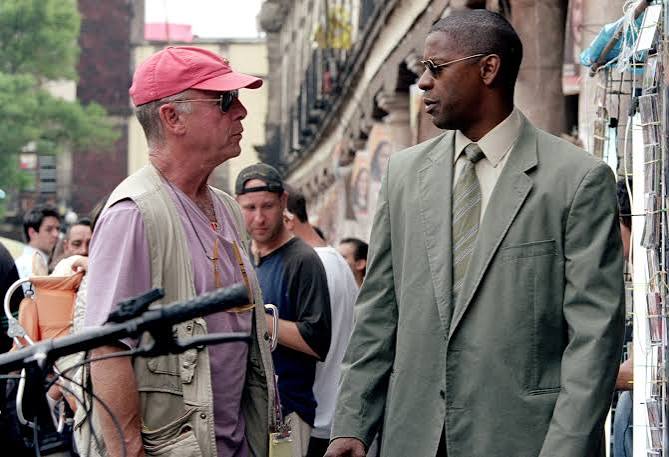
Hollywood casting occasionally works through years of development, elaborate meetings and market analysis. Tony Scott apparently went to the doctor and thought “Denzel. That kid. Guns. Mexico!” – Job done.
There is, admittedly, something rather sneaky about the pleasure the movie generates, hence my revisiting of the clips more often than is probably healthy. The villains are not sympathetic. The corrupt cops aren’t misunderstood. The kidnappers aren’t conflicted. The people operating this whole racket are horrible, without any redeeming features or gray areas whatsoever.
So when Creasy starts working his way through them, the movie gives the audience a rather grubby little permission slip to enjoy the violence. You know you shouldn’t. But you do. Watching the first member of the crew that Creasy gets his hands on fold, completely, from swaggering gangster to screaming, fingerless bitch boy in just a few moments of screentime is borderline life affirming.
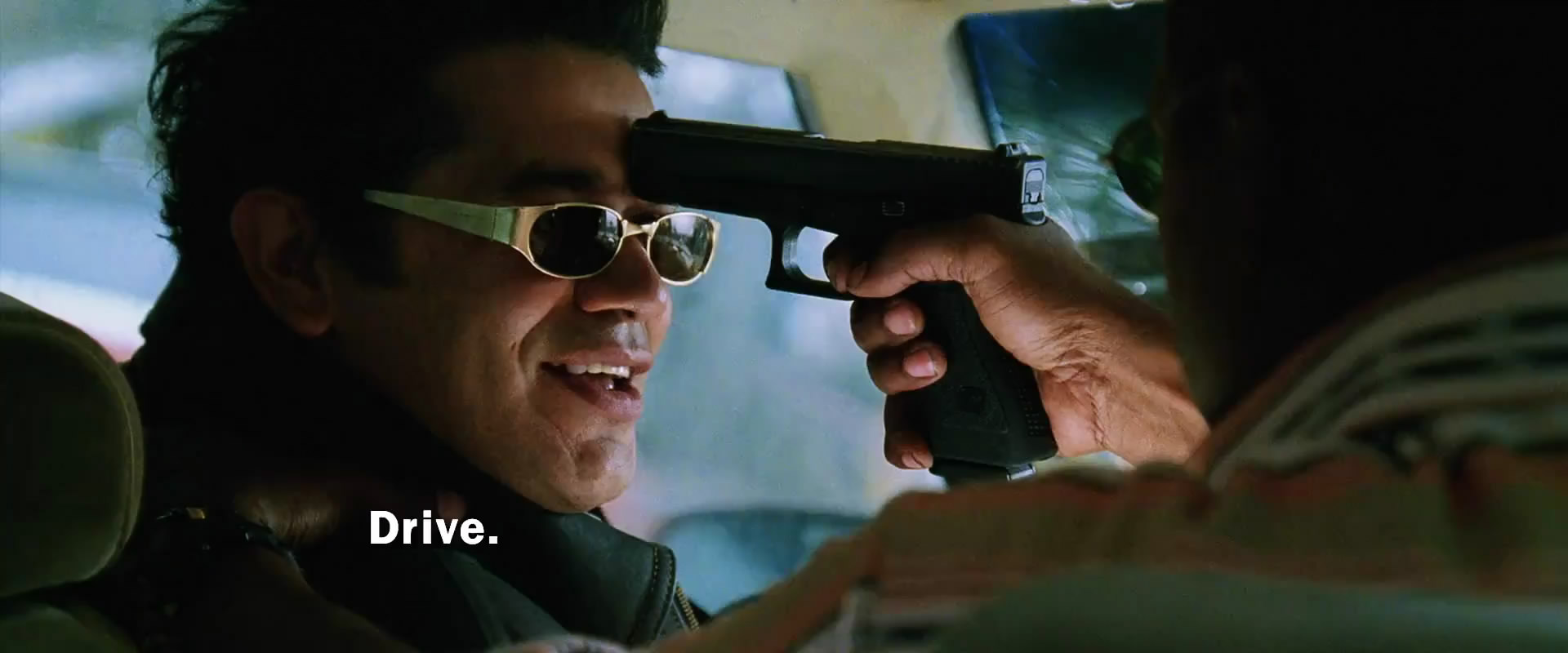
The film is morally uncomplicated in that respect. Creasy isn’t killing random people. He’s following the chain. One criminal leads to another, one corrupt cop leads to another, one conspirator leads to another. Eventually everyone who thought they were clever enough to exploit the kidnapping of a child discovers that they have made the unfortunate mistake of becoming personally relevant to Creasy and he’s way past caring what people think.
It is basically cinematic wish fulfilment, and it is hard to resist.
And Then There Is That Ending (Spoilers)
The final act is surprisingly melancholy. Creasy has been shot repeatedly and is bleeding out. He has spent the movie hunting the people responsible for Pita’s disappearance, and he’s got her back.
That’s the point. He doesn’t actually need to survive. His purpose has been restored – The man who arrived in Mexico wanting to die has spent the movie rediscovering a reason to live, only to sacrifice himself to save the person who gave him that reason.
There was actually an alternate ending in which Creasy survived long enough to confront the Voice and used the earlier rectal-bomb gag as the basis for a spectacularly insane final act. Tony Scott rejected it because he felt it didn’t fit the tone, which is probably wise.
Although there is a small part of me that desperately wants to live in the universe where Denzel Washington wanders into the villain’s headquarters, checks his watch and then detonates his own arse. That would be cinema.
Man On Fire is ridiculous, overlong, ludicrously violent, and occasionally mistakes visual chaos for visual storytelling while the plot eventually resembles a particularly violent flowchart. Yet it works.
Because underneath all the explosions, blood, jump cuts, a rocket launcher, corrupt cops, enormous guns and Tony Scott’s increasingly deranged editing, is a surprisingly sincere story about a broken man discovering that he isn’t completely broken.
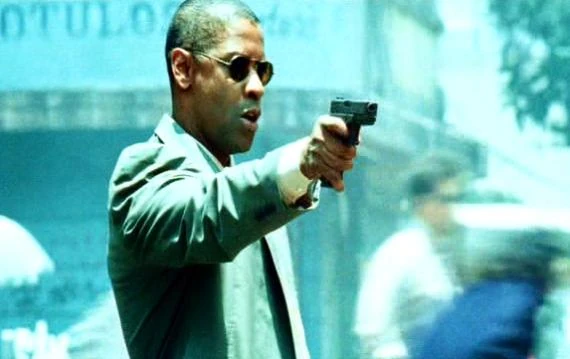
Denzel Washington is magnificent. Dakota Fanning is superb. Christopher Walken is Christopher Walken, and the Mexico City setting gives the film a real sense of place. When Creasy finally goes to war, the movie delivers exactly what the audience has been waiting for.
Man On Fire is the sort of film where anyone can spend two hours being a critic and complaining about excess and then, when Denzel blows somebody’s car into the next postal district, quietly lean forward and say:
“Go on then, Creasy.”
And that, frankly, is the sneaky genius of it. The movie spends its 45 minutes convincing you that this man has found his humanity, then it spends the rest of the film enthusiastically weaponizing it until, somewhere in Mexico City, a police chief discovers that there are significantly worse things in life than being arrested.
Go on then, Creasy.