

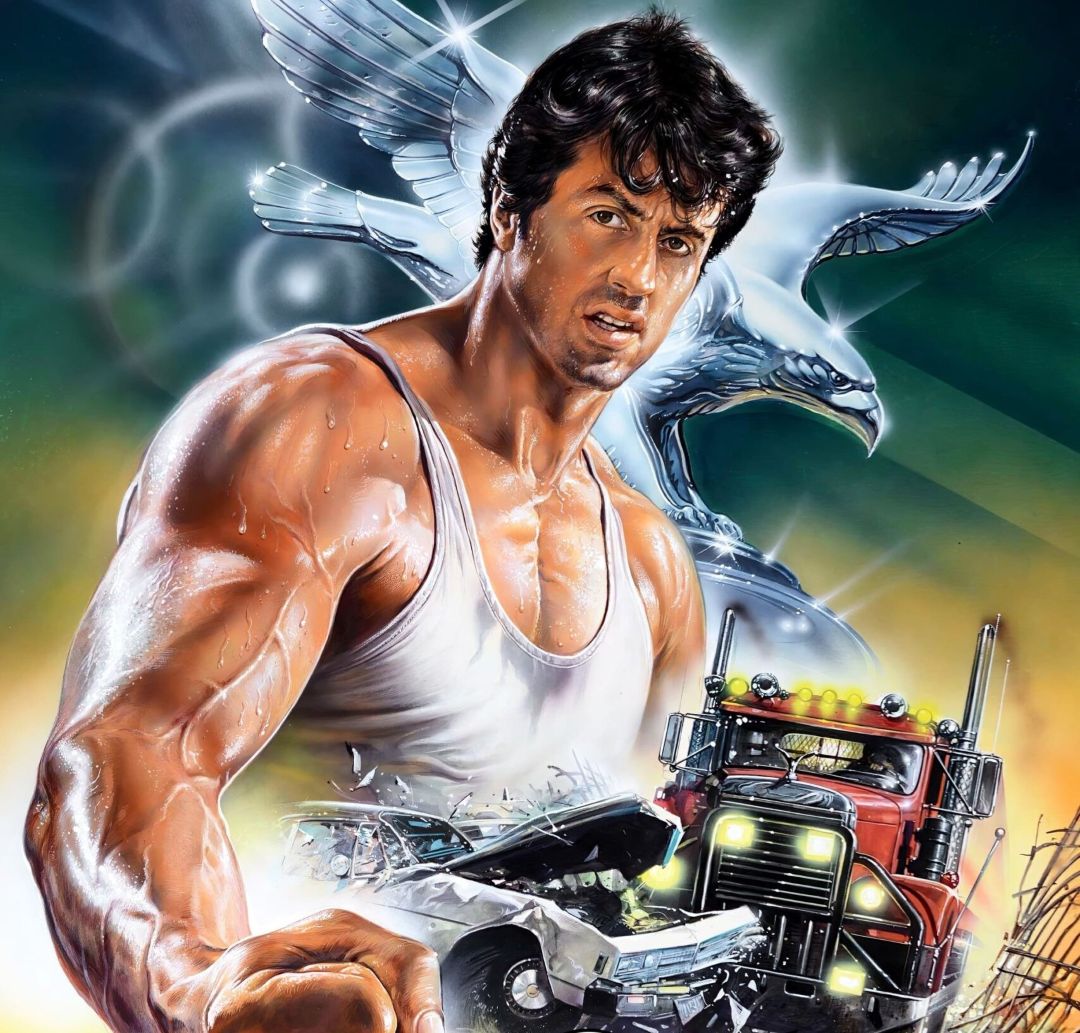
The year is 1986. Sylvester Stallone is one of the biggest movie stars on Earth. He has done for action cinema what Michelangelo did for ceilings. Rocky IV has practically ended the Cold War single-handedly. So what should he do next? In this malestrom of opportunity, one suit dares to ask the question:
“What if Rocky was a truck driver?”
Go on….
“And instead of boxing…”
Yes?
“…he arm wrestled strangers at truck stops for cash.”
And a contract did fall from the heavens for all to sign. This, Outposters, is actually how we ended up with Over The Top, unquestionably the greatest truck-stop-arm-wrestling-child-custody-battle-sports-movie ever made!
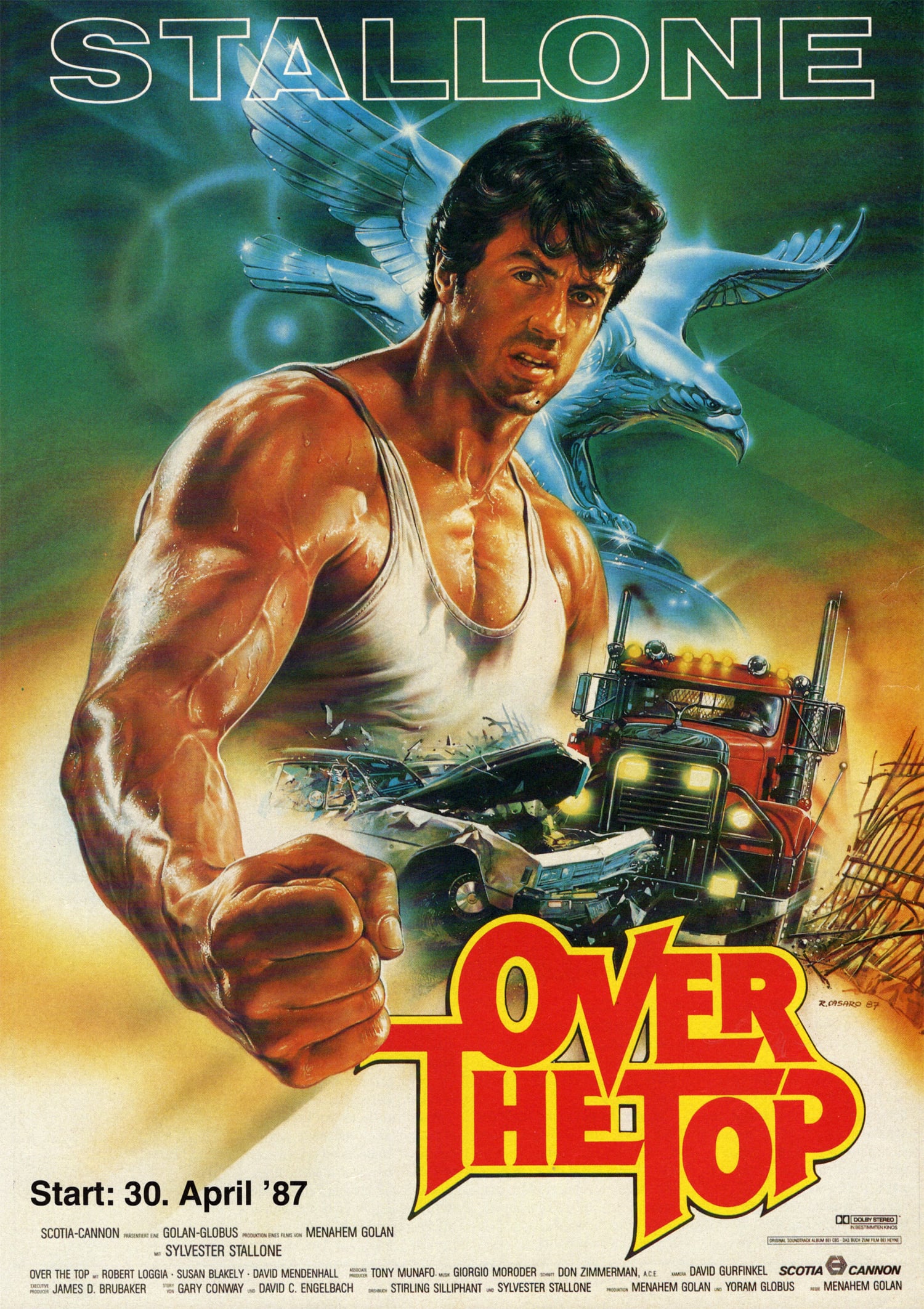
Over The Top
Yeah, you’re telling me! Viewed today, it is possible to think that they knew exactly what they were doing, and this title was some kind of in-joke. Then again, this was the 1980s, so it is also just as possible that they thought trying to do for truck stop arm wrestling what Rocky did for boxing and Rambo did for PTSD was a great idea. Especially with the world’s least convincing custody battle as its emotional core, and a main character called Lincoln Hawk.
The fact that this movie exists at all is one of cinema’s great miracles. The fact that it cost around $25 million and was designed as a major summer blockbuster is even funnier.
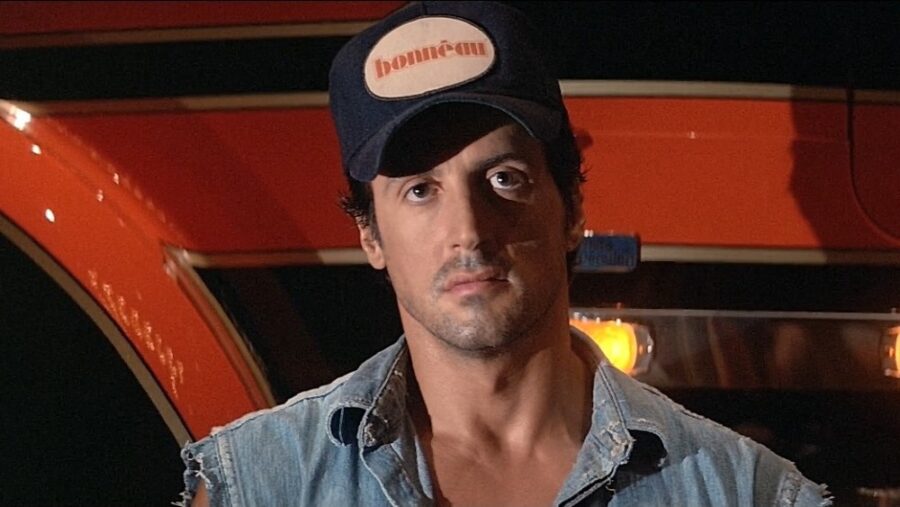
Let’s start with the hero. Sylvester Stallone plays Lincoln Hawk, which sounds less like a human being and more like a rejected G.I. Joe action figure.
“Now available: LINCOLN HAWK! With removable truck cab and arm-wrestling action!”
Hawk is a long-haul truck driver who decides to reconnect with his estranged son after years of absence. Already we’re in trouble. Not because of the premise, but because nobody involved appears remotely interested in making the custody dispute believable.
The movie’s central conflict is that Hawk wants a relationship with his son, Michael. Michael’s grandfather, played by Robert Loggia, opposes this. Why?
Because Robert Loggia has looked at the screenplay and correctly identified Lincoln Hawk as a man whose primary qualifications for parenthood are:
- Owns truck.
- Has arms.
- Occasionally wins gambling money.
Loggia spends the entire film behaving like the only sane person in the universe, and yet the movie desperately wants him to be the villain. He’s not. He’s a wealthy, successful grandfather who doesn’t want his grandson living in a Freightliner with a drifter who settles disputes through competitive elbow placement.
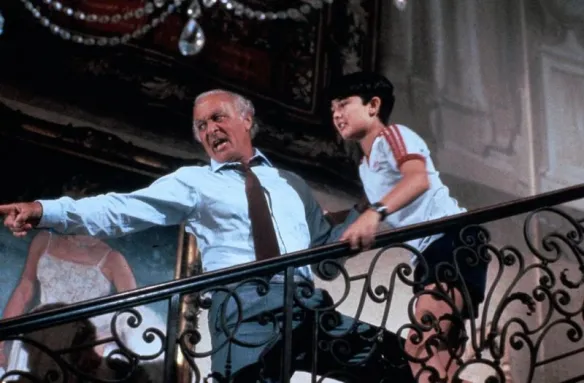
Frankly, his concerns seem reasonable. Every time Loggia threatens legal action, you find yourself nodding.
“Yes, Robert. Get that child away from the travelling arm-wrestling hobo.”
The custody storyline exists purely because the movie needs emotional stakes, but unfortunately, nobody involved seems to understand how custody works.
Lincoln Hawk has been absent for years. Years. His grand plan for reconnecting with his son appears to consist of kidnapping him from military school and driving across America while explaining the fundamentals of truck maintenance. At no point does anybody involved behave like actual human beings.
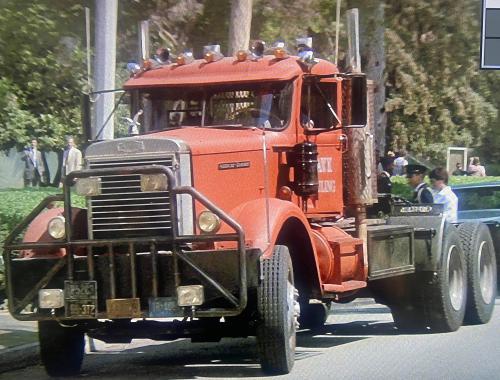
The legal system appears to function entirely on vibes. The movie operates under the assumption that if a father wins enough arm-wrestling matches, a judge is legally obligated to award custody.
That’s not how courts work. At least I hope not. Otherwise, somewhere in America, there’s a family lawyer currently preparing for trial by armbar.
The Hat Trigger
But we’re not here for realism. We’re here for the greatest character gimmick in Stallone movie history. The hat. You know the hat. The hat turning trigger that causes a transformation more dramatic than Popeye getting his hands on some canned spinach.
Whenever Lincoln Hawk gets serious about arm wrestling, he turns his baseball cap backwards.
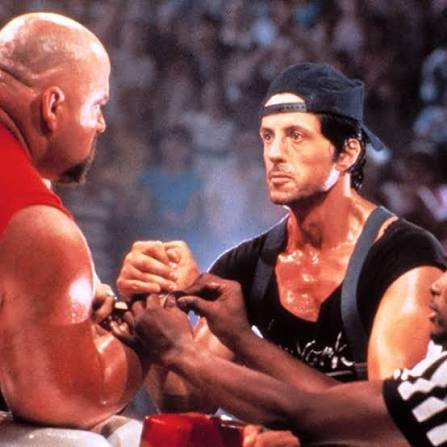
That’s it.
That’s the entire gimmick.
Bruce Banner becomes the Hulk. Clark Kent becomes Superman. Lincoln Hawk rotates a hat, and the movie treats this with absolute sincerity. Music swells. Camera angles tighten. Faces grow concerned. Because everyone knows that once the cap spins around, civilization itself hangs in the balance. Well, in the movie, they do. To us, it is one of the most unintentionally hilarious recurring motifs ever committed to film.
Every time it happens, the movie behaves as if glowing eyes and lightning effects are imminent. Instead, he’s just a truck driver wearing his hat differently. And you know what, I kinda fucking love it precisely because it is so shit, but so earnest.
The even stranger thing about Over The Top is that it genuinely believes arm wrestling can support a full-scale sports movie. Not just a subplot. Not a side event. The entire movie.
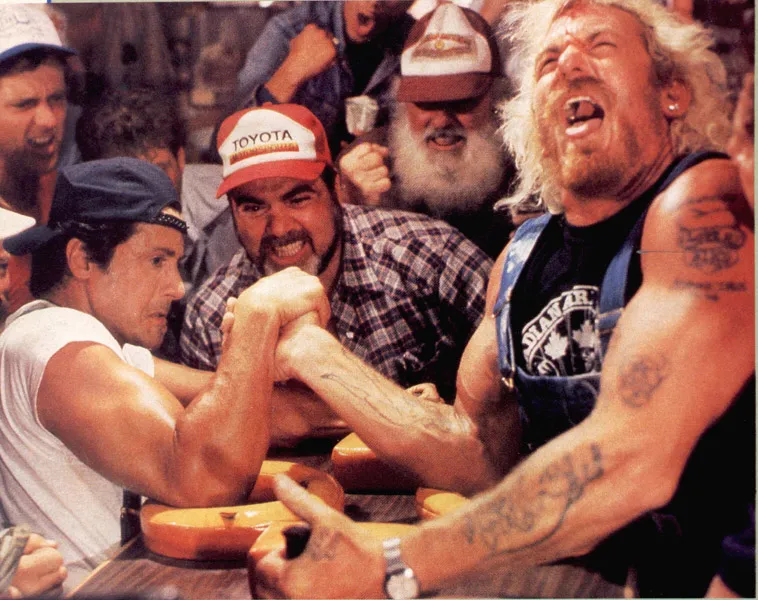
The structure is pure Rocky – Underdog hero, personal redemption, tournament, big showdown, triumphant finale – the only difference is that instead of one of the oldest and most respected sports in human history, the climax revolves around two men trying to force each other’s hands sideways on a table.
And it’s not even professional arm wrestling, it is truck stop gambling arm wrestling.
American movies have long attempted to create near-mythical, masculine pastimes to fill the void when long-distance truckers, knights of the road, are not driving. The reality, murdering hookers or dabbling in secret homosexuality via a network of truck stop glory holes, does not make for great movies. So we get totally made-up underground networks of things like fights (Any Which Way But Loose), arm wrestling, and beer runs (Smokey & The Bandit).
In reality, this would all be witnessed by three bored mechanics and a man named Earl who smells faintly of diesel. The movie treats it like the Super Bowl.
When the dust settles, we are left with just one question.
Why?
This question has haunted cinema scholars since at least last Tuesday. Why Over The Top? The answer seems to be a combination of ambition, timing, and sheer overconfidence.
In the mid-1980s Stallone could basically greenlight anything. He wasn’t just a star. He was a cultural force, and studios didn’t say “No!”, they asked him how many trucks he needed.
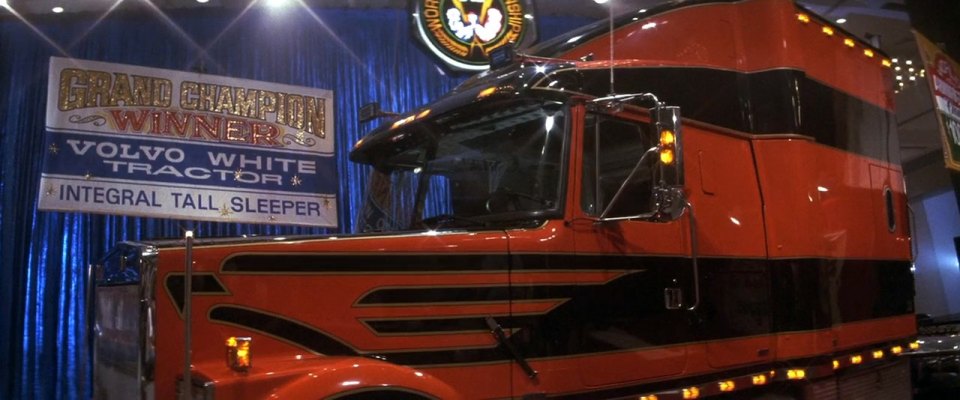
Producer Menahem Golan of the legendary Cannon Films reportedly offered Stallone a gigantic payday, including substantial upfront money and profit participation. At the time, it was one of the richest deals in Hollywood. And if somebody offered you a mountain of cash to pretend arm wrestling mattered, you’d probably listen too.
There’s also evidence that Stallone genuinely wanted another inspirational underdog story. The problem was that boxing already belonged to Rocky. So he went searching for another competitive arena and, unfortunately, he found arm wrestling.
The involvement of Cannon Films explains almost everything. As we have already discussed here at Last Movie Outpost, Cannon never met a questionable idea it didn’t love. This was the studio that looked at logic and responded, “What if we ignored that entirely?” Their business model was essentially:
- Find a star.
- Find a poster.
- Figure out the movie later.
Over The Top is peak Cannon. Huge ambition. Questionable judgement. Absolute confidence. The kind of film that only emerges when nobody in the room is willing to ask obvious questions.
As these obvious deficiencies start to become too big to ignore, the soundtrack works harder than anyone to cover it all up. Every scene is accompanied by inspirational 1980s power ballads desperately attempting to convince audiences they’re witnessing something important. Men are arm wrestling in a motel parking lot, so the music suggests the fate of mankind hangs in the balance.
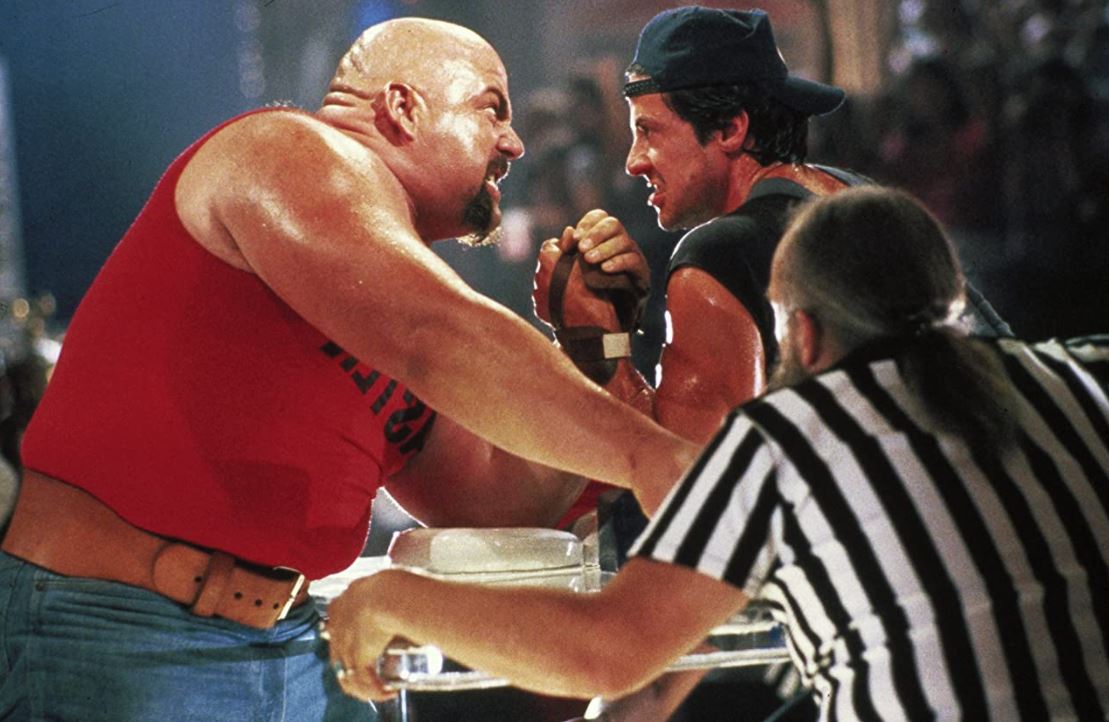
By the end, you feel like you have entered a hostage negotiation with the soundtrack:
“I demand you care! Look how emotional this is! Now get me a helicopter to the airport!”
The reality Over The Top waded into couldn’t really have been worse. 1987 was stacked with movies like Lethal Weapon, Predator, The Untouchables, RoboCop, and Fatal Attraction. Over The Top asked audiences to ignore aliens, cyborg cops, gangsters, action heroes, and psychological thrills and instead focus on a truck driver turning his hat around before arm wrestling.
It was only going to go one way.
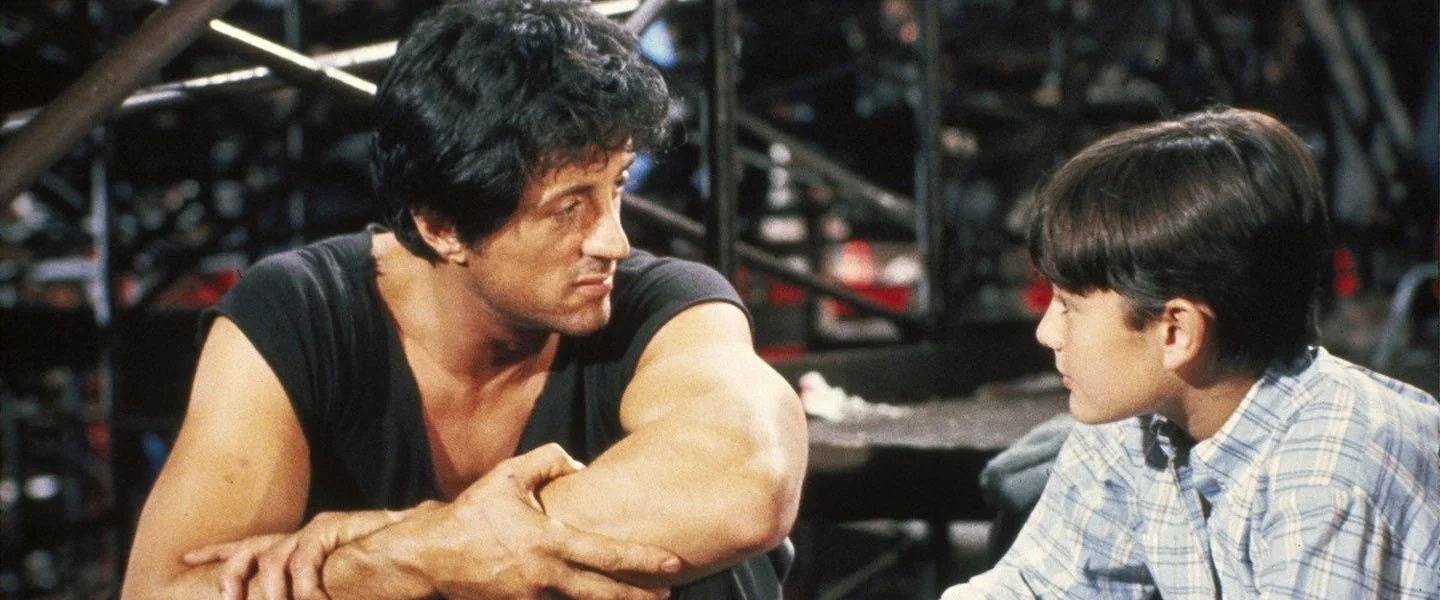
Critics looked at Over The Top and reacted the way a doctor reacts to an unusual rash. Reviews ranged from unimpressed to openly hostile. The kindest thing any reviewer said about it:
“Stallone is trying very hard.”
The film wasn’t a total catastrophe financially, but it significantly underperformed expectations. For a movie built around one of the biggest stars in the world, merely surviving wasn’t enough. It was expected to be another Rocky, and instead it became a punchline.
Yet… here’s the annoying thing. You can’t stop watching it.
The Secret Sauce
Objectively, this movie is terrible. The screenplay is bad, the dialogue is ridiculous, the mechanics of it make no sense, the entire premise is absurd, and Lincoln Hawk remains one of the funniest character names ever conceived.
And yet there is something almost hypnotic about it. Maybe it’s Stallone’s sincerity. Maybe it’s Loggia’s volcanic performance. Maybe it’s the earnest conviction that arm wrestling is the most important thing in the universe.
Over The Top has that one thing at its core, deep in its 1980s heart. Something that many 1980s movies had that modern movies simply don’t. Something I have only really realised while writing these 1980s retro reviews about movies that are, on the surface, ridiculous.
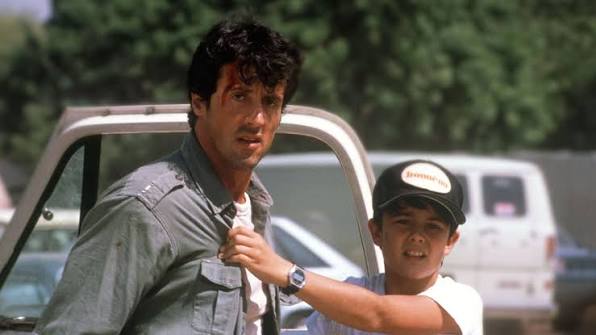
The movie never winks. Not once. It commits. Entirely. The filmmakers genuinely believe every second of this nonsense, so that sincerity becomes strangely compelling. Modern bad movies are often cynical, but Over The Top isn’t cynical at all.
It’s delusional, and that’s much more entertaining.
Over The Top is a failure by almost every measurable standard. It’s a sports movie built around a non-sport and a family drama built around an absurd custody dispute, about a man called Lincoln Hawk unironically.
It’s overblown, ridiculous, melodramatic, and frequently laughable. But it’s also unforgettable. Thirty-nine years later, people still remember it. That’s the secret.
Over The Top isn’t good. Not remotely. It’s objectively awful on virtually every level. Yet somehow it possesses the weird gravitational pull of a cinematic black hole that sucks you in. You stare at it in disbelief, you laugh at it constantly, and yet somehow you keep watching.
I have seen less compelling car wrecks.
And we all know, deep down, that there will never, ever, be a better truck-stop-arm-wrestling-child-custody-battle-sports-movie.

