



As you know, because you are an Outposter and therefore you know these things, James Gunn and Peter Safran are stepping down as co-CEOs of DC Studios. This follows DC being acquired by Skydance as part of their larger acquisition of Warner Bros. Discovery.
So the DC Cinematic Universe, whatever it has been or will be, is in a state of flux. Again. This was a standard feature of DC under Warner Bros. who couldn’t help but tinker in anything and everything in a cape and tights. The movement of DC Studios away from Warner Bros. Pictures oversight and with more autonomy as part of the Gunn and Safran deal was supposed to prevent this.

Scuttlebutt out in Hollywood right now is that there were two key issues that have led to this:
1) Skydance wanted DC Studios back reporting through Warner Bros. Pictures, which was not what was in the current Gunn and Safran deal – they reported independently alongside, not through, Warner Bros. Pictures. Skydance wanted more creative control delivered via WB. Gunn and Safran pushed back.
2) Skydance wanted to see more of a concrete plan around future slate – so something more like the way the MCU does things, roadmaps, timelines, interconnected tissue mapped out. Gunn and Safran weren’t operating like that. They were also rumored to be slower than their new boss, Ellison, wanted to respond to his request appropriately.
So they are out, and ex-Marvel alum is in as President of DC Studios and Chief Creative Officer.

Suddenly, just like that, the people at Skydance have inherited the keys to the DC Universe but, with it, a mountain of unfinished plans and a rather familiar question to anyone watching Warner Bros. try and have what Marvel had – what the bloody hell do they do now?
Here we go again.
After years of managerial musical chairs, creative U-turns, abandoned universes and enough reboots to make Doctor Who look like a model of continuity, the big bosses find themselves at another crossroads.
Does this mean that the plans for a carefully constructed and coherent DC cinematic universe have departed with Gunn and Safran, at least until the next executive decides they’d quite like a different one?
The way we see it, Skydance now has four broad choices on how to go forward. Each comes with its own attractions, pitfalls and opportunities to make an absolute clown show of things.
Let’s examine them.
Option 1: Just Stop, Everyone Go Home!
The nuclear option. Release whatever is already in production, honour whatever contractual obligations remain, and then put the entire DC Universe into mothballs for a a number of years.
No new Superman. No Wonder Woman. No Green Lantern. No Justice League. Nothing.

Let the audience have a rest. Let the superhero bubble deflate a little. Perhaps even allow people to remember what going to the cinema was like before every film became an advert for another film that might be cancelled before it gets made.
There is actually a reasonable argument for this. Superhero fatigue is real, the marketplace is crowded, and DC has spent so long confusing audiences with its continuity that a period of silence might be the best marketing campaign it could possibly devise.
The problem is that Warner Bros. has never been particularly good at doing nothing. Doing nothing doesn’t generate quarterly announcements, exciting new slates or expensive PowerPoint presentations explaining why the previous expensive PowerPoint presentation was wrong.
And what happens to Batman? Does he get put into storage? Does Superman go and live on a farm? Do we just leave Aquaman in the cupboard until somebody remembers where they put him?
There is also the small matter of the competition. Marvel isn’t exactly going to stop making films while DC takes a therapeutic lie-down.
And why bother brining in a new boss if you are going to just shutter the thing for a while?
Which leads us to…
Option 2: Burn It All Down, Start Again
Ah, the traditional DC response. After all, why fix something when you can simply replace it?
This would involve releasing the existing projects, declaring the Gunn-Safran DCU officially deceased and starting from scratch. New Superman. New Batman. New Wonder Woman. New everything.
A fresh slate, a fresh vision, a fresh ten-year plan and, inevitably, a fresh announcement that this time they have finally got it right. We’ve been here before, of course.
Since 2006, DC and Warner Bros. have been trying to establish their own answer to Marvel’s increasingly successful cinematic universe. Superman Returns arrived with the promise of a new beginning. Didn’t work. Meanwhile Nolan was smashing it with his closed off Batman universe. Then came Green Lantern, and we all know how that ended.
Then Man of Steel showed promise before Batman v Superman decided to introduce half the Justice League in the space of a single film because patience is for losers. This was followed by the Justice League theatrical car crash, before the resurrection artefact that is Zack Snyder’s Justice League.
At this point, DC’s cinematic history resembles a particularly badly managed Windows installation. Every few years somebody decides the system needs a complete reinstall, only to discover that they’ve lost half the files and the printer still doesn’t work.
A complete reboot would offer Jeremy Latcham a clean canvas. But it would also mean asking audiences to invest in yet another origin story for characters they already know perfectly well.
How many times can we watch Bruce Wayne’s parents get shot?
Option 3: Keep The DCU But Change Direction
This is probably the most sensible option. Which, historically, makes it the least likely to happen. This is Hollywood, after all.
Keep the foundations Gunn and Safran have established, honour the projects already in development, but allow the new leadership to reshape the creative direction.
A revised slate. A clearer long-term strategy. Perhaps a slightly different tone. Less emphasis on trying to make every character fit into one enormous interconnected narrative and more emphasis on making genuinely good individual films.
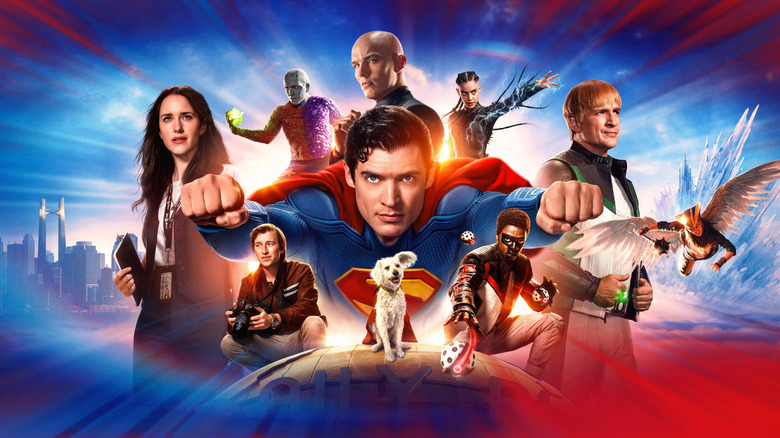
The Gunn/Safran DCU has hardly been an unmitigated disaster. Supergirl was a big mis-step, but Superman demonstrated that audiences were still interested in the character, Peacemaker proved that DC could deliver entertaining television, and the willingness to experiment with projects such as Clayface was at least refreshing.
But there have been problems. The box-office performance has been inconsistent, the overall direction remains somewhat opaque, and the grand promise of Gods and Monsters has yet to become the irresistible cinematic proposition DC desperately needs.
The temptation will be to make everything bigger, louder and more interconnected. More cameos, more crossovers, more post-credit scenes teasing something that might arrive in 2031. Perhaps the answer is the opposite?
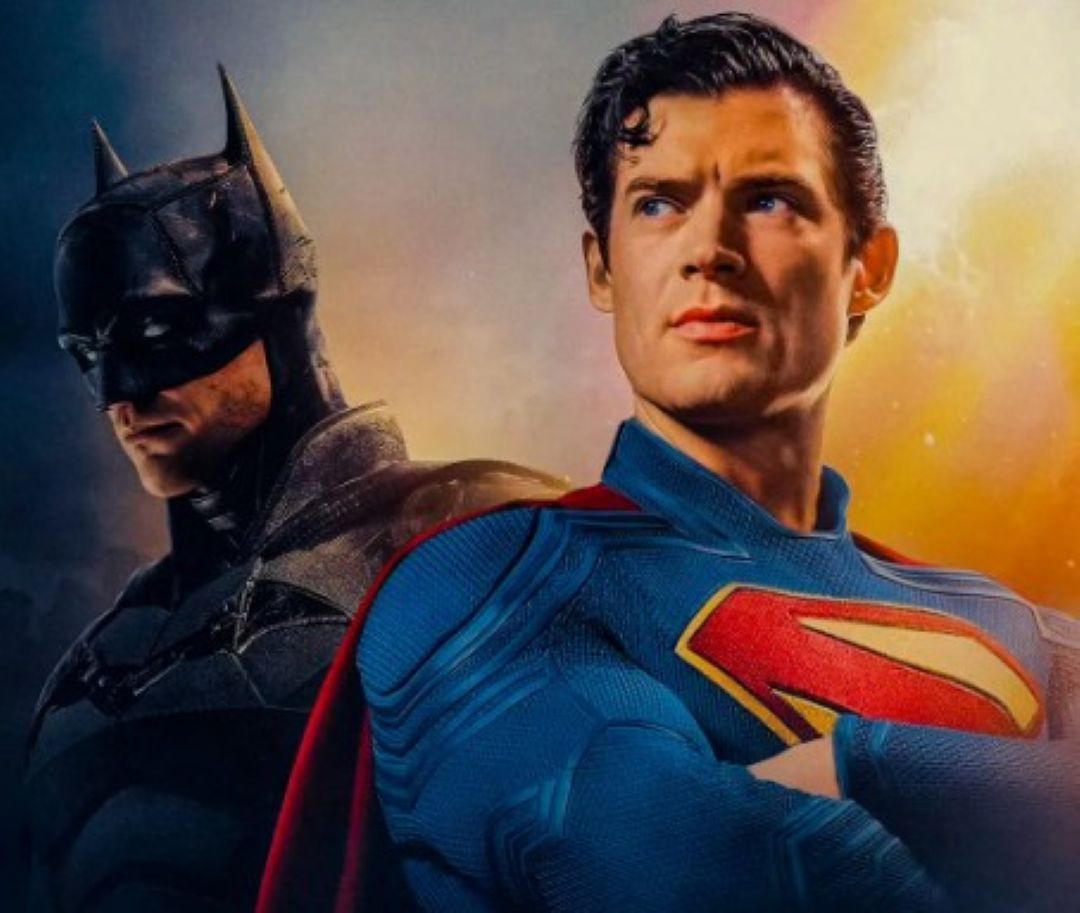
Give Superman a good sequel. Make a decent Wonder Woman film. Find a way to fold Pattinson’s Batman into things, but let the characters breathe. Stop treating every individual movie as a piece of corporate infrastructure.
And, for heaven’s sake, give the audience a reason to care about the characters rather than the elaborate spreadsheet connecting them.
The danger is that a change in creative tone becomes another excuse for wholesale interference. One executive wants darker. Another wants lighter. Marketing wants more comedy. The accountants want fewer characters. Before long, the entire thing has been redesigned by committee and nobody involved can remember what the original idea was.
Option 4: Bring Back The SnyderVerse
Oh, go on then. Let’s give the Snyder Bro community a little sticky happy ending just by typing those words.
Bring back Zack Snyder. Restore Henry Cavill, Ben Affleck and Gal Gadot. Find a way to resurrect the original Justice League plans and carry on as though the last three years was merely an elaborate fever dream.
The SnyderVerse has developed an extraordinary weird online afterlife. Its supporters remain vocal, passionate and apparently equipped with an unlimited supply of social media bandwidth. The release of the Snyder Cut demonstrated that there was a substantial audience willing to campaign for the restoration of a director’s original vision.

And there is an argument that Warner Bros. never gave Snyder’s original universe a fair chance. The theatrical Justice League was a compromised mess, and the studio’s decision to abandon its existing continuity created an enormous amount of confusion.
But let’s be realistic.
Restoring the SnyderVerse would be an enormous undertaking. The original actors have moved on, the continuity has been abandoned, and some of the creative decisions that led to the original DCEU were precisely the reasons Warner Bros. wanted a change in the first place.
Also, the SnyderVerse wasn’t exactly a flawless cinematic machine. Man of Steel was divisive, Batman v Superman appears to be, based on discussions about it, an acquired taste, and the original Justice League story was never completed as intended.
There is a difference between recognising that something was mishandled and pretending it was perfect. Still, imagine the announcement. Somewhere, a Warner Bros. executive is already practising the words:
“We have listened to the fans.”
The internet would explode. Half would celebrate. Half would threaten to leave the internet permanently. And Zack Snyder would probably be asked to make a six-hour version of the announcement video, in 4:3 and black and white.
What Should Skydance Do?
There is one rather inconvenient truth lurking beneath all four options – DC doesn’t have a character problem. It has a management problem.
It owns Superman, Batman, Wonder Woman, The Flash, Green Lantern, Aquaman, the Joker and arguably the richest collection of superhero characters in popular culture. These aren’t obscure intellectual properties requiring years of audience education. They’re household names.
Marvel managed to build an interconnected cinematic universe because it had a relatively consistent creative vision, a willingness to let individual films succeed on their own merits and, crucially, the patience to allow things to develop. They also did not panic so publicly when things didn’t work. Eternals and The Marvels were just quietly parked, forgotten about. They did not run around with their hair on fire, screaming.

DC has repeatedly demonstrated exactly the opposite.
Since 2006, it has lurched from one grand strategy to another, with executives apparently developing an allergic reaction to their own previous decisions. Every new regime arrives promising stability, announces a sweeping new vision, gets halfway through implementing it and then disappears into the Hollywood equivalent of witness protection.
The appointment of Jeremy Latcham, someone with genuine experience of the Marvel machine, is intriguing. But hiring someone who helped build the MCU doesn’t automatically mean DC can reproduce it. You can’t simply employ one of the architects of the Empire State Building and expect him to turn your garden shed into a skyscraper.
My preference? Option Three.
Keep what works. Change what doesn’t. Give the new leadership room to establish a coherent identity without immediately reaching for the cinematic equivalent of a flamethrower.
And perhaps, just perhaps, commit to a plan for longer than the average executive’s attention span.
Because if there’s one thing DC absolutely doesn’t need, it’s another announcement promising that the future of the DC Universe starts right here. We’ve heard that before. Several times.
I genuinely don’t think the DCU/DCEU can survive another full reboot without parking it for at least a decade.
And frankly, we’re beginning to suspect that the real DC multiverse isn’t made up of alternate versions of heroes. It’s made up of alternate versions of Warner Bros. executives, each arriving with a different bloody plan.
As superior online movie beings, what do you Outposters think they should do? And what will they do?

