


Just how the hell does a multi-billion dollar cinematic juggernaut go from the closest ting in Hollywood to a sure thing, to “We’re still working on it” in less than a generation? It’s possible, because it happened to Star Wars.
When Disney bought Lucasfilm in 2012 for a cool $4 billion, it didn’t just acquire a film franchise. It bought a mythology, a merchandising empire, and, most importantly, the assumption that printing money with Star Wars was as inevitable as gravity.
For a while, it was.
Then Disney somehow proved that even gravity can get tired.
The Force Awakens: Printing Money, and Setting Expectations
The modern, Disney Star Wars era properly begins in 2015 with The Force Awakens (2015).
According to Box Office Mojo, it pulled in roughly $2.068 billion worldwide. That’s not a film performance, that’s a financial event. A cultural ATM with lightsabers.
But there was a problem hiding inside that success: it wasn’t just a hi. It was a reassembly job. Familiar faces, familiar beats, familiar everything. It worked because audiences hadn’t yet been trained to expect uncertainty.
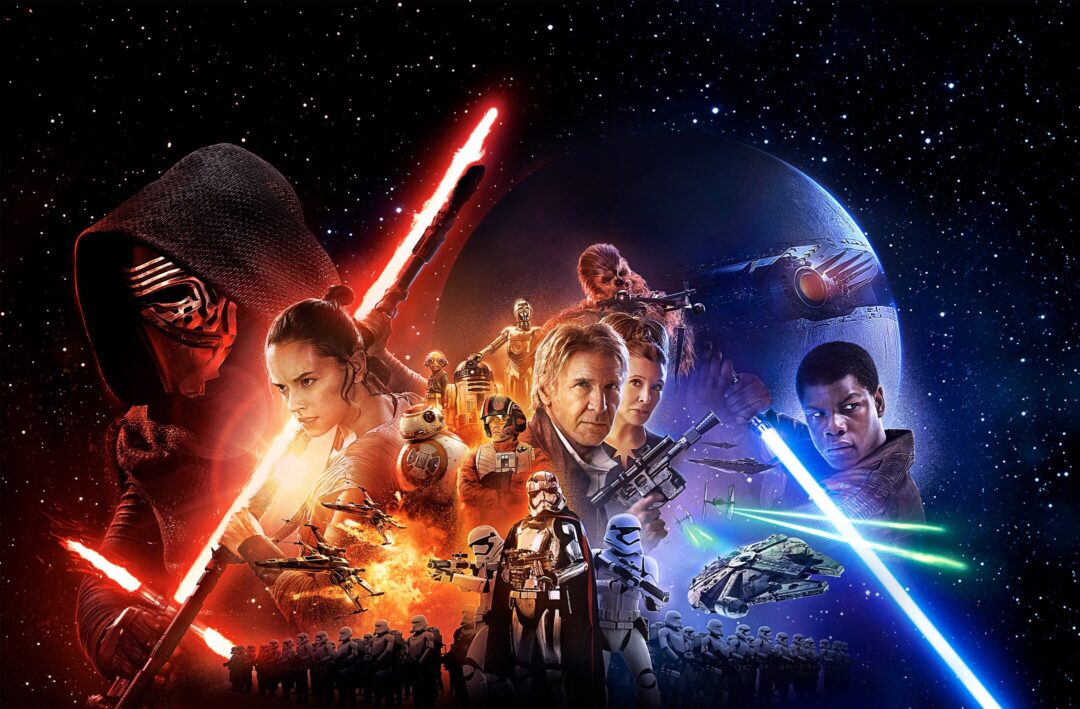
Disney didn’t just revive Star Wars. It reset expectations to “this will always make two billion dollars.”
That was the first mistake.
Rogue One: The Billion-Dollar One-Off
Rogue One (2016) sits in an awkward sweet spot in the Disney era: a genuine commercial hit that made roughly $1.056 billion worldwide, while also quietly refusing to behave like a franchise template anyone could safely reuse.
It worked because it barely behaved like Star Wars at all until it absolutely had to.
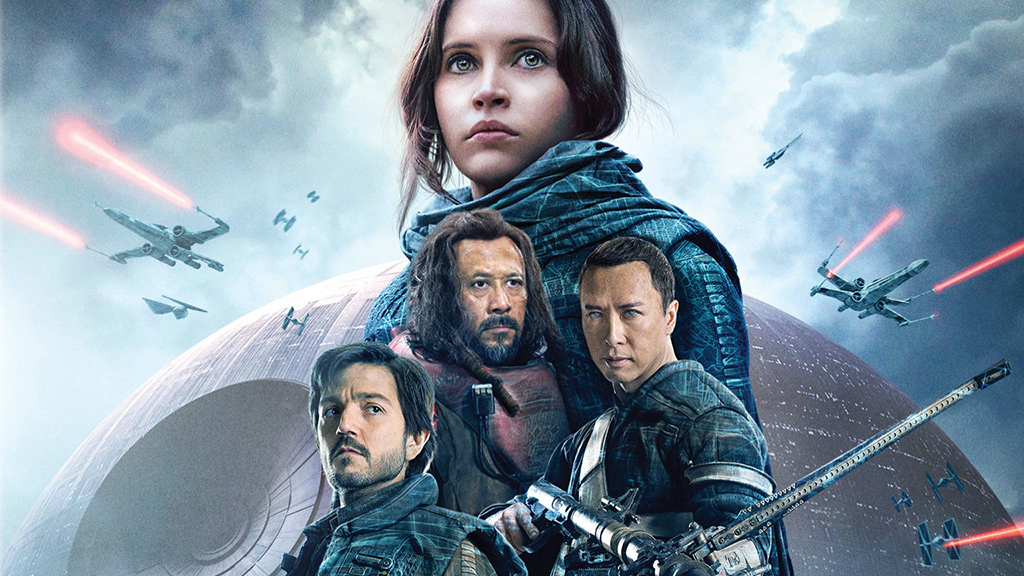
A grim, attritional war film about expendable people doing necessary things, it strips out most of the saga’s mythic comfort blanket and replaces it with industrial-scale desperation.
Even its success feels slightly detached from the rest of the franchise’s trajectory. Large enough to validate the Disney acquisition strategy, but too self-contained to meaningfully guide it.
And then there’s the final act, where Darth Vader briefly re-enters the story like a reminder of what the franchise really is.
That sequence alone has arguably done more cultural heavy lifting than several entire trilogies combined, while at the same time and with the benefit of hindsight, kinda messed things up.
Rogue One didn’t establish a repeatable model. It was a billion-dollar anomaly: successful, distinctive, and immediately unusable as a blueprint. In a franchise increasingly obsessed with scalability, that makes it just about useless to Lucasfilm.
The Last Jedi: Critical Praise, Cultural Fracture
Then came The Last Jedi (2017), which made around $1.33 billion worldwide.
Still enormous. Still a blockbuster. Still, in any rational universe, a triumph.
But something shifted in the fans.

This was where Star Wars really stopped being a shared cultural language and started becoming a group chat argument that never ends. Some hailed it as bold reinvention. Others experienced it as if someone had politely removed their childhood and replaced it with interpretive dance about pain and suffering.
The box office held, but suddenly the brand didn’t feel as stable anymore.
And when a franchise like Star Wars starts to crack, something really has gone tits up.
Solo: The First Real Warning Shot
Then it happened. Star Wars had its first measurable flop in the form of Solo: A Star Wars Story (2018).
Worldwide box office: roughly $393 million. On paper, that sounds fine… until you remember what Star Wars is supposed to be.
This wasn’t just a dip. It was a collapse in audience urgency. The first time a Star Wars film looked at the calendar and realized nobody had marked it.
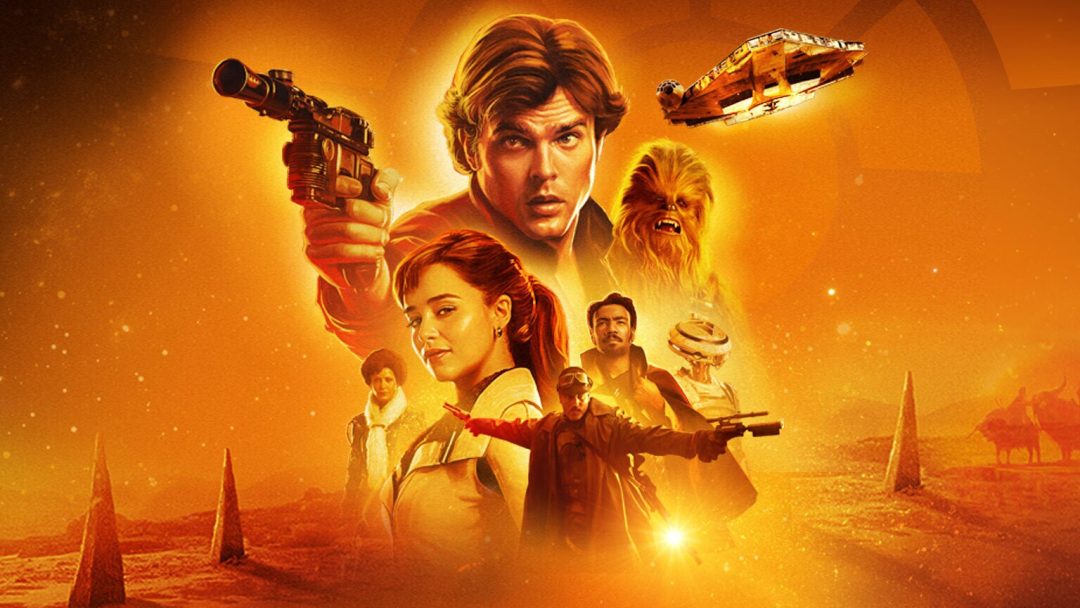
Internally, it triggered panic at Lucasfilm as they finally started to realize just what they had done.
A rethink of release schedules and spin-offs was ordered. The general assumption that audiences would show up for anything with the logo was being challenged.
The Rise of Fatigue: The Rise of Skywalker
The Rise of Skywalker (2019) landed at around $1.07 billion worldwide.
Still over a billion. Still massive. But in Star Wars terms, it felt like a retreat.
However it also started to lay bare that this franchise was no longer about storytelling. It was a negotiation between competing corporate instincts rather than a planned narrative arc. The film tried to satisfy everyone, and in doing so satisfied almost no one.
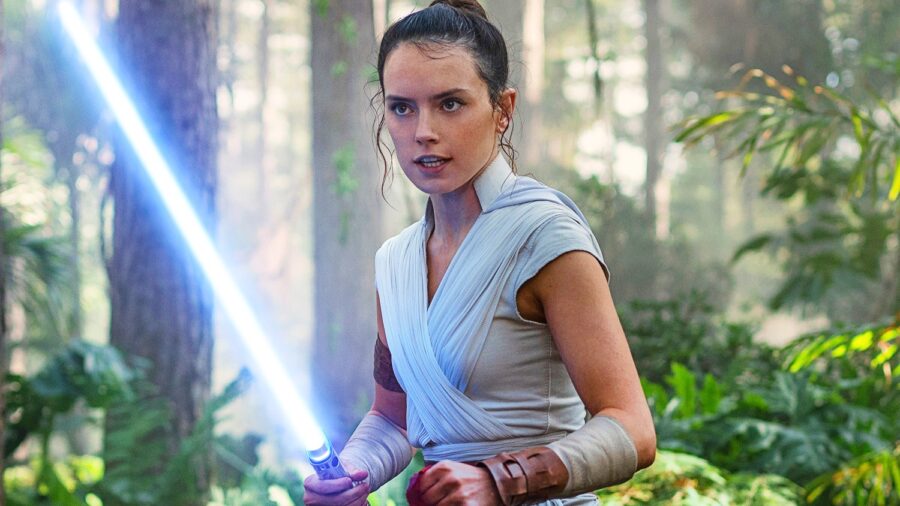
The key takeaway wasn’t just the number—it was the trajectory:
- $2.0 billion
- $1.3 billion
- $1.07 billion
- $0.39 billion
That’s not a saga. That’s a descending staircase on a waterfall chart in the boardroom.
Disney+: The Streaming Safety Valve That Became a Pressure Cooker
Enter Disney+.
The Mandalorian launched in 2019 and for a brief moment, everything felt salvaged. It was lean, focused, and, crucially, understood something simple: people like a lone bounty hunter with a cute green chaos gremlin.
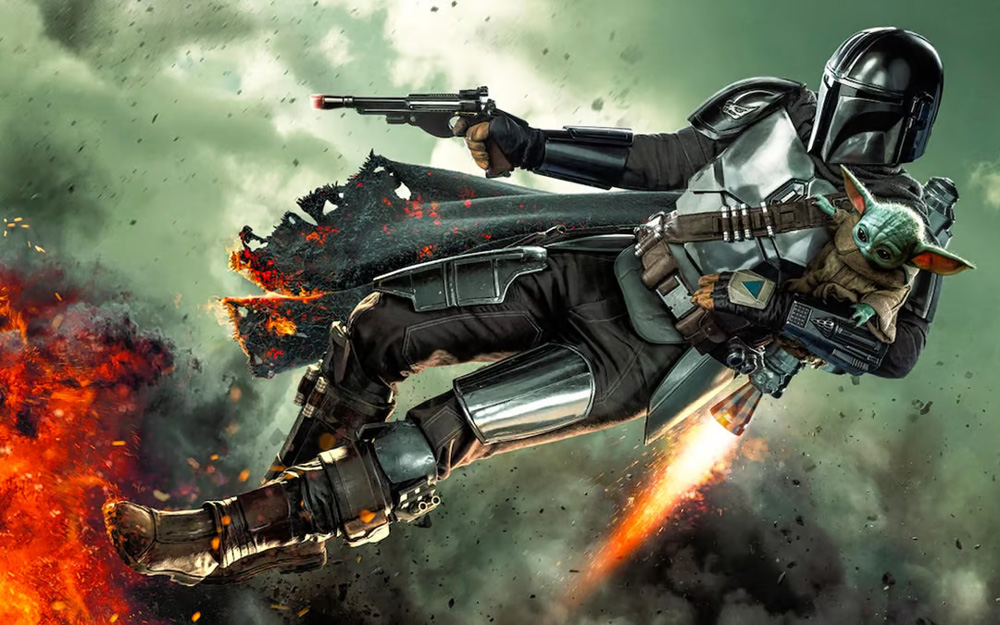
It worked because it wasn’t trying to explain Star Wars. It was just inhabiting it.
But then came the expansion phase:
- The Book of Boba Fett
- Obi-Wan Kenobi
- Ahsoka
- The Acolyte
- various announced-and-disappeared spin-offs like Rangers of the New Republic
The pattern became familiar: strong launch curiosity, mixed reception, and rapidly diminishing cultural footprint.
Nielsen data over the years consistently showed something uncomfortable: Star Wars shows could still break into streaming charts—but they were not even close to dominating.
Unlike theatrical releases, streaming doesn’t forgive softness. It just quietly stops recommending you.
Even The Mandalorian, once a flagship phenomenon, saw diminishing “must-watch-now” urgency by later seasons. It became less an event, more homework.
The Galactic Starcruiser: The $1,000-A-Night Reality Check
If there is a single physical monument to overconfidence, it is the Star Wars: Galactic Starcruiser hotel at Walt Disney World.
A two-night immersive experience that reportedly guests thousands, it was Disney’s attempt to turn fandom into a luxury roleplay retreat.
It closed after a surprisingly short run.
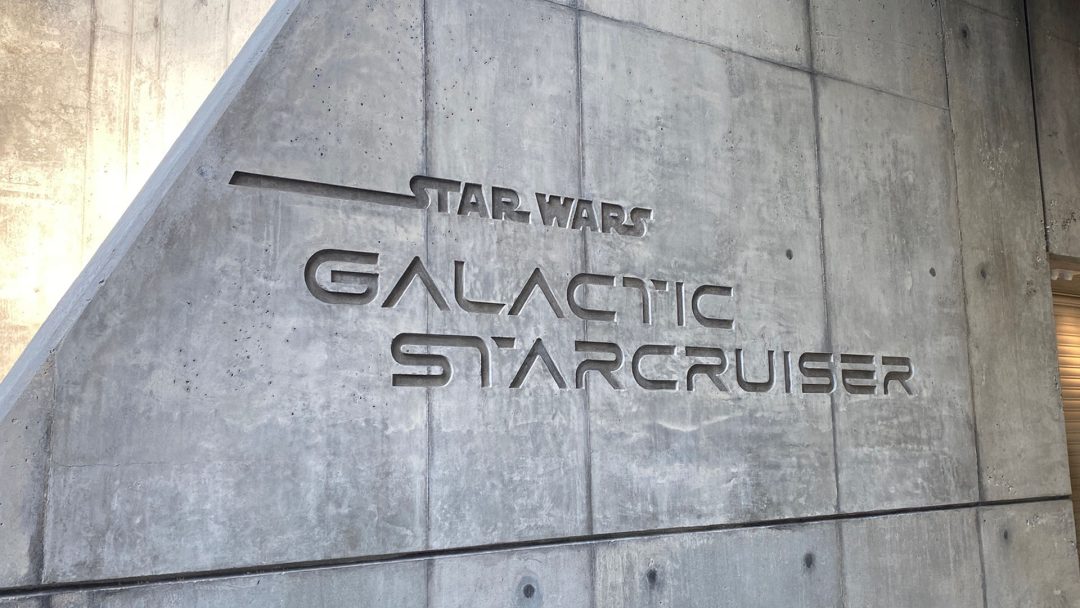
Why? Because it tried to solve a problem that didn’t exist: Star Wars fans didn’t want to have to remortgage just to live inside the lore for 48 hours. They just wanted good stories set inside it.
Instead, they got expensive improv theatre with a side order of corporate immersion training.
It wasn’t so much hospitality as it was commitment cosplay.
Toys, Merchandising, and the Quiet Drain
Now to the part Disney absolutely expected to remain bulletproof: merchandise.
Historically, Star Wars wasn’t just a film franchise—it was a toy licensing engine that could finance small revolutions.
But reports over the years have suggested softening demand for Star Wars merchandise compared to the original trilogy resurgence and even the early Disney revival peak.
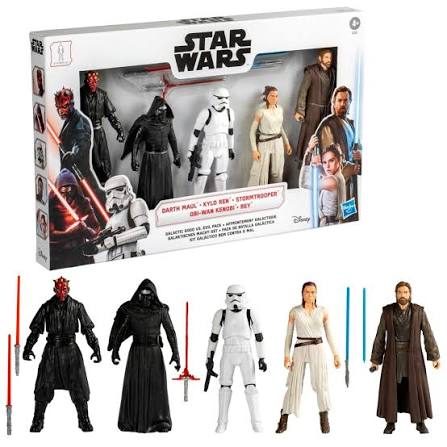
The reasons are not mysterious:
- Fragmented character recognition (too many new faces, too little emotional attachment)
- Inconsistent storytelling across films and streaming
- A shift in children’s attention toward gaming ecosystems rather than physical collectibles
You can’t sell an action figure of a character the audience vaguely remembers from Episode 7, slightly recalls from a Disney+ cameo, and assumes probably died off-screen.
Compare that to the original trilogy’s evergreen icons: Vader, Luke, Leia. Clean, simple, eternal.
Modern Star Wars merchandise feels less like mythology and more like onboarding documentation.
Galaxy’s Edge: Immersion Without Momentum
Galaxy’s Edge, Disney’s themed land at its parks, was designed to be the ultimate Star Wars experience.
And to be fair, it is visually impressive. Immersive. Expensive. Detailed.
But it also suffers from a fundamental problem: it is built around a narrative era that, outside of hardcore fans, doesn’t carry mass cultural momentum.
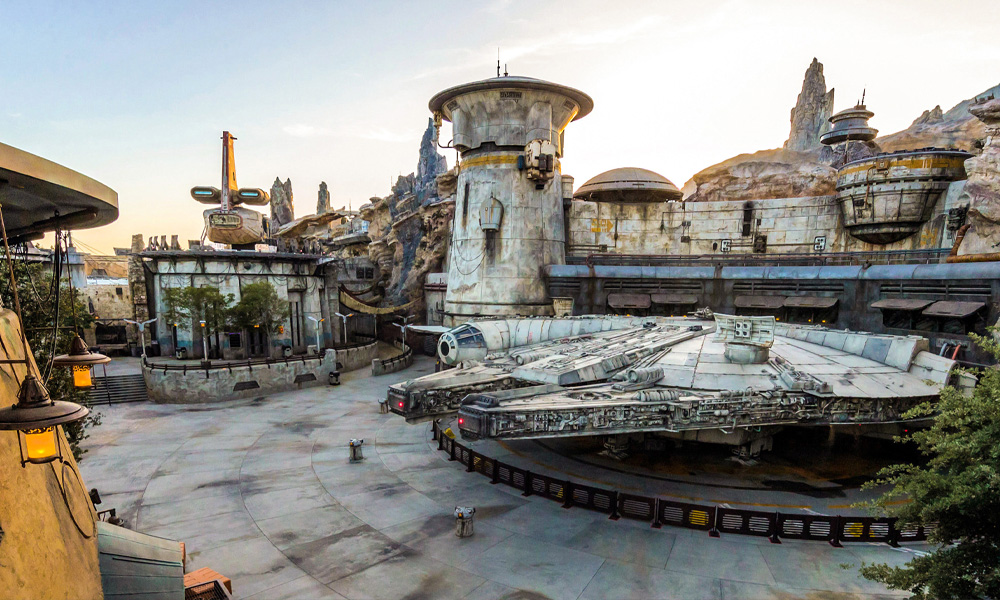
There has been no meaningful “rebrand” of Galaxy’s Edge, but there have been ongoing adjustments, updates, and attempts to inject more recognizable characters and tie-ins to boost engagement.
Because when your immersive land needs frequent narrative resuscitation, you don’t have a destination, you have a set dressing problem.
The Mandalorian & Grogu: The Next Hope… or the Next Expectation Problem
Well, by now we all know how that turned out, don’t we?
What did they expect? It was at least two years too late and had to carry a strange burden: it was expected to behave like both a film and a continuation of streaming television familiarity.
That’s a tricky conversion.
The $4 Billion Question: Was It Worth It?
Let’s do the uncomfortable math.
Disney paid: $4 billion for Lucasfilm.
Since then:
- A single film hit extraordinary heights (Force Awakens)
- A steady decline followed across the sequel trilogy
- One major spin-off underperformed (Solo)
- Streaming success arrived, but fragmented and inconsistent
- Merchandising dominance softened
- Experiential ventures failed to sustain demand, like Galactic Starcruiser
So what is the return?
Not a clean answer. More like a long-tail monetization curve with diminishing peaks and increasing maintenance costs.
Disney likely recouped significant value. Star Wars remains a global brand, but the original implicit promise (“this will print money forever”) has clearly eroded into something more complicated:
A franchise that still makes money, but no longer guarantees excitement.
The core problem was always Disney corporate driven expansion with zero emotional consolidation.
Star Wars is not completely dead. That would be far too simple, and far too merciful.
It is something more complicated: a legacy franchise still capable of enormous moments, but no longer operating on the assumption of universal excitement.
Disney didn’t destroy Star Wars. That would be dramatic.
What it did instead was something more modern, and arguably more corporate:
They tried to optimize it.
So now The Force is not with you anymore, it requires quarterly reporting.

