


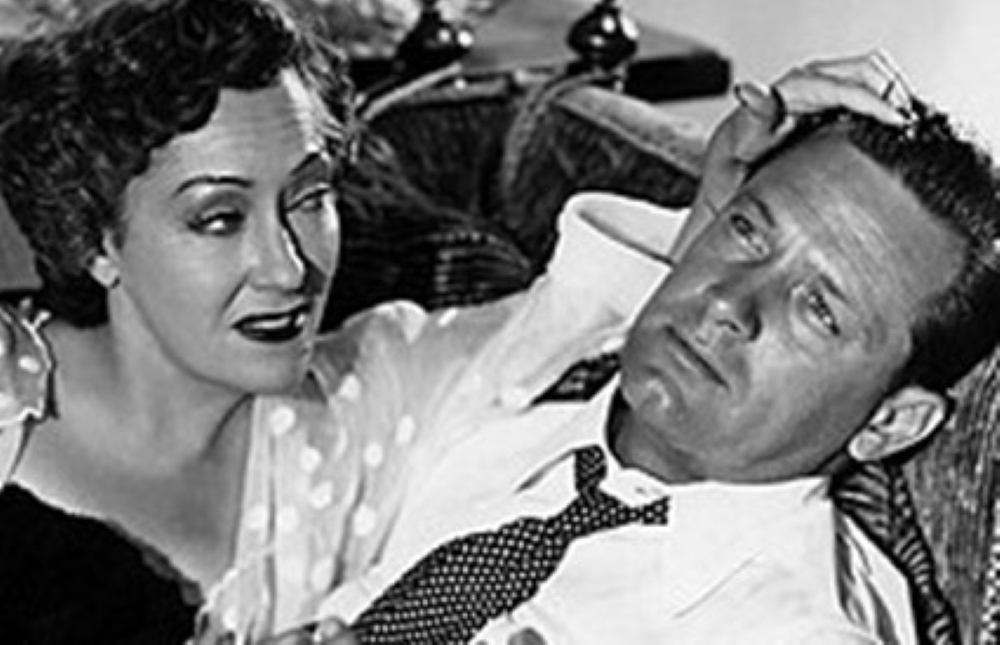
Last week you voted on which period drama I should watch and review for my IMDB Top 250 project. Sunset Boulevard came out on top with 43% of the vote.
In case you missed it, I am asking Outposters to select movies I haven’t seen in the IMDB Top 250 for me to watch and review.
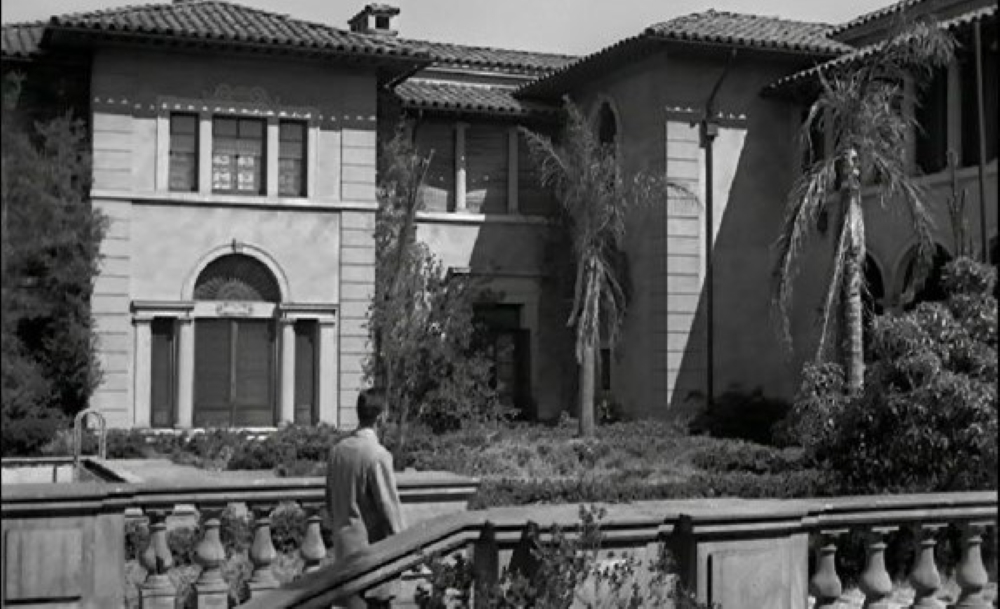
Sunset Boulevard is named after the famous 22-mile road in Hollywood. The decaying mansion at the centre of the story is located at the fictional address 10086 Sunset Boulevard. The real house was on Wiltshire Boulevard before being torn down in 1957.
The location is key because this movie is about Hollywood, and not the glamorous side. The neglected mansion is a sad reflection of its sole occupant – ageing silent movie star Norma Desmond (Gloria Swanson).
Hollywood has long-since abandoned Norma after she failed to make the transition from silent movies to talkies. She remains fabulously wealthy, but it means nothing without the adoration of the public. Her only fan mail comes from fake letters written by her live-in butler and chauffeur, Max.
Max feeds Norma’s delusions of grandeur and is later revealed to be another casualty of the Hollywood system, having once been a promising director in the silent movie era.
Either he couldn’t make the grade in the talkie era either or he made the mistake of hitching his wagon to Norma Desmond.
Max later reveals he was Norma’s first husband. It’s an odd revelation given the formal nature of their current relationship, but not totally implausible. Max could be suffering from some of the same delusions as Norma, or a case of terminal friendzone.
More likely he just can’t escape Norma’s orbit, which is the same fate that befalls Sunset Boulevard‘s tragic protagonist, Joe Gillis (William Holden).
Film Noir
It’s no spoiler to say that things don’t end well for Joe. This is film noir, after all. The movie opens with him floating face down in Norma’s swimming pool.
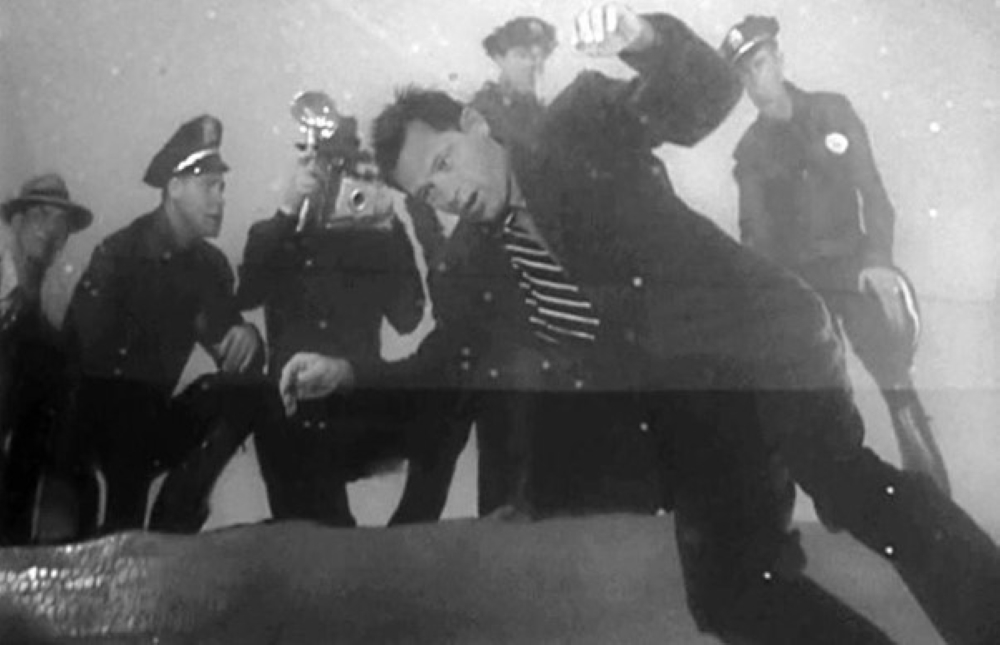
Joe himself narrates the movie from beyond the grave, flashing back six months to tell the story leading up to his ill-advised night swim.
It’s easy to overlook now how innovative the storytelling techniques were at the time. Putting the end at the beginning. The posthumous narrator. A story that focusses on how something happened rather than what happened. The lack of traditional romance.
Sunset Boulevard was released two years after the 1948 Paramount decrees that dismantled the Hollywood studios’ monopoly over the industry. Among other things, studios were forced to sell their theatre chains, so they had to compete to get their movies into the newly independent theatres.
More competition = better storytelling = Sunset Boulevard.
The Paramount decrees aren’t mentioned in Sunset Boulevard, but their effects can be inferred through the character of Joe Gillis. If Norma is a casualty of Hollywood’s first great upheaval (the transition from silent films to talkies), then Joe is on the verge of being a victim of the second (the Paramount Decrees).
Joe is a struggling writer whose screenplays aren’t selling due to them being stale and derivative. He’s behind on rent and on the verge of having to pack up and move back to Ohio.
Salome
Joe suffers a tire blowout on Sunset Boulevard while fleeing creditors trying to repossess his car. He stashes the car in Norma’s garage, believing the house to be abandoned. A case of mistaken identity leads to an unexpected invite inside.
Norma offers Joe a job polishing a screenplay she wrote based on The Dance of the Seven Veils, an adaptation of New Testament story The Feast of Herod. Norma would play Salome, who dances before King Herod Antipas to manipulate him into granting her deepest desires.
The movie places little emphasis on it, but the parallels to Norma’s life are clear. Norma’s deepest desire is for this screenplay to become her comeback picture, but at 50-years of age, she is clearly too old to play the young seductress Salome.
Side note: in a case of life imitating art, the same story was made into the 1953 movie Salome, starring Rita Hayworth and Stewart Grainger.
If Norma is the ghost of Hollywood past and Joe is the present, then young Paramount script reader Betty Schaefer (Nancy Olsen) represents the future. Betty savages one of Joe’s screenplays early in the movie, but spots potential in one of the scenes.
Betty wants to collaborate with Joe to develop the screenplay. In most movies this would be an obvious path to romance, but Betty is engaged to Joe’s best friend, and Joe keeps refusing to work with her.
After finishing his work on Norma’s screenplay, Joe becomes Norma Desmond’s ‘kept man.’ She buys him fancy clothes and employs emotional blackmail to keep him around. Following a suicide attempt, Joe finally stops resisting and becomes Norma’s gigolo, I think.
The Stars Are Ageless, Aren’t They?
I found Sunset Boulevard to be too subtle on the sexual aspect of Norma and Joe’s relationship. I didn’t know for sure if anything sexual was going on until I researched it afterwards.
Gloria Swanson portrays Norma as egotistical, manipulative, delusional, needy and overwrought. Her performance might seem over-the-top at times, but then you realise she is portraying a silent movie star.
Silent movie stars had to engage in a different kind of acting, using exaggerated facial expressions and mannerisms, as more of the performance was realised through body language rather than words.
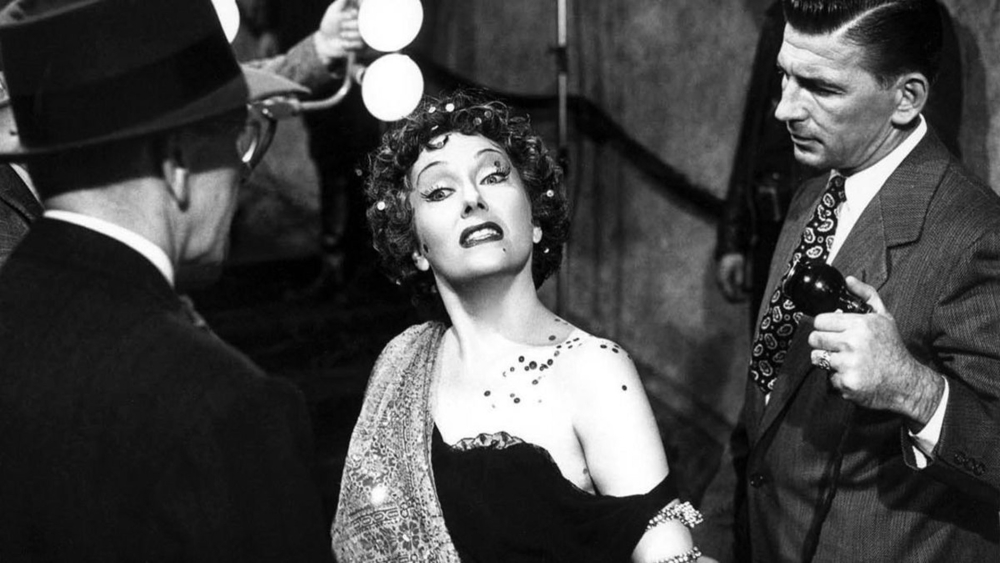
Norma embodies all of this, highlighting how much she remains stuck in the past, unable to evolve.
It works even better when you realise that Gloria Swanson herself was a silent movie star who struggled in the talkie era. Erich von Stroheim, who plays Max, was a former silent movie director who fell out of favour, just like his character. Legendary director Cecille B. DeMille plays himself.
Several other silent movie stars, including Buster Keaton, Hedda Hopper and Anna Q Nilsson, are cast as versions of themselves, playing members of Norma’s bridge club. But any sense of nostalgia is totally absent. They speak no lines, and Joe refers to them as ‘the waxworks.’
This meta casting blurs the lines between fiction and reality and lays bare the cutthroat Hollywood star system that elevates actors to almost God-like status and then discards them when their youth and usefulness are used up.
This phenomenon is hardly confined to Hollywood. I’m sure we’ve all seen versions of this kind of ageism play out in everyday life, albeit at a lower level, so it resonates more broadly and becomes more than just a rich person’s problem. It’s not just Hollywood, it’s life.
Tragedy
The movie gives Joe a potential avenue of escape from Norma, which adds to the sense of tragedy because we already know he won’t take it.
Joe finally agrees to work with Betty. Betty believes that movies have to say something beyond being mindless entertainment. It seems her outlook might force Joe to evolve in the new Hollywood era and prevent him being left behind like Norma. She also declares her love for Joe, and for a moment he has hope.
When Norma finds out Joe has been secretly working with Betty, she attempts to sabotage their relationship. Joe summons up a degree of self-respect and rejects them both – Norma because she is toxic, and Betty because he doesn’t deserve her.
It’s a self-destructive act, but arguably a moment of redemption that ends with Norma shooting him in the back as he tries to leave. He probably would have wanted it that way. He falls into the swimming pool, and the circle is complete.
The epilogue showing Norma’s arrest is probably my favourite part of the movie. Norma has completely lost her mind and believes she is filming a movie. But the cameras are only there to film her arrest.
Ironically, she is finally of interest again. She makes an exaggerated descent down the stairs and declares that she is ready for her close-up.
I enjoyed Sunset Boulevard a lot but felt it could have been more explicit in depicting Joe’s moral downfall. As is stands, I don’t think he did that much wrong. I feel he was being unnecessarily harsh on himself by not running away with Betty.
It also works well as a jumping off point into researching early Hollywood history. Down the rabbit hole I go.


