


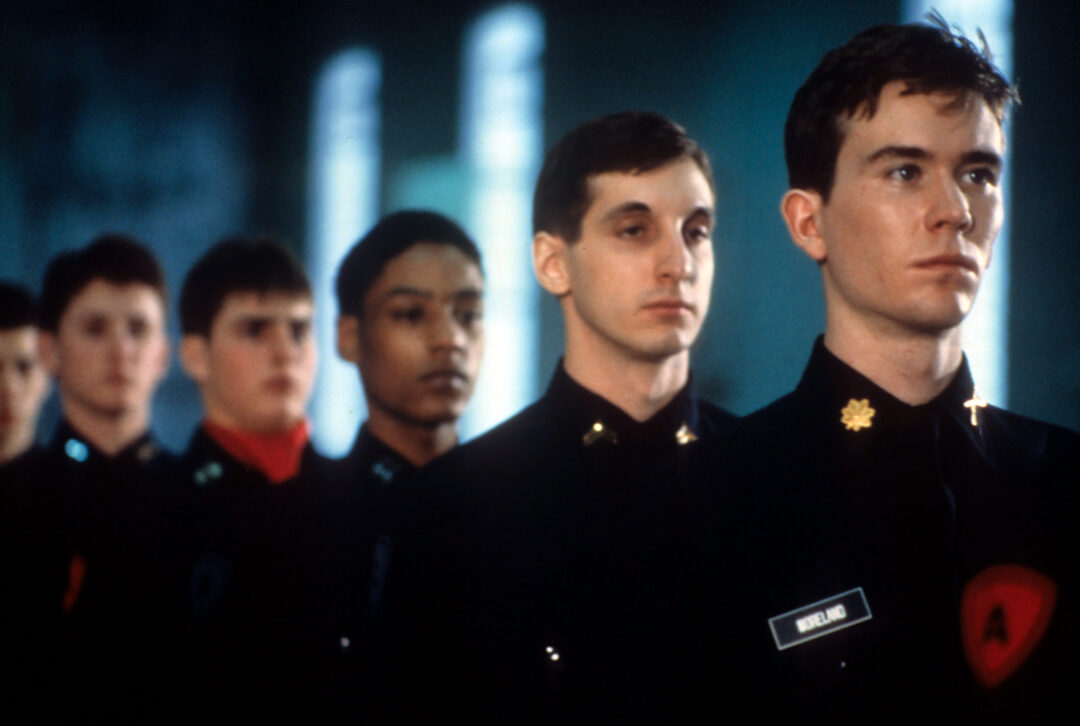
These revisitations of 80s movies, direct from the heyday of VHS, are really throwing up some memories for me. Nostalgia-tinted rediscoveries. Triggering some core memories.
The 80s are like some kind of shining beacon of movie-making. A time when every poster and VHS cover promised limitless potential. At the time when any plastic box in any wire rack could simply grab you, some failed. Like Taps.
A movie that somehow hid its light under a bushel with low-key marketing that made it feel like a highly serious military drama. Therefore, excitable young proto-Outposters possibly glossed over it, wandered past it on our way to rent Ice Pirates for the third time.
Whereas what the marketing department really should have done for this movie is remember that the pitch probably started with a simple question:
What if Red Dawn went to boarding school?
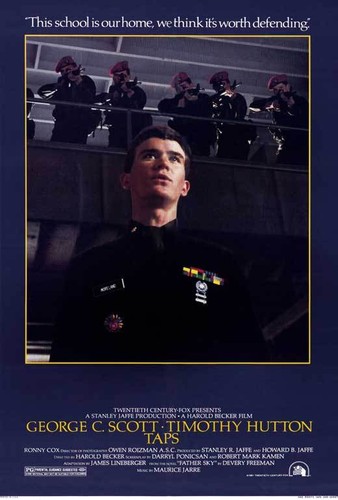
Taps
Taps is one of those movies that could only really have been made in the early 1980s. At any other time in the history of humanity, it simply wouldn’t fly. It’s a movie that earnestly asks you to believe the following proposition:
“What if a military academy full of teenage boys decided to fight the United States Army… and nearly won?”
Nobody involved appears to think this is remotely silly. And that’s the magic.
Watching Taps today is a surreal experience. On one hand, it’s a serious drama about honour, discipline, loyalty, and the collapse of old-fashioned ideals. On the other hand, it’s essentially Lord of the Flies with M16s and really expensive uniforms. Harry Potter with bazookas.
It’s completely ridiculous. It’s also surprisingly compelling. It really shouldn’t work
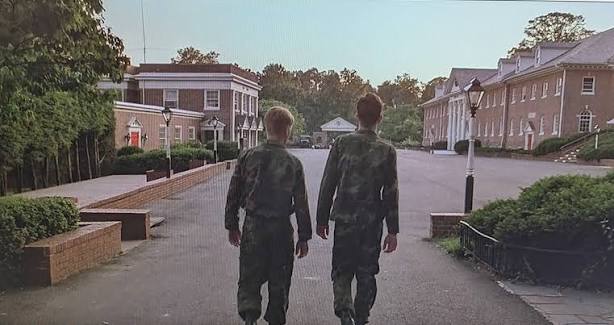
Bunker Hill Military Academy is one of those impossibly picturesque institutions Hollywood loves. Every lawn is immaculate. Every cadet looks like they just stepped out of a recruitment poster. George C. Scott plays General Harlan Bache, the academy’s ageing commandant. He’s old-school military through and through, believing discipline builds character and honour is everything.
Naturally, he suffers a heart attack early on. Because if there’s one thing that can derail a movie about military discipline, it’s the commanding officer keeling over twenty minutes in.
Meanwhile, developers have bought the academy grounds with plans to bulldoze everything and replace it with shiny suburban housing. The cadets, led by Timothy Hutton’s Brian Moreland, decide they simply won’t leave.
Not “we’ll protest.” Not “we’ll file legal appeals.” Not “we’ll organise a fundraiser.”
No. They seize the academy, with automatic weapons, determined to hold it against the US military. That’s the plot, and everyone treats this as a perfectly rational escalation.
Peak Early-’80s
The early 1980s loved stories about institutions under threat. Schools. Police departments. The Goonies’ homes. Bushwood Country Club. Military traditions. Family values. Pretty much anything involving stern men looking into the middle distance while synthesizers played quietly in the background.
Taps fits perfectly into this era. It plays everything completely straight, which somehow makes the increasingly absurd premise even more entertaining. Every decision made by these teenagers becomes another step down the road to absolute catastrophe.
“We should leave.”
“No.”
“The cops are here!”
“No.”
“The National Guard are here.”
“No.”
“The Army are here.”
“Still no.”
“Tanks?”
“…No.”
It’s like watching someone repeatedly hit <Continue Anyway> no matter how many Orcs there are.
It helps that it starts anchored around George C. Scott. He was one of those actors incapable of giving less than 110%. Even in a relatively small role, he dominates the opening act. General Bache genuinely believes military discipline creates decent human beings. He’s not portrayed as a monster or fanatic. He’s simply a man from another generation who cannot understand the modern world closing around him.
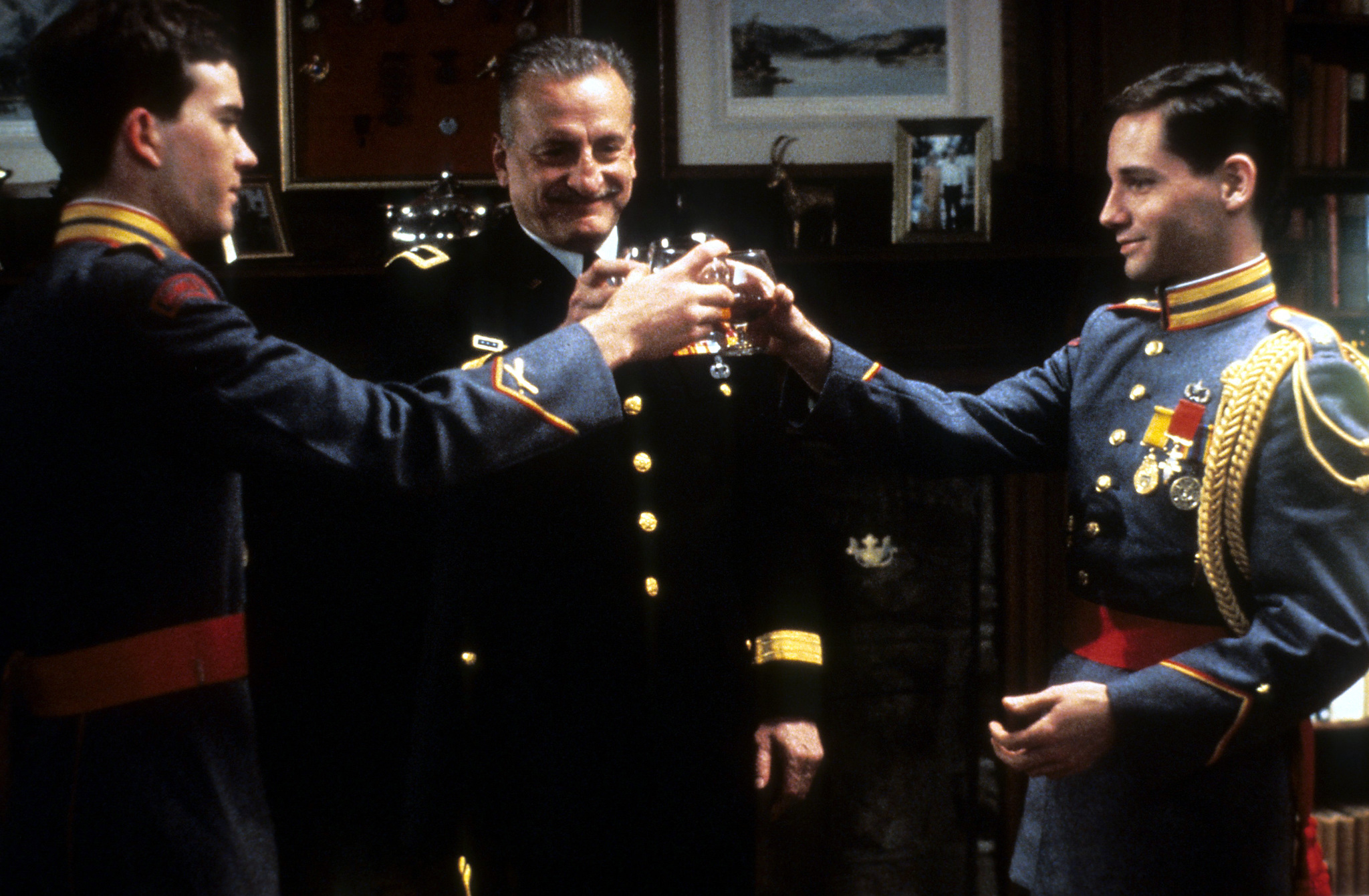
Scott gives him warmth, dignity, and sadness. Then he exits the movie surprisingly early. The film wisely uses his absence as its emotional engine. The cadets aren’t really fighting for a school, they’re fighting for an ideal that died alongside him. Unfortunately, they’re also teenagers. Which means that ideal gets mixed together with hormones, stubbornness and astonishingly poor decision making.
And who are these teenagers? Well, this movie might be able to lay claim to having the world’s most famous supporting cast just before they were famous. It’s playing “Spot the Future Superstar.” Genuinely, this cast is absurd.
Timothy Hutton had just won an Academy Award for Ordinary People and serves as the emotional centre. Then you notice a very young Sean Penn. Then an almost alarmingly intense Tom Cruise. Then Giancarlo Esposito. Then Evan Handler. Then Billy Van Zandt.
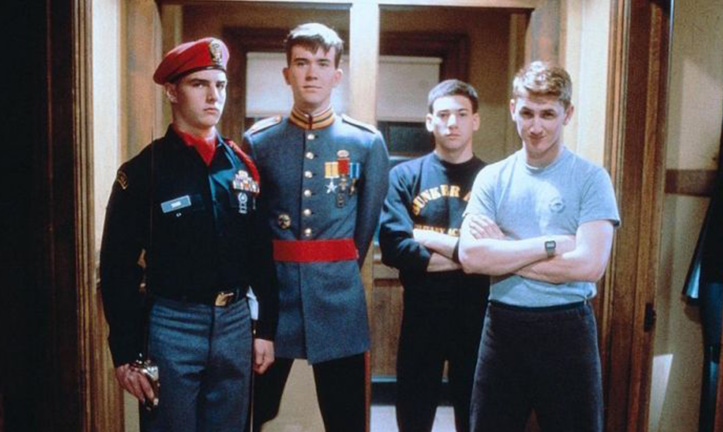
Then you realise practically every third cadet looks vaguely familiar because half of them went on to respectable careers. It’s one of those films where history has completely rewritten your expectations. Back in 1981, George C. Scott was the attraction. Today? People watch Taps because it’s an archaeological dig through future Hollywood royalty.
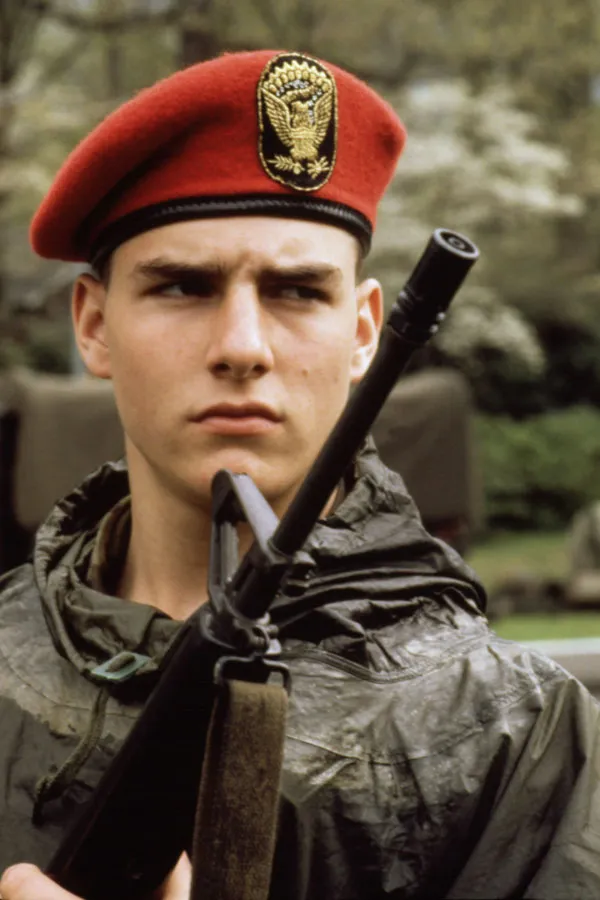
Tom Cruise arrives in all of this fully formed as Tom Cruise. This isn’t Tom Cruise’s first screen appearance, but it is the performance where audiences first noticed there was… something different about him. Even surrounded by experienced actors, Cruise practically vibrates. He doesn’t enter scenes, he attacks them.
His character, Cadet Captain David Shawn, gradually becomes the embodiment of militaristic obsession.
Cruise plays him with an unnerving intensity that’s impossible to ignore. His eyes never stop calculating. His jaw is permanently clenched. He behaves like someone who’s had three espressos, read The Art of War twice before breakfast, and is moments away from making everyone else’s problems dramatically worse. Which, coincidentally, is exactly what happens.
You can already see virtually every trademark that would define his career. Absolute commitment. Fearless physicality. Laser-focused energy. That ability to make even ordinary dialogue feel like life-or-death. It’s unmistakably Tom Cruise years before Top Gun turned him into a global phenomenon.
The scary thing? He’s barely started.
It is Sean Penn’s first film, his feature film debut. It’s fascinating seeing him before the intensity, before the Oscars, before decades of becoming Hollywood’s permanently angry conscience. He’s still recognisably Sean Penn. Even in a comparatively small role, there’s a natural confidence and unpredictability. Nobody could have predicted the career ahead of him, but it’s fun watching history begin.
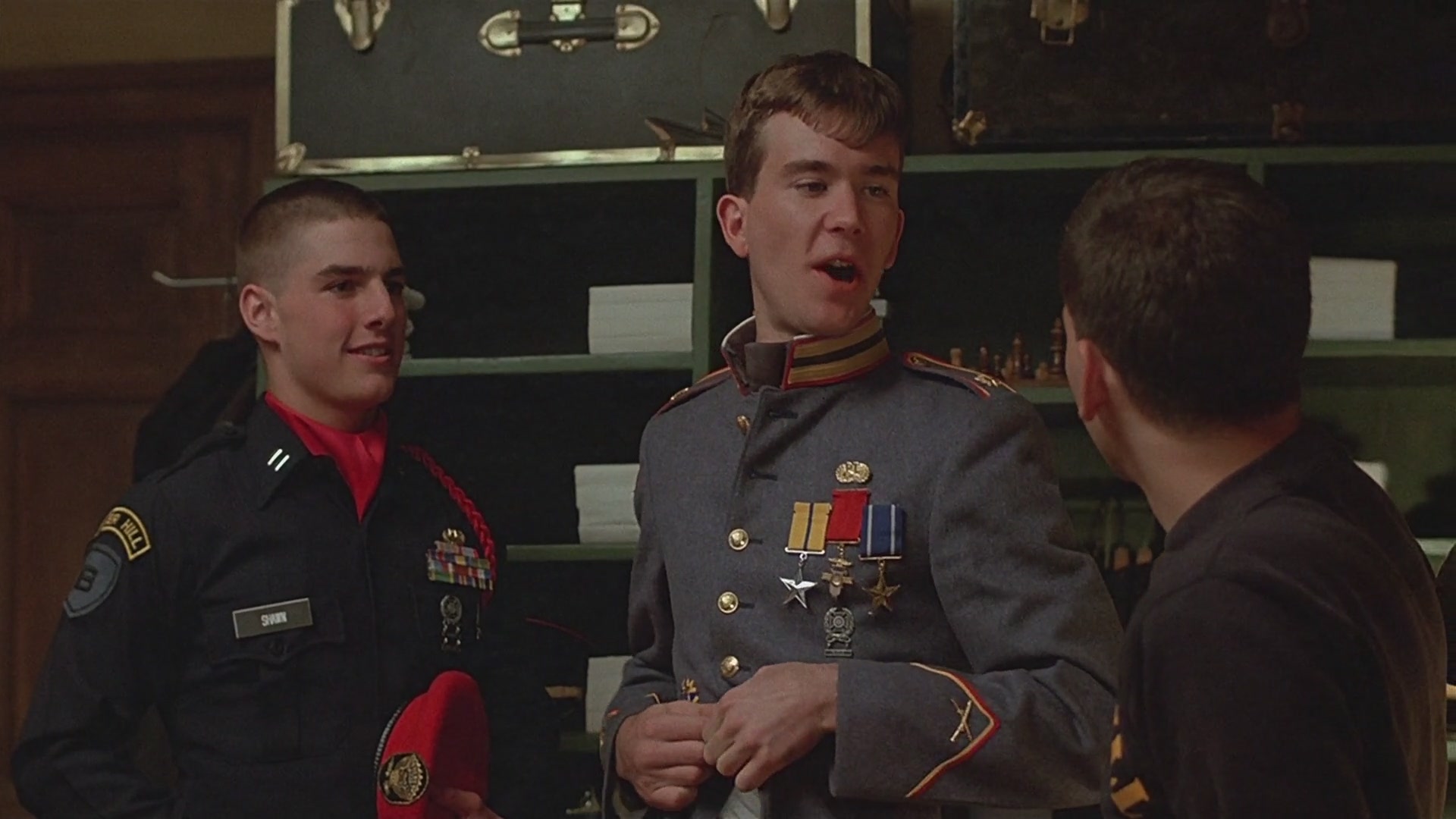
Timothy Hutton holds everything together. If Cruise supplies the volatility, Hutton provides the conscience. Fresh from winning the Academy Award for Ordinary People, Hutton was suddenly one of Hollywood’s brightest young actors.
His Brian Moreland is trapped between idealism and responsibility. He genuinely wants to protect the academy. He also slowly realises he’s trapped inside a situation spiralling completely out of control. Without Hutton grounding things emotionally, Taps would probably collapse under the weight of its increasingly unbelievable premise.
Behind The Scenes
Taps had an unexpectedly complicated journey to the screen. Directed by Harold Becker, it was adapted from Devery Freeman’s novel Father Sky. During development the story evolved considerably, shifting the focus toward the military academy and the escalating siege that defines the finished film.
Production took place at Pennsylvania’s Valley Forge Military Academy, which lends the movie an authenticity that’s difficult to fake. The location is practically another character. The stately buildings, immaculate parade grounds, and traditional military atmosphere give the film a convincing sense of place that makes the increasingly outlandish events feel oddly grounded.
The filmmakers also made extensive use of military hardware and large-scale action sequences. Helicopters, armoured vehicles, smoke-filled assaults, and hundreds of uniformed extras give the climax a scale that was impressive for the period.
It’s a surprisingly expensive-looking film for what is essentially “boarding school disagreement escalates somewhat.” And the escalation is glorious. Watching the story unfold is like observing the world’s most dramatic failure of conflict resolution.
Step one:
Property developers.
Step two:
Police.
Step three:
National Guard.
Step four:
United States Army.
This is not how negotiations usually work. Every adult in the movie seems constitutionally incapable of saying,
“Perhaps let’s all calm down.”
Meanwhile, every teenager has apparently watched one too many war movies. Everyone keeps making decisions that are emotionally understandable but objectively catastrophic. It’s like a Shakespeare tragedy directed by someone who’d recently bought access to military surplus equipment.
Critics were surprisingly kind. Upon release, Taps received generally positive reviews. Critics praised the performances, particularly George C. Scott and Timothy Hutton, while many singled out the young ensemble as unusually strong. Some questioned whether the film completely earned its explosive climax, but most agreed it treated its themes with sincerity rather than exploitation.
That’s probably why it still works. Like I have said about a few of these 80s movies lately, it never winks. It never acknowledges how completely bonkers the central premise actually is. The filmmakers believe every second, so that commitment carries the audience a very long way.
Financially, Taps performed respectably rather than spectacularly. Released during the busy Christmas season of 1981, it earned around $35 million worldwide on a budget reported to be roughly $14 million. Not a runaway blockbuster. Not a disappointment either. It found its audience, turned a profit, and gradually built a reputation through television and home video.
Ironically, its long-term legacy has become far bigger than its original box office suggested. Today, it is remembered less as an early-’80s hit and more as an astonishing collection of future stars before anyone knew just how famous they would become.
Modern audiences may laugh at some of the earnestness. The uniforms. The speeches. The unwavering belief that military discipline solves basically every problem except the one currently happening.
But Taps remains strangely affecting. It’s really about young people desperately trying to preserve certainty in a world that’s moved on without them. They’re clinging to tradition because everything else feels frighteningly uncertain. That’s a timeless idea.
The fact that they choose to express those emotions through armed occupation is… well, also kinda timeless.
Taps is one of those fascinating movies that belongs completely to its era while somehow remaining watchable decades later. It’s part coming-of-age drama and part military thriller. It is part tragedy and part accidental comedy.
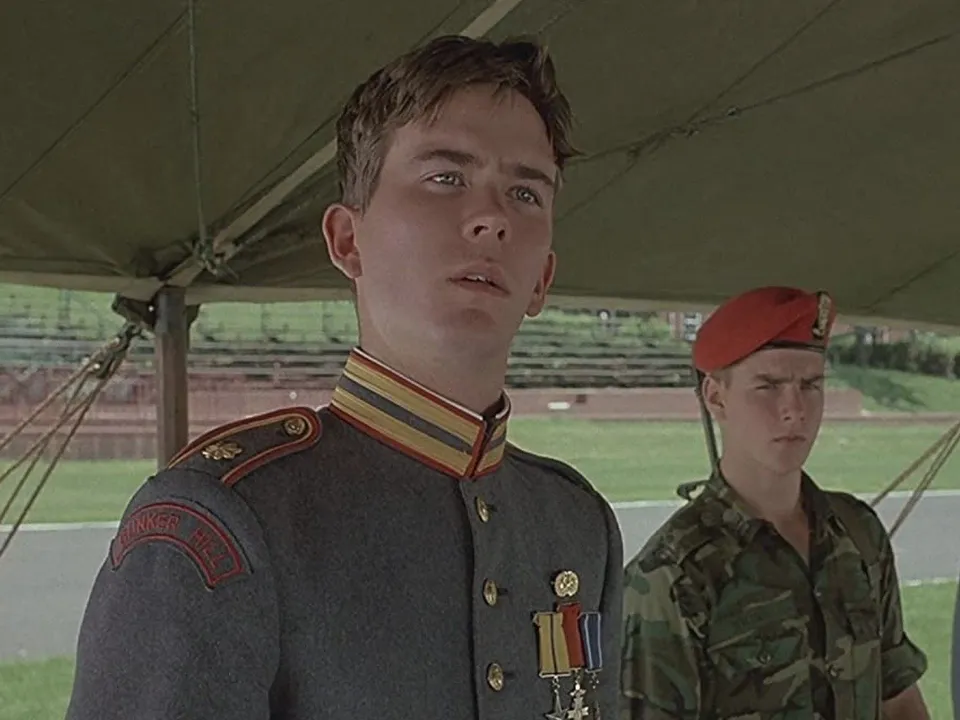
It features George C. Scott lending enormous dignity to proceedings, and yet another performance beyond his years from Timothy Hutton. Meanwhile, in the background, Sean Penn quietly begins an extraordinary career and Tom Cruise practically announces “I will become one of the biggest movie stars on Earth!” simply by glaring at people with enough intensity to melt parade-ground tarmac.
Most films age because of changing fashions. Taps ages because every few minutes, another future Hollywood heavyweight walks into frame. It’s impossible not to grin when yet another familiar face appears.
The plot is wildly implausible. The escalation borders on insanity. The emotional logic often asks for a generous suspension of disbelief. Yet somehow it all works. The film believes in honour, loyalty, and sacrifice with absolute sincerity, even as events become increasingly detached from anything resembling common sense. And maybe that’s ultimately why Taps survives.
It’s earnest without being cynical. Exciting without being cartoonish. Thoughtful without becoming preachy. It’s also one of cinema’s greatest examples of a disagreement over planning permission escalating into full military engagement.
You simply don’t get movies like Taps anymore. Probably for very good reasons.

