



One thing I am quickly realizing, as I continue to reacquaint myself with some of the 80s movies from my youth that didn’t necessarily reach the “all-time classic” barrier, is that most of them could only really have existed in this particular, tiny, sliver of human history. Not because of technology, maybe not because of politics, but because of pure culture and vibes. The Secret Of My Success is one of those.
This movie is so purely and completely of its time that I am not sure that anyone who didn’t live through it would ever be able to connect with it.
The Secret Of My Success
The Secret Of My Success is as 80s as better-quality cocaine and big hair in porn films. It is from a time when naked ambition wasn’t treated as a character flaw; it is an entire personality. You know this from minute one, second one as Night Ranger absolutely scream The Secret of My Success at you over the credits like they’re trying to wake the dead.
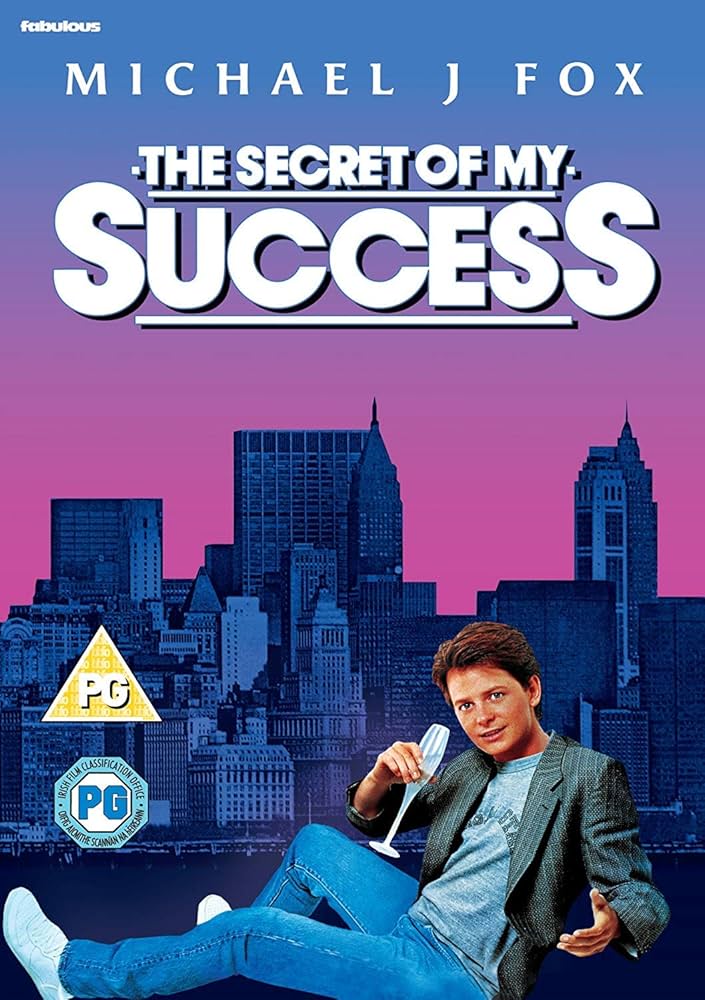
This is not easing you in. This is not gently introducing the story. No. This movie goes full power ballad almost immediately. And it’s an absolute banger. One of those glorious forgotten soundtrack songs that, while probably not going to motivate you to invade Normandy, could at least make you punch those numbers into that spreadsheet extra hard this morning.
Meanwhile, over the opening titles, we meet New York through the eyes of Kansas farm boy Brantley Foster. Not via landmarks or architecture. It is through women. Beautiful women, in skirts, in heels, in big sunglasses. Women apparently existing solely to stride dramatically through Manhattan looking impossibly glamorous.
To a sheltered Kansas boy this isn’t a city. It’s another planet populated entirely by supermodels. So the opening titles alone tell you exactly what this movie thinks New York is – Sexy, exciting, dangerous, full of opportunity… and somehow filthy.
Which neatly sums up actual 1980s Manhattan.
Welcome To New York, Please Avoid Being Murdered
It’s genuinely funny how movies of this era presented New York. Crime? Hilarious. Squalor? Exciting. Subway covered in graffiti? Character. Someone being mugged? Basically a running gag.
Modern New York is all artisanal coffee, $24 avocado toast and influencers taking selfies outside luxury apartment buildings. In 1987 New York looked like someone had declared war on sanitation, and yet movies somehow made it seem like the greatest place on Earth.

Everything looked dangerous. Everything looked alive. Everything looked like you might get stabbed but in a really entertaining way.
Into this city comes Michael J. Fox’s Brantley Foster with only one dream. Become really, really rich.
“When I come back to Kansas, I’m coming back on my own jet.”
Today we’d laugh. Back then? Honestly, not completely ridiculous. This was peak Reagan-era America where the entire culture was built around the idea that if you worked hard enough, smiled enough, networked enough and had a sufficiently motivational guitar riff playing behind you, then in New York City you absolutely could become a millionaire by Wednesday.
Movies genuinely believed this.
Wall Street. Working Girl. Baby Boom. Big Business. Broadcast News.
Everyone was climbing something, and corporate America wasn’t presented as soul-crushing bureaucracy, it was an adventure. Watching hundreds of suited office workers march into skyscrapers is somehow framed as exciting and purposeful, almost heroic. Today we sneer at them as brain-dead sheep and tax-pigs slaving away for multinational shareholders. But in the b80s? Man, working in an office was cool.
One genuinely surprising thing revisiting this now… I had absolutely no idea Michael J. Fox was that ginger. Maybe CRT televisions simply hid it. Maybe VHS saturation performed miracles. Maybe my childhood eyes ignored red hair entirely because gingers have no souls. But he’s practically glowing copper throughout this film.

He is still effortlessly charismatic though. Nobody sold optimism quite like Fox. He’s always two seconds away from grinning and impossible not to root for, even when he’s committing what must amount to approximately forty-seven counts of corporate fraud.
Which brings us to this point. Let’s be honest. The business side of this movie is complete nonsense. Absolutely glorious nonsense.
Brantley accidentally creates another identity and works upstairs among the suits while working downstairs in the mailroom. He executes stock deals, creates mergers, and moves paper around while everyone keeps shouting about acquisitions, but nobody appears to understand what anyone actually does. Least of all the writers.
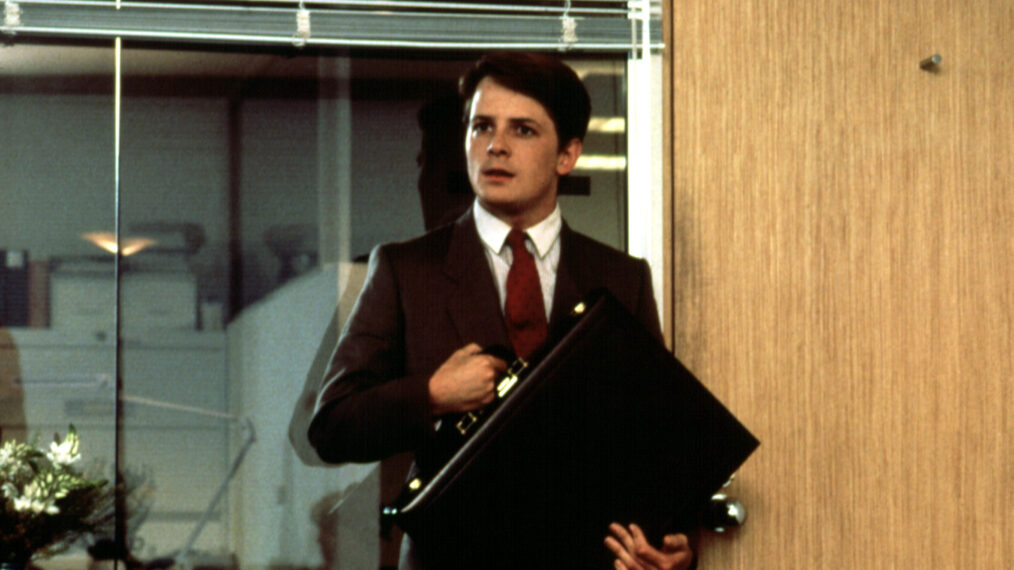
Corporate America is essentially portrayed like Hogwarts. Magic happens, important people nod, someone says “market share” while somebody else gets promoted and the day is done.
It’s all hilariously simplistic, yet you never care because the movie doesn’t care. It’s using business as the backdrop for screwball comedy rather than finance, which is exactly why it still works.
Although it’s astonishing how slowly we actually arrive there. Watching it again, I was amazed that we’re nearly half an hour in before the business identity-swapping really kicks into gear. Modern comedies would have hit that premise inside ten minutes. This movie happily spends ages simply enjoying hanging around with its characters.
Which is surprising, as the whole movie is only about an hour and fifty minutes long so it absolutely flies past. Compared to today’s bloated two-and-a-half-hour “content events,” this thing feels almost alarmingly efficient.
Sexy Time!
Fresh from Supergirl and The Legend of Billie Jean, Helen Slater arrives looking like sunshine with hairspray. Slater is absolutely stunning, wide-eyed, warm, and entirely believable as someone Brantley would immediately fall hopelessly in love with. Unfortunately, the movie also reminds you why she never quite became a superstar.
She’s charming. She’s lovely. But once scenes demand emotional range beyond smiling sweetly or looking mildly concerned, the limitations begin to show.
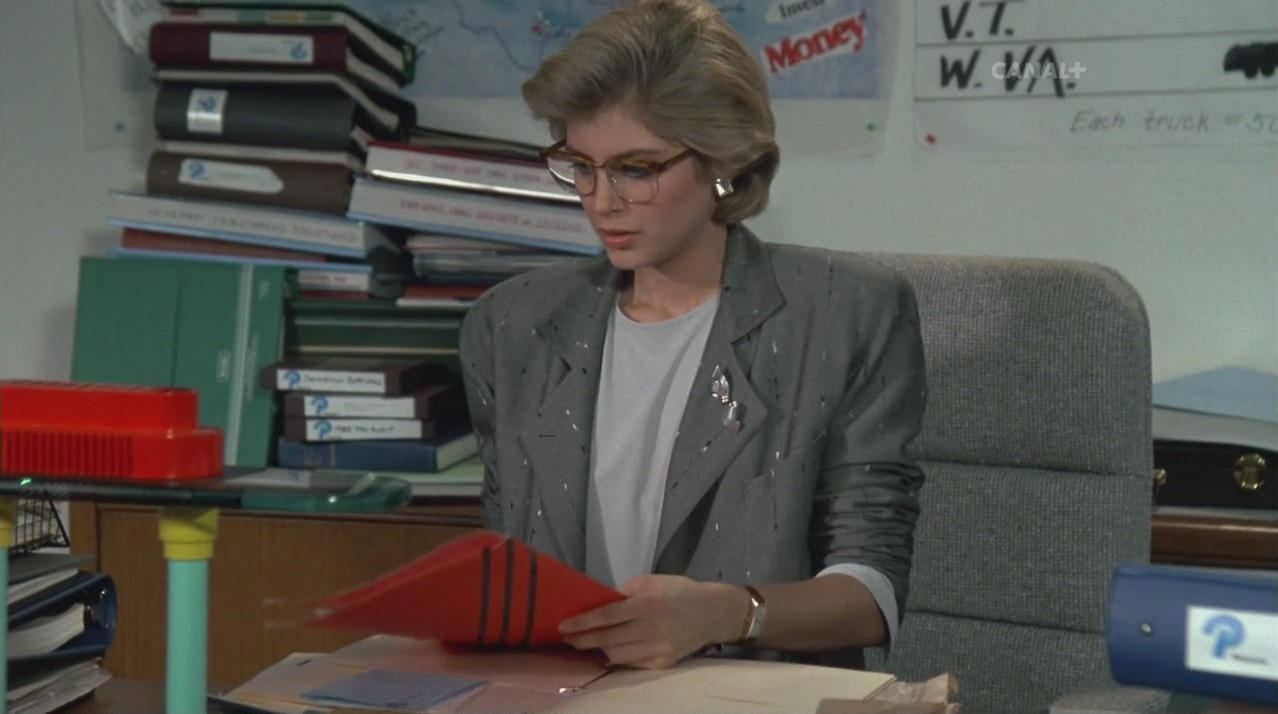
Meanwhile, the boss’s wife. Good grief! For many teenage boys watching this on VHS, this may genuinely have been their first encounter with the concept that attractive women didn’t necessarily stop existing after thirty. Margaret Whitton practically invented the cinematic MILF before American Pie even coined the acronym, and the internet ran with it.
She’s gloriously outrageous, sexually aggressive, overly confident, and dangerously bored. As a result, every scene with her in it crackles, and it feels like somebody told her she was in a somehow hornier movie, like Porkies.
Which bears mentioning, because this is a PG movie. A PG! There’s an unbelievable amount of sexiness packed into these 100 and something minutes, like the infamous headboard scene, with nothing shown but everything explicit, with increasingly enthusiastic banging noises through the bedroom wall that is honestly funnier than most R-rated sex comedies.
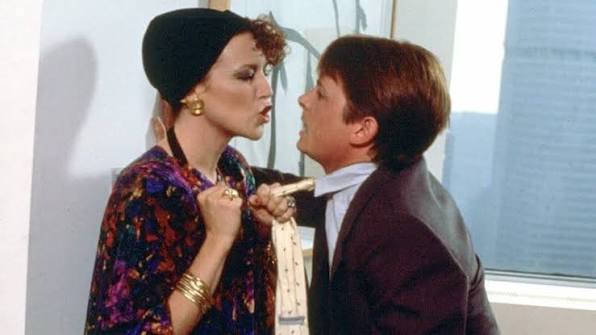
It’s cheeky, suggestive, and entirely built around implication. That approach is how this movie gets away with all of that sex-adjacent content. Modern films often mistake explicitness for humour, The Secret Of my Success knows exactly where the funny lives in sex.
Naturally Oh Yeah by Yello turns up, because no Eighties comedy involving flirtation, wealth or mild sexual confusion was legally allowed to exist without it. That opening synth hook remains one of cinema’s great shorthand pieces of music – instantly funny, sexy and ridiculous at the same time.
The other 80s staple in this is the sheer amount of casual sexism. Much of it a candidate for our It Would Never Get Made Today discussion of last week.
The typing pool, the secretaries, the receptionists. This movie implies that any of these women just exist to throw themselves at any man wearing a decent suit. And the way the junior staff are treated is extraordinary.
People bark orders, throw paperwork, dismiss assistants, and treat service staff as disposable while it is played entirely for laughs. Today, the tribunals would be visible from space.
There’s also one wonderfully on-the-nose joke about Brantley not being able to take a role he is qualified for because he’s not “a minority woman”, poking direct fun at affirmative-action in a very different cultural moment. The joke lands because everyone instantly understands the era it’s satirising, but today it’s exactly the sort of line studios today would quietly remove before the first script meeting.
For the wider cast, it is much stronger than people remember. Richard Jordan makes an excellent corporate villain, playing smarmy and smiling while planning professional executions. He is exactly the kind of executive who’d absolutely have vision statements framed on his office wall.
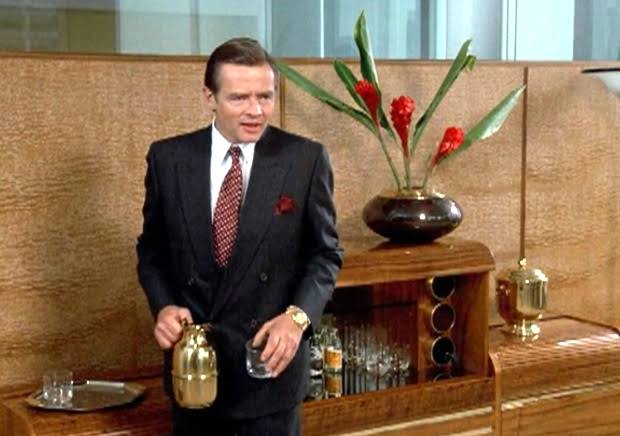
Fred Gwynne also pops up in what’s basically an enlarged cameo and immediately improves everything simply by existing. He had that wonderful ability to make authority figures funny without trying.
Even tiny supporting roles are packed with recognisable faces, and everybody understands the assignment.
Meanwhile, there may never have been a soundtrack more determined to improve your mood. Night Ranger. Yello. David Foster smoothness. Synth. Power ballads. Pop perfection. And then, it hits you with Walking On Sunshine, one of those songs physically incapable of making people unhappy. It arrives exactly when it should, because the movie understands something modern soundtracks often forget. Sometimes audiences simply want to feel good.
Slapstick Farce
One of the best things about The Secret Of My Success is that it knows exactly what it is, and never gets embarrassed about it. Sometimes, that is a good old fashioned slapstick farce. A key example of this is the night time at the mansion sequence. Doors opening, doors closing, people hiding, people swapping bedrooms, people nearly getting caught.
A direct descendant of classic bedroom comedies and stage plays, and everything depends on timing.
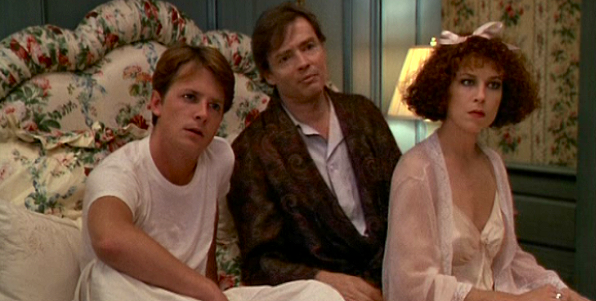
This is also evident in several sequences and it absolutely nails it.
Producer Herbert Ross wanted a contemporary screwball comedy, something with the energy of Billy Wilder filtered through Reagan-era corporate excess. The movie first started development way earlier than 1987. Jim Cash and Jack Epps Jr., who would later write Top Gun, built the screenplay around classic mistaken-identity farce, transplanting Shakespearean and old Hollywood plotting into the skyscrapers of Manhattan.
The premise owed more than a little to The Prince and the Pauper and The Apartment, only with significantly more double-breasted suits.
Michael J. Fox was the obvious choice after Back to the Future transformed him into one of Hollywood’s biggest stars overnight. The production cleverly capitalised on his everyman appeal. Fox had an unusual gift: he could convincingly play both the awkward outsider and the confident success story without changing much beyond his posture and grin. That duality was essential to Brantley Foster, a character juggling two identities while somehow remaining the nicest fraudster in cinematic history.

Filming took place in New York at a time when the city was still rough around the edges. Much of the corporate office footage was shot in real Manhattan buildings, lending authenticity to a story that otherwise treats business with all the realism of a Saturday morning cartoon. The contrast works beautifully. The locations feel genuine even if absolutely nothing that happens in them does.
One oft-repeated behind-the-scenes story concerns the film’s breakneck pace. Ross kept scenes moving rapidly, favouring quick dialogue and physical comedy over lengthy exposition. It helps explain why the film still feels so fresh. There is almost no fat on it. Every sequence either advances the plot, delivers a joke or sets up the next misunderstanding.
The soundtrack also received enormous attention. Rather than relying solely on a traditional orchestral score, the filmmakers leaned hard into contemporary pop and rock. It gave the film an identity all its own and inadvertently created a time capsule of 1987.
The film was a healthy commercial success, earning well over $100 million worldwide on a relatively modest budget. Critics were divided. Many dismissed it as lightweight fluff or implausible fantasy. Fair enough. Others praised Fox’s effortless charisma and the infectious energy that carried the increasingly ridiculous plot.
Time has arguably been kinder to it than many prestige dramas of the same era. Nobody watches The Secret of My Success expecting a forensic examination of corporate restructuring. They watch because it is funny, breezy, romantic and infectiously optimistic.
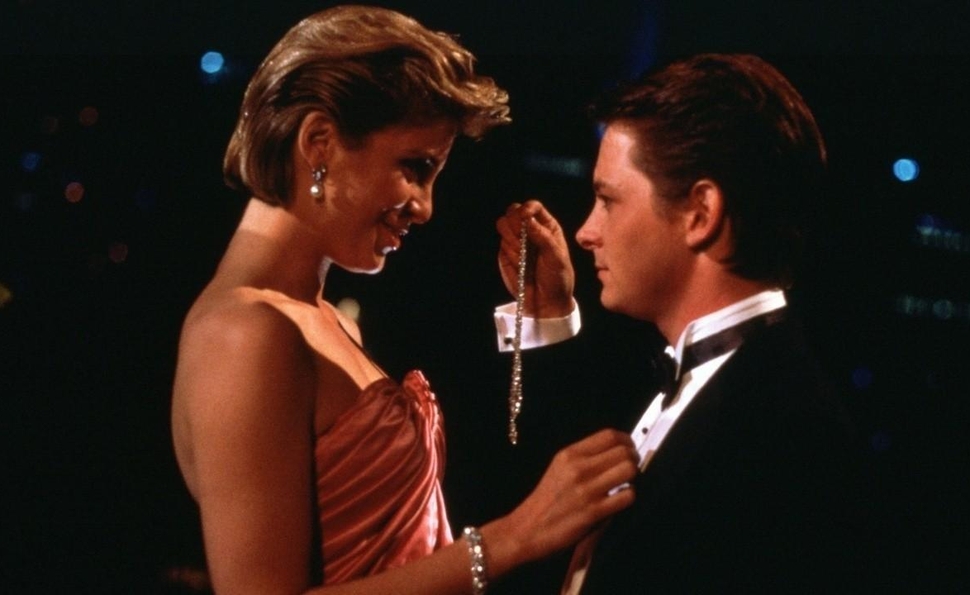
Is it realistic? Good Lord, no. Does any corporation function remotely like this? Absolutely not. Would Brantley be imprisoned before the second act in reality? Without question.
Yet none of it matters. Because The Secret of My Success captures something that disappeared somewhere around the Early 2000s. Optimism. Not irony, not cynicism. It genuinely believes that being enthusiastic, decent, hardworking and just a little bit cheeky can change your life. That the world rewards effort. That tomorrow might genuinely be better than today.
It’s complete fantasy, but it’s incredibly charming fantasy. Like most great Eighties movies, it tells you to stop overthinking everything, put on a suit three sizes too big, blast a guitar solo, walk confidently into the nearest skyscraper and simply be spunky enough to make success happen.
Whether or not that’s true is beside the point. For one glorious hour and fifty minutes, you’ll believe it.

