


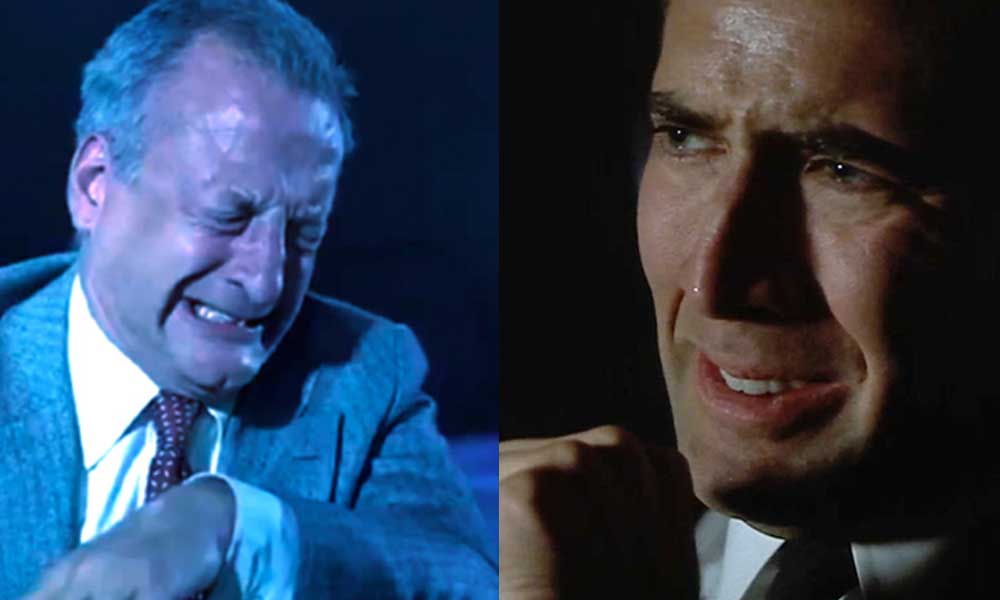
A double feature of Hardcore and 8MM should give a regular joe (you look like a good joe) their fill of movies about a main character searching for a missing girl in the seedy world of pornography.
Which film does a better job tackling a subject that doesn’t provide material for a feel-good flick but rather leaves folks heading for the shower to wash the stink off.
Let’s don our rubber gloves, ready our can of Lysol and find out…
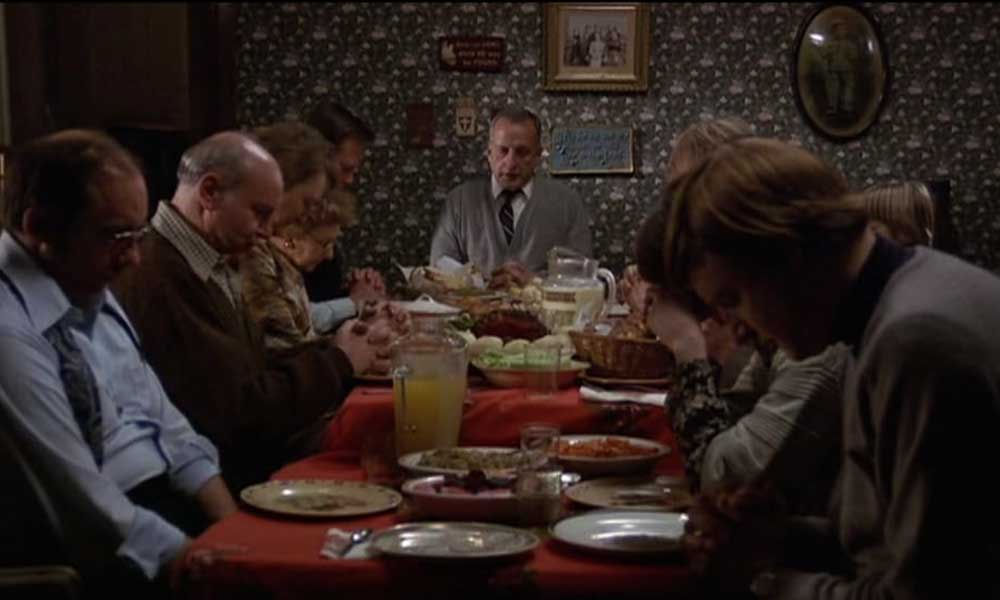
Hardcore
Hardcore (1979) is the brainchild of Scorsese collaborator Paul Shrader, who wrote Taxi Driver and Raging Bull but is probably best known for directing the second version of Exorcist: The Beginning.
Everyone’s favorite gun-toting, tactical vest aficionado John Milius came along for the ride as executive producer.
Originally, Warren Beatty was set to star but clashed with Shrader. Beatty wanted to change the story from a father searching for his missing daughter to a man searching for his missing girlfriend. Beatty thought he was too young to be a father. Yet, he didn’t think he was too old to have a fling with a 15-year-old Cher.
Who can understand the twisting turns of celebrity rationalizations?
Regardless, Shrader brought in George C. Scott instead. Scott was not a happy camper after making two commercial failures: Rage and The Savage is Loose. To sooth himself, Scott demanded production include five sick days to account for his drinking problem. He also declared Shrader a terrible director and labeled Hardcore a piece of crap.
Nevertheless, Scott turned in an effective performance as a staunchly conservative Calvinist Christian from Grand Rapids, Michigan, who is forced to travel to the debauched flesh pits of California to find his missing daughter.
Peter Boyle joins the fun as a wormy P.I., along with small roles from Cary Graham, who eventually gifted us Robot Jox, and Reb Brown, who went on to play Reb Brown in Captain America and Reb Brown in Uncommon Valor.
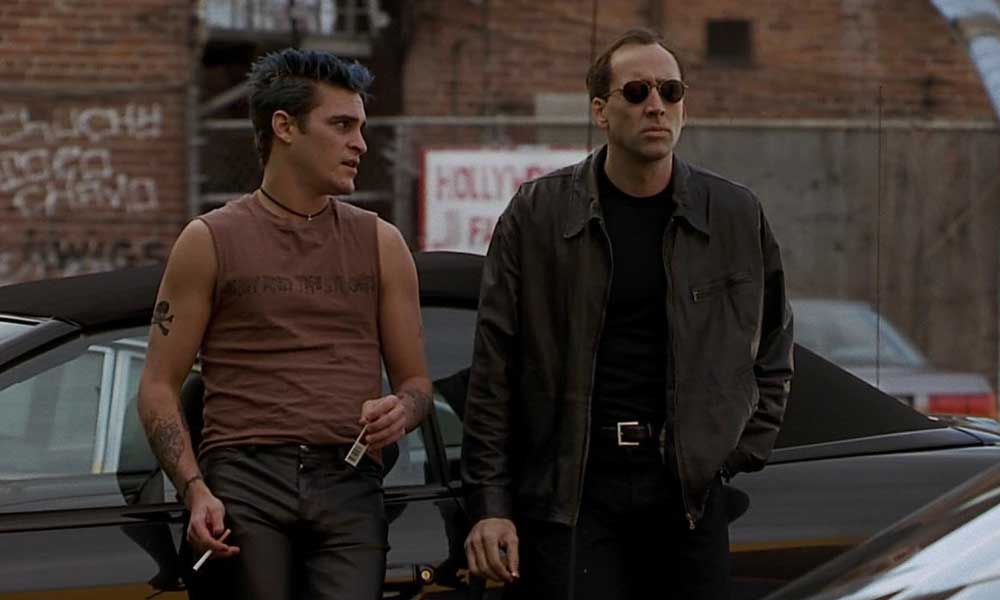
8MM
8MM (1999) is the product of screenwriter Kevin Andrew Walker and director Joel Schumacher, who were on opposite trajectories at the time. Walker was a rising star due to his work on David Fincher’s Seven. Schumacher was on his way to Hollywood Siberia for helming the great turkey that was Batman & Robin.
Russell Crowe and Mark Wahlberg were the first choices for the starring roles. 8MM ended up with Nicolas Cage and Joaquin Pheonix.
Cage had built himself up from a quirky loon to a genuine thespian and action star with the run of Leaving Las Vegas, The Rock, Con Air and Face/Off. Momentum like that could not be maintained, however. 8MM is one of the films that marked the beginning of his slide into today’s version of Cage.
As a sidenote, Cage is currently filming a cannibal movie in my home state of Minnesota. That sentence more than anything best describes today’s version of Cage…
Meanwhile, Phoenix was on the cusp of moving up a level with the soon-to-be-released Gladiator, which he would spin into a successful career as a serious actor with the ability to starve his body into something out of a Cronenberg movie.
Joining this crew is James Gandolfini and Peter Stormare in perhaps the most Gandolfini and Stormare roles ever, along with Anthony Heald (who is probably in the most Heald role ever) and Catherine Keener.
What’s The Story, Morning Glory
8MM is not a remake of Hardcore, but their storylines are quite similar and have identical beats.
In Hardcore, Scott’s daughter goes on a church field trip to California and goes missing. Scott enlists the aid of Boyle to find her. This leads to Scott witnessing a porno video featuring his daughter, which causes him great anguish.
Unsatisfied with Boyle’s progress, Scott travels to Cali to take care of business himself. He teams up with a prostitute played by Season Hubley, who appeared in Escape from New York as “Girl in Chock Full O’Nuts.”
Scott eventually crosses paths with a snuff filmmaker played by the great villain actor Marc Alaimo (Total Recall) in a blink-and-you’ll-miss him appearance.
In 8MM, Cage is hired by a wealthy widow to investigate a movie reel found in her late husband’s safe. Cage watches the video, which features a missing girl apparently being killed, which causes him great anguish.
Cage travels to California (with a few detours) to find out if the movie is real. He teams up with a pornography seller played by Phoenix. Cage eventually crosses paths with snuff filmmakers played Gandolfini, Stormare and Heald.
The best way to describe the main differences between the two projects is to say Hardcore is a “film” and 8MM is a “movie.” Outposters will nod with understanding, even if the concept cannot be fully articulated.
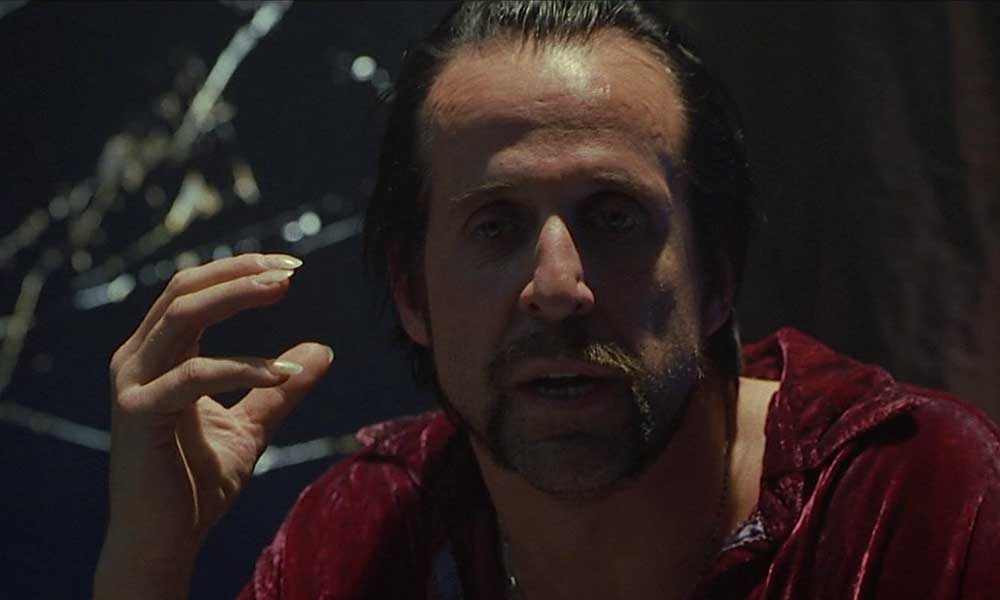
The events in Hardcore are grounded in a natural reality of regular people caught up in an exploitive world. The events of 8MM exist in a heightened reality. For example, Stormare is particularly theatrical as porn auteur Dino Velvet, who wears a robe, wears Lee Press On Nails and wields a crossbow.
What Lies Beneath
Both Hardcore and 8MM attempt to say something.
Shrader drew on his personal experiences growing up in a conservative religious community in the Midwest and having that world crash headlong into the polar opposite world of pornography.
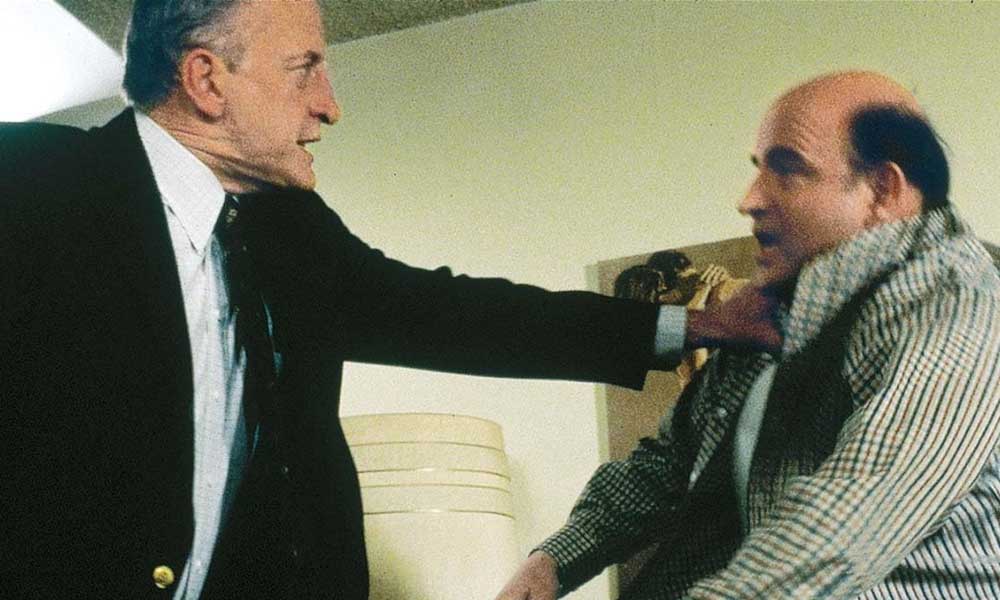
Hardcore is the story of a man who deeply loves his daughter, even if he can’t properly show it. He loves her so much that he travels to his version of hell to save her. While the journey wounds him, he doesn’t compromise his values (unless you count hitting a Twink with a lamp). He remains a man apart.
Scott’s character finds his answers. The film implies he realizes changes need to be made to make sure his world doesn’t become as ugly as the world he visited. Pornography is sex without love, but Michigan is home without love.
Meanwhile, 8MM concerns itself with the viral nature of pornography. As Cage is exposed to that world, he gradually becomes infected. He does compromise who he is to navigate the challenges he faces. It’s every neckbeard’s favorite philosopher, Nietzche’s, quote put onscreen:
“He who fights with monsters might take care lest he thereby become a monster. And if you gaze long into an abyss, the abyss also gazes into you.”
This is a great character journey, but the film isn’t quite up to it. The dark side of the coin is well realized, but the light side is not, mainly represented by Cage and Keener saying “I love you” to each other with varying degrees of angst.
In the end, Cage is not driven to seek transformation. He is driven to seek redemption.

Give Me That Old Time Religion
The religious aspect of Hardcore is more overt, but it seems to exist in 8MM as well. Walker is no stranger to referencing religion. Seven is a based around the concept of sin. He makes references to it in Sleepy Hollow, as well.
In 8MM, the surname of the wealthy family that kicks everything into motion is “Christian.” Likewise, the confrontation at the end reveals that the villain has a Christian mother.
Shrader is content to let the viewer draw their own conclusions about such things, but 8MM appears to poke a pin in Christian tenets with these little references. Like Cage and Keneer’s “I love yous,” these references ring hollow.
Part of the problem is that the “corrupt religious figure” has become a cliché in the last 25 years or so. The other problem is that if 8MM is portraying pornography as evil, Christianity basically wrote the book on what defines evil. If Christianity is hypocritical, then it’s definitions of evil are hypocritical, as well. Under that worldview, the morality of the villains is simply how they chose to live their lives. There’s no good or bad about it.
On The Other Hand…
These sorts of issues cannot be solely laid at the feet of Walker. Schumacher and Walker greatly clashed on 8MM.
Walker’s original script was uncompromisingly dark. For example, Walker offered no redemption for Cage’s character. At the end of the script, he is completely broken by the events of the film and commits suicide.
To make the material more palatable, Schumacher brought it writer Nicholas Kazan to rewrite and rearrange the script. This process is likely where the problems developed, and Walker eventually disowned the film.
Another source of disagreement between Schumacher and Walker was over the 8MM’s final confrontation. Walker wanted the killer to be a faceless, steroid freak to underscore the anonymous, industrial horror of pornography. Schumacher made him a normal-looking guy who gets his comeuppance in a standard climax.
Despite the friction with Walker, some of Schumacher’s changes are for the better. In the original script, the killer tracks down Cage’s character. In the film, Cage tracks down the killer, with the motivation to save his family.
Furthermore, I don’t have a problem with Schumacher’s solution for the final confrontation. Metaphors sound great on paper, but film is a visual medium. The filmed ending of 8MM does what it needs to do from an audience perspective.
Meanwhile, Hardcore has an ending that is maybe more in line with the ambiguity Walker wanted, but it isn’t as satisfactory.
Hardcore vs. 8MM
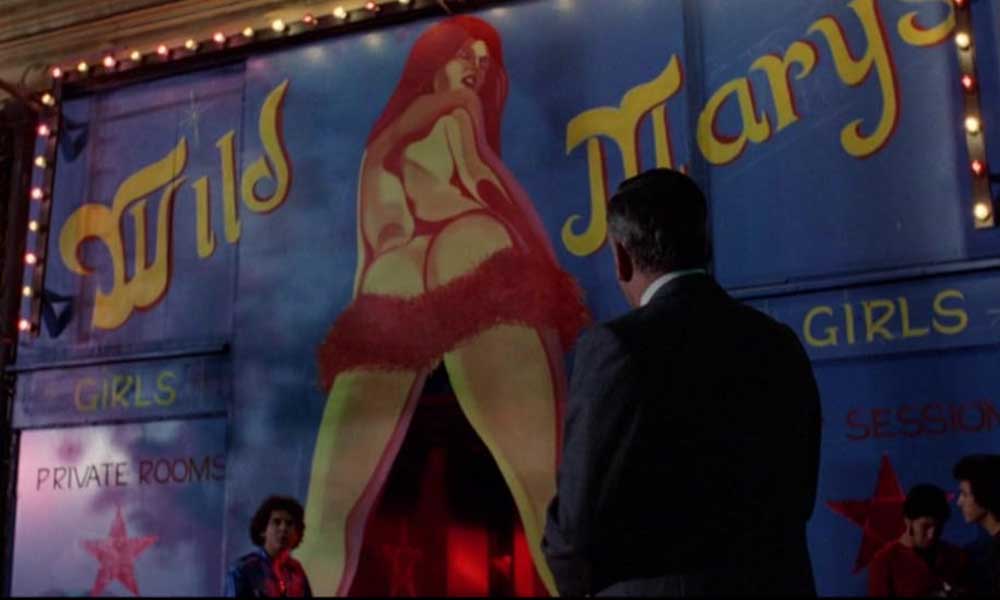
In the final analysis, both films have merit. They both do an effective job depicting the sleaziness of pornography world (the sad thing is the seedy areas shown in Hardcore really don’t seem that bad compared to the seedy areas of today).
Let’s break the main parts of the movies down a smidge further…
Main character: Cage has the charisma to drag the viewer along, but Cage’ness is the entirety of his performance.
There is no denying that a Scott performance also contains a large amount of Scott’ness, but Hardcore’s decision to make the dynamic a father-and-daughter vs. private-detective-and-missing-girl gives Hardcore a lot more to work with in the emotional department.
Supporting characters: It’s a wash. Phoenix is fine. Hubley is fine. They both had sad ends, but Hubley’s final scene is almost Chinatown-esque in how she is abandoned to the whims of her world.
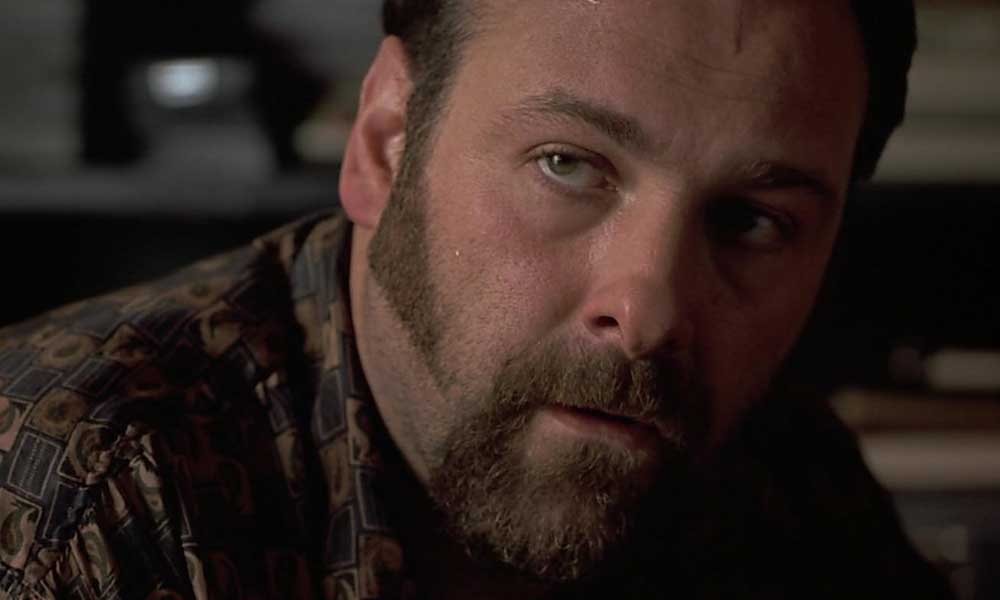
Villains: 8MM wins this one easily. Absolutely perfect casting. Stormare, Gandolfini and Heald could make reading Green Eggs & Ham sleazy. They don’t have to try at all in 8MM to achieve depravity.
Screenplay: Hardcore is more intelligent. 8MM is slicker. In the end, Hardcore probably has more staying power. Yet, 8MM is watchable as a neo-noir.
Direction: Say what you will about Schumacher, but he had flair. Certainly, more flair than Shrader, who is much more naturalistic in his approach. Yet, Shrader’s work on Hardcore is wonderfully gritty. Slight nod to Shrader.
Add all that up, and Hardcore probably wins by a nose over 8MM. If only you could mash the best elements of the two projects together, you’d end up with the definitive take on the subject. It would just need a catchy title for marketing to sell.
Up to Snuff maybe?

