


Released in 1986, Richard Wenk’s odd little vampire comedy arrived at precisely the point when Hollywood was rediscovering that vampires could be sexy, funny, dangerous, modern and, most importantly, profitable.
The old cape-and-castle brigade was being shoved into the attic while a new generation of bloodsuckers arrived wearing leather, designer haircuts and the sort of sunglasses that cost more than a family car.
Fright Night had already demonstrated that vampires could be both scary and funny. The Lost Boys would soon make them impossibly cool. Near Dark would strip the genre down and drag it through the dust of the American Southwest.
And then there was Vamp, which appears to have wandered into the decade through the wrong door.
It is technically a horror comedy. Technically. It is also a strip-club movie, a college comedy, an urban nightmare, a vampire film, a Grace Jones performance-art installation and, for extended periods, something resembling the kind of dreams I have after I have eaten too much cheese.
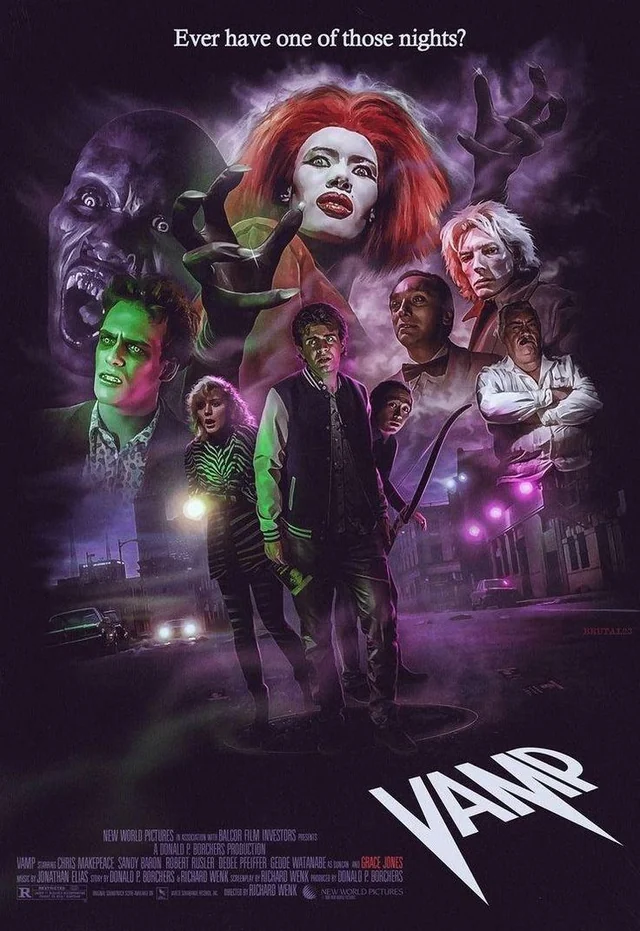
Vamp
The plot is straightforward enough. College students Keith (Chris Makepeace) and A.J. (Robert Rusler) need to acquire a stripper for a fraternity initiation and party, because apparently this is what constitutes higher education in America. They drag their friend Duncan (Gedde Watanabe) along because he owns the car and they head into the seedier parts of town.
They eventually find the After Dark Club. And what a club. It is one of those establishments where absolutely nobody has considered the possibility that customers might want to leave alive.
The place is run by Vic, played by Sandy Baron, who spends much of the film looking like a man who has accidentally become nightclub manager in Hell. He is desperate to make the place classy, talks about moving the operation to Las Vegas and seems blissfully unconcerned that his employees are, in fact, vampires.
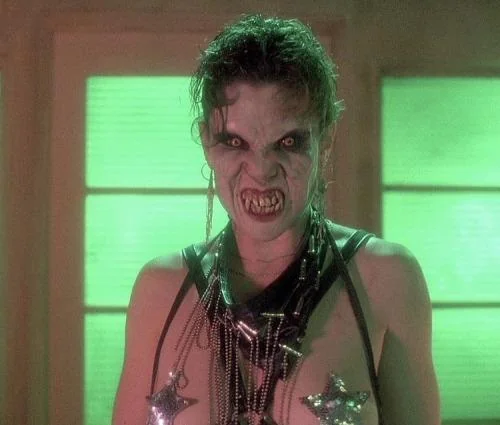
This is one of the great mysteries of Vamp.
Everyone seems to know. Not just the club owner. Not just the vampires. Everyone. The entire neighbourhood appears to be operating under a collective agreement that, yes, there are vampires here, but nobody should make a fuss because they’re probably good for business.
The boys, naturally, don’t know any of this. Because they are idiots.
This brings us to Katrina – Grace Jones.
Jones enters a movie as though she has arrived from another dimension, specifically to investigate why everyone else looks so ordinary. Katrina is the star attraction at the After Dark club and she is dressed as Grace Jones. That’s it. It’s like the call sheet specifically said “And Grace Jones appears, being Grace Jones”.
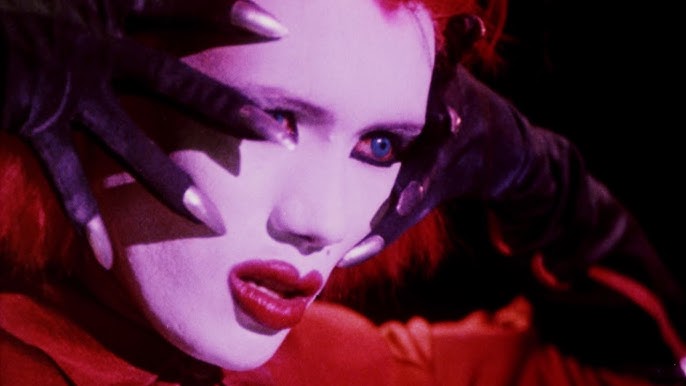
The hair. The make-up. The angular body. The costumes. The expression suggesting that she has just discovered your entire family tree and isn’t impressed with any of it. At all. She looks less like a stripper and more like someone has constructed a vampire out of architectural materials.
Remember, this was still the period when Hollywood was trying very hard to convince everyone that Grace Jones represented some terrifying new frontier of sexual danger. From Conan the Destroyer to A View to a Kill, Hollywood apparently looked at Grace Jones and thought:
“Yes! Men love a woman who is sexually intimidating and possibly capable of killing you simply by looking at him.”
Jones kept getting the call. To be fair, it isn’t difficult to understand why. She looks absolutely fucking terrifying. But there is something very funny about the way Hollywood was attempting to sell her as this exotic object of dangerous lust while Jones herself seems to be operating on an entirely different frequency.
She doesn’t look like she wants to seduce you and have sexy fun times with you. She wants to audit your soul.
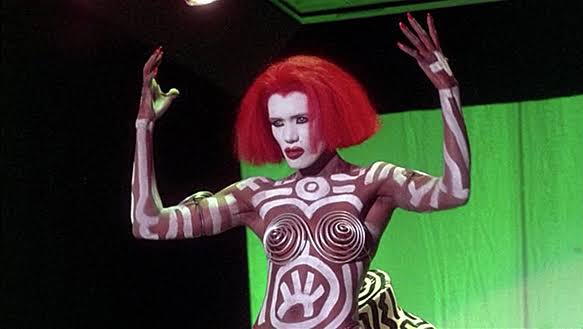
Her big dance sequence is the centrepiece of the film, and it remains one of the most bizarre things about Vamp. It is sensual, certainly, but it is also deeply strange. Jones moves with the deliberate physicality of someone who knows exactly how bizarre she looks and is perfectly happy to make you sit there and process it.
And here’s where the terrible reality of Vamp hits you: Vamp is way too sexy for its certificate, but somehow not sexy enough for the story it’s trying to sell.
All Over The Place
It wants to be sleazy. It wants to be erotic. It wants to be dangerous… But it also wants to be a comedy. And then it wants to be a horror film. And then it wants to be an offbeat 1980s cult movie. The problem is that it never quite figures out which one it actually is.
This is not The Lost Boys, which understood exactly what it was doing. That film was sexy, funny and scary, but the tonal machinery was beautifully calibrated. It knew when to throw in a joke and when to let the vampires actually be monsters.
Near Dark went the other way entirely. It took the vampire myth and essentially turned it into a grimy Western populated by homicidal drifters.
Vamp sits somewhere between them, looking nervously at both and wondering whether it should laugh or bite somebody. The result is weirdly unsettling.
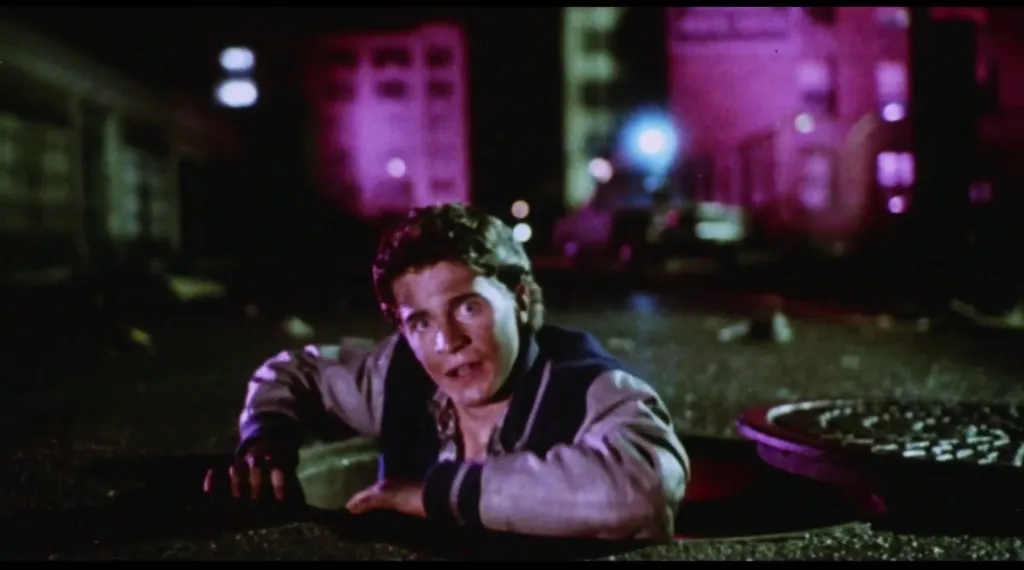
There are stretches of the film that genuinely work. The After Dark feels nasty. The streets around it feel dangerous. There is an excellent sense that Keith has wandered into a part of the city where the normal rules have stopped applying. The lighting is grubby and lurid, the sets feel claustrophobic, and Wenk occasionally creates the sensation that the whole place is some kind of elaborate trap.
Then, just as you’re beginning to feel uncomfortable, the movie remembers:
“Oh shit. We’re supposed to be funny.”
And somebody falls over. It is like watching a horror movie being repeatedly interrupted by someone asking whether you want to hear a joke.
One of the better sequences involves Keith being trapped in an elevator while the Donna Reed Show theme plays. That’s the sort of inspired tonal collision the film occasionally manages. The juxtaposition is genuinely funny because it understands that ordinary, wholesome Americana becomes considerably more disturbing when you’re trapped in an elevator while something supernatural is trying to murder you.
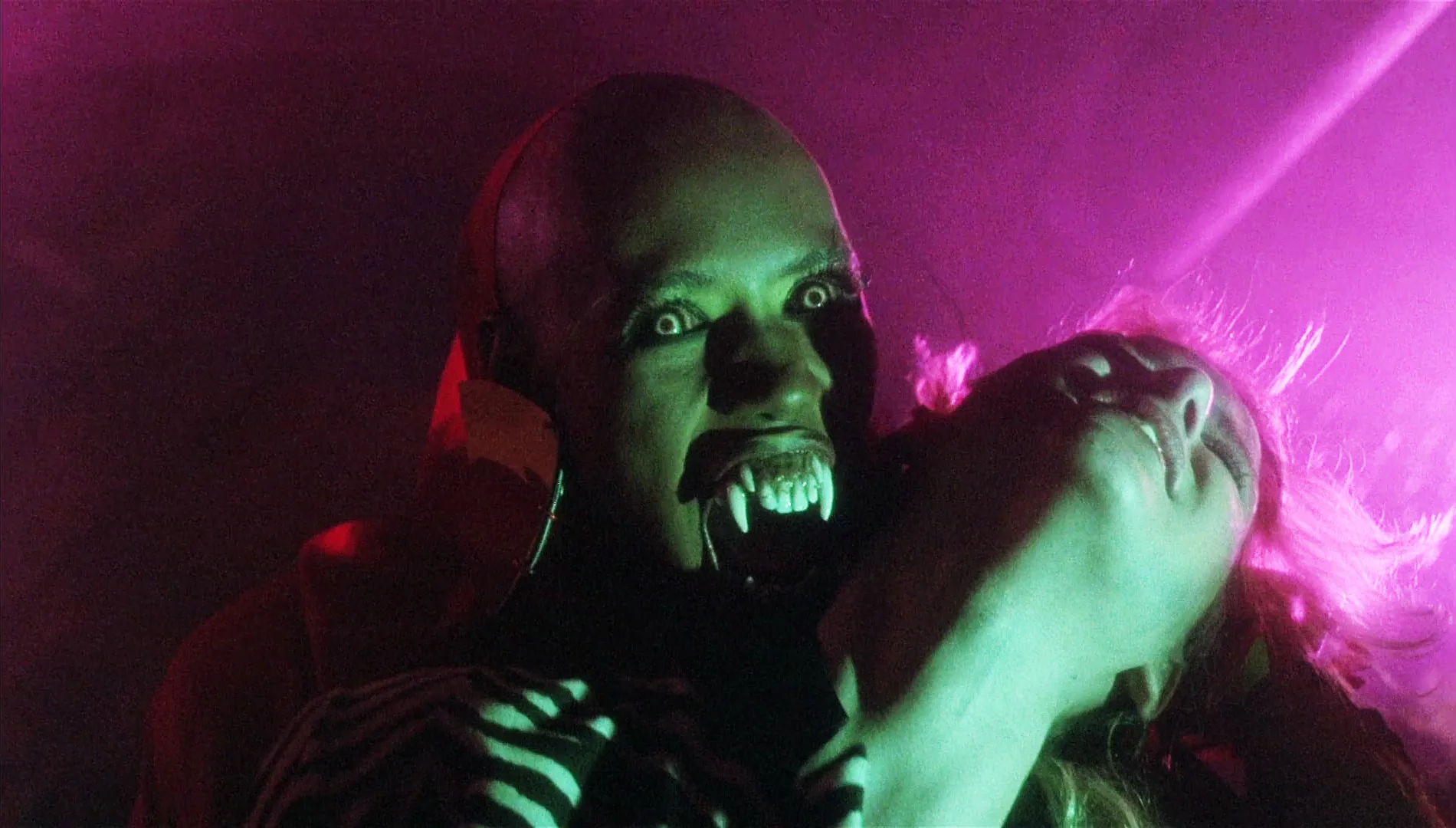
Unfortunately, Vamp doesn’t always trust its own weirdness. It keeps trying to explain the joke. And the more it explains, the less funny it becomes.
The cast, to their credit, helps enormously. Chris Makepeace is perfectly likeable as Keith, giving us the required 1980s everyman who looks as though he wants to be anywhere else. Robert Rusler is suitably obnoxious as A.J., because no vampire movie involving college students can possibly function without at least one spectacularly confident prick who assumes every woman he sees is interested in him.
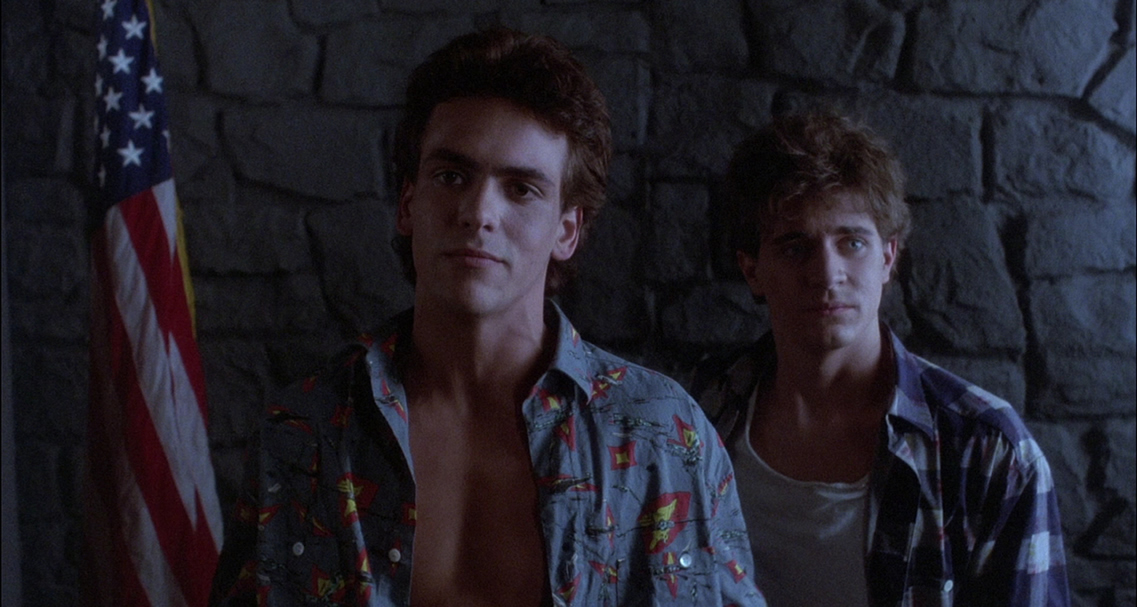
Gedde Watanabe gets some of the film’s more memorable comic moments as Duncan, essentially the guy who has been brought along because he owns the car and is therefore contractually obligated to endure everyone else’s stupidity. And then there’s Dedee Pfeiffer as Amaretto, who brings a lot of energy to the movie. Pfeiffer is particularly good at making the film’s bizarre world seem almost normal.
Sandy Baron, meanwhile, steals huge chunks of the film. His Vic is magnificent. He’s a grubby, delusional nightclub impresario who appears to believe that he is one good business decision away from becoming the owner of a glamorous Las Vegas resort. Unfortunately, he has opened a vampire strip club in a neighbourhood that looks like civilisation has given up.
Then, of course, Billy Drago appears because no 1980s genre movie was considered complete until Billy Drago turned up looking like a haunted cigarette.
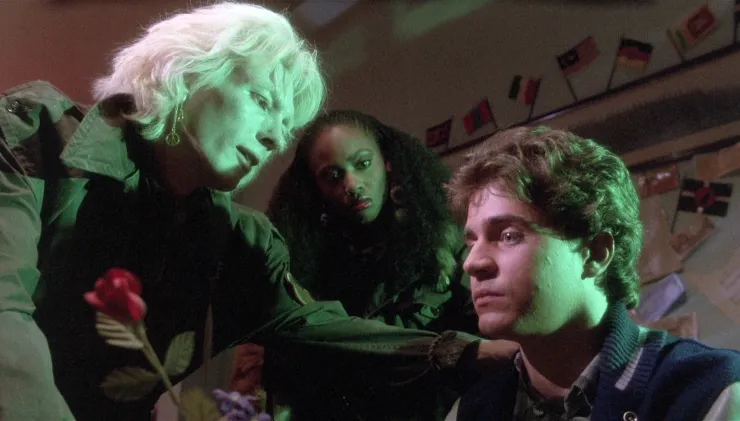
The production itself is almost as strange as the finished film.
Wenk’s original idea had apparently grown out of a vampire spoof called Dracula Bites the Big Apple, and he and producer Donald Borchers had initially been attempting to get another comedy off the ground before turning their attention to vampires. The finished movie was made for a modest $3.3 million and shot in Southern California in early 1986.
Credit where it is due, Wenk often hides the low budget it remarkably well. The film makes clever use of darkness, coloured lighting, smoke and grimy locations to suggest a world substantially more expensive than the one the producers could actually afford.
This is exploitation filmmaking dressed up in somebody else’s dinner jacket, and when it works, it actually really works.
And Grace Jones was a major part of making that possible. According to contemporary reporting, Wenk specifically wanted Katrina to remain genuinely threatening because the comedy only worked if the vampire remained frightening. Grace Jones, with her utterly alien presence, was therefore not just casting; she was part of the movie’s entire tonal strategy.
There’s an irony here, because Jones is probably the most memorable thing in the movie, and yet the film doesn’t really know what to do with her. Roger Ebert made essentially the same observation at the time, noting that Jones gets a couple of major scenes before the film largely leaves her behind.
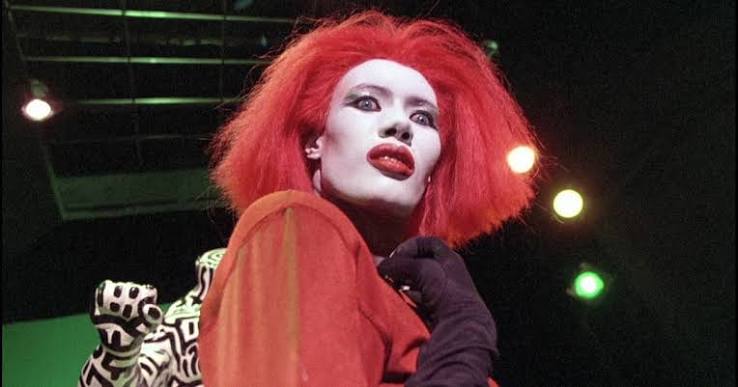
Quite why you would hire Grace Jones to play a vampire stripper and then not build the entire bloody movie around Grace Jones is one of those Hollywood mysteries.
And that is ultimately the problem with Vamp. There is a terrific movie trapped inside it. Sometimes you can see it. It’s in the sinister club and it’s in the strange streets. It’s in Katrina. It’s in the bizarre sense that this whole community knows exactly what is going on and has simply decided that vampires are a perfectly acceptable local industry.
It’s in the moments where Wenk allows the film to become genuinely unpleasant. But every time it starts becoming something distinctive, it swerves.
Comedy? Horror? Sex comedy? Monster movie? It never quite becomes horror comedy because the horror and comedy rarely cooperate. They simply take turns occupying the screen, and that is why it hasn’t ever really thrived as a genre.
What is true is that in an era of increasingly polished, carefully packaged studio entertainment, Vamp feels like something that escaped, and then didn’t quite know which way to run.
It is grubby, peculiar, occasionally funny, frequently creepy, and often ridiculous, centred around Grace Jones acting like an alien dominatrix who just wants to inform the Earth she has run out of patience.
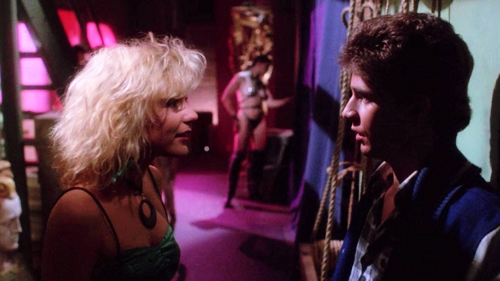
The late 1980s vampire renaissance would ultimately produce better films. The Lost Boys had the stars, the soundtrack, the style and the marketing muscle. Near Dark had the atmosphere, violence and genuine reinvention of the genre. Fright Night had already demonstrated how vampire horror and comedy could coexist.
Vamp arrived like somebody late to a party who was already drunk by the time they got there.
It is a flawed, strange, occasionally inspired little horror-comedy that doesn’t really know what it wants to be. When it works, it is gloriously odd. And when it doesn’t… hey look! Grace Jones!

