

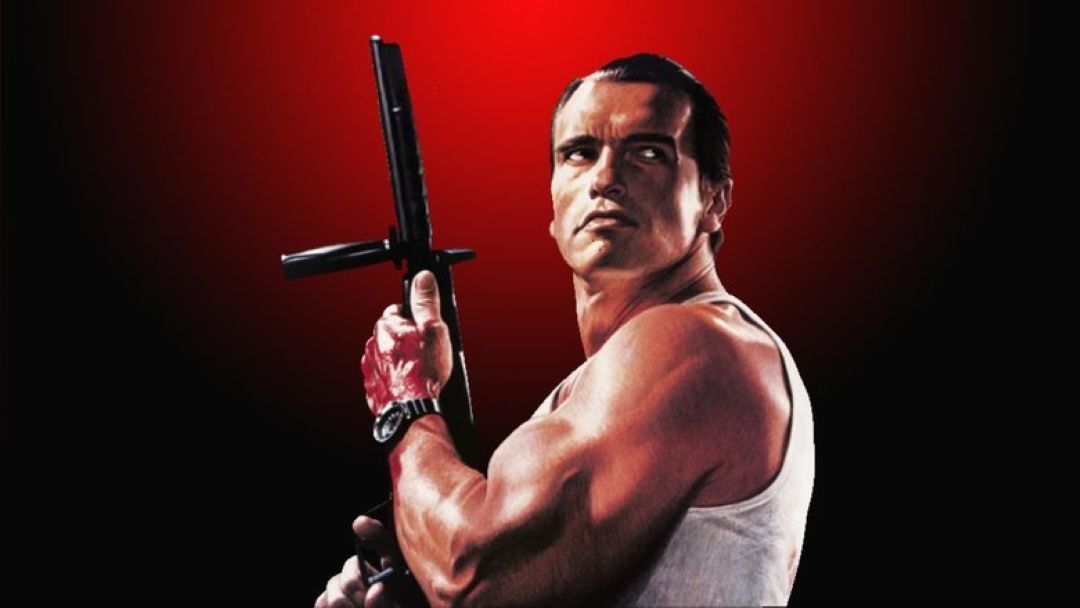
If, like me, your formative years as an Outposter were spent perusing the wire rack shelving in the gas station / convenience store / VHS rental emporium then a number of posters are probably forever etched into your movie memory. The screaming, clawing poster for The Howling. The swimming woman poster for Piranha. For me, and for no particular reason, there is also the poster for Raw Deal.
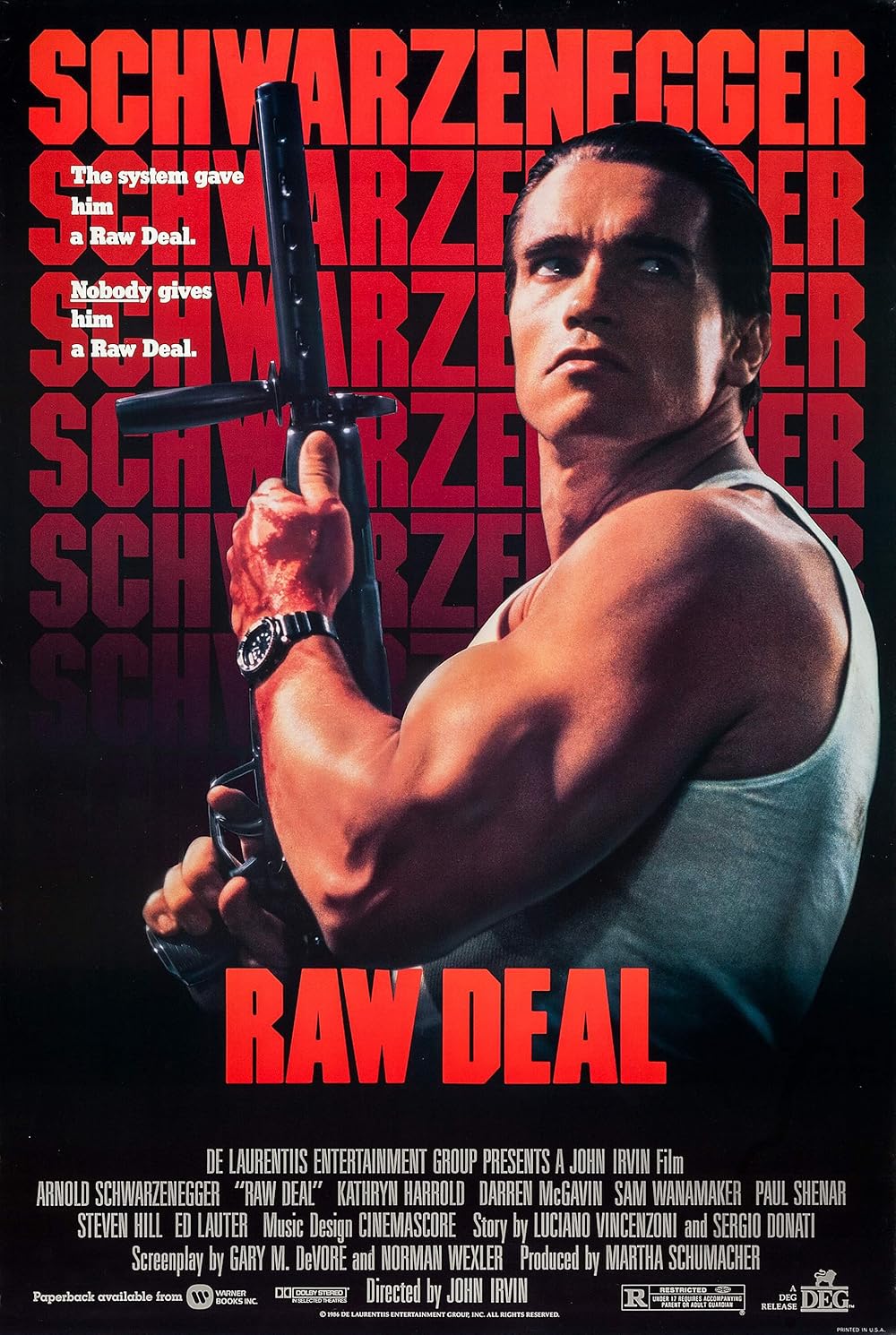
Back then, Arnie was in the ascendancy and, in the eyes of a ten-year-old proto-Outposter, he could do no wrong. So this movie was coveted, looked forward to. Cherished. Until it was time to finally get my grubby little paws on it. After which… it wasn’t.
For some reason, it is the Arnie movie of that era that everyone forgot. The Schwarzenegger film that nobody picked first.
You rented Commando. You watched Predator on repeat. You wore out your VHS of The Running Man. Even Red Heat got invited to the party because, at least, it had Jim Belushi shouting at people. Poor old Raw Deal always felt like the forgotten and unloved ginger stepchild. The one sitting quietly in the corner while Commando was throwing garden sheds at dictators.
As a kid, it seemed like the bargain-bin version of Commando. Similar era. Similar Arnold. Similar premise involving one extraordinarily muscular Austrian solving complicated problems with the subtlety of a runaway cement mixer. It was just not as fun and glossy as Commando. And there were 100% less Caribbean steel drums.
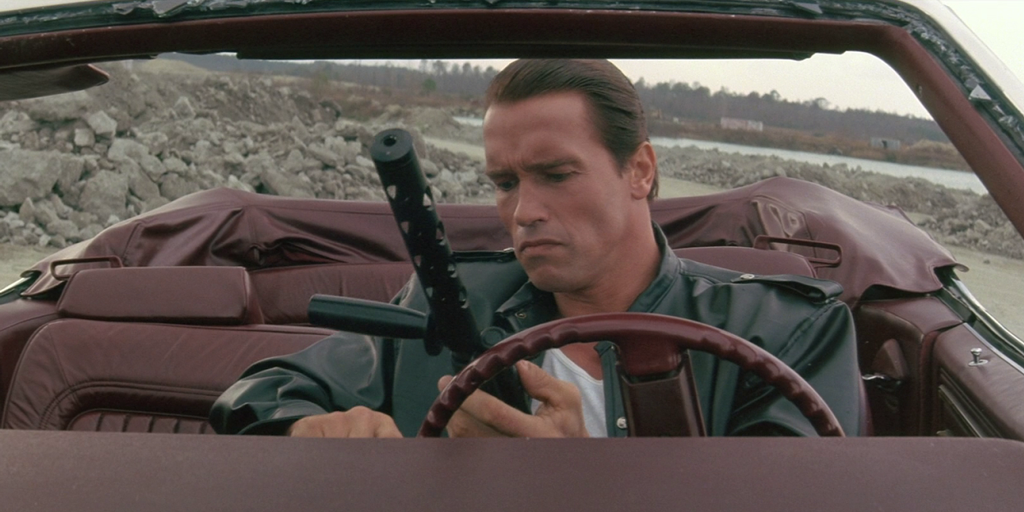
Which just goes to prove that kids really are stupid, because watching it as an adult, it’s actually rather brilliant.
Not because it’s secretly some misunderstood masterpiece. Because it’s one of the purest examples of mid-80s action cinema you’ll ever find. As I said in my retro review of Over The Top last week, one thing that is standing out to me in all these 80s movies is their earnestness. No irony. No winking at the audience. No laboured sassiness or college dorm level burns.
Also, nothing is destroyed. There are no tortured anti-heroes discussing their feelings while staring out of rain-covered windows. There is just stuff. Things happening, because things do.
In this case, there is just Arnold Schwarzenegger infiltrating the Mafia because that’s apparently a perfectly reasonable thing for the FBI to ask him to do. Makes sense to me. The beauty of Raw Deal is how unbelievably direct it is.
Here’s your hero.
Here’s your villains.
Go.
The plot exists purely to move Arnold from one room full of gangsters to another slightly larger room full of gangsters. Eventually, someone hands him a submachine gun. Everyone dies. Pure cinema.
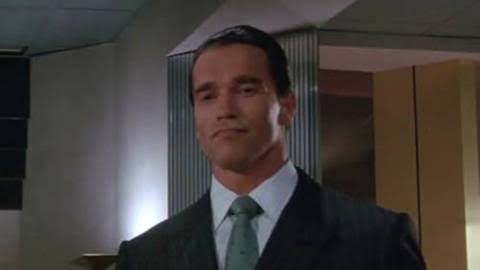
This arrived at an interesting point in Schwarzenegger’s career. He’d already exploded with Conan the Barbarian, conquered the action world with The Terminator, and then detonated pop culture with Commando. He was becoming something bigger than simply another action star. He was becoming Arnold.
Studios were slowly realising audiences weren’t paying to watch complicated stories. They were paying to watch Arnold Schwarzenegger exist for ninety minutes. Raw Deal almost feels like Hollywood experimenting with what would happen if you dropped him into a traditional gangster thriller.
The answer? Eventually, all the gangsters explode.
It’s less “undercover investigation” and more “undercover until Arnold gets bored.”
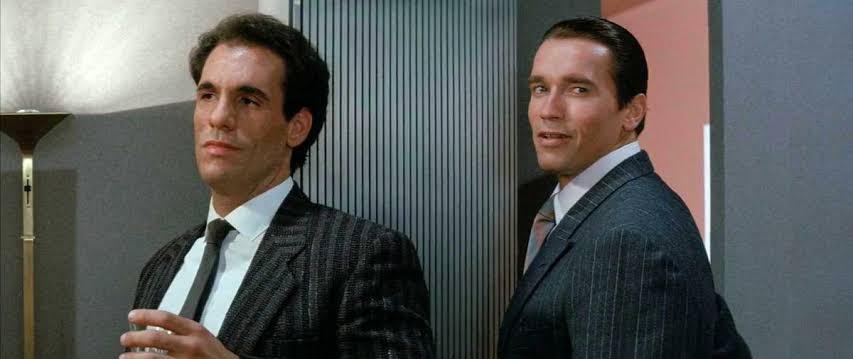
The film itself had a slightly awkward birth. Originally developed under the title Triple Identity, the screenplay bounced around before producer Dino De Laurentiis picked it up. John Irvin, fresh from smaller dramatic films, ended up directing something that probably looked very different in his head before Arnold arrived. Because no matter what script you start with, once Schwarzenegger walks on set looking like he could bench-press your family hatchback, you’re making an Arnold movie whether you intended to or not.
You can almost feel the clash between the filmmakers trying to make a gritty Mafia picture and the unstoppable gravitational pull of peak Schwarzenegger.
The result is wonderfully peculiar. Half crime drama / half demolition derby. All magnificent.
Then there’s the cast. Seeing Sam Wanamaker pop up is one of those lovely surprises modern audiences may not appreciate enough.
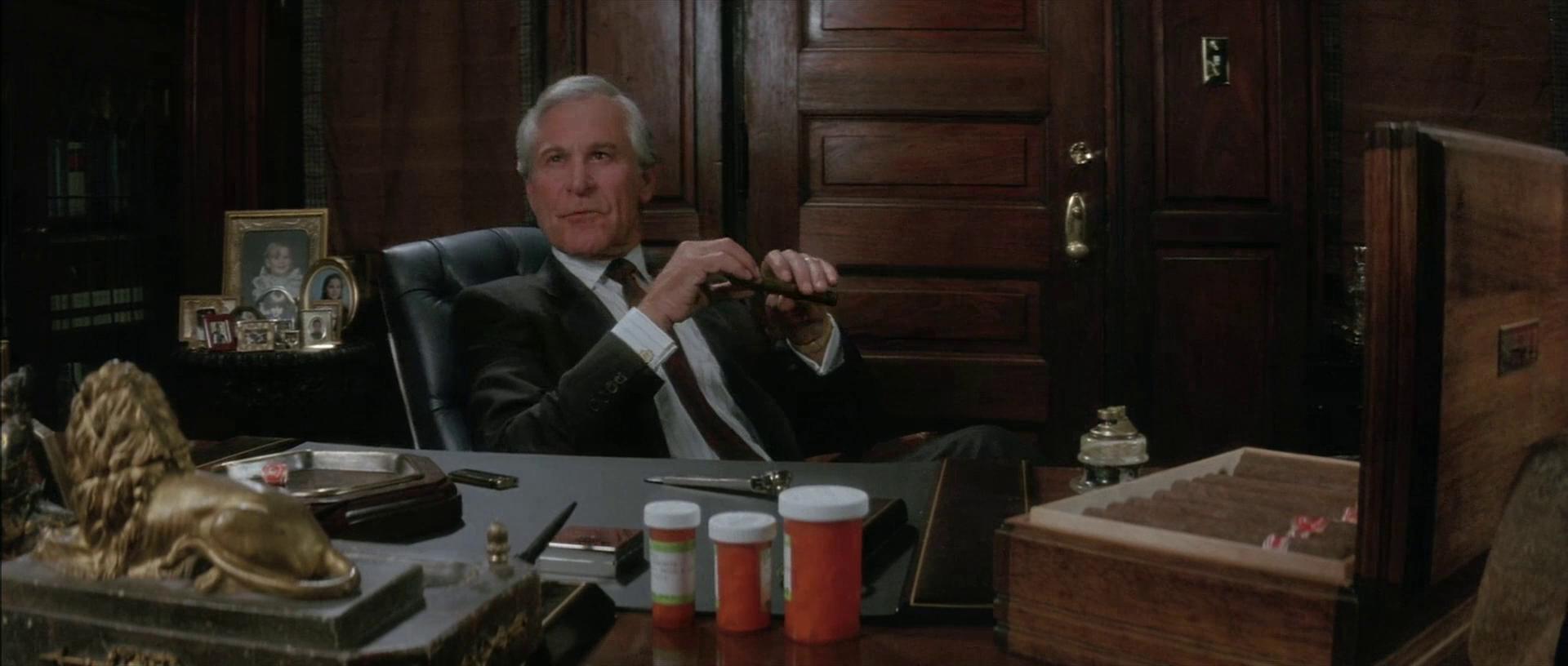
Here’s this distinguished actor and director, founder of Shakespeare’s Globe reconstruction, bringing genuine gravitas to proceedings while standing opposite a man whose neck is wider than most people’s waist.
The entire cast largely plays everything completely straight. Which somehow makes Arnold even funnier. Nobody acknowledges that this supposed undercover operative looks less like a small-town sheriff and more like the final boss in a protein shake commercial.
“Who’s the new guy?”
“I don’t know, but he appears capable of punching through granite.”
“Seems trustworthy.”
One of the film’s greatest pleasures is simply marinating in its glorious Eighties-ness. Nobody dresses casually. The villains don’t merely wear suits, they wear three-piece suits with gigantic lapels and silk ties. Every Mafia meeting resembles the annual conference of Extremely Aggressive Estate Agents.
Everyone smokes. Everyone drinks whisky. Everyone owns at least one expensive car that won’t survive the third act.
You don’t get henchmen anymore. You get business school graduates who happen to carry Uzis. The production design practically glows with polished wood, chrome, marble, and enough neon lighting to guide aircraft safely into Chicago.
Every nightclub contains saxophone music. Every mansion has suspiciously large staircases. Every office has a drinks cabinet. Now I think about it, it was legally impossible to make an action film in 1986 without at least one drinks cabinet.
Then there’s that scene. Arnold’s wife, spectacularly drunk, attempting to bake as his characters entuire back story is laid out by shouting. It’s absolutely perfect. Modern blockbusters would spend six test screenings trying to determine whether audiences understood the emotional symbolism of baking. Raw Deal simply shrugs – Big Austrian – Cake – Next scene.
That’s confidence. Action films today often suffer from what might politely be called Narrative Inflation. Every story has to save reality itself, the multiverse, or civilisation, time, the concept of hope.
Raw Deal is refreshingly tiny by comparison. Some mobsters need sorting out. Arnold sorts them out. Roll credits.
It’s almost therapeutic. Even the violence has an oddly innocent quality. Yes, hundreds of rounds are fired. Yes, vehicles are obliterated. Yes, property damage probably exceeds the GDP of a small Central American nation, but there’s none of the grim misery modern action films mistake for maturity. Everything has the cheerful enthusiasm of children smashing Action Men together.
The finale deserves particular praise. It’s one of those legendary 1980s climaxes where subtlety quietly packs its suitcase and leaves.
Machine guns. Explosions. Gangsters flying dramatically over furniture. Arnold firing enough ammunition to invade Belgium. The body count rapidly reaches numbers usually associated with medieval plagues.
It’s absurd. It’s glorious. It’s exactly what I fucking wanted!
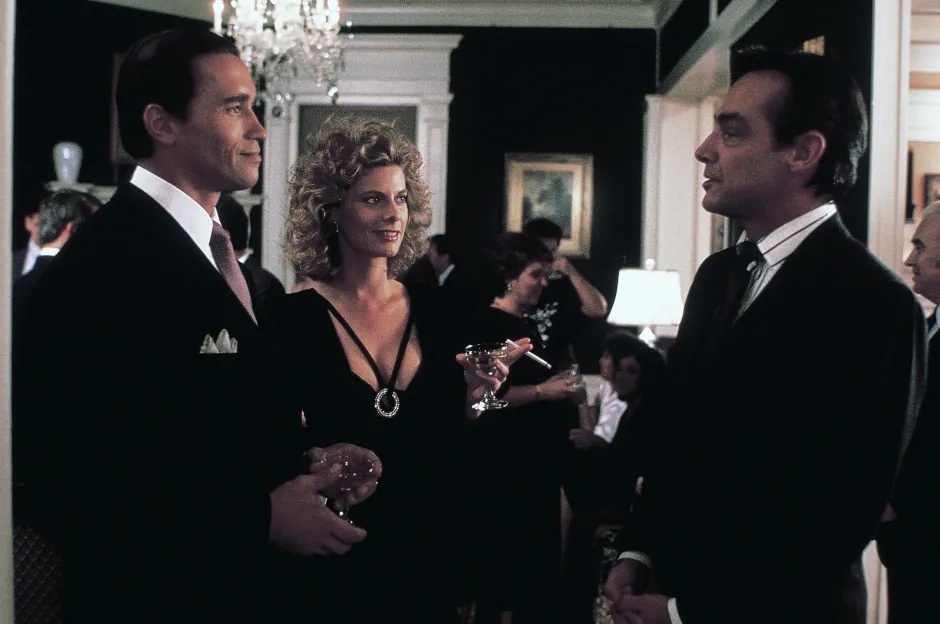
Schwarzenegger himself is fascinating to watch because this is before his comic timing fully evolved. He’s not yet the effortlessly charming superstar of Twins or Kindergarten Cop. Instead, he’s still relying almost entirely on sheer physical presence.
The man enters a room, and every other actor instantly becomes supporting cast. He doesn’t really perform dominance. He simply is dominant. Like gravity. Or taxes.
Of course, there are flaws. The pacing occasionally wanders, and a lot of supporting characters exist purely to become future corpses, while the undercover aspect stretches credibility until it snaps clean in half. Nobody, not one single person, questions why this supposedly ordinary sheriff resembles someone carved from refrigerated oak.
But honestly? Who cares? That’s part of the charm.
Films like this weren’t trying to win Oscars. They weren’t launching cinematic universes. They weren’t teasing twelve spin-offs and a streaming prequel.
They arrived, delivered exactly what was promised, and left.
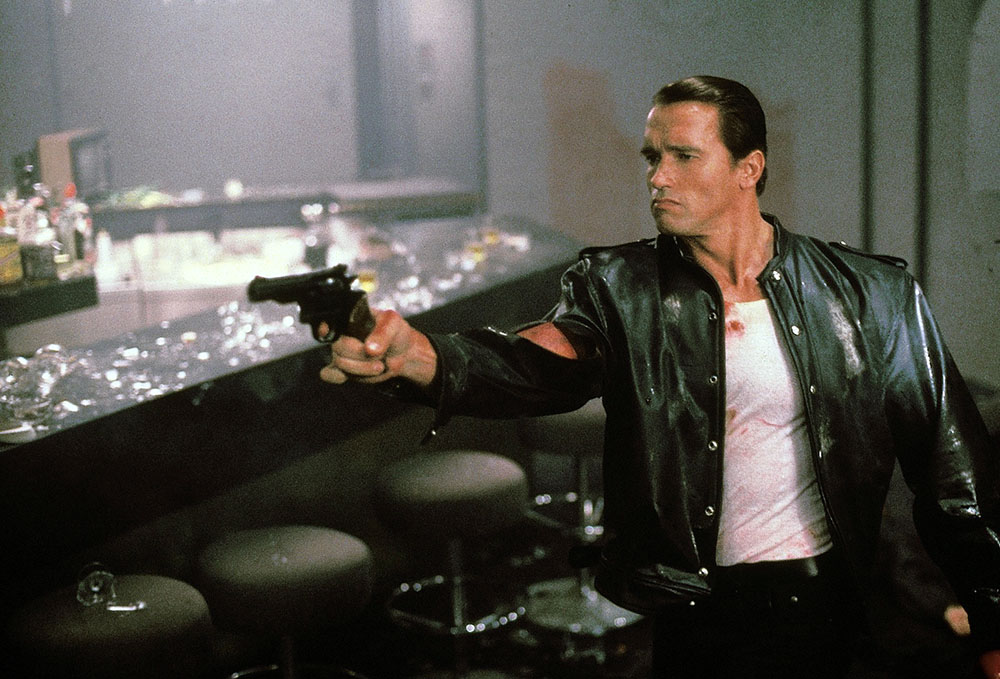
Watching Raw Deal today feels like opening a time capsule from a period when action films trusted audiences to have fun without explaining every joke or apologising for every explosion.
Everything is practical. Cars are genuinely wrecked. Squibs genuinely explode. Stuntmen genuinely earn their wages. When things smash, they’re actually smashing. You can feel the weight of it. The danger. The craftsmanship. It’s wonderfully tactile in an era increasingly dominated by anonymous digital chaos.
Maybe that’s why it has aged so well. As a kid, I wanted another Commando. Instead, I got something slower, stranger, and more interested in gangsters than body counts. That felt disappointing. Watching it now? It’s exactly that difference that makes it memorable.
It isn’t trying to top Commando. It’s trying to wear a slightly smarter suit while secretly carrying an assault rifle underneath. And eventually it gives up pretending altogether.
Raw Deal will never be Arnold’s greatest film. It isn’t even his greatest film from the 1980s, but it might be one of his most enjoyable to revisit because it represents a wonderfully uncomplicated era of blockbuster filmmaking.
An era where bad guys dressed like accountants from Hell. Heroes solved organised crime with military hardware. Sam Wanamaker lent unexpected class to proceedings. And exposition involved cake.
I just checked. Raw Deal has 31% on Rotten Tomatoes. Fucking hell, people are idiots.

